
 A SCHOLARLY BOOK REPOSITORY
2474 start with C start with C
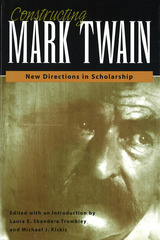
The thirteen essays in this collection combine to offer a complex and deeply nuanced picture of Samuel Clemens. With the purpose of straying from the usual notions of Clemens (most notably the Clemens/Twain split that has ruled Twain scholarship for over thirty years), the editors have assembled contributions from a wide range of Twain scholars. As a whole, the collection argues that it is time we approach Clemens not as a shadow behind the literary persona but as a complex and intricate creator of stories, a creator who is deeply embedded in the political events of his time and who used a mix of literary, social, and personal experience to fuel the movements of his pen.
The essays illuminate Clemens's connections with people and events not usually given the spotlight and introduce us to Clemens as a man deeply embroiled in the process of making literary gold out of everyday experiences. From Clemens's wonderings on race and identity to his looking to family and domesticity as defining experiences, from musings on the language that Clemens used so effectively to consideration of the images and processes of composition, these essays challenge long-held notions of why Clemens was so successful and so influential a writer. While that search itself is not new, the varied approaches within this collection highlight markedly inventive ways of reading the life and work of Samuel Clemens.
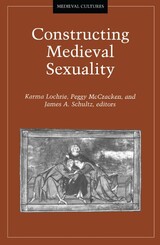
A groundbreaking examination of sexuality in the Middle Ages.
This collection is the first to be devoted entirely to medieval sexuality informed by current theories of sexuality and gender. It brings together essays from various disciplinary perspectives-literary, theological, philosophical, medical, historical, and art historical-to consider how the Middle Ages defined, regulated, and represented sexual practices and desires.
Always considering sexuality in relation to gender, the body, and identity, the essays explore medieval sexuality as a historical construction produced by and embedded in the cultures and institutions of that period. Examining a range of medieval texts and images, the contributors explore the medieval understanding of sodomy, the historical construction of heterosexuality, the polymorphous erotics of female mysticism, and the intersections of sexuality with race, gender, and religion. This work not only offers new perspectives on the ways in which queer theory might inform our views of sexuality in medieval Europe, but also suggests that medieval constructions of sexuality may offer important contributions to both queer theory and the history of sexuality.These essays, situated in the context of current debates, linger over various definitions of medieval sexuality; they speak to each other in their differences and their similarities to further productive thinking about the sometimes conflicting and always fascinating ways in which the Middle Ages regarded sex and sexuality. Contributors: E. Jane Burns, U of North Carolina; Joan Cadden, U of California, Davis; Michael Camille, U of Chicago; Dyan Elliott, Indiana U; Louise O. Fradenburg, U of California, Santa Barbara; Mark D. Jordan, U of Notre Dame; Steven F. Kruger, CUNY.
Not simply an “event” or merely an “incident,” the 1962 standoff between the U. S. and the Soviet Union over missiles in Cuba was a crisis, which subsequently has achieved almost mythic significance in the annals of United States foreign policy. Jutta Weldes asks why this occurrence in particular should be cast as a crisis, and how this so significantly affected “the national interest.” Here, Weldes analyzes the so-called Cuban missile crisis as a means to rethink the idea of national interest, a notion central to both the study and practice of international relations.
Why did the presence of Soviet missiles in Cuba constitute a crisis for U.S. state officials and thus a dire threat to U.S. national interests? It was, Weldes suggests, more a matter of discursive construction than of objective facts or circumstances. Drawing on social theory and on concepts from cultural studies, she exposes the “realities” of the crisis as social creations in the service of a particular and precarious U.S. state identity defined within the Cold War U.S. “security imaginary.”
Constructing National Interests shows how this process allowed for a redefining of the identities, interests, and likely actions of various states, so that it seemed to logically serve the U.S. national interest in removing the missiles from Cuba.
This is an interdisciplinary study of the cultural politics of nationalism and national identities in modern East Asia. Combining theoretical insights with empirical research, it explores the cultural dimensions of nationhood and identity-making in China, Japan, Korea, Hong Kong, and Taiwan. The essays address issues ranging from the complex relations between popular culture and national consciousness to the representation of ethnic/racial identity and gendered discourse on nationalism. The cutting-edge research on the diverse forms of cultural preacceptance and the various ways in which this participates in the construction and projection of national and ethnic identities in East Asia illuminates several understudied issues in Asian studies, including the ambiguity of Hong Kong identity during World War II and the intricate politics of the post-war Taiwanese trial of collaboration.
Addressing a wide range of theoretical and historical issues regarding cultural dimensions of nationalism and national identities all over East Asia, these essays draw insights from such recent theories as cultural studies, postcolonial theories, and archival-researched cultural anthropology. The book will be important reading for students of Asian studies as well as for serious readers interested in issues of nationalism and culture.
Kai-wing Chow is Associate Professor of East Asian Languages and Cultures. Kevin Doak is Associate Professor of History. Poshek Fu is Associate Professor of History and Cinema Studies. All three teach at University of Illinois, Urbana-Champaign.
The participle in its title—Constructing—acknowledges that any articulation of nineteenth-century religion is never just a work of the past: scholars also actively construct religion as their disciplinary assumptions (and indeed personal and lived investments) shape their research and findings. Constructing NineteenthCentury Religion newly analyzes the diverse ways in which religion was debated and deployed in a wide range of nineteenthcentury texts and contexts. While focusing primarily on nineteenthcentury Britain, the collection also contributes to the increasingly transnational and transcultural outlook of postsecular studies, drawing connections between Britain and the United States, continental Europe, and colonial India.

"A prodigious piece of scholarship that I can heartily recommend."—Michael Riordan, New Scientist
"An admirable history. . . . Detailed and so accurate."—Hugh N. Pendleton, Physics Today
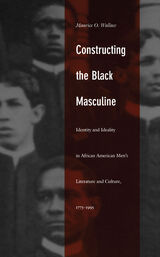
Highlighting their chronic objectification under the gaze of white eyes, Wallace argues that black men suffer a social and representational crisis in being at once seen and unseen, fetish and phantasm, spectacle and shadow in the American racial imagination. Invisible and disregarded on one hand, black men, perceived as potential threats to society, simultaneously face the reality of hypervisibility and perpetual surveillance. Paying significant attention to the sociotechnologies of vision and image production over two centuries, Wallace shows how African American men—as soldiers, Freemasons, and romantic heroes—have sought both to realize the ideal image of the American masculine subject and to deconstruct it in expressive mediums like modern dance, photography, and theatre. Throughout, he draws on the experiences and theories of such notable figures as Frederick Douglass, W. E. B. Du Bois, Booker T. Washington, and James Baldwin.
Katherine Singer Kovács Book Award, Society for Cinema and Media Studies, 2011
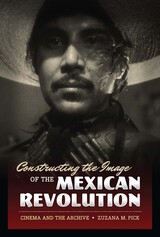
With a cast ranging from Pancho Villa to Dolores del Río and Tina Modotti, Constructing the Image of the Mexican Revolution demonstrates the crucial role played by Mexican and foreign visual artists in revolutionizing Mexico's twentieth-century national iconography. Investigating the convergence of cinema, photography, painting, and other graphic arts in this process, Zuzana Pick illuminates how the Mexican Revolution's timeline (1910–1917) corresponds with the emergence of media culture and modernity.
Drawing on twelve foundational films from Que Viva Mexico! (1931–1932) to And Starring Pancho Villa as Himself (2003), Pick proposes that cinematic images reflect the image repertoire produced during the revolution, often playing on existing nationalist themes or on folkloric motifs designed for export. Ultimately illustrating the ways in which modernism reinvented existing signifiers of national identity, Constructing the Image of the Mexican Revolution unites historicity, aesthetics, and narrative to enrich our understanding of Mexicanidad.

Ann Romines interweaves personal observation with scholarly analysis to address these questions. Writing from a feminist perspective and drawing on resources of gender studies, cultural studies, and new historicist reading, she examines both the content of the novels and the process of their creation. She explores the relationship between mother and daughter working as collaborative authors and calls into question our assumptions about plot, juvenile fiction, and constructions of gender on the nineteenth-century frontier and in the Depression years when the Little House books were written.
This is a book that will appeal both to scholars and to general readers who might welcome an engaging and accessible companion volume to the Little House novels.
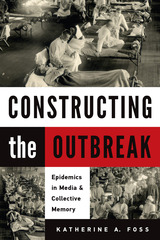
Constructing the Outbreak demonstrates how news reporting on epidemics communicates more than just information about pathogens; rather, prejudices, political agendas, religious beliefs, and theories of disease also shape the message. Analyzing seven epidemics spanning more than two hundred years—from Boston's smallpox epidemic and Philadelphia's yellow fever epidemic in the eighteenth century to outbreaks of diphtheria, influenza, and typhoid in the early twentieth century—Katherine A. Foss discusses how shifts in journalism and medicine influenced the coverage, preservation, and fictionalization of different disease outbreaks. Each case study highlights facets of this interplay, delving into topics such as colonization, tourism, war, and politics. Through this investigation into what has been preserved and forgotten in the collective memory of disease, Foss sheds light on current health care debates, like vaccine hesitancy.
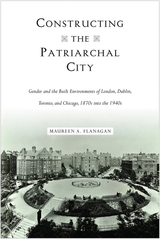
In the Anglo-Atlantic world of the late nineteenth century, groups of urban residents struggled to reconstruct their cities in the wake of industrialization and to create the modern city. New professional men wanted an orderly city that functioned for economic development. Women’s vision challenged the men’s right to reconstruct the city and resisted the prevailing male idea that women in public caused the city’s disorder.
Constructing the Patriarchal City compares the ideas and activities of men and women in four English-speaking cities that shared similar ideological, professional, and political contexts. Historian Maureen Flanagan investigates how ideas about gender shaped the patriarchal city as men used their expertise in architecture, engineering, and planning to fashion a built environment for male economic enterprise and to confine women in the private home. Women consistently challenged men to produce a more equitable social infrastructure that included housing that would keep people inside the city, public toilets for women as well as men, housing for single, working women, and public spaces that were open and safe for all residents.
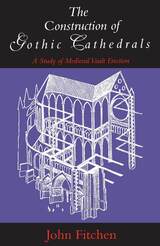
In The Construction of Gothic Cathedrals, John Fitchen systematically walks readers through the process of erecting the great edifices of the Gothic era. He explains the building equipment and falsework needed, the actual operations undertaken, and the sequence of these operations as specifically as they can be deduced today. In the absence of contemporary accounts of the techniques used by medieval builders, Fitchen's study brilliantly pieces together clues from manuscript illuminations, pictorial representations, and the fabrics of the building themselves. The result is the clearest picture available of the innovations and techniques that enabled these buildings, which still generate awe today, to rise majestically above the low buildings of their surrounding towns. It's a book that will enthrall readers of history, and one that, as Progressive Architecture noted, "no student of architecture should miss."
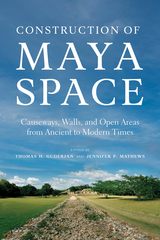
Through fifteen engaging chapters, contributors examine the construction of spatial features by ancient, historic, and contemporary Maya elite and nonelite peoples to understand how they used spaces differently. Through cutting-edge methodologies and case studies, chapters consider how and why Maya people connected and divided the spaces they used daily in their homes, in their public centers, in their sacred places such as caves, and across their regions to inform us about the mental constructs they used to create their lives and cultures of the past.
Contributors
Elias Alcocer Puerto
Alejandra Alonso Olvera
Traci Ardren
Jaime J. Awe
Alejandra Badillo Sánchez
Nicolas C. Barth
Grace Lloyd Bascopé
Adolpho Iván Batún-Alpuche
Elizabeth Beckner
M. Kathryn Brown
Bernadette Cap
Miguel Covarrubias Reyna
Juan Fernandez Diaz
Alberto G. Flores Colin
Thomas H. Guderjan
C. Colleen Hanratty
Héctor Hernández Álvarez
Scott R. Hutson
Joshua J. Kwoka
Whitney Lytle
Aline Magnoni
Jennifer P. Mathews
Stephanie J. Miller
Shawn G. Morton
Holley Moyes
Shannon Plank
Dominique Rissolo
Patrick Rohrer
Carmen Rojas Sandoval
Justine M. Shaw
J. Gregory Smith
Travis W. Stanton
Karl A. Taube
Daniel Vallejo-Cáliz
Sherman shows how a wartime visual culture saturated with images of ordinary foot soldiers, together with contemporary novels, memoirs, and tourist literature, promoted a distinctive notion of combat experience. The contrast between battlefield and home front, soldier and civilian was the basis for memory and collective gratitude. Postwar commemoration, however, also grew directly out of the long and agonized search for the remains of hundreds of thousands of missing soldiers, and the sometimes contentious debates over where to bury them. For this reason, the local monument, with its inscribed list of names and its functional resemblance to tombstones, emerged as the focal point of commemorative practice. Sherman traces every step in the process of monument building as he analyzes commemoration's competing goals—to pay tribute to the dead, to console the bereaved, and to incorporate mourners' individual memories into a larger political discourse.
Extensively illustrated, Sherman's study offers a visual record of a remarkable moment in the history of public art. It is at once a moving account of a culture haunted by war and a sophisticated analysis of the political stakes of memory in the twentieth century.
Winner of the 2000 J. Russell Major Prize of the American Historical Association
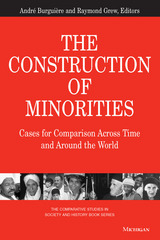
Spawned from a conference organized by the journals Annales and Comparative Studies in Society and History in concert with the Center for Historical Research at l'EHESS in Paris and the Department of History at the University of Michigan, this collection contrasts studies of Afro-Americans in the United States, French Protestants, notables in Renaissance Florence, religious minorities in the Ottoman Empire, Muslim and Chinese traders in Southeast Asia, the native peoples of Spanish America, lower-caste Indians, ethnic minorities in the Soviet Union, Australian aborigines, and American and French responses to AIDS to reveal valuable information about how minorities come to be constructed within societies. Some of the minorities considered are identified primarily in terms of their ethnicity, some by social class, and some by religion (Protestant, Jewish, and Muslim); a final essay asks whether the victims of AIDS constitute a minority at all.
With its cross-cultural emphasis, this book will be a valuable addition to courses on diversity, ethnicity, and cultural comparison. It is destined to be a useful reference for undergraduate and research libraries and a much-consulted work for specialists on each of the societies considered.
André Burguière is Research Director, l'Ecole des Hautes Etudes en Sciences Sociales (l'EHESS) in Paris. Raymond Grew is Professor of History Emeritus, University of Michigan.
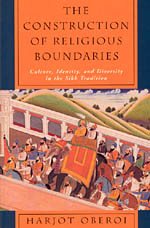
In the closing decades of the nineteenth century, however, the Singh Sabha, a powerful new Sikh movement, began to view the multiplicity in Sikh identity with suspicion and hostility. Aided by social and cultural forces unleashed by the British Raj, the Singh Sabha sought to recast Sikh tradition and purge it of diversity. The ethnocentric logic of a new elite dissolved alternative ideals under the highly codified culture of modern Sikhism.
A study of the process by which a pluralistic religious world view is replaced by a monolithic one, this important book calls into question basic assumptions about the efficacy of fundamentalist claims and the construction of all social and religious identities. An essential book for the field of South Asian religions, this work is also an important contribution to cultural anthropology, postcolonial studies, and the history of religion in general.
Constructions of Time and History in the Pre-Columbian Andes explores archaeological approaches to temporalities, social memory, and constructions of history in the pre-Columbian Andes. The authors examine a range of indigenous temporal experiences and ideologies, including astronomical, cyclical, generational, eschatological, and mythical time.
This nuanced, interdisciplinary volume challenges outmoded anthropological theories while building on an emic perspective to gain greater understanding of pre-Columbian Andean cultures. Contributors to the volume rethink the dichotomy of past and present by understanding history as indigenous Andeans perceived it—recognizing the past as a palpable and living presence. We live in history, not apart from it. Within this framework time can be understood as a current rather than as distinct points, moments, periods, or horizons.
The Andes offer a rich context by which to evaluate recent philosophical explorations of space and time. Using the varied materializations and ritual emplacements of time in a diverse sampling of landscapes, Constructions of Time and History in the Pre-Columbian Andes serves as a critique of archaeology’s continued and exclusive dependence on linear chronologies that obscure historically specific temporal practices and beliefs.
Contributors: Tamara L. Bray, Zachary J. Chase, María José Culquichicón-Venegas, Terence D’Altroy, Giles Spence Morrow, Matthew Sayre, Francisco Seoane, Darryl Wilkinson

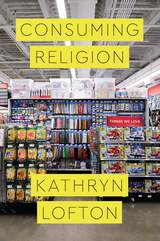
What are you drawn to like, to watch, or even to binge? What are you free to consume, and what do you become through consumption? These questions of desire and value, Kathryn Lofton argues, are questions for the study of religion. In eleven essays exploring soap and office cubicles, Britney Spears and the Kardashians, corporate culture and Goldman Sachs, Lofton shows the conceptual levers of religion in thinking about social modes of encounter, use, and longing. Wherever we see people articulate their dreams of and for the world, wherever we see those dreams organized into protocols, images, manuals, and contracts, we glimpse what the word “religion” allows us to describe and understand.
With great style and analytical acumen, Lofton offers the ultimate guide to religion and consumption in our capitalizing times.
What are you drawn to like, to watch, or even to binge? What are you free to consume, and what do you become through consumption? These questions of desire and value, Kathryn Lofton argues, are questions for the study of religion. In eleven essays exploring soap and office cubicles, Britney Spears and the Kardashians, corporate culture and Goldman Sachs, Lofton shows the conceptual levers of religion in thinking about social modes of encounter, use, and longing. Wherever we see people articulate their dreams of and for the world, wherever we see those dreams organized into protocols, images, manuals, and contracts, we glimpse what the word “religion” allows us to describe and understand.
With great style and analytical acumen, Lofton offers the ultimate guide to religion and consumption in our capitalizing times.
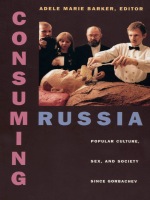
The contributors examine how the people of Russia reconcile prerevolutionary elite culture—as well as the communist legacy—with the influx of popular influences from the West to build a society that no longer relies on a single dominant discourse and embraces the multiplicities of both public and private Russian life. Barker brings together Russian and American scholars from anthropology, history, literature, political science, sociology, and cultural studies. These experts fuse theoretical analysis with ethnographic research to analyze the rise of popular culture, covering topics as varied as post-Soviet rave culture, rock music, children and advertising, pyramid schemes, tattooing, pets, and spectator sports. They consider detective novels, anecdotes, issues of feminism and queer sexuality, nostalgia, the Russian cinema, and graffiti. Discussions of pornography, religious cults, and the deployment of Soviet ideological symbols as post-Soviet kitsch also help to demonstrate how the rebuilding of Russia’s political and economic infrastructure has been influenced by its citizens’ cultural production and consumption.
This volume will appeal to those engaged with post-Soviet studies, to anyone interested in the state of Russian society, and to readers more generally involved with the study of popular culture.
Contributors. Adele Marie Barker, Eliot Borenstein, Svetlana Boym, John Bushnell, Nancy Condee, Robert Edelman, Laurie Essig, Julia P. Friedman, Paul W. Goldschmidt, Judith Deutsch Kornblatt, Anna Krylova, Susan Larsen, Catharine Theimer Nepomnyaschy, Theresa Sabonis-Chafee, Tim Scholl, Adam Weiner, Alexei Yurchak, Elizabeth Kristofovich Zelensky
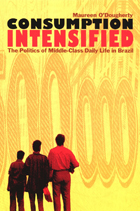
With the supports of middle-class living threatened—job security, quality education, home ownership, savings, ease of consumption—the means and meaning of “middle class” were thrown into question. The sector thus redefined itself through both class- and race-based claims of moral and cultural superiority and through privileged consumption, a definition the media underscored by continually addressing middle-class Brazilians as consumers—or rather, as consumers denied. In these times, adults became more flexible in employment, and put stakes in their children’s expensive private education. They engaged in elaborate comparison shopping, stockpiling of goods, and financial strategizing. Ongoing desire for distinction and “first- world” modernity prompted these Brazilians to buy foreign goods through contraband, thereby defying state protectionist policy. Discontented with the constraints of the national economy, they welcomed neoliberalism.
By uncovering connections between culture and politics, O’Dougherty complicates understandings of the middle class as a social group and category. Illuminating the intricate relation between identity and local and global consumption, her work will be welcomed by students and scholars in anthropology and Latin American studies, and those interested in consumption, popular culture, politics, and globalization.
A new conceptual tool for understanding the history of art
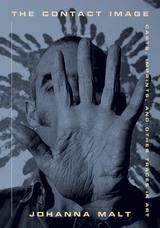
From ancient cave paintings to contemporary sculpture, forms of indexical trace are vital to the human practice of artmaking. Through this wide-ranging exploration, Johanna Malt shows how casts, molds, and imprints (“contact images”) offer a paradigm for thinking about our relationship to objects and their surfaces as sites of meaning. Engaging and complicating philosophical dualities of absence and presence, art and non-art, original and copy, Malt introduces the contact image as an important new concept for the study of Western art.
Close reading examples from 30,000 years of art history, Malt cuts across eras and media to unite diverse forms of artistic production created through instances of contact with “the objects of the world.” From holy relics to Napoleon’s death mask to life casts of the human body by artists such as Duane Hanson and Janine Antoni, as well as conceptual and performance work by Jasper Johns and Yves Klein, The Contact Image traces themes of selfhood, time, negation, and vestige in these tactile encounters.
Revisiting fundamental questions about representation, perception, and aesthetics, The Contact Image is a sophisticated provocation for a theory of art built on the tension and oscillations that emerge when we explore how artworks embody opposites.
Retail e-book files for this title are screen-reader friendly with images accompanied by short alt text and/or extended descriptions.
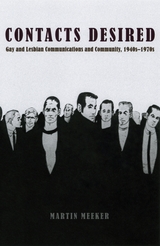
Martin Meeker here argues that over the course of the twentieth century, a series of important innovations occurred in the networks that linked individuals to a larger social knowledge of homosexuality. He points to three key innovations in particular: the emergence of the homophile movement in the 1950s; the mass media treatments of homosexuals in the late 1950s and early 1960s; and the popularization of do-it-yourself publishing from the late 1940s to the 1970s, which offered bar guides, handmade magazines, and other materials that gay men and lesbians could use to seek one another out. In the process, Meeker unearths a treasure trove of archival materials that reveals how homosexuals played a crucial role in transforming the very structure of communications and urban communities since the postwar era.
A Contagious Cause is the first book to trace the century-long hunt for a human cancer virus in America, an effort whose scale exceeded that of the Human Genome Project. The government’s campaign merged the worlds of molecular biology, public health, and military planning in the name of translating laboratory discoveries into useful medical therapies. However, its expansion into biomedical research sparked fierce conflict. Many biologists dismissed the suggestion that research should be planned and the idea of curing cancer by a vaccine or any other means as unrealistic, if not dangerous. Although the American hunt was ultimately fruitless, this effort nonetheless profoundly shaped our understanding of life at its most fundamental levels. A Contagious Cause links laboratory and legislature as has rarely been done before, creating a new chapter in the histories of science and American politics.
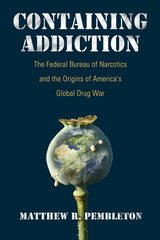
The story of America's “War on Drugs” usually begins with Richard Nixon or Ronald Reagan. In Containing Addiction, Matthew R. Pembleton argues that its origins instead lie in the years following World War II, when the Federal Bureau of Narcotics—the country's first drug control agency, established in 1930—began to depict drug control as a paramilitary conflict and
sent agents abroad to disrupt the flow of drugs to American shores.
U.S. policymakers had long viewed addiction and organized crime as profound domestic and trans-national threats. Yet World War II presented new opportunities to implement drug control on a global scale. Skeptical of public health efforts to address demand, the Federal Bureau of Narcotics believed that reducing the global supply of drugs was the only way to contain the spread of addiction. In effect, America applied a foreign policy solution to a domestic social crisis, demonstrating how consistently policymakers have assumed that security at home can only be achieved through hegemony abroad. The result is a drug war that persists into the present day.
This two-volume work includes nearly two hundred primary documents and images that narrate many aspects of United States history from the period before European contact and colonization through the twenty-first century. The sources assembled capture the voices of Americans of varied age, race, ethnicity, and gender, historical actors who represent not only diverse subject positions but also a wide variety of belief systems and varied circumstances. Combined with interpretive headnotes and discussion questions, the layered approaches of the contributors deliver an unusually complex and rich portrait of the American past while also offering readers glimpses of the many dimensions of the historians’ craft.
Containing Multitudes: A Documentary Reader of US History provides nearly two hundred primary documents that narrate aspects of US history from the period before European contact through the twenty-first century. Presented in two volumes, this curated selection—including letters, literature, journalism, and visual art—provides access to historical voices from a wide range of subject positions and belief systems.
Designed for US history survey courses, this reader provides both analysis and instructional support in the form of brief introductory essays and questions to promote student discussion and reflection. Containing Multitudes not only conveys a rich and complex portrait of the American past but also offers readers valuable insight into the many dimensions of the historian’s craft.
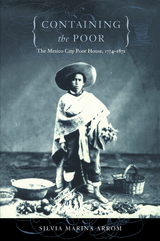
For a nation that had traditionally regarded the needy as having the undisputed right to receive alms and whose affluent citizens felt duty-bound to dispense them, the experiment was doomed from the start, explains Arrom. She uses deep archival research to reveal that—much to policymakers’ dismay—the Poor House became an orphanage largely because the government had underestimated the embeddedness of this moral economy of begging. While tracing the course of an eventful century that also saw colonialism give way to republicanism in Mexico, Arrom links the Poor House’s transformation with other societal factors as well, such as Mexican women’s increasing impact on social welfare policies.
With poverty, begging, and homelessness still rampant in much of Latin America today, this study of changing approaches to social welfare will be particularly valuable to student and scholars of Mexican and Latin American society and history, as well as those engaged in the study of social and welfare policy.
Examining a broad sweep of American culture, from the work of George Kennan to Playboy Magazine, from the movies of Doris Day and Walt Disney to those of Cecil B. DeMille and Alfred Hitchcock, from James Bond to Holden Caulfield, Nadel discloses the remarkable pervasiveness of the containment narrative. Drawing subtly on insights provided by contemporary theorists, including Baudrillard, Foucault, Jameson, Sedgwick, Certeau, and Hayden White, he situates the rhetoric of the Cold War within a gendered narrative powered by the unspoken potency of the atom. He then traces the breakdown of this discourse of containment through such events as the Bay of Pigs invasion and the Free Speech Movement at Berkeley, and ties its collapse to the onset of American postmodernism, typified by works such as Catch–22 and The Man Who Shot Liberty Valence.
An important work of cultural criticism, Containment Culture links atomic power with postmodernism and postwar politics, and shows how a multifarious national policy can become part of a nation’s cultural agenda and a source of meaning for its citizenry.
Drawing on more than 1,500 articles, reviews, and interviews written over the past fifteen years, Olivier Barlet identifies the critical questions brought about by the evolution of African cinema. In the process, he offers us a personal and passionate vision, making this book an indispensable sum of thought that challenges preconceived ideas and enriches an approach to cinema as a critical art.
Chapters address place-making in Chaco Canyon, recent trends in landscape archaeology, the formation of identities, landscape boundaries, and the movement associated with these aspects of place-making. They address how interaction of peoples with objects brings landscapes to life. Representing a diverse cross section of Southwestern archaeologists, the authors of this volume push the boundaries of archaeological method and theory, building a strong foundation for future Southwest studies.
This book will be of interest to professional and academic archaeologists, as well as students working in the American Southwest.
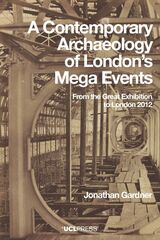
This book explores the traces of London’s most significant modern “mega events”: the Great Exhibition of 1851, the 1951 Festival of Britain’s South Bank Exhibition, and the 2012 Olympic and Paralympic Games. Though only open for a few weeks or months, mega events permanently and disruptively reshape their host cities and societies: they demolish and rebuild whole districts, they draw in materials and participants from around the globe, and their organizers self-consciously seek to leave a “legacy” that will endure for decades or more. The book argues that these spectacles must thus be seen as long-lived and persistent, rather than simply transient or short-term phenomena. It explores the long-term history of each event through contemporary archaeology, examining the contents and building materials of the Great Exhibition’s Crystal Palace and their extraordinary afterlife at Sydenham, South London; how the Festival of Britain’s South Bank Exhibition employed displays of ancient history to construct a new postwar British identity; and how London 2012 dealt with competing visions of the past as archaeology, waste, and heritage in creating a vision of the future.
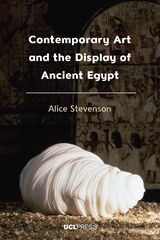
Contemporary art installations in Egyptian galleries are often framed as dialogues between past and present—but what if they are, instead, shaped by the museum itself? Contemporary Art and the Display of Ancient Egypt argues that both contemporary and ancient works are mediated through the structures and ideologies of the museum space. In this seminal work, Alice Stevenson examines how artists’ work influences museum discourse and public engagement with ancient artifacts.
Drawing on case studies from the British Museum, the Egyptian Museum in Turin, and the State Museum of Egyptian Art in Munich, this book assesses the motivations behind these interventions and their lasting impact. Through an evidence-based approach, Stevenson offers new insights into how curators, scholars, and artists can collaborate to create more meaningful and politically engaged museum experiences. Of particular interest to Egyptologists, museum professionals, and contemporary art scholars, this work redefines the role of artistic intervention in shaping our understanding of ancient cultures.
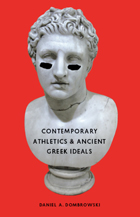
Despite their influence in our culture, sports inspire dramatically less philosophical consideration than such ostensibly weightier topics as religion, politics, or science. Arguing that athletic playfulness coexists with serious underpinnings, and that both demand more substantive attention, Daniel Dombrowski harnesses the insights of ancient Greek thinkers to illuminate contemporary athletics.
Dombrowski contends that the ideas of Plato, Aristotle, and Plotinus shed important light on issues—such as the pursuit of excellence, the concept of play, and the power of accepting physical limitations while also improving one’s body—that remain just as relevant in our sports-obsessed age as they were in ancient Greece. Bringing these concepts to bear on contemporary concerns, Dombrowski considers such questions as whether athletic competition can be a moral substitute for war, whether it necessarily constitutes war by other means, and whether it encourages fascist tendencies or ethical virtue. The first volume to philosophically explore twenty-first-century sport in the context of its ancient predecessor, Contemporary Athletics and Ancient Greek Ideals reveals that their relationship has great and previously untapped potential to inform our understanding of human nature.
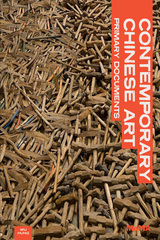
Publication of the Museum of Modern Art
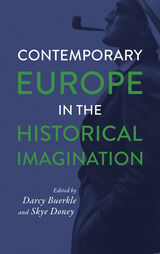
George L. Mosse (1918–99) was one of the most influential cultural and intellectual historians of modern Europe. A refugee from Nazi Germany, he was an early leader in the study of fascism and the history of sexuality and masculinity, authoring more than two dozen books. In Contemporary Europe in the Historical Imagination, an international assembly of leading scholars explore Mosse’s enduring methodologies in German studies and modern European cultural history. Considering Mosse’s life and work historically and critically, the book begins with his intellectual biography and goes on to reread his writings in light of historical developments since his death, and to use, extend, and contend with Mosse’s legacy in new contexts he may not have addressed or even foreseen.
The volume wrestles with intertwined questions that continue to emerge from Mosse’s pioneering research, including: What role do sexual and racial stereotypes play in European political culture before and after 1945? How are gender and Nazi violence bound together? And what does commemoration reveal about national culture? Importantly, the contributors pose questions that are inspired by Mosse’s work but that he did not directly examine. For example, to what extent were Nazism and Italian Fascism colonial projects? How have popular radical right parties reinforced and reimagined ethnonationalism and nativism? And how did Nazi perpetrators construct a moral system that accommodated genocide? Much like Mosse’s own work, the chapters in this book inspire new interventions into the history of gender and sexuality, Jewish identity during the rise of the Third Reich, and the many reincarnations of fascist pageantry and mass politics.
Contributors: Adi Armon, Steven E. Aschheim, Aleida Assmann, Darcy Buerkle, Skye Doney, Arie M. Dubnov, Rebekka Grossmann, David Harrisville, Meike Hoffmann, Andreas Huyssen, Elissa Mailänder, Frank Mecklenburg, Mary Nolan, Stefanie Schüler-Springorum, Roger Strauch, Enzo Traverso, Marc Volovici, Elisabeth Wagner, Sarah Wobick-Segev, Robert Zwarg
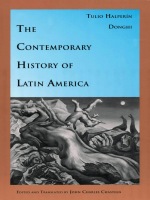
Beginning with a survey of the late colonial landscape, The Contemporary History of Latin America traces the social, economic, and political development of the region to the late twentieth century, with special emphasis on the period since 1930. Chapters are organized chronologically, each beginning with a general description of social and economic developments in Latin America generally, followed by specific attention to political matters in each country. What emerges is a well-rounded and detailed picture of the forces at work throughout Latin American history.
This book will be of great interest to all those seeking a general overview of modern Latin American history, and its distinctive Latin American voice will enhance its significance for all students of Latin American history.
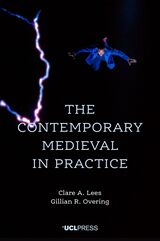
Speculative and nontraditional, The Contemporary Medieval in Practice adapts the conventional scholarly essay to reflect its interdisciplinary subject. Creative critical writing encourages the introduction of dialogue, poetry, and short essays within scholarly style, and this, the authors argue, makes it an ideal format for exploring innovative pathways from the contemporary to the medieval. Discussing urgent critical discourses and cultural practices, such as the study of the environment and the ethics of understanding bodies, identities, and histories, this short, accessible book focuses on early medieval British culture, or Anglo-Saxon studies, and its relation with, use of, and reworking in contemporary visual, poetic, and material culture after 1950.
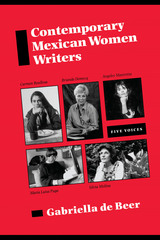
Mexican women writers moved to the forefront of their country's literature in the twentieth century. Among those who began publishing in the 1970s and 1980s are Maria Luisa Puga, Silvia Molina, Brianda Domecq, Carmen Boullosa, and Angeles Mastretta. Sharing a range of affinities while maintaining distinctive voices and outlooks, these are the women whom Gabriella de Beer has chosen to profile in Contemporary Mexican Women Writers.
De Beer takes a three-part approach to each writer. She opens with an essay that explores the writer's apprenticeship and discusses her major works. Next, she interviews each writer to learn about her background, writing, and view of herself and others. Finally, de Beer offers selections from the writer's work that have not been previously published in English translation. Each section concludes with a complete bibliographic listing of the writer's works and their English translations.
These essays, interviews, and selections vividly recreate the experience of being with the writer and sharing her work, hearing her tell about and evaluate herself, and reading the words she has written. The book will be rewarding reading for everyone who enjoys fine writing.


Contemporary Opera in Flux bridges the gaps between expanding literature on opera, theater, new music, postmodern dramaturgy, and posthuman aesthetics, while also confronting larger questions of identity, representation, and narrative agency that are at the forefront of contemporary music scholarship. This collection of essays engages critically with the past out of a conviction that, amid general public perceptions of opera as anachronistic or elitist, contemporary opera has emerged as an artistic incubator for experimentation.
Contemporary Perspectives on the History of Philosophy was first published in 1983. Minnesota Archive Editions uses digital technology to make long-unavailable books once again accessible, and are published unaltered from the original University of Minnesota Press editions.
The authors of the 27 appears in Volume 8, Midwest Studies in Philosophy,have established reputations as historians of philosophy, but their vantage point, here, is from "contemporary perspectives" - they use contemporary analytic skills to examine problems and issues considered by past philosophers. The papers, arranged in historical order, fall into six groups: ancient philosophy (the Pythagoreans, Plato, and Aristotle); the seventeenth-century rationalists (Descartes, Leibniz and Spinoza); the empiricists (Locke, Berkeley, and Hume); Kant; the nineteenth century (Hegel, Schopenhauer, and Mill); and, in conclusion, an essay on Wittgenstein's Tractatus and two broad, retrospective papers entitled "Old Analyses of the Physical World and new Philosophies of Language" and "Moral Crisis and the History of Ethics."
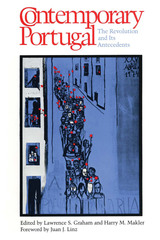
Despite worldwide interest in the Portuguese Revolution of 1974, Portugal remained for most people a little known and poorly understood country, neglected for years by social scientists. Editors Graham and Makler brought together for the first time in one substantive volume most of the leading social science experts on Portugal.
The contributors' highly original research represents the best work generated by the International Conference Group on Modern Portugal at its two major conferences held in 1973 and 1976. The result is a comprehensive collection of essays discussing in detail the events leading up to the revolution, the causes of the military coup, and the movement of a society on the brink of revolutionary upheaval toward open, democratic parliamentary elections.
As the first interdisciplinary study to span fifty years of Portuguese history from the Estado Novo of 1926 to the eventual social democratic republic, this book stands alone in its field. The specialist as well as the general reader will find insights into the dynamics of Portugal's people, politics, and economics.
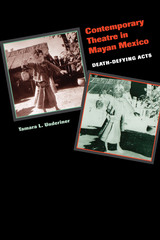
From the dramatization of local legends to the staging of plays by Shakespeare and other canonical playwrights to the exploration of contemporary sociopolitical problems and their effects on women and children, Mayan theatre is a flourishing cultural institution in southern Mexico. Part of a larger movement to define Mayan self-identity and reclaim a Mayan cultural heritage, theatre in Mayan languages has both reflected on and contributed to a growing awareness of Mayans as contemporary cultural and political players in Mexico and on the world's stage.
In this book, Tamara Underiner draws on fieldwork with theatre groups in Chiapas, Tabasco, and Yucatán to observe the Maya peoples in the process of defining themselves through theatrical performance. She looks at the activities of four theatre groups or networks, focusing on their operating strategies and on close analyses of selected dramatic texts. She shows that while each group works under the rubric of Mayan or indigenous theatre, their works are also in constant dialogue, confrontation, and collaboration with the wider, non-Mayan world. Her observations thus reveal not only how theatre is an agent of cultural self-definition and community-building but also how theatre negotiates complex relations among indigenous communities in Mayan Mexico, state governments, and non-Mayan artists and researchers.
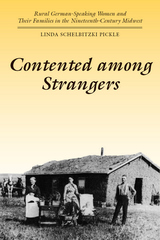
German-Americans make up one of the largest ethnic groups in the United States, yet their very success at assimilating has also made them one of the least visible. Contented among Strangers examines the central role German-speaking women in rural areas of the Midwest played in preserving their ethnic and cultural identity. Even while living far from their original homelands, these women applied traditional European patterns of rural family life and values to their new homes in Illinois, Iowa, Kansas, Missouri, and Nebraska. As a result they were more content with their modest lives than were their Anglo-American counterparts. Through personal recollections--including interesting diary material translated by the author, church and community documents, and migration and census data--Pickle reveals the diversity and richness of the women's experiences.
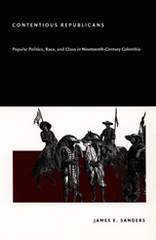
Beginning in the late 1840s, subaltern groups entered the political arena to forge alliances, both temporary and enduring, with the elite Liberal and Conservative Parties. In the process, each group formed its own political discourses and reframed republicanism to suit its distinct needs. These popular liberals and popular conservatives bargained for the parties’ support and deployed a broad repertoire of political actions, including voting, demonstrations, petitions, strikes, boycotts, and armed struggle. By the 1880s, though, many wealthy Colombians of both parties blamed popular political engagement for social disorder and economic failure, and they successfully restricted lower-class participation in politics. Sanders suggests that these reactionary developments contributed to the violence and unrest afflicting modern Colombia. Yet in illuminating the country’s legacy of participatory politics in the nineteenth century, he shows that the current situation is neither inevitable nor eternal.
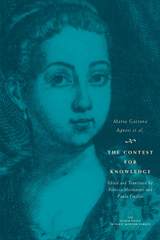
The Contest for Knowledge reveals how these four women used the methods and themes of their male counterparts to add their voices to the vigorous and prolific debate over the education of women during the eighteenth century. In the texts gathered here, the women discuss the issues they themselves thought most urgent for the equality of women in Italian society specifically and in European culture more broadly. Their thoughts on this important subject reveal how crucial the eighteenth century was in the long history of debates about women in the academy.
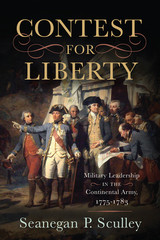
How American Colonial Ideals Shaped Command, Discipline, and Honor in the U.S. Armed Forces
In the summer of 1775, a Virginia gentleman-planter was given command of a New England army laying siege to British-occupied Boston. With his appointment, the Continental Army was born. Yet the cultural differences between those serving in the army and their new commander-in-chief led to conflicts from the very beginning that threatened to end the Revolution before it could start. The key challenge for General George Washington was establishing the standards by which the soldiers would be led by their officers. What kind of man deserved to be an officer? Under what conditions would soldiers agree to serve? And how far could the army and its leaders go to discipline soldiers who violated those enlistment conditions? As historian Seanegan P. Sculley reveals in Contest for Liberty: Military Leadership in the Continental Army, 1775–1783, these questions could not be determined by Washington alone. His junior officers and soldiers believed that they too had a part to play in determining how and to what degree their superior officers exercised military authority and how the army would operate during the war. A cultural negotiation concerning the use of and limits to military authority was worked out between the officers and soldiers of the Continental Army; although an unknown concept at the time, it is what we call leadership today. How this army was led and how the interactions between officers and soldiers from the various states of the new nation changed their understandings of the proper exercise of military authority was finally codified in General Friedrich Wilhelm von Steuben’s The Regulations for the Order and Discipline of the Troops of the United States, first published in 1779. The result was a form of military leadership that recognized the autonomy of the individual soldiers, a changing concept of honor, and a new American tradition of military service.
These incisive writings link the fate of the labor movement to the transformations in the shape of world capitalism, to the rise of the civil rights movement, and to the activists and intellectuals who have played such important roles. Tracing broad patterns of political thought, Lichtenstein offers important perspectives on the relationship of labor and the state, the tensions that sometimes exist between a culture of rights and the idea of solidarity, and the rise of conservatism in politics, law, and intellectual life. The volume closes with portraits of five activist intellectuals whose work has been vital to the conflicts that engage the labor movement, public policy, and political culture.
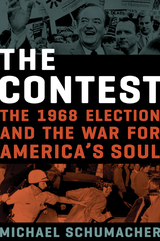
A dramatic, deeply informed account of one of the most consequential elections and periods in American history
1968—rife with riots, assassinations, anti–Vietnam War protests, and realpolitik—was one of the most tumultuous years in the twentieth century, culminating in one of the most consequential presidential elections in American history. The Contest tells the story of that contentious election and that remarkable year. Bringing a fresh perspective to events that still resonate half a century later, this book is especially timely, giving us the long view of a turning point in American culture and politics.
Author Michael Schumacher sets the stage with a deep look at the people with important roles in the unfolding drama: Lyndon B. Johnson, Robert F. Kennedy, Eugene McCarthy, George Wallace, Richard Nixon, and especially Hubert H. Humphrey, whose papers and journals afford surprising new insights. Following these politicians in the lead-up to the primaries, through the chaotic conventions, and down the home stretch to the general election, The Contest combines biographical and historical details to create a narrative as intimate in human detail as it is momentous in scope and significance.
An election year when the competing forces of law and order and social justice were on the ballot, the Vietnam War divided the country, and the liberal regime begun with Franklin D. Roosevelt was on the defensive, 1968 marked a profound shift in the nation’s culture and sense of itself. Thorough in its research and spellbinding in the telling, Schumacher’s book brings sharp focus to that year and its lessons for our current critical moment in American politics.

Controversial American-led radio initiatives sparked a kaleidoscope of conflicts and rivalries from the medium’s earliest days through the end of World War II. Michael A. Krysko explores how the medium engaged the knowledge, assumptions, and prejudices that fueled listeners’ and policymakers’ objections to foreign and unwelcome radio content.
Krysko considers Americans’ antagonism toward non-English language broadcasting; issues of identity, geography, and sovereignty that propelled opposition to Mexico’s “border blaster” stations; how a project aimed at helping Cajun-speaking listeners became a French-only celebration of Acadian culture; a failed initiative to teach English to Latin Americans via shortwave broadcasting; enduring US-Panamanian conflicts over the control of radio in and around the Panama Canal; and how farmers from across the Southwest protested a radio treaty’s perceived preferential treatment of Cuba. Paying particular attention to the act of listening, Krysko shows how these initiatives illuminated and solidified divisions rooted in identity, nationalism, and prejudice.
Clear and wide-ranging, Contested Airwaves reveals early radio’s place at the nexus of public programming, transnational relations, and its own evolution as a communication medium.
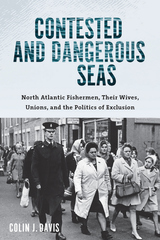
During the 1960s and 1970s, these seafaring workers experienced new hardships. As modern fleets from many nations intensified their hunt for fish, they found themselves in increasing competition for disappearing prey. Colin J. Davis details the unfolding drama as New England and British fishermen and their wives, partners, and families reacted to this competition. Rather than acting as bystanders to these crises, the men and women chronicled in Contested and Dangerous Seas became fierce advocates for the health of the Atlantic Ocean fisheries and for their families' livelihoods.

This book expands our understanding of evangelical itinerancy in the 1740s by viewing it within the context of Britain’s expanding commercial empire. As pro- and anti-revivalists tried to shape a burgeoning transatlantic consumer society, the itinerancy of the Great Awakening appears here as a forceful challenge to contemporary assumptions about the place of individuals within their social world and the role of educated leaders as regulators of communication, order, and change. The most celebrated of these itinerants was George Whitefield, an English minister who made unprecedented tours through the colonies. According to Hall, the activities of the itinerants, including Whitefield, encouraged in the colonists an openness beyond local boundaries to an expanding array of choices for belief and behavior in an increasingly mobile and pluralistic society. In the process, it forged a new model of the church and its social world.
As a response to and a source of dynamic social change, itinerancy in Hall’s powerful account provides a prism for viewing anew the worldly and otherworldly transformations of colonial society. Contested Boundaries will be of interest to students and scholars of colonial American history, religious studies, and cultural and social anthropology.
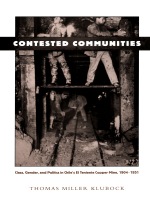
Klubock shows how a militant working-class community was established through the interplay between capitalist development, state formation, and the ideologies of gender. In describing how the North American copper company attempted to reconfigure and reform the work and social-cultural lives of men and women who migrated to the mine, Klubock demonstrates how struggles between labor and capital took place on a gendered field of power and reconstituted social constructions of masculinity and femininity. As a result, Contested Communities describes more accurately than any previous study the nature of grassroots labor militancy, working-class culture, and everyday politics of gender relations during crucial years of the Chilean Popular Front in the 1930s and 1940s.
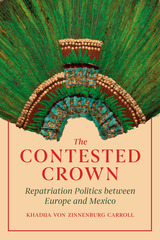
In The Contested Crown, Khadija von Zinnenburg Carroll meditates on the case of a spectacular feather headdress believed to have belonged to Montezuma, emperor of the Aztecs. This crown has long been the center of political and cultural power struggles, and it is one of the most contested museum claims between Europe and the Americas. Taken to Europe during the conquest of Mexico, it was placed at Ambras Castle, the Habsburg residence of the author’s ancestors, and is now in Vienna’s Welt Museum. Mexico has long requested to have it back, but the Welt Museum uses science to insist it is too fragile to travel.
Both the biography of a cultural object and a history of collecting and colonizing, this book offers an artist’s perspective on the creative potentials of repatriation. Carroll compares Holocaust and colonial ethical claims, and she considers relationships between indigenous people, international law and the museums that amass global treasures, the significance of copies, and how conservation science shapes collections. Illustrated with diagrams and rare archival material, this book brings together global history, European history, and material culture around this fascinating object and the debates about repatriation.
What began in fits and starts in activism and educational materials across the late twentieth century led to the passage of California’s landmark FAIR Education Act in 2011, ensuring that LGBTQ history has a place in the K–12 classroom. Historian Don Romesburg, the lead scholar who worked with advocacy organizations to pass the act, recounts the decades-long struggle to integrate LGBTQ content into history education policy, textbooks, and classrooms. Looking at California and states that followed its lead, he assesses the challenges and opportunities presented by this new way of teaching history. Romesburg’s powerful case for LGBTQ-inclusive education is all the more urgent in this era of anti-gay book bans, regressive legislation, and attempts to diminish the vital role that inclusive and honest history education should play in a democratic nation.
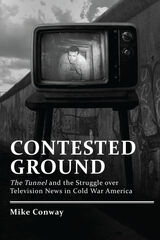
It was not just The Tunnel's subject matter that sparked controversy, but the medium itself. The surprisingly fast ascendance of television news as the country's top choice for information threatened the self-defined supremacy of print journalism and the de facto cooperation of government officials and reporters on Cold War issues. In Contested Ground, Mike Conway argues that the production and reception of television news and documentaries during this period reveals a major upheaval in American news communications.
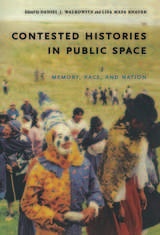
Several contributors examine how the experiences of indigenous groups and the imperial past are incorporated into public histories in British Commonwealth nations: in Te Papa, New Zealand’s national museum; in the First Peoples’ Hall at the Canadian Museum of Civilization; and, more broadly, in late-twentieth-century Australian culture. Still others focus on the role of governments in mediating contested racialized histories: for example, the post-apartheid history of South Africa’s Voortrekker Monument, originally designed as a tribute to the Voortrekkers who colonized the country’s interior. Among several essays describing how national narratives have been challenged are pieces on a dispute over how to represent Nepali history and identity, on representations of Afrocuban religions in contemporary Cuba, and on the installation in the French Pantheon in Paris of a plaque honoring Louis Delgrès, a leader of Guadeloupean resistance to French colonialism.
Contributors. Paul Amar, Paul Ashton, O. Hugo Benavides, Laurent Dubois, Richard Flores, Durba Ghosh, Albert Grundlingh, Paula Hamilton, Lisa Maya Knauer, Charlotte Macdonald, Mark Salber Phillips, Ruth B. Phillips, Deborah Poole, Anne M. Rademacher, Daniel J. Walkowitz
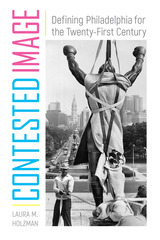
Thomas Eakins’ 1875 painting, The Gross Clinic, the Rocky Statue, andthe Barnes Foundation are all iconic in Philadelphia for different reasons. But around the year 2000, this painting, this sculpture, and this entire art collection, respectively, generated extended—and heated—controversies about the “appropriate” location for each item. Contested Image revisits the debates that surrounded these works of visual culture and how each item changed through acts of reception—through the ways that viewers looked at, talked about, and used these objects to define their city.
Laura Holzman investigates the negotiations and spirited debates that affected the city of Philadelphia’s identity and its public image. She considers how the region’s cultural resources reshaped the city’s reputation as well as delves into discussions about official efforts to boost local spirit. In tracking these “contested images,” Holzman illuminates the messy process of public envisioning of place and the ways in which public dialogue informs public meaning of both cities themselves and the objects of urban identity.
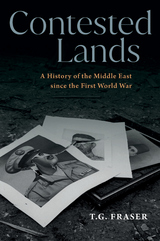
Until the First World War, the Ottoman Empire had dominated the Middle East for four centuries. Its collapse, coupled with the subsequent clash of European imperial policies, unleashed a surge of political feelings among the people of the Middle East as they vied for national self-determination. Over the century that followed, the region has become almost synonymous with unrest and conflict.
An accessible survey of the last century, Contested Lands tells the story of what happened in the Middle East and what it means today. T. G. Fraser analyzes the fault lines of the tension, including the damage brought by imperialism, the creation of the State of Israel, competition between secular rulers and emerging democratic and theocratic forces, and the rise of Arab Nationalism in the face of fraying regional alliances and the Islamic revival. Fraser offers a close look at how the events of the twenty-first century—the tragedy of 9/11, the Arab Spring, and Syria’s civil war—have combined with complex social and economic changes to transform the region. Untangling the history of the Middle East, this book offers a detailed and insightful picture of the region and why its heritage remains important today.
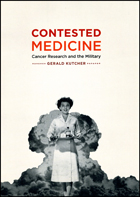
In the 1960s University of Cincinnati radiologist Eugene Saenger infamously conducted human experiments on patients with advanced cancer to examine how total body radiation could treat the disease. But, under contract with the Department of Defense, Saenger also used those same patients as proxies for soldiers to answer questions about combat effectiveness on a nuclear battlefield.
Using the Saenger case as a means to reconsider cold war medical trials, Contested Medicine examines the inherent tensions at the heart of clinical studies of the time. Emphasizing the deeply intertwined and mutually supportive relationship between cancer therapy with radiation and military medicine, Gerald Kutcher explores post–World War II cancer trials, the efforts of the government to manage clinical ethics, and the important role of military investigations in the development of an effective treatment for childhood leukemia. Whereas most histories of human experimentation judge research such as Saenger’s against idealized practices, Contested Medicine eschews such an approach and considers why Saenger’s peers and later critics had so much difficulty reaching an unambiguous ethical assessment. Kutcher’s engaging investigation offers an approach to clinical ethics and research imperatives that lays bare many of the conflicts and tensions of the postwar period.
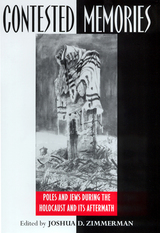
This collection of essays, representing three generations of Polish and Jewish scholars, is the first attempt since the fall of Communism to reassess the existing historiography of Polish-Jewish relations just before, during, and after the Second World War. In the spirit of detached scholarly inquiry, these essays fearlessly challenge commonly held views on both sides of the debates. The authors are committed to analyzing issues fairly and to reaching a mutual understanding. Contributors cover six topics:
1. The prewar legacy
2. The deterioration of Polish-Jewish relations during the first years of the war
3. Institutional Polish responses to the Nazi Final Solution
4. Poles and the Polish nation through Jewish eyes
5. The destruction of European Jewry and Polish popular opinion
6. Polish-Jewish relations since 1945
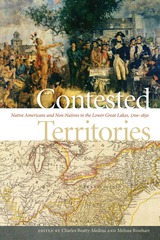
A remarkable multifaceted history, Contested Territories examines a region that played an essential role in America's post-revolutionary expansion—the Lower Great Lakes region, once known as the Northwest Territory. As French, English, and finally American settlers moved westward and intersected with Native American communities, the ethnogeography of the region changed drastically, necessitating interactions that were not always peaceful. Using ethnohistorical methodologies, the seven essays presented here explore rapidly changing cultural dynamics in the region and reconstruct in engaging detail the political organization, economy, diplomacy, subsistence methods, religion, and kinship practices in play. With a focus on resistance, changing worldviews, and early forms of self-determination among Native Americans, Contested Territories demonstrates the continuous interplay between actor and agency during an important era in American history.
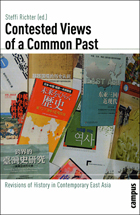
-From the conclusion
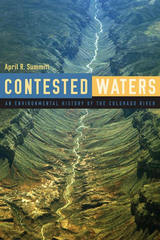
The Colorado River is a vital resource to urban and agricultural communities across the Southwest, providing water to 30 million people. Contested Waters tells the river's story-a story of conquest, control, division, and depletion.
Beginning in prehistory and continuing into the present day, Contested Waters focuses on three important and often overlooked aspects of the river's use: the role of western water law in its over-allocation, the complexity of power relationships surrounding the river, and the concept of sustainable use and how it has been either ignored or applied in recent times. It is organized in two parts, the first addresses the chronological history of the river and long-term issues, while the second examines in more detail four specific topics: metropolitan perceptions, American Indian water rights, US-Mexico relations over the river, and water marketing issues. Creating a complete picture of the evolution of this crucial yet over-utilized resource, this comprehensive summary will fascinate anyone interested in the Colorado River or the environmental history of the Southwest.
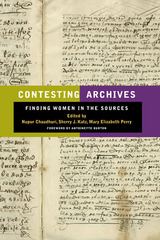
The contributors of Contesting Archives challenge the assumption that an archive is a neutral, immutable, and a historical repository of information. Instead, these historians view it as a place where decisions are made about whose documents--and therefore whose history--is important. Finding that women's voices and their texts were often obscured or lost altogether, they have developed many new methodologies for creating unique archives and uncovering more evidence by reading documents "against the grain," weaving together many layers of information to reveal complexities and working collectively to reconstruct the lives of women in the past.
Global in scope, this volume demonstrates innovative research on diverse women from the sixteenth century to the present in Spain, Mexico, Tunisia, India, Iran, Poland, Mozambique, and the United States. Addressing gender, race, class, nationalism, transnationalism, and migration, these essays' subjects include indigenous women of colonial Mexico, Muslim slave women, African American women of the early twentieth century, Bengali women activists of pre-independence India, wives and daughters of Qajar rulers in Iran, women industrial workers in communist Poland and socialist Mozambique, and women club owners in modern Las Vegas. A foreword by Antoinette Burton adroitly synthesizes the disparate themes woven throughout the book.
Contributors are Janet Afary, Maryam Ameli-Rezai, Antoinette Burton, Nupur Chaudhuri, Julia Clancy-Smith, Mansoureh Ettehadieh, Malgorzata Fidelis, Joanne L. Goodwin, Kali Nicole Gross, Daniel S. Haworth, Sherry J. Katz, Elham Malekzadeh, Mary Elizabeth Perry, Kathleen Sheldon, Lisa Sousa, and Ula Y. Taylor.

In Contesting Medical Confidentiality, Andreas-Holger Maehle travels back to the origins of this increasingly relevant issue. He offers the first comparative analysis of professional and public debates on medical confidentiality in the United States, Britain, and Germany during the late nineteenth and early twentieth centuries, when traditional medical secrecy first came under pressure from demands of disclosure in the name of public health. Maehle structures his study around three representative questions of the time that remain salient today: Do physicians have a privilege to refuse court orders to reveal confidential patient details? Is there a medical duty to report illegal procedures to the authorities? Should doctors breach confidentiality in order to prevent the spread of disease? Considering these debates through a unique historical perspective, Contesting Medical Confidentiality illuminates the ethical issues and potentially grave consequences that continue to stir up public debate.
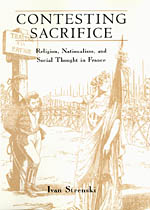
Strenski suggests that the annihilating spirituality rooted in the Catholic model of Eucharistic sacrifice persuaded the judges in the Dreyfus Case to overlook or play down his possible innocence because a scapegoat was needed to expiate the sins of France and save its army from disgrace. Strenski also suggests that the French army's strategy in World War I, French fascism, and debates over public education and civic morals during the Third Republic all owe much to Catholic theology of sacrifice and Protestant reinterpretations of it. Pointing out that every major theorist of sacrifice is French, including Bataille, Durkheim, Girard, Hubert, and Mauss, Strenski argues that we cannot fully understand their work without first taking into account the deep roots of sacrificial thought in French history.
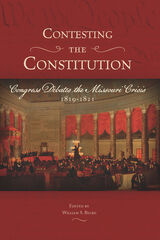
The larger question with which the legislators grappled were the limits of the Constitution’s provisions granting Congress the authority to affect the institution of slavery—both where it already existed and where it could expand. The issue—what would come to be known as the Missouri Crisis—severely tested the still young republic and, some four decades later, would all but rend it asunder. This timely collection of original essays thoughtfully engages the intersections of history and constitutional law, and is certain to find eager readers among historians, legal scholars, political scientists, as well as many who call Missouri home.
Contributing Authors:
William S. Belko
Christopher Childers
John Eastman
Brook Poston
John R. Van Atta
Critically examining past master narratives in light of emerging alternatives, these essayists ask us to reevaluate the stories we tell, the narrative traditions within which they are situated, and the audiences they are designed to persuade. The first essays explore the gendered character of social history rhetoric by exposing alternative, feminist traditions of social scientific and social historical writing. The second section focuses on alternative narrative traditions of historical writing in non-European contexts, specifically India, Japan, and China. And the third group spotlights the rhetorical uses of synthesis in the writings of social historians.
The essays feature the range of narrative possibilities available to historians who have become self-critical about the pervasive use of unexamined master narratives; they show how limited that tradition can be compared with the diverse alternatives derived from, for example, gendered traditions of Latin American travel writers of the nineteenth century, Victorian women's historical writing, or the lively subaltern tradition in Indian social history. Together they argue not for the abandonment of historical materialism or the elimination of all master narratives but for the reinvigoration of social history through the use of new and more persuasive arguments based on alternative narratives.
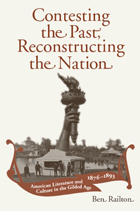
In this study of Gilded Age literature and culture, Ben Railton proposes that in the years after Reconstruction, America’s identity was often contested through distinct and competing conceptions of the nation’s history. He argues that the United States moved toward unifying and univocal historical narratives in the years between the Centennial and Columbian Expositions, that ongoing social conflict provided sites for complications of those narratives, and that works of historical literature offer some of the most revealing glimpses into the nature of those competing visions.
Gilded Age scholarship often connects the period to the 20th-century American future, but Railton argues that it is just as crucial to see how the era relates to the American past. He closely analyzes the 1876 and 1893 Expositions, finding that many of the period’s central trends, from technology to imperialism, were intimately connected to particular visions of the nation’s history. Railton’s concern is with four key social questions: race, Native Americans, women, and the South. He provides close readings of a number of texts for the ways they highlight these issues. He examines established classics (The Adventures of Huck Finn and The Bostonians); newer additions to the canon (The Conjure Woman, Life Among the Piutes, The Story of Avis); largely forgotten best-sellers (Uncle Remus, The Grandissimes); unrecovered gems (Ploughed Under, Where the Battle Was Fought); and autobiographical works by Douglass and Truth, poems by Harper and Piatt, and short stories by Woolson and Cook.
These readings, while illuminating the authors themselves, contribute to ongoing conversations over historical literature’s definition and value, and a greater understanding of not only American society in the Gilded Age, but also debates on our shared but contested history that remain very much alive in the present.
An essential resource exploring orality and literacy in the pre-Hellenistic southern Levant and the Hebrew Bible
Situated historically between the invention of the alphabet, on the one hand, and the creation of ancient Israel's sacred writings, on the other, is the emergence of literary production in the ancient Levant. In this timely collection of essays by an international cadre of scholars, the dialectic between the oral and the written, the intersection of orality with literacy, and the advent of literary composition are each explored as a prelude to the emergence of biblical writing in ancient Israel. Contributors also examine a range of relevant topics including scripturalization, the compositional dimensions of orality and textuality as they engage biblical poetry, prophecy, and narrative along with their antecedents, and the ultimate autonomy of the written in early Israel. The contributors are James M. Bos, David M. Carr, André Lemaire, Robert D. Miller II, Nadav Na'aman, Raymond F. Person Jr., Frank H. Polak, Christopher A. Rollston, Seth L. Sanders, Joachim Schaper, Brian B. Schmidt, William M. Schniedewind, Elsie Stern, and Jessica Whisenant.
Features
- Addresses questions of literacy and scribal activity in the Levant and Negev
- Articles examine memory, oral tradition, and text criticism
- Discussion of the processes of scripturalization
The U.S.-Mexico borderlands have long supported a web of relationships that transcend the U.S. and Mexican nations. Yet national histories usually overlook these complex connections. Continental Crossroads rediscovers this forgotten terrain, laying the foundations for a new borderlands history at the crossroads of Chicano/a, Latin American, and U.S. history. Drawing on the historiographies and archives of both the U.S. and Mexico, the authors chronicle the transnational processes that bound both nations together between the early nineteenth century and the 1940s, the formative era of borderlands history.
A new generation of borderlands historians examines a wide range of topics in frontier and post-frontier contexts. The contributors explore how ethnic, racial, and gender relations shifted as a former frontier became the borderlands. They look at the rise of new imagined communities and border literary traditions through the eyes of Mexicans, Anglo-Americans, and Indians, and recover transnational border narratives and experiences of African Americans, Chinese, and Europeans. They also show how surveillance and resistance in the borderlands inflected the “body politics” of gender, race, and nation. Native heroine Bárbara Gandiaga, Mexican traveler Ignacio Martínez, Kiowa warrior Sloping Hair, African American colonist William H. Ellis, Chinese merchant Lee Sing, and a diverse cast of politicos and subalterns, gendarmes and patrolmen, and insurrectos and exiles add transnational drama to the formerly divided worlds of Mexican and U.S. history.
Contributors. Grace Peña Delgado, Karl Jacoby, Benjamin Johnson, Louise Pubols, Raúl Ramos, Andrés Reséndez, Bárbara O. Reyes, Alexandra Minna Stern, Samuel Truett, Elliott Young
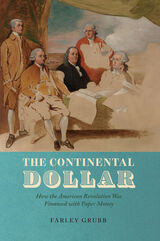
The Continental Dollar is a revelatory history of how the fledgling United States paid for its first war. Farley Grubb upends the common telling of this story, in which the United States printed cross-colony money, called Continentals, to serve as an early fiat currency—a currency that is not tied to a commodity like gold, but rather to a legal authority. As Grubb details, the Continental was not a fiat currency, but a “zero-coupon bond”—a wholly different species of money. As bond payoffs were pushed into the future, the money’s value declined, killing the Continentals’ viability years before the Revolutionary War would officially end.
Drawing on decades of exhaustive mining of eighteenth-century records, The Continental Dollar is an essential origin story of the early American monetary system, promising to serve as the benchmark for critical work for decades to come.
READERS
Browse our collection.
PUBLISHERS
See BiblioVault's publisher services.
STUDENT SERVICES
Files for college accessibility offices.
RECENTLY PUBLISHED



UChicago Accessibility Resources
home | accessibility | search | about | contact us
BiblioVault ® 2001 - 2026
The University of Chicago Press