
 A SCHOLARLY BOOK REPOSITORY
2474 start with C start with C
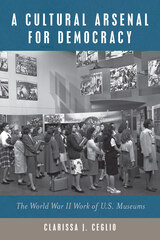
Unsurprisingly, exhibitions served as the primary vehicle through which museums, large and small, engaged their publics with wartime topics with fare ranging from displays on the cultures of Allied nations to "living maps" that charted troop movements and exhibits on war preparedness. Clarissa J. Ceglio chronicles debates, experiments, and collaborations from the 1930s to the immediate postwar years, investigating how museums re-envisioned the exhibition as a narrative medium and attempted to reconcile their mission with new modes of storytelling.

Cultural Chinese: Readings in Art, Literature, and History is an advanced language textbook with a new approach to cultural integration and immersion. In this unique book, culture becomes the very core of language learning, transitioning its role from context to text.
This textbook is ideal for courses in advanced Chinese and Chinese culture. Third- and fourth-year students and instructors will find themselves deeply immersed in the very fabric of Chinese culture that governs personal behavior and directs social dynamics.
FEATURES:
• Each of nine lessons features a distinctive topic of Chinese culture that serves as a portal to Chinese perceptions and perspectives.
• Main text of each lesson begins with a brief introduction and is further illustrated with two historical or mythological stories that inform Chinese values and attitudes.
• Additional mini-stories challenge students’ abilities of cultural interpretation.
• Includes a total of twenty-seven stories familiar to every educated Chinese person that will prepare students for meaningful communication and understanding.
• Each lesson includes more than ten sections of exercises intertwined with culture, including vocabulary and idioms, historical information, linguistic points, translation exercises, and online research required for debate, composition, and storytelling.

Why did the invasion of Iraq result in cultural destruction and killings of intellectuals? Convention sees accidents of war and poor planning in a campaign to liberate Iraqis. The authors argue instead that the invasion aimed to dismantle the Iraqi state to remake it as a client regime.
Post-invasion chaos created conditions under which the cultural foundations of the state could be undermined. The authors painstakingly document the consequences of the occupiers' willful inaction and worse, which led to the ravaging of one of the world's oldest recorded cultures. Targeted assassination of over 400 academics, kidnapping and the forced flight of thousands of doctors, lawyers, artists and other intellectuals add up to cultural cleansing.
This important work lays to rest claims that the invasion aimed to free an educated population to develop its own culture of democracy.

Chapters on Lionel Trilling, H. L. Mencken and Irving Babbitt, Ralph Ellison, Dwight Macdonald, Diana Trilling, and Edmund Wilson affirm the continuing pertinence of their work to today's concerns. Seaton then turns to the careers of Leslie Fiedler and Susan Sontag to explore the impact of the cultural radicalism of the sixties on literary criticism. Subsequent chapters analyze the successes and failures of contemporary cultural studies through the writings of Richard Rorty, Edward Said, Stanley Fish and Fredric Jameson.
Separately, these chapters provide provocative readings of the individual critics; together they make a case for the tradition exemplified by these critics as an alternative to contemporary cultural studies. The issues the book discusses extend beyond literary criticism and the academic world to the political-religious- cultural conflicts of today's culture wars.
"These lively, closely argued essays explain very clearly what the issues are, how they arose, and why they are important." --Christopher Lasch
"A forceful argument about the relationship between literary studies and politics that will add something important to the vigorous, and often fierce, discussion of the canon, the politics of literature, and educational reform."--William Cain, Wellesley College
James Seaton is Professor of English, Michigan State University. He is co-editor, with William K. Buckley, of Beyond Cheering and Bashing: New Perspectives on the Closing of the American Mind.
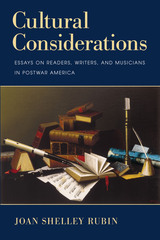
Focusing on aspects of American literary and musical culture in the decades after World War II, Rubin examines the contests between critics and their readers over the authority to make aesthetic judgments; the effort of academics to extend the university outward by bringing the humanities to a wide public; the politics of setting poetic texts to music; the role of ideology in the practice of commissioning and performing choral works; and the uses of reading in the service of both individualism and community. Specific topics include the 1957 attack by the critic John Ciardi on the poetry of Anne Morrow Lindbergh in the Saturday Review; the radio broadcasts of the classicist Gilbert Highet; Dwight Macdonald's vitriolic depiction of the novelist James Gould Cozzens as a pernicious middlebrow; the composition and reception of Howard Hanson's "Song of Democracy"; the varied career of musician Gunther Schuller; the liberal humanism of America's foremost twentieth-century choral conductor, Robert Shaw; and the place of books in the student and women's movements of the 1960s.
What unites these essays is the author's ongoing concern with cultural boundaries, mediation, and ideology--and the contradictions they frequently entail.
Certificate of Commendation, American Association of State and Local History
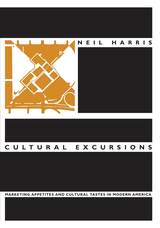
The essays fall into three general sections: the first treats the history of cultural institutions, highlighting the role of museums; the second section focuses on some literary, artistic, and entrepreneurial responses to the new mass culture; and the final group of essays explores the social history of art and architecture. Throughout Harris's diverse writings certain themes recur—the redefining of boundaries between high art and popular culture, the relationship between public taste and technological change, and the very notion of what constitutes a shared social experience. Harris's pioneering work has broadened the field of cultural history and encouraged whole new areas of inquiry. Cultural Excursions will be useful for those in American and culture studies, as well as for the general reader trying to make sense of the culture in which we live.
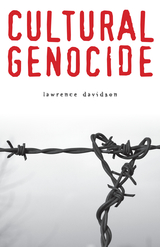
Most scholars of genocide focus on mass murder. Lawrence Davidson, by contrast, explores the murder of culture. He suggests that when people have limited knowledge of the culture outside of their own group, they are unable to accurately assess the alleged threat of others around them. Throughout history, dominant populations have often dealt with these fears through mass murder. However, the shock of the Holocaust now deters today’s great powers from the practice of physical genocide. Majority populations, cognizant of outside pressure and knowing that they should not resort to mass murder, have turned instead to cultural genocide as a “second best” politically determined substitute for physical genocide.
In Cultural Genocide, this theory is applied to events in four settings, two events that preceded the Holocaust and two events that followed it: the destruction of American Indians by uninformed settlers who viewed these natives as inferior and were more intent on removing them from the frontier than annihilating them; the attack on the culture of Eastern European Jews living within Russian-controlled areas before the Holocaust; the Israeli attack on Palestinian culture; and the absorption of Tibet by the People’s Republic of China.
In conclusion, Davidson examines the mechanisms that may be used to combat today’s cultural genocide as well as the contemporary social and political forces at work that must be overcome in the process.
All across the humanities fields there is a new interest in materials and materiality. This is the first book to capture and study the “material turn” in the humanities from all its varied perspectives. Cultural Histories of the Material World brings together top scholars from all these different fields—from Art History, Anthropology, Archaeology, Classics, Folklore, History, History of Science, Literature, Philosophy—to offer their vision of what cultural history of the material world looks like and attempt to show how attention to materiality can contribute to a more precise historical understanding of specific times, places, ways, and means. The result is a spectacular kaleidoscope of future possibilities and new perspectives.
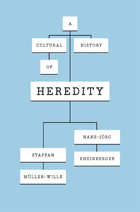
It was only around 1800 that heredity began to enter debates among physicians, breeders, and naturalists. Soon thereafter it evolved into one of the most fundamental concepts of biology. Here Staffan Müller-Wille and Hans-Jörg Rheinberger offer a succinct cultural history of the scientific concept of heredity. They outline the dramatic changes the idea has undergone since the early modern period and describe the political and technological developments that brought about these changes.
Müller-Wille and Rheinberger begin with an account of premodern theories of generation, showing that these were concerned with the procreation of individuals rather than with hereditary transmission. The authors reveal that when hereditarian thinking first emerged, it did so in a variety of cultural domains, such as politics and law, medicine, natural history, breeding, and anthropology. Müller-Wille and Rheinberger then track theories of heredity from the late nineteenth century—when leading biologists considered it in light of growing societal concerns with race and eugenics—through the rise of classical and molecular genetics in the twentieth century, to today, as researchers apply sophisticated information technologies to understand heredity. What readers come to see from this exquisite history is why it took such a long time for heredity to become a prominent concept in the life sciences and why it gained such overwhelming importance in those sciences and the broader culture over the last two centuries.

When the first Disneyland opened its doors in 1955, it reinvented the American amusement park and transformed the travel, tourism, and entertainment industries forever. Now a global vacation empire, the original park in Anaheim, California, has been joined by massive complexes in Florida, Tokyo, Paris, Hong Kong, and Shanghai.
Spanning six decades, three continents, and five distinct cultures, Sabrina Mittermeier presents an interdisciplinary examination of the parks, situating them in their proper historical context and exploring the distinct cultural, social, and economic landscapes that defined each one at the time of its construction. Mittermeier then spotlights the central role of class in the subsequent success or failure of each venture. The first comparative study of the Disney theme parks, the book closes a significant gap in existing research and is an important new contribution to the field.
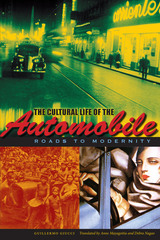
From its invention in Europe at the end of the nineteenth century, the automobile crisscrossed the world, completely took over the cities, and became a feature of daily life. Considered basic to the American lifestyle, the car reflected individualism, pragmatism, comfort, and above all modernity. In Latin America, it served as a symbol of distinction, similar to jewelry or fine clothing. In The Cultural Life of the Automobile, Guillermo Giucci focuses on the automobile as an instrument of social change through its “kinetic modernity” and as an embodiment of the tremendous social impact of technology on cultural life.
Material culture—how certain objects generate a wide array of cultural responses—has been the focus of much scholarly discussion in recent years. The automobile wrought major changes and inspired images in language, literature, and popular culture. Focusing primarily on Latin America but also covering the United States, Europe, Asia, and Africa, Giucci examines how the automobile was variously adapted by different cultures and how its use shaped and changed social and economic relationships within them. At the same time, he shows how the “automobilization” of society became an essential support for the development of modern individualism, and the automobile its clearest material manifestation.

Limited to neither a single discipline nor a particular intellectual figure, this book comprehensively views British cultural Marxism in terms of the dialogue between historians and the originators of cultural studies and in its relationship to the new left and feminist movements. From the contributions of Eric Hobsbawm, Christopher Hill, Rodney Hilton, Sheila Rowbotham, Catherine Hall, and E. P. Thompson to those of Perry Anderson, Barbara Taylor, Raymond Williams, Dick Hebdige, and Stuart Hall, Dworkin examines the debates over issues of culture and society, structure and agency, experience and ideology, and theory and practice. The rise, demise, and reorganization of journals such as The Reasoner, The New Reasoner, Universities and Left Review, New Left Review, Past and Present, are also part of the history told in this volume. In every instance, the focus of Dworkin’s attention is the intellectual work seen in its political context. Cultural Marxism in Postwar Britain captures the excitement and commitment that more than one generation of historians, literary critics, art historians, philosophers, and cultural theorists have felt about an unorthodox and critical tradition of Marxist theory.

Singleton develops the concept of "cultural melancholy" as a response to scholarship that calls for the separation of critical race studies and psychoanalysis, excludes queer theoretical approaches from readings of African American literatures and cultures, and overlooks the status of racialized performance culture as a site of serious academic theorization. In doing so, he weaves critical race studies, psychoanalysis, queer theory, and performance studies into conversation to uncover a host of hidden dialogues—psychic and social, personal and political, individual and collective—for the purpose of promoting a culture of racial grieving, critical race consciousness, and collective agency.
Wide-ranging and theoretically bold, Cultural Melancholy counteracts the racial legacy effects that plague our twenty-first century multiculture.
This is the first text to document in detail the variegated responses of British artists to postwar America and its art, criticism and mass media. Their reactions that ranged from Americanism – enthusiasm and compliance – to Anti-Americanism – criticism and resistance. Covering significant art movements such as Abstract Expressionism, the Independent Group and Pop Art, Walker synthesises information from hundreds of published sources and interviews to paint a vivid picture of a crucial period in British culture.
Many of the critics, painters and sculptors featured – Lawrence Alloway, Peter Blake, Reyner Banham, Anthony Caro, Clement Greenberg, David Hockney, Richard Hamilton, R.B. Kitaj, John Latham, Claes Oldenburg, Eduardo Paolozzi, Herbert Read, Bridget Riley, Larry Rivers – are now internationally famous. The study is brought up to date with an overview of the decline in American influence during in the 1980s and 1990s and the rise of Brit Art.
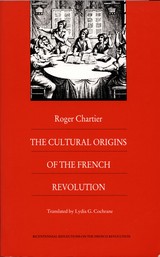
Chartier has set himself two important tasks. First, while acknowledging the seminal contribution of Daniel Mornet’s Les origens intellectuelles de la Révolution française (1935), he synthesizes the half-century of scholarship that has created a sociology of culture for Revolutionary France, from education reform through widely circulated printed literature to popular expectations of government and society. Chartier goes beyond Mornet’s work, not be revising that classic text but by raising questions that would not have occurred to its author.
Chartier’s second contribution is to reexamine the conventional wisdom that there is a necessary link between the profound cultural transformation of the eighteenth century (generally characterized as the Enlightenment) and the abrupt Revolutionary rupture of 1789. The Cultural Origins of the French Revolution is a major work by one of the leading scholars in the field and is likely to set the intellectual agenda for future work on the subject.
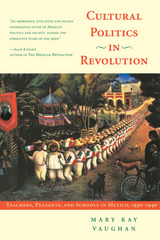
To show the significance of this facet of the Revolution, Mary Kay Vaughan analyzes the educational effort of the state during the 1930s, locating it within the broader sweep of Mexican history to illustrate how the government sought to nationalize and modernize rural society. Vaughan focuses on activities in rural schools, where central state policy makers, teachers, and people of the countryside came together to forge a national culture. She examines the cultural politics of schooling in four rural societies in the states of Sonora and Puebla that are representative of the peasant societies in revolutionary Mexico, and she shows how the state's program of socialist education became an arena for intense negotiations over power, culture, knowledge, rights, and gender practices. The real cultural revolution, Vaughan observes, lay not in the state's efforts at socialist education but in the dialogue between state and society that took place around this program. In the 1930s, rural communities carved out a space to preserve their local identities while the state succeeded in nurturing a multi-ethnic nationalism based on its promise of social justice and development.
Vaughan brings to her analysis a comparative understanding of peasant politics and educational history, extensive interviews, and a detailed examination of national, regional, and local archives to create an evocative and informative study of Mexican politics and society during modern Mexico's formative years. Cultural Politics in Revolution clearly shows that only by expanding the social arena in which culture was constructed and contested can we understand the Mexican Revolution's real achievements.
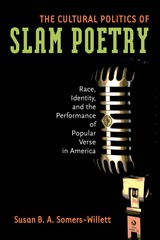
"For a lucid and thorough 'real-world' analysis of the movement from the ground-up--including its history, aesthetics, and culture, there is surely no better place to start than Somers-Willett's trailblazing book."
--- Jerome Sala, Pleiades
"Finally, a clear, accurate, and thoroughly researched examination of slam poetry, a movement begun in 1984 by a mixed bag of nobody poets in Chicago. At conception, slam poetry espoused universal humanistic ideals and a broad spectrum of participants, and especially welcome is the book's analysis of how commercial marketing forces succeeded in narrowing public perception of slam to the factionalized politics of race and identity. The author's knowledge of American slam at the national level is solid and more authentic than many of the slammers who claim to be."
---Marc Kelly Smith, founder/creator of the International Poetry Slam movement
The cultural phenomenon known as slam poetry was born some twenty years ago in white working-class Chicago barrooms. Since then, the raucous competitions have spread internationally, launching a number of annual tournaments, inspiring a generation of young poets, and spawning a commercial empire in which poetry and hip-hop merge.
The Cultural Politics of Slam Poetry is the first critical book to take an in-depth look at slam, shedding light on the relationships that slam poets build with their audiences through race and identity performance and revealing how poets come to celebrate (and at times exploit) the politics of difference in American culture.
With a special focus on African American poets, Susan B. A. Somers-Willett explores the pros and cons of identity representation in the commercial arena of spoken word poetry and, in doing so, situates slam within a history of verse performance, from blackface minstrelsy to Def Poetry. What's revealed is a race-based dynamic of authenticity lying at the heart of American culture. Rather than being mere reflections of culture, Somers-Willett argues, slams are culture---sites where identities and political values get publicly refigured and exchanged between poets and audiences.
Susan B. A. Somers-Willett is a decade-long veteran of slam and teaches creative writing and poetics as an Assistant Professor of English at Montclair State University. She is the author of two books of poetry, Quiver and Roam. Visit the author's website at: http://www.susansw.com/.
Photo by Jennifer Lacy.
Based on a research project funded by the Swedish Research Council, this book examines 40 years of post-war independent immigrant filmmaking in Sweden. John Sundholm and Lars Gustaf Andersson consider the creativity that lies in the state of exile, offering analyses of over 50 rarely seen immigrant films that would otherwise remain invisible and unarchived. They shed light on the complex web of personal, economic, and cultural circumstances that surround migrant filmmaking, discuss associations that became important sites of self-organization for exiled filmmakers, and explore the cultural practice of minor immigrant cinema archiving. The Cultural Practice of Immigrant Filmmaking applies film theory to immigrant filmmaking in a transnational context, exploring how immigrant filmmakers use film to find a place in a new cultural situation.

Addressing the increasing significance of digital platforms, this work examines the transformative roles of over-the-top streaming services—Netflix, Viki, and V Live—video-sharing platforms such as YouTube, and social media platforms such as TikTok and Instagram, and the power relations between content producers, information technology sectors, the government, creative laborers, and audiences in the globalization of Korean culture and media. By developing critical cultural industries studies as a new theoretical framework, Cultural Production of Hallyu in the Digital Platform Era explores the ever-growing Korean Wave phenomenon with the advent of global digital platforms.
A complex portrait of postdictatorial Chile by one of that country’s most incisive cultural critics, this book uses memoirs, photographs, the plastic arts, novels, and other texts—the “residues” of a culture—to analyze the political-cultural Chilean landscape in the wake of Augusto Pinochet’s seventeen-year military rule. Such residual areas reveal the flaws and lapses in Chile’s transition from violent military dictatorship to electoral democracy.
Nelly Richard's analysis ranges from an exploration of false memories of the recent past—especially memories of violence—to a discussion of the university under neoliberalism; from debates about the use of the word “gender” to an examination of refractory texts and cultural activities such as Diamela Eltit’s “testimonio” of a schizophrenic vagabond, Eugenio Dittborn’s use of photography in art installations, and transvestite performances. In Cultural Residues, each instance becomes a suggestive metaphor for understanding a rapidly modernizing Chile attempting to re-democratize its public life.
A selection of Martin Jay's recent writings on contemporary thought and culture, this is a book about ideas that matter—and about why ideas matter. Borrowing from Flaubert's notion of a dictionary of “received ideas” and Raymond Williams's explorations of the “keywords” of the modern age, Jay investigates some of the central concepts by which we currently organize our thoughts and lives. His topics range from “theory” and “experience” to the meaning of “multiculturalism” and the dynamics of cultural “subversion.” Among the thinkers he engages are Bataille and Foucault, Adorno and Lacoue-Labarthe, Walter Benjamin, Christa Wolf, and Jean-François Lyotard.
By looking closely at what “words do and perform,” Jay makes us aware of the extent to which the language we use mediates and shapes our experience. By helping to distance us from much that we now take for granted, he makes it difficult for us to remain comfortably certain about what we think we know.
Elegantly written and richly insightful, this is a work of cultural criticism and intellectual analysis of the first order.
Our conception of cultures and cultural change has altered dramatically in recent decades: no longer do we understand cultures as isolated units; rather, we see them as hybrid formations constantly engaged in a multidirectional process of exchange and influence with other cultures. Yet the very process by which we represent these cultural transfers is itself subject to cultural, political, and ideological conditions that affect our understanding, acknowledgment, and representation of them. Built around concrete examples of controversial representations of cultural transfer from Asia, the Arab world, and Europe, Cultural Transfers in Dispute presents a critical self-reflection on the scholarly practices that underpin our attempts to study and describe other cultures.
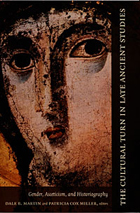
The contributors investigate three key concerns of late ancient studies: gender, asceticism, and historiography. They consider Macrina’s scar, Mary’s voice, and the harlot’s body as well as Augustine, Jovinian, Gregory of Nazianzus, Julian, and Ephrem the Syrian. Whether examining how animal bodies figured as a means for understanding human passion and sexuality in the monastic communities of Egypt and Palestine or meditating on the almost modern epistemological crisis faced by Theodoret in attempting to overcome the barriers between the self and the wider world, these essays highlight emerging theoretical and critical developments in the field.
Contributors. Daniel Boyarin, David Brakke, Virginia Burrus, Averil Cameron, Susanna Elm, James E. Goehring, Susan Ashbrook Harvey, David G. Hunter, Blake Leyerle, Dale B. Martin, Patricia Cox Miller, Philip Rousseau, Teresa M. Shaw, Maureen A. Tilley, Dennis E. Trout, Mark Vessey
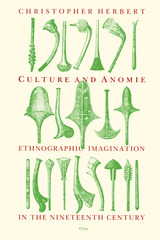
Making wide reference to twentieth-century anthropologists from Malinowski and Benedict to Evans-Pritchard, Geertz, and Lévi-Strauss as well as to nineteenth-century social theorists like Tylor, Spencer, Mill, and Arnold, Herbert stresses the philosophically dubious, unstable character that has clung to the "culture" idea and embarrassed its exponents even as it was developing into a central principle of interpretation.
In a series of detailed studies ranging from political economy to missionary ethnography, Mayhew, and Trollope's fiction, Herbert then focuses on the intellectual and historical circumstances that gave to "culture" the appearance of a secure category of scientific analysis despite its apparent logical incoherence. What he describes is an intimate relationship between the idea of culture and its antithesis, the myth or fantasy of a state of boundless human desire—a conception that binds into a single tradition of thought such seemingly incompatible writers as John Wesley, who called this state original sin, and Durkheim, who gave it its technical name in sociology: anomie.
Methodologically provocative and rich in unorthodox conclusions, Culture and Anomie will be of interest not only to specialists in nineteenth-century literature and intellectual history, but also to readers across the wide range of fields in which the concept of culture plays a determining role.
This volume spans La Guma’s political and literary life in exile through accounts of his travels to Algeria, Lebanon, Vietnam, Soviet Central Asia, and elsewhere, along with his critical assessments of Paul Robeson, Nadine Gordimer, Maxim Gorky, Alexander Solzhenitsyn, and Pablo Neruda, among other writers. The first dedicated collection of La Guma’s exile writing, Culture and Liberation restores an overlooked dimension of his life and work, while opening a window on a wider world of cultural and political struggles in Africa, Asia, and Latin America during the second half of the twentieth century.
Boyer argues that understanding the unprecedented success that this dissident bourgeois political group had in transforming the basic tenets of political life is crucial to understanding the history of the Central European state and the ways in which it was slowly undermined by popular electoral politics. The movement's efforts to save the Austrian Empire by trying to create an economically integrated but ethnically pluralistic state are particularly enlightening today in the shadow of ethnic violence in Sarajevo, where began the end of the Austrian Empire in 1914.
The most comprehensive account of any mass political movement in late-nineteenth century Central Europe, this two- volume work is crucial reading for anyone interested in Hapsburg history, German history or the history of social democracy.
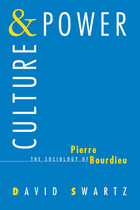
David Swartz focuses on a central theme in Bourdieu's work—the complex relationship between culture and power—and explains that sociology for Bourdieu is a mode of political intervention. Swartz clarifies Bourdieu's difficult concepts, noting where they have been misinterpreted by critics and where they have fallen short in resolving important analytical issues. The book also shows how Bourdieu has synthesized his theory of practices and symbolic power from Durkheim, Marx, and Weber, and how his work was influenced by Sartre, Levi-Strauss, and Althusser.
Culture and Power is the first book to offer both a sympathetic and critical examination of Bourdieu's work and it will be invaluable to social scientists as well as to a broader audience in the humanities.
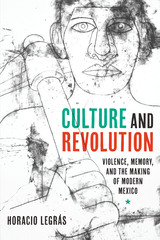
In the twenty years of postrevolutionary rule in Mexico, the war remained fresh in the minds of those who participated in it, while the enigmas of the revolution remained obscured. Demonstrating how textuality helped to define the revolution, Culture and Revolution examines dozens of seemingly ahistorical artifacts to reveal the radical social shifts that emerged in the war’s aftermath.
Presented thematically, this expansive work explores radical changes that resulted from postrevolution culture, including new internal migrations; a collective imagining of the future; popular biographical narratives, such as that of the life of Frida Kahlo; and attempts to create a national history that united indigenous and creole elite society through literature and architecture. While cultural production in early twentieth-century Mexico has been well researched, a survey of the common roles and shared tasks within the various forms of expression has, until now, been unavailable. Examining a vast array of productions, including popular festivities, urban events, life stories, photographs, murals, literature, and scientific discourse (including fields as diverse as anthropology and philology), Horacio Legrás shows how these expressions absorbed the idiosyncratic traits of the revolutionary movement.
Tracing the formation of modern Mexico during the 1920s and 1930s, Legrás also demonstrates that the proliferation of artifacts—extending from poetry and film production to labor organization and political apparatuses—gave unprecedented visibility to previously marginalized populations, who ensured that no revolutionary faction would unilaterally shape Mexico’s historical process during these formative years.
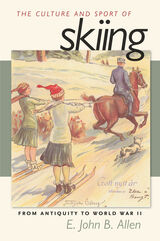
Of all the individuals who contributed to the modernization of skiing before World War II, Allen identifies three who were especially influential: Fridtjof Nansen of Norway, whose explorations on skis paradoxically inspired the idea of skiing as sport; Arnold Lunn of England, whose invention of downhill skiing and the slalom were foundations of the sport's globalization; and Hannes Schneider, whose teachings introduced both speed and safety into the sport.
Underscoring the extent to which ancient ways persisted despite modernization, the book ends with the Russo-Finnish War, a conflict in which the Finns, using equipment that would have been familiar a thousand years before, were able to maneuver in snow that had brought the mechanized Soviet army to a halt.
More than fifty images not only illustrate this rich history but provide further opportunity for analysis of its cultural significance.
Tomlinson offers a new model for understanding this period in our emergence, one based on analysis of advancing human cultures in an evolution that was simultaneously cultural and biological—a biocultural evolution. He places front and center the emergence of culture and the human capacities to create it, in a fashion that expands the conceptual framework of recent evolutionary theory. His wide-ranging vision encompasses arguments on the development of music, modern technology, and metaphysics. At the heart of these developments, he shows, are transformations in our species’ particular knack for signmaking. With its innovative synthesis of humanistic and scientific ideas, this book will be an essential text.
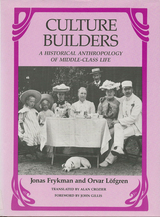
Culture Builders deals primarily with the ways in which ideas about the good and proper life are anchored in the trivialities and routines of everyday life: in the sharing of a meal, in holiday-making, and in the upbringing of children. The authors describe how the attitudes of the bourgeoisie toward. Time and time-keeping set them apart from the peasantry. Uses and perceptions of naturals increasingly divided the classes. For peasants, nature consisted of natural resources to be used. Fr the bourgeoisie, nature had only non-productive connotations. Another change was the growing importance of home over the community. Life became a romantic ideal, not an economic necessity. For the first time, parents became self-conscious about how to raise their children.
Frykman and Lögnen also show how the middle-class developed new perceptions of dirt, pollution, orderliness, health, sexuality, and bodily functions, and how they disdained the filth of peasant households. By stressing refinement, rationality, morality, and discipline, the middle classes were able to differentiate themselves not only from the peasants, but also from the degenerate aristocracy and the disordered and uncontolled emerging working class. The bourgeoisie viewed their own form of culture as the highest on the evolutionary ladder, and turned it into a national culture against which all other groups would be measured.
Culture, Class, and Politics in Modern Appalachia takes stock of the field of Appalachian studies as it explores issues still at the center of its scholarship: culture, industrialization, the labor movement, and twentieth-century economic and political failure and their social impact. A new generation of scholars continues the work of Appalachian studies’ pioneers, exploring the diversity and complexity of the region and its people. Labor migrations from around the world transformed the region during its critical period of economic growth. Collective struggles over occupational health and safety, the environment, equal rights, and civil rights challenged longstanding stereotypes. Investigations of political and economic power and the role of social actors and social movements in Appalachian history add to the foundational work that demonstrates a dynamic and diverse region.
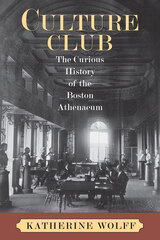
Yet from the outset, Katherine Wolff shows, the Boston Athenaeum was more than a library; it was also a breeding ground for evolving notions of cultural authority and American identity. Though governed by the Boston elite, who promoted it as a way of strengthening their own clout in the city, the early Athenaeum reflected conflicting and at times contradictory aims and motives on the part of its membership. On the one hand, by drawing on European aesthetic models to reinforce an exalted sense of mission, Athenaeum leaders sought to establish themselves as guardians of a nascent American culture. On the other, they struggled to balance their goals with their concerns about an increasingly democratic urban populace. As the Boston Athenaeum opened its doors to women as well as men outside its inner circle, it eventually began to define itself against a more accessible literary institution, the Boston Public Library.
Told through a series of provocative episodes and generously illustrated, Culture Club offers a more complete picture than previously available of the cultural politics behind the making of a quintessentially American institution.

An important anthology putting the leading topics in Southern anthropology in the context of the 1960s
Proceedings of the Southern Anthropological Society:
No. 1, Essays on Medical Anthropology (1968), edited by Thomas Weaver, with contributions by Frank J. Essene, Thomas Weaver, Charles Hudson, Helen Phillips, Hazel Hitson Weidman, Dorothea C. Leighton, Nora F. Cline, Peter Goethals, Berton H. Kaplan, Alice H. Murphree, John G. Peck, and Gianna Hochstein
No. 2, Urban Anthropology: Research Perspectives and Strategies (1968, edited by Elizabeth M. Eddy, with contributions by Charles Hudson, Elizabeth M. Eddy, Conrad M. Arensberg, Charles H. Fairbanks, H. W. Hutchinson, Anthony Leeds, Hans C. Buechler, Brian M. de Toit, Emilio Willems, Michael D. Olien, and John Gulick
No. 3, Concepts and Assumptions in Contemporary Anthropology (1969), edited by Stephen A. Tyler, with contributions by Charles Hudson, Stephen A. Tyler, Eric R. Wolf, Ann Fischer, E. Pendleton Banks, Munro S. Edmonson, Francis E. Johnston, William G. Haag, Arden R. King, and Jan Brukman
No. 4, The Not So Solid South: Anthropological Studies in a Regional Subculture (1971), edited by J. Kenneth Morland, with contributions by Charles Hudson, J. Kenneth Morland, Helen Phillips Keber, Jared Harper, Edward E. Knipe, Helen M. Lewis, Milton B. Newton Jr., Ronald J. Duncan, John Gordon, H. Eugene Hodges, William L. Partridge, Max E. Stanton, Robert Sayers, James L. Peacock, and Christopher Crocker
No. 5, Red, White, and Black: Symposium on Indians in the Old South (1971), edited by Charles M. Hudson, with contributions by Charles Hudson, Louis De Vorsey Jr., William S. Pollitzer, Mary R. Haas, David J. Hally, Charles H. Fairbanks, F. N. Boney, Joseph L. Brent III, William S. Willis Jr., John H. Peterson Jr., and Charles Crowe.
Originally distributed by the University of Georgia Press, are all combined herein with a historical overview in the new introduction by Miles Richardson and with a new index to the complete anthology.
An acclaimed artist and cultural provocateur reveals the hidden biases of the contemporary art world
In self-congratulatory tones of tolerance and open-mindedness, the Western gatekeepers of the contemporary art world—gallery owners and museum curators, patrons and promoters—take great pains to demonstrate their inclusive vision of world culture. They highlight the Latin American show mounted “a few years ago” or the African works featured in a recent exhibition of non-Western artists. Non-Western artists soon discover that this veneer of liberalism masks an array of unwritten, unspoken, and unseemly codes and quotas dictating the acquisition and exhibition of their works and the success of their careers. In past decades, cultural institutions and the critical establishment in the West resisted difference; today, they are obsessed with exoticism. Both attitudes reflect firmly entrenched prejudices that prescribe the rules of what Nigerian-born artist, curator, and scholar Olu Oguibe terms the “culture game.”
In the celebrated, controversial essays gathered here, Oguibe exposes the disparities and inconsistencies of the reception and treatment afforded Western and non-Western artists; the obstacles that these contradictions create for non-Western and minority artists, especially those who live and practice in the Western metropolis; and the nature and peculiar concerns of contemporary non-Western art as it deals with the ramifications and residues of the colonial encounter as well as its own historical and cultural past. Ranging from the impact of the West’s appetite for difference on global cultural relations and the existence of a digital Third World to the African redefinition of modernity, Oguibe’s uncompromising and unapologetic criticism provides a uniquely global vision of contemporary art and culture.
Throughout, Bell revisits issues of genre with an eye toward the unexpected details of authors' lives, and invites us to reconsider the hidden functions that terms such as "romanticism" and "realism" served for authors and their critics. Whether tracing the demands of the market or the expectations of readers, Bell examines the intimate relationship between literary production and culture; each essay closely links the milieu in which American writers worked with the trajectory of their storied careers.
Lubkemann focuses on how Ndau social networks were fragmented by wartime displacement and the profound effect this had on gender relations. Demonstrating how wartime migration and post-conflict return were shaped by social struggles and interests that had little to do with the larger political reasons for the war, Lubkemann contests the assumption that wartime migration is always involuntary. His critical reexamination of displacement and his engagement with broader theories of agency and social change will be of interest to anthropologists, political scientists, historians, and demographers, and to anyone who works in a war zone or with refugees and migrants.
Culture in the Anteroom introduces an English-speaking readership to the full range of Siegfried Kracauer's work as novelist, architect, journalist, sociologist, historian, exile critic, and theorist of visual culture. This interdisciplinary anthology---including pieces from Miriam Bratu Hansen, Andreas Huyssen, Noah Isenberg, Lutz Koepnick, Eric Rentschler, and Heide Schlüpmann---brings together literary and film scholars, historians and art historians, sociologists, and architects to address the scope and current relevance of a body of work dedicated to investigating all aspects of modernism and modernity. The contributors approach Kracauer's writings from a variety of angles, some by placing them in dialogue with his contemporaries in Weimar Germany and the New York Intellectuals of the 1940s and '50s; others by exploring relatively unknown facets of Kracauer's oeuvre by considering his contributions to architectural history, the history of radio as well as other new media, and museum and exhibition culture.
Drawing on fiction, memoirs, journalistic accounts, and extensive interviews with artists, collectors, and dealers, Mullin shows how anthropological notions of culture were used to valorize Indian art and create a Southwest Indian art market. By turning their attention to Indian affairs and art in Santa Fe, New Mexico, she argues, these women escaped the gender restrictions of their eastern communities and found ways of bridging public and private spheres of influence. Tourism, in turn, became a means of furthering this cultural colonization. Mullin traces the development of aesthetic worth as it was influenced not only by politics and profit but also by gender, class, and regional identities, revealing how notions of “culture” and “authenticity” are fundamentally social ones. She also shows how many of the institutions that the early patrons helped to establish continue to play an important role in the contemporary market for American Indian art.
This book will appeal to audiences in cultural anthropology, art history, American studies, women’s studies, and cultural history.
Turn on the news and it looks as if we live in a time and place unusually consumed by the specter of disaster. The events of 9/11 and the promise of future attacks, Hurricane Katrina and the destruction of New Orleans, and the inevitable consequences of environmental devastation all contribute to an atmosphere of imminent doom. But reading an account of the San Francisco earthquake of 1906, with its vivid evocation of buildings “crumbling as one might crush a biscuit,” we see that calamities—whether natural or man-made—have long had an impact on the American consciousness.
Uncovering the history of Americans’ responses to disaster from their colonial past up to the present, Kevin Rozario reveals the vital role that calamity—and our abiding fascination with it—has played in the development of this nation. Beginning with the Puritan view of disaster as God’s instrument of correction, Rozario explores how catastrophic events frequently inspired positive reactions. He argues that they have shaped American life by providing an opportunity to take stock of our values and social institutions. Destruction leads naturally to rebuilding, and here we learn that disasters have been a boon to capitalism, and, paradoxically, indispensable to the construction of dominant American ideas of progress.
As Rozario turns to the present, he finds that the impulse to respond creatively to disasters is mitigated by a mania for security. Terror alerts and duct tape represent the cynical politician’s attitude about 9/11, but Rozario focuses on how the attacks registered in the popular imagination—how responses to genuine calamity were mediated by the hyperreal thrills of movies; how apocalyptic literature, like the best-selling Left Behind series, recycles Puritan religious outlooks while adopting Hollywood’s style; and how the convergence of these two ways of imagining disaster points to a new postmodern culture of calamity. The Culture of Calamity will stand as the definitive diagnosis of the peculiarly American addiction to the spectacle of destruction.
The Culture of Christina Rossetti explores a “new” Christina Rossetti as she emerges from the scrutiny of the particular historical and cultural context in which she lived and wrote. The essays in this collection demonstrate how the recluse, saint, and renunciatory spinster of former studies was in fact an active participant in her society’s attempt to grapple with new developments in aesthetics, theology, science, economics, and politics.
The volume examines Rossetti’s poetry, fiction, and nonfiction from a variety of theoretical and critical perspectives in order to reevaluate her place in the Victorian world of art, literature, and ideas. The essays offer a radical rethinking of her best-known poems, retrieve neglected works, establish the diversity of her writing, and reposition Rossetti within a canon continually under formation.
Contributing to the ongoing retrieval of the nineteenth-century woman poet, The Culture of Christina Rossetti highlights Rossetti’s responses to both male and female literary traditions and explores her incorporation and revision of literary influences from medieval Italian sources to contemporary writers.

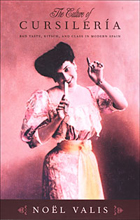
Valis finds evidence in literature, cultural objects, and popular customs to
argue that cursilería has its roots in a sense of cultural inadequacy felt by the lower middle classes in nineteenth- and early-twentieth-century Spain. The Spain of this era, popularly viewed as the European power most resistant to economic and social modernization, is characterized by Valis as suffering from nostalgia for a bygone, romanticized society that structured itself on strict class delineations. With the development of an economic middle class during the latter half of the nineteenth century, these designations began to break down, and individuals across all levels of the middle class exaggerated their own social status in an attempt to protect their cultural capital. While the resulting manifestations of cursilería were often provincial, indeed backward, the concept was—and still is—closely associated with a sense of home. Ultimately, Valis shows how cursilería embodied the disparity between old ways and new, and how in its awkward manners, airs of pretension, and graceless anxieties it represents Spain's uneasy surrender to the forces of modernity.
The Culture of Cursilería will interest students and scholars of Latin America, cultural studies, Spanish literature, and modernity.
This book provides the first in-depth, wide-scope treatment of da’wa. A term difficult to translate, da’wa covers a semantic field ranging from the call or invitation to Islam, to religious preaching and proselytizing, to the mission and message of Islam. Historically da’wa has been directed outward to nonbelievers, but in modern times it has turned increasingly inward to “straying” Muslims. While the media and many scholars have focused on extremism and militant groups that have raised the banner of jihad, this volume argues that da’wa, not jihad, forms the backbone of modern Islamic politics and religiosity, and that the study of da’wa is essential for understanding contemporary Islamic politics as well as jihadist activity. Contributors represent a variety of approaches and come from a range of academic, religious, and national backgrounds. In these essays, they analyze the major discourses of da’wa, their embodiment in the major Islamic movements of the twentieth century, and their transformation into new forms of activism through the media, the state, and jihadi groups—including al-Qaeda and ISIS—in the twenty-first century.
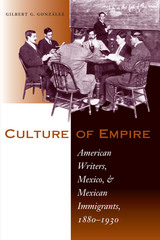
A history of the Chicano community cannot be complete without taking into account the United States' domination of the Mexican economy beginning in the late nineteenth and early twentieth centuries, writes Gilbert G. González. For that economic conquest inspired U.S. writers to create a "culture of empire" that legitimated American dominance by portraying Mexicans and Mexican immigrants as childlike "peons" in need of foreign tutelage, incapable of modernizing without Americanizing, that is, submitting to the control of U.S. capital. So powerful was and is the culture of empire that its messages about Mexicans shaped U.S. public policy, particularly in education, throughout the twentieth century and even into the twenty-first.
In this stimulating history, Gilbert G. González traces the development of the culture of empire and its effects on U.S. attitudes and policies toward Mexican immigrants. Following a discussion of the United States' economic conquest of the Mexican economy, González examines several hundred pieces of writing by American missionaries, diplomats, business people, journalists, academics, travelers, and others who together created the stereotype of the Mexican peon and the perception of a "Mexican problem." He then fully and insightfully discusses how this misinformation has shaped decades of U.S. public policy toward Mexican immigrants and the Chicano (now Latino) community, especially in terms of the way university training of school superintendents, teachers, and counselors drew on this literature in forming the educational practices that have long been applied to the Mexican immigrant community.
The Culture of Feedback digs deep into a dazzling variety of left-of-center experiences and attitudes from this misunderstood period, bringing us a new look at the wild side of the 1970s. Belgrad shows us how ideas from systems theory were taken up by the counterculture and the environmental movement, eventually influencing a wide range of beliefs and behaviors, particularly related to the question of what is and is not intelligence. He tells the story of a generation of Americans who were struck by a newfound interest in—and respect for—plants, animals, indigenous populations, and the very sounds around them, threading his tapestry with cogent insights on environmentalism, feminism, systems theory, and psychedelics. The Culture of Feedback repaints the familiar image of the ’70s as a time of Me Generation malaise to reveal an era of revolutionary and hopeful social currents, driven by desires to radically improve—and feed back into—the systems that had come before.
Through a series of poignant tales—from the struggle by a group of friends against daily corruption to the contest over a saint's identity, from nostalgia for the departed Jews to Salman Rushdie's vision of doubt in a world of religious certainty—Rosen shows how a dazzling array of potential changes are occurring alongside deeply embedded continuity, a process he compares to a game of chess in which infinite variations of moves can be achieved while fundamental aspects of "the game" have had a remarkably enduring quality. Whether it is the potential fabrication of new forms of Islam by migrants to Europe (creating a new "Euro-Islam," as Rosen calls it), the emphasis put on individuals rather than institutions, or the heartrending problems Muslims may face when their marriages cross national boundaries, each story and each interpretation offers a window into a world of contending concepts and challenged coherence.
The Culture of Islam is both an antidote to simplified versions of Islam circulating today and a consistent story of the continuities that account for much of ordinary Muslim life. It offers, in its human stories and its insights, its own contribution, as the author says, "to the mutual understanding and forgiveness that alone will make true peace possible."
Several contributors examine how fascism was understood in the 1930s by, for example, influential theorists, an antifascist literary group, and leading intellectuals responding to capitalist modernization. Others explore the idea that fascism’s solution to alienation and exploitation lay in efforts to beautify work, the workplace, and everyday life. Still others analyze the realization of and limits to fascist aesthetics in film, memorial design, architecture, animal imagery, a military museum, and a national exposition. Contributors also assess both manifestations of and resistance to fascist ideology in the work of renowned authors including the Nobel-prize-winning novelist and short-story writer Kawabata Yasunari and the mystery writers Edogawa Ranpo and Hamao Shirō. In the work of these final two, the tropes of sexual perversity and paranoia open a new perspective on fascist culture. This volume makes Japanese fascism available as a critical point of comparison for scholars of fascism worldwide. The concluding essay models such work by comparing Spanish and Japanese fascisms.
Contributors. Noriko Aso, Michael Baskett, Kim Brandt, Nina Cornyetz, Kevin M. Doak, James Dorsey, Aaron Gerow, Harry Harootunian, Marilyn Ivy, Angus Lockyer, Jim Reichert, Jonathan Reynolds, Ellen Schattschneider, Aaron Skabelund, Akiko Takenaka, Alan Tansman, Richard Torrance, Keith Vincent, Alejandro Yarza
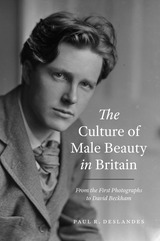
Spanning the decades from the rise of photography to the age of the selfie, this book traces the complex visual and consumer cultures that shaped masculine beauty in Britain, examining the realms of advertising, health, pornography, psychology, sport, and celebrity culture. Paul R. Deslandes chronicles the shifting standards of male beauty in British culture—from the rising cult of the athlete to changing views on hairlessness—while connecting discussions of youth, fitness, and beauty to growing concerns about race, empire, and degeneracy. From earlier beauty show contestants and youth-obsessed artists, the book moves through the decades into considerations of disfigured soldiers, physique models, body-conscious gay men, and celebrities such as David Beckham and David Gandy who populate the worlds of television and social media.
Deslandes calls on historians to take beauty and gendered aesthetics seriously while recasting how we think about the place of physical appearance in historical study, the intersection of different forms of high and popular culture, and what has been at stake for men in “looking good.”

Jay M. Smith argues that the early modern nobility instinctively drew a correlation between the meaning of merit and an image of the "sovereign's gaze." In the early seventeenth century, merit meant the qualities traditionally associated with aristocratic values: generosity, fidelity, and honor. Nobles sought to display those qualities before the appreciative gaze of the king himself. But the expansion of the monarchy forced the routinization of the sovereign's gaze, and Louis XIV began to affirm and reward new qualities--talent and application--besides those thought innately noble.
The contradictions implicit within the absolute monarchy's culture of merit are demonstrated by the eighteenth-century French army, which was dominated by the nobility, but also committed to efficiency and expertise. Smith shows that the army's continuous efforts to encourage and reward "merit" led to a clash of principles. The ever-growing emphasis on talent and discipline led reformers--the great majority of them noble--to attack the most egregious examples of privilege and favoritism in the army. Smith's analysis of the long-term evolution in conceptions of royal service suggests a new explanation for the shift in values signified by the French Revolution. The transition away from the "personal" gaze of the king toward the "public" gaze of the monarchy and nation foretold the triumph of a new culture of merit in which noble birth would have no meaning.
The Culture of Merit will interest historians and other social scientists concerned with issues of aristocratic identity, state formation, professionalization, and the changing political culture of pre-Revolutionary France.
Jay M. Smith is Assistant Professor of History, University of North Carolina, Chapel Hill.

Drawing on court transcripts, gallery archives, exhibition reviews, private correspondence—and a striking series of cartoons and photographs—The Culture of Property traverses the history of gender, material culture, urban life, colonialism, Irish and Scottish nationalism, and British citizenship. This fascinating book challenges recent scholarship in museum studies in light of ongoing culture wars. It should be required reading for cultural policy makers, museum professionals, and anyone interested in the history of art and Britain.
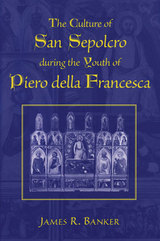
Piero della Francesca has remained an enigma because of the contradictions observed in his life and art. Banker's archival research has enabled him to clear away some of the obscurities. This book situates Piero in the earliest social and intellectual worlds within which he moved. Heretofore, writers on Piero have begun his putative formation in Florence in 1439. Banker demonstrates that the young painter's formation began prior to 1439, when he was surrounded by his family and the local artisans' community.
The Culture of San Sepolcro during the Youth of Piero della Francesca integrates social and art history in order to better understand the formation of a Renaissance artist. It will be vital to scholars and historians of the Italian Renaissance city states, as well as to art historians and those interested in the relationship of art and society.
James R. Banker is Professor of History, North Carolina State University.
"A compelling narrative, putting living flesh on shorthand intuitions that connect North Beach to Black Mountain College, Fenollosa to Pollock, Jackson Lears's No Place of Grace to Todd Gitlin's The Sixties."—Joel Smith, Boston Review
"An invaluable introduction to postwar modernism across the arts."—Thomas Augst, Boston Book Review
"Belgrad's extensive probing of the artists and movements with their profound sociological roots is timely as well as comprehensive....A major contribution for serious scholars."—Choice

Central to his argument is the contention that, contrary to post-Enlightenment humanist, liberal and conservative thought, 'culture' does not necessarily stand in opposition to political inequality and social injustice, but may be complicit with the oppressive exercise of power.
The book focuses on Shakespearean tragedy and on the historicism and culturalism of much present-day cultural theory. Barker's analysis moves dialectically backwards and forwards between these two moments in order to illuminate aspects of early modern culture, and to critique the ways in which the complicity between culture and violence has been occluded. Rejecting the tendency of both modernism and post-modernism to homogenise historical time, Barker argues for a genuinely new, 'diacritical' understanding of the violence of history.
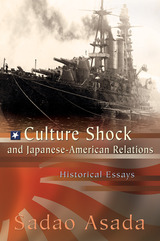
Ever since Commodore Perry sailed into Uraga Channel, relations between the United States and Japan have been characterized by culture shock. Now a distinguished Japanese historian critically analyzes contemporary thought, public opinion, and behavior in the two countries over the course of the twentieth century, offering a binational perspective on culture shock as it has affected their relations.
In these essays, Sadao Asada examines the historical interaction between these two countries from 1890 to 2006, focusing on naval strategy, transpacific racism, and the atomic bomb controversy. For each topic, he offers a rigorous analysis of both American and Japanese perceptions, showing how cultural relations and the interchange of ideas have been complex—and occasionally destructive.
Culture Shock and Japanese-American Relations contains insightful essays on the influence of Alfred Mahan on the Japanese navy and on American images of Japan during the 1920s. Other essays consider the progressive breakdown of relations between the two countries and the origins of the Pacific War from the viewpoint of the Japanese navy, then tackle the ultimate shock of the atomic bomb and Japan’s surrender, tracing changing perceptions of the decision to use the bomb on both sides of the Pacific over the course of sixty years. In discussing these subjects, Asada draws on Japanese sources largely inaccessible to Western scholars to provide a host of eye-opening insights for non-Japanese readers.
After studying in America for nine years and receiving degrees from both Carleton College and Yale University, Asada returned to Japan to face his own reverse culture shock. His insights raise important questions of why people on opposite sides of the Pacific see things differently and adapt their perceptions to different purposes. This book marks a major effort toward reconstructing and understanding the conflicted course of Japanese-American relations during the first half of the twentieth century.
"Irene Taviss Thomson gives us a nuanced portrait of American social politics that helps explain both why we are drawn to the idea of a 'culture war' and why that misrepresents what is actually going on."
---Rhys H. Williams, Professor and Chair, Department of Sociology, Loyola University Chicago
"An important work showing---beneath surface conflict---a deep consensus on a number of ideals by social elites."
---John H. Evans, Department of Sociology, University of California, San Diego
The idea of a culture war, or wars, has existed in America since the 1960s---an underlying ideological schism in our country that is responsible for the polarizing debates on everything from the separation of church and state, to abortion, to gay marriage, to affirmative action. Irene Taviss Thomson explores this notion by analyzing hundreds of articles addressing hot-button issues over two decades from four magazines: National Review, Time, The New Republic, and The Nation, as well as a wide array of other writings and statements from a substantial number of public intellectuals.
What Thomson finds might surprise you: based on her research, there is no single cultural divide or cultural source that can account for the positions that have been adopted. While issues such as religion, homosexuality, sexual conduct, and abortion have figured prominently in public discussion, in fact there is no single thread that unifies responses to each of these cultural dilemmas for any of the writers.
Irene Taviss Thomson is Professor Emeritus of Sociology, having taught in the Department of Social Sciences and History at Fairleigh Dickinson University for more than 30 years. Previously, she taught in the Department of Sociology at Harvard University.
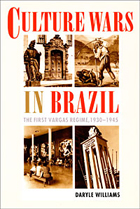
Williams draws on a rich selection of textual, pictorial, and architectural sources in his exploration of the dynamic nature of educational film and radio, historical preservation, museum management, painting, public architecture, and national delegations organized for international expositions during the unsettled era in which modern Brazil’s cultural canon took definitive form. In his close reading of the tensions surrounding official policies of cultural management, Williams both updates the research of the pioneer generation of North American Brazilianists, who examined the politics of state building during the Vargas era, and engages today’s generation of Brazilianists, who locate the construction of national identity of modern Brazil in the Vargas era.
By integrating Brazil into a growing body of literature on the cultural dimensions of nations and nationalism, Culture Wars in Brazil will be important reading for students and scholars of Latin American history, state formation, modernist art and architecture, and cultural studies.
"An outstanding work of educational theory and history."—John Coatsworth, University of Chicago
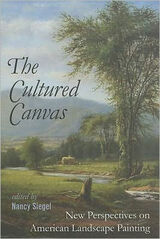
Written from aesthetic, sociopolitical, cultural, and literary perspectives, The Cultured Canvas explores myriad ways in which American visual culture can be evaluated through newly conceived thematic and ideological approaches. This book moves beyond our accepted notion of the oil painting on canvas to consider the term as both a literal and figurative surface upon which artists construct or construe the landscape as an intellectual, cultural, or physical entity. It provides an innovative reevaluation of traditional thought concerning the Hudson River School, Luminism, and artists of the Civil War era.
As interdisciplinary emphases are employed with increasing frequency in arts and humanities courses, the breadth and depth of topics covered in this collection will provide a much-needed text for scholars in American art history, nineteenth-century American studies, and landscape studies, in addition to serving as a complement to courses in American literature and culture.
Hardcover is un-jacketed.

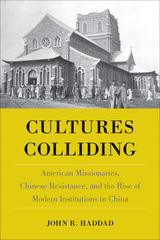
As incredible as it may seem, the American missionaries who journeyed to China in 1860 planning solely to spread the Gospel ultimately reinvented their entire enterprise. By 1900, they were modernizing China with schools, colleges, hospitals, museums, and even YMCA chapters. In Cultures Colliding, John R. Haddad nimbly recounts this transformative institution-building—how and why it happened—and its consequences.
When missionaries first traveled to rural towns atop mules, they confronted populations with entrenched systems of belief that embraced Confucius and rejected Christ. Conflict ensued as these Chinese viewed missionaries as unwanted disruptors. So how did this failing movement eventually change minds and win hearts? Many missionaries chose to innovate. They built hospitals and established educational institutions offering science and math. A second wave of missionaries opened YMCA chapters, coached sports, and taught college. Crucially, missionaries also started listening to Chinese citizens, who exerted surprising influence over the preaching, teaching, and caregiving, eventually running some organizations themselves. They embraced new American ideals while remaining thoroughly Chinese.
In Cultures Colliding, Haddad recounts the unexpected origins and rapid rise of American institutions in China by telling the stories of the Americans who established these institutions and the Chinese who changed them from within. Today, the impact of this untold history continues to resonate in China.
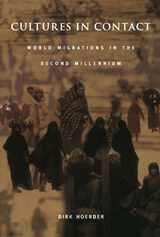
Signaling a major paradigm shift, Cultures in Contact creates an English-language map of human movement that is not Atlantic Ocean-based. Hoerder describes the origins, causes, and extent of migrations around the globe and analyzes the cultural interactions they have triggered. He pays particular attention to the consequences of immigration within the receiving countries. His work sweeps from the eleventh century forward through the end of the twentieth, when migration patterns shifted to include transpacific migration, return migrations from former colonies, refugee migrations, and distinct regional labor migrations in the developing world. Hoerder demonstrates that as we enter the third millennium, regional and intercontinental migration patterns no longer resemble those of previous centuries. They have been transformed by new communications systems and other forces of globalization and transnationalism.
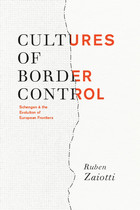
In recent years, a number of European countries abolished national border controls in favor of Europe’s external frontiers. In doing so, they challenged long-established conceptions of sovereignty, territoriality, and security in world affairs.
Setting forth a new analytic framework informed by constructivism and pragmatism, Ruben Zaiotti traces the transformation of underlying assumptions and cultural practices guiding European policymakers and postnational Europe, shedding light on current trends characterizing its politics and relations with others. The book also includes a fascinating comparison to developments in North America, where the United States has pursued more restrictive border control strategies since 9/11. As a broad survey of the origins, evolution, and implications of this remarkable development in European integration, Cultures of Border Control will be of interest to students and scholars of international relations and political geography.
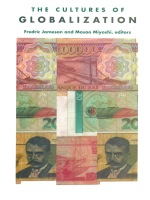
Discussing overlapping themes of transnational consequence, the contributors to this volume describe how the global character of technology, communication networks, consumer culture, intellectual discourse, the arts, and mass entertainment have all been affected by recent worldwide trends. Appropriate to such diversity of material, the authors approach their topics from a variety of theoretical perspectives, including those of linguistics, sociology, economics, anthropology, and the law. Essays examine such topics as free trade, capitalism, the North and South, Eurocentrism, language migration, art and cinema, social fragmentation, sovereignty and nationhood, higher education, environmental justice, wealth and poverty, transnational corporations, and global culture. Bridging the spheres of economic, political, and cultural inquiry, The Cultures of Globalization offers crucial insights into many of the most significant changes occurring in today’s world.
Contributors. Noam Chomsky, Ioan Davies, Manthia Diawara, Enrique Dussel, David Harvey, Sherif Hetata, Fredric Jameson, Geeta Kapur, Liu Kang, Joan Martinez-Alier, Masao Miyoshi, Walter D. Mignolo, Alberto Moreiras, Paik Nak-chung, Leslie Sklair, Subramani, Barbara Trent
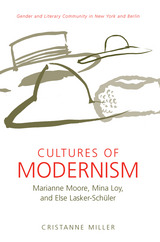
Cultures of Modernism explores how the structure and location of literary communities significantly influence who writes, what they write about, and their openness to formal experimentation. These influences particularly affect women writers. Author Cristanne Miller notes striking patterns of similarity in the concerns and lives of women living in geographically distant centers of modernist production. She looks at three significant poets---the American Marianne Moore, the British expatriate Mina Loy, and the German Else Lasker-Schüler---in the context of cultural, national, and local elements to argue that location significantly affected their performances of subjectivity, gender, race, and religion. The first book of its kind, Cultures of Modernism breaks new ground while it contributes to the ongoing reconception of the modernist period.
"A fascinating, provocative, and genuinely original study of a 'different' modernism in poetry---namely, the Modernism of women poets."
---Marjorie Perloff, Stanford University
"An important and ambitious work that makes major contributions to the fields of gender studies and modernist studies, and to the study of modernist poetry."
---Robin Schulze, Pennsylvania State University
"Offers a welcome corrective to the unreflective critical tendency . . . to make broad claims about the historical experiences and cultural conundrums of 'women,' and particularly 'women writers.' Miller offers tour-de-force comparative readings . . . threading together the world-historical with the personal, poetics with the political, and wielding the instruments of scansion as deftly as a surgeon."
---Modernism/modernity, The Official Journal of the Modernist Studies Association
Cristanne Miller is Edward H. Butler Professor of English and Chair of the English Department at the University of Buffalo, State University of New York.
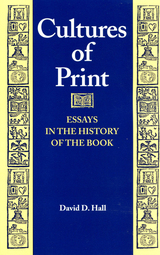
David D. Hall examines the interchange between popular and learned cultures and the practices of reading and writing. His writings deal with change and continuity, exploring the possibility of a reading revolution and arguing for the long duration of a Protestant vernacular tradition. A newly written essay on book culture in the early Chesapeake describes a system of scribal publication. The pieces reflect Hall's belief that the better we understand the production and consumption of books, the closer we come to a social history of culture.

Drawing on a broad range of interpretive practices, these essays range across American history, from European representations of the New World to the mass media spectacle of the Persian Gulf War. The volume breaks down the boundary between the study of foreign relations and American culture to examine imperialism as an internal process of cultural appropriation and as an external struggle over international power. The contributors explore how the politics of continental and international expansion, conquest, and resistance have shaped the history of American culture just as much as the cultures of those it has dominated. By uncovering the dialectical relationship between American cultures and international relations, this collection demonstrates the necessity of analyzing imperialism as a political or economic process inseparable from the social relations and cultural representations of gender, race, ethnicity, and class at home.
Contributors. Lynda Boose, Mary Yoko Brannen, Bill Brown, William Cain, Eric Cheyfitz, Vicente Diaz, Frederick Errington, Kevin Gaines, Deborah Gewertz, Donna Haraway, Susan Jeffords, Myra Jehlen, Amy Kaplan, Eric Lott, Walter Benn Michaels, Donald E. Pease, Vicente Rafael, Michael Rogin, José David Saldívar, Richard Slotkin, Doris Sommer, Gauri Viswanathan, Priscilla Wald, Kenneth Warren, Christopher P. Wilson
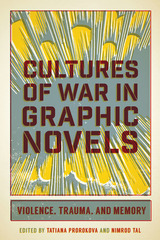
Cultures of War in Graphic Novels examines the representation of small-scale and often less acknowledged conflicts from around the world and throughout history. The contributors look at an array of graphic novels about conflicts such as the Boxer Rebellion (1899-1901), the Irish struggle for national independence (1916-1998), the Falkland War (1982), the Bosnian War (1992-1995), the Rwandan genocide (1994), the Israel-Lebanon War (2006), and the War on Terror (2001-). The book explores the multi-layered relation between the graphic novel as a popular medium and war as a pivotal recurring experience in human history. The focus on largely overlooked small-scale conflicts contributes not only to advance our understanding of graphic novels about war and the cultural aspects of war as reflected in graphic novels, but also our sense of the early twenty-first century, in which popular media and limited conflicts have become closely interrelated.
READERS
Browse our collection.
PUBLISHERS
See BiblioVault's publisher services.
STUDENT SERVICES
Files for college accessibility offices.
RECENTLY PUBLISHED






UChicago Accessibility Resources
home | accessibility | search | about | contact us
BiblioVault ® 2001 - 2026
The University of Chicago Press