
 A SCHOLARLY BOOK REPOSITORY
365 start with C start with C
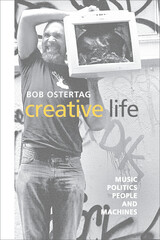
Drawing on his intimate engagement with political conflict in Latin America and the Balkans, Ostertag identifies an art of "insurgent politics" that struggles to expand the parameters of the physical and social world. He also discusses his innovative collaborations with major modern performers, filmmakers, and artists around the world. Part memoir, part journalism, and part aesthetic manifesto, Creative Life is a dazzling set of writings from a musical artist who has worked on the cutting edge of new music for thirty years.
During the colonial period in Guyana, the country’s coastal lands were worked by enslaved Africans and indentured Indians. In Creole Indigeneity, Shona N. Jackson investigates how their descendants, collectively called Creoles, have remade themselves as Guyana’s new natives, displacing indigenous peoples in the Caribbean through an extension of colonial attitudes and policies.
Looking particularly at the nation’s politically fraught decades from the 1950s to the present, Jackson explores aboriginal and Creole identities in Guyanese society. Through government documents, interviews, and political speeches, she reveals how Creoles, though unable to usurp the place of aboriginals as First Peoples in the New World, nonetheless managed to introduce a new, more socially viable definition of belonging, through labor. The very reason for bringing enslaved and indentured workers into Caribbean labor became the organizing principle for Creoles’ new identities.
Creoles linked true belonging, and so political and material right, to having performed modern labor on the land; labor thus became the basis for their subaltern, settler modes of indigeneity—a contradiction for belonging under postcoloniality that Jackson terms “Creole indigeneity.” In doing so, her work establishes a new and productive way of understanding the relationship between national power and identity in colonial, postcolonial, and anticolonial contexts.
Crime and Social Justice in Indian Country calls to attention the need for culturally appropriate research protocols and critical discussions of social and criminal justice in Indian Country. The contributors come from the growing wave of Native American as well as non-Indigenous scholars who employ these methods. They reflect on issues in three key areas: crime, social justice, and community responses to crime and justice issues. Topics include stalking, involuntary sterilization of Indigenous women, border-town violence, Indian gaming, child welfare, and juvenile justice. These issues are all rooted in colonization; however, the contributors demonstrate how Indigenous communities are finding their own solutions for social justice, sovereignty, and self-determination.
Thanks to its focus on community responses that exemplify Indigenous resilience, persistence, and innovation, this volume will be valuable to those on the ground working with Indigenous communities in public and legal arenas, as well as scholars and students. Crime and Social Justice in Indian Country shows the way forward for meaningful inclusions of Indigenous peoples in their own justice initiatives.
Contributors
Alisse Ali-Joseph
William G. Archambeault
Cheryl Redhorse Bennett
Danielle V. Hiraldo
Lomayumptewa K. Ishii
Karen Jarratt-Snider
Eileen Luna-Firebaugh
Anne Luna-Gordinier
Marianne O. Nielsen
Linda M. Robyn

Analyses of crime and justice in an unprecedented time
While COVID-19 lockdowns affected nearly everyone worldwide, feelings of anxiety and fear were exacerbated for those already entangled in the criminal justice system. Scholars recognized the unique opportunity to study crime and the justice system’s response during this period, though they soon realized that determining the pandemic’s effects would be a complicated, nuanced process.
Crime, Corrections, and the COVID-19 Pandemic features analyses and findings from more than thirty contributors in eleven essays. The collection examines the multifaceted social, economic, cultural, legislative, and policy responses to COVID-19 and their impacts on crime and justice. It also explores how professionals across the criminal justice system—police officers, campus police officers, attorneys, judges, correctional staff, and community supervision agents—adapted to unprecedented challenges.
The book provides real-world evidence of how unconventional solutions and groundbreaking practices were implemented in response to a global crisis. Contributors analyze how incarcerated individuals, their families, and their supervisors dealt with the fear of transmission, medical care, and death. Their findings, which are necessarily dependent on timing, place, measurement, and operationalization, include both change and stasis, both negative and positive outcomes. For instance, while minor and property-related offenses initially declined, violent crimes like homicide and intimate partner violence increased. Drug usage patterns changed, leading to a rise in opioid overdoses, and despite the rise in digital interactions, there was no significant difference in self-reported cybervictimization. Furthermore, rates of gang-related crimes did not decrease. Policy and public health responses reshaped criminal activities, influencing the methods and motivations behind theft, child and elder abuse, and other offenses. This volume includes in-depth examinations of certain often-overlooked crimes, such as labor trafficking, and provides direct insights into the job challenges faced by criminal justice professionals, from probation personnel to labor rights advocates.
Emerging innovations in health risk management within correctional facilities led to increased awareness and focus on specific types of crime. Responses to the pandemic revealed significant challenges, such as burnout among justice system personnel, difficulties in adapting and innovating, and challenges in providing services to vulnerable populations.
Through diverse perspectives and empirical approaches ranging from advanced statistical analysis to qualitative interviews, Crime, Corrections, and the COVID-19 Pandemic offers a comprehensive exploration of the complexities that affect research results. It showcases the resilience and innovation within the criminal justice field and details the challenges professionals in this area tackled during a universally trying time, presenting valuable lessons for future crises.
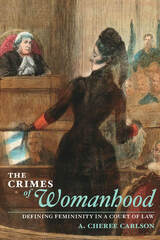
Carlson analyzes the situations of several women of varying historical stature, from the insanity trials of Mary Todd Lincoln and Lizzie Borden's trial for the brutal slaying of her father and stepmother, to lesser-known trials involving insanity, infidelity, murder, abortion, and interracial marriage. The insanity trial of Elizabeth Parsons Ware Packard, the wife of a minister, resulted from her attempts to change her own religion, while a jury acquitted Mary Harris for killing her married lover, suggesting that loss of virginity to an adulterous man was justifiable grounds for homicide. The popular conception of abortion as a "woman's crime" came to the fore in the case of Ann Loman (also known as Madame Restell), who performed abortions in New York both before and after it became a crime. Finally, Alice Rhinelander was sued for fraud by her new husband Leonard for "passing" as white, but the jury was more moved by the notion of Alice being betrayed as a woman by her litigious husband than by the supposed defrauding of Leonard as a white male. Alice won the case, but the image of womanhood as in need of sympathy and protection won out as well.
At the heart of these cases, Carlson reveals clearly just how narrow was the line that women had to walk, since the same womanly virtues that were expected of them--passivity, frailty, and purity--could be turned against them at any time. These trials of popular status are especially significant because they reflect the attitudes of the broad audience, indicate which forms of knowledge are easily manipulated, and allow us to analyze how the verdict is argued outside the courtroom in the public and press. With gripping retellings and incisive analysis of these scandalous criminal and civil cases, this book will appeal to historians, rhetoricians, feminist researchers, and anyone who enjoys courtroom drama.

Jenifer L. Barclay and Stefanie Hunt-Kennedy edit a collection of interdisciplinary essays that consider how and why physical, sensory, intellectual, and psychological disabilities are underrepresented, erased, or distorted in the historical record. The contributors draw on the methodology and practice of cripping to uncover disability in contested archives and explore ways to build inclusive archives accountable to, and centered on, disabled people and disability justice. Throughout, they show ableness informing the politics of the archive as a physical space, a discriminatory record, and a collection of silences.
An essential contribution to research methods and disability justice, Cripping the Archive offers a blueprint for intersectional and interdisciplinary approaches that bridge disability studies, history, and archival studies.

Contributors. Douglas Booth, Peter Brosius, Robin Canniford, Krista Comer, Kevin Dawson, Clifton Evers, Chris Gibson, Dina Gilio-Whitaker, Dexter Zavalza Hough-Snee, Scott Laderman, Kristin Lawler, lisahunter, Colleen McGloin, Patrick Moser, Tara Ruttenberg, Cori Schumacher, Alexander Sotelo Eastman, Glen Thompson, Isaiah Helekunihi Walker, Andrew Warren, Belinda Wheaton
Animal Studies is a rapidly growing interdisciplinary field devoted to examining, understanding, and critically evaluating the complex relationships between humans and
other animals. Scholarship in Animal Studies draws on a variety of methodologies to explore these multi-faceted relationships in order to help us understand the ways in which other animals figure in our lives and we in theirs.
Bringing together the work of a group of internationally distinguished scholars, the contribution in Critical Terms for Animal Studies offers distinct voices and diverse perspectives, exploring significant concepts and asking important questions. How do we take non-human animals seriously, not simply as metaphors for human endeavors, but as subjects themselves? What do we mean by anthropocentrism, captivity, empathy, sanctuary, and vulnerability, and what work do these and other critical terms do in Animal Studies?
An indispensable reference for the field, Critical Terms for Animal Studies not only provides a framework for thinking about animals as subjects of their own experiences, but also serves as a touchstone to help us think differently about our conceptions of what it means to be human, and the impact human activities have on the more than human world.

With growing anxiety about American identity fueling debates about the nation’s borders, ethnicities, and languages, Crossing Borders, Drawing Boundaries provides a timely and important rhetorical exploration of divisionary bounds that divide an Us from a Them. The concept of “border” calls for attention, and the authors in this collection respond by describing it, challenging it, confounding it, and, at times, erasing it.
Motivating us to see anew the many lines that unite, divide, and define us, the essays in this volume highlight how discourse at borders and boundaries can create or thwart conditions for establishing identity and admitting difference. Each chapter analyzes how public discourse at the site of physical or metaphorical borders presents or confounds these conditions and, consequently, effective participation—a key criterion for a modern democracy. The settings are various, encompassing vast public spaces such as cities and areas within them; the rhetorical spaces of history books, museum displays, activist events, and media outlets; and the intimate settings of community and classroom conversations.
Crossing Borders, Drawing Boundaries shows how rich communication can be when diverse cultures intersect and create new opportunities for human connection, even while different populations, cultures, age groups, and political parties adopt irreconcilable positions. It will be of interest to scholars in rhetoric and literacy studies and students in rhetorical analysis and public discourse.
Contributors include Andrea Alden, Cori Brewster, Robert Brooke, Randolph Cauthen, Jennifer Clifton, Barbara Couture, Vanessa Cozza, Anita C. Hernández, Roberta J. Herter, Judy Holiday, Elenore Long, José A. Montelongo, Karen P. Peirce, Jonathan P. Rossing, Susan A. Schiller, Christopher Schroeder, Tricia C. Serviss, Mónica Torres, Kathryn Valentine, Victor Villanueva, and Patti Wojahn.
Given the limited economic opportunities in rural Nepal, the desire of young men of all income and education levels, castes and ethnicities to migrate has never been higher. Crossing the Border to India provides an ethnography of male labor migration from the western hills of Nepal to Indian cities. Jeevan Sharma shows how a migrant’s livelihood and gender, as well as structural violence impacts his perceptions, experiences, and aspirations.
Based on long-term fieldwork, Sharma captures the actual experiences of crossing the border. He shows that Nepali migration to India does not just allow young men from poorer backgrounds to “save there and eat here,” but also offers a strategy to escape the more regimented social order of the village. Additionally, migrants may benefit from the opportunities offered by the “open-border” between India and Nepal to attain independence and experience a distant world. However, Nepali migrants are subjected to high levels of ill treatment. Thus, while the idea of freedom remains extremely important in Nepali men’s migration decisions, their actual experience is often met with unfreedom and suffering.
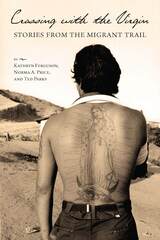
Crossing With the Virgin collects stories heard from migrants about these treacherous treks—firsthand accounts told to volunteers for the Samaritans, a humanitarian group that seeks to prevent such unnecessary deaths by providing these travelers with medical aid, water, and food. Other books have dealt with border crossing; this is the first to share stories of immigrant suffering at its worst told by migrants encountered on desert trails.
The Samaritans write about their encounters to show what takes place on a daily basis along the border: confrontations with Border Patrol agents at checkpoints reminiscent of wartime; children who die in their parents’ desperate bid to reunite families; migrants terrorized by bandits; and hovering ghost-like above nearly every crossing, the ever-present threat of death.
These thirty-nine stories are about the migrants, but they also tell how each individual author became involved with this work. As such, they offer not only a window into the migrants’ plight but also a look at the challenges faced by volunteers in sometimes compromising situations—and at their own humanizing process.
Crossing With the Virgin raises important questions about underlying assumptions and basic operations of border enforcement, helping readers see past political positions to view migrants as human beings. It will touch your heart as surely as it reassures you that there are people who still care about their fellow man.
Cross-Language Relations in Composition brings together the foremost scholars in the fields of composition, second language writing, education, and literacy studies to address the limitations of the tacit English-only policy prevalent in composition pedagogy and research and to suggest changes for the benefit of writing students and instructors throughout the United States. Recognizing the growing linguistic diversity of students and faculty, the ongoing changes in the English language as a result of globalization, and the increasingly blurred categories of native, foreign, and second language English speakers, editors Bruce Horner, Min-Zhan Lu, and Paul Kei Matsuda have compiled a groundbreaking anthology of essays that contest the dominance of English monolingualism in the study and teaching of composition and encourage the pursuit of approaches that embrace multilingualism and cross-language writing as the norm for teaching and research.
The nine chapters comprising part 1 of the collection focus on the origins of the “English only” bias dominating U.S. composition classes and present alternative methods of teaching and research that challenge this monolingualism. In part 2, nine composition teachers and scholars representing a variety of theoretical, institutional, and professional perspectives propose new, compelling, and concrete ways to understand and teach composition to students of a “global,” plural English, a language evolving in a multilingual world.
Drawing on recent theoretical work on genre, complexity, performance and identity, as well as postcolonialism, Cross-Language Relations in Composition offers a radically new approach to composition teaching and research, one that will prove invaluable to all who teach writing in today’s multilingual college classroom.
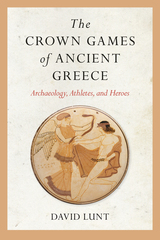
The Crown Games were the apex of competition in ancient Greece. Along with prestigious athletic contests in honor of Zeus at Olympia, they comprised the Pythian Games for Apollo at Delphi, the Isthmian Games for Poseidon, and the Nemean Games, sacred to Zeus. For over nine hundred years, the Greeks celebrated these athletic and religious festivals, a rare point of cultural unity amid the fierce regional independence of the numerous Greek city-states and kingdoms.
The Crown Games of Ancient Greece examines these festivals in the context of the ancient Greek world, a vast and sprawling cultural region that stretched from modern Spain to the Black Sea and North Africa. Illuminating the unique history and features of the celebrations, David Lunt delves into the development of the contest sites as sanctuaries and the Panhellenic competitions that gave them their distinctive character. While literary sources have long been the mainstay for understanding the evolution of the Crown Games and ancient Greek athletics, archaeological excavations have significantly augmented contemporary understandings of the events. Drawing on this research, Lunt brings deeper context to these gatherings, which were not only athletics competitions but also occasions for musical contests, dramatic performances, religious ceremonies, and diplomatic summits—as well as raucous partying. Taken as a circuit, the Crown Games offer a more nuanced view of ancient Greek culture than do the well-known Olympian Games on their own. With this comprehensive examination of the Crown Games, Lunt provides a new perspective on how the ancient Greeks competed and collaborated both as individuals and as city-states.

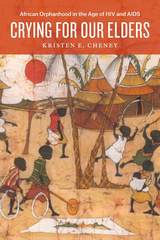
Through ethnographic fieldwork and collaborative research with children in Uganda, Cheney traces how the “best interest” principle that governs children’s’ rights can stigmatize orphans and leave children in the post-antiretroviral era even more vulnerable to exploitation. She details the dramatic effects this has on traditional family support and child protection and stresses child empowerment over pity. Crying for Our Elders advances current discussions on humanitarianism, children’s studies, orphanhood, and kinship. By exploring the unique experience of AIDS orphanhood through the eyes of children, caregivers, and policymakers, Cheney shows that despite the extreme challenges of growing up in the era of HIV/AIDS, the post-ARV generation still holds out hope for the future.

How the visual culture of food, cookery, and consumption played a central role in the making of postrevolutionary Mexico.
Postrevolutionary Mexico City was a site of anxious nation-building, as rampant modernization converged and clashed with the nation’s growing nostalgia for its pre-Columbian heritage. During this volatile period, food became a meaningful symbol for a Mexican citizenry seeking new modes of national participation.
Culinary Palettes explores how the artistic invocation of food cultures became an arena in which to negotiate the political entanglements of postrevolutionary Mexico. Lesley Wolff casts a nuanced eye on the work of visual artists such as Tina Modotti, Carlos González, and Rufino Tamayo, who nurtured the symbolic and performative power of iconic foods such as pulque, mole poblano, and watermelon. Through analysis of a wide array of visual evidence, including paintings, architecture, vintage postcards, menus, and cookbooks, Culinary Palettes demonstrates how these artists positioned their work within a broad visual landscape that relied upon the power of Mexican foodways in the urban and national imagination. In the studios of modernists, Wolff argues, artistic production, foodways, and Indigeneity proved to be mutually constitutive—and at times weaponized—agents in articulating competing claims to a new nationhood.
Cassarino takes the reader through the changing dynamics of food production and consumption, from wartime sensibilities of patriotic eating to the postwar excess of culinary cosmopolitanism and finally to contemporary supermarket pastorals. She pairs chefs and poets—Julia Child and Gertrude Stein, Poppy Cannon and Frank O’Hara, Vertamae Smart-Grosvenor and Harryette Mullen—to argue that each converts eating into an aesthetic opportunity that has the power to impact how people consume. In this way, Cassarino reveals the modern cookbook not just as a literary counterpart to contemporary poetry but also as vital to the literature and art occurring around it. From Futurist cookbooks to fast food lyrics, from Gullah recipes to Eat Art, she reminds us that global foodscapes are connected to aesthetic movements in literature and art.
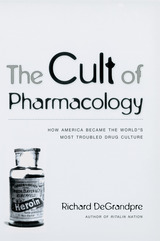
Exploring how this rather benign relationship with psychoactive drugs was transformed into one of confusion and chaos, The Cult of Pharmacology tells the dramatic story of how, as one legal drug after another fell from grace, new pharmaceutical substances took their place. Whether Valium or OxyContin at the pharmacy, cocaine or meth purchased on the street, or alcohol and tobacco from the corner store, drugs and drug use proliferated in twentieth-century America despite an escalating war on “drugs.”
Richard DeGrandpre, a past fellow of the National Institute on Drug Abuse and author of the best-selling book Ritalin Nation, delivers a remarkably original interpretation of drugs by examining the seductive but ill-fated belief that they are chemically predestined to be either good or evil. He argues that the determination to treat the medically sanctioned use of drugs such as Miltown or Seconal separately from the illicit use of substances like heroin or ecstasy has blinded America to how drugs are transformed by the manner in which a culture deals with them.
Bringing forth a wealth of scientific research showing the powerful influence of social and psychological factors on how the brain is affected by drugs, DeGrandpre demonstrates that psychoactive substances are not angels or demons irrespective of why, how, or by whom they are used. The Cult of Pharmacology is a bold and necessary new account of America’s complex relationship with drugs.
“McCloskey and Ziliak have been pushing this very elementary, very correct, very important argument through several articles over several years and for reasons I cannot fathom it is still resisted. If it takes a book to get it across, I hope this book will do it. It ought to.”
—Thomas Schelling, Distinguished University Professor, School of Public Policy, University of Maryland, and 2005 Nobel Prize Laureate in Economics
“With humor, insight, piercing logic and a nod to history, Ziliak and McCloskey show how economists—and other scientists—suffer from a mass delusion about statistical analysis. The quest for statistical significance that pervades science today is a deeply flawed substitute for thoughtful analysis. . . . Yet few participants in the scientific bureaucracy have been willing to admit what Ziliak and McCloskey make clear: the emperor has no clothes.”
—Kenneth Rothman, Professor of Epidemiology, Boston University School of Health
The Cult of Statistical Significance shows, field by field, how “statistical significance,” a technique that dominates many sciences, has been a huge mistake. The authors find that researchers in a broad spectrum of fields, from agronomy to zoology, employ “testing” that doesn’t test and “estimating” that doesn’t estimate. The facts will startle the outside reader: how could a group of brilliant scientists wander so far from scientific magnitudes? This study will encourage scientists who want to know how to get the statistical sciences back on track and fulfill their quantitative promise. The book shows for the first time how wide the disaster is, and how bad for science, and it traces the problem to its historical, sociological, and philosophical roots.
Stephen T. Ziliak is the author or editor of many articles and two books. He currently lives in Chicago, where he is Professor of Economics at Roosevelt University. Deirdre N. McCloskey, Distinguished Professor of Economics, History, English, and Communication at the University of Illinois at Chicago, is the author of twenty books and three hundred scholarly articles. She has held Guggenheim and National Humanities Fellowships. She is best known for How to Be Human* Though an Economist (University of Michigan Press, 2000) and her most recent book, The Bourgeois Virtues: Ethics for an Age of Commerce (2006).
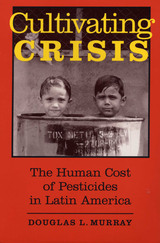
Since World War II, the Green Revolution has boosted agricultural production in Latin America and other parts of the Third World, with money, technical assistance, and other forms of aid from United States development agencies. But the Green Revolution came at a high price—massive pesticide dependence that has caused serious socioeconomic and public health problems and widespread environmental damage.
In this study, Douglas Murray draws on ten years of field research to tell the stories of international development strategies, pesticide problems, and agrarian change in Latin America. Interwoven with his considerations of economic and geopolitical dimensions are the human consequences for individual farmers and rural communities.
This highly interdisciplinary study, integrating the perspectives of sociology, ecology, economics, political science, and public health, adds an important voice to the debate on opportunities for and obstacles to more lasting and sustainable development in the Third World. It will be of interest to a wide audience in the social and environmental sciences.
Development agencies and researchers are preoccupied with policy; with exerting influence over policy, linking research to policy and with implementing policy around the world.
But what if development practice is not driven by policy? Suppose that the things that make for 'good policy' - policy that legitimises and mobilises political support - in reality make it impossible to implement?
By focusing in detail on the unfolding activities of a development project in western India over more than ten years, as it falls under different policy regimes, this book takes a close look at the relationship between policy and practice in development.
David Mosse shows how the actions of development workers are shaped by the exigencies of organisations and the need to maintain relationships rather than by policy; but also that development actors work hardest of all to maintain coherent representations of their actions as instances of authorised policy. Raising unfamiliar questions, Mosse provides a rare self-critical reflection on practice, while refusing to endorse current post-modern dismissal of development.
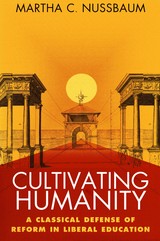
How can higher education today create a community of critical thinkers and searchers for truth that transcends the boundaries of class, gender, and nation? Martha C. Nussbaum, philosopher and classicist, argues that contemporary curricular reform is already producing such “citizens of the world” in its advocacy of diverse forms of cross-cultural studies. Her vigorous defense of “the new education” is rooted in Seneca’s ideal of the citizen who scrutinizes tradition critically and who respects the ability to reason wherever it is found—in rich or poor, native or foreigner, female or male.
Drawing on Socrates and the Stoics, Nussbaum establishes three core values of liberal education: critical self-examination, the ideal of the world citizen, and the development of the narrative imagination. Then, taking us into classrooms and campuses across the nation, including prominent research universities, small independent colleges, and religious institutions, she shows how these values are (and in some instances are not) being embodied in particular courses. She defends such burgeoning subject areas as gender, minority, and gay studies against charges of moral relativism and low standards, and underscores their dynamic and fundamental contribution to critical reasoning and world citizenship.
For Nussbaum, liberal education is alive and well on American campuses in the late twentieth century. It is not only viable, promising, and constructive, but it is essential to a democratic society. Taking up the challenge of conservative critics of academe, she argues persuasively that sustained reform in the aim and content of liberal education is the most vital and invigorating force in higher education today.
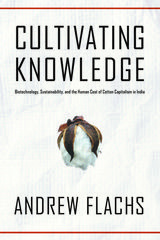
In Cultivating Knowledge anthropologist Andrew Flachs shows how rural farmers come to plant genetically modified or certified organic cotton, sometimes during moments of agrarian crisis. Interweaving ethnographic detail, discussions of ecological knowledge, and deep history, Flachs uncovers the unintended consequences of new technologies, which offer great benefits to some—but at others’ expense. Flachs shows that farmers do not make simple cost-benefit analyses when evaluating new technologies and options. Their evaluation of development is a complex and shifting calculation of social meaning, performance, economics, and personal aspiration. Only by understanding this complicated nexus can we begin to understand sustainable agriculture.
By comparing the experiences of farmers engaged with these mutually exclusive visions for the future of agriculture, Cultivating Knowledge investigates the human responses to global agrarian change. It illuminates the local impact of global changes: the slow, persistent dangers of pesticides, inequalities in rural life, the aspirations of people who grow fibers sent around the world, the place of ecological knowledge in modern agriculture, and even the complex threat of suicide. It all begins with a seed.
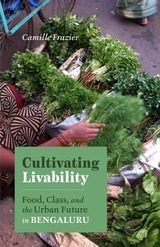
What urban food networks reveal about middle class livability in times of transformation
In recent years, the concept of “livability” has captured the global imagination, influencing discussions about the implications of climate change on human life and inspiring rankings of “most livable cities” in popular publications. But what really makes for a livable life, and for whom?
Cultivating Livability takes Bengaluru, India, as a case study—a city that is alternately described as India’s most and least livable megacity, where rapid transformation is undergirded by inequalities evident in the food networks connecting peri-urban farmers and the middle-class public. Anthropologist Camille Frazier probes the meaning of “livability” in Bengaluru through ethnographic work among producers and consumers, corporate intermediaries and urban information technology professionals.
Examining the varying efforts to reconfigure processes of food production, distribution, retail, and consumption, she reveals how these intersections are often rooted in and exacerbate ongoing forms of disenfranchisement that privilege some lives at the expense of others.
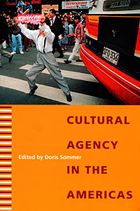
Based in North and South America, scholars from fields including anthropology, performance studies, history, literature, and communications studies explore specific variations of cultural agency across Latin America. Contributors reflect, for example, on the paradoxical programming and reception of a state-controlled Cuban radio station that connects listeners at home and abroad; on the intricacies of indigenous protests in Brazil; and the formulation of cultural policies in cosmopolitan Mexico City. One contributor notes that trauma theory targets individual victims when it should address collective memory as it is worked through in performance and ritual; another examines how Mapuche leaders in Argentina perceived the pitfalls of ethnic essentialism and developed new ways to intervene in local government. Whether suggesting modes of cultural agency, tracking exemplary instances of it, or cautioning against potential missteps, the essays in this book encourage attentiveness to, and the multiplication of, the many extraordinary instantiations of cultural resourcefulness and creativity throughout Latin America and beyond.
Contributors. Arturo Arias, Claudia Briones, Néstor García Canclini, Denise Corte, Juan Carlos Godenzzi, Charles R. Hale, Ariana Hernández-Reguant, Claudio Lomnitz, Jesús Martín Barbero, J. Lorand Matory, Rosamel Millamán, Diane M. Nelson, Mary Louise Pratt, Alcida Rita Ramos, Doris Sommer, Diana Taylor, Santiago Villaveces
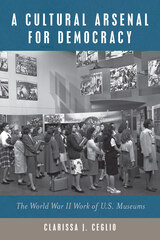
Unsurprisingly, exhibitions served as the primary vehicle through which museums, large and small, engaged their publics with wartime topics with fare ranging from displays on the cultures of Allied nations to "living maps" that charted troop movements and exhibits on war preparedness. Clarissa J. Ceglio chronicles debates, experiments, and collaborations from the 1930s to the immediate postwar years, investigating how museums re-envisioned the exhibition as a narrative medium and attempted to reconcile their mission with new modes of storytelling.
Gieryn looks at episodes of boundary-work: Was phrenology good science? How about cold fusion? Is social science really scientific? Is organic farming? After centuries of disputes like these, Gieryn finds no stable criteria that absolutely distinguish science from non-science. Science remains a pliable cultural space, flexibly reshaped to claim credibility for some beliefs while denying it to others. In a timely epilogue, Gieryn finds this same controversy at the heart of the raging "science wars."
Most scholars of genocide focus on mass murder. Lawrence Davidson, by contrast, explores the murder of culture. He suggests that when people have limited knowledge of the culture outside of their own group, they are unable to accurately assess the alleged threat of others around them. Throughout history, dominant populations have often dealt with these fears through mass murder. However, the shock of the Holocaust now deters today’s great powers from the practice of physical genocide. Majority populations, cognizant of outside pressure and knowing that they should not resort to mass murder, have turned instead to cultural genocide as a “second best” politically determined substitute for physical genocide.
In Cultural Genocide, this theory is applied to events in four settings, two events that preceded the Holocaust and two events that followed it: the destruction of American Indians by uninformed settlers who viewed these natives as inferior and were more intent on removing them from the frontier than annihilating them; the attack on the culture of Eastern European Jews living within Russian-controlled areas before the Holocaust; the Israeli attack on Palestinian culture; and the absorption of Tibet by the People’s Republic of China.
In conclusion, Davidson examines the mechanisms that may be used to combat today’s cultural genocide as well as the contemporary social and political forces at work that must be overcome in the process.
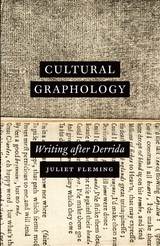
Fleming shows that the single most important lesson to survive from Derrida’s early work is that we do not know what writing is. Channeling Derrida’s thought into places it has not been seen before, she examines printed errors, spaces, and ornaments (topics that have hitherto been marginal to our accounts of print culture) and excavates the long-forgotten reading practice of cutting printed books. Proposing radical deformations to the meanings of fundamental and apparently simple terms such as “error,” “letter,” “surface,” and “cut,” Fleming opens up exciting new pathways into our understanding of writing all told.

This edited volume is an exploration of the social, cultural, political, and commercial implications of the trailblazing reality television series RuPaul’s Drag Race. Going beyond mere analysis of the show itself, the contributors interrogate the ways RuPaul’s Drag Race has affected queer representation in media, examining its audience, economics, branding, queer politics, and every point in between.
Since its groundbreaking and subversive entry into the reality television complex in 2009, the show has had profound effects on drag and the cultures that surround it. Bringing together scholarship across disciplines—including cultural anthropology, media studies, linguistics, sociology, marketing, and theater and performance studies—the collection offers rich academic analysis of Ru Paul’s Drag Race and its lasting influence on fan cultures, queer representation, and the very fabric of drag as an art form in popular cultural consciousness.
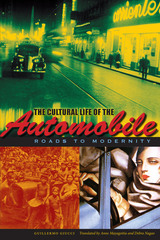
From its invention in Europe at the end of the nineteenth century, the automobile crisscrossed the world, completely took over the cities, and became a feature of daily life. Considered basic to the American lifestyle, the car reflected individualism, pragmatism, comfort, and above all modernity. In Latin America, it served as a symbol of distinction, similar to jewelry or fine clothing. In The Cultural Life of the Automobile, Guillermo Giucci focuses on the automobile as an instrument of social change through its “kinetic modernity” and as an embodiment of the tremendous social impact of technology on cultural life.
Material culture—how certain objects generate a wide array of cultural responses—has been the focus of much scholarly discussion in recent years. The automobile wrought major changes and inspired images in language, literature, and popular culture. Focusing primarily on Latin America but also covering the United States, Europe, Asia, and Africa, Giucci examines how the automobile was variously adapted by different cultures and how its use shaped and changed social and economic relationships within them. At the same time, he shows how the “automobilization” of society became an essential support for the development of modern individualism, and the automobile its clearest material manifestation.
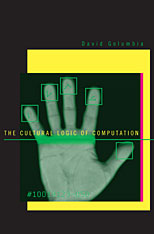
Advocates of computers make sweeping claims for their inherently transformative power: new and different from previous technologies, they are sure to resolve many of our existing social problems, and perhaps even to cause a positive political revolution.
In The Cultural Logic of Computation, David Golumbia, who worked as a software designer for more than ten years, confronts this orthodoxy, arguing instead that computers are cultural “all the way down”—that there is no part of the apparent technological transformation that is not shaped by historical and cultural processes, or that escapes existing cultural politics. From the perspective of transnational corporations and governments, computers benefit existing power much more fully than they provide means to distribute or contest it. Despite this, our thinking about computers has developed into a nearly invisible ideology Golumbia dubs “computationalism”—an ideology that informs our thinking not just about computers, but about economic and social trends as sweeping as globalization.
Driven by a programmer’s knowledge of computers as well as by a deep engagement with contemporary literary and cultural studies and poststructuralist theory, The Cultural Logic of Computation provides a needed corrective to the uncritical enthusiasm for computers common today in many parts of our culture.

Addressing the increasing significance of digital platforms, this work examines the transformative roles of over-the-top streaming services—Netflix, Viki, and V Live—video-sharing platforms such as YouTube, and social media platforms such as TikTok and Instagram, and the power relations between content producers, information technology sectors, the government, creative laborers, and audiences in the globalization of Korean culture and media. By developing critical cultural industries studies as a new theoretical framework, Cultural Production of Hallyu in the Digital Platform Era explores the ever-growing Korean Wave phenomenon with the advent of global digital platforms.
The late Dwight Conquergood’s research has inspired an entire generation of scholars invested in performance as a meaningful paradigm to understand human interaction, especially between structures of power and the disenfranchised. Conquergood’s research laid the groundwork for others to engage issues of ethics in ethnographic research, performance as a meaningful paradigm for ethnography, and case studies that demonstrated the dissolution of theory/practice binaries.Cultural Struggles is the first gathering of Conquergood’s work in a single volume, tracing the evolution of one scholar’s thinking across a career of scholarship, teaching, and activism, and also the first collection of its kind to bring together theory, method, and complete case studies.
The collection begins with an illuminating introduction by E. Patrick Johnson and ends with commentary by other scholars (Micaela di Leonardo, Judith Hamera, Shannon Jackson, D. Soyini Madison, Lisa Merrill, Della Pollock, and Joseph Roach), engaging aspects of Conquergood’s work and providing insight into how that work has withstood the test of time, as scholars still draw on his research to inform their current interests and methods.
Working in several subdisciplines, contributors report on research in the areas of cultural boundaries, cultural transmission, and the socially organized nature of learning. Boundaries are found not only within and between the societies in these studies but also within and between the communities of scholars who study them. To break down these boundaries, this volume includes scholars who use multiple theoretical perspectives, including practice theory and evolutionary traditions, which are sometimes complementary and occasionally clashing. Geographic coverage ranges from the indigenous Americas to Africa, the Near East, and South Asia, and the time frame extends from the prehistoric or precontact to colonial periods and up to the ethnographic present. Contributors include leading scholars from the United States, Canada, the United Kingdom, and Europe. Together, they employ archaeological, ethnographic, ethnoarchaeological,experimental, and simulation data to link micro-scale processes of cultural transmission to macro-scale processes of social group boundary formation, continuity, and change.
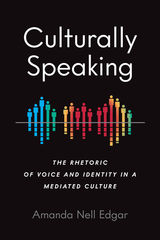
Recent pieces by NPR, the BBC, and Forbes have called attention to the power of voice—positing that “your voice is the secret to getting hired” and that “voice can accelerate or hold back a career.” While it has become clearer that such things as pitch and intonation can be tied to assumptions about one’s gender, race/ethnicity, and class, studying voice as a socially constructed artifact carries with it unique challenges. In response, Culturally Speaking: The Rhetoric of Voice and Identity in a Mediated Culture presents an innovative approach to studying the spoken voice in media, showing how racial and gendered oppression bubble beneath the surface of American culture’s most recognized speaking voices, spreading invisible messages about which kinds of vocal identities are privileged and which kinds should be silenced.
Through her analysis of prominent voices in American culture—including Morgan Freeman, Tina Fey, Barack Obama, Adele, Dave Chappelle, Richard Pryor, and George Lopez—Amanda Nell Edgar argues that voices carry a residue of the particular cultural environments in which they are formed, and that these environments can be traced and analyzed to add a sonic dimension to our understanding of race and gender as rhetorically situated identities—pushing back against the often-unnoticed systems of sound-based discrimination.
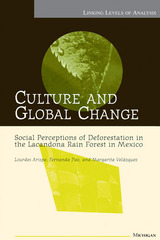
The authors of this compelling book argue that before suitable solutions can be found to pressing environmental problems, we need a way to gather information on the human dimensions of global changes. How do small and everyday individual actions add up to the intricate networks of global interactions? What are our rights and responsibilities as humans toward the planet and its natural resources?
The Lacandon rain forest in Mexico provides a vivid example of an environmental challenge that will demand the concerted efforts of many different groups, and not only technical solutions, to resolve successfully. Using data taken largely from in-depth interviews with landowners, farm workers, cattle raisers, housewives, professionals, and civil servants, the authors draw a rich portrait of the varied perceptions and positions these groups and individuals hold. At issue are the social, rather than psychological, bases of their perspectives.
Culture and Global Change offers a model for how the social sciences, and anthropology in particular, can lead the way in developing comprehensive understandings of the interrelationships between groups at the local, regional, and international levels that affect perceptions of the environment and thus the viability of solutions. It is required reading for anthropologists and environmental activists alike.
Lourdes Arizpe is Assistant Director-General for Culture, UNESCO. Fernanda Paz and Margarita Vel´zquez work for the Centro Regional de Investigaciones Multidisciplinarias, Universidad Nacional Autonoma de México.
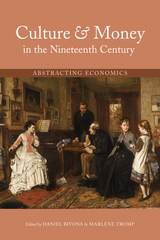
Since the 1980s, scholars have made the case for examining nineteenth-century culture—particularly literary output—through the lens of economics. In Culture and Money in the Nineteenth Century: Abstracting Economics, two luminaries in the field of Victorian studies, Daniel Bivona and Marlene Tromp, have collected contributions from leading thinkers that push New Economic Criticism in new and exciting directions.
Spanning the Americas, India, England, and Scotland, this volume adopts an inclusive, global view of the cultural effects of economics and exchange. Contributors use the concept of abstraction to show how economic thought and concerns around money permeated all aspects of nineteenth-century culture, from the language of wills to arguments around the social purpose of art.
The characteristics of investment and speculation; the fraught symbolic and practical meanings of paper money to the Victorians; the shifting value of goods, services, and ideas; the evolving legal conceptualizations of artistic ownership—all of these, contributors argue, are essential to understanding nineteenth-century culture in Britain and beyond.
Contributors: Daniel Bivona, Suzanne Daly, Jennifer Hayward, Aeron Hunt, Roy Kreitner, Kathryn Pratt Russell, Cordelia Smith, and Marlene Tromp.
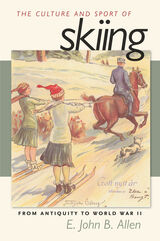
Of all the individuals who contributed to the modernization of skiing before World War II, Allen identifies three who were especially influential: Fridtjof Nansen of Norway, whose explorations on skis paradoxically inspired the idea of skiing as sport; Arnold Lunn of England, whose invention of downhill skiing and the slalom were foundations of the sport's globalization; and Hannes Schneider, whose teachings introduced both speed and safety into the sport.
Underscoring the extent to which ancient ways persisted despite modernization, the book ends with the Russo-Finnish War, a conflict in which the Finns, using equipment that would have been familiar a thousand years before, were able to maneuver in snow that had brought the mechanized Soviet army to a halt.
More than fifty images not only illustrate this rich history but provide further opportunity for analysis of its cultural significance.
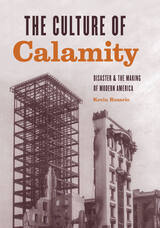
Turn on the news and it looks as if we live in a time and place unusually consumed by the specter of disaster. The events of 9/11 and the promise of future attacks, Hurricane Katrina and the destruction of New Orleans, and the inevitable consequences of environmental devastation all contribute to an atmosphere of imminent doom. But reading an account of the San Francisco earthquake of 1906, with its vivid evocation of buildings “crumbling as one might crush a biscuit,” we see that calamities—whether natural or man-made—have long had an impact on the American consciousness.
Uncovering the history of Americans’ responses to disaster from their colonial past up to the present, Kevin Rozario reveals the vital role that calamity—and our abiding fascination with it—has played in the development of this nation. Beginning with the Puritan view of disaster as God’s instrument of correction, Rozario explores how catastrophic events frequently inspired positive reactions. He argues that they have shaped American life by providing an opportunity to take stock of our values and social institutions. Destruction leads naturally to rebuilding, and here we learn that disasters have been a boon to capitalism, and, paradoxically, indispensable to the construction of dominant American ideas of progress.
As Rozario turns to the present, he finds that the impulse to respond creatively to disasters is mitigated by a mania for security. Terror alerts and duct tape represent the cynical politician’s attitude about 9/11, but Rozario focuses on how the attacks registered in the popular imagination—how responses to genuine calamity were mediated by the hyperreal thrills of movies; how apocalyptic literature, like the best-selling Left Behind series, recycles Puritan religious outlooks while adopting Hollywood’s style; and how the convergence of these two ways of imagining disaster points to a new postmodern culture of calamity. The Culture of Calamity will stand as the definitive diagnosis of the peculiarly American addiction to the spectacle of destruction.

Kitharoidia was arguably the most popular, most geographically widespread, and longest-running performance genre in antiquity. From the archaic period to the late Roman imperial era, citharodes enjoyed star status, playing their songs to vast crowds at festival competitions and concerts throughout the Mediterranean world.
The Culture of Kitharoidia is the first study dedicated exclusively to the art, practice, and charismatic persona of the citharode. Traversing a wide range of discourse and imagery about kitharoidia—poetic and prose texts, iconography, inscriptions—the book offers a nuanced account of the aesthetic and sociocultural complexities of citharodic song and examines the iconic role of the songmakers in the popular imagination, from mythical citharodes such as Orpheus to the controversial innovator Timotheus, to that most notorious of musical dilettantes, Nero.
Cultures of Doing Good: Anthropologists and NGOs serves as a foundational text to advance a growing subfield of social science inquiry: the anthropology of nongovernmental organizations (NGOs). Thorough introductory chapters provide a short history of NGO anthropology, address how the study of NGOs contributes to anthropology more broadly, and examine ways that anthropological studies of NGOs expand research agendas spawned by other disciplines. In addition, the theoretical concepts and debates that have anchored the analysis of NGOs since they entered scholarly discourse after World War II are explained.
The wide-ranging volume is organized into thematic parts: “Changing Landscapes of Power,” “Doing Good Work,” and “Methodological Challenges of NGO Anthropology.” Each part is introduced by an original, reflective essay that contextualizes and links the themes of each chapter to broader bodies of research and to theoretical and methodological debates. A concluding chapter synthesizes how current lines of inquiry consolidate and advance the first generation of anthropological NGO studies, highlighting new and promising directions in this field.
In contrast to studies about surveys of NGOs that cover a single issue or region, this book offers a survey of NGO dynamics in varied cultural and political settings. The chapters herein cover NGO life in Tanzania, Serbia, the Czech Republic, Egypt, Peru, the United States, and India. The diverse institutional worlds and networks include feminist activism, international aid donors, USAID democracy experts, Romani housing activism, academic gender studies, volunteer tourism, Jewish philanthropy, Islamic faith-based development, child welfare, women’s legal arbitration, and environmental conservation.
The collection explores issues such as normative democratic civic engagement, elitism and professionalization, the governance of feminist advocacy, disciplining religion, the politics of philanthropic neutrality, NGO tourism and consumption, blurred boundaries between anthropologists as researchers and activists, and barriers to producing critical NGO ethnographies.
In Cultures of Fear, a truly world-class line up of scholars explore the formation and normalisation of fear in the context of war and terrorism.
"Freedom from fear" is a universal right and fundamental for human well-being. People often look to governments, humanitarian agencies, and other institutions to further this aim. However, this book shows that these organisations often use the same "logic of fear" to monitor, control, and contain human beings in zones of violence.
This is an excellent interdisciplinary reader for students of anthropology, sociology and politics. Contributors include Noam Chomsky, Slavoj Zizek, Jean Baudrillard, Catharine MacKinnon, Neil Smith, Cynthia Enloe, David L. Altheide, Cynthia Cockburn and Carolyn Nordstrum.

This transatlantic and truly interdisciplinary collection, with an afterword by distinguished literary scholar Rita Felski, is also notable for its mix of established and emerging scholars. The contributors address diverse aspects of women’s engagement with fashion in modernity, through such topics as Sapphic architecture, tea gowns, secondhand clothing, transnational identity, the coquette, nursing uniforms, and Harlem Renaissance photographs. Cultures of Femininity in Modern Fashion traces a unique and often surprising history of modernity and its entwinement with the gendered phenomenon of fashion.
Around the globe, people leave their homes to better themselves, to satisfy needs, and to care for their families. They also migrate to escape undesirable conditions, ranging from a lack of economic opportunities to violent conflicts at home or in the community. Most studies of migration have analyzed the topic at either the macro level of national and global economic and political forces, or the micro level of the psychology of individual migrants. Few studies have examined the "culture of migration"—that is, the cultural beliefs and social patterns that influence people to move.
Cultures of Migration combines anthropological and geographical sensibilities, as well as sociological and economic models, to explore the household-level decision-making process that prompts migration. The authors draw their examples not only from their previous studies of Mexican Oaxacans and Turkish Kurds but also from migrants from Europe, sub-Saharan Africa, the Pacific, and many parts of Asia. They examine social, economic, and political factors that can induce a household to decide to send members abroad, along with the cultural beliefs and traditions that can limit migration. The authors look at both transnational and internal migrations, and at shorter- and longer-term stays in the receiving location. They also consider the effect that migration has on those who remain behind. The authors' "culture of migration" model adds an important new dimension to our understanding of the cultural beliefs and social patterns associated with migration and will help specialists better respond to increasing human mobility.
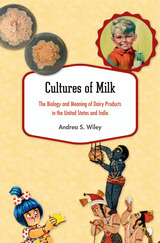
Milk is the only food mammals produce naturally to feed their offspring. The human species is the only one that takes milk from other animals and consumes it beyond weaning age. Cultures of Milk contrasts the practices of the world’s two leading milk producers, India and the United States. In both countries, milk is considered to have special qualities. Drawing on ethnographic and scientific studies, popular media, and government reports, Andrea Wiley reveals that the cultural significance of milk goes well beyond its nutritive value.
Shifting socioeconomic and political factors influence how people perceive the importance of milk and how much they consume. In India, where milk is out of reach for many, consumption is rising rapidly among the urban middle class. But milk drinking is declining in America, despite the strength of the dairy industry. Milk is bound up in discussions of food scarcity in India and food abundance in the United States. Promotion of milk as a means to enhance child growth boosted consumption in twentieth-century America and is currently doing the same in India, where average height is low. Wiley considers how variation among populations in the ability to digest lactose and ideas about how milk affects digestion influence the type of milk and milk products consumed. In India, most milk comes from buffalo, but cows have sacred status for Hindus. In the United States, cow’s milk has long been a privileged food, but is now facing competition from plant-based milk.
Contributors. Bruno Belhoste, Karine Chemla, Caroline Ehrhardt, Fa-ti Fan,Kenji Ito, Evelyn Fox Keller, Guillaume Lachenal, Donald MacKenzie, Mary S. Morgan, Nancy J. Nersessian, David Rabouin, Hans-Jörg Rheinberger, Claude Rosental, Koen Vermeir
Curating Community is a book for academics, artists, curators, and constitutional designers interested in legacies of violence, transitional justice, and democracy.
A trailblazing exploration of the political stakes of curiosity
Curiosity is political. Who is curious, when, and how reflects the social values and power structures of a given society. In Curiosity and Power, Perry Zurn explores the political philosophy of curiosity, staking the groundbreaking claim that it is a social force—the heartbeat of political resistance and a critical factor in social justice. He argues that the very scaffolding of curiosity is the product of political architectures, and exploring these values and architectures is crucial if we are to better understand, and more ethically navigate, the struggle over inquiry in an unequal world.
Curiosity and Power explores curiosity through the lens of political philosophy—weaving in Nietzsche, Foucault, and Derrida in doing so—and the experience of political marginalization, demonstrating that curiosity is implicated equally in the maintenance of societies and in their transformation. Curiosity plays as central a role in establishing social institutions and fields of inquiry as it does in their deconstruction and in building new forms of political community. Understanding curiosity is critical to understanding politics, and understanding politics is critical to understanding curiosity.
Drawing not only on philosophy and political theory but also on feminist theory, race theory, disability studies, and trans studies, Curiosity and Power tracks curiosity in the structures of political marginalization and resistance—from the Civil Rights Movement to building better social relationships. Curiosity and Power insists that the power of curiosity be recognized and engaged responsibly.
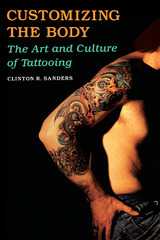

Originally published in 1989, this ground-breaking ethnographic exploration of tattooing—and the art world surrounding it—covers the history, anthropology and sociology of body modification practices; the occupational experience of the tattooist; the process and social consequences of becoming a tattooed person; and the prospects of "serious" tattooing becoming an accepted art form. Curiously, despite the greater prevalence of tattoos and body modification in today’s society, there is still a stigma of deviance associated with people who get or ink tattoos.
Retaining the core of the original book, this revised and expanded edition offers a new preface by the author and a new chapter focusing on the changes that have occurred in the tattoo world. A section on the new scholarly literature that has emerged, as well as the new modes of body modification that have come into vogue are included along with a new gallery of photographs that shows some splendid examples of contemporary tattoo art. A directory of artists' websites invites readers to discover the range of work being done around the world—from “suits” (full body tattoos) to skulls.
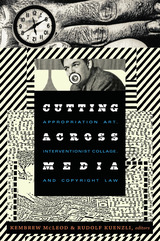
Contributors. Craig Baldwin, David Banash, Marcus Boon, Jeff Chang, Joshua Clover, Lorraine Morales Cox, Lloyd Dunn, Philo T. Farnsworth, Pierre Joris, Douglas Kahn, Rudolf Kuenzli, Rob Latham, Jonathan Lethem, Carrie McLaren, Kembrew McLeod, Negativland, Davis Schneiderman, David Tetzlaff, Gábor Vályi, Warner Special Products, Eva Hemmungs Wirtén
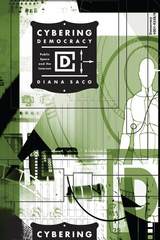
Reconceptualizes the relationship between participatory democracy, technology, and space
The Internet has been billed by some proponents as an "electronic agora" ushering in a "new Athenian age of democracy." That assertion assumes that cyberspace’s virtual environment is compatible with democratic practice. But the anonymous sociality that is intrinsic to the Internet seems at odds with theories of democracy that presuppose the possibility, at least, of face-to-face meetings among citizens. The Internet, then, raises provocative questions about democratic participation: Must the public sphere exist as a physical space? Does citizenship require a bodily presence?
In Cybering Democracy, Diana Saco boldly reconceptualizes the relationship between democratic participation and spatial realities both actual and virtual. She argues that cyberspace must be viewed as a produced social space, one that fruitfully confounds the ordering conventions of our physical spaces. Within this innovative framework, Saco investigates recent and ongoing debates over cryptography, hacking, privacy, national security, information control, and Internet culture, focusing on how different online practices have shaped this particular social space. In the process, she highlights fundamental issues about the significance of corporeality in the development of civic-mindedness, the exercise of citizenship, and the politics of collective action.
Cyber-Proletariat brings Marxist analysis to bear on a range of modern informational technologies. The result is a book indispensable to social theorists and hacktivists alike and essential reading for anyone who wants to understand how Silicon Valley shapes the way we live today.
READERS
Browse our collection.
PUBLISHERS
See BiblioVault's publisher services.
STUDENT SERVICES
Files for college accessibility offices.
RECENTLY PUBLISHED




UChicago Accessibility Resources
home | accessibility | search | about | contact us
BiblioVault ® 2001 - 2025
The University of Chicago Press