
 A SCHOLARLY BOOK REPOSITORY
7 start with C start with C
Composition research consistently demonstrates that the social context of writing determines the majority of conventions any writer must observe. Still, most universities organize the required first-year composition course as if there were an intuitive set of general writing "skills" usable across academic and work-world settings.
In College Writing and Beyond: A New Framework for University Writing Instruction, Anne Beaufort reports on a longitudinal study comparing one student’s experience in FYC, in history, in engineering, and in his post-college writing. Her data illuminate the struggle of college students to transfer what they learn about "general writing" from one context to another. Her findings suggest ultimately not that we must abolish FYC, but that we must go beyond even genre theory in reconceiving it.
Accordingly, Beaufort would argue that the FYC course should abandon its hope to teach a sort of general academic discourse, and instead should systematically teach strategies of responding to contextual elements that impinge on the writing situation. Her data urge attention to issues of learning transfer, and to developmentally sound linkages in writing instruction within and across disciplines. Beaufort advocates special attention to discourse community theory, for its power to help students perceive and understand the context of writing.
This book is a collection of essays originally presented at Ann Arbor Symposium IV, Teaching and Learning Popular Music, at the University of Michigan. Organized into four sections of similar-themed writings, the essays trace numerous discourses, principles, methods, and prospects for popular music education in academia. Additionally, the book contains several features that are useful for modern-day scholars and their institutions. First, it acknowledges the gradual liquidation of traditional disciplinary boundaries, signaling the likely future dominance of interdisciplinary research and collaborations. Second, it values international perspectives of music teaching and learning. Third, the selected topics, methodologies, and predictions provide a working agenda for the future development and success of popular music teaching and learning.
Using Mark as a test case, scholars address questions like: How should my research and my approach to the text play out in the classroom? What differences should my academic context and my students' expectations make? How should new approaches and innovations inform interpretation and teaching? This resource enables biblical studies instructors to explore various interpretative approaches and to begin to engage pedagogical issues in our changing world.
Features:
- Ideas that may be adapted for teaching any biblical text
- Diverse perspectives from nine experts in their fields
- Essays include tips, ideas, and lesson plans for the classroom
The second edition is a thorough revision with all chapters updated to refer to works written since the first edition was published. A few chapters have been added: one devoted to writing in a digital era (Chapter 3); one devoted to the debates about English as a lingua franca, "translingual literacy practices," and other hybrid uses of English that have been ongoing in the last ten years (Chapter 4); and one giving special attention to issues related to writing from sources and plagiarism (Chapter 6).
As with the first edition, the second edition of Controversies is not a book that will teach readers how to do things. Rather, it is a book designed to help readers think and to wrestle with issues in L2 writing that are not easily resolved by how-to prescriptions.
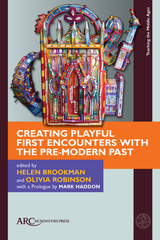
This collection explores playful ways of fostering creative engagements with the medieval and early modern past and its own literary and artistic products, especially among those new to their study.
As scholars and teachers of early English, the contributors cover literary and cultural material from a range of genres within the Old English, Middle English, Tudor, and Stuart periods and collectively delve into a shared interest in facilitating what we might loosely define as “newcomer” or “non-specialist” encounters with the past: initial, exploratory contact in which prior knowledge cannot be assumed, whether involving creative professionals, experts from other disciplines, undergraduate and school students, or members of the public. Considering artworks and installation, theatre and performance and curation practices, case studies offer practice-based examples of learning and engagement which proceed primarily through creative and playful approaches. The case studies are arranged into two broad groups: those which work through performance and theatrical play of various kinds, and those which work through playful practices of production and making. All share a perspective of irreverence, of vivid immersion, and of the possibilities of conjuring with the past.

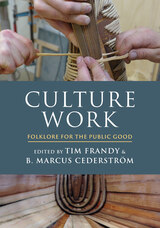
Thematically arranged chapters embody the interconnected aspects of culture work, from amplifying local voices to galvanizing community from within, from preservation of cultural knowledge to its creative repurposing for a desired future. These inventive projects provide concrete examples and accessible theory grounded in practice, encourage readers to embark on their own public culture work, and create new forward-looking inspiration for community leaders and scholars in the field.
READERS
Browse our collection.
PUBLISHERS
See BiblioVault's publisher services.
STUDENT SERVICES
Files for college accessibility offices.
RECENTLY PUBLISHED




UChicago Accessibility Resources
home | accessibility | search | about | contact us
BiblioVault ® 2001 - 2025
The University of Chicago Press