
 A SCHOLARLY BOOK REPOSITORY
12 start with C start with C

Every scientist working today draws on databases to produce scientific knowledge. Databases have become more common than microscopes, voltmeters, and test tubes, and the increasing amount of data has led to major changes in research practices and profound reflections on the proper professional roles of data producers, collectors, curators, and analysts.
Collecting Experiments traces the development and use of data collections, especially in the experimental life sciences, from the early twentieth century to the present. It shows that the current revolution is best understood as the coming together of two older ways of knowing—collecting and experimenting, the museum and the laboratory. Ultimately, Bruno J. Strasser argues that by serving as knowledge repositories, as well as indispensable tools for producing new knowledge, these databases function as digital museums for the twenty-first century.
On a near-daily basis, data is being used to narrate our lives. Categorizing algorithms draw from amassed personal data to assign narrative destinies to individuals at crucial junctures, simultaneously predicting and shaping the paths of our lives. Data is commonly assumed to bring us closer to objectivity, but the narrative paths these algorithms assign seem, more often than not, to replicate biases about who an individual is and could become.
While the social effects of such algorithmic logics seem new and newly urgent to consider, Collecting Lives looks to the late nineteenth and early twentieth century US to provide an instructive prehistory to the underlying question of the relationship between data, life, and narrative. Rodrigues contextualizes the application of data collection to human selfhood in the late nineteenth and early twentieth century US in order to uncover a modernist aesthetic of data that offers an alternative to the algorithmic logic pervading our sense of data’s revelatory potential. Examining the work of W. E. B. Du Bois, Henry Adams, Gertrude Stein, and Ida B. Wells-Barnett, Rodrigues asks how each of these authors draw from their work in sociology, history, psychology, and journalism to formulate a critical data aesthetic as they attempt to answer questions of identity around race, gender, and nation both in their research and their life writing. These data-driven modernists not only tell different life stories with data, they tell life stories differently because of data.
“What any body is—and is able to do—cannot be disentangled from the media we use to consume and produce texts.” ---from the Introduction.
Kristin Arola and Anne Wysocki argue that composing in new media is composing the body—is embodiment. In Composing (Media) = Composing (Embodiment), they havebrought together a powerful set of essays that agree on the need for compositionists—and their students—to engage with a wide range of new media texts. These chapters explore how texts of all varieties mediate and thereby contribute to the human experiences of communication, of self, the body, and composing. Sample assignments and activities exemplify how this exploration might proceed in the writing classroom.
Contributors here articulate ways to understand how writing enables the experience of our bodies as selves, and at the same time to see the work of (our) writing in mediating selves to make them accessible to institutional perceptions and constraints. These writers argue that what a body does, and can do, cannot be disentangled from the media we use, nor from the times and cultures and technologies with which we engage.
To the discipline of composition, this is an important discussion because it clarifies the impact/s of literacy on citizens, freedoms, and societies. To the classroom, it is important because it helps compositionists to support their students as they enact, learn, and reflect upon their own embodied and embodying writing.

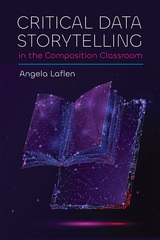
At the heart of Laflen’s approach is critical data storytelling—a practice that equips students with the skills to understand, interpret, and ethically communicate with and about data through various multimodal formats. By teaching students to make informed decisions as data storytellers, Laflen addresses the ethical implications of working with data while offering practical strategies for reading and analyzing data stories. This approach empowers both students and teachers to engage critically with data as a tool for learning and communication. It also highlights how multimodal composition has yet to fully account for the central role of data in shaping contemporary communication and argumentation.
By focusing on the ethical and rhetorical dimensions of data storytelling, Critical Data Storytelling in the Composition Classroompresents a pedagogical approach that prepares students for the challenges of working with data in a rapidly evolving digital landscape. This flexible, adaptable model for teaching critical data literacy is of great interest to writing instructors, scholars in rhetoric and composition, and educators who seek to prepare students for the demands of a data-driven world.

READERS
Browse our collection.
PUBLISHERS
See BiblioVault's publisher services.
STUDENT SERVICES
Files for college accessibility offices.
RECENTLY PUBLISHED



UChicago Accessibility Resources
home | accessibility | search | about | contact us
BiblioVault ® 2001 - 2025
The University of Chicago Press