
 A SCHOLARLY BOOK REPOSITORY
65 start with C start with C
Building her exploration around the central figure of Claes Jansz Vischer, an Amsterdam-based publisher closely tied to the Dutch West India Company, Sutton shows how printed maps of Dutch Atlantic territories helped rationalize the Dutch Republic’s global expansion. Maps of land reclamation projects in the Netherlands, as well as the Dutch territories of New Netherland (now New York) and New Holland (Dutch Brazil), reveal how print media were used both to increase investment and to project a common narrative of national unity. Maps of this era showed those boundaries, commodities, and topographical details that publishers and the Dutch West India Company merchants and governing Dutch elite deemed significant to their agenda. In the process, Sutton argues, they perpetuated and promoted modern state capitalism.
Gadberry’s approach to seventeenth-century writings poses questions urgent for the twenty-first. Bringing literature and philosophy into rich dialogue, Gadberry centers close reading as a method uniquely equipped to manage skepticism, tolerate critical ambivalence, and detect feeling in philosophy. Helping us read classic moments of philosophical argumentation in a new light, this elegant study also expands outward to redefine thinking in light of its poetic formations.
What is “Europe,” and when did it come to be? In the Renaissance, the term “Europe” circulated widely. But as Katharina N. Piechocki argues in this compelling book, the continent itself was only in the making in the fifteenth and sixteenth centuries.
Cartographic Humanism sheds new light on how humanists negotiated and defined Europe’s boundaries at a momentous shift in the continent’s formation: when a new imagining of Europe was driven by the rise of cartography. As Piechocki shows, this tool of geography, philosophy, and philology was used not only to represent but, more importantly, also to shape and promote an image of Europe quite unparalleled in previous centuries. Engaging with poets, historians, and mapmakers, Piechocki resists an easy categorization of the continent, scrutinizing Europe as an unexamined category that demands a much more careful and nuanced investigation than scholars of early modernity have hitherto undertaken. Unprecedented in its geographic scope, Cartographic Humanism is the first book to chart new itineraries across Europe as it brings France, Germany, Italy, Poland, and Portugal into a lively, interdisciplinary dialogue.

This catalogue highlights the fifty-two sculptures in the Byzantine Collection at Dumbarton Oaks. The objects range from the third-century BC miniature portrait head of a Ptolemaic emperor to the sixteenth-century lindenwood “Queen of Heaven” by Tilmann Riemenschneider.
These sculptures are not representative of any one culture or period, but rather are characteristic of the Blisses’ wide-ranging tastes and extraordinary connoisseurship. About a quarter of the objects are Greco-Roman in date, and nearly two-thirds of the remainder are Late Antique, predominantly limestone carvings from Early Byzantine Egypt. Sculpture from the Middle Byzantine period is very rare, making the four pieces in this collection especially significant.
Reaching back to the time between the Renaissance and the Enlightenment, Passannante traces a history of catastrophizing through literary and philosophical encounters with materialism—the view that the world is composed of nothing but matter. As artists, poets, philosophers, and scholars pondered the physical causes and material stuff of the cosmos, they conjured up disasters out of thin air and responded as though to events that were befalling them. From Leonardo da Vinci’s imaginative experiments with nature’s destructive forces to the fevered fantasies of doomsday astrologers, from the self-fulfilling prophecies of Shakespeare’s tragic characters to the mental earthquakes that guided Kant toward his theory of the sublime, Passannante shows how and why the early moderns reached for disaster when they ventured beyond the limits of the sensible. He goes on to explore both the danger and the critical potential of thinking catastrophically in our own time.

After examining the interplay between competing ideologies and public institutions, from the monarchy to the Parlement of Paris to the aristocratic household, the volume explores the dynamics of deviance and dissent, particularly in regard to women’s roles in religious reform movements and such sensationalized phenomena as the witch hunts and infanticide trials. Concluding essays examine how regional and confessional identities reshaped French identity in response to the discovery of the New World and the spectacular spread of Calvinism.
Contributors. Charmarie Blaisdell, William Bouwsma, Lawrence M. Bryant, Denis Crouzet, Robert Descimon, Barbara B. Diefendorf, Richard M. Golden, Sarah Hanley, Mack P. Holt, Donald R. Kelley, Kristen B. Neuschel, J. H. M. Salmon, Zachary Sayre Schiffman, Silvia Shannon, Alfred Soman, Michael Wolfe
Published by University of Delaware Press. Distributed worldwide by Rutgers University Press.

An insightful exploration of the moral and political power of the character sketch in early modern Europe—and the implications for our own relationship to this genre today.
In the fourth century BCE, the philosopher Theophrastus, a student of Aristotle, composed thirty character sketches depicting ordinary Athenian vices: idle chatter, bad timing, cowardice, shamelessness, and superstition, among others. Centuries later, this enigmatic text—known as the Characters—was feverishly translated and imitated by early modern Europeans convinced of its moral and political importance. Tracing this resurgence of the Theophrastan tradition, Katie Ebner-Landy sheds new light on the role of the character sketch as a philosophical tool.
Ebner-Landy shows that the original Characters is best understood as a work of political philosophy, designed to urge Athenians toward civic virtue. It is this quality that made the text so resonant in early modern Europe, where the character sketch again served as a means of encouraging ethical behavior and cultivating political knowledge. During the English Civil War, for example, the character sketch was used to diagnose new political types such as the Roundhead and the Cavalier. By the era of the Enlightenment, however, moral philosophy’s long association with the character sketch began to break down. A different approach to philosophy took hold, one that spurned literary descriptions of manners, mores, and types and instead emphasized the principles underlying knowledge itself. This shift, in turn, helped to drive a broader separation between literature and philosophy.
A revealing intellectual history, The Character Sketch as Philosophy also encourages us to consider what literary description might contribute to ethics and political thought today—and to think critically about the kinds of character sketches on which we still rely, from the snob to the mansplainer.
Alongside the architectural splendor and intellectual brilliance of early Renaissance Florence there existed a second world of poverty, misery, social despair, and child abandonment. The Ospedale degli Innocenti (Hospital of the Innocents), designed and built between 1419 and 1445 by the renowned architect Filippo Brunelleschi, united these disparate worlds. Christian charity and compassion, as well as the humanist commitment to social perfection, family values, and love for children, were intertwined with a civic pride in which charity curried God's favor and invoked God's blessings on the city's fortunes.
Based on a close and attentive reading of archival material from the hospital and from the Florentine State Archives, Charity and Children in Renaissance Florence both chronicles the concerns and ambivalence of parents who abandoned children and follows the lives of the hospital's inhabitants from childhood to death. The book also demonstrates how hospital officials deliberately duplicated the structure and values of the Florentine family within the hospital walls. Gavitt's research shows that early modern foundling hospitals were not charnel houses where parents knowingly and impersonally abandoned their unwanted children to certain death. Charity and Children in Renaissance Florence provokes reflection on the contrast between our own views on the care of homeless children and those of the Italian Renaissance.
Winner of the Society for Italian Historical Studies 1988 Award for Best Unpublished Manuscript.
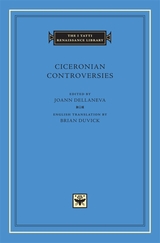
The most important literary dispute of the Renaissance pitted those writers of Neo-Latin who favored imitation of Cicero alone, as the single best exemplar of Latin prose, against those who preferred to follow an eclectic array of literary models. This Ciceronian controversy is the subject of the texts collected for the first time in this volume: exchanges of letters between Angelo Poliziano and Paolo Cortesi; between Gianfrancesco Pico della Mirandola and Pietro Bembo; and between Giovambattista Giraldi Cinzio and his mentor Celio Calcagnini. A postscript by Lilio Gregorio Giraldi and writings by Antonio Possevino comment further on this correspondence.
Because they address some of the most fundamental aspects of literary production, these quarrels shed light on similar debates about vernacular literature, which also turned on imitation and the role of the author. The Ciceronian controversy can also be seen as part of larger cultural movements, such as the choice of vernacular language over Latin, the development of Jesuit pedagogy, and the religious conflicts that characterized much of the Renaissance.
Assembling essays written by three generations of labor historians, each with markedly different approaches to the labor histories of early America and the Atlantic world, this issue offers unique insights into the evolution of class analysis and its shifting place in the field of labor history. In one essay, a renowned member of the first generation of “new social historians” reflects on his work, considering the past and future of class analysis while highlighting some of his current views about class in early America. In other essays, a new generation of scholars enriches scholarship on early America and the Atlantic by incorporating complex and nuanced discussions of race and gender into traditional class analyses. Perhaps signaling the future of the field, another essay discusses the theoretical foundations and implications of a globalized mode of historical class analysis, examining the complicated connections among peoples in Europe, Africa, and North America during the seventeenth and eighteenth centuries and the impact these connections had in shaping early America and the Atlantic world.
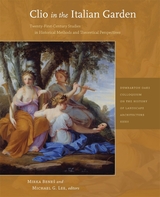
Italian gardens have received more attention from historians than perhaps any other garden tradition. This volume presents eight richly illustrated essays by established and emerging scholars that suggest striking new directions for future research.
Mirka Beneš and Raffaella Fabiani Giannetto examine the long historical development and disciplinary diversity of Italian garden studies. Marcello Fagiolo and Vincenzo Cazzato advance a new theory of villa systems that enlarges the geographical frame of the field. Mauro Ambrosoli highlights the contributions of anonymous laborers and gardeners in the creation of the countryside, while Lionella Scazzosi shows how this broader view of agency informs decisions by policymakers regarding the restoration and maintenance of historical gardens. Antonella Pietrogrande and Denis Ribouillault offer new interpretations of some of the most famous Renaissance sites through analyses of cultural imagination and modes of perception.
This volume exemplifies the broad transformations, both quantitative and methodological, taking place in the study and practice of garden design, and offers a reflective meditation on the vitality of one of the oldest branches of garden and landscape history.
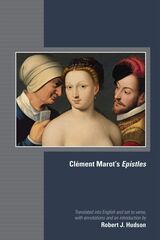
Clément Marot (1496–1544), a royal poet in Renaissance France who ushered in new verse forms and renewed existing ones, stands as one of the most important literary voices of the first half of the sixteenth century. Clément Marot’s Epistles represents a first attempt to offer a sustained English-language translation and critical edition of what is widely considered his most personal, historically relevant, and crowning verse form. Aiming for integrality and poetic precision, the volume translates and sets to verse all seventy-four of Marot’s epistles, employing the same meter and rhyme scheme used by the poet in the original compositions. Likewise focused on capturing Marot’s poetic voice, thus maintaining idiomatic and literary integrity, the resulting translation is an attempt to relate the playfulness and pathos of Marot’s verse, rendering it accessible to an anglophone public.
Beyond the more traditional verse epistles included in the primary base text, Marot’s authorized complete works from 1538, the volume also offers translations of the introductory prose epistles penned by Marot for his Adolescence clémentine of 1532 and the 1538 edition (Lyon, Dolet), as well as the coq-à-l’âne and other versified satirical epistles, the “artificial epistle” retelling of a popular medieval romance, and more. A robust critical apparatus includes ample footnotes, an extensive introduction, illustrations, a bibliography, a chronological table, and a concordance with the principal modern French-language editions of Marot’s epistles.
The book should appeal to English-speaking historians and literary scholars alike, as well as to poetry lovers, who will appreciate a new acquaintance with this distinctive voice from poetry’s past.
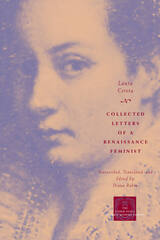
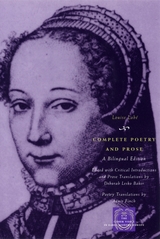
Yet these letters also furnish a detailed portrait of an early modern woman’s private experience, for Cereta addressed many letters to a close circle of family and friends, discussing highly personal concerns such as her difficult relationships with her mother and her husband. Taken together, these letters are a testament both to an individual woman and to enduring feminist concerns.
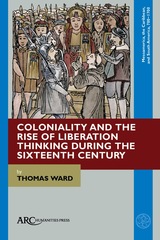
Two moments frame the treatment of American colonialism’s physical and mental pathways and the liberative response to them, known as liberation thinking. These are St. Thomas More’s Utopia, published in 1516, and Felipe Guaman Poma de Ayala’s thousand-page Nueva crónica y buen gobierno, completed one hundred years later. These works and others by Erasmus and Bartolomé de las Casas trace the development of the idea of human liberation in the face of degrading chattel and encomienda slavery as well as the peonage that gave rise to the hacienda system in the Americas. Catholic humanists such as More, Erasmus, Las Casas, and Guaman Poma developed arguments, theories, and even theology that attempted to deconstruct those subordinating structures.

For half a century the Franciscan friar Bernardino de Sahagún (1499–1590), often described as the first anthropologist of the New World, worked with his indigenous colleagues at the Collegio Imperial at Tlatelolco (now Mexico City) on an encyclopedic compendium of the beliefs, rituals, language, arts, and economy of the vanishing culture of the Aztecs. Colors Between Two Worlds examines the most richly illustrated manuscript of this great ethnographic work, the Florentine Codex, which is in the collection of the Biblioteca Medicea Laurenziana in Florence, through the issue of color.
The Codex reveals how the colors the Aztecs used in their artistic production and in everyday life, as well as the names they gave each color, illuminate their understanding of the world around them, from the weather to the curing of disease. The pigments and dyes that indigenous artists used to illustrate the Codex reflect a larger dialogue between native and European cultures, which the Florentine Codex records more fully than any surviving document from colonial New Spain.


Marsilio Ficino (1433–1499), the Florentine scholar-philosopher-magus, was largely responsible for the Renaissance revival of Plato. The publication of his Latin translations of the dialogues in 1484 was an intellectual event of the first magnitude, making the Platonic canon accessible to western Europe after the passing of a millennium and establishing Plato as an authority for Renaissance thought.
This volume contains Ficino’s extended analysis and commentary on the Phaedrus, which he explicates as a meditation on “beauty in all its forms” and a sublime work of theology. In the commentary on the Ion, Ficino explores a poetics of divine inspiration that leads to the Neoplatonist portrayal of the soul as a rhapsode whose song is an ascent into the mind of God. Both works bear witness to Ficino’s attempt to revive a Christian Platonism and what might be called an Orphic Christianity.
Marsilio Ficino (1433–1499), the Florentine scholar-philosopher-magus, was largely responsible for the Renaissance revival of Plato. Ficino’s commentaries on Plato remained the standard guide to the Greek philosopher’s works for centuries. Vanhaelen’s new translation of Ficino’s vast commentary on the Parmenides makes this monument of Renaissance metaphysics accessible to the modern student of philosophy.
The volume contains the first critical edition of the Latin text, an ample introduction, and extensive notes.

Marsilio Ficino (1433–1499), the Florentine scholar-philosopher-magus, was largely responsible for the Renaissance revival of Plato. Ficino’s commentaries on Plato remained the standard guide to the Greek philosopher’s works for centuries. Vanhaelen’s new translation of Ficino’s vast commentary on the Parmenides makes this monument of Renaissance metaphysics accessible to the modern student of philosophy.
The volume contains the first critical edition of the Latin text, an ample introduction, and extensive notes.

Parker begins by tracing the criticism of Dante commentaries from the nineteenth century to the present and then examines the tradition of commentary from the Middle Ages to the Renaissance. She shows how the civic, institutional, and social commitments of commentators shaped their response to the Comedy, and how commentators tried to use the poem as an authoritative source for various kinds of social legitimation. Parker discusses how different commentators dealt with a deeply political section of the poem: the damnation of Brutus and Cassius.
The scope and importance of Commentary and Ideology will command the attention of a broad group of scholars, including Italian specialists on Dante, late medievalists, students and professionals in early modern European literature, bibliographers, critical theorists, historians of literary criticism and theory, and cultural and intellectual historians.


A preeminent Renaissance philosopher on the founder of Neoplatonism
Marsilio Ficino (1433–1499) was the leading Platonic philosopher of the Renaissance and is generally recognized as the greatest authority on ancient Platonism before modern times. Among his greatest accomplishments as a scholar was his 1492 Latin translation of the complete works of Plotinus (204–270 CE), the founder of Neoplatonism. The 1492 edition also contained an immense commentary that remained for centuries the principal introduction to Plotinus’s works for Western scholars. At the same time, it constitutes a major statement of Ficino’s own late metaphysics. The I Tatti edition, planned in six volumes, contains the first modern edition of the Latin text and the first translation into any modern language. The present volume also contains a summary of Ficino’s argumentation in the commentary on Plotinus’ First Ennead.
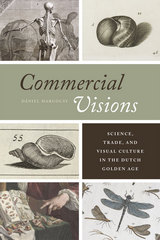
Margócsy introduces a number of natural historians, physicians, and curiosi in Amsterdam, London, St. Petersburg, and Paris who, in their efforts to boost their trade, developed modern taxonomy, invented color printing and anatomical preparation techniques, and contributed to philosophical debates on topics ranging from human anatomy to Newtonian optics. These scientific practitioners, including Frederik Ruysch and Albertus Seba, were out to do business: they produced and sold exotic curiosities, anatomical prints, preserved specimens, and atlases of natural history to customers all around the world. Margócsy reveals how their entrepreneurial rivalries transformed the scholarly world of the Republic of Letters into a competitive marketplace.
Margócsy’s highly readable and engaging book will be warmly welcomed by anyone interested in early modern science, global trade, art, and culture.
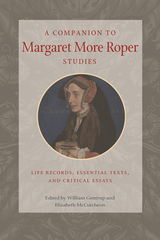
Margaret More Roper is the learned daughter of St. Thomas More, the Catholic martyr; their lives are closely linked to each other and to early sixteenth-century changes in politics and religion and the social upheaval and crises of conscience that they brought. Specifically, Roper's major works - her translation of Erasmus's commentary on the Lord's Prayer and the long dialogue letter between More and Roper on conscience - highlight two major preoccupations of the period: Erasmian humanism and More's last years, which led to his death and martyrdom.
Roper was one of the most learned women of her time and a prototype of the woman writer in England, and this edited volume is a tribute to her life, writings, and place among early women authors. It combines comprehensive and convenient joining of biographical, textual, historical, and critical components within a single volume for the modern reader. There is no comparable study in print, and it fills a significant gap in studies of early modern women writers.
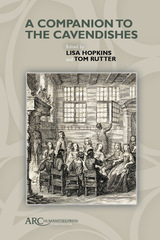
The noble Cavendishes were one of the most influential families in the politics and culture of early modern England and beyond. A Companion to the Cavendishes offers a comprehensive account of the Cavendish family's creative output and cultural significance in the seventeenth century. It discusses the writings of individuals including William and Margaret Cavendish, and William's daughters Jane and Elizabeth; family members' work and patronage in other media such as music, architecture, and the visual arts; their participation in contemporary developments in politics, philosophy, and horsemanship; and the networks in which they moved both in England and in continental Europe. It also covers the work of less well-known family members such as the poet and biographer George Cavendish and the composer Michael Cavendish. This volume combines path-breaking scholarship with discussion of existing research, making it an invaluable resource for all those interested in this fascinating and diverse group of men and women.
This book is available as Open Access.
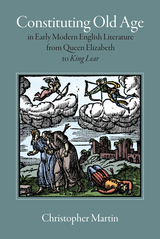
How did Shakespeare and his contemporaries, whose works mark the last quarter century of Elizabeth I's reign as one of the richest moments in all of English literature, regard and represent old age? Was late life seen primarily as a time of withdrawal and preparation for death, as scholars and historians have traditionally maintained? In this book, Christopher Martin examines how, contrary to received impressions, writers and thinkers of the era—working in the shadow of the kinetic, long-lived queen herself—contested such prejudicial and dismissive social attitudes.
In late Tudor England, Martin argues, competing definitions of and regard for old age established a deeply conflicted frontier between external, socially “constituted” beliefs and a developing sense of an individual's “constitution” or physical makeup, a usage that entered the language in the mid-1500s. This space was further complicated by internal divisions within the opposing camps. On one side, reverence for the elder's authority, rooted in religious and social convention, was persistently challenged by the discontents of an ambitious younger underclass. Simultaneously, the aging subject grounded an enduring social presence and dignity on a bodily integrity that time inevitably threatened. In a historical setting that saw both the extended reign of an aging monarch and a resulting climate of acute generational strife, this network of competition and accommodation uniquely shaped late Elizabethan literary imagination. Through fresh readings of signature works, genres, and figures, Martin redirects critical attention to this neglected aspect of early modern studies.
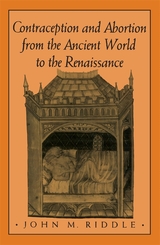
John Riddle uncovers the obscure history of contraception and abortifacients from ancient Egypt to the seventeenth century with forays into Victorian England—a topic that until now has evaded the pens of able historians.
Riddle’s thesis is, quite simply, that the ancient world did indeed possess effective (and safe) contraceptives and abortifacients. The author maintains that this rich body of knowledge about fertility control—widely held in the ancient world—was gradually lost over the course of the Middle Ages, becoming nearly extinct by the early modern period. The reasons for this he suggests, stemmed from changes in the organization of medicine. As university medical training became increasingly important, physicians’ ties with folk traditions were broken. The study of birth control methods was just not part of the curriculum.
In an especially telling passage, Riddle reveals how Renaissance humanists were ill equipped to provide accurate translations of ancient texts concerning abortifacients due to their limited experience with women’s ailments. Much of the knowledge about contraception belonged to an oral culture—a distinctively female-centered culture. From ancient times until the seventeenth century, women held a monopoly on birthing and the treatment of related matters; information passed from midwife to mother, from mother to daughter. Riddle reflects on the difficulty of finding traces of oral culture and the fact that the little existing evidence is drawn from male writers who knew that culture only from a distance. Nevertheless, through extraordinary scholarly sleuthing, the author pieces together the clues and evaluates the scientific merit of these ancient remedies in language that is easily understood by the general reader. His findings will be useful to anyone interested in learning whether it was possible for premodern people to regulate their reproduction without resorting to the extremities of dangerous surgical abortions, the killing of infants, or the denial of biological urges.
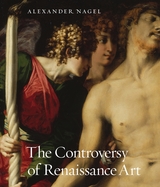
Many studies have shown that images—their presence in the daily lives of the faithful, the means used to control them, and their adaptation to secular uses—were at the heart of the Reformation crisis in northern Europe. But the question as it affects the art of Italy has been raised only in highly specialized studies.
In this book, Alexander Nagel provides the first truly synthetic study of the controversies over religious images that pervaded Italian life both before and parallel to the Reformation north of the Alps. Tracing the intertwined relationship of artistic innovation and archaism, as well as the new pressures placed on the artistic media in the midst of key developments in religious iconography, The Controversy of Renaissance Art offers an important and original history of humanist thought and artistic experimentation from one of our most acclaimed historians of art.

An intimate portrait, based on newly discovered archival sources, of one of the most famous Jewish artists of the Italian Renaissance who, charged with a scandalous crime, renounced his faith and converted to Catholicism.
In 1491 the renowned goldsmith Salomone da Sesso converted to Catholicism. Born in the mid-fifteenth century to a Jewish family in Florence, Salomone later settled in Ferrara, where he was regarded as a virtuoso artist whose exquisite jewelry and lavishly engraved swords were prized by Italy’s ruling elite. But rumors circulated about Salomone’s behavior, scandalizing the Jewish community, who turned him over to the civil authorities. Charged with sodomy, Salomone was sentenced to die but agreed to renounce Judaism to save his life. He was baptized, taking the name Ercole “de’ Fedeli” (“One of the Faithful”). With the help of powerful patrons like Duchess Eleonora of Aragon and Duke Ercole d’Este, his namesake, Ercole lived as a practicing Catholic for three more decades. Drawing on newly discovered archival sources, Tamar Herzig traces the dramatic story of his life, half a century before ecclesiastical authorities made Jewish conversion a priority of the Catholic Church.
A Convert’s Tale explores the Jewish world in which Salomone was born and raised; the glittering objects he crafted, and their status as courtly hallmarks; and Ercole’s relations with his wealthy patrons. Herzig also examines homosexuality in Renaissance Italy, the response of Jewish communities and Christian authorities to allegations of sexual crimes, and attitudes toward homosexual acts among Christians and Jews. In Salomone/Ercole’s story we see how precarious life was for converts from Judaism, and how contested was the meaning of conversion for both the apostates’ former coreligionists and those tasked with welcoming them to their new faith.
On January 20, 1984, Earl Washington—defended for all of forty minutes by a lawyer who had never tried a death penalty case—was found guilty of rape and murder in the state of Virginia and sentenced to death. After nine years on death row, DNA testing cast doubt on his conviction and saved his life. However, he spent another eight years in prison before more sophisticated DNA technology proved his innocence and convicted the guilty man.
DNA exonerations have shattered confidence in the criminal justice system by exposing how often we have convicted the innocent and let the guilty walk free. In this unsettling in-depth analysis, Brandon Garrett examines what went wrong in the cases of the first 250 wrongfully convicted people to be exonerated by DNA testing.
Based on trial transcripts, Garrett’s investigation into the causes of wrongful convictions reveals larger patterns of incompetence, abuse, and error. Evidence corrupted by suggestive eyewitness procedures, coercive interrogations, unsound and unreliable forensics, shoddy investigative practices, cognitive bias, and poor lawyering illustrates the weaknesses built into our current criminal justice system. Garrett proposes practical reforms that rely more on documented, recorded, and audited evidence, and less on fallible human memory.
Very few crimes committed in the United States involve biological evidence that can be tested using DNA. How many unjust convictions are there that we will never discover? Convicting the Innocent makes a powerful case for systemic reforms to improve the accuracy of all criminal cases.
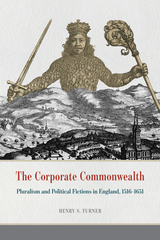
Henry S. Turner uses the resources of economic and political history, literary analysis, and political philosophy to demonstrate how a number of English institutions with corporate associations—including universities, guilds, towns and cities, and religious groups—were gradually narrowed to the commercial, for-profit corporation we know today, and how the joint-stock corporation, in turn, became both a template for the modern state and a political force that the state could no longer contain. Through innovative readings of works by Thomas More, William Shakespeare, Francis Bacon, and Thomas Hobbes, among others, Turner tracks the corporation from the courts to the stage, from commonwealth to colony, and from the object of utopian fiction to the subject of tragic violence. A provocative look at the corporation’s peculiar character as both an institution and a person, The Corporate Commonwealth uses the past to suggest ways in which today’s corporations might be refashioned into a source of progressive and collective public action.

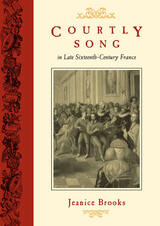
Brooks concentrates on a period in which the court's importance in projecting the symbolic centrality of monarchy was growing rapidly and considers the role of the air in defining patronage hierarchies at court and in enhancing courtly visions of masculine and feminine virtue. Her study illuminates the court's relationship to the world beyond its own confines, represented first by Italy, then by the countryside. In addition to the 40 editions of airs de cour printed between 1559 and 1589, Brooks draws on memoirs, literary works, and iconographic evidence to present a rounded vision of French Renaissance culture.
The first book-length examination of the history of air de cour, this work also sheds important new light on a formative moment in French history.
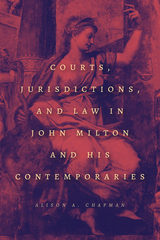
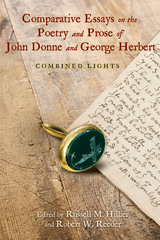
Surveying Milton’s early pamphlets, divorce tracts, late political tracts, and major prose works in comparison with the writings and cases of some of Milton’s contemporaries—including George Herbert, John Donne, Ben Jonson, and John Bunyan—Chapman reveals the variety and nuance in Milton’s juridical toolkit and his subtle use of competing legal traditions in pursuit of justice.
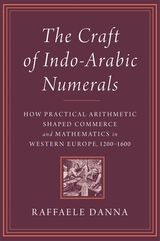
“A must-read for any scholar interested in the origins of the European Miracle.” —Joel Mokyr, Nobel Prize–winning author of A Culture of Growth: The Origins of the Modern Economy
An illuminating, fine-grained account of how Indo-Arabic numerals facilitated the spread of practical knowledge in Western Europe—reshaping both commerce and mathematics in the process.
In the thirteenth-century Mediterranean, commerce transformed as merchants shifted from Roman to Indo-Arabic numerals—an alternative that better facilitated complex calculations. It has long been known that this transition stemmed from Europe’s increasing exchanges with India, Persia, and the Arabic world. Yet much remains to be understood about how Indo-Arabic numerals—and the practical arithmetic they enabled—actually spread across Europe. As Raffaele Danna shows, it was hundreds of ordinary merchants, schoolmasters, and artisans who nurtured these changes, thereby driving key advances in both commerce and mathematics.
Drawing on an original catalog of more than 1,200 practical arithmetic manuals, Danna charts the incremental spread of the new figures with unprecedented precision. While Italian merchants were the early adopters, it took nearly three centuries for Indo-Arabic numerals to become established in northern Europe. As Danna shows, adoption did not follow the routes of maritime trade. Rather, Indo-Arabic numerals moved gradually across the continent through inland networks of practitioners. Everywhere they went, the ten figures enhanced commercial practices and facilitated the emergence of a coherent language of mathematical craft. The growing social circulation of this knowledge, in turn, had a lasting impact on the economic trajectory of Western Europe. By the late sixteenth century, even academics were absorbing lessons from the vernacular tradition—a development that led to the first major breakthroughs in European mathematical theory since antiquity.
Combining economic history with the social history of mathematics, The Craft of Indo-Arabic Numerals illuminates the integral role of practical arithmetic in both intellectual and commercial transformations across Western Europe.
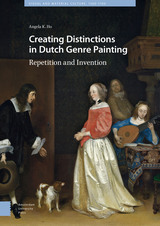
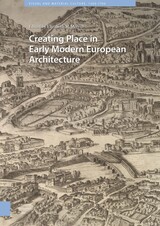
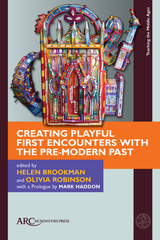
This collection explores playful ways of fostering creative engagements with the medieval and early modern past and its own literary and artistic products, especially among those new to their study.
As scholars and teachers of early English, the contributors cover literary and cultural material from a range of genres within the Old English, Middle English, Tudor, and Stuart periods and collectively delve into a shared interest in facilitating what we might loosely define as “newcomer” or “non-specialist” encounters with the past: initial, exploratory contact in which prior knowledge cannot be assumed, whether involving creative professionals, experts from other disciplines, undergraduate and school students, or members of the public. Considering artworks and installation, theatre and performance and curation practices, case studies offer practice-based examples of learning and engagement which proceed primarily through creative and playful approaches. The case studies are arranged into two broad groups: those which work through performance and theatrical play of various kinds, and those which work through playful practices of production and making. All share a perspective of irreverence, of vivid immersion, and of the possibilities of conjuring with the past.
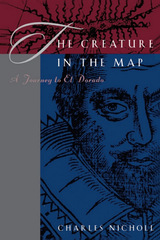
"Walter Raleigh . . . was one of those Elizabethan all-rounders who still seem staggeringly larger than life. . . . Mr. Nicholl's cogent reconstruction of the journey uses Raleigh's own account, 'The Discoverie of Guiana'—part truth, part advertising, part rhapsody—and much well-found ancillary material."—Anthony Bailey, New York Times
"Like The Reckoning, his brilliant account of the murder of Christopher Marlowe, Nicholl's new book might be called an exercise in historical conjuring. The Creature in the Map is an effort not only to analyse but also to call into presence the lived experience of the voyage Raleigh undertook in 1595 to the Orinoco Delta in what is now Venezuela."—Stephen Greenblatt, Times Literary Supplement
"Charles Nicholl belongs to an elite company, that of historians who know how to make research into arcane matters and distant times as engrossing as In Cold Blood or All the President's Men."—Michael Dirda, Washington Post

A provocative analysis of how Christianity helped legitimize the death penalty in early modern Europe, then throughout the Christian world, by turning execution into a great cathartic public ritual and the condemned into a Christ-like figure who accepts death to save humanity.
The public execution of criminals has been a common practice ever since ancient times. In this wide-ranging investigation of the death penalty in Europe from the fourteenth to the eighteenth century, noted Italian historian Adriano Prosperi identifies a crucial period when legal concepts of vengeance and justice merged with Christian beliefs in repentance and forgiveness.
Crime and Forgiveness begins with late antiquity but comes into sharp focus in fourteenth-century Italy, with the work of the Confraternities of Mercy, which offered Christian comfort to the condemned and were for centuries responsible for burying the dead. Under the brotherhoods’ influence, the ritual of public execution became Christianized, and the doomed person became a symbol of the fallen human condition. Because the time of death was known, this “ideal” sinner could be comforted and prepared for the next life through confession and repentance. In return, the community bearing witness to the execution offered forgiveness and a Christian burial. No longer facing eternal condemnation, the criminal in turn publicly forgave the executioner, and the death provided a moral lesson to the community.
Over time, as the practice of Christian comfort spread across Europe, it offered political authorities an opportunity to legitimize the death penalty and encode into law the right to kill and exact vengeance. But the contradictions created by Christianity’s central role in executions did not dissipate, and squaring the emotions and values surrounding state-sanctioned executions was not simple, then or now.
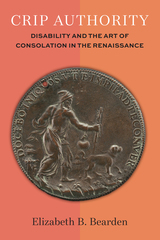
Disabled authors include Francesco Petrarca, Teresa de Cartagena, Giovani Paolo Lomazzo, Miguel de Cervantes Saavedra, Robert Burton, and John Milton. They all explore their experiences of disability, but their work has rarely or never been considered from a disability studies perspective. Bearden thus brings today’s models of disability studies and crip theory together with early modern articulations of disability based on ancient and Renaissance models of military, political, biblical, and literary authority. In sum, Crip Authority makes a significant contribution to the growing field of early modern disability studies and invites us to rethink the extent of crip history and the endurance of disability gain.
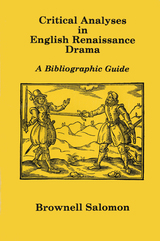
This bibliographic guide directs the reader to a prize selection of the best modern, analytical studies of every play, anonymous play, masque, pageant, and "entertainment" written by more than two dozen contemporaries of Shakespeare in the years between 1580 and 1642. Together with Shakespeare's plays, these works comprise the most illustrious body of drama in the English language.
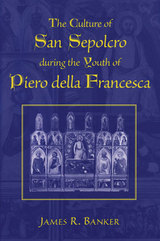
Piero della Francesca has remained an enigma because of the contradictions observed in his life and art. Banker's archival research has enabled him to clear away some of the obscurities. This book situates Piero in the earliest social and intellectual worlds within which he moved. Heretofore, writers on Piero have begun his putative formation in Florence in 1439. Banker demonstrates that the young painter's formation began prior to 1439, when he was surrounded by his family and the local artisans' community.
The Culture of San Sepolcro during the Youth of Piero della Francesca integrates social and art history in order to better understand the formation of a Renaissance artist. It will be vital to scholars and historians of the Italian Renaissance city states, as well as to art historians and those interested in the relationship of art and society.
James R. Banker is Professor of History, North Carolina State University.
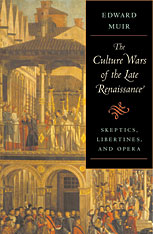
In the summer of 1591 students from the University of Padua attacked the local Jesuit college and successfully appealed to the Venetian Senate to intervene on behalf of the university. When the Jesuits were expelled from the Venetian dominion a few years later, religious censorship was virtually eliminated. The result was a remarkable era of cultural innovation that promoted free inquiry in the face of philosophical and theological orthodoxy, advocated libertine morals, critiqued the tyranny of aristocratic fathers over their daughters, and expanded the theatrical potential of grand opera.
In Padua a faction of university faculty, including Galileo Galilei and the philosopher Cesare Cremonini, pursued an open and free inquiry into astronomy and philosophy. In Venice some of Cremonini's students founded the Accademia degli Incogniti (Academy of the Unknowns), one of whose most notorious members was the brilliant polemicist Ferrante Pallavicino.
The execution of Pallavicino for his writings attacking Pope Urban VIII silenced the more outrageous members of the Incogniti, who soon turned to writing libretti for operas. The final phase of the Venetian culture wars pitted commercial opera, with its female performers and racy plot lines, against the decorous model of Jesuit theater. The libertine inclinations of the Incogniti suffuse many of the operas written in the 1640s, especially Monteverdi's masterpiece, L'Incoronazione di Poppea.
Edward Muir's exploration of an earlier age of anxiety reveals the distinguished past of today's culture wars, including debates about the place of women in society, the clash between science and faith, and the power of the arts to stir emotions.
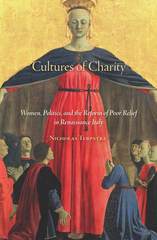
Renaissance Italians pioneered radical changes in ways of helping the poor, including orphanages, workhouses, pawnshops, and women’s shelters. Nicholas Terpstra shows that gender was the key factor driving innovation. Most of the recipients of charity were women. The most creative new plans focused on features of women’s poverty like illegitimate births, hunger, unemployment, and domestic violence. Signal features of the reforms, from forced labor to new instruments of saving and lending, were devised specifically to help young women get a start in life.
Cultures of Charity is the first book to see women’s poverty as the key factor driving changes to poor relief. These changes generated intense political debates as proponents of republican democracy challenged more elitist and authoritarian forms of government emerging at the time. Should taxes fund poor relief? Could forced labor help build local industry? Focusing on Bologna, Terpstra looks at how these fights around politics and gender generated pioneering forms of poor relief, including early examples of maternity benefits, unemployment insurance, food stamps, and credit union savings plans.
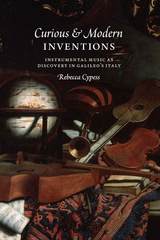
Rebecca Cypess shows that early modern thinkers were fascinated with instrumental technologies. The telescope, the clock, the pen, the lute—these were vital instruments for leading thinkers of the age, from Galileo Galilei to Giambattista Marino. No longer used merely to remake an object or repeat a process already known, instruments were increasingly seen as tools for open-ended inquiry that would lead to new knowledge. Engaging with themes from the history of science, literature, and the visual arts, this study reveals the intimate connections between instrumental music and the scientific and artisanal tools that served to mediate between individuals and the world around them.
READERS
Browse our collection.
PUBLISHERS
See BiblioVault's publisher services.
STUDENT SERVICES
Files for college accessibility offices.
RECENTLY PUBLISHED



UChicago Accessibility Resources
home | accessibility | search | about | contact us
BiblioVault ® 2001 - 2025
The University of Chicago Press