
 A SCHOLARLY BOOK REPOSITORY
130 scholarly books by Omnidawn and 6
start with D
130 scholarly books by Omnidawn and 6
130 scholarly books by Omnidawn
6 start with D start with D
6 start with D start with D
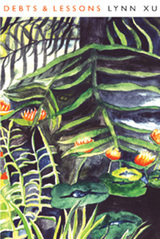
Debts & Lessons
Lynn Xu
Omnidawn, 2013
The poems in Lynn Xu’s striking debut collection, Debts & Lessons, travel under the power of history’s illusory engine and echo its ululations of love, violence, and lament. Named after the first part of Marcus Aurelius’s Meditations, this book also finds its way across oceans and between languages, as the poet looks to the dead for guidance amid the abstractions of contemporary life. Xu pays her phantoms (and her readers) with the dream-currency of hallucinatory songs, which balance her finely-tuned ear against a world of awakenings.
[more]

Defensible Space/if a crow—
Ian Lockaby
Omnidawn, 2024
Experimental poetry that embraces shifts, adaptation, and the unknown as a means to move beyond old and dying worlds.
Considering how we might detox from old languages, systems, and modes of life, Ian Lockaby’s poems seek out new forms of interconnectivity and possibility, finding the energy of emerging worlds along the edges of ruins. This collection poses questions of how to thrive in aftermaths, suggesting that attempts at absolute knowledge are less powerful than an embrace of the unknown. Throughout these poems, Lockaby uses crows as a model for dynamic adaption and creative entanglement with the world and with language, finding “defensible space” for new lyrical syntax amid shifts and desolation: “Everywhere a burning root system. Everywhere, a root fire crowing off the splayed tail feathers of a crow.”
Defensible Space/if a crow—looks towards a reintroduction of fire into wilds and wilds into our lives, taking the unknown of an “if” as the base from where we can build life.
Defensible Space/if a crow– won Omnidawn’s 2022 Poetry Chapbook contest, selected by Ruth Ellen Kocher.
Considering how we might detox from old languages, systems, and modes of life, Ian Lockaby’s poems seek out new forms of interconnectivity and possibility, finding the energy of emerging worlds along the edges of ruins. This collection poses questions of how to thrive in aftermaths, suggesting that attempts at absolute knowledge are less powerful than an embrace of the unknown. Throughout these poems, Lockaby uses crows as a model for dynamic adaption and creative entanglement with the world and with language, finding “defensible space” for new lyrical syntax amid shifts and desolation: “Everywhere a burning root system. Everywhere, a root fire crowing off the splayed tail feathers of a crow.”
Defensible Space/if a crow—looks towards a reintroduction of fire into wilds and wilds into our lives, taking the unknown of an “if” as the base from where we can build life.
Defensible Space/if a crow– won Omnidawn’s 2022 Poetry Chapbook contest, selected by Ruth Ellen Kocher.
[more]

Descent
Arria Deepwater
Omnidawn, 2025
A work of fabulist fiction that centers on the lives and protection of those living in sick, disabled, and other marginalized bodies.
Arria Deepwater’s Descent is a modern fairy tale exploring the vulnerability and strength that come with living in an unconventional body, especially for those living with the experience of disabilities, chronic illness, hyper-medicalization, objectification, and 2SLGBTQIA+ identities. The reader is invited to become an observer of isolation, violation, and the magic of secret joy. Descent moves through entangled connections and dissolving boundaries between humanity and the natural world as it seeks to weave a spell of protection for those whose bodies do not conform, for whom existence is a radical act of rebellion and creativity.
Exploring boundaries of intimacy, fluidity, and grief, Deepwater brings an eco-feminist speculative twist to the growing canon of writers with marginalized identities. Deepwater considers the fractured reality of living in a queer disabled body and how we might find freedom, safety, and spiritual healing despite grief.
Descent is the winner of Omnidawn’s 2022 Fabulist Fiction Contest, chosen by Michelle Ruiz Keil.
Arria Deepwater’s Descent is a modern fairy tale exploring the vulnerability and strength that come with living in an unconventional body, especially for those living with the experience of disabilities, chronic illness, hyper-medicalization, objectification, and 2SLGBTQIA+ identities. The reader is invited to become an observer of isolation, violation, and the magic of secret joy. Descent moves through entangled connections and dissolving boundaries between humanity and the natural world as it seeks to weave a spell of protection for those whose bodies do not conform, for whom existence is a radical act of rebellion and creativity.
Exploring boundaries of intimacy, fluidity, and grief, Deepwater brings an eco-feminist speculative twist to the growing canon of writers with marginalized identities. Deepwater considers the fractured reality of living in a queer disabled body and how we might find freedom, safety, and spiritual healing despite grief.
Descent is the winner of Omnidawn’s 2022 Fabulist Fiction Contest, chosen by Michelle Ruiz Keil.
[more]
Devonte Travels the Sorry Route
T.J. Anderson III
Omnidawn, 2019
Devonte, the eponymous subject of the poems in Devonte Travels the Sorry Route, has a gift: he can travel across space and time. This extraordinary quality brings Devonte into contact with a broad array of events and phenomena from black history and culture. Unlike most of us, who perceive of history as a sequence of fleeting events, Devonte is able to experience all of his diverse travels to varied historical epochs and places simultaneously, and in doing so is able to become a “stalker of history,” chasing down the elusive narratives that have been erased or ignored by the building of empires and the destruction of ecosystems.
As fantastical as this account seems, in these poems, T.J. Anderson III captures a critical aspect of the ways identity is formed through community and collective memory, particularly among the peoples of the African diaspora. The way the words expand across the page enacts this polyvocal coalescing, and the blank space in between evokes the vast oceans that first separated and continue to resonate in the collective imagination of the Black community. At the same time that he relates the difficulty of crossing vast expanses of time and space to connect with our history, in these gripping poems Anderson proposes that the past is never far off—in fact, like Devonte, it lives in our own personalities and experiences today.
As fantastical as this account seems, in these poems, T.J. Anderson III captures a critical aspect of the ways identity is formed through community and collective memory, particularly among the peoples of the African diaspora. The way the words expand across the page enacts this polyvocal coalescing, and the blank space in between evokes the vast oceans that first separated and continue to resonate in the collective imagination of the Black community. At the same time that he relates the difficulty of crossing vast expanses of time and space to connect with our history, in these gripping poems Anderson proposes that the past is never far off—in fact, like Devonte, it lives in our own personalities and experiences today.
[more]

Diary of Small Discontents
New & Selected Poems 1974–2024
John Yau
Omnidawn, 2025
A collection of poetry showcasing the diversity of subjects and forms in Yau’s writing.
This collection brings together work from half a century of writing by John Yau. Preoccupied with forms and musical structures, Yau’s work includes sestinas, sonnets, pantoums, and lists, as well as invented forms. Employing both strict and open-ended frameworks, Yau creates multi-faceted poems that can shift abruptly from humor to outrage and consider topics including Chinese American identity, school shootings, invented countries, and haunted memories. Some poems are grounded in an autobiographical voice, while others take on the voices of other characters, including contemporary artists and a fictional Chinese private eye.
Spanning the vast diversity of Yau’s forms and subjects, the poems in Diary of Small Discontents add up to an unapologetically original collection.
This collection brings together work from half a century of writing by John Yau. Preoccupied with forms and musical structures, Yau’s work includes sestinas, sonnets, pantoums, and lists, as well as invented forms. Employing both strict and open-ended frameworks, Yau creates multi-faceted poems that can shift abruptly from humor to outrage and consider topics including Chinese American identity, school shootings, invented countries, and haunted memories. Some poems are grounded in an autobiographical voice, while others take on the voices of other characters, including contemporary artists and a fictional Chinese private eye.
Spanning the vast diversity of Yau’s forms and subjects, the poems in Diary of Small Discontents add up to an unapologetically original collection.
[more]
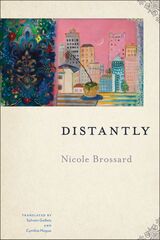
Distantly
Nicole Brossard
Omnidawn, 2022
A bilingual collection of poems that offers a surreal perspective of urban experience.
This bilingual edition of Nicole Brossard’s lyrical poetry is a sequence of lush, taut cityscapes. Known for her elliptical and materially grounded poetics, Brossard creates an intimate series of poems drawn loosely from urban experience. The poems comprise an evocative distillation of postmodern urban life with a sharp sense of cultural and gendered histories of violence and beauty and struggles for survival and intimacy. The poems capture the emotional and ecological surroundings of each city and its people. The cities in Brossard’s poems feel surreal and in them dwell survivors of “misfortunes,” living in urban landscapes with their “gleaming debris” and “bridges, ghats, / rivers in a time of peace and torture.” These poems gesture toward a transmuted social context and toward a quest “to meet the horizon the day after the horizon.”
This bilingual edition of Nicole Brossard’s lyrical poetry is a sequence of lush, taut cityscapes. Known for her elliptical and materially grounded poetics, Brossard creates an intimate series of poems drawn loosely from urban experience. The poems comprise an evocative distillation of postmodern urban life with a sharp sense of cultural and gendered histories of violence and beauty and struggles for survival and intimacy. The poems capture the emotional and ecological surroundings of each city and its people. The cities in Brossard’s poems feel surreal and in them dwell survivors of “misfortunes,” living in urban landscapes with their “gleaming debris” and “bridges, ghats, / rivers in a time of peace and torture.” These poems gesture toward a transmuted social context and toward a quest “to meet the horizon the day after the horizon.”
[more]
READERS
Browse our collection.
PUBLISHERS
See BiblioVault's publisher services.
STUDENT SERVICES
Files for college accessibility offices.
RECENTLY PUBLISHED





UChicago Accessibility Resources
home | accessibility | search | about | contact us
BiblioVault ® 2001 - 2025
The University of Chicago Press