
 A SCHOLARLY BOOK REPOSITORY
9 start with D start with D
The biblical narrative of Israel’s only daughter Dinah is steeped in deception and violence, vengeance and destruction, and a silence that has posed interpretive problems for readers for more than two millennia. Carrie A. Cifers takes up the retellings of Genesis 34 in Josephus’s Jewish Antiquities, the book of Jubilees, and Joseph and Aseneth to explore how later authors tried to clarify the assumedly implicit ethical message of Dinah’s story. Through narrative ethics and socionarratology, Cifers demonstrates that biblical stories are a space of encounter where texts make claims on readers and where readers have an ethical responsibility as witnesses to the text. Dangerous Tales is a call for contemporary readers to engage biblical narratives in ways that mitigate interpretive violence and maximize each text’s ethical potential.

Counter to standard readings of Judges, Bal's interpretation demonstrates that the book has a political and ideological coherence in which the treatment of women plays a pivotal role. Bal concentrates here not on the assassinations and battles that rage through Judges but on the violence in the domestic lives of individual characters, particularly sexual violence directed at women. Her skillful reading reveals that murder, in this text, relates to gender and reflects a social structure that is inherently contradictory. By foregrounding the stories of women and subjecting them to subtle narrative analysis, she is able to expose a set of preoccupations that are essential to the sense of these stories but are not articulated in them. Bal thereby develops a "countercoherence" in conflict with the apparent emphases of Judges—the politics, wars, and historiography that have been the constant focus of commentators on the book.
Death and Dissymmetry makes an important contribution to the development of a feminist method of interpreting ancient texts, with consequences for religious studies, ancient history, literary theory, and gender studies.

Explore how the past came to address the present and the future and why it became important for emerging Jewish identity.
Experts explore the themes and topics that made Deuteronomy and the Former Prophets appealing to ancient readers leading ultimately to those texts becoming authoritative for Persian and Hellenistic readers. This unique collection of essays focuses on what larger impact these texts might have had on primary and secondary audiences as part of emerging Torah. Contributors include Klaus-Peter Adam, Yairah Amit, Thomas M. Bolin, Philip R. Davies, Serge Frolov, Susanne Gilmayr-Bucher, E. Axel Knauf, Christoph Levin, James R. Linville, and Thomas Römer, and Diana V. Edelman.
Features:
- Essays focused on why texts became authoritative instead of when they were written or their historicity
- Two scholars examine each book providing a range of views
- Coverage of the socio-religious function of emerging Torah in the Persian and early Hellenistic periods
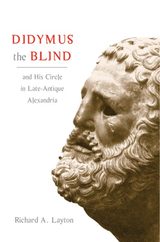
The writings of Didymus were censored and destroyed due to his posthumous condemnation for heresy. This study recovers the uncensored voice of Didymus through the commentaries among the Tura papyri, a massive set of documents discovered in an Egyptian quarry in 1941.
This neglected corpus offers an unprecedented glimpse into the internal workings of a Christian philosophical academy in the most vibrant and tumultuous cultural center of late antiquity. By exploring the social context of Christian instruction in the competitive environment of fourth-century Alexandria, Richard A. Layton elucidates the political implications of biblical interpretation.
Through detailed analysis of the commentaries on Psalms, Job, and Genesis, the author charts a profound tectonic shift in moral imagination as classical ethical vocabulary becomes indissolubly bound to biblical narrative. Attending to the complex interactions of political competition and intellectual inquiry, this study makes a unique contribution to the cultural history of late antiquity.
Dirshuni: Contemporary Women’s Midrash, is the first-ever English edition of a historic collection of midrashim composed by Israeli women, which has been long-anticipated by multiple American audiences, including synagogues, rabbinical seminaries, adult learning programs, Jewish educators, and scholars of gender and religion. Using the classical forms developed by the ancient rabbis, the contributors express their religious and moral thought and experience through innovative interpretations of scripture. The women writers, from all denominations and beyond, of all political stripes and ethnic backgrounds, contribute their Torah to fill the missing half of the sacred Jewish bookshelf. This book reflects dramatic changes in the agency of women in the world of religious writings. The volume features a comprehensive introduction to Midrash for the uninitiated reader by the distinguished scholar Tamar Kadari and extensive annotation and commentary by Tamar Biala.
A reevaluation of the concept of the soul based on the latest evidence
Biblical scholars have long claimed that the Israelites “could not conceive of a disembodied nefesh [soul].” Steiner rejects that claim based on a broad spectrum of textual, linguistic, archaeological, and anthropological evidence spanning the millennia from prehistoric times to the present. The biblical evidence includes a prophecy of Ezekiel condemning women who pretend to trap the wandering souls of sleeping people. The extrabiblical evidence suggests that a belief in the existence of disembodied souls was part of the common religious heritage of the peoples of the ancient Near East.
Features
- A re-examination of the evidence for and against disembodied souls in the Hebrew Bible
- A new look at the nature and behavior of disembodied souls in the Hebrew Bible
- A new study of the meaning and sociolinguistic background of the Katumuwa inscription
READERS
Browse our collection.
PUBLISHERS
See BiblioVault's publisher services.
STUDENT SERVICES
Files for college accessibility offices.
RECENTLY PUBLISHED




UChicago Accessibility Resources
home | accessibility | search | about | contact us
BiblioVault ® 2001 - 2025
The University of Chicago Press