
 A SCHOLARLY BOOK REPOSITORY
11 start with D start with D


The death penalty arouses our passions as does few other issues. Some view taking another person’s life as just and reasonable punishment while others see it as an inhumane and barbaric act. But the intensity of feeling that capital punishment provokes often obscures its long and varied history in this country.
Now, for the first time, we have a comprehensive history of the death penalty in the United States. Law professor Stuart Banner tells the story of how, over four centuries, dramatic changes have taken place in the ways capital punishment has been administered and experienced. In the seventeenth and eighteenth centuries, the penalty was standard for a laundry list of crimes—from adultery to murder, from arson to stealing horses. Hangings were public events, staged before audiences numbering in the thousands, attended by women and men, young and old, black and white alike. Early on, the gruesome spectacle had explicitly religious purposes—an event replete with sermons, confessions, and last-minute penitence—to promote the salvation of both the condemned and the crowd. Through the nineteenth century, the execution became desacralized, increasingly secular and private, in response to changing mores. In the twentieth and twenty-first centuries, ironically, as it has become a quiet, sanitary, technological procedure, the death penalty is as divisive as ever.
By recreating what it was like to be the condemned, the executioner, and the spectator, Banner moves beyond the debates, to give us an unprecedented understanding of capital punishment’s many meanings. As nearly four thousand inmates are now on death row, and almost one hundred are currently being executed each year, the furious debate is unlikely to diminish. The Death Penalty is invaluable in understanding the American way of the ultimate punishment.
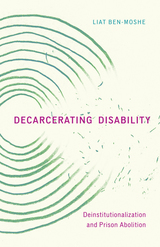
This vital addition to carceral, prison, and disability studies draws important new links between deinstitutionalization and decarceration
Prison abolition and decarceration are increasingly debated, but it is often without taking into account the largest exodus of people from carceral facilities in the twentieth century: the closure of disability institutions and psychiatric hospitals. Decarcerating Disability provides a much-needed corrective, combining a genealogy of deinstitutionalization with critiques of the current prison system.
Liat Ben-Moshe provides groundbreaking case studies that show how abolition is not an unattainable goal but rather a reality, and how it plays out in different arenas of incarceration—antipsychiatry, the field of intellectual disabilities, and the fight against the prison-industrial complex. Ben-Moshe discusses a range of topics, including why deinstitutionalization is often wrongly blamed for the rise in incarceration; who resists decarceration and deinstitutionalization, and the coalitions opposing such resistance; and how understanding deinstitutionalization as a form of residential integration makes visible intersections with racial desegregation. By connecting deinstitutionalization with prison abolition, Decarcerating Disability also illuminates some of the limitations of disability rights and inclusion discourses, as well as tactics such as litigation, in securing freedom.
Decarcerating Disability’s rich analysis of lived experience, history, and culture helps to chart a way out of a failing system of incarceration.
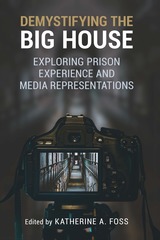
Scholars from cultural and critical studies, feminist studies, queer studies, African American studies, media studies, sociology, and psychology offer critical analysis of media depictions of prison, bridging the media’s portrayals of incarcerated lives with actual experiences and bringing to light forgotten voices in prison narratives.
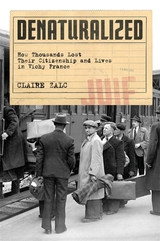
“In Denaturalized, Claire Zalc combines the precision of the scholar with the passion of a storyteller…This is a deftly written book. Zalc combines in an accessible style (smoothly translated by Catherine Porter) the stories of people trapped within a bureaucracy that was as obsessed, perhaps, with clearing files as with hunting Jews. In other words, Zalc reminds us how cruel the banality of indifference could be.”—Wall Street Journal
Winner of the Prix d’histoire de la justice
A leading historian radically revises our understanding of the fate of Jews under the Vichy regime.
Thousands of naturalized French men and women had their citizenship revoked by the Vichy government during the Second World War. Once denaturalized, these men and women, mostly Jews who were later sent to concentration camps, ceased being French on official records and walked off the pages of history. As a result, we have for decades severely underestimated the number of French Jews murdered by Nazis during the Holocaust. In Denaturalized, Claire Zalc unearths this tragic record and rewrites World War II history.
At its core, this is a detective story. How do we trace a citizen made alien by the law? How do we solve a murder when the body has vanished? Faced with the absence of straightforward evidence, Zalc turned to the original naturalization papers in order to uncover how denaturalization later occurred. She discovered that, in many cases, the very officials who granted citizenship to foreigners before 1940 were the ones who retracted it under Vichy rule.
The idea of citizenship has always existed alongside the threat of its revocation, and this is especially true for those who are naturalized citizens of a modern state. At a time when the status of millions of naturalized citizens in the United States and around the world is under greater scrutiny, Denaturalized turns our attention to the precariousness of the naturalized experience—the darkness that can befall those who suddenly find themselves legally cast out.
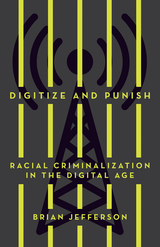
Tracing the rise of digital computing in policing and punishment and its harmful impact on criminalized communities of color
The U.S. Bureau of Justice Statistics estimates that law enforcement agencies have access to more than 100 million names stored in criminal history databases. In some cities, 80 percent of the black male population is registered in these databases. Digitize and Punish explores the long history of digital computing and criminal justice, revealing how big tech, computer scientists, university researchers, and state actors have digitized carceral governance over the past forty years—with devastating impact on poor communities of color.
Providing a comprehensive study of the use of digital technology in American criminal justice, Brian Jefferson shows how the technology has expanded the wars on crime and drugs, enabling our current state of mass incarceration and further entrenching the nation’s racialized policing and punishment. After examining how the criminal justice system conceptualized the benefits of computers to surveil criminalized populations, Jefferson focuses on New York City and Chicago to provide a grounded account of the deployment of digital computing in urban police departments.
By highlighting the intersection of policing and punishment with big data and web technology—resulting in the development of the criminal justice system’s latest tool, crime data centers—Digitize and Punish makes clear the extent to which digital technologies have transformed and intensified the nature of carceral power.

The first English translation of letters of arrest from eighteenth century France held in the archives of the Bastille
Drunken and debauched husbands; libertine wives; vagabonding children. These and many more are the subjects of requests for confinement written to the king of France in the eighteenth century. These letters of arrest (lettres de cachet) from France’s Ancien Régime were often associated with excessive royal power and seen as a way for the king to imprison political opponents. In Disorderly Families, first published in French in 1982, Arlette Farge and Michel Foucault collect ninety-four letters from ordinary families who, with the help of hired scribes, submitted complaints to the king to intervene and resolve their family disputes.
Gathered together, these letters show something other than the exercise of arbitrary royal power, and offer unusual insight into the infamies of daily life. From these letters come stories of divorce and marital conflict, sexual waywardness, reckless extravagance, and abandonment. The letters evoke a fluid social space in which life in the home and on the street was regulated by the rhythms of relations between husbands and wives, or parents and children. Most impressively, these letters outline how ordinary people seized the mechanisms of power to address the king and make demands in the name of an emerging civil order.
Arlette Farge and Michel Foucault were fascinated by the letters’ explosive qualities and by how they both illustrated and intervened in the workings of power and governmentality. Disorderly Families sheds light on Foucault’s conception of political agency and his commitment to theorizing how ordinary lives come to be touched by power. This first English translation is complete with an introduction from the book’s editor, Nancy Luxon, as well as notes that contextualize the original 1982 publication and eighteenth-century policing practices.
-Katherine S. Newman
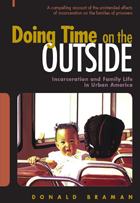
"Doing Time on the Outside brings to life in a compelling way the human drama, and tragedy, of our incarceration policies. Donald Braman documents the profound economic and social consequences of the American policy of massive imprisonment of young African American males. He shows us the link between the broad-scale policy changes of recent decades and the isolation and stigma that these bring to family members who have a loved one in prison. If we want to understand fully the impact of current criminal justice policies, this book should be required reading."
-Mark Mauer, Assistant Director, The Sentencing Project
"Through compelling stories and thoughtful analysis, this book describes how our nation's punishment policies have caused incalculable damage to the fabric of family and community life. Anyone concerned about the future of urban America should read this book."
-Jeremy Travis, The Urban Institute
In the tradition of Elijah Anderson's Code of the Street and Katherine Newman's No Shame in My Game, this startling new ethnography by Donald Braman uncovers the other side of the incarceration saga: the little-told story of the effects of imprisonment on the prisoners' families.
Since 1970 the incarceration rate in the United States has more than tripled, and in many cities-urban centers such as Washington, D.C.-it has increased over five-fold. Today, one out of every ten adult black men in the District is in prison and three out of every four can expect to spend some time behind bars. But the numbers don't reveal what it's like for the children, wives, and parents of prisoners, or the subtle and not-so-subtle effects mass incarceration is having on life in the inner city.
Author Donald Braman shows that those doing time on the inside are having a ripple effect on the outside-reaching deep into the family and community life of urban America. Braman gives us the personal stories of what happens to the families and communities that prisoners are taken from and return to. Carefully documenting the effects of incarceration on the material and emotional lives of families, this groundbreaking ethnography reveals how criminal justice policies are furthering rather than abating the problem of social disorder. Braman also delivers a number of genuinely new arguments.
Among these is the compelling assertion that incarceration is holding offenders unaccountable to victims, communities, and families. The author gives the first detailed account of incarceration's corrosive effect on social capital in the inner city and describes in poignant detail how the stigma of prison pits family and community members against one another. Drawing on a series of powerful family portraits supported by extensive empirical data, Braman shines a light on the darker side of a system that is failing the very families and communities it seeks to protect.
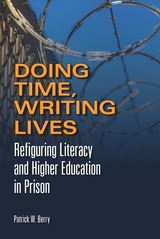
Doing Time, Writing Lives offers a much-needed analysis of the teaching of college writing in U.S. prisons, a racialized space that—despite housing more than 2 million people—remains nearly invisible to the general public. Through the examination of a college-in-prison program that promotes the belief that higher education in prison can reduce recidivism and improve life prospects for the incarcerated and their families, author Patrick W. Berry exposes not only incarcerated students’ hopes and dreams for their futures but also their anxieties about whether education will help them.
Combining case studies and interviews with the author’s own personal experience of teaching writing in prison, this book chronicles the attempts of incarcerated students to write themselves back into a society that has erased their lived histories. It challenges polarizing rhetoric often used to describe what literacy can and cannot deliver, suggesting more nuanced and ethical ways of understanding literacy and possibility in an age of mass incarceration.

"The HIV+ men incarcerated in Limestone Prison's Dorm 16 were put there to be forgotten. Not only do Benjamin Fleury-Steiner and Carla Crowder bring these men to life, Fleury-Steiner and Crowder also insist on placing these men in the middle of critical conversations about health policy, mass incarceration, and race. Dense with firsthand accounts, Dying Inside is a nimble, far-ranging and unblinking look at the cruelty inherent in our current penal policies."
---Lisa Kung, Director, Southern Center for Human Rights
"The looming prison health crisis, documented here at its extreme, is a shocking stain on American values and a clear opportunity to rethink our carceral approach to security."
---Jonathan Simon, University of California, Berkeley
"Dying Inside is a riveting account of a health crisis in a hidden prison facility."
---Michael Musheno, San Francisco State University, and coauthor of Deployed
"This fresh and original study should prick all of our consciences about the horrific consequences of the massive carceral state the United States has built over the last three decades."
---Marie Gottschalk, University of Pennsylvania, and author of The Prison and the Gallows
"An important, bold, and humanitarian book."
---Alison Liebling, University of Cambridge
"Fleury-Steiner makes a compelling case that inmate health care in America's prisons and jails has reached the point of catastrophe."
---Sharon Dolovich, University of California, Los Angeles
"Fleury-Steiner's persuasive argument not only exposes the sins of commission and omission on prison cellblocks, but also does an excellent job of showing how these problems are the natural result of our nation's shortsighted and punitive criminal justice policy."
---Allen Hornblum, Temple University, and author of Sentenced to Science
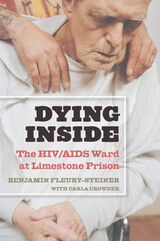
Dying Inside brings the reader face-to-face with the nightmarish conditions inside Limestone Prison's Dorm 16---the segregated HIV ward. Here, patients chained to beds share their space with insects and vermin in the filthy, drafty rooms, and contagious diseases spread like wildfire through a population with untreated---or poorly managed at best---HIV.
While Dorm 16 is a particularly horrific human rights tragedy, it is also a symptom of a disease afflicting the entire U.S. prison system. In recent decades, prison populations have exploded as Americans made mass incarceration the solution to crime, drugs, and other social problems even as privatization of prison services, especially health care, resulted in an overcrowded, underfunded system in which the most marginalized members of our society slowly wither from what the author calls "lethal abandonment."
This eye-opening account of one prison's failed health-care standards is a wake-up call, asking us to examine how we treat our forgotten citizens and compelling us to rethink the American prison system in this increasingly punitive age.
"The HIV+ men incarcerated in Limestone Prison's Dorm 16 were put there to be forgotten. Not only do Benjamin Fleury-Steiner and Carla Crowder bring these men to life, Fleury-Steiner and Crowder also insist on placing these men in the middle of critical conversations about health policy, mass incarceration, and race. Dense with firsthand accounts, Dying Inside is a nimble, far-ranging and unblinking look at the cruelty inherent in our current penal policies."
---Lisa Kung, Director, Southern Center for Human Rights
"The looming prison health crisis, documented here at its extreme, is a shocking stain on American values and a clear opportunity to rethink our carceral approach to security."
---Jonathan Simon, University of California, Berkeley
"Dying Inside is a riveting account of a health crisis in a hidden prison facility."
---Michael Musheno, San Francisco State University, and coauthor of Deployed
"This fresh and original study should prick all of our consciences about the horrific consequences of the massive carceral state the United States has built over the last three decades."
---Marie Gottschalk, University of Pennsylvania, and author of The Prison and the Gallows
"An important, bold, and humanitarian book."
---Alison Liebling, University of Cambridge
"Fleury-Steiner makes a compelling case that inmate health care in America's prisons and jails has reached the point of catastrophe."
---Sharon Dolovich, University of California, Los Angeles
"Fleury-Steiner's persuasive argument not only exposes the sins of commission and omission on prison cellblocks, but also does an excellent job of showing how these problems are the natural result of our nation's shortsighted and punitive criminal justice policy."
---Allen Hornblum, Temple University, and author of Sentenced to Science
Dying Inside brings the reader face-to-face with the nightmarish conditions inside Limestone Prison's Dorm 16---the segregated HIV ward. Here, patients chained to beds share their space with insects and vermin in the filthy, drafty rooms, and contagious diseases spread like wildfire through a population with untreated---or poorly managed at best---HIV.
While Dorm 16 is a particularly horrific human rights tragedy, it is also a symptom of a disease afflicting the entire U.S. prison system. In recent decades, prison populations have exploded as Americans made mass incarceration the solution to crime, drugs, and other social problems even as privatization of prison services, especially health care, resulted in an overcrowded, underfunded system in which the most marginalized members of our society slowly wither from what the author calls "lethal abandonment."
This eye-opening account of one prison's failed health-care standards is a wake-up call, asking us to examine how we treat our forgotten citizens and compelling us to rethink the American prison system in this increasingly punitive age.
READERS
Browse our collection.
PUBLISHERS
See BiblioVault's publisher services.
STUDENT SERVICES
Files for college accessibility offices.
RECENTLY PUBLISHED







UChicago Accessibility Resources
home | accessibility | search | about | contact us
BiblioVault ® 2001 - 2025
The University of Chicago Press