logo for Harvard University Press
The Earliest Missionary Grammar of Tamil
Fr. Henriques' Arte da Lingua Malabar: Translation, History, and Analysis
Jeanne Hein
Harvard University Press

Arte da Lingua Malabar is a grammar of the Tamil spoken in the sixteenth century by the Parava pearl fisher community on the east coast of South India between Kanyakumari and Rameswaram. Fr. Henrique Henriques, S.J., a Portuguese Jesuit missionary to South India, was the first diligent student of Tamil from Europe. He wrote this grammar in Portuguese around 1549 CE for the benefit of his colleagues engaged in learning the local language for spreading their religious beliefs. Consequently, Arte da Lingua Malabar reflects the first linguistic contact between India and the West.

This grammar is unique in many aspects. It is not based on traditional Indian grammars; rather, it uses Latin grammatical categories to describe sixteenth-century Tamil. The effort to describe a language (Tamil) in terms of an unrelated language (Portuguese) has resulted in several inaccuracies in transliteration and scribing. Yet, Arte da Lingua Malabar is the best evidence for showing how sixteenth-century Tamil was heard and written by a sixteenth-century Portuguese. This English translation by Jeanne Hein and V. S. Rajam also includes analysis of the grammar and a description of the political context in which it was written.
[more]

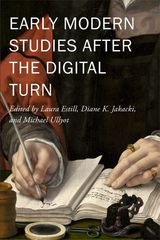
front cover of Early Modern Studies after the Digital Turn
Early Modern Studies after the Digital Turn
Edited by Laura Estill, Diane K. Jakacki, Michael Ullyot
Iter Press, 2016
The essays collected in this volume address the digital humanities’ core tensions: fast and slow; surficial and nuanced; quantitative and qualitative. Scholars design algorithms and projects to process, aggregate, encode, and regularize historical texts and artifacts in order to position them for new and further interpretations. Every essay in this book is concerned with the human-machine dynamic, as it bears on early modern research objects and methods. The interpretive work in these pages and in the online projects discussed orients us toward the extensible future of early modern scholarship after the digital turn.
[more]

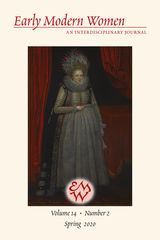
front cover of Early Modern Women Journal v14.2
Early Modern Women Journal v14.2
Bernadette Andrea
Arizona Center for Medieval and Renaissance Studies, 2020

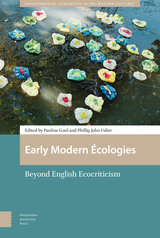
front cover of Early Modern Écologies
Early Modern Écologies
Beyond English Ecocriticism
Pauline Goul
Amsterdam University Press, 2020
Early Modern Écologies is the first collective volume to offer perspectives on the relationship between contemporary ecological thought and early modern French literature. If Descartes spoke of humans as being ‘masters and possessors of Nature’ in the seventeenth century, the writers taken up in this volume arguably demonstrated a more complex and urgent understanding of the human relationship to our shared planet. Opening up a rich archive of literary and non-literary texts produced by Montaigne and his contemporaries, this volume foregrounds not how ecocriticism renews our understanding of a literary corpus, but rather how that corpus causes us to re-think or to nuance contemporary eco-theory. The sparsely bilingual title (an acute accent on écologies) denotes the primary task at hand: to pluralize (i.e. de-Anglophone-ize) the Environmental Humanities. Featuring established and emerging scholars from Europe and the United States, Early Modern Écologies opens up new dialogues between ecotheorists such as Timothy Morton, Gilles Deleuze, and Bruno Latour and Montaigne, Ronsard, Du Bartas, and Olivier de Serres.
[more]

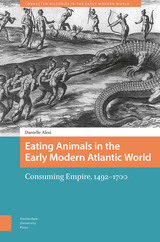
front cover of Eating Animals in the Early Modern Atlantic World
Eating Animals in the Early Modern Atlantic World
Consuming Empire, 1492-1700
Danielle Alesi
Amsterdam University Press, 2025
This book examines how the perceived edibility of animals evolved during the colonization of the Americas. Early European colonizers ate a variety of animals in the Americas, motivated by factors like curiosity, starvation, and diplomacy. As settlements increased and became more sustainable, constructs of edibility shifted and the colonial food system evolved accordingly. By exploring the changes in animal edibility identifiable in early modern Spanish, French, and English sources in the regions of Mesoamerica, Greater Amazonia, and the east coast of North America, this book shows that animals, foodways, and settler colonialism are inextricably linked and that the colonization of the Americas was not only the beginning of new empires, but also of a long-lasting colonial food culture that drives both food systems and human-animal relationships to the present day.
[more]

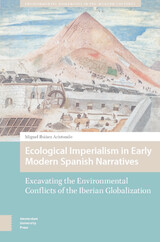
front cover of Ecological Imperialism in Early Modern Spanish Narratives
Ecological Imperialism in Early Modern Spanish Narratives
Excavating the Environmental Conflicts of the Iberian Globalization
Miguel Ibáñez Aristondo
Amsterdam University Press, 2025
How are the environmental conflicts of our time intertwined with the legacies of Spanish imperialism and early modern globalization? In Ecological Imperialism in Early Modern Spanish Narratives: Excavating the Environmental Conflicts of the Iberian Globalization, Miguel Ibáñez Aristondo argues that to understand the historical ramifications of the ecological crisis, it is imperative to excavate the fragmented histories and entangled viewpoints associated with European imperialism. Drawing on early modern Iberian, Indigenous, and European sources, the book interrogates how early modern debates regarding war, free trade, abundance, property, race, sovereignty, and history were deeply entwined within ideas and theories driving the relationship between humans and the environment. By exploring the conflict-ridden experiences arising from Spanish imperialism, the book argues that ecological crises have given rise to divergent visions and social hierarchies over time, driven by environmental conflicts opposing social justice and collective life to capital accumulation and imperial competition.
[more]

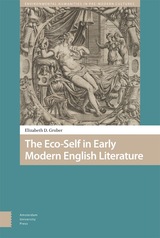
front cover of The Eco-Self in Early Modern English Literature
The Eco-Self in Early Modern English Literature
Elizabeth Gruber
Amsterdam University Press, 2023
The Eco-Self in Early Modern English Literature tracks an important shift in early modern conceptions of selfhood, arguing that the period hosted the birth of a new subset of the human, the eco-self, which melds a deeply introspective turn with an abiding sense of humans’ embedment in the world. A confluence of cultural factors produced the relevant changes. Of paramount significance was the rapid spread of literacy in England and across Europe: reading transformed the relationship between self and world, retooled moral reasoning, and even altered human anatomy. This book pursues the salutary possibilities, including the ecological benefits, of this redesigned self by advancing fresh readings of texts by William Shakespeare, Christopher Marlowe, John Webster, and Margaret Cavendish. The eco-self offers certain refinements to ecological theory by renewing appreciation for the rational, deliberative functions that distinguish humans from other species.
[more]

logo for Harvard University Press
Emperor and Aristocracy in Japan, 1467–1680
Resilience and Renewal
Lee Butler
Harvard University Press, 2002

An institution in decline, possessing little power in an age dominated by warriors? Or a still-potent symbol of social and political legitimacy? Emperor and Aristocracy in Japan traces the fate of the imperial Japanese court from its lowest point during the turbulent, century-long sengoku, when the old society, built upon the strength and influence of the court, the priesthood, and a narrow warrior elite, was shaken to its foundations, to the Tokugawa era, when court culture displayed renewed vitality, and tea gatherings, flower arranging, and architecture flourished.

In determining how the court managed to persist and survive, Butler looks into contemporary documents, diaries, and letters to reveal the court's internal politics and protocols, hierarchies, finances, and ceremonial observances. Emperor and courtiers adjusted to the prominence of the warrior elite, even as they held on to the ideological advantages bestowed by birth, tradition, and culture. To this historical precedent the new wielders of power paid dutiful homage, ever mindful that ranks and titles, as well as the political blessing of the emperor, were advantageous marks of distinction.
[more]

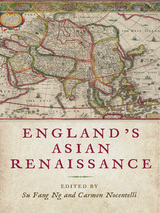
front cover of England's Asian Renaissance
England's Asian Renaissance
Su Fang Ng
University of Delaware Press, 2022
England's Asian Renaissance explores how Asian knowledges, narratives, and customs inflected early modern English literature. Just as Asian imports changed England's tastes and enriched the English language, Eastern themes, characters, and motifs helped shape the country's culture and contributed to its national identity. Questioning long-standing dichotomies between East and West and embracing a capacious understanding of translatio as geographic movement, linquistic transformation, and cultural grafting, the collection gives pride of place to convergence, approximation, and hybridity, thus underscoring the radical mobility of early modern culture. In so doing, England's Asian Renaissance also moves away from entrenched narratives of Western cultural sovereignty to think anew England's debts to Asia.

Published by the University of Delaware Press. Distributed worldwide by Rutgers University Press.
[more]

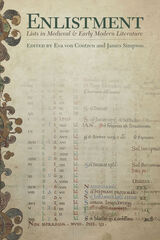
front cover of Enlistment
Enlistment
Lists in Medieval and Early Modern Literature
Edited by Eva von Contzen and James Simpson
The Ohio State University Press, 2022
Bestiaries. Lapidaries. Lunaries. Inventories and household vocabularies. Lists are everywhere in medieval and early modern texts––evidence of the need to manage and order knowledge and experience. Yet until now, listing as a formal practice has received scant scholarly attention. In Enlistment, foremost medievalists and early modernists from both the Anglo-American and German traditions investigate the humble list as a platform for better understanding how and why lists captivated period audiences. From epic catalogues of trees in Geoffrey Chaucer and Edmund Spenser to genealogies and the names of the divine, the lists in question come from a variety of periods, languages, and genres. Throughout, contributors demonstrate how lists have the curious capacity to challenge our categories of thinking and ordering of the world. The lists we encounter in medieval and early modern literature can thus be seen as seismographs of cultural knowledge and also as testing grounds for defining the ineffable, or unfathomable, or that which would be dangerous if otherwise expressed.

Contributors: Suzanne Conklin Akbari, Ingo Berensmeyer, Eva von Contzen, Alex Davis, Andrew James Johnston, Wolfram R. Keller, Alexis Kellner Becker, Kathryn Mogk Wagner, Martha Rust, James Simpson
[more]

front cover of Epistemic Practices and Plant Classification in Premodern European Botanical Knowledge
Epistemic Practices and Plant Classification in Premodern European Botanical Knowledge
An Interdisciplinary Treatment
Fabrizio Baldassarri
Amsterdam University Press, 2025
This volume aims to uncover the diverse approach to plants in the Renaissance and seventeenth century that paved the way for a definition of botany as a fully-fledged discipline. Its scope expands beyond the natural historical interest in collections and the fabrication of materia medica: moving from Varchi, Matthioli and Bauhin to Locke, Pinelli, and Linnaeus, among others, the contributions collected here connect practical and theoretical features, dealing with the challenges that characterized any involvement with plants. The authors focus on the linguistic shortcomings, problems in authenticating specimens, and efforts to establish new botanical geographies to favour trades, as well as the pursuits of new methodologies, artisanal technologies, and chymical experiments with plants. Botany thus emerges as a suitable discipline to disclose the complexities and challenges of early modern science in general.
[more]

front cover of Europe in the Sixteenth Century
Europe in the Sixteenth Century
H. G. Koenigsberger, George L. Mosse, and G. Q. Bowler
University of Wisconsin Press, 2026
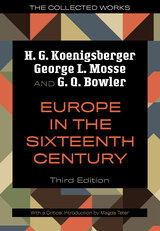
The revised and updated edition of a seminal text, Europe in the Sixteenth Century weaves the distinct histories of the diverse European states into a vivid and complex tapestry. Focusing on similarities of experience across borders, including the centralization of town life and development of market economics, the authors reexamine familiar subjects of the era—from religious upheaval to imperial conflict to artistic revolutions—creating a dynamic, unified narrative of change. This third edition features a new introduction by Magda Teter, tracing the influence of H. G. Koenigsberger, George L. Mosse, and G. Q. Bowler’s work on the historiography of Europe well into the twenty-first century.
[more]

logo for Harvard University Press
Exeter, 1540-1640
The Growth of an English County Town, Revised Edition
Wallace T. MacCaffrey
Harvard University Press

Life in a provincial capital is the subject of this study of Exeter during the Elizabethan and early Stuart ages. The author offers new insight into the way the English middle-class lived and the way in which Tudor policy achieved its aims in the provinces. During this period, Exeter was characterized by its self-sufficiency and by an oligarchical control over every aspect of its civic life. Wallace MacCaffrey describes a semi-autonomous world in itself, in which a small interlocked group of merchant families, related by marriage, kept tight control over the economy, politics, religion, education and social activities.

Taking the inclinations and actions of the local figures as his points of departure, the author discusses such great issues of the age as the Reformation, the war with Spain, and the monarchy, and examines how often they were pushed aside or subordinated to local affairs. Although the local citizen body had no part in national policy making, it was called upon to participate in carrying out the directives which came from London; it did carry out these policies, sometimes successfully, sometimes unsuccessfully.

In writing this detailed study, MacCaffrey has drawn on hitherto unused files from the records of the city.

[more]

logo for University of Arkansas Press
Expedition of Hernando de Soto West of the Mississippi, 1541–1543
Proceedings of the de Soto Symposia, 1988 and 1990
Gloria Young
University of Arkansas Press, 1999

Back by popular demand and new in paperback, this spirited collection of nearly twenty papers celebrates the 450th anniversary of Hernando de Soto’s epic expedition across the Southeast and West.

Originally presented at two symposia conducted by the University Museum at the University of Arkansas, the collection offers an array of viewpoints and diverse approaches to de Soto scholarship. Archaeologists, anthropologists, historians, museum curators, and folklorists all contribute to this lively debate on the Spanish explorer and his travels.

The book focuses on research that challenges traditional interpretation of de Soto’s entrada and travel route, particularly after the expedition crossed the Mississippi River. David H. Dye hypothesizes a route across the river and the alluvial plain by linking the narrative accounts with geography and archaeological knowledge. Phyllis A. Morse asserts that the Parkin site is the location of the capital of Casqui, one of the polities visited by de Soto. Charles M. Hudson repostulates his version of the expedition route, which in 1988 severely challenged the De Soto Commission theory of 1939. Ann M. Early redraws the trail in the uplands of the Ouachita Mountains And Frank E. Schambach tests the possibility that the expedition wandered through Caddoan territory in east Texas after de Soto’s death.

Several chapters examine the Native Americans whom de Soto and his expedition encountered in their journey; other contributions provide a fresh look at the chronicles of the expedition that have survived. What emerges is a redrawn map of de Soto’s exploration—and a deeper understanding of the impact of European contact on the New World.

[more]


Send via email Share on Facebook Share on Twitter