
 A SCHOLARLY BOOK REPOSITORY
56 start with E start with E
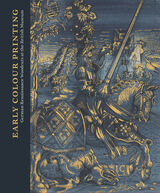
From artworks to missals and icons to wallpapers, this book breaks new ground by revealing the fascinating underlying technologies that enabled the production of these color-printed objects. Further, the volume offers significant new scholarship, pinpointing attributions to printers—not just to artists or designers. In doing so, it lays the groundwork for a new understanding of the history of print, one that encompasses all forms of printed material. Thoroughly researched and engagingly written, this collection guide will be a standard reference on German graphic art, early modern visual culture, and the history of printing itself.
“The idea of the self, as seen from diverse and fascinating perspectives on sixteenth- and seventeenth-century life: this is what readers can expect from Early Modern Autobiography. A beautifully edited collection, genuinely far-reaching and insightful, Early Modern Autobiography makes known to us a great deal about how people saw themselves four hundred years ago."
—Derek Cohen, Professor of English, McLaughlin College, York University
"Acutely addressing a range of central issues from subjectivity to theatricality to religion, these essays will be of great interest to specialists in early modern studies and students of autobiographical writings from all eras."
—Heather Dubrow, Tighe-Evans Professor and John Bascom Professor, Department of English, University of Wisconsin
"The essays in this volume show where archival discoveries—memoirs, letters, account books, wills, and marginalia—can take us in understanding early modern mentalities. They document the interdependence of the abstract and the everyday, the social constructedness of self-awareness, local contexts for self-recordation, and impulses that range from legal purpose to imaginative escape. The sixteen chapters open many fascinating new perspectives on identity and personhood in Renaissance England."—Lena Cowen Orlin, Executive Director, The Shakespeare Association of America and Professor of English, University of Maryland Baltimore County
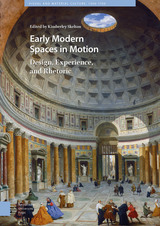


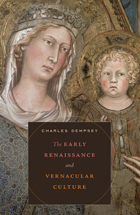
Why do the paintings and poetry of the Italian Renaissance—a celebration of classical antiquity—also depict the Florentine countryside populated with figures dressed in contemporary silk robes and fleur-de-lys crowns? Upending conventional interpretations of this well-studied period, Charles Dempsey argues that a fusion of classical form with contemporary content, once seen as the paradox of the Renaissance, can be better understood as its defining characteristic.
Dempsey describes how Renaissance artists deftly incorporated secular and popular culture into their creations, just as they interwove classical and religious influences. Inspired by the love lyrics of Parisian troubadours, Simone Martini altered his fresco Maestà in 1321 to reflect a court culture that prized terrestrial beauty. As a result the Maestà scandalously revealed, for the first time in Italian painting, a glimpse of the Madonna’s golden locks. Modeled on an ancient statue, Botticelli’s Birth of Venus went much further, featuring fashionable beauty ideals of long flowing blonde hair, ivory skin, rosy cheeks, and perfectly arched eyebrows. In the only complete reconstruction of Feo Belcari’s twelve Sybilline Octaves, Dempsey shows how this poet, patronized by the Medici family, was also indebted to contemporary dramatic modes. Popularizing biblical scenes by mixing the familiar with the exotic, players took the stage outfitted in taffeta tunics and fanciful hats, and one staging even featured a papier-maché replica of Jonah’s Whale. As Dempsey’s thorough study illuminates, Renaissance poets and artists did not simply reproduce classical aesthetics but reimagined them in vernacular idioms.

A renowned Renaissance poet’s homage to Naples makes its debut in modern English translation.
Giovanni Pontano (1429–1503), whose academic name was Gioviano, was one of the great scholar-poets of the Renaissance as well as a leading statesman who served as prime minister to the Aragonese kings of southern Italy. The dominant literary figure of quattrocento Naples, Pontano produced literary works in several genres and was the leader of the Neapolitan academy. The two works included in the present volume, broadly inspired by Virgil, might be considered Pontano’s love songs to the landscapes of Naples. The Eclogues offer a spectacular, panoramic tour of the Bay of Naples region, even as they focus on intimate domestic scenes and allegorize the people and places of the poet’s world. The Garden of the Hesperides is a work of brilliant erudition on an unprecedented poetic topic: the cultivation of citrus trees and the splendid pleasures of gardens. This volume features a newly established Latin text of the Garden of the Hesperides as well as the first published translations of both works into English.
Praised by Erasmus and Thomas More, Vives advocated education for all women, regardless of social class and ability. From childhood through adolescence to marriage and widowhood, this manual offers practical advice as well as philosophical meditation and was recognized soon after publication in 1524 as the most authoritative pronouncement on the universal education of women. Arguing that women were intellectually equal if not superior to men, Vives stressed intellectual companionship in marriage over procreation, and moved beyond the private sphere to show how women's progress was essential for the good of society and state.
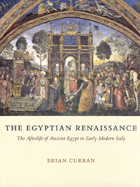
Fascination with ancient Egypt is a recurring theme in Western culture, and here Brian Curran uncovers its deep roots in the Italian Renaissance, which embraced not only classical art and literature but also a variety of other cultures that modern readers don’t tend to associate with early modern Italy. Patrons, artists, and spectators of the period were particularly drawn, Curran shows, to Egyptian antiquity and its artifacts, many of which found their way to Italy in Roman times and exerted an influence every bit as powerful as that of their more familiar Greek and Roman counterparts.
Curran vividly recreates this first wave of European Egyptomania with insightful interpretations of the period’s artistic and literary works. In doing so, he paints a colorful picture of a time in which early moderns made the first efforts to decipher Egyptian hieroglyphs, and popes and princes erected pyramids and other Egyptianate marvels to commemorate their own authority. Demonstrating that the emergence of ancient Egypt as a distinct category of historical knowledge was one of Renaissance humanism’s great accomplishments, Curran’s peerless study will be required reading for Renaissance scholars and anyone interested in the treasures and legacy of ancient Egypt.
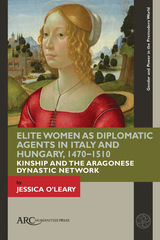
This book explores the diplomatic role of women in early modern European dynastic networks through the study of Aragonese marriage alliances in late fifteenth-century Italy and Hungary. It challenges the frequent erasure of dynastic wives from diplomatic and political narratives to show how elite women were diplomatically active agents for two dynasties.
Chapters analyze the lives of Eleonora (1450-1493) and Beatrice d'Aragona (1457-1508), daughters of King Ferrante of Naples (1423-1494), and how they negotiated their natal and marital relationships to achieve diplomatic outcomes. While Ferrante expected his daughters to follow paternal imperatives and to remain engaged in collective dynastic strategy, the extent of his kinswomen's continued participation in familial projects was dependent on the nature of their marital relationships. The book traces the access to these relationships that enabled courtly women to re-enter the diplomatic space after marriage, not as objects, but as agents, with their own strategies, politics, and schemes.
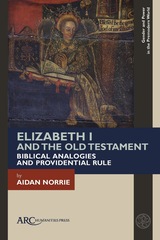
Throughout her reign, Elizabeth I and her supporters used biblical analogies to perpetuate the Queen’s claim to be England’s providential Protestant monarch. While Elizabeth’s parallels with various biblical figures—including Deborah, Esther, Judith, David, Solomon, and Daniel—have all received varying levels of attention in the scholarship, this is the first analysis of how biblical analogy functioned as a religio-political tool for Elizabeth across her reign. Taking both a chronological and thematic approach, this book addresses this gap by analyzing Elizabeth and her supporters’ use of the Old Testament to provide justification for decisions (or the lack thereof), to offer counsel to the Queen, and to vindicate both female kingship and the royal supremacy. It argues that biblical analogies were a vital component of Elizabethan royal iconography, and that their widespread use demonstrates their potency as a tool for legitimizing and sustaining her power.
This edition preserves the appearance, spelling, and punctuation of the original manuscript while expanding antiquated contractions to provide an easily readable text. Textual notes appear on the page, and in-depth contextual notes and word glosses are provided in the commentary section. The analyses add to our knowledge of early modern manuscript culture and literary manuscript transmission, and a substantial introduction provides context for the compilation of the anthology.

In drawing attention to the body, this collection underlines the importance of embodied knowledge and sensory experiences associated with the making practices of historically marginalised groups, such as craftspeople, women, domestic servants, and those who were colonised, to confront biases in the written archive. The history of making is found not only in technological and economic innovations which drove ‘progress’ but also in the hands, minds, and creations of makers themselves.
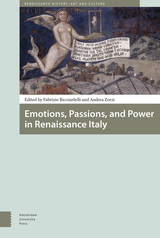

Renaissance humanists believed that the origins of peoples could reveal crucial facts about their modern political character. Margaret Meserve explores what happened when European historians turned to study the political history of a faith other than their own.
Meserve investigates the methods and illuminates the motives of scholars negotiating shifting boundaries—between scholarly research and political propaganda, between a commitment to critical historical inquiry and the pressure of centuries of classical and Christian prejudice, between the academic ideals of humanism and the everyday demands of political patronage. Drawing on political oratory, diplomatic correspondence, crusade propaganda, and historical treatises, Meserve shows how research into the origins of Islamic empires sprang from—and contributed to—contemporary debates over the threat of Islamic expansion in the Mediterranean. Humanist histories of the Turks were sharply polemical, portraying the Ottomans as a rogue power. But writings on other Muslim polities include some of the first positive appraisals of Muslim statecraft in the European tradition.
This groundbreaking book offers new insights into Renaissance humanist scholarship and the longstanding European debates over the relationship between Christianity and Islam.
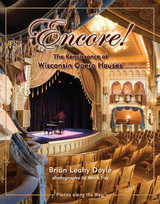
A remarkable number of Wisconsin towns and cities were home to an opera house in the late 1800s and early 1900s. Some were freestanding structures built by local benefactors, industrialists, and capitalists. Others were located within a city hall building and financed by local tax dollars with the support of government officials who believed in the value of the arts for their community
In Encore! The Renaissance of Wisconsin Opera Houses, Brian Leahy Doyle chronicles the histories of ten Wisconsin opera houses and theaters, from their construction to their heydays as live performance spaces and through the periods when many of these stages went dark. But what makes these stories so compelling is that all but one of the featured theaters has been restored to its original splendor. Just as the beginnings of these theaters were often the result of the efforts of local citizens, Doyle discovers that their restoration is due to the commitment of dedicated and passionate people. More than one of these revived theaters has spurred the revitalization of its surrounding downtown business district as well.
Encore! is the second book in the Places along the Way series. Richly illustrated with historic and contemporary photos, the Places along the Way series links Wisconsin's past with its present, exploring the state's history through its architecture.
Published by University of Delaware Press. Distributed worldwide by Rutgers University Press.
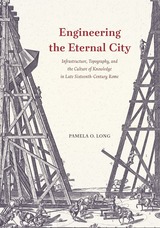
This portrait of an early modern Rome examines the many conflicts, failures, and successes that shaped the city, as decision-makers tried to control not only Rome’s structures and infrastructures but also the people who lived there. Taking up visual images of the city created during the same period—most importantly in maps and urban representations, this book shows how in a time before the development of modern professionalism and modern bureaucracies, there was far more wide-ranging conversation among people of various backgrounds on issues of engineering and infrastructure than there is in our own times. Physicians, civic leaders, jurists, cardinals, popes, and clerics engaged with painters, sculptors, architects, printers, and other practitioners as they discussed, argued, and completed the projects that remade Rome.


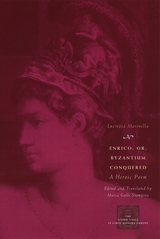
Lucrezia Marinella (1571–1653) is, by all accounts, a phenomenon in early modernity: a woman who wrote and published in many genres, whose fame shone brightly within and outside her native Venice, and whose voice is simultaneously original and reflective of her time and culture. In Enrico; or, Byzantium Conquered, one of the most ambitious and rewarding of her numerous narrative works, Marinella demonstrates her skill as an epic poet.
Now available for the first time in English translation, Enrico retells the story of the conquest of Byzantium in the Fourth Crusade (1202–04). Marinella intersperses historical events in her account of the invasion with numerous invented episodes, drawing on the rich imaginative legacy of the chivalric romance. Fast-moving, colorful, and narrated with the zest that characterizes Marinella’s other works, this poem is a great example of a woman engaging critically with a quintessentially masculine form and subject matter, writing in a genre in which the work of women poets was typically shunned.
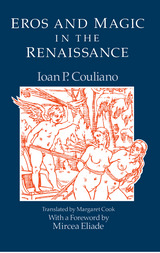
Renaissance magic, according to Ioan Couliano, was a scientifically plausible attempt to manipulate individuals and groups based on a knowledge of motivations, particularly erotic motivations. Its key principle was that everyone (and in a sense everything) could be influenced by appeal to sexual desire. In addition, the magician relied on a profound knowledge of the art of memory to manipulate the imaginations of his subjects. In these respects, Couliano suggests, magic is the precursor of the modern psychological and sociological sciences, and the magician is the distant ancestor of the psychoanalyst and the advertising and publicity agent.
In the course of his study, Couliano examines in detail the ideas of such writers as Giordano Bruno, Marsilio Ficino, and Pico della Mirandola and illuminates many aspects of Renaissance culture, including heresy, medicine, astrology, alchemy, courtly love, the influence of classical mythology, and even the role of fashion in clothing.
Just as science gives the present age its ruling myth, so magic gave a ruling myth to the Renaissance. Because magic relied upon the use of images, and images were repressed and banned in the Reformation and subsequent history, magic was replaced by exact science and modern technology and eventually forgotten. Couliano's remarkable scholarship helps us to recover much of its original significance and will interest a wide audience in the humanities and social sciences.
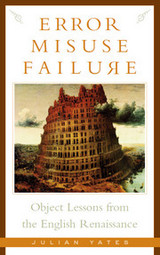

From humble beginnings, Bartolomeo Scala (1430–1497) trained in the law and rose to prominence as a leading citizen of Florence, serving as secretary and treasurer to the Medicis and chancellor of the Guelf party before becoming first chancellor of Florence, a post he held for fifteen years. His palace in Borgo Pinti, modeled on classical designs, was emblematic of his achievements as a humanist as well as a public official. Along with his professional writings as chancellor, Scala’s personal treatises, fables, and dialogues—widely read and admired by his contemporaries—were deeply indebted to classical sources. This volume collects works from throughout his career that show his acquaintance with recently rediscovered ancient writers, whose works he had access to through the Medici libraries, and the influence of fellow humanists such as Marsilio Ficino, Aeneas Silvius Piccolomini (Pope Pius II), and Giovanni Pico della Mirandola. Perhaps the most significant is the Defense against the Detractors of Florence, a key document in the development of modern republicanism.
This volume presents fresh translations by Renée Neu Watkins of five of the texts based on Latin editions by Alison Brown, who also contributes an introduction to Scala’s life and works.
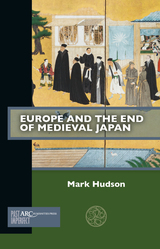
Japan’s transition from medieval to early modern occurred at the time of an emerging global Europe. In the 1540s European traders and missionaries began a century of dynamic cultural and economic interaction with the Japanese Islands. In the midst of civil war, over 300,000 Japanese converted to Christianity and Japan became an influential location in the Counter-Reformation’s reinvention of Christianity as the first global religion. At the beginning of the seventeenth century, however, unification of Japan by the Tokugawa shoguns led to persecutions and strict limits on European presence in the country. Examining a range of topics, including the relationship between Christianity and folk religion, the introduction of firearms, new crops and cuisines, and treponemal disease, this book re-evaluates Japan’s transformation from medieval to early modern in a global context.
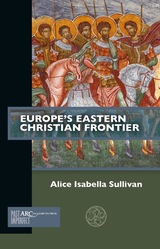
Within the shifting political landscapes of Eastern Europe during the late Middle Ages, the principality of Moldavia (extending over today's northeastern third of Romania and the Republic of Moldova) emerged as an eastern Christian frontier—indeed, a bastion, a “gate of Christianity”—in the face of the advancing Ottoman armies and Tatar forces. Moldavia’s leaders—among them Peter I Mușat, Alexander I, and Stephen III—established political, military, and economic contacts in efforts to strengthen and protect their domain, and, by extension, the rest of Europe. After the fall of Constantinople in 1453, Moldavia under Stephen III also refashioned Byzantine traditions in a new context, thereby preserving and transforming the legacies of the former Byzantine Empire to the north of the Danube River. This book argues for Moldavia’s central role in the political, military, economic, and cultural spheres of Eastern Europe from the second half of the fourteenth century to the turn of the sixteenth century.
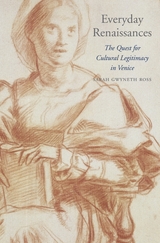
The world of wealth and patronage that we associate with sixteenth- and early seventeenth-century Italy can make the Renaissance seem the exclusive domain of artists and aristocrats. Revealing a Renaissance beyond Michelangelo and the Medici, Sarah Gwyneth Ross recovers the experiences of everyday men and women who were inspired to pursue literature and learning.
Ross draws on a trove of original unpublished sources—wills, diaries, household inventories, account books, and other miscellany—to reconstruct the lives of over one hundred artisans, merchants, and others on the middle rung of Venetian society who embraced the ennobling virtues of a humanistic education. These men and women sought out the latest knowledge, amassed personal libraries, and passed both their books and their hard-earned wisdom on to their families and heirs.
Physicians were often the most avid—and the most anxious—of professionals seeking cultural legitimacy. Ross examines the lives of three doctors: Nicolò Massa (1485–1569), Francesco Longo (1506–1576), and Alberto Rini (d. 1599). Though they had received university training, these self-made men of letters were not patricians but members of a social group that still yearned for credibility. Unlike priests or lawyers, physicians had not yet rid themselves of the taint of artisanal labor, and they were thus indicative of a middle class that sought to earn the respect of their peers and betters, protect and advance their families, and secure honorable remembrance after death.
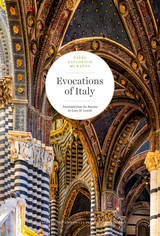
In 1907, Pavel Muratov, a budding littérateur and art connoisseur from Moscow, set off for Italy with his wife, three friends, and a dozen books on the Italian Renaissance. This journey, the first of over a dozen he would make in a decade, inspired an obsession with the country’s art and culture that would produce, in the words of Clive James, “one of the most dazzling books of its type ever written.” First published in Russian between 1911 and 1924, Evocations of Italy(Obrazy Italii) chronicles Muratov’s encounters with the art, myth, and land of Italy. A classic of the Silver Age, it built on the tradition of Italian travelogues by Goethe, Stendhal, John Ruskin, and Henry James and defined the idea of Italy for generations of Russian artists and writers. Finally available in English, this three-volume collector's edition illuminates the personalities, conditions, and dreams that gave us the Italian Renaissance. At once intimate and authoritative, and here richly illustrated with photographs that echo Muratov’s shimmering juxtapositions of image and sensation, Evocations of Italy is as timely and compelling a guide today as it was a hundred years ago.
READERS
Browse our collection.
PUBLISHERS
See BiblioVault's publisher services.
STUDENT SERVICES
Files for college accessibility offices.
RECENTLY PUBLISHED



UChicago Accessibility Resources
home | accessibility | search | about | contact us
BiblioVault ® 2001 - 2025
The University of Chicago Press