
 A SCHOLARLY BOOK REPOSITORY
27 start with E start with E
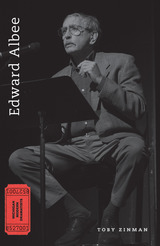
Edward Albee was a giant in American theater, in the same pantheon with Arthur Miller, Eugene O’Neill, and Tennessee Williams. His prolific career included three Pulitzer Prizes and the 2005 Lifetime Achievement Tony Award.
Albee continued producing major works for the theater into his eighties, including a prequel to The Zoo Story, which shocked the country when it first appeared in 1958—and his plays have seen major revivals on and off Broadway in recent years. Yet even with this resurgence of popularity, no up-to-date treatment of his plays is currently in print.
With engaging discussions of his most famous plays, such as Who’s Afraid of Virginia Woolf and Three Tall Women, as well as his lesser known works, this essential guide reveals the heart of Albee’s drama, highlighting the themes of sex, death, loneliness, and time that have occupied the playwright during his more than fifty years in the theater.
Toby Zinman is the theater critic for the Philadelphia Inquirer. She has written for numerous publications, including Variety,American Theater, and Theatre Journal. She is Professor of English at the University of the Arts, Philadelphia.
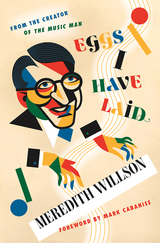
Back in print: the playful and personal memoir of Meredith Willson’s creative tribulations and triumphs before The Music Man
Composer, musical director, writer, lecturer, and piccoloist Meredith Willson laid many eggs throughout his career—but not all those eggs would hatch quite so gloriously as his Broadway hit The Music Man. In Eggs I Have Laid, Willson genially chronicles the failures that he faced as he made his place in show business during the pivotal early 1950s, when radio was being overtaken by television.
From Hollywood to New York, London, and Paris, and back to his hometown of Mason City, Iowa, Willson sets each scene vividly, bringing to life his encounters with zeitgeist stars, from collaborators Tallulah Bankhead and Fred Allen to Orson Welles and Carmen Miranda. His signature wit excels as he relates his tales of eggs dropped, notable among them the lavishly produced variety program The Big Show, his ill-fated attempt to be a radio bulwark against the encroaching tide of television.
First published in 1955, Eggs I Have Laid features delightful curiosities, like an eight-page “platonic dialogue” about quitting smoking and the lyrics to a love song with the occupancy limits of the New York Fire Code as its central metaphor. It is at once a vivid chronicle and a trove of insight from the hilarious, perseverant mind of Meredith Willson.
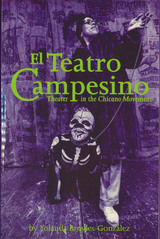
Born in 1965 as an organizing tool within César Chávez's United Farm Workers union, El Teatro Campesino became the premier Chicana/o performance ensemble to emerge out of the Chicano movement of the 1960s and 1970s. This study demythologizes and reinterprets the company's history from its origins in California's farm labor struggles to its successes in Europe and on Broadway until the disbanding of the original collective ensemble in 1980 with the subsequent adoption of mainstream production techniques.
Yolanda Broyles-González corrects many misconceptions concerning the Teatro's creation and evolution. She draws from a rich storehouse of previously untapped material, such as interviews with numerous ensemble members, production notes, and unpublished diaries, to highlight the reality of the collective creation that characterized the Teatro's work.
Writing within contemporary cultural studies theory, Broyles-González sheds light on class, gender, race, and cultural issues. Her work situates the Teatro within working-class Mexican performance history, the Chicano movement, gender relations, and recent attempts to mainstream.

Elfriede Jelinek and The Princess Plays includes an article on Jelinek’s changing position in the world of letters by Gitta Honegger, a leading Jelinek scholar and translator. Accompanying this major article is Honegger’s extended interview with the author; they discuss Jelinek’s aesthetic influences and ideas, what it’s like to win the Nobel Prize, and its implications for the writer. In addition to the first English-language publication of three short plays from Elfriede Jelinek’s Princess Plays, this issue of Theater includes Gitta Honegger’s extended and deeply personal interview with Jelinek, as well as Honegger’s article on her changing position in the world of letters since winning the 2004 Nobel Prize. The issue, which also includes articles on France’s Théâtre du Soleil, offers a compelling portrait of Jelinek and a rare introduction to her provocative theater.
Contributors. Duccio Bellugi, Gitta Honegger, Elfriede Jelinek, Robert Kluyver, Marina Kotzamani, Judith Miller, Ariane Mnouchkine, Béatrice Picon-Vallin, Anthony Richter, Gordon Rogoff, René Solis, Emmanuel Wallon, Philippa Wehle
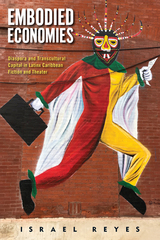
In chapters that compare works by Lin-Manuel Miranda, Nilo Cruz, Edwin Sánchez, Ángel Lozada, Rita Indiana Hernández, Dolores Prida, and Mayra Santos Febres, Reyes examines the contradictions of transcultural capital, its potential to establish networks of support in Latinx enclaves, and the risks it poses for reproducing the inequities of power and privilege that have always been at the heart of the American Dream. Embodied Economies shares new perspectives through its comparison of works written in both English and Spanish, and the literary voices that emerge from the US and the Hispanic Caribbean.
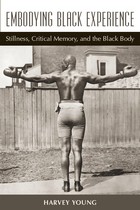
"Young's linkage between critical race theory, historical inquiry, and performance studies is a necessary intersection. Innovative, creative, and provocative."
---Davarian Baldwin, Paul E. Raether Distinguished Professor of American Studies, Trinity College
In 1901, George Ward, a lynching victim, was attacked, murdered, and dismembered by a mob of white men, women, and children. As his lifeless body burned in a fire, enterprising white youth cut off his toes and, later, his fingers and sold them as souvenirs. In Embodying Black Experience, Harvey Young masterfully blends biography, archival history, performance theory, and phenomenology to relay the experiences of black men and women who, like Ward, were profoundly affected by the spectacular intrusion of racial violence within their lives. Looking back over the past two hundred years---from the exhibition of boxer Tom Molineaux and Saartjie Baartman (the "Hottentot Venus") in 1810 to twenty-first century experiences of racial profiling and incarceration---Young chronicles a set of black experiences, or what he calls, "phenomenal blackness," that developed not only from the experience of abuse but also from a variety of performances of resistance that were devised to respond to the highly predictable and anticipated arrival of racial violence within a person's lifetime.
Embodying Black Experience pinpoints selected artistic and athletic performances---photography, boxing, theater/performance art, and museum display---as portals through which to gain access to the lived experiences of a variety of individuals. The photographs of Joseph Zealy, Richard Roberts, and Walker Evans; the boxing performances of Jack Johnson, Joe Louis, and Muhammad Ali; the plays of Suzan-Lori Parks, Robbie McCauley, and Dael Orlandersmith; and the tragic performances of Bootjack McDaniels and James Cameron offer insight into the lives of black folk across two centuries and the ways that black artists, performers, and athletes challenged the racist (and racializing) assumptions of the societies in which they lived.
Blending humanistic and social science perspectives, Embodying Black Experience explains the ways in which societal ideas of "the black body," an imagined myth of blackness, get projected across the bodies of actual black folk and, in turn, render them targets of abuse. However, the emphasis on the performances of select artists and athletes also spotlights moments of resistance and, indeed, strength within these most harrowing settings.
Harvey Young is Associate Professor of Theatre, Performance Studies, and Radio/Television/Film at Northwestern University.
A volume in the series Theater: Theory/Text/Performance
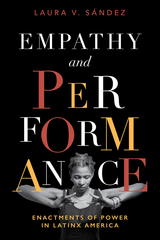
To survey different answers to these queries, Sández studies Indigurrito (Nao Bustamante); Dominicanish (Josefina Báez); ¡Bienvenidos Blancos! or Welcome White People! (Alex Torra); the apology delivered by the group Veterans Stand with Standing Rock during protests against the Dakota Access Pipeline; and Kukuli Velarde’s body of work, from We, the Colonized Ones to A Mi Vida. In these artistic enactments, which range from 1992 to 2021, the historical construct of boundaries and bodies becomes evident. Following recent work on empathy by Lanzoni, Maibom, Calloway-Thomas, Bloom, Hogan, and Matravers, among others, Sández examines in-group/out-group divisions, the establishment of identity categories through performance, and the exploration of subaltern identities.
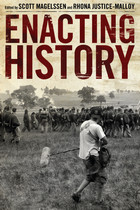
Where performance meets the past: exploring how we stage, shape, and experience history.
Enacting History is a collection of new essays exploring the world of historical performances. The volume focuses on performances outside the traditional sphere of theatre, among them living history museums, battle reenactments, pageants, renaissance festivals, and adventure-tourism destinations. This volume argues that the recent surge in such performances have raised significant questions about the need for, interest in, and value of such nontraditional theater. Many of these performances claim a greater or lesser degree of historical "accuracy" or "authenticity," and the authors tease out the representational and historiographic issues related to these arguments. How, for instance, are issues of race, ethnicity, and gender dealt with at museums that purport to be accurate windows into the past? How are politics and labor issues handled in local- or state-funded institutions that rely on volunteer performers? How do tourists' expectations shape the choices made by would-be purveyors of the past? Where do matters of taste or censorship enter in when reconciling the archival evidence with a family-friendly mission?
Essays in the collection address, among other subjects, reenactments of period cookery and cuisine at a Maryland renaissance festival; the roles of women as represented at Minnesota's premiere living history museum, Historic Fort Snelling; and the Lewis and Clark bicentennial play as cultural commemoration. The editors argue that historical performances like these-regardless of their truth-telling claims-are an important means to communicate, document, and even shape history, and allow for a level of participation and accessibility that is unique to performance. Enacting History is an entertaining and informative account of the public's fascination with acting out and watching history and of the diverse methods of fulfilling this need.
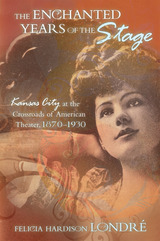
Sarah Bernhardt, Sir Henry Irving, Edwin Booth . . . there was a time when they all played Kansas City. From star-studded engagements at ornate opera houses to risqué shows in Fourth Street honky-tonks, Kansas City was a cow town that wanted to civilize itself through the performing arts. And because it was a railway hub in the heyday of trouping, it opened its doors to America’s traveling performers.
This book chronicles the “first golden age” of Kansas City theater, from the opening of the Coates Opera House in 1870 through the gradual decline of touring productions after World War I. Drawing on the recollections of renowned theater critic David Austin Latchaw and on newspaper archives of the era, Felicia Londré has gleaned long-lost nuggets of theater life—both the legitimate stage and popular fare—to create a fascinating account of a city and its theater culture.
The Enchanted Years of the Stage is brimming with forgotten stories and historical illustrations that offer a new perspective on both the history of American theater and the humor and pathos of performers’ lives. It tells how James O’Neill once chased a messenger boy for ruining a big scene, while Louis James played practical jokes on fellow actors in the middle of Shakespeare performances; how police kept watch over the burlesque girls at the Folly to make sure their act wouldn’t reach the level of indecency allowed in St. Louis; how Orth Stein shot the manager of the Theatre Comique; and how Eddie Foy played his death scene in Kansas City—by dying there. Throughout the book, sidebars of Latchaw’s writing reflect the style and spirit of this bygone era.
Offering a richer view of American theater than have accounts centered on New York, Londré’s book also yields a wealth of new insights into the social and political fabric of an emerging metropolis and testifies to the importance of the arts in the growth and reputation of a great city. By conveying the richness and complexity of road shows in Kansas City—a microcosm of the burgeoning national stage—she gives us a key piece in the mosaic that was American theater in a neglected but unforgettable era.
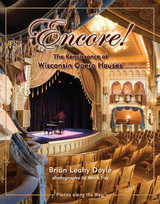
A remarkable number of Wisconsin towns and cities were home to an opera house in the late 1800s and early 1900s. Some were freestanding structures built by local benefactors, industrialists, and capitalists. Others were located within a city hall building and financed by local tax dollars with the support of government officials who believed in the value of the arts for their community
In Encore! The Renaissance of Wisconsin Opera Houses, Brian Leahy Doyle chronicles the histories of ten Wisconsin opera houses and theaters, from their construction to their heydays as live performance spaces and through the periods when many of these stages went dark. But what makes these stories so compelling is that all but one of the featured theaters has been restored to its original splendor. Just as the beginnings of these theaters were often the result of the efforts of local citizens, Doyle discovers that their restoration is due to the commitment of dedicated and passionate people. More than one of these revived theaters has spurred the revitalization of its surrounding downtown business district as well.
Encore! is the second book in the Places along the Way series. Richly illustrated with historic and contemporary photos, the Places along the Way series links Wisconsin's past with its present, exploring the state's history through its architecture.
Winner, 2020 Ann Saddlemyer Award
Finalist, ATHE Outstanding Book Award for 2020
Mention Spéciale, Société québécoise d'études théâtrale
In Encounters on Contested Lands, Julie Burelle employs a performance studies lens to examine how instances of Indigenous self-representation in Québec challenge the national and identity discourses of the French Québécois de souche—the French-speaking descendants of white European settlers who understand themselves to be settlers no more but rather colonized and rightfully belonging to the territory of Québec.
Analyzing a wide variety of performances, Burelle brings together the theater of Alexis Martin and the film L'Empreinte, which repositions the French Québécois de souche as métis, with protest marches led by Innu activists; the Indigenous company Ondinnok's theater of repatriation; the films of Yves Sioui Durand, Alanis Obomsawin, and the Wapikoni Mobile project; and the visual work of Nadia Myre. These performances, Burelle argues, challenge received definitions of sovereignty and articulate new ones while proposing to the province and, more specifically, to the French Québécois de souche, that there are alternative ways to imagine Québec's future and remember its past.
The performances insist on Québec's contested nature and reframe it as animated by competing sovereignties. Together they reveal how the "colonial present tense" and "tense colonial present" operate in conjunction as they work to imagine an alternative future predicated on decolonization. Encounters on Contested Lands engages with theater and performance studies while making unique and needed contributions to Québec and Canadian studies, as well as to Indigenous and settler-colonial studies.
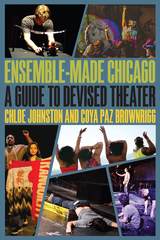
Featuring the work of: About Face Youth Theatre • Albany Park Theater Project • Barrel of Monkeys • Every house has a door • FEMelanin • 500 Clown • Free Street Theater • Honey Pot Performance • Lookingglass Theater • The Neo-Futurists • The Second City • Southside Ignoramus Quartet • Teatro Luna • Walkabout Theater • Young Fugitives
Ensemble-Made Chicago brings together a wide range of Chicago theater companies to share strategies for cocreating performance. Cocreated theater breaks down the traditional roles of writer, director, and performer in favor of a more egalitarian approach in which all participants contribute to the creation of original material. Each chapter offers a short history of a Chicago company, followed by detailed exercises that have been developed and used by that company to build ensemble and generate performances. Companies included range in age from two to fifty years, represent different Chicago neighborhoods, and reflect both the storefront tradition and established cultural institutions. The book pays special attention to the ways the fight for social justice has shaped the development of this aesthetic in Chicago.
Assembled from interviews and firsthand observations, Ensemble-Made Chicago is written in a lively and accessible style and will serve as an invaluable guide for students and practitioners alike, as well as an important archive of Chicago’s vibrant ensemble traditions. Readers will find new creative methods to enrich their own practice and push their work in new directions.

Drawing out the particularities of collaborative work, Entanglements of Two: A Series of Duets considers the duo as a microcosm of humankind. Focusing on a ten-year period in the work of collaborative performance maker Karen Christopher, the book explores the practical, philosophical, and aesthetic implications of working in pairs and offers wider reflections on the duet as a concept in artistic and social life. The twenty-five pieces in the collection—from an international group of collaborators, artists, and performance scholars, alongside writing from related disciplines, including linguistics, physics, poetry, and theology—offer critical reflections on artistic collaboration and entanglement and contemplate their significance on an interpersonal and global level. A foreword by writer and artist Season Butler rounds out this essential volume.
In this survey of eighteenth- and nineteenth-century American drama, Tice L. Miller examines American plays written before a canon was established in American dramatic literature and provides analyses central to the culture that produced them. Entertaining the Nation: American Drama in the Eighteenth and Nineteenth Centuries evaluates plays in the early years of the republic, reveals shifts in taste from the classical to the contemporary in the 1840s and 1850s, and considers the increasing influence of realism at the end of the nineteenth century.
Miller explores the relationship between American drama and societal issues during this period. While never completely shedding its English roots, says Miller, the American drama addressed issues important on this side of the Atlantic such as egalitarianism, republicanism, immigration, slavery, the West, Wall Street, and the Civil War.
In considering the theme of egalitarianism, the volume notes Alexis de Tocqueville’s observation in 1831 that equality was more important to Americans than liberty. Also addressed is the Yankee character, which became a staple in American comedy for much of the nineteenth century.
Miller analyzes several English plays and notes how David Garrick’s reforms in London were carried over to the colonies. Garrick faced an increasingly middle-class public, offers Miller, and had to make adjustments to plays and to his repertory to draw an audience.
The volumealso looks at the shift in drama that paralleled the one in political power from the aristocrats who founded the nation to Jacksonian democrats. Miller traces how the proliferation of newspapers developed a demand for plays that reflected contemporary society and details how playwrights scrambled to put those symbols of the outside world on stage to appeal to the public. Steamships and trains, slavery and adaptations of Uncle Tom’s Cabin, and French influences are presented as popular subjects during that time.
Entertaining the Nation effectively outlines the civilizing force of drama in the establishment and development of the nation, ameliorating differences among the various theatergoing classes, and provides a microcosm of the changes on and off the stage in America during these two centuries.

Case studies in the volume include the Choctaw Cultural Center in Oklahoma and Choctaw sovereignty; a Black artist’s autoethnographic performance challenging White audiences’ entitlement to full inclusion; Immersive Van Gogh experiences and their scenographers; telephone performance during the COVID-19 lockdowns; Diane Paulus’s The Donkey Show; the Battle of Atlanta panorama; an antebellum-themed department store display from the 1920s; escape rooms at Disney Parks; remotely staged plays about aging and dementia; tiki bars; anachronistic costuming at Renaissance Festivals; the technologies that shape the boundaries of immersive worlds; and tabletop role-playing games. Taken together, these essays contribute a rich discussion of immersive performance across radically different contexts, offering analytical models and terminology with which to clarify and advance this emergent discourse.

Interdisciplinary essays on Manuela Infante’s award-winning play explore the relationship between critical plant studies and performance art in the Anthropocene
Since its first staging in 2016, Estado Vegetal, Manuela Infante’s riveting piece of experimental performance art, has expanded philosophical thinking into a fully-fledged artistic inquiry of nonanthropocentric being. Through Infante’s polyvocal monologue, acted with impetus by Marcela Salinas, plants are charged with an agency capable of uprooting culturally grounded conceptions of the world in the face of incommensurable trauma and loss.
This first book dedicated to Infante’s plant-focused performance features eight essays by scholars, poets, and artists whose practices draw from research fields as disparate as new materialism, anthropogenic feminism, queer studies, and speculative realism. Including an interview with Infante, the full playscript, and stills from the performance, Estado Vegetal: Performance and Plant-Thinking reveals the roles that plants in art can play in productively reconfiguring human–nonhuman relations within current anthropogenic perspectives.
Infante’s performance is a perfect case study and reference point for anyone interested in exploring the complexities of plant-thinking through alternative and experimental avenues. Furthermore, this book is at once a critical plant studies primer and an artistic problematization of the philosophical questions that have been central to the latest multidisciplinary discussions on plant-being.
Contributors: Maaike Bleeker, Utrecht U; Lucy Cotter, Portland State U; Prudence Gibson, UNSW Sydney; Michael Marder, U of the Basque Country; Dawn Sanders, U of Gothenburg; Catriona Sandilands, York U; Sibila Sotomayor Van Rysseghem, colectivo LASTESIS; Mandy-Suzanne Wong.
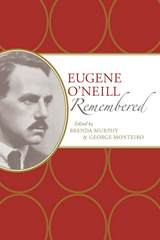
Known principally as the author of some of the most significant plays in the American dramatic canon and as one of America’s Nobel Laureates in literature, O'Neill rarely gave interviews and offered few details about himself. As a consequence, his life has long been shrouded in myth. He also abetted some of the misconceptions about his youth by, for example, advocating the story that he was expelled from Princeton for throwing a rock through Woodrow Wilson's window or by exaggerating the amount of time he had spent at sea. The legend of the hard-drinking, tormented playwright with a grim view of life was further reinforced when Long Day's Journey into Night was produced in 1956, three years after his death instead of the twenty-five years he had insisted on.
The portrayal of O’Neill as a tragic figure has been solidified in a number of biographies. The purpose of this collection, however, is to present O'Neill as others saw him and described him in their first-person accounts. In the course of these reminiscences, many of the vast and various narrators conflict with and contradict each other. Unlike other accounts of O’Neill’s life, much of the focus is on impressions instead of facts. The result is a revealing composite portrait of a key figure in twentieth-century American literary history.
This extensive collection offers insights unavailable in any other book and will hold massive appeal for scholars and students interested in American literature, Eugene O’Neill, and theater history, as well as anyone keen to uncover intimate details of the life of one of America’s greatest writers.
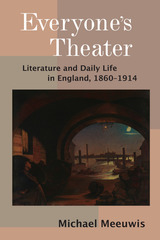
Nearly all residents of England and its colonies between 1860 and 1914 were active theatergoers, and many participated in the amateur theatricals that defined late Victorian life. The Victorian theater was not an abstract figuration of the world as a stage, but a media system enmeshed in mass lived experience that fulfilled in actuality the concept of a theatergoing nation. Everyone’s Theater turns to local history, the words of everyday Victorians found in their diaries and production records, to recover this lost chapter of theater history in which amateur drama domesticates the stage. Professional actors and playwrights struggled to make their productions compatible with ideas and techniques that could be safely reproduced in the home—and in amateur performances from Canada to India. This became the first true English national theater: a society whose myriad classes found common ground in theatrical display. Everyone’s Theater provides new ways to extend Victorian literature into the dimension of voice, sound, and embodiment, and to appreciate the pleasures of Victorian theatricality.

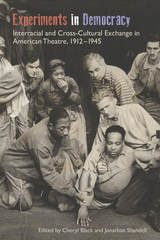
In Experiments in Democracy, edited by Cheryl Black and Jonathan Shandell, theatre historians examine a wide range of performances—from Broadway, folk plays and dance productions to scripted political rallies and radio dramas. Contributors look at such diverse groups as the Theatre Union, La Unión Martí-Maceo, and the American Negro Theatre, as well as individual playwrights and their works, including Theodore Browne’s folk opera Natural Man, Josefina Niggli’s Soldadera, and playwright Lynn Riggs’s Cherokee Night and Green Grow the Lilacs (the basis for the musical Oklahoma!). Exploring the ways progressive artists sought to connect isolated racial and cultural groups in pursuit of a more just and democratic society, contributors take into account the blind spots, compromised methods, and unacknowledged biases at play in their practices and strategies. Essays demonstrate how the gap between the ideal of American democracy and its practice—mired in entrenched systems of white privilege, economic inequality, and social prejudice—complicated the work of these artists.
Focusing on questions of race, ethnicity, gender, and sexuality on the stage in the decades preceding the Civil Rights era, Experiments in Democracy fills an important gap in our understanding of the history of the American stage—and sheds light on these still-relevant questions in contemporary American society.
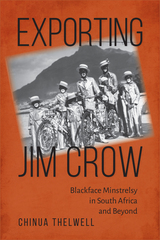
Chinua Thelwell brings blackface minstrelsy and performance culture into the discussion of apartheid's nineteenth-century origins and afterlife, employing a broad archive of South African newspapers and magazines, memoirs, minstrel songs and sketches, diaries, and interview transcripts. Exporting Jim Crow highlights blackface minstrelsy's cultural and social impact as it became a dominant form of entertainment, moving from its initial appearances on music hall stages to its troubling twentieth-century resurgence on movie screens and at public events. This carefully researched and highly original study demonstrates that the performance of race in South Africa was inherently political, contributing to racism and shoring up white racial identity.
READERS
Browse our collection.
PUBLISHERS
See BiblioVault's publisher services.
STUDENT SERVICES
Files for college accessibility offices.
RECENTLY PUBLISHED


UChicago Accessibility Resources
home | accessibility | search | about | contact us
BiblioVault ® 2001 - 2025
The University of Chicago Press