
 A SCHOLARLY BOOK REPOSITORY
23 start with F start with F

eTextbooks are now available to purchase or rent through VitalSource.com! Please visit VitalSource for more information on pricing and availability.
Faces of Contemporary Russia is a one-semester textbook for high-intermediate to advanced level Russian students that aims to develop students' linguistic proficiency by examining significant personalities in current Russian culture. In addition to introductory and concluding chapters, the book features twelve individuals (one per chapter), drawing from a range of areas such as arts, sports, journalism, and business. While upper-level Russian textbooks tend to emphasize grammar and reading more traditional works of Russian literature, this book instead seeks to primarily engage students in learning about and discussing the breadth of contemporary Russian culture while weaving the study of grammar and vocabulary into those discussions. In addition to readings and in-class communicative activities, the book also features guided research assignments that encourage students to make use of the many personality interviews and YouTube clips available online.
For Instructors: Exam copies of the textbook are available free of charge to instructors and can be ordered on this page. To request a print sample, please use the "print" exam copy button. To request a digital sample, instructors should log onto VitalSource.com, select "Faculty Sampling" in the upper right-hand corner, and select the desired product.

Primarily known as the author of the Dialogus miraculorum—a collection of exemplary stories that secured his reputation as the master of Cistercian storytelling—Caesarius of Heisterbach was also the author of several sermons and homilies. Although they are not as well known today, his Homilies on Jesus’ Childhood are exceptional in many ways. Readers will immediately notice Caesarius’s versatility as he employs an impressive array of persuasive techniques: quoting scholarly works, interpreting Hebrew names and letters, delving into etymology and numerology, and including numerous examples to instruct both the learned and the common person.
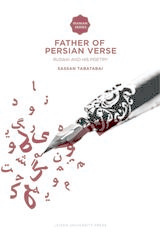
He is widely regarded as "the father of Persian poetry, for he was the first major poet to write in New Persian language, following the Arab conquest in the seventh and eighth centuries, which established Islam as the official religion, and made Arabic the predominant literary language in Persian-speaking lands for some two centuries.
In the tenth century the Caliphate power, with headquarters in Bagdad, gradually weakened. The remoteness of Khorâsân, where Rudaki was based, provided a hospitable atmosphere for a "renaissance" of Persian literature. Persian poetry—now written in the Arabic alphabet—flourished under the patronage of the Samanid amirs, who drew literary talent to their court. Under the rule of Nasr ibn Ahmad II (r. 914-943), Rudaki distinguished himself as the brightest literary star of the Samanid court.
This book presents Rudaki as the founder of a new poetic aesthetic, which was adopted by subsequent generations of Persian poets. Rudaki is credited with being the first to write in the rubâi form; and many of the images we first encounter in Rudaki's lines have become staples of Persian poetry.
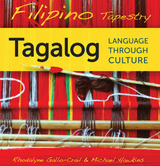
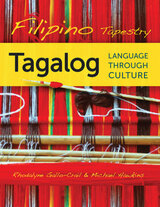
An official language of the Philippines, Filipino is based on Tagalog, with elements of Spanish, English, and Chinese mixed in. The result is a rich, expressive language spoken in the Philippines and throughout the far-reaching Filipino diaspora.
Filipino Tapestry offers an innovative approach to learning language by emphasizing the critical intersection of language and culture. It provides activities and exercises that immerse beginning and intermediate students of Filipino in a variety of authentic situations to simulate an in-country experience. Starting with chapters on such topics as family, friends, and home, it then expands the student’s world in chapters prompting conversation about food, shopping, parties, and pastimes. Its later chapters push learners to discuss city and country life, cultural traditions, religion, history, and politics.
Features include:
• background chapters on phonology, sentence construction, and common expressions
• photos and cultural notes about chapter themes
• grammar, reading, listening, and speaking exercises
• glossaries of words and additional expressions
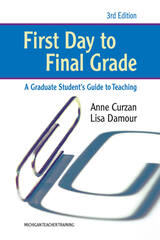
This new edition incorporates newer teaching and learning pedagogy. The book has been updated to reflect the role of technology both inside and outside the classroom. In addition, a new chapter has been added that discusses successfully transitioning from being a teaching assistant to being hired as a full-time instructor.

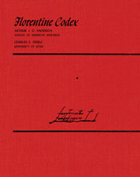
Two of the world’s leading scholars of the Aztec language and culture have translated Sahagún’s monumental and encyclopedic study of native life in Mexico at the time of the Spanish Conquest. This immense undertaking is the first complete translation into any language of Sahagún’s Nahuatl text, and represents one of the most distinguished contributions in the fields of anthropology, ethnography, and linguistics.
Written between 1540 and 1585, the Florentine Codex (so named because the manuscript has been part of the Laurentian Library’s collections since at least 1791) is the most authoritative statement we have of the Aztecs’ lifeways and traditions—a rich and intimate yet panoramic view of a doomed people.
The Florentine Codex is divided by subject area into twelve books and includes over 2,000 illustrations drawn by Nahua artists in the sixteenth century.
Book One describes in detail the gods of the Aztec people, including Uitzilopochtli, Tlatoc, and Quetzalcoatl. This colorful and clear translation brings to life characteristics of each god, describing such items as clothing or adornment worn by individual gods, as well as specific personality traits.
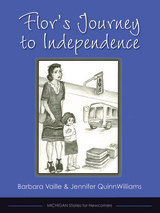
A modified version of this story is also available on our website, www.press.umich.edu/esl/stories.
The MICHIGAN Stories for Newcomers are original fiction written for adult English learners who wish to improve their reading and English skills
This new edition, updated and with additional exercises, equips those who work, travel, and study in Arab countries with an educated form of spoken Arabic that functions flexibly in the face of various regional colloquial variants in the Arab world.
Because the Arabic language has a number of very different spoken vernaculars, being able to speak and be understood in all Arab countries has become a challenge for English speakers. Ryding and Mehall have designed a course that teaches a standardized variant of spoken Arabic that is close to, but more natural than, the literary Modern Standard Arabic.
With a non-grammar-based approach, this book fosters communicative competence in Arabic on all levels and develops speaking proficiency without abandoning Arabic script. It has proven to be clear, effective, and relevant to the needs of Americans living and working in the Arab East. Task-based lessons feature basic dialogues between Americans and Arabs, explanations of new structures, vocabulary expansion, and exercises; and provide gradual access to the sounds and script of Arabic by emphasizing listening and reading comprehension first, then slowly adding oral exercises and activities until the student has achieved basic proficiency.
Not intended for self-instruction for beginners, Formal Spoken Arabic Basic Course with MP3 Files assumes some previous knowledge of Modern Standard Arabic, Arabic script and phonology, and previous or simultaneous instruction in orthography. This new edition includes a CD of MP3 audio exercises that are keyed to the text and drill students on listening and speaking.
Lessons cover topics including:
Heads of State
Cities and Countries
Official Titles
Geography
Systems of Government
Lost Luggage
Getting Acquainted
Establishing Common Ground
Seeking and Giving Information
Personal Needs and Family
Handling Problems
Eating Out
Bargaining and Buying
This Arabic language-learning classic is now enhanced with a bound-in CD of MP3 files. Designed to provide beginners in Arabic with maximum linguistic and cultural exposure in a short period (about 100 hours of contact time), this book consists of sixteen lessons with dialogs and exercises dealing with day-to-day scenarios: greeting people, getting a taxi, making phone calls, asking directions, discussing the weather, and effectively communicating with police and duty officers. The lessons help the reader to navigate situations at gas stations, marketplaces, restaurants, and in their own households.
Formal Spoken Arabic (FSA) is a kind of lingua franca that is more natural than speaking Modern Standard Arabic (MSA), the literary form of the language. FSA uses the shared features of the various urban colloquial dialects, defaulting to Levantive (terms common to Lebanon, Syria, and Jordan) where the spoken dialects diverge. Each lesson includes cultural notes on American-Arab interactions, notes on learner strategies for managing Arabic conversations with a limited amount of language, and grammar explanations in clear, non-technical language. Although the main dialogue for each lesson is presented in Arabic script, transcriptions are used to accelerate spoken performance. The FAST Course includes grammatical explanations, English-Arabic and Arabic-English glossaries, appendices listing common idioms, courtesy expressions and other useful terms, instructor's notes, and drills aided and accompanied by the CD.
Originally created for diplomats, this is an expanded and enhanced edition of a work originally developed by the U.S. State Department as a six-week intensive, or "FAST" (Familiarization and Short-Term) course, and is easily adaptable for students in Middle East area studies. Travelers heading for posts in the Arab world who quickly need to gain a basic ability to converse in day-to-day situations will find Formal Spoken Arabic FAST Course an invaluable companion.
This audio download product is NOT an audio reproduction of all the content in the accompanying textbook (Four Point: Listening & Speaking 2, Second Edition).
The Four Point series is designed for English language learners whose primary goal is to succeed in an academic setting.The series covers the four academic skills of reading, writing, listening, and speaking while providing reinforcement and systematic recycling of key vocabulary and further exposure to grammar issues. In order to participate in academic settings, English learners need focused activities to develop and then maintain their use of vocabulary and grammar. Each book in the series focuses heavily on vocabulary in particular, highlighting between 125-150 key vocabulary items including individual words, compound words, phrasal verbs, short phrases, idioms, metaphors, collocations, and longer set lexical phrases.
The French Language in Russia provides the fullest examination and discussion to date of the adoption of the French language by the elites of imperial Russia during the eighteenth and nineteenth centuries. It is interdisciplinary, approaching its subject from the angles of various kinds of history and historical sociolinguistics. Beyond its bearing on some of the grand narratives of Russian thought and literature, this book may afford more general insight into the social, political, cultural, and literary implications and effects of bilingualism in a speech community over a long period. It should also enlarge understanding of francophonie as a pan-European phenomenon. On the broadest plane, it has significance in an age of unprecedented global connectivity, for it invites us to look beyond the experience of a single nation and the social groups and individuals within it in order to discover how languages and the cultures and narratives associated with them have been shared across national boundaries.
It's time for a new approach to learning French verbs. Unlike popular verb guides that require the rote memorization of hundreds of verb forms, this book clearly explains the rules that govern the conjugation of all classes of French verbs—especially the irregular ones that give second-language learners the most trouble. These straightforward, easy-to-understand rules for conjugating French verbs are effective learning tools for both beginning students and more advanced speakers who want to perfect their usage of French verb forms.
French Verbs Made Simple(r) has many helpful features that you won't find in any other verb guide:
- Clear explanations of all verb tenses and forms.
- The simple patterns and rules that govern the conjugation of all verbs—including those verbs whose irregularities follow patterns that can be easily learned.
- A detailed discussion of how each verb form is used, with numerous examples.
- A full explanation of whether a verb should be conjugated with avoir or être, and the conditions under which the past participle is variable—two of the thorniest problems for students of French.
- An extended treatment of the subjunctive that will help you understand why it is used in some situations but not others.
- Complete conjugations for 57 basic model verbs (along with 27 "variants") and a comprehensive listing of some 6,200 verbs that indicates which of the models each verb follows.
Going well beyond any other guide in the clarity and detail of its explanations—as well as the innovative manner in which individual verbs are linked to model conjugations—French Verbs Made Simple(r) is the only guide to French verbs a learner needs.
Sally Chivers provides a fascinating look at and challenge to how North American popular culture has portrayed old age as a time of disease, decline, and death. Within contemporary Canadian literary and film production, a tradition of articulate central elderly female characters challenges what the aging body has come to signify in a broader cultural context. Rather than seek positive images of aging, which can do their own prescriptive damage, the author focuses on constructive depictions that provide a basis on which to create new stories and readings of growing old. This type of humanities approach to the study of aging promises neither to fixate on nor avoid consideration of the role of the body in the much broader process of getting older. The progression implied in the title from the solitary symbol of The Old Woman toward a community of older women, indicates not a move toward euphemism, but rather an increasing and necessary awareness of the social and cultural dimensions of aging.

The Lexicon brings together lexical material from a wide range of published and non-published sources to create an extensive compilation of the vocabulary of Fulfulde as it is spoken in that part of central Mali known as Masina (in Fulfulde, Maasina). The Lexicon is intended primarily for non-Fulfulde speakers who are learning the language at the intermediate or advanced levels and who need access to a comprehensive reference source on Fulfulde vocabulary. Scholars, development workers, and others whose research or fieldwork involves use of the Fulfulde of Masina may find it helpful as well in clarifying nuances of meaning and standardized spelling for the less familiar terms they might encounter. It is also intended that the present work, beyond the matter of organizing vocabulary, will contribute significantly to the expanding lexicographical and linguistic investigations of Fulfulde.
This book offers a systematic guide to navigating the different phases of the curriculum, from its inception to its evaluation. Part I explores the conceptual and theoretical foundations that shape curriculum and instruction. Part II provides practical knowledge and guidelines that programs and individual teachers can adopt or adapt to their specific educational contexts with the goal is to optimize the teaching and learning experience. Elturki draws largely on knowledge from the field of education, particularly curriculum studies, to complement what we know about L2 teaching and learning from Applied Linguistics, Second Language Acquisition, and English Language Teaching. Each chapter begins with pre-reading questions to stimulate thinking and concludes with post-reading questions for reflection, encouraging readers to connect the material to their own context.
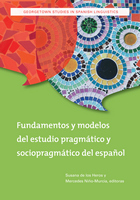
This rich textbook provides a comprehensive introduction to the principal concepts and thematic areas of Spanish pragmatics. It is aimed at advanced students of Spanish—upper-level undergraduates and beginning graduate students—who need to hone their language skills for contextually sensitive use of the language.
Written entirely in Spanish, with Spanish examples, this volume introduces basic pragmatics, methods of analysis, and new thematic areas such as language and the press and globalization. Theoretical explanations combine with practical exercises in each chapter to help students master the subtleties of language use.
READERS
Browse our collection.
PUBLISHERS
See BiblioVault's publisher services.
STUDENT SERVICES
Files for college accessibility offices.
RECENTLY PUBLISHED





UChicago Accessibility Resources
home | accessibility | search | about | contact us
BiblioVault ® 2001 - 2025
The University of Chicago Press