
 A SCHOLARLY BOOK REPOSITORY
6 start with F start with F
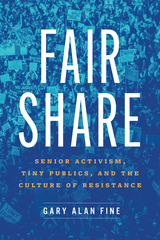
If you've ever been to a protest or been involved in a movement for social change, you have likely experienced a local culture, one with slogans, jargon, and shared commitments. Though one might think of a cohort of youthful organizers when imagining protest culture, this powerful ethnography from esteemed sociologist Gary Alan Fine explores the world of senior citizens on the front lines of progressive protests. While seniors are a notoriously important—and historically conservative—political cohort, the group Fine calls “Chicago Seniors Together” is a decidedly leftist organization, inspired by the model of Saul Alinsky. The group advocates for social issues, such as affordable housing and healthcare, that affect all sectors of society but take on a particular urgency in the lives of seniors. Seniors connect and mobilize around their distinct experiences but do so in service of concerns that extend beyond themselves. Not only do these seniors experience social issues as seniors—but they use their age as a dramatic visual in advocating for political change.
In Fair Share, Fine brings readers into the vital world of an overlooked political group, describing how a “tiny public” mobilizes its demands for broad social change. In investigating this process, he shows that senior citizen activists are particularly savvy about using age to their advantage in social movements. After all, what could be more attention-grabbing than a group of passionate older people determinedly shuffling through snowy streets with canes, in wheelchairs, and holding walkers to demand healthcare equity, risking their own health in the process?

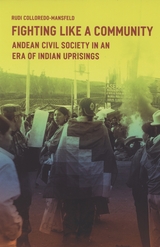
The indigenous population of the Ecuadorian Andes made substantial political gains during the 1990s in the wake of a dynamic wave of local activism. The movement renegotiated land development laws, elected indigenous candidates to national office, and successfully fought for the constitutional redefinition of Ecuador as a nation of many cultures. Fighting Like a Community argues that these remarkable achievements paradoxically grew out of the deep differences—in language, class, education, and location—that began to divide native society in the 1960s.
Drawing on fifteen years of fieldwork, Rudi Colloredo-Mansfeld explores these differences and the conflicts they engendered in a variety of communities. From protestors confronting the military during a national strike to a migrant family fighting to get a relative released from prison, Colloredo-Mansfeld recounts dramatic events and private struggles alike to demonstrate how indigenous power in Ecuador is energized by disagreements over values and priorities, eloquently contending that the plurality of Andean communities, not their unity, has been the key to their political success.

For Women and the Nation is the story of this courageous woman. One of a handful of full-length biographies of African women, let alone of African women activists, it will be welcomed by students of women's studies, African history, and biography, as well as by those interested in exploring the historical background of Nigeria.
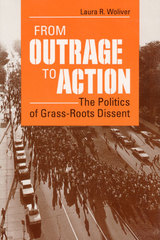
Through in-depth interviews with activists, Laura Woliver examines these community actions, studying the groups involved and linking her conclusions to larger questions of political power and the impact of social movements. Her findings will make fascinating reading for those interested in the rise and fall of grass-roots interest groups, the nature of dissent, and the reasons why people volunteer countless hours, sometimes in the face of community opposition and isolation, to dedicate themselves to a cause. The ad hoc interest groups studied are the Committee to Recall Judge Archie Simonson (Madison), the Coalition for Justice for Ernest Lacy (Milwaukee), Concerned Citizens for Children (Grant County, Wisconsin), and Citizens Taking Action (Madison). Woliver relates the community responses in these cases to those in the Jeffrey Dahmer mass murder case and the beating by Los Angeles police of Rodney King.
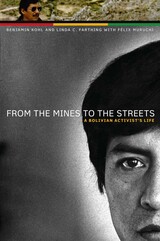
From the Mines to the Streets draws on the life of Félix Muruchi to depict the greater forces at play in Bolivia and elsewhere in South America during the last half of the twentieth century. It traces Félix from his birth in an indigenous family in 1946, just after the abolition of bonded labor, through the next sixty years of Bolivia's turbulent history. As a teenager, Félix followed his father into the tin mines before serving a compulsory year in the military, during which he witnessed the 1964 coup d'état that plunged the country into eighteen years of military rule. He returned to work in the mines, where he quickly rose to become a union leader. The reward for his activism was imprisonment, torture, and exile. After he came home, he participated actively in the struggles against neoliberal governments, which led in 2006—the year of his sixtieth birthday—to the inauguration of Evo Morales as Bolivia's first indigenous president.
The authors weave Muruchi's compelling recollections with contextual commentary that elucidates Bolivian history. The combination of an unforgettable life story and in-depth text boxes makes this a gripping, effective account, destined to become a classic sourcebook.
READERS
Browse our collection.
PUBLISHERS
See BiblioVault's publisher services.
STUDENT SERVICES
Files for college accessibility offices.
RECENTLY PUBLISHED





UChicago Accessibility Resources
home | accessibility | search | about | contact us
BiblioVault ® 2001 - 2026
The University of Chicago Press