
 A SCHOLARLY BOOK REPOSITORY
12 start with G start with G
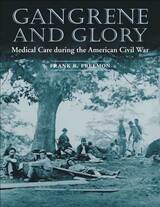
A medical doctor and a credentialed historian, Frank R. Freemon combines poignant, sometimes horrifying anecdotes of amputation, infection, and death with a clearheaded discussion of the state of medical knowledge, the effect of the military bureaucracy on medical supplies, and the members of the medical community who risked their lives, their health, and even their careers to provide appropriate care to the wounded. Freemon examines the impact on major campaigns--Manassas, Gettysburg, Vicksburg, Shiloh, Atlanta--of ignorance, understaffing, inexperience, overcrowded hospitals, insufficient access to ambulances, and inadequate supplies of essentials such as quinine.
Presenting the medical side of the war from a variety of perspectives--the Union, the Confederacy, doctors, nurses, soldiers, and their families--Gangrene and Glory achieves a peculiar immediacy by restricting its scope to the knowledge and perceptions available to its nineteenth-century subjects. Now available for the first time in paperback, this important volume takes a hard, close look at a neglected and crucial aspect of this bloody conflict.
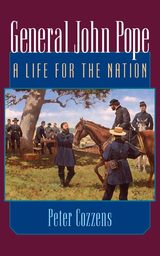
Renowned Civil War scholar Peter Cozzens has mined Pope's own memoirs and a wealth of other primary sources to provide a complete picture of this gifted strategist. Uncovering new information about Pope's pre- and postwar career and his path to power, Cozzens delineates the political environment that surrounded Pope and provided the context for his actions.
Cozzens examines Pope's early career first as commander of the Army of the Mississippi and then as leader of a hastily formed Army of Virginia against Robert E. Lee. After his famous defeat at the Second Battle of Bull Run, Pope was sent to the frontier. There he held important commands on the western plains over the next twenty-four years, all the while struggling to clear his reputation of the events at Second Bull Run. A principal architect of the Red River War, which broke the resistance of the Southern Plains Indians, Pope espoused humanitarian treatment of subjugated tribes and was recognized as one of the army's leading authorities on Indian affairs.
In place of the simplistic caricature that has satisfied most historians, Cozzens has crafted an accurate, humane, balanced portrait of a complex man involved with the most complex issues of his day. A monumental work on a long-neglected figure, General John Pope offers a fresh look at a key nineteenth-century military leader as well as the most detailed analysis available of Federal leadership during the Second Bull Run campaign.
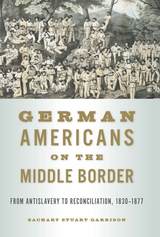
Liberal German immigrants, having escaped the European aristocracy who undermined their revolution and the formation of a free nation, viewed slaveholders as a specter of European feudalism. During the antebellum years, many liberal German Americans feared slavery would inhibit westward progress, and so they embraced the Free Soil and Free Labor movements and the new Republican Party. Most joined the Union ranks during the Civil War.
After the war, in a region largely opposed to black citizenship and Radical Republican rule, German Americans were seen as dangerous outsiders. Facing a conservative resurgence, liberal German Republicans employed the same line of reasoning they had once used to justify emancipation: A united nation required the end of both federal occupation in the South and special protections for African Americans. Having played a role in securing the Union, Germans largely abandoned the freedmen and freedwomen. They adopted reconciliation in order to secure their place in the reunified nation. Garrison’s unique transnational perspective to the sectional crisis, the Civil War, and the postwar era complicates our understanding of German Americans on the middle border.
Robert Hunt examines how Union veterans of the Army of the Cumberland employed the extinction of slavery in the trans-Appalachian South in their memory of the Civil War. Hunt argues that rather than ignoring or belittling emancipation, it became central to veterans’ retrospective understanding of what the war, and their service in it, was all about. The Army of the Cumberland is particularly useful as a subject for this examination because it invaded the South deeply, encountering numerous ex-slaves as fugitives, refugees, laborers on military projects, and new recruits. At the same time, the Cumberlanders were mostly Illinoisans, Ohioans, Indianans, and, significantly, Kentucky Unionists, all from areas suspicious of abolition before the war.
Hunt argues that the collapse of slavery in the trans-Appalachian theater of the Civil War can be usefully understood by exploring the post-war memories of this group of Union veterans. He contends that rather than remembering the war as a crusade against the evils of slavery, the veterans of the Army of the Cumberland saw the end of slavery as a by-product of the necessary defeat of the planter aristocracy that had sundered the Union; a good and necessary outcome, but not necessarily an assertion of equality between the races.
Some of the most provocative discussions about the Civil War in current scholarship are concerned with how memory of the war was used by both the North and the South in Reconstruction, redeemer politics, the imposition of segregation, and the Spanish-American War. This work demonstrates that both the collapse of slavery and the economic and social post-War experience convinced these veterans that they had participated in the construction of the United States as a world power, built on the victory won against corrupt Southern plutocrats who had impeded the rightful development of the country.
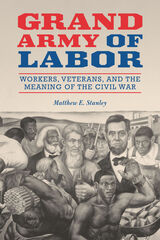
From the Gilded Age through the Progressive era, labor movements reinterpreted Abraham Lincoln as a liberator of working people while workers equated activism with their own service fighting for freedom during the war. Matthew E. Stanley explores the wide-ranging meanings and diverse imagery used by Civil War veterans within the sprawling radical politics of the time. As he shows, a rich world of rituals, songs, speeches, and newspapers emerged among the many strains of working class cultural politics within the labor movement. Yet tensions arose even among allies. Some people rooted Civil War commemoration in nationalism and reform, and in time, these conservative currents marginalized radical workers who tied their remembering to revolution, internationalism, and socialism.
An original consideration of meaning and memory, Grand Army of Labor reveals the complex ways workers drew on themes of emancipation and equality in the long battle for workers’ rights.
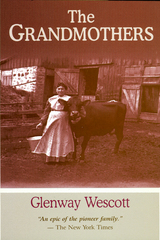
The Grandmothers is the chronicle of Alwyn’s ancestors: the bitter Henry Tower, who returned from Civil War battlefields to find his beautiful wife Serena lost in a fatal fever; Rose Hamilton, robust and eager, who yearned to leave the cabin of her bearded, squirrel-hunting brothers for the company of courteous Leander Tower; the boy-soldier Hilary Tower, whose worship of his brother made him desperate; fastidious Nancy Tower, whose love for her husband Jesse Davis could not overcome her disgust with the dirt under his fingernails; Ursula Duff, proud and silent, maligned among her neighbors by her venal husband; Alwyn’s parents, Ralph Tower and Marianne Duff, whose happiness is brought about only by the intervention of a determined spinster.
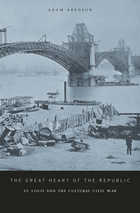
The Civil War revealed what united as well as what divided Americans in the nineteenth century—not only in its deadly military conflict, but also in the broader battle of ideas, dueling moral systems, and competing national visions that preceded and followed. This cultural civil war was the clash among North, South, and West, as their leaders sought to shape Manifest Destiny and slavery politics.
No site embodied this struggle more completely than St. Louis, the largest city along the border of slavery and freedom. In this sweeping history, Adam Arenson reveals a city at the heart of the cultural civil war. St. Louisans heralded a new future, erasing old patterns as the United States stretched across the continent. They tried to reorient the nation’s political landscape, with westerners in the vanguard and St. Louis as the cultural, commercial, and national capital. John C. Calhoun, Frederick Douglass, Walt Whitman, and John Brown tracked the progress of the cultural contest by monitoring events in St. Louis, observing how the city’s leaders tried yet ultimately failed to control the national destiny.
The interplay of local ambitions and national meanings reveals the wider cultural transformation brought about by westward expansion, political strife, and emancipation in the era of the Civil War and Reconstruction. This vibrant and beautifully written story enriches our understanding of America at a crossroads.

While fighting a war for the Union, the Republican party attempted to construct the world’s most powerful and most socially advanced nation. Rejecting the common assumption that wartime domestic legislation was a series of piecemeal reactions to wartime necessities, Heather Cox Richardson argues that party members systematically engineered pathbreaking laws to promote their distinctive theory of political economy.
Republicans were a dynamic, progressive party, the author shows, that championed a specific type of economic growth. They floated billions of dollars in bonds, developed a national currency and banking system, imposed income taxes and high tariffs, passed homestead legislation, launched the Union Pacific railroad, and eventually called for the end of slavery. Their aim was to encourage the economic success of individual Americans and to create a millennium for American farmers, laborers, and small capitalists.
However, Richardson demonstrates, while Republicans were trying to construct a nation of prosperous individuals, they were laying the foundation for rapid industrial expansion, corporate corruption, and popular protest. They created a newly active national government that they determined to use only to promote unregulated economic development. Unwittingly, they ushered in the Gilded Age.
READERS
Browse our collection.
PUBLISHERS
See BiblioVault's publisher services.
STUDENT SERVICES
Files for college accessibility offices.
RECENTLY PUBLISHED



UChicago Accessibility Resources
home | accessibility | search | about | contact us
BiblioVault ® 2001 - 2025
The University of Chicago Press