
 A SCHOLARLY BOOK REPOSITORY
Uncovering race, gender, and sexual biases in popular self-publishing platforms
The average reader need not go far in a bookstore before, knowingly or not, they encounter authors who started their careers by self-publishing prior to achieving commercial success. Examples include Margaret Atwood, Andy Weir, Colleen Hoover, Anna Todd, E. L. James, Scarlett St. Clair, and many more. Such stories of self-made writers are compelling and seem more attainable to others with the accessibility of modern publishing platforms such as Amazon, Apple, Google, Kobo, Wattpad, Webtoon, Radish, Inkitt, Qidian, Tapas, and Swoon Reads. However, as Claire Parnell uncovers in her examination of the two most popular—Amazon and Wattpad—these services in fact perpetuate systemic racial, gender, and sexual bias against authors of color and queer authors through their technological, economic, social, and cultural structures.
At a time when there is a real reckoning with the discrimination that has resulted in publishing opportunities for only relatively few privileged authors—who are often White, upper class, and male—self-publishing presents itself as an equalizer of sorts. Exploring that idea, Parnell shows that these platforms are not just intermediaries for information; they structure content and users in multiple, often inequitable, ways through their ability to set market conditions and apply algorithmic sorting. Combining original interviews, walkthrough method, metadata analysis, and more, Parnell finds that self-publishing platforms reproduce challenges for authors from marginalized communities. Far from equalizing the market, the new platforms instead frequently perpetuate the stubborn barriers to mainstream success for BIPOC and queer authors.

Inequality, per se, has been with us for millennia. With the creation, growth and deepening of Capitalism across the globe, inequalities take on new dimensions, unknown in previous eras. As Capitalism has spread its wings across the globe over the last 200 or so years, so inequalities have deepened and widened, both inside Nation Sates, between nation States. These inequalities are of income, wealth and of power.
This book, written by the widely respected economic historian Douglas Dowd at the age of 90, is notable for his own experience and vivid memory, of the 1929-31 recession. Since the 1980s, and the predominance of the present neo-liberal ideology, all of the inequalities that the book presents have grown rapidly. Written as a critique of the counter-productivity of growing economic inequality and vindicated by the present world banking crisis, Dowd presents a strong argument against capitalist expansion, exploitation and oligarchic rule.
Dowd's conclusions, that the globalization and growth of the financial sector will impact painfully upon hundreds of millions of people, unknown to most of us in our lifetime, Dowd's book deals with these issues from the unique perspective of inequality. Presenting both a history of the current crisis and an overview of it's, Inequality will appeal to both a broad general readership, and provides an extremely useful reference point for students of political economy, economic history, contemporary economics and global politics.

Weaver brings these clashes to the fore by showing how New York City politics has been shaped by these conflicting orders. He examines the transformation of the city’s political economy in the aftermath of the 1975 fiscal crisis through neoliberal real estate development and privatization, the conservative rise of law-and-order politics in the 1970s to 1990s, and the efforts of the city’s egalitarians to respond to each of these shifts through social movements such as Occupy and Black Lives Matter.
Inequality, Crime, and Resistance in New York City belies glib assumptions about the city’s liberal character. Weaver reveals the metropolis not as a homogenous political whole, but as a site in which the victories and defeats of rival political forces change the terms of local citizenship for the millions of residents who call the city home.
In the series Political Lessons from American Cities

Winner of the Richard A. Lester Award for the Outstanding Book in Industrial Relations and Labor Economics, Princeton University
An Economist Best Economics and Business Book of the Year
A Financial Times Best Economics Book of the Year
Inequality is one of our most urgent social problems. Curbed in the decades after World War II, it has recently returned with a vengeance. We all know the scale of the problem—talk about the 99% and the 1% is entrenched in public debate—but there has been little discussion of what we can do but despair. According to the distinguished economist Anthony Atkinson, however, we can do much more than skeptics imagine.
“[Atkinson] sets forth a list of concrete, innovative, and persuasive proposals meant to show that alternatives still exist, that the battle for social progress and equality must reclaim its legitimacy, here and now… Witty, elegant, profound, this book should be read.”
—Thomas Piketty, New York Review of Books
“An uncomfortable affront to our reigning triumphalists. [Atkinson’s] premise is straightforward: inequality is not unavoidable, a fact of life like the weather, but the product of conscious human behavior.
—Owen Jones, The Guardian

Over the past few decades, Austin, Texas, has made a concerted effort to develop into a “technopolis,” becoming home to companies such as Dell and numerous start-ups in the 1990s. It has been a model for other cities across the nation that wish to become high-tech centers while still retaining the livability to attract residents. Nevertheless, this expansion and boom left poorer residents behind, many of them African American or Latino, despite local and federal efforts to increase lower-income and minority access to technology.
This book was born of a ten-year longitudinal study of the digital divide in Austin—a study that gradually evolved into a broader inquiry into Austin’s history as a segregated city, its turn toward becoming a technopolis, what the city and various groups did to address the digital divide, and how the most disadvantaged groups and individuals were affected by those programs.
The editors examine the impact of national and statewide digital inclusion programs created in the 1990s, as well as what happened when those programs were gradually cut back by conservative administrations after 2000. They also examine how the city of Austin persisted in its own efforts for digital inclusion by working with its public libraries and a number of local nonprofits, and the positive impact those programs had.

Despite the tragic reality of the continuing Israeli-Arab conflict and deep-rooted beliefs that the chasm between Israeli Jews and Israeli Arabs is unbridgeable, this book affirms the bonds between the two communities. Rachel Feldhay Brenner demonstrates that the literatures of both ethnic groups defy the ideologies that have obstructed dialogue between the two peoples.
Brenner argues that literary critics have ignored the variety and the dissent in the novels of both Arab and Jewish writers in Israel, giving them interpretations that embrace the politics of exclusion and conform with Zionist ideology. Brenner offers insightful new readings that compare fiction by Jewish writers Amos Oz, A.B. Yehoshua, David Grossman, and others with fiction written in Hebrew by such Arab-Israeli writers as Atallah Mansour, Emile Habiby, and Anton Shammas. This parallel analysis highlights the moral and psychological dilemmas faced by both the Jewish victors and the Arab vanquished, and Brenner suggests that the hope for release from the historical trauma lies—on both sides—in reaching an understanding with and of the adversary.
Drawing upon the theories of Walter Benjamin, Jacques Lacan, Sigmund Freud, Emanuel Levinas, and others, Inextricably Bonded is an innovative and illuminating examination of literary dissent from dominant ideology.
A fascinating tale of seduction, murder, fraud, coercion—and the trial of the “Minneapolis Monster”
On a winter night in 1894, a young woman’s body was found in the middle of a road near Lake Calhoun on the outskirts of Minneapolis. She had been shot through the head. The murder of Kittie Ging, a twenty-nine-year-old dressmaker, was the final act in a melodrama of seduction and betrayal, petty crimes and monstrous deeds that would obsess reporters and their readers across the nation when the man who likely arranged her killing came to trial the following spring. Shawn Francis Peters unravels that sordid, spellbinding story in his account of the trial of Harry Hayward, a serial seducer and schemer whom some deemed a “Svengali,” others a “Machiavelli,” and others a “lunatic” and “man without a soul.”
Dubbed “one of the greatest criminals the world has ever seen” by the famed detective William Pinkerton, Harry Hayward was an inveterate and cunning plotter of crimes large and small, dabbling in arson, insurance fraud, counterfeiting, and illegal gambling. His life story, told in full for the first time here, takes us into shadowy corners of the nineteenth century, including mesmerism, psychopathy, spiritualism, yellow journalism, and capital punishment. From the horrible fate of an independent young businesswoman who challenged Victorian mores to the shocking confession of Hayward on the eve of his execution (which, if true, would have made him a serial killer), The Infamous Harry Hayward unfolds a transfixing tale of one of the most notorious criminals in America during the Gilded Age.

Until very recently, almost all books on infancy assumed basic infant immaturity. Remarkably, as Tiffany Field shows in her survey of recent research, investigators are discovering that infants possess sophisticated perceptual skills, such as hearing, even before birth. Newborns can sense touch and motion, discriminate tastes and smells, recognize their mother's voice, and imitate facial expressions. In fact, the newborn is an active learner, looking, reaching, sucking, and grimacing from its first moments in its new environment.
Field provides a readable account of our current knowledge about infant development. She looks at the emergence of sensorimotor and cognitive skills, which play an important role in social and emotional development in the months following birth as the infant experiences the world. In a chapter with important implications for working mothers, Field reviews the literature on infants in nursery and daycare programs, countering negative assessments with studies that show an enhancement of infants' social interaction in good care settings. In the concluding chapter, she pays particular attention to infants at risk because of disease (including AIDS), maternal drug use, prematurity, or maternal depression, and describes possible intervention strategies. The bibliography provides an invaluable summary of significant primary reference papers for professional researchers, students, and parents.
Here is a major new work on human infancy written by one of the country's leading developmental psychologists and two distinguished colleagues. At its core is the long-awaited report of the authors' six-year study of infant daycare. Important in its own right, this experiment becomes the occasion for a wide-ranging discussion of cognitive and emotional processes in infancy, of the effects of early experience on later growth, and of the deep-seated cultural and historical assumptions that underlie our views of human development.
For those concerned with social policy, the book provides the best empirical assessment now available of the effects of group care on the psychological well-being of infants. It also supplies a blueprint for quality daycare that may well stand as a model for future nurseries.
For those interested in the course of cognitive and emotional development, the book provides rich information about the major growth functions that characterize human infancy. It also outlines an explanation of these growth functions that links changes in emotional behavior to the maturation of underlying cognitive processes in a new and provocative way.
And for everyone interested in human nature, the book of offers a controversial thesis about the discontinuity of psychological growth that challenges some of our most fundamental assumptions about the nature of individual development.
Here is a major new work on human infancy written by one of the country’s leading developmental psychologists and two distinguished colleagues. At its core is the long-awaited report of the authors’ six-year study of infant day care. Important in its own right, this experiment becomes the occasion for a wide-ranging discussion of cognitive and emotional processes in infancy, of the effects of early experience on later growth, and of the deep-seated cultural and historical assumptions that underlie our views of human development.
For those concerned with social policy, the book provides the best empirical assessment now available of the effects of group care on the psychological well-being of infants. It also supplies a blueprint for quality daycare that may well stand as a model for future nurseries. For those interested in the course of cognitive and emotional development, the book provides rich information about the major growth functions that characterize human infancy. It also outlines an explanation of these growth functions that links changes in emotional behavior to the maturation of underlying cognitive processes in a new and provocative way. And for everyone interested in human nature, the book of offers a controversial thesis about the discontinuity of psychological growth that challenges some of our most fundamental assumptions about the nature of individual development.
For this paperback edition, the statistical summary has been removed from the appendix to shorten the work and make it even more appealing to the general reader.

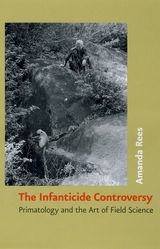
Infanticide in the natural world might be a relatively rare event, but as Amanda Rees shows, it has enormously significant consequences. Identified in the 1960s as a phenomenon worthy of investigation, infanticide had, by the 1970s, become the focus of serious controversy. The suggestion, by Sarah Hrdy, that it might be the outcome of an evolved strategy intended to maximize an individual’s reproductive success sparked furious disputes between scientists, disagreements that have continued down to the present day.
Meticulously tracing the history of the infanticide debates, and drawing on extensive interviews with field scientists, Rees investigates key theoretical and methodological themes that have characterized field studies of apes and monkeys in the twentieth century. As a detailed study of the scientific method and its application to field research, The Infanticide Controversy sheds new light on our understanding of scientific practice, focusing in particular on the challenges of working in “natural” environments, the relationship between objectivity and interpretation in an observational science, and the impact of the public profile of primatology on the development of primatological research. Most importantly, it also considers the wider significance that the study of field science has in a period when the ecological results of uncontrolled human interventions in natural systems are becoming ever more evident.
In the past few years, a new breed of baby-watchers has discovered more about infancy than has ever been known before. Infants brings this knowledge out of inaccessible academic journals and makes it available to everyone in direct language.
Written by a child psychologist who has studied the developmental progress of infants for many years, the book describes and interprets the fascinating capabilities of infants in their first years of life. It covers the ability of the newborn to see and hear their parents, their natural disposition toward getting to know caregivers, and the growth of love and attachment between parent and baby. It explores the changing mental abilities and social skills in the first and second years, and tells readers how they can observe these stages in children.
At a time when parents are increasingly beset by contradictory advice about infant care, many will find it useful to have a sensible and caring book that presents the latest information on understanding the behavior of babies. Parenting can then become the emotionally fulfilling and intellectually stimulating responsibility it should be.

What do infants know? What do they feel, and how do they come to understand what’s happening around them? How do they begin to construe others as persons with feelings and intentions? These questions inspire this remarkable new look at the infant’s world. The short answer? Infants are much more sophisticated perceivers, feelers, and thinkers of their world than we may think.
In this lively book, Philippe Rochat makes a case for an ecological approach to human development. Looking at the ecological niche infants occupy, he describes how infants develop capabilities and conceptual understanding in relation to three interconnected domains: the self, objects, and other people. Drawing on the great body of contemporary “competent infant” research, Rochat offers a thoughtful overview of many current, controversial topics, from neonatal imitation to early numeracy, to the development of self-awareness. In a provocative conclusion, he describes infancy as a series of key transitions—so dramatic that they are sometimes called “revolutions”—and maps out the processes that impel development.
Offering a unifying theoretical vision of the vast research of recent years, The Infant’s World is an inspiring introduction to the liveliest area of modern psychology.
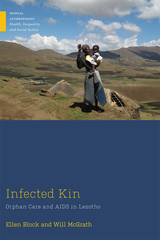
Supplementary instructor resources (https://www.csbsju.edu/sociology/faculty/anthropology-teaching-resources/infected-kin-teaching-resources)


For too long, the theory and practice of infectious disease outbreak response have been the domain of a small number of experienced responders. The COVID-19 pandemic brought global attention to the requirements of effective outbreak response, and the need for preparation across the key pillars. Decisionmakers, early career practitioners, and those in the field now have access to a comprehensive text that brings together evidence-based and practical insights from the best in the business.
Dale Fisher, Professor of Medicine at the National University of Singapore, was chair of WHO’s Global Outbreak Alert and Response Network before and during most of the pandemic. In this massive collaborative effort, he marshals nearly one hundred top public health leaders and experts from the front lines to present thirty-seven chapters on pandemic preparedness and response, drawing heavily on experiences from COVID-19, but also from Ebola, MERS, SARS-1, influenza, and other outbreaks of modern times. The contributors include experts from health ministries and Centres for Disease Control and national public health institutions around the world; from international organizations like the WHO, MSF, IFRC, and UNICEF; and research institutions and various NGOs from dozens of countries, adding to the diversity and richness of the descriptions.
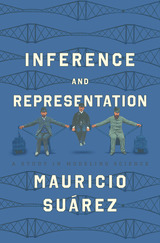
Mauricio Suárez develops a conception of representation that delivers a compelling account of modeling practice. He begins by discussing the history and methodology of model building, charting the emergence of what he calls the modeling attitude, a nineteenth-century and fin de siècle development. Prominent cases of models, both historical and contemporary, are used as benchmarks for the accounts of representation considered throughout the book. After arguing against reductive naturalist theories of scientific representation, Suárez sets out his own account: a case for pluralism regarding the means of representation and minimalism regarding its constituents. He shows that scientists employ a variety of modeling relations in their representational practice—which helps them to assess the accuracy of their representations—while demonstrating that there is nothing metaphysically deep about the constituent relation that encompasses all these diverse means.
The book also probes the broad implications of Suárez’s inferential conception outside scientific modeling itself, covering analogies with debates about artistic representation and philosophical thought over the past several decades.
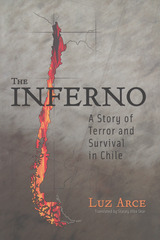
As a member of Salvador Allende’s Personal Guards (GAP), Luz Arce worked with leaders of the Socialist Party during the Popular Unity Government from 1971 to1973. In the months following the coup, Arce served as a militant with others from the Left who opposed the military junta led by Augusto Pinochet, which controlled the country from 1973 to1990. Along with thousands of others in Chile, Arce was detained and tortured by Chile’s military intelligence service, the DINA, in their attempt to eliminate alternative voices and ideologies in the country. Arce’s testimonial offers the harrowing story of the abuse she suffered and witnessed as a survivor of detention camps, such as the infamous Villa Grimaldi.
But when faced with threats made to her family, including her young son, and with the possibility that she could be murdered as thousands of others had been, Arce began to collaborate with the Chilean military in their repression of national resistance groups and outlawed political parties. Her testimonial thus also offers a unique perspective from within the repressive structures as she tells of her work as a DINA agent whose identifications even lead to the capture of some of her former friends and compañeros.
During Chile’s return to democracy in the early 1990s, Arce experienced two fundamental changes in her life that led to the writing of her story. The first was a deep spiritual renewal through her contacts with the Catholic Church whose Vicariate of Solidarity had fought for human rights in the country during the dictatorship. The second was her decision to participate within the legal system to identify and bring to justice those members of the military who were responsible for the crimes committed from 1973 to1990. Luz Arce’s book invites readers to rethink the definition of testimonial narrative in Latin America through the unique perspective of a survivor-witness-confessor.

An Open Letters Monthly Best Nonfiction Book of the Year
America’s criminal justice system is broken. The United States punishes at a higher per capita rate than any other country in the world. In the last twenty years, incarceration rates have risen 500 percent. Sentences are harsh, prisons are overcrowded, life inside is dangerous, and rehabilitation programs are ineffective. Looking not only to court records but to works of philosophy, history, and literature for illumination, Robert Ferguson, a distinguished law professor, diagnoses all parts of a now massive, out-of-control punishment regime.
“If I had won the $400 million Powerball lottery last week I swear I would have ordered a copy for every member of Congress, every judge in America, every prosecutor, and every state prison official and lawmaker who controls the life of even one of the millions of inmates who exist today, many in inhumane and deplorable conditions, in our nation’s prisons.”
—Andrew Cohen, The Atlantic
“Inferno is a passionate, wide-ranging effort to understand and challenge…our heavy reliance on imprisonment. It is an important book, especially for those (like me) who are inclined towards avoidance and tragic complacency…[Ferguson’s] book is too balanced and thoughtful to be disregarded.”
—Robert F. Nagel, Weekly Standard

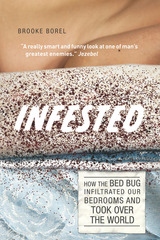
In Infested, Borel introduces readers to the biological and cultural histories of these amazingly adaptive insects, and the myriad ways in which humans have responded to them. She travels to meet with scientists who are rearing bed bug colonies—even by feeding them with their own blood (ouch!)—and to the stages of musicals performed in honor of the pests. She explores the history of bed bugs and their apparent disappearance in the 1950s after the introduction of DDT, charting how current infestations have flourished in direct response to human chemical use as well as the ease of global travel. She also introduces us to the economics of bed bug infestations, from hotels to homes to office buildings, and the expansive industry that has arisen to combat them.
Hiding during the day in the nooks and seams of mattresses, box springs, bed frames, headboards, dresser tables, wallpaper, or any clutter around a bed, bed bugs are thriving and eager for their next victim. By providing fascinating details on bed bug science and behavior as well as a captivating look into the lives of those devoted to researching or eradicating them, Infested is sure to inspire at least a nibble of respect for these tenacious creatures—while also ensuring that you will peek beneath the sheets with prickly apprehension.
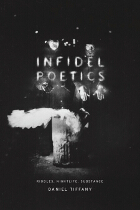
Poetry has long been regarded as the least accessible of literary genres. But how much does the obscurity that confounds readers of a poem differ from, say, the slang that seduces listeners of hip-hop? Infidel Poetics examines not only the shared incomprensibilities of poetry and slang, but poetry's genetic relation to the spectacle of underground culture.
Charting connections between vernacular poetry, lyric obscurity, and types of social relations—networks of darkened streets in preindustrial cities, the historical underworld of taverns and clubs, the subcultures of the avant-garde—Daniel Tiffany shows that obscurity in poetry has functioned for hundreds of years as a medium of alternative societies. For example, he discovers in the submerged tradition of canting poetry and its eccentric genres—thieves’ carols, drinking songs, beggars’ chants—a genealogy of modern nightlife, but also a visible underworld of social and verbal substance, a demimonde for sale.
Ranging from Anglo-Saxon riddles to Emily Dickinson, from the icy logos of Parmenides to the monadology of Leibniz, from Mother Goose to Mallarmé, Infidel Poetics offers an exhilarating account of the subversive power of obscurity in word, substance, and deed.
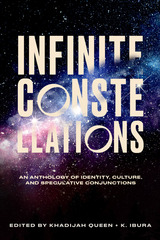
A galaxy of voices. A universe of belonging.
The innovative fictions in Infinite Constellations showcase the voices and visions of 30 remarkable writers, both new and established, from the global majority: Native American/First Nation writers, South Asian writers, East Asian writers, Black American writers, Latinx writers, and Caribbean and Middle Eastern writers. These are visions both familiar and strange, but always rooted in the mystery of human relationships, the deep honoring of memory, and the rootedness to place and the centering of culture.
The writers in this anthology mirror, instruct, bind and unbind, myth-make and myth-invert, transform and transmute, make us belly-laugh or hum our understanding, gasp or whisper gently, and remember that sometimes we need to holler and fight as we grieve. Any dangers herein, imagined or observed in poem and story, transport us: moving from latent to extant, then unleashed.
This work does not presume; it presents and blossoms, creating a constellation of appearances, a symphony of belonging.
“In collecting this work,” note editors Khadijah Queen and K. Ibura, “we felt humbled by the love threaded throughout the voices speaking to us in stories and poems that vault beyond expectation and settle in our consciousness as an expansion of what’s possible when we tend to one another with intention. We felt lifted, held aloft in these arrangements of language. We hope that as you read each story and poem, you will find the same sense of empowerment and celebration that we know has sustained us over countless generations, and in their beauty and humor and intelligence and complexity, continue to enrich us still.”
CONTRIBUTORS
George Abraham / Kenzie Allen / Shreya lla Anasuya / Thea Anderson / Wendy Chin-Tanner / Alton Melvar M. Depanas / Yohanca Delgado / Jennifer Elise Foerster / Aerik Francis / André O. Hoilette / Brian K. Hudson / K. Ibura / Pedro Iniguez / Ruth Ellen Kocher / Ra’Niqua Lee / Tonya Liburd / Kenji C. Liu / Shalewa Mackall / Lucien Darjeun Meadows / Melanie Merle / Juan J. Morales / Thirii Myo Kyaw Myint / Cindy Juyound Ok / Daniel José Older / Soham Patel / Lynn C. Pitts/ Khadijah Queen / Sheree Renée Thomas / Sarah Sophia Yanni / dg nanouk okpik / shakirah peterson

“Blanchot waits for us still to come, to be read and reread. . . I would say that never as much as today have I pictured him so far ahead of us.” Jacques Derrida
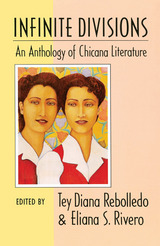
Through poetry, fiction, drama, essay, and other forms, this landmark volume showcases the talents of more than fifty authors, including Gloria E. Anzaldúa, Ana Castillo, Lorna Dee Cervantes, Denise Chávez, Sandra Cisneros, Pat Mora, Cherríe Moraga, and María Helena Viramontes.
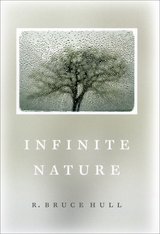
In this impassioned and judicious work, R. Bruce Hull argues that environmentalism will never achieve its goals unless it sheds its fundamentalist logic. The movement is too bound up in polarizing ideologies that pit humans against nature, conservation against development, and government regulation against economic growth. Only when we acknowledge the infinite perspectives on how people should relate to nature will we forge solutions that are respectful to both humanity and the environment.
Infinite Nature explores some of these myriad perspectives, from the scientific understandings proffered by anthropology, evolution, and ecology, to the promise of environmental responsibility offered by technology and economics, to the designs of nature envisioned in philosophy, law, and religion. Along the way, Hull maintains that the idea of nature is social: in order to reach the common ground where sustainable and thriving communities are possible, we must accept that many natures can and do exist.
Incisive, heartfelt, and brimming with practical solutions, Infinite Nature brings a much-needed and refreshing voice to the table of environmental reform.
Infinite Phenomenology builds on John Russon’s earlier book, Reading Hegel’s Phenomenology, to offer a second reading of Hegel’s Phenomenology of Spirit. Here again, Russon writes in a lucid, engaging style and, through careful attention to the text and a subtle attunement to the existential questions that haunt human life, he demonstrates how powerfully Hegel’s philosophy can speak to the basic questions of philosophy. In addition to original studies of all the major sections of the Phenomenology, Russon discusses complementary texts by Hegel, namely, the Philosophy of Spirit, the Philosophy of Right, and the Science of Logic. He concludes with an appendix that discusses the reception and appropriation of Hegel’s Phenomenology in twentieth-century French philosophy. As with Russon’s earlier work, Infinite Phenomenology will remain essential reading for those looking to engage Hegel’s essential, yet difficult, text.





In 1957, encouraged by Georgia O’Keeffe, artist Yayoi Kusama left Japan for New York City to become a star. By the time she returned to her home country in 1973, she had established herself as a leader of New York’s avant-garde movement, known for creating happenings and public orgies to protest the Vietnam War and for the polka dots that had become a trademark of her work. Her sculptures, videos, paintings, and installations are to this day included in major international exhibitions.

Diving through illusions and phantoms of virtual realms and into the human desire for boundless possibility, Infinity Pool charts the ways technologies have become embedded in our minds, bodies, and lives. Immersed in a world of data streams, neural nets, spider algorithms, and electronic terminals, Jonathan Thirkield’s poems plumb the dissonances and shrinking distances between ourselves and digital technologies, imagining what becomes of the fragile machinery of the human body amid a rapidly transforming world.
Thirkield turns to language as a mediator and explores infinity as a mathematical concept, a multiverse conceit, and a driver of the computational imagination. Traveling across the full spectrum of digital experience—from satellites crossing the edges of our solar system to microscopic bytes that operate beneath our perception—this collection is a testament to the future we imagine ourselves to be living through and to what happens when our escapist desires give way to the realities of birth, loss, parenthood, and sickness.
Through lyrical, narrative, and formal mutations, these poems cut through a decade of exponential technological growth, landing in the reality of our corporeal experiences: the isolation of chronic illness, the daunting journeys of children growing up today, and the hope that we can remain connected to each other no matter how tenuous the ties.


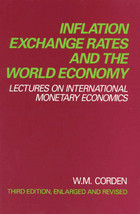
Even though standard economic models predict that output will drop and unemployment will rise during disinflation, Israel saw a boom in private consumption and large increases in real wages that lasted for about three years. To understand how the effects of Israeli disinflation policies defied typical expectations, Leiderman investigates how monetary fiscal policy determined Israel's runaway inflation and how the country brought its economy abruptly under control. He finds that rates of inflation and consumption depend on the public's expectations about future fiscal adjustments and that foreign trade shocks do not inevitably lead to a long-term rise in the inflation rate. His illumination of international trade and domestic policies, past and present, will interest academic economists and policymakers alike.
This volume presents the latest thoughts of a brilliant group of young economists on one of the most persistent economic problems facing the United States and the world, inflation. Rather than attempting an encyclopedic effort or offering specific policy recommendations, the contributors have emphasized the diagnosis of problems and the description of events that economists most thoroughly understand. Reflecting a dozen diverse views—many of which challenge established orthodoxy—they illuminate the economic and political processes involved in this important issue.
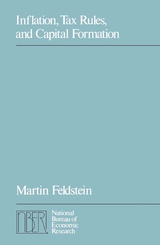
Inflation, Tax Rules, and Capital Formation brings together fourteen papers that show the importance of the interaction between tax rules and monetary policy. Based on theoretical and empirical research, these papers emphasize the importance of including explicit specifications of the tax system in such study.
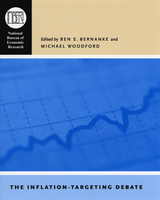
In Inflation Targeting, a distinguished group of contributors explores the many underexamined dimensions of inflation targeting—its potential, its successes, and its limitations—from both a theoretical and an empirical standpoint, and for both developed and emerging economies. The volume opens with a discussion of the optimal formulation of inflation-targeting policy and continues with a debate about the desirability of such a model for the United States. The concluding chapters discuss the special problems of inflation targeting in emerging markets, including the Czech Republic, Poland, and Hungary.
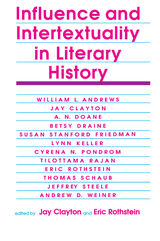
This important collection explores and clarifies two of the most contested ideas in literary theory today, influence and intertextuality. The study of influence tends to center on major authors and canonical works, identifying prior documents as “sources” or “contexts” for a given author. Intertextuality, on the other hand, is a concept unconcerned with authors as individuals; it treats all texts as part of a network of discourse that includes culture, history, and social practices as well as other literary works. In thirteen essays drawing on the entire spectrum of English and American literary history, this volume considers the relationship between these two terms—their rivalry, their kinship, their range of uses.
Debates about these two concepts have been crucial to the “new historicism” and the resurgence of interest in literary history. The essays in this volume employ a refreshing array of examples from that history—poetry of the Renaissance and the twentieth century, novels of the eighteenth through twentieth centuries, Old English texts, and postmodernist productions that have served as recurrent “intertexts” for contemporary theory. The contributors treat such currently vital questions as the role of the author, canon formation, gender, causality, and the social dimension of texts. They illuminate old assumptions and new ideas about agency that lie behind notions of influence, and they examine models of an anonymous textual field that lie behind notions of intertextuality.
The volume takes much of its character from its own intertextual origin as a group project of the English faculty at the University of Wisconsin–Madison. Though diverse in their academic interests, concerns, and experience, the contributors particpated in an ongoing intellectual exchange that is a model of how new scholarship can arise from dialogue.
Campaign contributions are widely viewed as a corrupting influence but most scholarly research concludes that they have marginal impact on legislative behavior. Lynda W. Powell shows that contributions have considerable influence in some state legislatures but very little in others. Using a national survey of legislators, she develops an innovative measure of influence and delineates the factors that explain this great variation across the 99 U.S. state legislative chambers.
Powell identifies the personal, institutional, and political factors that determine how much time a legislator devotes to personal fundraising and fundraising for the caucus. She shows that the extent of donors' legislative influence varies in ways corresponding to the same variations in the factors that determine fundraising time. She also confirms a link between fundraising and lobbying with evidence supporting the theory that contributors gain access to legislators based on donations, Powell's findings have important implications for the debate over the role of money in the legislative process.
Presenting Dewey’s new view of philosophical inquiry
This critical edition of The Influence of Darwin on Philosophy and Other Essays in Contemporary Thought presents the results of John Dewey’s patient construction, throughout the previous sixteen years, of the radically new view of the methods and concerns of philosophical inquiry. It was a view that he continued to defend for the rest of his life.
In the 1910 The Influence of Darwin on Philosophy and Other Essays in Contemporary Thought—the first collection of Dewey’s previously published, edited essays—John Dewey provided readers with an overview of the scope and direction of his philosophical vision in one volume. The order in which the eleven essays were presented was a reverse chronology, with more recently published essays appearing first. The collection of eleven essays offered a detailed portrait of Dewey’s proposed reconstruction of the traditional concepts of knowledge and truth. It furthermore elaborated on how his new logic and his proposal regarding knowledge and truth fit comfortably together, not only with each other but also with a pragmatically proper understanding of belief, reality, and experience.
Because material in the Collected Works of John Dewey, 1882–1953 was published chronologically, however, the essays published together in the 1910 Darwin book have appeared in seven different volumes in the Collected Works. This new, critical edition restores a classic collection of essays authored and edited by John Dewey as they originally appeared in the volume. The edition is presented with ancillary materials, including responses by Dewey’s critics and an introduction by Douglas Browning.
INTERVIEWEES INCLUDE:
Isabella Avila (17.7m on TikTok)
Jacques Bastien (cofounder, SHADE)
Mark Cuban (8.6m on Twitter)
Mary Fitzgerald (1.8m on Instagram)
GloZell Green (4.6m on YouTube)
Tim Karsliyev (1.7m on Instagram)
Kevin Kreider (431k on Instagram)
Max Levine (cofounder, Amp Studios)
Cindy Pham (468k on YouTube)
Michael Schweiger (CEO, Central Entertainment Group)
LaToya Shambo (CEO/founder, Black Girl Digital)
Joshua Suarez (14.4m on TikTok)
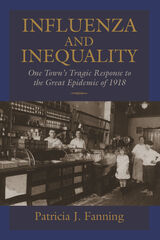
By 1918, Norwood was a small, ethnically diverse, industrialized, and stratified community. Ink, printing, and tanning factories were owned by wealthy families who lived privileged lives. These industries attracted immigrant laborers who made their homes in several ethnic neighborhoods and endured prejudice and discrimination at the hands of native residents. When the epidemic struck, the immigrant neighborhoods were most affected; a fact that played a significant role in the town's response—with tragic results.
This close analysis of one town's struggle illuminates how even well-intentioned elite groups may adopt and implement strategies that can exacerbate rather than relieve a medical crisis. It is a cautionary tale that demonstrates how social behavior can be a fundamental predictor of the epidemic curve, a community's response to crisis, and the consequences of those actions.

Much has been debated about the presence of undocumented workers along the South Texas border, but these debates often overlook the more complete dimension: the region’s longstanding, undocumented economies as a whole. Borderlands commerce that evades government scrutiny can be categorized into informal economies (the unreported exchange of legal goods and services) or underground economies (criminal economic activities that, obviously, occur without government oversight). Examining long-term study, observation, and participation in the border region, with the assistance of hundreds of locally embedded informants, The Informal and Underground Economy of the South Texas Border presents unique insights into the causes and ramifications of these economic channels.
The third volume in UT–Pan American’s Borderlife Project, this eye-opening investigation draws on vivid ethnographic interviews, bolstered by decades of supplemental data, to reveal a culture where divided loyalties, paired with a lack of access to protection under the law and other forms of state-sponsored recourse, have given rise to social spectra that often defy stereotypes. A cornerstone of the authors’ findings is that these economic activities increase when citizens perceive the state’s intervention as illegitimate, whether in the form of fees, taxes, or regulation. From living conditions in the impoverished colonias to President Felipe Calderón’s futile attempts to eradicate police corruption in Mexico, this book is a riveting portrait of benefit versus risk in the wake of a “no-man’s-land” legacy.

An empirically rich reconstruction of how informality became an intrinsic part of urban life across three continents.
Over a quarter of the world’s urban population lives in informal settlements. While informality as a concept has been widely debated, we still know very little about the phenomenon’s urban history or how that history has shaped the evolution of world cities. Spotlighting the historical processes that have created and sustained urban informality for more than a century, editors Charlotte Vorms and Brodwyn Fischer and this volume’s contributors reveal informality as an intrinsic feature of urbanity, shaping not only cities across the globe but also deeper processes of state formation, socioeconomic stratification, and political struggle.
The volume brings together case studies spanning more than a hundred years, drawn from Latin America (Brazil, Chile, Venezuela, and Mexico), Northern Africa (Morocco and Algeria), and Latin Europe (France, Spain, and Italy). Together, they show that informality is neither a contemporary crisis nor a predicament unique to the Global South. Topics include the origins of informal settlements and their relationship with law and institutional power; grassroots efforts to legitimize shantytown communities; mass social movements for rights to the city; the role that shantytown removal campaigns played in populist politics, fascism, and colonialism; and the ways that informality perpetuated racial and ethnic inequalities. Informal Cities is an indispensable guide to the complex and fraught terrain of urban informality in its many historical guises.
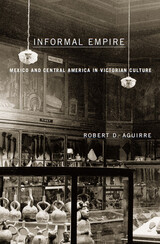
Behind the ancient artifacts exhibited in our museums lies a secret past—of travel, desire, the quest for knowledge, and even theft. Such is the case with the objects of Mesoamerican culture so avidly collected, cataloged, and displayed by the British in the nineteenth century. Informal Empire recaptures the history of those artifacts from Mexico and Central America that stirred Victorian interest—a history that reveals how such objects and the cultures they embodied were incorporated into British museum collections, panoramas, freak shows, adventure novels, and records of imperial administrators.
Robert D. Aguirre draws on a wealth of previously untapped historical information to show how the British colonial experience in Africa and the Near East gave rise to an “informal imperialism” in Mexico and Central America. Aguirre’s work helps us to understand what motivated the British to beg, borrow, buy, and steal from peripheral cultures they did not govern. With its original insights, Informal Empire points to a new way of thinking about British imperialism and, more generally, about the styles and forms of imperialism itself.

Contributors. Dalida María Benfield, Zach Blas, Ama Josephine Budge Johnstone, micha cárdenas, Amy Sara Carroll, Shu Lea Cheang, Jian Neo Chen, Heather Dewey-Hagborg, Ranjodh Singh Dhaliwal, Stephanie Dinkins, Ricardo Dominguez, Ashley Ferro-Murray, Matthew Fuller, Jacob Gaboury, Jennifer Gabrys, Alexander R. Galloway, Jennifer Mae Hamilton, Donna J. Haraway, Eva Hayward, Stefan Helmreich, Kathy High, Leon J. Hilton, Ho Rui An, Hi'ilei Julia Kawehipuaakahaopulani Hobart, Tung-Hui Hu, Caroline A. Jones, Melody Jue, Homay King, Larissa Lai, Lawrence Lek, Esther Leslie, Alexis Lothian, Isadora Neves Marques, Radha May (Elisa Giardina-Papa, Nupur Mathur, and Bathsheba Okwenje), Shaka McGlotten, Mahan Moalemi, madison moore, Astrida Neimanis, Bahar Noorizadeh, Luciana Parisi, Thao Phan, Ana Teixeira Pinto, Luiza Prado de O. Martins, Rita Raley, Patricia Reed, Jennifer Rhee, Bassem Saad, Ashkan Sepahvand, Justin Talplacido Shoulder, Lucy Suchman, Ollie Zhang

The golden democratic tradition of an informed and involved electorate freely and rationally choosing its public officials seems to be at odds with American political reality. Thus the questions: On what basis do people vote and form opinions? How does the lack of information at the individual level affect system performance?
In this collection twenty-six distinguished political scientists discuss, debate, and define the relationship between information and the democracy it supposedly serves. The contributors address both the empirical and normative aspects of governing in the United States, employing psychological, sociological, and economic perspectives.

What is experimental knowledge, and how do we get it? While there is general agreement that experiment is a crucial source of scientific knowledge, how experiment generates that knowledge is far more contentious. In this book, philosopher of science James Mattingly explains how experiments function. Specifically, he discusses what it is about experimental practice that transforms observations of what may be very localized, particular, isolated systems into what may be global, general, integrated empirical knowledge. Mattingly argues that the purpose of experimentation is the same as the purpose of any other knowledge-generating enterprise—to change the state of information of the knower. This trivial-seeming point has a non-trivial consequence: to understand a knowledge-generating enterprise, we should follow the flow of information. Therefore, the account of experimental knowledge Mattingly provides is based on understanding how information flows in experiments: what facilitates that flow, what hinders it, and what characteristics allow it to flow from system to system, into the heads of researchers, and finally into our store of scientific knowledge.
In this controversial book, Keith Krehbiel investigates and casts doubt upon a view of Congress held by many academics, journalists, and members of the lay public: that Congress is organized primarily to facilitate logrolling or "gains from trade" between legislators. The author puts forward an alternative "informational" theory that, unlike previous formal theories, highlights institutional needs and individual incentives for acquiring policy expertise. Using games with incomplete information, Krehbiel derives a set of unique and testable predictions about the organization of legislatures -- including the composition of committees and the procedures under which legislation is considered.
Krehbiel's creative illustrations and nonmathematical presentation of formal theories make this book accessible to a diverse set of readers. The political relevance and testability of games with incomplete information will be appreciated by game theorists and economists, while the book's findings make it essential reading for political scientists who study American politics, political institutions, or democratic legislatures.
An insightful rethinking of political socialization within Latino immigrant households.
Conventional wisdom tells us that children are passive recipients of political lessons from their parents, with caregivers being the ones who mold the developing behavior and beliefs of the children under their roof. Roberto F. Carlos challenges this preconception by revealing how Latino children, especially those with immigrant parents, often become key sources of political information and guidance in their families. As migrant parents navigate unfamiliar institutions and customs in the United States, they often turn to their children to broker information about everything from daily life to civic engagement. These roles not only place unique responsibilities on children but also create new pathways for them to shape the political behavior of their parents. Moreover, by taking on these roles, children learn the skills that can make them effective advocates later in life, even as they face resource disadvantages that normally correlate with reduced political participation and sense of political efficacy.
Drawing on six original surveys, multiple experiments, and in-depth interviews, including the accounts of youth helping protect their families from deportation, InformationBrokers shows how these dynamics influence both immigrant parents and their children in politically consequential ways. With the Latino population now over 64 million, Information Brokers offers vital insight into the political incorporation of America’s largest ethnic group.
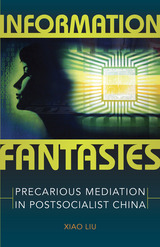
Winner of the Science Fiction Research Association Book Award
A groundbreaking, alternate history of information technology and information discourses
Although the scale of the information economy and the impact of digital media on social life in China today could pale that of any other country, the story of their emergence in the post-Mao sociopolitical environment remains untold. Information Fantasies offers a revisionist account of the emergence of the “information society,” arguing that it was not determined by the technology of digitization alone but developed out of a set of techno-cultural imaginations and practices that arrived alongside postsocialism.
Anticipating discussions on information surveillance, data collection, and precarious labor conditions today, Xiao Liu goes far beyond the current scholarship on internet and digital culture in China, questioning the limits of current new-media theory and history, while also salvaging postsocialism from the persistent Cold War structure of knowledge production.
Ranging over forgotten science fiction, unjustly neglected films, corporeal practices such as qigong, scientific journals, advertising, and cybernetic theories, Information Fantasies constructs an alternate genealogy of digital and information imaginaries—one that will change how we look at the development of the postsocialist world and the emergence of digital technologies.
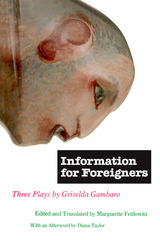

An in-depth assessment of innovations in military information technology informs hypothetical outcomes for artificial intelligence adaptations
In the coming decades, artificial intelligence (AI) could revolutionize the way humans wage war. The military organizations that best innovate and adapt to this AI revolution will likely gain significant advantages over their rivals. To this end, great powers such as the United States, China, and Russia are already investing in novel sensing, reasoning, and learning technologies that will alter how militaries plan and fight. The resulting transformation could fundamentally change the character of war.
In Information in War, Benjamin Jensen, Christopher Whyte, and Scott Cuomo provide a deeper understanding of the AI revolution by exploring the relationship between information, organizational dynamics, and military power. The authors analyze how militaries adjust to new information communication technology historically to identify opportunities, risks, and obstacles that will almost certainly confront modern defense organizations as they pursue AI pathways to the future. Information in War builds on these historical cases to frame four alternative future scenarios exploring what the AI revolution could look like in the US military by 2040.
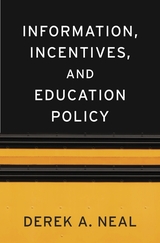
How do we ensure that waste and inefficiency do not undermine the mission of publicly funded schools? Derek Neal writes that economists must analyze education policy in the same way they analyze other procurement problems. Insights from research on incentives and contracts in the private sector point to new approaches that could induce publicly funded educators to provide excellent education, even though taxpayers and parents cannot monitor what happens in the classroom.
Information, Incentives, and Education Policy introduces readers to what economists know—and do not know—about the logjams created by misinformation and disincentives in education. Examining a range of policy agendas, from assessment-based accountability and centralized school assignments to charter schools and voucher systems, Neal demonstrates where these programs have been successful, where they have failed, and why. The details clearly matter: there is no quick-and-easy fix for education policy. By combining elements from various approaches, economists can help policy makers design optimal reforms.
Information, Incentives, and Education Policy is organized to show readers how standard tools from economics research on information and incentives speak directly to some of the most crucial issues in education today. In addition to providing an overview of the pluses and minuses of particular programs, each chapter includes a series of exercises that allow students of economics to work through the mathematics for themselves or with an instructor’s assistance. For those who wish to master the models and tools that economists of education should use in their work, there is no better resource available.
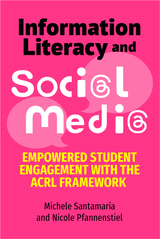
Information Literacy and Social Media: Empowered Student Engagement with the ACRL Framework provides librarians and non-librarian practitioners with ways to teach and learn with social media. It addresses how to broadly conceptualize information literacy teaching with social media and allay any student reluctance to using social media for academic purposes. It proposes how to map some of the ACRL threshold concepts onto specific social media platforms, including Facebook, X, Instagram, and TikTok, while providing general guidance for if and when those platforms change. There are eight concrete, cross-disciplinary lesson plans that factor in design, assessment, and student engagement. Finally, the book considers how up-and-coming platforms might empower students to be critical content creators and encourage librarians and faculty to support and create new information literacy initiatives on their campuses.
Information Literacy and Social Media demonstrates how to engage students with and through social media platforms and teach them to embrace their role as information creators through engagement with the ACRL Framework for Information Literacy for Higher Education. This is the step that they must take to truly be metaliterate in the creative and ethical ways that make information literacy an essential college competency.



"Colbert has long been celebrated as Louis XIV's minister of finance, trade, and industry. More recently, he has been viewed as his minister of culture and propaganda. In this lively and persuasive book, Jake Soll has given us a third Colbert, the information manager."
---Peter Burke, University of Cambridge
"Jacob Soll gives us a road map drawn from the French state under Colbert. With a stunning attention to detail Colbert used knowledge in the service of enhancing
royal power. Jacob Soll's scholarship is impeccable and his story long
overdue and compelling."
---Margaret Jacob, University of California, Los Angeles
"Nowadays we all know that information is the key to power, and that the masters of information rule the world. Jacob Soll teaches us that Jean-Baptiste Colbert had grasped this principle three and a half centuries ago, and used it to construct a new kind of state. This imaginative, erudite, and powerfully written book re-creates the history of libraries and archives in early modern Europe, and ties them in a novel and convincing way to the new statecraft of Europe's absolute monarchs."
---Anthony Grafton, Princeton University
"Brilliantly researched, superbly told, and timely, Soll's story is crucial for the history of the modern state."
---Keith Baker, Stanford University
When Louis XIV asked his minister Jean-Baptiste Colbert---the man who was to oversee the building of Versailles and the Royal Academy of Sciences, as well as the navy, the Paris police force, and French industry---to build a large-scale administrative government, Colbert created an unprecedented information system for political power. In The Information Master, Jacob Soll shows how the legacy of Colbert's encyclopedic tradition lies at the very center of the rise of the modern state and was a precursor to industrial intelligence and Internet search engines.
Soll's innovative look at Colbert's rise to power argues that his practice of collecting knowledge originated from techniques of church scholarship and from Renaissance Italy, where merchants recognized the power to be gained from merging scholarship, finance, and library science. With his connection of interdisciplinary approaches---regarding accounting, state administration, archives, libraries, merchant techniques, ecclesiastical culture, policing, and humanist pedagogy---Soll has written an innovative book that will redefine not only the history of the reign of Louis XIV and information science but also the study of political and economic history.
Jacob Soll is Associate Professor of History at Rutgers University and the author of Publishing The Prince: History, Reading, and the Birth of Political Criticism (University of Michigan Press, 2005), and winner of the 2005 Jacques Barzun Prize from the American Philosophical Society and a 2009 Guggenheim Fellowship. Soll edited a special issue of Journal of the History of Ideas titled "The Uses of Historical Evidence in Early Modern Europe"; has cofounded the online journal Republics of Letters; and is editor, along with Anthony Grafton and Ann Blair, of the series Cultures of Knowledge in the Early Modern World.
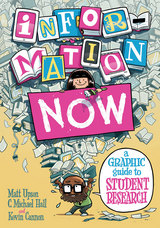
Information Now is an innovative approach to information literacy that will reinvent the way college students think about research. Instead of the typical textbook format, it uses illustrations, humor, and reflective exercises to teach students how to become savvy researchers. Students will learn how to evaluate information, to incorporate it into their existing knowledge base, to wield it effectively, and to understand the ethical issues surrounding its use. Written by two library professionals, it incorporates concepts and skills drawn from the Association of College and Research Libraries’ Information Literacy Competency Standards for Higher Education and their Framework for Information Literacy for Higher Education. Thoroughly researched and highly engaging, Information Now offers the tools that students need to become powerful consumers and creators of information.
Whether used by a high school student tackling a big paper, an undergrad facing the newness of a university library, or a writer wanting to go beyond Google, Information Now is a powerful tool for any researcher’s arsenal.
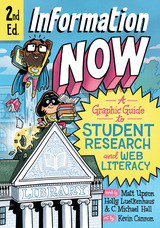
This second edition of the popular guide incorporates critical analysis of information systems, asking students to think about the biases and problems in how databases and search engines are designed and used. It also addresses how different populations of people are disproportionately affected by the algorithmic biases built into information systems. And it includes revised critical thinking exercises in every chapter.
Written and revised by library professionals, Information Now is a fun and insightful tool for high school and college students, writers, and anyone wanting to improve their research skills.
Since their publication in 1957, Downs's seminal ideas -- tweedledum and tweedledee politics and the "rationality" of political ignorance and nonparticipation on the part of voters--have shaped an ongoing debate about how politics actually work. The debate pits a public-choice model inspired by microeconomic precepts against a traditional textbook model that presumes a responsible, informed, and civic-minded citizenry and a set of elected officials motivated by concern for the public interest and policy convictions.
The essays comprising Information, Participation, and Choice, by leading political scientists and economists, provide both a summary of Downs's key theoretical insights and an empirical examination of how well models inspired by Downs accurately describe U.S. political competition for Congress and the presidency.
Bernard Grofman is Professor of Political Science and Social Psychology, University of California, Irvine.
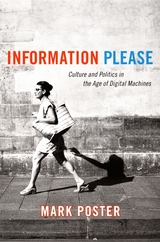
Poster’s critique develops through a series of lively studies. Analyzing the appearance of Sesame Street’s Bert next to Osama Bin Laden in a New York Times news photo, he examines the political repercussions of this Internet “hoax” as well as the unlimited opportunities that Internet technology presents for the appropriation and alteration of information. He considers the implications of open-source licensing agreements, online personas, the sudden rise of and interest in identity theft, peer-to-peer file sharing, and more. Focusing explicitly on theory, he reflects on the limitations of critical concepts developed before the emergence of new media, particularly globally networked digital communications, and he argues that, contrary to the assertions of Michael Hardt and Antonio Negri, new media do not necessarily reproduce neoimperialisms. Urging a rethinking of assumptions ingrained during the dominance of broadcast media, Poster charts new directions for work on politics and digital culture.
The first of Pluto Press’s new Digital Barricades series, focusing on ground-breaking critical explorations of resistance within the digital world, Information Politics explores the exploitations both facilitated by, and contested through, increases in information flows; the embedding of information technologies in daily life; and the intersection of network and control protocols. Anyone hoping to get to grips with the rapidly changing terrain of digital culture and conflict should start here.

READERS
Browse our collection.
PUBLISHERS
See BiblioVault's publisher services.
STUDENT SERVICES
Files for college accessibility offices.
RECENTLY PUBLISHED





UChicago Accessibility Resources
home | accessibility | search | about | contact us
BiblioVault ® 2001 - 2025
The University of Chicago Press