
 A SCHOLARLY BOOK REPOSITORY
14 start with I start with I
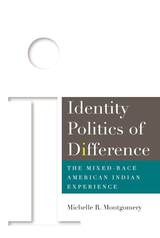
In Identity Politics of Difference, author Michelle R. Montgomery uses a multidisciplinary approach to examine questions of identity construction and multiracialism through the experiences of mixed-race Native American students at a tribal school in New Mexico. She explores the multiple ways in which these students navigate, experience, and understand their racial status and how this status affects their educational success and social interactions.
Montgomery contextualizes students’ representations of their racial identity choices through the compounded race politics of blood quantum and stereotypes of physical features, showing how varying degrees of "Indianness" are determined by peer groups. Based on in-depth interviews with nine students who identify as mixed-race (Native American–White, Native American–Black, and Native American–Hispanic), Montgomery challenges us to scrutinize how the category of “mixed-race” bears different meanings for those who fall under it based on their outward perceptions, including their ability to "pass" as one race or another.
Identity Politics of Difference includes an arsenal of policy implications for advancing equity and social justice in tribal colleges and beyond and actively engages readers to reflect on how they have experienced the identity politics of race throughout their own lives. The book will be a valuable resource to scholars, policy makers, teachers, and school administrators, as well as to students and their families.

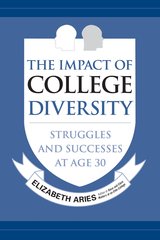
The Impact of College Diversity details how exposure to diversity in college helped shape Black and white graduates process issues of economic and racial privilege and inequality at age 30. She investigates how college diversity experiences also facilitate the attainment of upward social mobility in lower-income students and the role that mobility played in their relationships with family and friends in their home communities. Aries further examines how interactions with peers of another race and class influenced development of citizenship skills and civic engagement, as well as Black students’ ability to cope with the challenges they faced in the professional world.
Aries concludes her study with a discussion of why elite colleges have been beneficial in promoting upward mobility in lower-income students, and the importance of achieving equity and inclusion in making diversity initiatives successful.

Winner of the William M. LeoGrande Prize
For over a century, the United States has sought to improve the behavior of the peoples of Latin America. Perceiving their neighbors to the south as underdeveloped and unable to govern themselves, U.S. policy makers have promoted everything from representative democracy and economic development to oral hygiene. But is improvement a progressive impulse to help others, or realpolitik in pursuit of a superpower’s interests?
“In this subtle and searing critique of U.S. efforts to ‘uplift’ Latin America, Lars Schoultz challenges us to question the fundamental tenets of the development industry that became entrenched in the U.S. foreign policy bureaucracy over the last century.”
—Piero Gleijeses, author of Visions of Freedom
“In this masterful work, Lars Schoultz provides a companion and follow-up to his classic Beneath the United States…A necessary and rewarding read for scholars and students of U.S. foreign policy and inter-American relations.”
—Renata Keller, The Americas
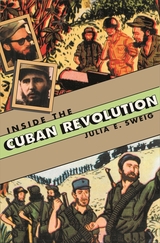
Julia Sweig shatters the mythology surrounding the Cuban Revolution in a compelling revisionist history that reconsiders the revolutionary roles of Fidel Castro and Che Guevara and restores to a central position the leadership of the Cuban urban underground, the Llano. Granted unprecedented access to the classified records of Castro's 26th of July Movement's underground operatives--the only scholar inside or outside of Cuba allowed access to the complete collection in the Cuban Council of State's Office of Historic Affairs--she details the ideological, political, and strategic debates between Castro's mountain-based guerrilla movement and the urban revolutionaries in Havana, Santiago, and other cities.
In a close study of the fifteen months from November 1956 to July 1958, when the urban underground leadership was dominant, Sweig examines the debate between the two groups over whether to wage guerrilla warfare in the countryside or armed insurrection in the cities, and is the first to document the extent of Castro's cooperation with the Llano. She unveils the essential role of the urban underground, led by such figures as Frank País, Armando Hart, Haydée Santamaria, Enrique Oltuski, and Faustino Pérez, in controlling critical decisions on tactics, strategy, allocation of resources, and relations with opposition forces, political parties, Cuban exiles, even the United States--contradicting the standard view of Castro as the primary decision maker during the revolution.
In revealing the true relationship between Castro and the urban underground, Sweig redefines the history of the Cuban Revolution, offering guideposts for understanding Cuban politics in the 1960s and raising intriguing questions for the future transition of power in Cuba.

Where tradition meets bureaucracy—Native students redefine education on their own terms.
Inside the Eagle’s Head offers a compelling and deeply human portrait of the Southwestern Indian Polytechnic Institute (SIPI), a federally operated college serving Native American students from across the United States. In it, anthropologist Angelle Khachadoorian draws on years of teaching experience and extensive student interviews to illuminate the challenges and successes of life at SIPI. Far more than an institutional history, this book captures the voices of students navigating a complex educational landscape shaped by federal oversight, tribal identity, and personal ambition.
Through vivid metaphors—SIPI as a family, a prison, a reservation—students articulate their struggles and resilience within a system that is at once empowering and restrictive. Khachadoorian’s analysis reveals how SIPI’s hybrid nature—part community college, part BIA legacy—creates both opportunities and obstacles for its students. With empathy and insight, she explores how young Native Americans forge identity, community, and purpose in a setting few outsiders understand. Inside the Eagle’s Head is essential reading for educators, policymakers, and anyone interested in the intersection of Indigenous education, federal institutions, and student agency. It is a powerful testament to the transformative potential of listening to students’ stories.
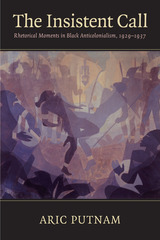
Throughout the nineteenth century, African heritage played an important role in black America, as personal memories and cultural practices continued to shape the everyday experience of people of African descent living under the shadow of slavery. Resisting efforts to de-Africanize their values, customs, and beliefs, Black Americans invoked their African roots in public arguments about their identity and place in the “new” world. At the outset of the twentieth century many still saw Africa primarily as the source of a common cultural and spiritual past. But after the 1920s, the meaning of African heritage changed as people of African descent expressed new relationships between themselves, the United States, and the African Diaspora.
In The Insistent Call, Aric Putnam studies the rhetoric of newspapers, literature, and political pamphlets that expressed this shift. He demonstrates that as people of African descent debated the United States' occupation of Haiti, the Liberian labor crisis, and the Italian invasion of Ethiopia, they formed a new collective identity, one that understood the African Diaspora in primarily political rather than cultural terms. In addition to uncovering a neglected period in the history of Black rhetoric, Putnam shows how rhetoric that articulates the interests of a population not defined by the boundaries of a state can still motivate collective action and influence policies.
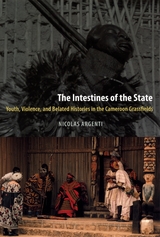
Beginning his study with a political analysis of youth in the Grassfields from the eighteenth century to the present, Argenti pays special attention to the repeated violent revolts staged by young victims of political oppression. He then combines this history with extensive ethnographic fieldwork in the Oku chiefdom, discovering that the specter of past violence lives on in the masked dance performances that have earned intense devotion from today’s youth. Argenti contends that by evoking the imagery of past cataclysmic events, these masquerades allow young Oku men and women to address the inequities they face in their relations with elders and state authorities today.
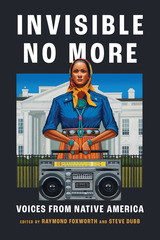
Edited by Raymond Foxworth of First Nations Development Institute and Steve Dubb of The Nonprofit Quarterly, Invisible No More is a groundbreaking collection of stories by Native American leaders, many of them women, who are leading the way through cultural grounding and nation-building in the areas of community, environmental justice, and economic justice. Authors in the collection come from over a dozen Native nations, including communities in Alaska and Hawaiʻi. Chapters are grouped by themes of challenging philanthropy, protecting community resources, environmental justice, and economic justice. While telling their stories, authors excavate the history and ongoing effects of genocide and colonialism, reminding readers how philanthropic wealth often stems from the theft of Native land and resources, as well as how major national parks such as Yosemite were “conserved” by forcibly expelling Native residents. At the same time, the authors detail ways that readers might imagine the world differently, presenting stories of Native community building that offer benefits for all. Accepting this invitation to reset assumptions can be at once profound and pragmatic. For instance, wildfires in large measure result from recent Western land mismanagement; Native techniques practiced for thousands of years can help manage fire for everyone’s benefit.
In a world facing a mounting climate crisis and record economic inequality, Invisible No More exposes the deep wounds of a racist past while offering a powerful call to care for one another and the planet. Indigenous communities have much to offer, not the least of which are solutions gleaned from cultural knowledge developed over generations.
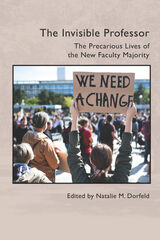
This edited collection, the first in the Practices & Possibilities series to be published in its Voices from the Field section, offers a rich set of narratives by writing instructors who are serving or have worked in contingent positions. Intended for anyone considering a career in the humanities, The Invisible Professor seeks to reach individuals in three phases of their careers: those thinking of entering the profession, those knee-deep in it and looking for ways to improve conditions, and those who have vacated academic positions for more humane alternative tracks.
As academia comes to a crossroads, with a disheartening shift towards a more disposable business model, multiple solutions are desperately needed. Faculty members in contingent positions are the new faculty majority on college campuses, and they are most likely the first professors students will meet. They deserve respect and a livable wage.

Irish Writers in the Irish American Press spans the period from Oscar Wilde's 1882 American lecture tour to the months following JFK's assassination and covers the century in which Irish American identity was shaped by immigration, religion, politics, and economic advancement. Through a close engagement with Irish American periodicals, Butler offers a more nuanced understanding of the connections between Irish literary studies and Irish American culture during this period.

The most significant conquest of the twentieth century may well have been the triumph of American consumer society over Europe’s bourgeois civilization. It is this little-understood but world-shaking campaign that unfolds in Irresistible Empire, Victoria de Grazia’s brilliant account of how the American standard of living defeated the European way of life and achieved the global cultural hegemony that is both its great strength and its key weakness today.
De Grazia describes how, as America’s market empire advanced with confidence through Europe, spreading consumer-oriented capitalism, all alternative strategies fell before it—first the bourgeois lifestyle, then the Third Reich’s command consumption, and finally the grand experiment of Soviet-style socialist planning. Tracing the peculiar alliance that arrayed New World salesmanship, statecraft, and standardized goods against the Old World’s values of status, craft, and good taste, Victoria de Grazia follows the United States’ market-driven imperialism through a vivid series of cross-Atlantic incursions by the great inventions of American consumer society. We see Rotarians from Duluth in the company of the high bourgeoisie of Dresden; working-class spectators in ramshackle French theaters conversing with Garbo and Bogart; Stetson-hatted entrepreneurs from Kansas in the midst of fussy Milanese shoppers; and, against the backdrop of Rome’s Spanish Steps and Paris’s Opera Comique, Fast Food in a showdown with advocates for Slow Food. Demonstrating the intricacies of America’s advance, de Grazia offers an intimate and historical dimension to debates over America’s exercise of soft power and the process known as Americanization. She raises provocative questions about the quality of the good life, democracy, and peace that issue from the vaunted victory of mass consumer culture.
READERS
Browse our collection.
PUBLISHERS
See BiblioVault's publisher services.
STUDENT SERVICES
Files for college accessibility offices.
RECENTLY PUBLISHED




UChicago Accessibility Resources
home | accessibility | search | about | contact us
BiblioVault ® 2001 - 2025
The University of Chicago Press