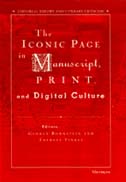
front cover of The Iconic Page in Manuscript, Print, and Digital Culture
The Iconic Page in Manuscript, Print, and Digital Culture
George Bornstein and Theresa Tinkle, Editors
University of Michigan Press, 1998
Most readers think of a written work as producing its meaning through the words it contains. But what is the significance of the detailed and beautiful illuminations on a medieval manuscript? Of the deliberately chosen typefaces in a book of poems by Yeats? Of the design and layout of text in an electronic format? How does the material form of a work shape its understanding in a particular historical moment, in a particular culture?
The material features of texts as physical artifacts--their "bibliographic codes" --have over the last decade excited increasing interest in a variety of disciplines. The Iconic Page in Manuscript, Print, and Digital Culture gathers essays by an extraordinarily distinguished group of scholars to offer the most comprehensive examination of these issues yet, drawing on examples from literature, history, the fine arts, and philosophy.
Fittingly, the volume contains over two dozen illustrations that display the iconic features of the works analyzed--from Alfred the Great's Boethius through medieval manuscripts to the philosophy of C. S. Peirce and the dustjackets on works by F. Scott Fitzgerald and William Styron.
The Iconic Page in Manuscript, Print, and Digital Culture will be groundbreaking reading for scholars in a wide range of fields.
George Bornstein is C. A. Patrides Professor of English, University of Michigan. Theresa Tinkle is Associate Professor of English, University of Michigan.
[more]

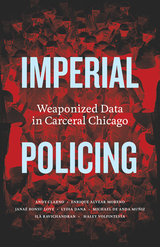
front cover of Imperial Policing
Imperial Policing
Weaponized Data in Carceral Chicago
Andy Clarno
University of Minnesota Press, 2024

Exposing the carceral webs and weaponized data that shape Chicago’s police wars
 

Chicago is a city with extreme concentrations of racialized poverty and inequity, one that relies on an extensive network of repressive agencies to police the poor and suppress struggles for social justice. Imperial Policing examines the role of local law enforcement, federal immigration authorities, and national security agencies in upholding the city’s highly unequal social order.


Collaboratively authored by the Policing in Chicago Research Group, Imperial Policing was developed in dialogue with movements on the front lines of struggles against racist policing in Black, Latinx, and Arab/Muslim communities. It analyzes the connections between three police “wars”—on crime, terror, and immigrants—focusing on the weaponization of data and the coordination between local and national agencies to suppress communities of color and undermine social movements. Topics include high-tech, data-based tools of policing; the racialized archetypes that ground the police wars; the manufacturing of criminals and terrorists; the subversion of sanctuary city protections; and abolitionist responses to policing, such as the Erase the Database campaign.


Police networks and infrastructure are notoriously impenetrable to community members and scholars, making Imperial Policing a rare, vital example of scholars working directly with community organizations to map police networks and intervene in policing practices. Engaging in a methodology designed to provide support for transformative justice organizations, the Policing in Chicago Research Group offers a critical perspective on the abolition of imperial policing, both in Chicago and around the globe.


[more]

logo for Harvard University Press
Information Technology in a Democracy
Alan F. Westin
Harvard University Press, 1971

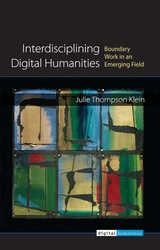
front cover of Interdisciplining Digital Humanities
Interdisciplining Digital Humanities
Boundary Work in an Emerging Field
Julie Thompson Klein
University of Michigan Press, 2015
Interdisciplining Digital Humanities sorts through definitions and patterns of practice over roughly sixty-five years of work, providing an overview for specialists and a general audience alike. It is the only book that tests the widespread claim that Digital Humanities is interdisciplinary. By examining the boundary work of constructing, expanding, and sustaining a new field, it depicts both the ways this new field is being situated within individual domains and dynamic cross-fertilizations that are fostering new relationships across academic boundaries. It also accounts for digital reinvigorations of “public humanities” in cultural heritage institutions of museums, archives, libraries, and community forums.
[more]

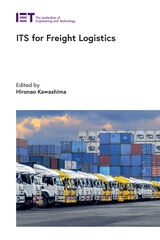
front cover of ITS for Freight Logistics
ITS for Freight Logistics
Hironao Kawashima
The Institution of Engineering and Technology, 2022
The global economy requires globalized movement of goods. Freight transport operations need to be efficient, productive, safe and secure, clean and green. The use of ICT and ITS (intelligent transport systems) are addressing these challenges by developing more rapid, more reliable and more precisely timed strategies for freight transport.
[more]


Send via email Share on Facebook Share on Twitter