
 A SCHOLARLY BOOK REPOSITORY
4 start with I start with I

Contributors to this volume examine historical and contemporary visual practices-Chinese health fairs, documentary films produced by the World Health Organization, illness maps, fashions for nurses, and live surgery on the Internet-in order to delve into the political and epidemiological contexts underlying their creation and dissemination.
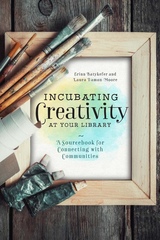
Creativity needs a platform. As technology consultant David Weinberger puts it, “A platform provides resources that lets other people build things.” The library is an ideal platform, and in this book Batykefer and Damon-Moore, creators of the Library as Incubator Project, share the experiences of numerous creative library workers and artists who are making it happen. Their stories will show you how to move beyond merely responding to community needs towards actively building a platform with your community. And best of all, you don’t need to start from scratch—rather, you amplify what’s already working. Filled with ideas and initiatives that can be customized to suit your library and its community, this book
- discusses the four elements (Resources, Invitations, Partnerships & Engagement, and Staff) and the two lenses (Community-Led and Evaluation) of the Creative Library platform;
- outlines six steps for surveying your community’s artistic landscape;
- gives methods for expanding partnerships and connections with individuals and organizations through exploration, hands-on learning, and engagement with the community;
- shares perspectives on the “ideal library” from several artists, with three examples of artist-in-residence programs;
- offers examples of community invitations in action, such as the Pittsburgh Fiberarts Guild workshops on creating flowers using recycled materials;
- shows how to use “orphan photos” from your archives for creative inspiration;
- advises on using qualitative evaluations to effectively “weed” your initiatives; and
- shares tips for encouraging library staff to express their creativity, turning avocations into library initiatives like Handmade Crafternoons, the Yahara Music Library, or BOOKLESS.
By building on existing elements at your library and filling in the gaps with community-driven additions, your library can be a space that cultivates creativity in both its users and staff.
INTERVIEWEES INCLUDE:
Isabella Avila (17.7m on TikTok)
Jacques Bastien (cofounder, SHADE)
Mark Cuban (8.6m on Twitter)
Mary Fitzgerald (1.8m on Instagram)
GloZell Green (4.6m on YouTube)
Tim Karsliyev (1.7m on Instagram)
Kevin Kreider (431k on Instagram)
Max Levine (cofounder, Amp Studios)
Cindy Pham (468k on YouTube)
Michael Schweiger (CEO, Central Entertainment Group)
LaToya Shambo (CEO/founder, Black Girl Digital)
Joshua Suarez (14.4m on TikTok)
In Innovation Equity, Elie Ofek, Eitan Muller, and Barak Libai analyze how a vast array of past innovations performed in the marketplace—from their launch to the moment they became everyday products to the phase where consumers moved on to the “next big thing.” They identify key patterns in how consumers adopt innovations and integrate these with marketing scholarship on how companies manage their customer base by attracting new customers, keeping current customers satisfied, and preventing customers from switching to competitors’ products and services. In doing so, the authors produce concrete models that powerfully predict how the marketplace will respond to innovations, providing a much more authoritative way to estimate their potential monetary value, as well as a framework for making it possible to achieve that value.
READERS
Browse our collection.
PUBLISHERS
See BiblioVault's publisher services.
STUDENT SERVICES
Files for college accessibility offices.
RECENTLY PUBLISHED




UChicago Accessibility Resources
home | accessibility | search | about | contact us
BiblioVault ® 2001 - 2026
The University of Chicago Press