
 A SCHOLARLY BOOK REPOSITORY
9 start with I start with I

In a state that locks up a disproportionate number of men and women of color, white prison workers occupy a complicated social position as representatives of institutional authority and bearers of social stigma. The job, by turns dangerous, dull, or dehumanizing, is aided by a quick wit, comedic timing, and verbal agility. The men and women who do this work rely on storytelling, practical jokes, and sarcasm to bond with each other, build flexible relationships with inmates, and create personal identities that work in and out of prison. Schmidt shows how this humorous occupational culture both upholds and undermines prisons as social institutions.
Issues of power and race, as well as sex and gender, infuse Schmidt's groundbreaking analysis, and she also engages with current scholarship about identity, occupational folklore, and family narrative. This eye-opening, provocative book reveals the invisible culture, beliefs, and aesthetics embedded in workplace humor.


An original transatlantic history of the invention of the corrections profession and of ensuing debates about punishment’s purposes and prisoners’ rights.
Impermissible Punishments explores the history of punishment inside prisons and how governments grappled with obligations to justify the punishments they impose. Legal scholar Judith Resnik charts the creation of the corrections profession and weaves together the stories of people who made rules for prisons and the stories of those living under the resulting regimes.
Resnik maps three centuries of shifting ideas, norms, and legal standards aiming to draw lines between permissible and impermissible punishments. Her account documents the impact of World War II, the United Nations, the US Civil Rights movement, and the pioneering prisoners who insisted that law should protect their individual dignity. Taking us to the present, Resnik analyzes the expansion of imprisonment, the inability of public and private prisons to provide safe housing, and the impact of abolition politics.
Exploring the interdependency of people in and out of prisons, Impermissible Punishments examines what governments committed to equality owe to the people they detain and argues that many contemporary forms of punishment need to end.
"This is a serious and enlightened and concerned attempt to fuse liberal and conservative attitudes and values to achieve a breakthrough in American penal policy."—Congressional Staff Journal


A groundbreaking collection of writings by Michel Foucault and the Prisons Information Group documenting their efforts to expose France’s inhumane treatment of prisoners
Founded by Michel Foucault and others in 1970–71, the Prisons Information Group (GIP) circulated information about the inhumane conditions within the French prison system. Intolerable makes available for the first time in English a fully annotated compilation of materials produced by the GIP during its brief but influential existence, including an exclusive new interview with GIP member Hélène Cixous and writings by Gilles Deleuze and Jean Genet.
These archival documents—public announcements, manifestos, reports, pamphlets, interventions, press conference statements, interviews, and round table discussions—trace the GIP’s establishment in post-1968 political turmoil, the new models of social activism it pioneered, the prison revolts it supported across France, and the retrospective assessments that followed its denouement. At the same time, Intolerable offers a rich, concrete exploration of Foucault’s concept of resistance, providing a new understanding of the arc of his intellectual development and the genesis of his most influential book, Discipline and Punish.
Presenting the account of France’s most vibrant prison resistance movement in its own words and on its own terms, this significant and relevant collection also connects the approach and activities of the GIP to radical prison resistance movements today.
Praise for the Prison Creative Arts Project:
"I cannot overstate how profoundly my experience with the Prison Creative Arts Project has shaped my life. It began my engagement with prison issues, developed both my passion and my understanding of them, and I continue to draw on both as I seek to contribute to a more rational, humane and just criminal justice system. PCAP prepared me to adapt to any situation, to take risks, to collaborate with people very different from myself in a manner infused with total respect."
---Jesse Jannetta, researcher, Justice Policy Center, the Urban Institute
"PCAP provided me with an emotional education that I would not have received otherwise. PCAP continually opens the doors to the stark reality of our criminal justice system as well as our society's ability to right the wrongs of that system and provide justice to millions of men, women, and children . . . PCAP showed me the power I, and the individuals around me, have to make a difference."
---Anne Bowles, Policy and Outreach Associate, Institute for Higher Education Policy
"PCAP looks beyond past mistakes and personal shortcomings to find the beauty and creative energies that help to heal the hurts we've done to others. They have not forgotten that we are human too! . . . Their program has given me a way to reach people that I would otherwise never reach. For that, I owe PCAP everything. They are my lifeline that I cling to."
---Bryan Picken, incarcerated artist
Prisons are an invisible, but dominant, part of American society: the United States incarcerates more people than any other nation in the world. In Michigan, the number of prisoners rose from 3,000 in 1970 to more than 50,000 by 2008, a shift that Buzz Alexander witnessed firsthand when he came to teach at the University of Michigan.
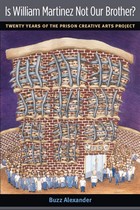
Is William Martinez Not Our Brother? describes the University of Michigan's Prison Creative Arts Project (PCAP), a pioneering program founded in 1990 that provides university courses, a nonprofit organization, and a national network for incarcerated youth and adults in Michigan juvenile facilities and prisons.
By giving incarcerated individuals an opportunity to participate in the arts, PCAP enables them to withstand and often overcome the conditions and culture of prison, the policies of an incarcerating state, and the consequences of mass incarceration.
Buzz Alexander is Arthur F. Thurnau Professor of English Language and Literature, College of Literature, Science, and the Arts, at the University of Michigan and was Carnegie National Professor of the Year in 2005.
Cover image: Overcrowded by Ronald Rohn
READERS
Browse our collection.
PUBLISHERS
See BiblioVault's publisher services.
STUDENT SERVICES
Files for college accessibility offices.
RECENTLY PUBLISHED




UChicago Accessibility Resources
home | accessibility | search | about | contact us
BiblioVault ® 2001 - 2025
The University of Chicago Press