
 A SCHOLARLY BOOK REPOSITORY
6 start with J start with J

The Civil War in Missouri was a time of great confusion, violence, and destruction. Although several major battles were fought in the state between Confederate and Union forces, much of the fighting in Missouri was an ugly form of terrorism carried out by loose bands of Missouri guerrillas, by Kansas "Jayhawkers," or by marauding patrols of Union soldiers. This irregular warfare provided a training ground for people like Jesse and Frank James who, after the war, used their newly learned skills to form an outlaw band that ultimately became known all over the world.
Jesse James and the Civil War in Missouri discusses the underlying causes of the Civil War as they relate to Missouri and reveals how the war helped create both the legend and the reality of Jesse James and his gang. Written in an accessible style, this valuable little book will be welcomed by anyone with an interest in the Civil War, the legend of Jesse James, or Missouri history.
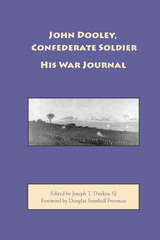
One of the best primary accounts of the Civil War by a Confederate.
John Dooley was the youngest son of Irish immigrants to Richmond, Virginia, where his father prospered, and the family took a leading position among Richmond’s sizeable Irish community. Early in 1862, John left his studies at Georgetown University to serve in the First Virginia Infantry Regiment, in which his father John and brother James also served. John’s service took him to Second Manassas, South Mountain, Sharpsburg (Antietam), Fredericksburg, and Gettysburg; before that last battle, Dooley was elected a lieutenant. On the third day at Gettysburg, Dooley swept up the hill in Pickett’s charge, where he was shot through both legs and lay all night on the field, to be made a POW the next day. Held until February 27, 1865, Dooley made his way back south to arrive home very near the Confederacy’s final collapse.
Dooley’s account is valuable for the content of his service and because most of the material came from his diary, with some interpolations (which are indicated as such) that he made shortly after the war’s end when his memory was still fresh. Dooley’s health seems to have been permanently compromised by his wounds; he entered a Roman Catholic seminary after the war and died in 1873 several months before his ordination was to take place.
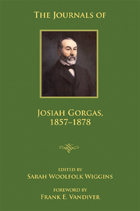
Josiah Gorgas was best known as the highly regarded Chief of Confederate Ordnance. Born in 1818, he attended West Point, served in the U.S. Army, and later, after marrying Amelia Gayle, daughter of a former Alabama governor, joined the Confederacy. After the Civil War he served as president of The University of Alabama until ill health forced him to resign. His journals, maintained between 1857 and 1878, reflect the family's economic successes and failures, detail the course of the South through the Civil War, and describe the ordeal of Reconstruction. Few journals cover such a sweep of history. An added dimension is the view of Victorian family life as Gorgas explored his feelings about aspects of parental responsibility and transmission of values to children--a rarely documented account from the male perspective. His son, called Willie in the journals, was William Crawford Gorgas (1854-1920), who was noted for his fight to control yellow fever and who became surgeon general of the United States.
In his foreword to the volume, Frank E. Vandiver states: "Wiggins has done much more than present a well-edited version of Gorgas's diaries and journals; she has interpreted them in full Gorgas family context and in perspective of the times they cover. . . . Wiggins informs with the sort of editorial notes expected of a careful scholar, but she enlightens with wide knowledge of American and southern history. . . . Josiah Gorgas [was] an unusually observant, passionate man, a 'galvanized Rebel' who deserves rank among the true geniuses of American logistics."
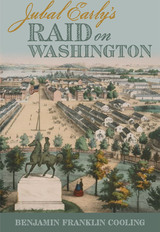
Amid an air of stalemate, the Confederates planned a bold move to strike at Washington, DC and capture or scatter Lincoln and his cabinet. In command of the operation was the colorful and unpredictable Jubal “Old Jube” Anderson Early, brought in to replace the fallen Stonewall Jackson. Less well known than the bloodier Antietam and Gettysburg, Early's campaign, Cooling argues, had greater significance.
In addition to the persnickety bachelor Anderson, this account introduces many colorful participants, including railroad president John W. Garrett, the politically influential Blair family, and Elizabeth “Aunt Betty” Thomas, a free Black woman, who was said to have saved Lincoln’s life by shouting at him: “Get down, you fool!” when he came under fire at Fort Stevens. Exciting and comprehensive, Civil War scholars and readers will delight in this masterful account.
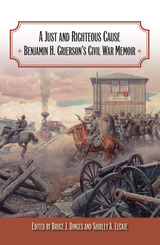
General Benjamin H. Grierson is most widely known as the brilliant cavalryman whose actions in the Civil War's Mississippi Valley campaign facilitated Ulysses S. Grant's capture of Vicksburg. There is, however, much more to this key Union officer than a successful raid into Confederate-held Mississippi. In A Just and Righteous Cause: Benjamin H. Grierson's Civil War Memoir, edited by Bruce J. Dinges and Shirley A. Leckie, Grierson tells his story in forceful, direct, and highly engaging prose.
A Just and Righteous Cause paints a vivid picture of Grierson's prewar and Civil War career, touching on his antislavery views, Republican Party principles, and military strategy and tactics. His story begins with his parents' immigration to the United States and follows his childhood, youth, and career as a musician; the early years of his arriage; his business failures prior to becoming a cavalry officer in an Illinois regiment; his experiences in battle; and his Reconstruction appointment. Grierson also provides intimate accounts of his relationships with such prominent politicians and Union leaders as Abraham Lincoln, Richard Yates, Andrew Johnson, William T. Sherman, Ulysses S.
Grant, John C. Frémont, and Benjamin Prentiss.
Because Grierson wrote the memoir mainly with his family as the intended audience, he manages to avoid the self-promotion that plagues many of his contemporaries' chronicles. His reliance on military records and correspondence, along with family letters, lends an immediacy rarely found in military memoirs. His reminiscences also add fuel to a reemerging debate on soldiers' motivations for enlisting—in Grierson's case, patriotism and ideology—and shed new light on the Western theater of the Civil War, which has seen a recent surge in interest among Civil War enthusiasts.
A non-West Point officer, Grierson owed his developing career to his independent studies of the military and his connections to political figures in his home state of Illinois and later to important Union leaders. Dinges and Leckie provide a helpful introduction, which gives background on the memoir and places Grierson's career into historical context. Aided by fourteen photos and two maps, as well as the editors' superb annotations, A Just and Righteous Cause is a valuable addition to Civil War history.
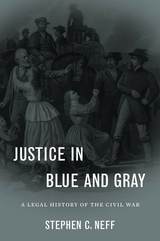
Stephen C. Neff offers the first comprehensive study of the wide range of legal issues arising from the American Civil War, many of which resonate in debates to this day.
Neff examines the lawfulness of secession, executive and legislative governmental powers, and laws governing the conduct of war. Whether the United States acted as a sovereign or a belligerent had legal consequences, including treating Confederates as rebellious citizens or foreign nationals in war. Property questions played a key role, especially when it came to the process of emancipation. Executive detentions and trials by military commissions tested civil liberties, and the end of the war produced a raft of issues on the status of the Southern states, the legality of Confederate acts, clemency, and compensation. A compelling aspect of the book is the inclusion of international law, as Neff situates the conflict within the general laws of war and details neutrality issues, where the Civil War broke important new legal ground.
This book not only provides an accessible and informative legal portrait of this critical period but also illuminates how legal issues arise in a time of crisis, what impact they have, and how courts attempt to resolve them.
READERS
Browse our collection.
PUBLISHERS
See BiblioVault's publisher services.
STUDENT SERVICES
Files for college accessibility offices.
RECENTLY PUBLISHED


UChicago Accessibility Resources
home | accessibility | search | about | contact us
BiblioVault ® 2001 - 2025
The University of Chicago Press