
 A SCHOLARLY BOOK REPOSITORY
9 start with L start with L
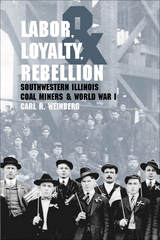
On April 5, 1918, as American troops fought German forces on the Western Front, German American coal miner Robert Prager was hanged from a tree outside Collinsville, Illinois, having been accused of disloyal utterances about the United States and chased out of town by a mob. In Labor, Loyalty, and Rebellion: Southwestern Illinois Coal Miners and World War I, Carl R. Weinberg offers a new perspective on the Prager lynching and confronts the widely accepted belief among labor historians that workers benefited from demonstrating loyalty to the nation.
The first published study of wartime strikes in southwestern Illinois is a powerful look at a group of people whose labor was essential to the war economy but whose instincts for class solidarity spawned a rebellion against mine owners both during and after the war. At the same time, their patriotism wreaked violent working-class disunity that crested in the brutal murder of an immigrant worker. Weinberg argues that the heightened patriotism of the Prager lynching masked deep class tensions within the mining communities of southwestern Illinois that exploded after the Great War ended.
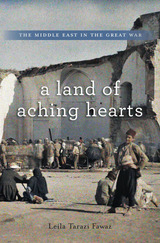
The Great War transformed the Middle East, bringing to an end four hundred years of Ottoman rule in Arab lands while giving rise to the Middle East as we know it today. A century later, the experiences of ordinary men and women during those calamitous years have faded from memory. A Land of Aching Hearts traverses ethnic, class, and national borders to recover the personal stories of the civilians and soldiers who endured this cataclysmic event.
Among those who suffered were the people of Greater Syria—comprising modern Syria, Lebanon, Jordan, Israel, and Palestine—as well as the people of Turkey, Iraq, and Egypt. Beyond the shifting fortunes of the battlefield, the region was devastated by a British and French naval blockade made worse by Ottoman war measures. Famine, disease, inflation, and an influx of refugees were everyday realities. But the local populations were not passive victims. Fawaz chronicles the initiative and resilience of civilian émigrés, entrepreneurs, draft-dodgers, soldiers, villagers, and townsmen determined to survive the war as best they could. The right mix of ingenuity and practicality often meant the difference between life and death.
The war’s aftermath proved bitter for many survivors. Nationalist aspirations were quashed as Britain and France divided the Middle East along artificial borders that still cause resentment. The misery of the Great War, and a profound sense of huge sacrifices made in vain, would color people’s views of politics and the West for the century to come.

The 1923 Treaty of Lausanne remains one of the few interwar peace settlements that has endured into the twenty-first century. Yet, the memory of Lausanne has proved deeply contested. Celebrated by some as a triumph of state sovereignty and peacemaking, it has also come to symbolize forced displacement, the erasure of minority rights, and the codification of population transfers as instruments of international order.
Just over one hundred years after the signing of the Treaty of Lausanne, The Lausanne Moment revisits this diplomatic, legal, economic, and financial juncture that helped reshape the world and defined new norms of sovereignty, displacement, and identity. Building on a growing body of interdisciplinary scholarship and serving as a sequel to They All Made Peace—What is Peace?, also published by Gingko, this edited volume foregrounds the lived realities and long-term legacies of the treaty, critically re-examining the political, cultural, and social consequences of its provisions and aftershocks.
Rather than focusing solely on high diplomacy or legal text, The Lausanne Moment brings into view the human dimension of the Lausanne moment. Through case studies ranging from the refugee experience in Nikaia and Asia Minor orphans in Greece, to the enduring memory of loss in Pontic singing, the symbolic ethnicity of Cretan descendants, and the Kurdish experience in Turkey, the book documents the deeply personal and community-level consequences of forced migration and political rupture. These experiences are not confined to the immediate postwar period; they linger across time, informing the present-day politics of memory, migration, and identity.
This volume also interrogates the geopolitics of Lausanne through new thematic lenses. Essays explore how the treaty facilitated the continuation of imperial practices under new nationalist forms, shaped debates over public debt and cultural heritage, and affected actors and regions often overlooked in Lausanne historiography, such as Albania, Cyprus, and the Kurdish nationalist movements. Lausanne’s cultural afterlives, from its role in shaping archaeology, music, and education policy, are also covered in the book. Through its interdisciplinary and transregional approach, The Lausanne Moment breaks new ground in Lausanne studies, bringing together historians, anthropologists, archaeologists, political scientists, and cultural theorists, and introduces voices and perspectives—Kurdish, Cypriot, Pontic, Albanian, and Cretan—that have been marginal to mainstream narratives. By weaving together policy analysis, oral history, cultural production, and historical research, the volume offers an expansive and textured account of one of the twentieth century’s most consequential, yet paradoxical, peace settlements.
The Lausanne Moment situates the treaty within broader histories of state-led population engineering, colonial eugenic practices, and the moral politics of international humanitarianism. The “peace” of Lausanne, the volume suggests, was neither absolute nor apolitical—it was crafted, contested, and constantly renegotiated. The book’s contributors collectively ask not only what peace meant in 1923, but also what it means today for those still living with its consequences.
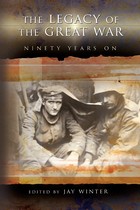
In late 2007 and early 2008, world-renowned historians gathered in Kansas City for a series of public forums on World War I. Each of the five events focused on a particular topic and featured spirited dialogue between its prominent participants.
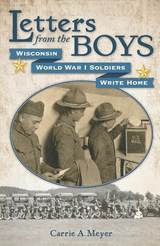
On the 100th anniversary of the arrival of the flood of American troops in Europe that would shift the tide of World War I in favor of the Allies, Letters from the Boys brings to life this terrible war as experienced by Wisconsinites writing home.
Technology had transformed the battlefield in alarming ways. Automatic rifles mowed down the young men who went “over the top” to attack enemy trenches; airplanes and improved artillery brought death unseen from miles away; terrifying clouds of poison gas choked and burned the European countryside; the internal combustion engine brought tanks to the battlefield for the first time and revolutionized the way troops deployed.
In the thick of it were young men from Wisconsin who found themselves caught up in geopolitical events half a world away. Professor Carrie A. Meyer combed through three newspapers in Green County, Wisconsin, to collect and synthesize the letters from the boys into a narrative that is both unique and representative, telling the stories of several Green County boys and what they saw, from preparing for war, to life among French families near the front, to the terror of the battlefield. Meyer gracefully removes the veil of obscurity and anonymity hanging over soldiers who participated in a war fought so long ago by great numbers of men, reminding us that armies are made of individuals who strove to do their part and then return to their families.
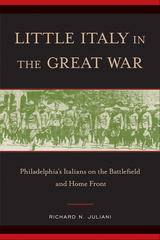
The Great War challenged all who were touched by it. Italian immigrants, torn between their country of origin and country of relocation, confronted political allegiances that forced them to consider the meaning and relevance of Americanization. In his engrossing study, Little Italy in the Great War, Richard Juliani focuses on Philadelphia’s Italian community to understand how this vibrant immigrant population reacted to the war as they were adjusting to life in an American city that was ambivalent toward them.
Juliani explores the impact of the Great War on many immigrant soldiers who were called to duty as reservists and returned to Italy, while other draftees served in the U.S. Army on the Western Front. He also studies the impact of journalists and newspapers reporting the war in English and Italian, and reactions from civilians who defended the nation in industrial and civic roles on the home front.
Within the broader context of the American experience, Little Italy in the Great War examines how the war affected the identity and cohesion of Italians as a population still passing through the assimilation process.
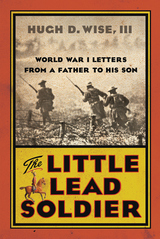
Arriving in France in April 1918, Col. Hugh D. Wise, commander of the U.S. 61st Infantry Division, held a precious object. It was a toy soldier given to him by his six-year-old son, Hugh, Jr. The boy had asked the little lead soldier to write him with news of his father. The colonel saw action in two of the most important campaigns the Americans fought, St. Mihiel and Meuse-Argonne, and the little lead soldier dutifully assured a boy thousands of miles away that his father was safe: “The men had been shelled, gassed, and raked by machine guns constantly: and undergone several intense bombardments; and made a difficult though successful attack; and had resisted a fierce counter-attack. They had dug trenches, moved, and dug again. All this time they had been without shelter, exposed to a cold driving rain and without warm food—They were wet, chilled, and tired when called upon for even greater efforts but they responded with the energy and spirit of fresh troops.” A treasured family heirloom, these wartime letters are presented for the first time along with letter from Colonel Wise to his wife, and engrossing historical context provided by his grandson, Hugh D. Wise, III. The Little Lead Soldier: World War I Letters from a Father to His Son is a remarkable story of how a father performed his dangerous duty while keeping a promise to his boy.

How Tennessee reformers reconciled Southern heritage with rising nationalism, weaving the Lost Cause into the fabric of American progress and identity
The Lost Cause and the Great War tells the stories of central Tennessee Progressive-era reformers to illustrate the fascinating broader issue of how Southerners steeped in Lost Cause Civil War mythologies simultaneously developed patriotic American fervor. Focusing on Luke Lea, a prominent politician and American army officer who attempted to capture Kaiser Wilhelm II during World War I, the book reveals the intricate interplay between three competing ideas: attachment to the memory of the Confederacy, intense American nationalism, and advocacy for progressive reforms.
Hunt shows that Lea and his contemporaries sought either to harmonize these competing loyalties or to compartmentalize them to use when needed. Through insightful accounts of Tennessee’s 1928 presidential campaign, the American Legion’s response to cuts to veteran benefits in 1933, and the redefinition of America’s global role post–World War II, Hunt shows how these reformers achieved a balance that held until the Civil Rights movement disrupted this delicate consensus.
Hunt’s rich account reveals how Lea and others like him wove national patriotism and Southern collective memory into a cohesive narrative that supported their broader Progressive goals. The book offers much to readers interested in Southern history, the Gilded Age, Prohibition, World War I, World War II, and the beginnings of the Civil Rights movement. It provides vivid examples of how collective memory and narratives shape social and political movements. General readers will discover how white Southerners who remained devoted to vindicating the Confederacy nonetheless became fervent supporters of America's growing nationalism in the early twentieth century.
READERS
Browse our collection.
PUBLISHERS
See BiblioVault's publisher services.
STUDENT SERVICES
Files for college accessibility offices.
RECENTLY PUBLISHED



UChicago Accessibility Resources
home | accessibility | search | about | contact us
BiblioVault ® 2001 - 2025
The University of Chicago Press