
 A SCHOLARLY BOOK REPOSITORY
281 start with M start with M

With cities across the country adding miles of bike lanes and building bike-share stations, bicycling is enjoying a new surge of popularity in America. It seems that every generation or two, Americans rediscover the freedom of movement, convenience, and relative affordability of the bicycle. The earliest two-wheeler, the draisine, arrived in Philadelphia in 1819 and astonished onlookers with the possibility of propelling themselves “like lightning.” Two centuries later, the bicycle is still the fastest way to cover ground on gridlocked city streets.
Filled with lively stories, The Mechanical Horse reveals how the bicycle transformed American life. As bicycling caught on in the nineteenth century, many of the country’s rough, rutted roads were paved for the first time, laying a foundation for the interstate highway system. Cyclists were among the first to see the possibilities of self-directed, long-distance travel, and some of them (including a fellow named Henry Ford) went on to develop the automobile. Women shed their cumbersome Victorian dresses—as well as their restricted gender roles—so they could ride. And doctors recognized that aerobic exercise actually benefits the body, which helped to modernize medicine. Margaret Guroff demonstrates that the bicycle’s story is really the story of a more mobile America—one in which physical mobility has opened wider horizons of thought and new opportunities for people in all avenues of life.

An essential account of how the media devices we use today inherit the management practices governing factory labor
This book argues that management is enabled by media forms, just as media gives life to management. Media technologies central to management have included the stopwatch, the punch card, the calculator, and the camera, while management theories are taught in printed and virtual textbooks and online through TED talks. In each stage of the evolving relationship between workers and employers, management innovations are learned through media, with media formats producing fresh opportunities for management.
Drawing on rich historical and ethnographic case studies, this book approaches key instances of the industrial and service economy—the legacy of Toyotism in today’s software industry, labor mediators in electronics manufacturing in Central and Eastern Europe, and app-based food-delivery platforms in China—to push media and management studies in new directions. Media and Management offers a provocative insight on the future of labor and media that inevitably cross geographical boundaries.
How media shapes our actions and feelings about race
Amid fervent conversations about antiracism and police violence, Media and the Affective Life of Slavery delivers vital new ideas about how our feelings about race are governed and normalized by our media landscape. Allison Page examines U.S. media from the 1960s to today, analyzing how media culture instructs viewers to act and feel in accordance with new racial norms created for an era supposedly defined by an end to legal racism.
From the classic television miniseries Roots to the edutainment video game Mission 2: Flight to Freedom and the popular website slaveryfootprint.org, Media and the Affective Life of Slavery provides an in-depth look at the capitalist and cultural artifacts that teach the U.S. public about slavery. Page theorizes media not only as a system of representation but also as a technology of citizenship and subjectivity, wherein race is seen as a problem to be solved. Ultimately, she argues that visual culture works through emotion, a powerful lever for shaping and managing racialized subjectivity.
Media and the Affective Life of Slavery delivers compelling, provocative material and includes a wealth of archival research into such realms as news, entertainment, television, curricula, video games, and digital apps, providing new and innovative scholarship where none currently exists.

Media backends--the electronics, labor, and operations behind our screens--significantly influence our understanding of the sociotechnical relations, economies, and operations of media. Lisa Parks, Julia Velkova, and Sander De Ridder assemble essays that delve into the evolving politics of the media infrastructural landscape. Throughout, the contributors draw on feminist, queer, and intersectional criticism to engage with infrastructural and industrial issues. This focus reflects a concern about the systemic inequalities that emerge when tech companies and designers fail to address workplace discrimination and algorithmic violence and exclusions. Moving from smart phones to smart dust, the essayists examine topics like artificial intelligence, human-machine communication, and links between digital infrastructures and public service media alongside investigations into the algorithmic backends at Netflix and Spotify, Google’s hyperscale data centers, and video-on-demand services in India.
A fascinating foray into an expanding landscape of media studies, Media Backends illuminates the behind-the-screen processes influencing our digital lives.
Contributors: Mark Andrejevic, Philippe Bouquillion, Jonathan Cohn, Faithe J. Day, Sander De Ridder, Fatima Gaw, Christine Ithurbide, Anne Kaun, Amanda Lagerkvist, Alexis Logsdon, Stine Lomborg, Tim Markham, Vicki Mayer, Rahul Mukherjee, Kaarina Nikunen, Lisa Parks, Vibodh Parthasarathi, Philipp Seuferling, Ranjit Singh, Jacek Smolicki, Fredrik Stiernstedt, Matilda Tudor, Julia Velkova, and Zala Volcic


Media, Culture, and Decolonization: Re-righting the Subaltern Histories of Ghana invites us to look at media and culture from a decolonial perspective. Through Dagbaŋ epistemologies and knowledge systems, this book examines media by highlighting how African languages, cultures, and traditions can shift how we think of knowledge. It is an offering to anyone curious about the relationship between culture, language, and media. By focusing on African language media in Ghana such as film, television, and radio, the book emphasizes the importance of espousing a decolonial politic and praxis in the process of co-creating knowledge with Indigenous communities. It connects the struggles of global majority countries and demonstrates the ways in which (neo)colonialism and imperialism impede the work toward liberatory futures. This book demonstrates the potential that African language media hold as tools of cultural and epistemological decolonization.

Judith Farquhar examines how health magazines serve as sources of both medical information and erotic titillation to readers in urban China. Tom Boellstorff analyzes how queer zines produced in Indonesia construct the relationship between same-sex desire and citizenship. Purnima Mankekar examines the rearticulation of commodity affect, erotics, and nation on Indian television. Louisa Schein describes how portrayals of Hmong women in videos shot in Laos create desires for the homeland among viewers in the diaspora. Taken together, the essays offer fresh insights into research on gender, erotics, media, and Asia transnationally conceived.
Contributors. Anne Allison, Tom Boellstorff, Nicole Constable, Heather Dell, Judith Farquhar, Sarah L. Friedman, Martin F. Manalansan IV, Purnima Mankekar, Louisa Schein, Everett Yuehong Zhang


Herman Wasserman analyzes the debates surrounding South Africa's new media presence against the backdrop of rapidly changing geopolitics. His exploration reveals how South African disputes regarding access to, and representation in, the media reflect the domination and inequality in the global communication sphere. Optimists see post-apartheid media as providing a vital space that encourages exchanges of opinion in a young democracy. Critics argue the public sphere mirrors South Africa's past divisions and privileges the viewpoints of the elite. Wasserman delves into the ways these simplistic narratives obscure the country's internal tensions, conflicts, and paradoxes even as he charts the diverse nature of South African entry into the global arena.


"This book is the perfect primer for understanding media in the digital age. We are in an era when newspaper, radio, and television are fast becoming archeological concepts. Herein are the reasons why."
---Nicholas Negroponte, founder and chairman of One Laptop per Child and cofounder of the MIT Media Laboratory
"Congratulations to Neuman and colleagues for a fascinating exploration of how previous new media were constructed, whether things could have been otherwise, and what can be learned for future media."
---Sonia Livingstone, Department of Media and Communications, the London School of Economics and Political Science
In Media, Technology, and Society, some of the most prominent figures in media studies explore the issue of media evolution. Focusing on a variety of compelling examples in media history, ranging from the telephone to the television, the radio to the Internet, these essays collectively address a series of notoriously vexing questions about the nature of technological change. Is it possible to make general claims about the conditions that enable or inhibit innovation? Does government regulation tend to protect or thwart incumbent interests? What kinds of concepts are needed to address the relationship between technology and society in a nonreductive and nondeterministic manner? To what extent can media history help us to understand and to influence the future of media in constructive ways? The contributors' historically grounded responses to these questions will be relevant to numerous fields, including history, media and communication studies, management, sociology, and information studies.
W. Russell Neuman is John Derby Evans Professor of Media Technology and Research Professor, Center for Political Studies, Institute for Social Research, at the University of Michigan.
DIGITALCULTUREBOOKS: a collaborative imprint of the University of Michigan Press and the University of Michigan Library
The Media Welfare State: Nordic Media in the Digital Era comprehensively addresses the central dynamics of the digitalization of the media industry in the Nordic countries—Sweden, Norway, Denmark, Finland, and Iceland—and the ways media organizations there are transforming to address the new digital environment. Taking a comparative approach, the authors provide an overview of media institutions, content, use, and policy throughout the region, focusing on the impact of information and communication technology/internet and digitalization on the Nordic media sector. Illustrating the shifting media landscape the authors draw on a wide range of cases, including developments in the press, television, the public service media institutions, and telecommunication.
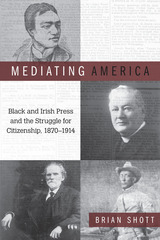
Until recently, print media was the dominant force in American culture. The power of the paper was especially true in minority communities. African Americans and European immigrants vigorously embraced the print newsweekly as a forum to move public opinion, cohere group identity, and establish American belonging.
Mediating America explores the life and work of T. Thomas Fortune and J. Samuel Stemons as well as Rev. Peter C. Yorke and Patrick Ford—respectively two African American and two Irish American editor/activists in the late nineteenth and early twentieth centuries. Historian Brian Shott shows how each of these “race men” (the parlance of the time) understood and advocated for his group’s interests through their newspapers. Yet the author also explains how the newspaper medium itself—through illustrations, cartoons, and photographs; advertisements and page layout; and more—could constrain editors’ efforts to guide debates over race, religion, and citizenship during a tumultuous time of social unrest and imperial expansion.
Black and Irish journalists used newspapers to recover and reinvigorate racial identities. As Shott proves, minority print culture was a powerful force in defining American nationhood.

Happel primarily lived and worked in the vigorous port city of Hamburg, which was a “media center” in terms of the access it offered to a wide library of books in public and private collections. Hamburg’s port status meant it buzzed with news and information, and Happel drew on this flow of data in his novels. His books deal with many topics of current interest—national identity formation, gender and sexualities, Western European encounters with neighbors to the East, confrontations with non-European and non-Western powers and cultures—and they feature multiple media, including news reports, news collections, and travel writings. As a result, Happel’s use of contemporary source material in his novels feeds our current interest in the impact of the production of knowledge on seventeenth-century narrative. Mediating Culture in the Seventeenth-Century German Novel explores the narrative wealth and multiversity of Happel’s work, examines Happel’s novels as illustrative of seventeenth-century novel writing in Germany, and investigates the synergistic relationship in Happel’s writings between the booming print media industry and the evolution of the German novel.
Daniel investigates coordinated teen pregnancy prevention efforts within federal political discourse, along with public policy, popular culture, national advocacy, and local initiatives, revealing the evidence of this transformation. In the 1970s and 1980s, political leaders from both parties used teen pregnancy to strengthen their attacks on racialized impoverished communities. With a new welfare policy in 1996 that rhetoric moved toward blaming teen pregnancy—seemingly in a race- and class-neutral way—on the teens who engaged in sex prematurely and irresponsibly. Daniel effectively illustrates that the construction of teen pregnancy as an individual's problem has been a key component in a neoliberal agenda that frees the government from the responsibility of addressing systemic problems of poverty, lack of access to education, ongoing structural racism, and more.
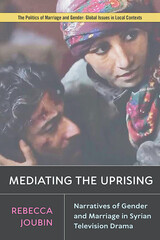
While for some screenwriters a return to pre-2011 life would be welcome after so much bloodshed, others advocated profound cultural and social transformation, instead. They employed marriage and gender metaphors in the stories they wrote to engage in political critique, even at the risk of creating marketing difficulties for the shows or they created escapist stories such as transnational adaptations and Old Damascus tales. Serving as heritage preservation, Mediating the Uprising underscores that television drama creators in Syria have many ways of engaging in protest, with gender and marriage at the heart of the polemic.
Medicalized Masculinities considers how these threads in scholarship failed to consider the male body adequately and presents cutting-edge research into the definition and regulation of masculinity by medicine. Renowned health and gender studies experts examine medicalized conditions such as balding, aging, and other dimensions of the life cycle in the tradition of the sociology of health and gender.

When Jacquelyn S. Litt interviewed African-American and Jewish women who raised their children in the 1930s and 1940s, she found that these women responded to experts' advice in ways uniquely shaped by their ethnicity, race, and class. For middle-class African-American and Jewish women, medicalization took place in ethnically/racially segregated networks and functioned as a collectively held strategy for social advance as much as a set of technical practices for raising healthy children. For poor, single African-American mothers, everyday networks offered limited access to medical institutions or mainstream norms. Medical discourse was largely controlled by white women and men, which left these women disempowered in medical institutions and marginal to dominant definitions of acceptable mothering.
Litt's book is enriched with many narratives from the mothers themselves. Both the women's voices and her acute sociological research bring to light how medicalized motherhood, while not the single cause of difference and inequality among the women, was a site where they were produced.
A provocative new approach to medieval culture
In Medieval Identity Machines, Jeffrey J. Cohen examines the messiness, permeability, and perversity of medieval bodies, arguing that human identity always exceeds the limits of the flesh. Combining critical theory with a rigorous reading of medieval texts, Cohen asks if the category “human” isn’t too small to contain the multiplicity of identities. As such, this book is the first to argue for a “posthuman” Middle Ages and to make extensive use of the philosophical writings of Gilles Deleuze to rethink the medieval.
Among the topics that Cohen covers are the passionate bond between men and horses in chivalric training; the interrelation of demons, celibacy, and colonialism in an Anglo-Saxon saint’s life; Lancelot’s masochism as envisioned by Chrétien de Troyes; the voice of thunder echoing from Margery Kempe; and the fantasies that sustained some dominant conceptions of race. This tour of identity—in all its fragility and diffusion—illustrates the centrality of the Middle Ages to theory as it enhances our understanding of self, embodiment, and temporality in the medieval world.
Interprets space and place in the medieval era.
Interprets space and place in the medieval era.
A glance at medieval maps tells us that cartographers of the Middle Ages divided space differently than we do today. In the great mappae mundi, for instance, Jerusalem takes center stage, with an image of the crucified Christ separating one place from another. The architects of medieval cathedrals manipulated space to clarify the roles and status of all who entered. Even in the most everyday context, space was allotted according to gender and class and was freighted with infinitely subtle meanings. The contributors to this volume cross disciplinary and theoretical boundaries to read the words, metaphors, images, signs, poetic illusions, and identities with which medieval men and women used space and place to add meaning to the world.Contributors: Kathleen Biddick, U of Notre Dame; Charles Burroughs, SUNY, Binghamton; Michael Camille, U of Chicago; Tom Conley, Harvard U; Donnalee Dox, U of Arizona; Jody Enders, U of California, Santa Barbara; Valerie K. J. Flint, U of Hull, UK; Andrzej Piotrowski, U of Minnesota; Daniel Lord Smail, Fordham U.Barbara A. Hanawalt is King George III Professor of British History at Ohio State University. Michal Kobialka is associate professor of theatre at University of Minnesota.

Rare is the person who has never known the feelings of apathy, sorrow, and uselessness that characterize the affliction known as melancholy. In this book, one of Europe's leading intellectuals shows that melancholy is not only a psychological condition that affects individuals but also a social and cultural phenomenon that can be of considerable help in understanding the modern middle class. His larger topic is, in fact, modernity in general.
Lepenies focuses not on what melancholy is but on what it means when people claim to be melancholy. His aim is to examine the origin and spread of the phenomenon with relation to particular social milieux, and thus he looks at a variety of historical manifestations: the fictional utopian societies of the Renaissance, the ennui of the French aristocracy in the seventeenth century, the cult of inwardness and escapism among the middle class in eighteenth-century Germany. In each case he shows that the human condition is shaped by historical and societal forces--that apathy, boredom, utopian idealism, melancholy, inaction, and excessive reflection are the correlates of class-wide powerlessness and the failure of purposeful efforts.
Lepenies makes inventive use of an extraordinary range of sociological, philosophical, and literary sources, from Robert Burton's Anatomy of Melancholy to the ideas of contemporary theorists such as Robert K. Merton and Arnold Gehlen. His study gains added richness from its examination of writers whose works express the melancholy of entire social classes--writers such as La Rochefoucauld, Goethe, and Proust. In his masterly analysis of these diverse ideas and texts, he illuminates the plight of people who have been cast aside by historical change and shows us the ways in which they have coped with their distress. Historians, sociologists, psychologists, students of modern literature, indeed anyone interested in the problems of modernity will want to read this daring and original book.
Concern with memory permeated Roman literature, history, rhetorical training, and art and architecture. This is the first book to look at the phenomenon from a variety of perspectives, including cognitive science. There is no orthodoxy in memory studies and the approaches are both empirical and theoretical. A central issue is: who and what preserved and shaped cultural memory in Rome, and how did that process work? Areas and subjects covered include the Romans' view of the changing physical fabric of the city, monuments (by etymology related to memory) such as the Arch of Constantine, memory and the Roman triumph, Roman copies of Greek sculpture and their relation to memory, the importance of written information and of continuing process, the creation of memory in Republican memoirs and Flavian poetry, the invention of traditions, and the connection of cultural and digital memory.
The ten chapters present original findings that complement earlier scholarship from the perspective of memory and open up new horizons for inquiry. The introduction by volume editor Karl Galinsky situates the work within current studies on cultural and social memory, and the concluding chapter by Daniel Libeskind provides the perspective of a contemporary practitioner.
Additional contributors include Richard Jenkyns, Harriet I. Flower, T. P. Wiseman, Karl-J. Hölkeskamp, Gianpiero Rosati, Diane Favro, Jessica Hughes, Anna Anguissola, Lisa Marie Mignone, and Bernard Frischer.
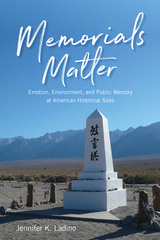
In Memorials Matter, author Jennifer Ladino investigates the natural and physical environments of seven diverse National Park Service (NPS) sites in the American West and how they influence emotions about historical conflict and national identity. Chapters center around the region’s diverse inhabitants (Mexican, Chinese, Japanese, African, and Native Americans) and the variously traumatic histories these groups endured—histories of oppression, exploitation, incarceration, slavery, and genocide. Drawing on material ecocritical theory, Ladino emphasizes the ideological and political importance of memorials and how they evoke visceral responses that are not always explicitly “storied,” but nevertheless matter in powerful ways.
In this unique blend of narrative scholarship and critical theory, Ladino demonstrates how these memorial sites and their surrounding landscapes, combined with written texts, generate emotion and shape our collective memory of traumatic events. She urges us to consider our everyday environments and to become attuned to features and feelings we might have otherwise overlooked.
These case studies present a new and creative synthesis of the multiple meanings of memory and representation within the context of contemporary perceptions of truth.
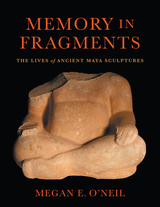
An exploration of how the ancient Maya engaged with their history by using, altering, and burying stone sculptures.
For the ancient Maya, monumental stone sculptures were infused with agency. As they were used, reused, altered, and buried, such sculptures retained ceremonial meaning. In Memory in Fragments, Megan E. O'Neil explores how ancient Maya people engaged with history through these sculptures, as well as how they interacted with the stones themselves over the course of the sculptures’ long “lives.” Considering Maya religious practices, historiography, and conceptions of materials and things, O’Neil explores how Maya viewers perceived sculptures that were fragmented, scarred, burned, damaged by enemies, or set in unusual locations. In each case, she demonstrates how different human interactions, amid dynamic religious, political, and historical contexts, led to new episodes in the sculptures' lives.
A rare example of cross-temporal and geographical work in this field, Memory in Fragments both compares sculptures within ancient Maya culture across Honduras, Guatemala, Mexico, and Belize over hundreds of years and reveals how memory may accrue around and be evoked in material remains.
Contributors: David Berry, Ina Blom, Wolfgang Ernst, Matthew Fuller, Andrew Goffey, Liv Hausken, Yuk Hui, Trond Lundemo, Adrian Mackenzie, Sónia Matos, Richard Mills, Jussi Parikka, Eivind Røssaak, Stuart Sharples, Tiziana Terranova, Pasi Väliaho.
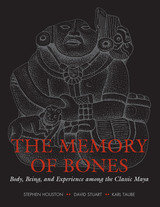
All of human experience flows from bodies that feel, express emotion, and think about what such experiences mean. But is it possible for us, embodied as we are in a particular time and place, to know how people of long ago thought about the body and its experiences? In this groundbreaking book, three leading experts on the Classic Maya (ca. AD 250 to 850) marshal a vast array of evidence from Maya iconography and hieroglyphic writing, as well as archaeological findings, to argue that the Classic Maya developed a coherent approach to the human body that we can recover and understand today.
The authors open with a cartography of the Maya body, its parts and their meanings, as depicted in imagery and texts. They go on to explore such issues as how the body was replicated in portraiture; how it experienced the world through ingestion, the senses, and the emotions; how the body experienced war and sacrifice and the pain and sexuality that were intimately bound up in these domains; how words, often heaven-sent, could be embodied; and how bodies could be blurred through spirit possession.
From these investigations, the authors convincingly demonstrate that the Maya conceptualized the body in varying roles, as a metaphor of time, as a gendered, sexualized being, in distinct stages of life, as an instrument of honor and dishonor, as a vehicle for communication and consumption, as an exemplification of beauty and ugliness, and as a dancer and song-maker. Their findings open a new avenue for empathetically understanding the ancient Maya as living human beings who experienced the world as we do, through the body.


Each chapter, written by a national expert, is based on months and even years of interviews with male sex workers, including young boys and elderly men in some countries. The workers discuss why they do the work, what it is like, and what their behavior means to them. For example, those who have regular sex with men often strenuously affirm their heterosexuality, though there is considerable variety in their attitudes.
Each chapter relates the experiences of the male sex workers to the political economy of their neighborhood and assesses the implications of their work for HIV transmission and the AIDS epidemic. The researchers and the sex workers discuss the value of different kinds of health promotion interventions.
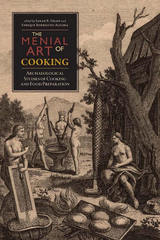
This book examines techniques and technologies of food preparation, the spaces where food was cooked, the relationship between cooking and changes in suprahousehold economies, the religious and symbolic aspects of cooking, the relationship between cooking and social identity, and how examining foodways provides insight into social relations of production, distribution, and consumption. Contributors use a wide variety of evidence-including archaeological data; archival research; analysis of ceramics, fauna, botany, glass artifacts, stone tools, murals, and painted ceramics; ethnographic analogy; and the distribution of artifacts across space-to identify signs of cooking and food processing left by ancient cooks.
The Menial Art of Cooking is the first archaeological volume focused on cooking and food preparation in prehistoric and historic settings around the world and will interest archaeologists, social anthropologists, sociologists, and other scholars studying cooking and food preparation or subsistence.

Stephen Fredman illuminates the relationship of Jewish intellectuals to modernity through a close look at Reznikoff's life and writing. He shows that when we regard the Objectivists as modern Jewish poets, we can see more clearly their distinctiveness as modernists and the reasons for their profound impact upon later poets, such as Allen Ginsberg and Charles Bernstein. Fredman also argues that to understand Reznikoff's work more completely, we must see it in the context of early, nonsectarian attempts to make the study of Jewish culture a force in the construction of a more pluralistic society. According to Fredman, then, the indelible images in Reznikoff's poetry open a window onto the vexed but ultimately successful entry of Jewish immigrants and their children into the mainstream of American intellectual life.
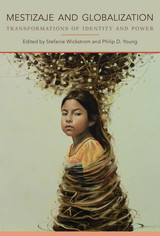
Mestizaje and Globalization presents perspectives on the underlying transformation of identity and power associated with the term during times of great change in the Americas. The volume offers a comprehensive and empirically diverse collection of insights concerning mestizaje’s complex relationship with indigeneity, the politics of ethnic identity, transnational social movements, the aesthetic of cultural production, development policies, and capitalist globalization, with particular attention to cases in Latin America and the United States.
Beyond the narrow and often inadequate meaning of mestizaje as biological and racial mixing, the concept deserves an innovative theoretical consideration due to its multidimensional, multifaceted character and its resilience as an ideological construct. The contributors argue that historical analyses of mestizaje do not sufficiently understand contemporary ways that racism, ethnic discrimination, and social injustice intermingle with current discourse and practice of cultural recognition and multiculturalism in the Americas.
Mestizaje and Globalization contributes to an emerging multidisciplinary effort to explore how identities are imposed, negotiated, and reconstructed. The chapter authors clearly set forth the issues and obstacles that indigenous peoples and subjugated minorities face, as well as the strategies they have employed to gain empowerment in the face of globalization.
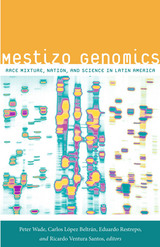
Drawing on ethnographic research in Brazil, Colombia, and Mexico, the contributors to Mestizo Genomics explore how the concepts of race, ethnicity, nation, and gender enter into and are affected by genomic research. In Latin America, national identities are often based on ideas about mestizaje (race mixture), rather than racial division. Since mestizaje is said to involve relations between European men and indigenous or African women, gender is a key factor in Latin American genomics and in the analyses in this book. Also important are links between contemporary genomics and recent moves toward official multiculturalism in Brazil, Colombia, and Mexico. One of the first studies of its kind, Mestizo Genomics sheds new light on the interrelations between "race," identity, and genomics in Latin America.
Contributors. Adriana Díaz del Castillo H., Roosbelinda Cárdenas, Vivette García Deister, Verlan Valle Gaspar Neto, Michael Kent, Carlos López Beltrán, María Fernanda Olarte Sierra, Eduardo Restrepo, Mariana Rios Sandoval, Ernesto Schwartz-Marín, Ricardo Ventura Santos, Peter Wade

The Methamphetamine Industry in America describes the reality that the methamphetamine industry is a social phenomenon connecting local, national, and international communities and markets. The book details the results of a groundbreaking three-stage study, part of a joint initiative of the National Institute on Drug Abuse and the National Institute of Justice, in which police agencies across the United States were surveyed and their responses used to identify likely areas of study. The authors then visited these areas to observe and interview local participants, from users and dealers to law enforcement officers and clinical treatment workers.
Through the eyes and words of these participants, the book tells the story of the evolution of methamphetamine markets in the United States over the past several years, given changes in public policies and practices and changing public opinion about methamphetamine. The authors look closely at how the markets are part of a larger industry, how they are socially organized, and how they operate. They also consider the relationships among the people involved and those around them, and the national, regional, and local culture of the markets. Their work demonstrates the importance of understanding the business of methamphetamine—and by extension other drugs in society—through a lens that focuses on social behavior, social relationships, and the cultural elements that shape the organization and operation of this illicit but effective industry.
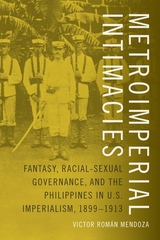

Up to 750,000 Mexican American men served in World War II, earning more Medals of Honor and other decorations in proportion to their numbers than any other ethnic group. Mexican American women entered the workforce on the home front, supporting the war effort and earning good wages for themselves and their families. But the contributions of these men and women have been largely overlooked as American society celebrates the sacrifices and achievements of the "Greatest Generation." To bring their stories out of the shadows, this book gathers eleven essays that explore the Mexican American experience in World War II from a variety of personal and scholarly perspectives.
The book opens with accounts of the war's impact on individuals and families. It goes on to look at how the war affected school experiences; how Mexican American patriotism helped to soften racist attitudes; how Mexican Americans in the Midwest, unlike their counterparts in other regions of the country, did not experience greater opportunities as a result of the war; how the media exposed racist practices in Texas; and how Mexican nationals played a role in the war effort through the Bracero program and through the Mexican government's championing of Mexican Americans' rights. As a whole, the collection reveals that World War II was the turning point that gave most Mexican Americans their first experience of being truly included in American society, and it confirms that Mexican Americans of the "Greatest Generation" took full advantage of their new opportunities as the walls of segregation fell.
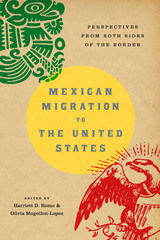
Borderlands migration has been the subject of considerable study, but the authorship has usually reflected a north-of-the-border perspective only. Gathering a transnational group of prominent researchers, including leading Mexican scholars whose work is not readily available in the United States and academics from US universities, Mexican Migration to the United States brings together an array of often-overlooked viewpoints, reflecting the interconnectedness of immigration policy.
This collection’s research, principally empirical, reveals significant aspects of labor markets, family life, and educational processes. Presenting recent data and accessible explanations of complex histories, the essays capture the evolving legal frameworks and economic implications of Mexico-US migrations at the national and municipal levels, as well as the experiences of receiving communities in the United States. The volume includes illuminating reports on populations ranging from undocumented young adults to elite Mexican women immigrants, health-care rights, Mexico’s incorporation of return migration, the impact of Deferred Action for Childhood Arrivals on higher education, and the experiences of young children returning to Mexican schools after living in the United States. Reflecting a multidisciplinary approach, the list of contributors includes anthropologists, demographers, economists, educators, policy analysts, and sociologists.
Underscoring the fact that Mexican migration to the United States is unique and complex, this timely work exemplifies the cross-border collaboration crucial to the development of immigration policies that serve people in both countries.

Every day, 40,000 commuters cross the U.S. Mexico border at Tijuana San Diego to go to work. Untold numbers cross illegally. Since NAFTA was signed into law, the border has become a greater obstacle for people moving between countries. Transnational powers have exerted greater control over the flow of goods, services, information, and people.
Mexican Voices of the Border Region examines the flow of people, commercial traffic, and the development of relationships across this border. Through first-person narratives, Laura Velasco Ortiz and Oscar F. Contreras show that since NAFTA, Tijuana has become a dynamic and significant place for both nations in terms of jobs and residents. The authors emphasize that the border itself has different meanings whether one crosses it frequently or not at all. The interviews probe into matters of race, class, gender, ethnicity, place, violence, and political economy as well as the individual's sense of agency.
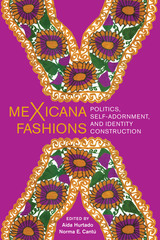
2020 Second Place, Best Nonfiction Multi Author, International Latino Book Awards
Collecting the perspectives of scholars who reflect on their own relationships to particular garments, analyze the politics of dress, and examine the role of consumerism and entrepreneurialism in the production of creating and selling a style, meXicana Fashions examines and searches for meaning in these visible, performative aspects of identity.
Focusing primarily on Chicanas but also considering trends connected to other Latin American communities, the authors highlight specific constituencies that are defined by region (“Tejana style,” “L.A. style”), age group (“homie,” “chola”), and social class (marked by haute couture labels such as Carolina Herrera and Oscar de la Renta). The essays acknowledge the complex layers of these styles, which are not mutually exclusive but instead reflect a range of intersections in occupation, origin, personality, sexuality, and fads. Other elements include urban indigenous fashion shows, the shifting quinceañera market, “walking altars” on the Days of the Dead, plus-size clothing, huipiles in the workplace, and dressing in drag. Together, these chapters illuminate the full array of messages woven into a vibrant social fabric.
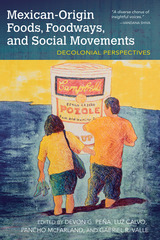
This collection of new essays offers groundbreaking perspectives on the ways that food and foodways serve as an element of decolonization in Mexican-origin communities.
The writers here take us from multigenerational acequia farmers, who trace their ancestry to Indigenous families in place well before the Oñate Entrada of 1598, to tomorrow’s transborder travelers who will be negotiating entry into the United States. Throughout, we witness the shifting mosaic of Mexican-origin foods and foodways in the fields, gardens, and kitchen tables from Chiapas to Alaska.
Global food systems are also considered from a critical agroecological perspective, including the ways colonialism affects native biocultural diversity, ecosystem resilience, and equality across species, human groups, and generations.
Mexican-Origin Foods, Foodways, and Social Movements is a major contribution to the understanding of the ways that Mexican-origin peoples have resisted and transformed food systems. It will animate scholarship on global food studies for years to come.

A Choice Outstanding Academic Title of the Year
According to census projections, by 2050 nearly one in three U.S. residents will be Latino, and the overwhelming majority of these will be of Mexican descent. This dramatic demographic shift is reshaping politics, culture, and fundamental ideas about American identity. Neil Foley, a leading Mexican American historian, offers a sweeping view of the evolution of Mexican America, from a colonial outpost on Mexico’s northern frontier to a twenty-first-century people integral to the nation they have helped build.
“Compelling…Readers of all political persuasions will find Foley’s intensively researched, well-documented scholarly work an instructive, thoroughly accessible guide to the ramifications of immigration policy.”
—Publishers Weekly
“For Americans long accustomed to understanding the country’s development as an east-to-west phenomenon, Foley’s singular service is to urge us to tilt the map south-to-north and to comprehend conditions as they have been for some time and will likely be for the foreseeable future…A timely look at and appreciation of a fast-growing demographic destined to play an increasingly important role in our history.”
—Kirkus Reviews

Micro-Politics was first published in 1994. Minnesota Archive Editions uses digital technology to make long-unavailable books once again accessible, and are published unaltered from the original University of Minnesota Press editions.
Patricia S. Mann explains our current period as a time of social transformation resulting from an "unmooring" of women, men, and children from the nuclear family, gender relations having replaced economic relations as the primary site of social tension and change in our lives. The feminist movement has evolved, according to Mann, into a popularly based postfeminist struggle to reconstruct relationships between women and men within everyday contexts of work, family, education, and politics.
Mann formulates a "postmodern" theory of political agency, utilizing it to explain political events such as the Hill-Thomas Senate hearings and their social aftermath. While liberal and progressive theories have explained political agency in terms of individual or group forms of identity, Mann suggests another alternative. Individuals such as Anita Hill are drawn into socially meaningful struggles in the context of their daily lives-as we all are potentially participating in micro-political forms of activism in a variety of institutional contexts. These dynamic micropolitical situations involve intersecting dimensions of race, class, and sexuality, as well as gender. Within specific conflicts, individuals rearticulate their notions of desire and responsibility, and their expectations for recognition and reward; according to Mann political agency resides in these choices. Addressing some of the most important controversies in political philosophy, Mann weaves together strands of the "participatory politics" of the 1960s and the multicultural politics of the 1990s. In doing so, she offers a new basis for understanding social change.
Organized in the 1980s and ’90s by dozens of American cities, late-night basketball leagues were designed for social intervention, risk reduction, and crime prevention targeted at African American youth and young men. In Midnight Basketball, Hartmann traces the history of the program and the policy transformations of the period, while exploring the racial ideologies, cultural tensions, and institutional realities that shaped the entire field of sports-based social policy. Drawing on extensive fieldwork, the book also brings to life the actual, on-the-ground practices of midnight basketball programs and the young men that the programs intended to serve. In the process, Midnight Basketball offers a more grounded and nuanced understanding of the intricate ways sports, race, and risk intersect and interact in urban America.
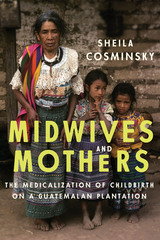
The World Health Organization is currently promoting a policy of replacing traditional or lay midwives in countries around the world. As part of an effort to record the knowledge of local midwives before it is lost, Midwives and Mothers explores birth, illness, death, and survival on a Guatemalan sugar and coffee plantation, or finca, through the lives of two local midwives, Doña Maria and her daughter Doña Siriaca, and the women they have served over a forty-year period.
By comparing the practices and beliefs of the mother and daughter, Sheila Cosminsky shows the dynamics of the medicalization process and the contestation between the midwives and biomedical personnel, as the latter try to impose their system as the authoritative one. She discusses how the midwives syncretize, integrate, or reject elements from Mayan, Spanish, and biomedical systems. The midwives’ story becomes a lens for understanding the impact of medicalization on people’s lives and the ways in which women’s bodies have become contested terrain between traditional and contemporary medical practices. Cosminsky also makes recommendations for how ethno-obstetric and biomedical systems may be accommodated, articulated, or integrated. Finally, she places the changes in the birthing system in the larger context of changes in the plantation system, including the elimination of coffee growing, which has made women, traditionally the primary harvesters of coffee beans, more economically dependent on men.

Migrant Deaths in the Arizona Desert addresses the tragic results of government policies on immigration. The contributors consist of a multidisciplinary group who are dedicated to the thousands of men, women, and children who have lost their lives while crossing the desert in search of a better life. Each chapter in this important new volume seeks answers to migrant deaths, speaking to the complexity of this tragedy via a range of community and scholarly approaches.
The activists, artists, and scholars included in this volume confront migrant deaths and disappearances in the U.S.-Mexico borderlands as they reflect on the startling realities of death, migration, and public policy. Chapters touch on immigration and how it is studied, community responses to crisis, government policy, definitions of citizenship, and the role of the arts and human expression in response to state violence. Collectively the contributions throw a spotlight on the multivocal, transdisciplinary efforts to address the historical silence surrounding this human tragedy.
Despite numerous changes in the migration processes and growing attention to the problem, many people who attempt border crossings continue to disappear and die. This book offers a timely exploration of the ways that residents, scholars, activists, and artists are responding to this humanitarian crisis on their doorstep.
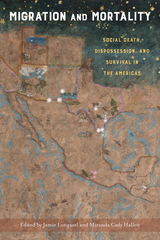
Death threatens migrants physically during perilous border crossings between Central and North America, but many also experience legal, social, and economic mortality. Rooted in histories of colonialism and conquest, exclusionary policies and practices deliberately take aim at racialized, dispossessed people in transit. Once in the new land, migrants endure a web of systems across every facet of their world—work, home, healthcare, culture, justice—that strips them of their personhood, denies them resources, and creates additional obstacles that deprive them of their ability to live fully.
As laws and policies create ripe conditions for the further extraction of money, resources, and labor power from the dispossessed, the contributors to this vibrant anthology, Migration and Mortality, examine restrictive immigration policies and the broader capitalist systems of exploitation and inequality while highlighting the power of migrants’ collective resistance and resilience.
The case studies in this timely collection explore border deaths, detention economies, asylum seeking, as well as the public health and mental health of migrants. Ultimately, these examples of oppression and survival contribute to understanding broader movements for life and justice in the Americas.
Constant migration is a worldwide phenomenon that creates sharp divisions between those who accept the need for migrants and welcome the contributions they make and those who oppose them on xenophobic grounds. Guy Arnold provides a comprehensive survey of the consequences of migration.
Arnold studies both the massive internal migrations in China and India that drive economic development and the influx of cheap labour into the advanced economies of the USA and EU. He shows that migrants are essential to advanced countries, filling skills gaps and bolstering ageing and static populations. He argues that the constant flow of people in all directions should be welcomed as a positive assault upon outdated, narrow nationalism.
Packed with statistics that support the argument that migration is a force for positive change, Arnold's analysis will be an excellent resource for journalists, policy makers and students of sociology, human geography and anthropology.
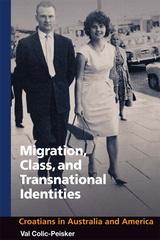
Val Colic-Peisker harnesses concepts and theories from sociology, anthropology, and political science to compare the vastly different experiences of two Croatian immigrant cohorts in the city of Perth, Western Australia. The populations explored represent an earlier group of working-class migrants arriving from communist Yugoslavia from the 1950s to 1970s and a later group of urban professionals arriving in the 1980s and 1990s as 'independent' or skills-based migrants. This latter group integrated into professional ranks but also used their Australian experience as a stepping stone in becoming part of a highly mobile global professional middle class.
Employing a refined theoretical analysis, this rich ethnography challenges the domination of the ethnic perspective in migration studies and the idea of ethnic community itself. It emphasizes the importance of class, focusing on the intersection of class, ethnicity, and gender in the process of migration, migrant incorporation, and transnationalism. In theorizing the connection of the two migrant cohorts with their native Croatia, the study introduces concepts of "ethnic" and "cosmopolitan" transnationalism as two distinctive experiences mediated by class.
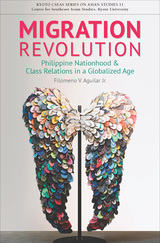
The global nomadism of Filipino workers brought about some fundamental reorientations. It revolutionized Philippine society, reignited a sense of nationhood, imposed new demands on the state, reconfigured the class structure, and transnationalized class and other social relations, even as it deterritorialized the state and impacted the destinations of migrant workers.
Philippine foreign policy now takes surprising turns in consideration of migrant workers and Filipinos living abroad. Many tertiary education institutions aim deliberately at the overseas employability of local graduates. And the “Fil-foreign” offspring of unions with partners from other nationalities add a new inflection to Filipino identity.
Ranging from oral history projects to the asylum process to calls for decolonial justice, the contributors’ analyses illuminate how migrants’ and refugees’ personal narratives influence both perceptions and policies. Their merger of perspectives provides a nuanced understanding of migration and emphasizes the importance of how storytelling can foster empathy, challenge stereotypes, and drive social change. At the same time, the essays center migrants’ and refugees’ voices within public debates and in work done to humanize the reality they face.
Original and multifaceted, Migration Stories provides a vital addition to how we study and frame immigration.
With the rise of drones and computer-controlled weapons, the line between war and video games continues to blur. In this book, the authors trace how the realities of war are deeply inflected by their representation in popular entertainment. War games and other media, in turn, feature an increasing number of weapons, tactics, and threat scenarios from the War on Terror.
While past analyses have emphasized top-down circulation of pro-military ideologies through government public relations efforts and a cooperative media industry, The Military-Entertainment Complex argues for a nonlinear relationship, defined largely by market and institutional pressures. Tim Lenoir and Luke Caldwell explore the history of the early days of the video game industry, when personnel and expertise flowed from military contractors to game companies; to a middle period when the military drew on the booming game industry to train troops; to a present in which media corporations and the military influence one another cyclically to predict the future of warfare.
In addition to obvious military-entertainment titles like America’s Army, Lenoir and Caldwell investigate the rise of best-selling franchise games such as Call of Duty, Battlefield, Medal of Honor, and Ghost Recon. The narratives and aesthetics of these video games permeate other media, including films and television programs. This commodification and marketing of the future of combat has shaped the public’s imagination of war in the post-9/11 era and naturalized the U.S. Pentagon’s vision of a new way of war.

These conflicting narratives of entrepreneurial creativity and digital immorality operate to quell the growing threat represented by millennials’ media agency. With fan activities becoming ever more visible on social media platforms including YouTube, Facebook, LiveJournal, Twitter, Polyvore, and Tumblr, the fan has become the avatar of our digital hopes and fears.
In an ambitious study encompassing a wide range of media texts, including popular television series like Kyle XY, Glee, Gossip Girl, Veronica Mars, and Pretty Little Liars and online works like The Lizzie Bennet Diaries, as well as fan texts from blog posts and tweets to remix videos, YouTube posts, and image-sharing streams, author Louisa Ellen Stein traces the circulation of the contradictory tropes of millennial hope and millennial noir. Looking at what millennials do with digital technology demonstrates the molding impact of commercial representations, and at the same time reveals how millennials are undermining, negotiating, and changing those narratives.
This generation—and the fans it represents—is actively transforming the media landscape into a dynamic, culturally transgressive space of collective authorship. Offering a rich and complex vision of the relationship between fandom and millennial culture, Millennial Fandom will interest fans, millennials, students, and scholars of contemporary media culture alike.

It’s the American dream—unfettered freedom to follow our ambitions, to forge our identities, to become self-made. But what if our culture of limitless self-fulfillment is actually making millions desperately ill? One of our leading interpreters of modernity and nationalism, Liah Greenfeld argues that we have overlooked the connection between egalitarian society and mental illness. Intellectually fearless, encompassing philosophy, psychology, and history, Mind, Modernity, Madness challenges the most cherished assumptions about the blessings of living in a land of the free.
Modern nationalism, says Greenfeld, rests on bedrock principles of popular sovereignty, equality, and secularism. Citizens of the twenty-first century enjoy unprecedented freedom to become the authors of their personal destinies. Empowering as this is, it also places them under enormous psychic strain. They must constantly appraise their identities, manage their desires, and calibrate their place within society. For vulnerable individuals, this pressure is too much. Training her analytic eye on extensive case histories in manic depression and schizophrenia, Greenfeld contends that these illnesses are dysfunctions of selfhood caused by society’s overburdening demands for self-realization. In her rigorous diagnosis, madness is a culturally constituted malady.
The culminating volume of Greenfeld’s nationalism trilogy, Mind, Modernity, Madness is a tour de force in the classic tradition of Émile Durkheim—and a bold foray into uncharted territory. Often counter-intuitive, always illuminating, Mind, Modernity, Madness presents a many-sided view of humanity, one that enriches our deepest understanding of who we are and what we aspire to be.
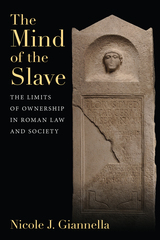
In order to place Roman jurists in conversation with both technical and literary sources, Giannella grounds this study in philology and argues that conceptions of the mind of the slave were at the heart of legal and cultural debates about the nature of slavery and ownership. It also contributes to a wider debate about selfhood and autonomy, since philosophers often used the figure of the slave as a representation of humanity as its limits.

A Choice Outstanding Academic Title of the Year
In Minds on Fire, Mark C. Carnes shows how role-immersion games channel students’ competitive (and sometimes mischievous) impulses into transformative learning experiences. His discussion is based on interviews with scores of students and faculty who have used a pedagogy called Reacting to the Past, which features month-long games set during the French Revolution, Galileo’s trial, the partition of India, and dozens of other epochal moments in disciplines ranging from art history to the sciences. These games have spread to over three hundred campuses around the world, where many of their benefits defy expectations.
“[Minds on Fire is] Carnes’s beautifully written apologia for this fascinating and powerful approach to teaching and learning in higher education. If we are willing to open our minds and explore student-centered approaches like Reacting [to the Past], we might just find that the spark of student engagement we have been searching for in higher education’s mythical past can catch fire in the classrooms of the present.”
—James M. Lang, Chronicle of Higher Education
“This book is a highly engaging and inspirational study of a ‘new’ technique that just might change the way educators bring students to learning in the 21st century.”
—D. D. Bouchard, Choice

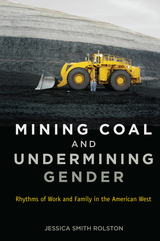
Though mining is an infamously masculine industry, women make up 20 percent of all production crews in Wyoming’s Powder River Basin—the largest coal-producing region in the United States. How do these women fit into a working culture supposedly hostile to females? This is what anthropologist Jessica Smith Rolston, herself a onetime mine worker and the daughter of a miner, set out to discover. Her answers, based on years of participant-observation in four mines and extensive interviews with miners, managers, engineers, and the families of mine employees, offer a rich and surprising view of the working “families” that miners construct. In this picture, gender roles are not nearly as straightforward—or as straitened—as stereotypes suggest.
Gender is far from the primary concern of coworkers in crews. Far more important, Rolston finds, is protecting the safety of the entire crew and finding a way to treat each other well despite the stresses of their jobs. These miners share the burden of rotating shift work—continually switching between twelve-hour day and night shifts—which deprives them of the daily rhythms of a typical home, from morning breakfasts to bedtime stories. Rolston identifies the mine workers’ response to these shared challenges as a new sort of constructed kinship that both challenges and reproduces gender roles in their everyday working and family lives.
Crews’ expectations for coworkers to treat one another like family and to adopt an “agricultural” work ethic tend to minimize gender differences. And yet, these differences remain tenacious in the equation of masculinity with technical expertise, and of femininity with household responsibilities. For Rolston, such lingering areas of inequality highlight the importance of structural constraints that flout a common impulse among men and women to neutralize the significance of gender, at home and in the workplace.
At a time when the Appalachian region continues to dominate discussion of mining culture, this book provides a very different and unexpected view—of how miners live and work together, and of how their lives and work reconfigure ideas of gender and kinship.

In Minor Troubles, Erin J. Rand investigates a series of controversies about youth sexuality and queerness from the early twenty-first century: adult concerns about teen sexting, the bullying and suicides of queer kids, trans youths’ access to gender-segregated bathrooms at school, and sex education. In the public deliberation and mediation of each of these controversies, the imagined qualities of childhood—innocence, vulnerability, nonsexuality, and, crucially, whiteness—are deployed by adults to justify the protection of children. However, these rhetorical figurations of childhood often produce material precarities for actual young people, especially youth of color and queer, trans, and gender-nonconforming youth.
Rand foregrounds the fundamental role of racialization in forming ideas about childhood, arguing that the image of innocent white childhood depends upon the dehumanization of racialized youth. Moreover, the rhetorical process of figuration produces vulnerability and constrains agency for real young people and creates cultural ideas about childhood that come to justify policies, discipline behaviors, regulate identities, control knowledges, and determine interventions that shape children’s lives, bodies, and experiences.
In Misbehaving Science, Aaron Panofsky traces the field of behavior genetics back to its origins in the 1950s, telling the story through close looks at five major controversies. In the process, Panofsky argues that persistent, ungovernable controversy in behavior genetics is due to the broken hierarchies within the field. All authority and scientific norms are questioned, while the absence of unanimously accepted methods and theories leaves a foundationless field, where disorder is ongoing. Critics charge behavior geneticists with political motivations; champions say they merely follow the data where they lead. But Panofsky shows how pragmatic coping with repeated controversies drives their scientific actions. Ironically, behavior geneticists’ struggles for scientific authority and efforts to deal with the threats to their legitimacy and autonomy have made controversy inevitable—and in some ways essential—to the study of behavior genetics.
In Misconceiving Merit, sociologists Mary Blair-Loy and Erin A. Cech uncover the cultural foundations of a paradox. On one hand, academic science, engineering, and math revere meritocracy, a system that recognizes and rewards those with the greatest talent and dedication. At the same time, women and some racial and sexual minorities remain underrepresented and often feel unwelcome and devalued in STEM. How can academic science, which so highly values meritocracy and objectivity, produce these unequal outcomes?
Blair-Loy and Cech studied more than five hundred STEM professors at a top research university to reveal how unequal and unfair outcomes can emerge alongside commitments to objectivity and excellence. The authors find that academic STEM harbors dominant cultural beliefs that not only perpetuate the mistreatment of scientists from underrepresented groups but hinder innovation. Underrepresented groups are often seen as less fully embodying merit compared to equally productive white and Asian heterosexual men, and the negative consequences of this misjudgment persist regardless of professors’ actual academic productivity. Misconceiving Merit is filled with insights for higher education administrators working toward greater equity as well as for scientists and engineers striving to change entrenched patterns of inequality in STEM.
Lies and inaccurate information are as old as humanity, but never before have they been so easy to spread. Each moment of every day, the Internet and broadcast media purvey misinformation, either deliberately or accidentally, to a mass audience on subjects ranging from politics to consumer goods to science and medicine, among many others. Because misinformation now has the potential to affect behavior on a massive scale, it is urgently important to understand how it works and what can be done to mitigate its harmful effects.
Misinformation and Mass Audiences brings together evidence and ideas from communication research, public health, psychology, political science, environmental studies, and information science to investigate what constitutes misinformation, how it spreads, and how best to counter it. The expert contributors cover such topics as whether and to what extent audiences consciously notice misinformation, the possibilities for audience deception, the ethics of satire in journalism and public affairs programming, the diffusion of rumors, the role of Internet search behavior, and the evolving efforts to counteract misinformation, such as fact-checking programs. The first comprehensive social science volume exploring the prevalence and consequences of, and remedies for, misinformation as a mass communication phenomenon, Misinformation and Mass Audiences will be a crucial resource for students and faculty researching misinformation, policymakers grappling with questions of regulation and prevention, and anyone concerned about this troubling, yet perhaps unavoidable, dimension of current media systems.

Between 1961 and 1967 the United States Air Force buried 1,000 Minuteman Intercontinental Ballistic Missiles in pastures across the Great Plains. The Missile Next Door tells the story of how rural Americans of all political stripes were drafted to fight the Cold War by living with nuclear missiles in their backyards—and what that story tells us about enduring political divides and the persistence of defense spending.
By scattering the missiles in out-of-the-way places, the Defense Department kept the chilling calculus of Cold War nuclear strategy out of view. This subterfuge was necessary, Gretchen Heefner argues, in order for Americans to accept a costly nuclear buildup and the resulting threat of Armageddon. As for the ranchers, farmers, and other civilians in the Plains states who were first seduced by the economics of war and then forced to live in the Soviet crosshairs, their sense of citizenship was forever changed. Some were stirred to dissent. Others consented but found their proud Plains individualism giving way to a growing dependence on the military-industrial complex. Even today, some communities express reluctance to let the Minutemen go, though the Air Force no longer wants them buried in the heartland.
Complicating a red state/blue state reading of American politics, Heefner’s account helps to explain the deep distrust of government found in many western regions, and also an addiction to defense spending which, for many local economies, seems inescapable.

For example, Clarke studies corporations' plans for cleaning up oil spills in Prince William Sound prior to the Exxon Valdez debacle, and he finds that the accepted strategies were not just unrealistic but completely untenable. Although different organizations were required to have a cleanup plan for huge spills in the sound, a really massive spill was unprecedented, and the accepted policy was little more than a patchwork of guesses based on (mostly unsuccessful) cleanups after smaller accidents.
While we are increasingly skeptical of big organizations, we still have no choice but to depend on them for protection from large-scale disasters. We expect their specialists to tell the truth, and yet, as Clarke points out, reassuring rhetoric (under the guise of expert prediction) may have no basis in fact or truth because no such basis is attainable.
In uncovering the dangers of planning when implementation is a fantasy, Clarke concludes that society would be safer, smarter, and fairer if organizations could admit their limitations.
"An incursion into new territory written with insight and flair, Clarke's book achieves a revolution in understanding plans as an organizational activity-how they come about, why they go awry, and the often-disastrous disconnect between plans and an organization's ability to carry them out. A book that will fascinate general readers, administrators, organization theorists, and disaster buffs, Mission Improbable stands as a valuable companion volume to Pressman and Wildavsky's Implementation."—Diane Vaughan, author of The Challenger Launch Decision

Missouri has been likened to a “cave factory” because its limestone bedrock can be slowly dissolved by groundwater to form caverns, and the state boasts more than six thousand caves in an unbelievable variety of sizes, lengths, and shapes. Dwight Weaver has been fascinated by Missouri’s caves since boyhood and now distills a lifetime of exploration and research in a book that will equally fascinate readers of all ages.
Missouri Caves in History and Legend records a cultural heritage stretching from the end of the ice age to the twenty-first century. In a grand tour of the state’s darkest places, Weaver takes readers deep underground to shed light on the historical significance of caves, correct misinformation about them, and describe the ways in which people have used and abused these resources.
Weaver tells how these underground places have enriched our knowledge of extinct animals and early Native Americans. He explores the early uses of caves: for the mining of saltpeter, onyx, and guano; as sources of water; for cold storage; and as livestock shelters. And he tells how caves were used for burial sites and moonshine stills, as hideouts for Civil War soldiers and outlaws—revealing how Jesse James became associated with Missouri caves—and even as venues for underground dance parties in the late nineteenth century.
Bringing caves into the modern era, Weaver relates the history of Missouri’s “show caves” over a hundred years—from the opening of Mark Twain Cave in 1886 to that of Onyx Mountain Caverns in 1990—and tells of the men and women who played a major role in expanding the state’s tourism industry. He also tracks the hunt for the buried treasure and uranium ore that have captivated cave explorers, documents the emergence of organized caving, and explains how caves now play a role in wildlife management by providing a sanctuary for endangered bats and other creatures.
Included in the book is an overview of cave resources in twelve regions, covering all the counties that currently have recorded caves, as well as a superb selection of photos from the author’s extensive collection, depicting the history and natural features of these underground wonders. Missouri Caves in History and Legend is a riveting account that marks an important contribution to the state’s heritage and brings this world of darkness into the light of day.

Winner of a 2011 “Distinguished Achievement in Literature” award, Missouri Humanities Council
Civil War Missouri stood at the crossroads of America. As the most Southern-leaning state in the Middle West, Missouri faced a unique dilemma. The state formed the gateway between east and west, as well as one of the borders between the two contending armies. Moreover, because Missouri was the only slave state in the Great Interior, the conflicts that were tearing the nation apart were also starkly evident within the state. Deep divisions between Southern and Union supporters, as well as guerrilla violence on the western border, created a terrible situation for civilians who lived through the attacks of bushwhackers and Jayhawkers.
The documents collected in Missouri's War reveal what factors motivated Missourians to remain loyal to the Union or to fight for the Confederacy, how they coped with their internal divisions and conflicts, and how they experienced the end of slavery in the state. Private letters, diary entries, song lyrics, official Union and Confederate army reports, newspaper editorials, and sermons illuminate the war within and across Missouri's borders.
Missouri's War also highlights the experience of free and enslaved African Americans before the war, as enlisted Union soldiers, and in their effort to gain rights after the end of the war. Although the collection focuses primarily on the war years, several documents highlight both the national sectional conflict that led to the outbreak of violence and the effort to reunite the conflicting forces in Missouri after the war.
While mistrust can quickly ruin relationships and even dissolve extensive social ties, Carey shows that it might have other values. Drawing on fieldwork in Morocco’s High Atlas Mountains as well as comparative material from regions stretching from Eastern Europe to Melanesia, he examines the impact of mistrust on practices of conversation and communication, friendship and society, and politics and cooperation. In doing so, he demonstrates that trust is not the only basis for organizing human society and cooperating with others. The result is a provocative but enlightening work that makes us rethink social issues such as suspicion, doubt, and uncertainty.
The United States Census 2000 presents a twenty-first century America in which mixed-race marriages, cross-race adoption, and multiracial families in general are challenging the ethnic definitions by which the nation has historically categorized its population. Addressing a wide spectrum of questions raised by this rich new cultural landscape, Mixing It Up brings together the observations of ten noted voices who have experienced multiracialism first-hand.
From Naomi Zack's "American Mixed Race: The United States 2000 Census and Related Issues" to Cathy Irwin and Sean Metzger's "Keeping Up Appearances: Ethnic Alien-Nation in Female Solo Performance," this diverse collection spans the realities of multiculturalism in compelling new analysis. Arguing that society's discomfort with multiracialism has been institutionalized throughout history, whether through the "one drop" rule or media depictions, SanSan Kwan and Kenneth Speirs reflect on the means by which the monoracial lens is slowly being replaced.
Itself a hybrid of memoir, history, and sociological theory, Mixing It Up makes it clear why the identity politics of previous decades have little relevance to the fluid new face of contemporary humanity.
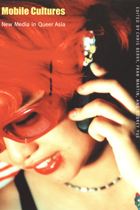
Scholars, artists, and activists from a range of countries, the contributors chronicle the different ways new media galvanize Asian queer communities in Taiwan, South Korea, Japan, Indonesia, Thailand, Malaysia, India, and around the world. They consider phenomena such as the uses of the Internet among gay, lesbian, or queer individuals in Taiwan and South Korea; the international popularization of Japanese queer pop culture products such as Yaoi manga; and a Thai website’s reading of a scientific tract on gay genetics in light of Buddhist beliefs. Essays also explore the politically subversive possibilities opened up by the proliferation of media technologies, examining, for instance, the use of Cyberjaya—Malaysia’s government-backed online portal—to form online communities in the face of strict antigay laws.
Contributors. Chris Berry, Tom Boellstorff, Larissa Hjorth, Katrien Jacobs, Olivia Khoo, Fran Martin, Mark McLelland, David Mullaly, Baden Offord, Sandip Roy, Veruska Sabucco, Audrey Yue
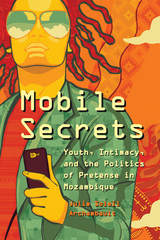
With Mobile Secrets, Julie Soleil Archambault offers a complete rethinking of how we understand uncertainty, truth, and ignorance by revealing how better access to information may in fact be anything but desirable. By engaging with young adults in a Mozambique suburb, Archambault shows how, in their efforts to create fulfilling lives, young men and women rely on mobile communication not only to mitigate everyday uncertainty but also to juggle the demands of intimacy by courting, producing, and sustaining uncertainty. In their hands, the phone has become a necessary tool in a wider arsenal of pretense—a means of creating the open-endedness on which harmonious social relations depend in postwar postsocialist Mozambique. As Mobile Secrets shows, Mozambicans have harnessed the technology not only to acquire information but also to subvert regimes of truth and preserve public secrets, allowing everyone to feign ignorance about the workings of the postwar intimate economy.

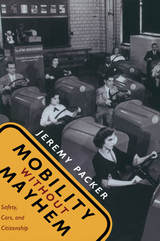
Packer focuses on cultural figures that have been singled out as particularly dangerous. Women drivers, hot-rodders, bikers, hitchhikers, truckers, those who “drive while black,” and road ragers have all been targets of fear. As Packer debunks claims about the dangers posed by each figure, he exposes biases against marginalized populations, anxieties about social change, and commercial and political desires to profit by fomenting fear. Certain populations have been labeled as dangerous or deviant, he argues, to legitimize monitoring and regulation and, ultimately, to curtail access to automotive mobility. Packer reveals how the boundary between personal freedom and social constraint is continually renegotiated in discussions about safe, proper driving.
Both established and up-and-coming scholars bring a diversity of geographic, institutional, and research-based perspectives to the volume, which includes in-depth investigations of specific forms of mobility work in composition, as well as responses to and reflections on those explorations. Eight chapters present specific cases or issues of this work and twelve shorter response chapters follow, identifying key points of intersection and conflict in the arguments and posing new questions and directions to pursue.
Addressing matters of knowledge transfer and meaning translation, immigrant literacy practices, design pedagogy, academic career changes, student websites, research methodologies, school literacy programs, and archives, Mobility Work in Composition asks what mobility in composition means and how, why, and for whom it might work. It will be of broad interest to students and scholars in rhetoric and composition.
Contributors: Anis Bawarshi, Elizabeth Chamberlain, Patrick Danner, Christiane Donahue, Keri Epps, Eli Goldblatt, Rachel Gramer, Timothy Johnson, Jamila Kareem, Carmen Kynard, Rebecca Lorimer Leonard, Andrea Olinger, John Scenters-Zapico, Khirsten L. Scott, Mary P. Sheridan, Jody Shipka, Ann Shivers-McNair, Scott Wible, Rick Wysocki
The difference, Mark Poster argues, is the profound effect electronic mediation exerts on the very way we perceive ourselves and reality. To help decode the linguistic dimensions of our multiple forms of social interaction, he plays upon Marx's theory of the mode of production—the shift to late capitalism has a parallel in the shift from the mode of production to that of information.
Enlisting poststructuralist theory, he links four modes of communication with four poststructuralists: TV ads with Baudrillard, data bases with Foucault, electronic writing with Derrida, and computer science with Lyotard. Mode of Information points the way to a poststructuralist strategy for writing history, a framework well suited to unearthing structures of domination and the means to their disruption.
"An informed, insightful, provocative account of phenomena that have transformed virtually every area of public and private life on our time."—Robert Anchor, American Historical Review
"The importance of Poster's book is unmistakable for he skillfully negotiates between and juxtaposes two wide theoretical domains—electronically mediated communications and poststructuralist theory—about which much has been written, but hardly with the acumen that he brings to bear in a long-awaited critical rapprochement."—Charles J. Stivale, Criticism
The newspaper’s idea of a modern, democratic Germany was undermined by the political and economic crises that hit Germany at the beginning of the 1930s. The way the newspaper described German democracy changed under these pressures. Flappers, American fridges, and modern music—the things that Tempo had once marshalled as representatives of a German future—were now rejected by the newspaper as emblems of a bygone age. The changes in Tempo’s vision of Germany’s future show that descriptions of Weimar politics as a standoff between upright democrats and rabid extremists do not do justice to the historical complexity of the period. Rather, we need to accept the Nazis as a lethal product of a German democracy itself. The history of Tempo teaches us how liberal democracies can create and nurture their own worst enemies.
Thomas combines historical research with fieldwork she conducted in Jamaica between 1993 and 2003. Drawing on her research in a rural hillside community just outside Kingston, she looks at how Jamaicans interpreted and reproduced or transformed on the local level nationalist policies and popular ideologies about progress. With detailed descriptions of daily life in Jamaica set against a backdrop of postcolonial nation-building and neoliberal globalization, Modern Blackness is an important examination of the competing identities that mobilize Jamaicans locally and represent them internationally.
Scholars of history, women’s studies, literature, and cultural studies follow the Modern Girl around the world, analyzing her manifestations in Germany, Australia, China, Japan, France, India, the United States, Russia, South Africa, and Zimbabwe. Along the way, they demonstrate how the economic structures and cultural flows that shaped a particular form of modern femininity crossed national and imperial boundaries. In so doing, they highlight the gendered dynamics of interwar processes of racial formation, showing how images and ideas of the Modern Girl were used to shore up or critique nationalist and imperial agendas. A mix of collaborative and individually authored chapters, the volume concludes with commentaries by Kathy Peiss, Miriam Silverberg, and Timothy Burke.
Contributors: Davarian L. Baldwin, Tani E. Barlow, Timothy Burke, Liz Conor, Madeleine Yue Dong, Anne E. Gorsuch, Ruri Ito, Kathy Peiss, Uta G. Poiger, Priti Ramamurthy, Mary Louise Roberts, Barbara Sato, Miriam Silverberg, Lynn M. Thomas, Alys Eve Weinbaum
A comparative study of contemporary Israeli and Palestinian diasporas.
Exilic and diasporic experience have become ubiquitous in recent decades. Jews, lacking a homeland, spread to various parts of the world, making the Jewish diaspora paradigmatic. But after the establishment of Israel in 1948, a different kind of diaspora emerged, as more than a tenth of Israeli citizens have chosen to leave their newly established state and resettle. Meanwhile, about half of all Palestinians, including Palestinian citizens of Israel, now reside in exile, predominantly as a result of the ongoing Palestinian-Israeli conflict.
Recognizing that Israeli-Jewish and Palestinian-Arab societies coexist and are engaged in constant relations, Nahum Karlinsky has assembled an impressive array of contributors to explore these diasporas alongside one another and in dialogue with other diasporic communities. The collected essays cover such topics as Palestinian exiles and diasporas, the demographics of today’s Israeli diaspora, immigrant enterprises, transnationalism and development, the unique place of Israeli Jews in the United States, the literature of Palestinian transnationals, and the emergence of Berlin as a queer Israeli-Jewish immigrant enclave.The Modern Israeli and Palestinian Diasporas challenges and reimagines the very notion of a homeland.
READERS
Browse our collection.
PUBLISHERS
See BiblioVault's publisher services.
STUDENT SERVICES
Files for college accessibility offices.
RECENTLY PUBLISHED




UChicago Accessibility Resources
home | accessibility | search | about | contact us
BiblioVault ® 2001 - 2025
The University of Chicago Press