
 A SCHOLARLY BOOK REPOSITORY
5 start with M start with M

Limits of the Human—the third volume in the Mechademia series—maps the terrain of posthumanity using manga and anime as guides and signposts to understand how to think about humanity’s new potentialities and limits. Through a wide range of texts—the folklore-inspired monsters that populate Mizuki Shigeru’s manga; Japan’s Gothic Lolita subculture; Tezuka Osamu’s original cyborg hero, Atom, and his manga version of Fritz Lang’s Metropolis (along with Ôtomo Katsuhiro’s 2001 anime film adaptation); the robot anime, Gundam; and the notion of the uncanny in Ghost in the Shell 2: Innocence, among others—the essays in this volume reject simple human/nonhuman dichotomies and instead encourage a provocative rethinking of the definitions of humanity along entirely unexpected frontiers.
Contributors: William L. Benzon, Lawrence Bird, Christopher Bolton, Steven T. Brown, Joshua Paul Dale, Michael Dylan Foster, Crispin Freeman, Marc Hairston, Paul Jackson, Thomas LaMarre, Antonia Levi, Margherita Long, Laura Miller, Hajime Nakatani, Susan Napier, Natsume Fusanosuke, Sharalyn Orbaugh, Ôtsuka Eiji, Adèle-Elise Prévost and MUSEbasement; Teri Silvio, Takayuki Tatsumi, Mark C. Taylor, Theresa Winge, Cary Wolfe, Wendy Siuyi Wong, and Yomota Inuhiko.
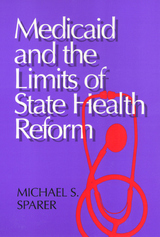
With the defeat of national health reform, many liberals have looked to the states as the source of health policy innovation. At the same time, many in the new Republican majority and several governors also support increased state control. In contrast, Michael S. Sparer convincingly argues that states by themselves can neither satisfy the liberal hope for universal coverage nor the conservative hope for cost containment. He also points to two critical drawbacks to a state-dominated health care system: the variation in coverage among states and the intergovernmental tension that would inevitably accompany such a change.
Supporting his arguments, Sparer analyzes the contradictions in operations and policies between the New York and California Medicaid programs. For instance, why does New York spend an average of $7,286 on its Medicaid beneficiaries and California an average of $2,801? The answer, the author suggests, is rooted in bureaucratic politics. California officials enjoy significant bureaucratic autonomy, while the system in New York is fragmented, decentralized, and interest-group dominated. The book supports this conclusion by exploring nursing home and home care policy, hospital care policy, and managed care policy in the two states. Sparer's dissection of the consequences of state-based reform make a persuasive case for national health insurance.
A New Statesman Best Book of the Year
A Church Times Book of the Year
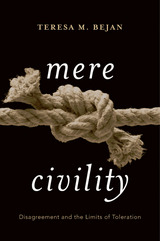
We are facing a crisis of civility, a war of words polluting our public sphere. In liberal democracies committed to tolerating active, often heated disagreement, the loss of this virtue appears critical.
Most modern appeals to civility follow arguments by Hobbes or Locke by proposing to suppress disagreement or exclude views we deem “uncivil” for the sake of social harmony. By comparison, mere civility—a grudging conformity to norms of respectful behavior—as defended by Rhode Island’s founder, Roger Williams, might seem minimal and unappealing. Yet Teresa Bejan argues that Williams’s outlook offers a promising path forward in confronting our own crisis, one that challenges our fundamental assumptions about what a tolerant—and civil—society should look like.
“Penetrating and sophisticated.”
—James Ryerson, New York Times Book Review
“Would that more of us might learn to look into the past with such gravity and humility. We might end up with a more (or mere) civil society, yet.”
—Los Angeles Review of Books
“A deeply admirable book: original, persuasive, witty, and eloquent.”
—Jacob T. Levy, Review of Politics
“A terrific book—learned, vigorous, and challenging.”
—Alison McQueen, Stanford University
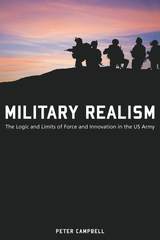
In five case studies of U.S. Army doctrine, Campbell pits military realism against bureaucratic and cultural perspectives in three key areas—nuclear versus conventional warfare, preferences for offense versus defense, and COIN missions—and finds that the army has been more doctrinally flexible than those perspectives would predict. He demonstrates that decision makers, while vowing in the wake of Vietnam to avoid (COIN) missions, nonetheless found themselves adapting to the geopolitical realities of fighting “low intensity” conflicts. In essence, he demonstrates that pragmatism has won out over dogmatism. At a time when American policymakers remain similarly conflicted about future defense strategies, Campbell’s work will undoubtedly shape and guide the debate.
READERS
Browse our collection.
PUBLISHERS
See BiblioVault's publisher services.
STUDENT SERVICES
Files for college accessibility offices.
RECENTLY PUBLISHED





UChicago Accessibility Resources
home | accessibility | search | about | contact us
BiblioVault ® 2001 - 2025
The University of Chicago Press