
 A SCHOLARLY BOOK REPOSITORY
6 start with M start with M
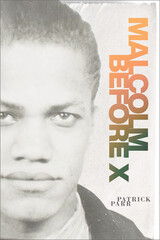
A Kirkus Reviews Best Nonfiction Book of 2024
A Spectator Best Book of the Year
Finalist for the 2025 ASALH Book Prize
Drawing upon interviews, correspondence, and nearly 2000 pages of never-before-used prison records, Malcolm Before X is the definitive examination of the prison years of civil rights icon Malcolm X.
In February 1946, when 20-year-old Malcolm Little was sentenced to eight to ten years in a maximum-security prison, he was a petty criminal and street hustler in Boston. By the time he was paroled in August 1952, he had transformed into a voracious reader, joined the Black Muslims, and was poised to become Malcolm X, one of the most prominent and important intellectuals of the civil rights era. While scholars and commentators have exhaustively detailed, analyzed, and debated Malcolm X’s post-prison life, they have not explored these six and a half transformative years in any depth.
Paying particular attention to his time in prison, Patrick Parr’s Malcolm Before X provides a comprehensive and groundbreaking examination of the first twenty-seven years of Malcolm X’s life (1925–1965). Parr traces Malcolm’s African lineage, explores his complicated childhood in the Midwest, and follows him as he moves east to live with his sister Ella in Boston’s Roxbury neighborhood, where he is convicted of burglary and sentenced.
Parr utilizes a trove of previously overlooked documents that include prison files and prison newspapers to immerse the reader into the unique cultures—at times brutal and at times instructional—of Charlestown State Prison, the Concord Reformatory, and the Norfolk Prison Colony. It was at these institutions that Malcolm devoured books, composed poetry, boxed, debated, and joined the Nation of Islam, changing the course of his life and setting the stage for a decade of antiracist activism that would fundamentally reshape American culture.
In this meticulously researched and beautifully written biography, the inspiring story of how Malcolm Little became Malcolm X is finally told.
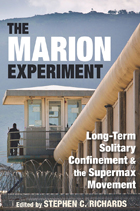
Taking readers into the darkness of solitary confinement, this searing collection of convict experiences, academic research, and policy recommendations shines a light on the proliferation of supermax (super-maximum-security) prisons and the detrimental effects of long-term high-security confinement on prisoners and their families.
Stephen C. Richards, an ex-convict who served time in nine federal prisons before earning his PhD in criminology, argues the supermax prison era began in 1983 at USP Marion in southern Illinois, where the first “control units” were built by the Federal Bureau of Prisons. The Marion Experiment, written from a convict criminology perspective, offers an introduction to long-term solitary confinement and supermax prisons, followed by a series of first-person accounts by prisoners—some of whom are scholars—previously or currently incarcerated in high-security facilities, including some of the roughest prisons in the western world. Scholars also address the widespread “Marionization” of solitary confinement; its impact on female, adolescent, and mentally ill prisoners and families; and international perspectives on imprisonment.
As a bold step toward rethinking supermax prisons, Richards presents the most comprehensive view of the topic to date to raise awareness of the negative aspects of long-term solitary confinement and the need to reevaluate how prisoners are housed and treated.

Winner of the National Book Critics Circle Award
A Smithsonian Book of the Year
A New York Review of Books “Best of 2020” Selection
A New York Times Best Art Book of the Year
An Art Newspaper Book of the Year
A powerful document of the inner lives and creative visions of men and women rendered invisible by America’s prison system.
More than two million people are currently behind bars in the United States. Incarceration not only separates the imprisoned from their families and communities; it also exposes them to shocking levels of deprivation and abuse and subjects them to the arbitrary cruelties of the criminal justice system. Yet, as Nicole Fleetwood reveals, America’s prisons are filled with art. Despite the isolation and degradation they experience, the incarcerated are driven to assert their humanity in the face of a system that dehumanizes them.
Based on interviews with currently and formerly incarcerated artists, prison visits, and the author’s own family experiences with the penal system, Marking Time shows how the imprisoned turn ordinary objects into elaborate works of art. Working with meager supplies and in the harshest conditions—including solitary confinement—these artists find ways to resist the brutality and depravity that prisons engender. The impact of their art, Fleetwood observes, can be felt far beyond prison walls. Their bold works, many of which are being published for the first time in this volume, have opened new possibilities in American art.
As the movement to transform the country’s criminal justice system grows, art provides the imprisoned with a political voice. Their works testify to the economic and racial injustices that underpin American punishment and offer a new vision of freedom for the twenty-first century.
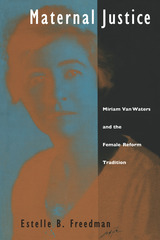
Estelle B. Freedman draws from Van Waters's diaries, letters, and personal papers to recreate her complex personal life, unveiling the disparity between Van Waters's public persona and her agonized private soul. With the power and elegance of a novel, Maternal Justice illuminates this historical context, casting light on the social welfare tradition, on women's history, on the American feminist movement, and on the history of sexuality.
"Maternal Justice is as much a work of history as it is biography, bringing to life not only a remarkable woman but also the complex political and social milieu within which she worked and lived."—Kelleher Jewett, The Nation
"This sympathetic biography reclaims Van Waters for history."—Publishers Weekly
"The Van Waters legacy, as Freedman gracefully presents, is that she cared about the lives of women behind bars. It is a strikingly unfashionable sentiment today."—Jane Meredith Adams, San Francisco Chronicle Book Review, Editor's Recommended Selection
"This finely crafted biography is both an engrossing read and a richly complicated account of a reformer whose work . . . bridged the eras of voluntarist charitable activism and professional social service."—Sherri Broder, Women's Review of Books
"This is a sympathetic, highly personal biography, revealing of both the author's responses to her subject's life and, in considerable detail, Van Waters's family traumas, illnesses, and love affairs."—Elizabeth Israels Perry, Journal of American History

The culmination of over a decade of original research, Mean Lives, Mean Laws exposes a Kafkaesque criminal justice system, one that has no problem with treating women as collateral damage in the War on Drugs or with stripping female prisoners of their parental rights. Yet it also reveals the individual histories of women who were jailed in Oklahoma, providing intimate portraits of their lives before, during, and after their imprisonment. We witness the impoverished and abusive conditions in which many of these women were raised; we get a vivid portrait of their everyday lives behind bars; and we glimpse the struggles that lead many ex-convicts to fall back into the penal system.
Through an innovative methodology that combines statistical rigor with extensive personal interviews, Sharp shows how female incarceration affects not only individuals, but also families and communities. Putting a human face on a growing social problem, Mean Lives, Mean Laws raises important questions about both the state of Oklahoma and the state of the nation.

READERS
Browse our collection.
PUBLISHERS
See BiblioVault's publisher services.
STUDENT SERVICES
Files for college accessibility offices.
RECENTLY PUBLISHED




UChicago Accessibility Resources
home | accessibility | search | about | contact us
BiblioVault ® 2001 - 2025
The University of Chicago Press