
 A SCHOLARLY BOOK REPOSITORY
281 start with M start with M

On the social consequences of machines
Automation, animation, and ecosystems are terms of central media-philosophical concern in today’s society of humans and machines. This volume describes the social consequences of machines as a mediating concept for the animation of life and automation of technology. Bernard Stiegler’s automatic society illustrates how digital media networks establish a new proletariat of knowledge workers. Gertrud Koch offers the animation of the technical to account for the pathological relations that arise between people and their devices. And Thomas Pringle synthesizes how automation and animation explain the history of intellectual exchanges that led to the hybrid concept of the ecosystem, a term that blends computer and natural science. All three contributions analyse how categories of life and technology become mixed in governmental policies, economic exploitation and pathologies of everyday life thereby both curiously and critically advancing the term that underlies those new developments: ‘machine.’

Machines of Youth traces the rise, and more recently the fall, of car culture among American teens. In this book, Gary S. Cross details how an automobile obsession drove teen peer culture from the 1920s to the 1980s, seducing budding adults with privacy, freedom, mobility, and spontaneity. Cross shows how the automobile redefined relationships between parents and teenage children, becoming a rite of passage, producing new courtship rituals, and fueling the growth of numerous car subcultures. Yet for teenagers today the lure of the automobile as a transition to adulthood is in decline.Tinkerers are now sidelined by the advent of digital engine technology and premolded body construction, while the attention of teenagers has been captured by iPhones, video games, and other digital technology. And adults have become less tolerant of teens on the road, restricting both cruising and access to drivers’ licenses.
Cars are certainly not going out of style, Cross acknowledges, but how upcoming generations use them may be changing. He finds that while vibrant enthusiasm for them lives on, cars may no longer be at the center of how American youth define themselves. But, for generations of Americans, the modern teen experience was inextricably linked to this particularly American icon.
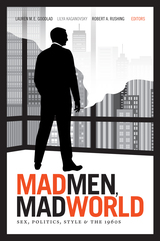
In the introduction, the editors explore the show's popularity; its controversial representations of race, class, and gender; its powerful influence on aesthetics and style; and its unique use of period historicism and advertising as a way of speaking to our neoliberal moment. Mad Men, Mad World also includes an interview with Phil Abraham, an award-winning Mad Men director and cinematographer. Taken together, the essays demonstrate that understanding Mad Men means engaging the show not only as a reflection of the 1960s but also as a commentary on the present day.
Contributors. Michael Bérubé, Alexander Doty, Lauren M. E. Goodlad, Jim Hansen, Dianne Harris, Lynne Joyrich, Lilya Kaganovsky, Clarence Lang, Caroline Levine, Kent Ono, Dana Polan, Leslie Reagan, Mabel Rosenheck, Robert A. Rushing, Irene Small, Michael Szalay, Jeremy Varon

In answering these questions, the authors explore not just the online commentary but also Mad Men fans’ fan fiction, cosplay, cocktail making, and vintage furniture collecting. Whether tweeting as one of the main characters (or just a lowly mail clerk), setting Peggy up with the man who’ll treat her right, or figuring out just which “Mad Man” they are at heart, fans integrate the show into their lives and use it to make sense of their own choices in work, leisure, and love.
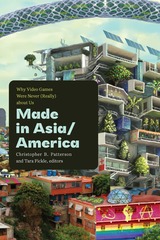
Contributors. Matthew Seiji Burns, Edmond Y. Chang, Naomi Clark, Miyoko Conley, Toby Đỗ, Anthony Dominguez, Tara Fickle, Sarah Christina Ganzon, Yuxin Gao, Domini Gee, Melos Han-Tani, Huan He, Matthew Jungsuk Howard, Rachael Hutchinson, Paraluman (Luna) Javier, Sisi Jiang, Marina Ayano Kittaka, Minh Le, Haneul Lee, Rachel Li, Christian Kealoha Miller, Patrick Miller, Keita C. Moore, Souvik Mukherjee, Christopher B. Patterson, Pamela (Pam) Punzalan, Takeo Rivera, Yasheng She, D. Squinkifer, Lien B. Tran, Prabhash Ranjan Tripathy, Emperatriz Ung, Gerald Voorhees, Yizhou (Joe) Xu, Robert Yang, Mike Ren Yi

A mother whose child has had a cochlear implant tells Laura Mauldin why enrollment in the sign language program at her daughter’s school is plummeting: “The majority of parents want their kids to talk.” Some parents, however, feel very differently, because “curing” deafness with cochlear implants is uncertain, difficult, and freighted with judgment about what is normal, acceptable, and right. Made to Hear sensitively and thoroughly considers the structure and culture of the systems we have built to make deaf children hear.
Based on accounts of and interviews with families who adopt the cochlear implant for their deaf children, this book describes the experiences of mothers as they navigate the health care system, their interactions with the professionals who work with them, and the influence of neuroscience on the process. Though Mauldin explains the politics surrounding the issue, her focus is not on the controversy of whether to have a cochlear implant but on the long-term, multiyear undertaking of implantation. Her study provides a nuanced view of a social context in which science, technology, and medicine are trusted to vanquish disability—and in which mothers are expected to use these tools. Made to Hear reveals that implantation has the central goal of controlling the development of the deaf child’s brain by boosting synapses for spoken language and inhibiting those for sign language, placing the politics of neuroscience front and center.
Examining the consequences of cochlear implant technology for professionals and parents of deaf children, Made to Hear shows how certain neuroscientific claims about neuroplasticity, deafness, and language are deployed to encourage compliance with medical technology.
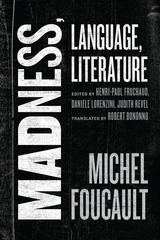
Perceiving an enigmatic relationship between madness, language, and literature, French philosopher Michel Foucault developed ideas during the 1960s that are less explicit in his later, more well-known writings. Collected here, these previously unpublished texts reveal a Foucault who undertakes an analysis of language and experience detached from their historical constraints. Three issues predominate: the experience of madness across societies; madness and language in Artaud, Roussel, and Baroque theater; and structuralist literary criticism. Not only do these texts pursue concepts unique to this period such as the “extra-linguistic,” but they also reveal a far more complex relationship between structuralism and Foucault than has typically been acknowledged.

No one expressed the heart and soul of the Sixties as powerfully as the Beatles did through the words, images, and rhythms of their music. In Magic Circles, Devin McKinney uncovers the secret history of a generation and a pivotal moment in twentieth-century culture. He reveals how the Beatles enacted the dream life of their time and shows how they embodied a kaleidoscope of desire and anguish for all who listened—hippies or reactionaries, teenage fans or harried parents, Bob Dylan or Charles Manson. The reader who dares to re-enter the vortex that was the Sixties will appreciate, perhaps for the first time, much of what lay beneath the social trauma of the day.
Delving into concerts and interviews, films and music, outtakes and bootlegs, Devin McKinney brings to bear the insights of history, aesthetics, sociology, psychology, and mythology to account for the depth and resonance of the Beatles’ impact. His book is also a uniquely multifaceted appreciation of the group’s artistic achievement, exploring their music as both timeless expression and visceral response to their historical moment. Starting in the cellars of Liverpool and Hamburg, and continuing through the triumph of Beatlemania, the groundbreaking studio albums, and the last brutal, sorrowful thrust of the White Album, Magic Circles captures both the dream and the reality of four extraordinary musicians and their substance as artists. At once an entrancing narrative and an analytical montage, the book follows the drama, comedy, mystery, irony, and curious off-ramps of investigation and inquiry that contributed to one of the most amazing odysseys in pop culture.
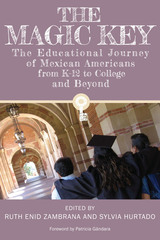
Mexican Americans comprise the largest subgroup of Latina/os, and their path to education can be a difficult one. Yet just as this group is often marginalized, so are their stories, and relatively few studies have chronicled the educational trajectory of Mexican American men and women. In this interdisciplinary collection, editors Zambrana and Hurtado have brought together research studies that reveal new ways to understand how and why members of this subgroup have succeeded and how the facilitators of success in higher education have changed or remained the same.
The Magic Key’s four sections explain the context of Mexican American higher education issues, provide conceptual understandings, explore contemporary college experiences, and offer implications for educational policy and future practices. Using historical and contemporary data as well as new conceptual apparatuses, the authors in this collection create a comparative, nuanced approach that brings Mexican Americans’ lived experiences into the dominant discourse of social science and education. This diverse set of studies presents both quantitative and qualitative data by gender to examine trends of generations of Mexican American college students, provides information on perceptions of welcoming university climates, and proffers insights on emergent issues in the field of higher education for this population. Professors and students across disciplines will find this volume indispensable for its insights on the Mexican American educational experience, both past and present.
Duke University Press Scholars of Color First Book Award recipient
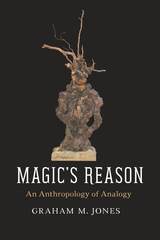
Using French magicians’ engagements with North African ritual performers as a case study, Jones shows how magic became enshrined in anthropological reasoning. Acknowledging the residue of magic’s colonial origins doesn’t require us to dispense with it. Rather, through this radical reassessment of classic anthropological ideas, Magic’s Reason develops a new perspective on the promise and peril of cross-cultural comparison.

The transformation from the post-war model of guided capitalism towards its neo-liberal variety has serious consequences for intra-organisational power relations which result in a one-sided articulation of interests. This erodes the moral fabric of the labour organisation as a social institution. In this context special attention is paid to the wide-spread erosion of corporate ethics in the 21st century.
The intensification of the labour process - a consistent phenomenon in industrial capitalism has got a new impulse, due to the lack of countervailing power within an eroding system of labour relations as well as to superior production techniques and technologies.
These tendencies have a deteriorating effect on the substance of the personnel discipline, ending up in a loss of function.
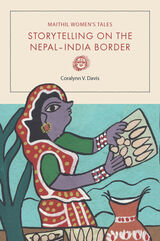
In Maithil Women’s Tales, Coralynn V. Davis examines how these storytellers weave together their own life experiences--the hardships and the pleasures--with age-old themes. In so doing, Davis demonstrates, they harness folk traditions to grapple personally as well as collectively with social values, behavioral mores, relationships, and cosmological questions.
Each chapter includes stories and excerpts that reveal Maithil women’s gift for rich language, layered plots, and stunning allegory. In addition, Davis provides ethnographic and personal information that reveal the complexity of women’s own lives, and includes works painted by Maithil storytellers to illustrate their tales. The result is a fascinating study of being and becoming that will resonate for readers in women’s and Hindu studies, folklore, and anthropology.
In this edited collection, contributors tackle current water issues in the era of climate change using a wide variety of recent literature and film. At its core, this collection demonstrates that water is an immense reservoir of artistic potential and an agent of historical and cultural exchange. Creating familiar and relatable contexts for water dilemmas, authors and directors of contemporary literary texts and films present compelling stories of our relationships to water, water health, ecosystems, and conservation. They also explore how global water problems affect local communities around the world and intersect with social and cultural aspects such as health, citizenship, class, gender, race, and ethnicity.
This transformative work highlights the cultural significance of water—the source of life and a powerful symbol in numerous cultures. It also raises awareness about global water debates and crises.

A New Yorker Best Book of the Year
A sweeping new history of the changing meaning of work in the United States, from Horatio Alger to Instagram influencers.
How Americans think about work changed profoundly over the course of the twentieth century. Thrift and persistence came to seem old-fashioned. Successful workers were increasingly expected to show initiative and enthusiasm for change—not just to do their jobs reliably but to create new opportunities for themselves and for others. Our culture of work today is more demanding than ever, even though workers haven't seen commensurate rewards.
Make Your Own Job explains how this entrepreneurial work ethic took hold, from its origins in late nineteenth-century success literature to the gig economy of today, sweeping in strange bedfellows: Marcus Garvey and Henry Ford, Avon ladies and New Age hippies. Business schools and consultants exhorted managers to cultivate the entrepreneurial spirit in their subordinates, while an industry of self-help authors synthesized new ideas from psychology into a vision of work as “self-realization.” Policy experts embraced the new ethic as a remedy for urban and Third World poverty. Every social group and political tendency, it seems, has had its own exemplary entrepreneurs.
Historian Erik Baker argues that the entrepreneurial work ethic has given meaning to work in a world where employment is ever more precarious––and in doing so, has helped legitimize a society of mounting economic insecurity and inequality. From the advent of corporate capitalism in the Gilded Age to the economic stagnation of recent decades, Americans have become accustomed to the reality that today’s job may be gone tomorrow. Where work is hard to find and older nostrums about diligent effort fall flat, the advice to “make your own job” keeps hope alive.
Based on her analysis of more than 2,500 hours of makeover TV, Weber argues that the much-desired After-body speaks to and makes legible broader cultural narratives about selfhood, citizenship, celebrity, and Americanness. Although makeovers are directed at both male and female viewers, their gendered logic requires that feminized subjects submit to the controlling expertise wielded by authorities. The genre does not tolerate ambiguity. Conventional (middle-class, white, ethnically anonymous, heterosexual) femininity is the goal of makeovers for women. When subjects are male, makeovers often compensate for perceived challenges to masculine independence by offering men narrative options for resistance or control. Foregoing a binary model of power and subjugation, Weber provides an account of makeover television that is as appreciative as it is critical. She reveals the makeover show as a rich and complicated text that expresses cultural desires and fears through narratives of selfhood.
In the three largest cities in Sweden, social movement “scenes”—networks of social movement actors and the places they inhabit—challenge threats such as gentrification. The geography of the built environment influences their ability to lay claim to urban space and to local political processes. In Making a Scene, Kimberly Creasap emphasizes that it is the centrality, concentration, and visibility of these scenes that make them most effective. Whereas some scenes become embedded as part of everyday life—as in Malmö—in contrast, scenes in Göteborg and Stockholm often fail to become part of the fabric of urban neighborhoods.
Creasap investigates key spaces for scenes, from abandoned industrial areas and punk clubs to street festivals, bookstores, and social centers, to show how activists create sites and develop structures of resistance that are anti-capitalist, anti-fascist, anti-gentrification, queer, and feminist. She also charts the relationship between scenes and city spaces to show these autonomous social movements create their own cultural landscapes. Making a Scene encourages critical thinking about spatiality and place in the sociology of social movements and the role of social movements as important actors in urban development.
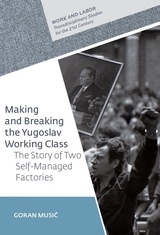
Workers' self-management was one of the unique features of communist Yugoslavia. Goran Musić has investigated the changing ways in which blue-collar workers perceived the recurring crises of the regime. Two self-managed metal enterprises, one in Serbia another in Slovenia, provide the frame of the analysis in the time span between 1945 and 1989. These two factories became famous for strikes in 1988 that evoked echoes in popular discourses in former Yugoslavia. Drawing on interviews, factory publications and other media, local archives, and secondary literature, Musić analyzes the two cases, going beyond the clichés of political manipulation from the top and workers' intrinsic attraction to nationalism.
The author explains how, in the later phase of communist Yugoslavia, growing social inequalities among the workers and undemocratic practices inside the self-managed enterprises facilitated the spread of a nationalist and pro-market ideology on the shop floors. Yet rather than being a mass taken advantage of by populist leaders, the working class Musić presents is one with agency and voice, a force that played an important role in shaping the fate of the country. The book thus seeks to open a debate on the social processes leading up to the dissolution of Yugoslavia.

In 1969, Jon Beckwith and his colleagues succeeded in isolating a gene from the chromosome of a living organism. Announcing this startling achievement at a press conference, Beckwith took the opportunity to issue a public warning about the dangers of genetic engineering. Jon Beckwith's book, the story of a scientific life on the front line, traces one remarkable man's dual commitment to scientific research and social responsibility over the course of a career spanning most of the postwar history of genetics and molecular biology.
A thoroughly engrossing memoir that recounts Beckwith's halting steps toward scientific triumphs--among them, the discovery of the genetic element that turns genes on--as well as his emergence as a world-class political activist, Making Genes, Making Waves is also a compelling history of the major controversies in genetics over the last thirty years. Presenting the science in easily understandable terms, Beckwith describes the dramatic changes that transformed biology between the late 1950s and our day, the growth of the radical science movement in the 1970s, and the personalities involved throughout. He brings to light the differing styles of scientists as well as the different ways in which science is presented within the scientific community and to the public at large. Ranging from the travails of Robert Oppenheimer and the atomic bomb to the Human Genome Project and recent "Science Wars," Beckwith's book provides a sweeping view of science and its social context in the latter half of the twentieth century.
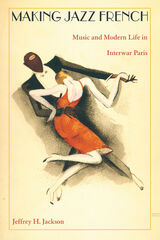
Drawing on memoirs, press accounts, and cultural criticism, Jackson uses the history of jazz in Paris to illuminate the challenges confounding French national identity during the interwar years. As he explains, many French people initially regarded jazz as alien because of its associations with America and Africa. Some reveled in its explosive energy and the exoticism of its racial connotations, while others saw it as a dangerous reversal of France’s most cherished notions of "civilization." At the same time, many French musicians, though not threatened by jazz as a musical style, feared their jobs would vanish with the arrival of American performers. By the 1930s, however, a core group of French fans, critics, and musicians had incorporated jazz into the French entertainment tradition. Today it is an integral part of Parisian musical performance. In showing how jazz became French, Jackson reveals some of the ways a musical form created in the United States became an international phenomenon and acquired new meanings unique to the places where it was heard and performed.

Melding the rural and the urban with the local, regional, and global, Levantine cuisine is a mélange of ingredients, recipes, and modes of consumption rooted in the Eastern Mediterranean. Making Levantine Cuisine provides much-needed scholarly attention to the region’s culinary cultures while teasing apart the tangled histories and knotted migrations of food. Akin to the region itself, the culinary repertoires that constitute Levantine cuisine endure and transform—are unified but not uniform. This book delves into the production and circulation of sugar, olive oil, and pistachios; examines the social origins of kibbe, Adana kebab, shakshuka, falafel, and shawarma; and offers a sprinkling of family recipes along the way. The histories of these ingredients and dishes, now so emblematic of the Levant, reveal the processes that codified them as national foods, the faulty binaries of Arab or Jewish and traditional or modern, and the global nature of foodways. Making Levantine Cuisine draws from personal archives and public memory to illustrate the diverse past and persistent cultural unity of a politically divided region.

"Making Local News by Phyllis Kaniss . . . is significant. . . . If we can continue to get smarter about that which journalism leaves out or distorts in its coverage of politics, we may eventually get smarter about politics itself."—Mitchell Stephens, The Philadelphia Inquirer View
"A convincing analysis of the factors and forces which color how and why local issues do, or do not, become newsworthy." —Michael H. Ebner, Journal of Interdisciplinary History
"This work serves as a reminder of the importance of a medium that is often overlooked until economic realities threaten its very existence." —Choice
"Kaniss is truly a pioneer in the study of local news."—Susan Herbst, Contemporary Sociology
To recast new materialist rhetorics as inherently crafty, Leigh Gruwell historicizes and locates the concept of craft both within rhetorical history as well as in the disciplinary history of writing studies. Her investigation centers on three specific case studies: craftivism, the fibercraft website Ravelry, and the 2017 Women’s March. These instances all highlight how a material, ecological understanding of rhetorical agency can enact political change.
Craft agency models how we humans might work with and alongside things—nonhuman, sometimes digital, sometimes material—to create more equitable relationships. Making Matters argues that craft is a useful starting point for addressing criticisms of new materialist rhetorics not only because doing so places rhetorical action as a product of complex relationships between a network of human and nonhuman actors, but also because it does so with an explicitly activist agenda that positions the body itself as a material interface.
Making Meaning reflects McKenzie's virtuosity as a traditional bibliographer and reveals how his thought-provoking scholarship made him a driving force in the genesis and development of the new interdisciplinary field of book history. His refusal to recognize the traditional boundary between bibliography and literary history re-energized the study of the social, political, economic, and cultural aspects of book production and reception.
The editors' introduction and headnotes situate McKenzie's innovative and controversial thinking in the debates of his time.

In the early twentieth century, human bodily movement garnered interest among researchers who were convinced that understanding and controlling it could help govern an increasingly frazzled, fragmented world. Making Movement Modern traces one movement visualization technique, Labanotation, from its origins in expressionist dance, Austro-Hungarian military discipline, and contemporary physiology to its employment in factories and offices a half-century later. Frustrated by societies that seemed plagued by regimentation and alienation, the users of Laban-inspired systems—from artists and scientists to factory owners, politicians, lawyers, anthropologists, psychiatrists, and computer scientists—hoped to provide opportunities for individual expression while simultaneously harnessing movement to serve the needs of larger communities, businesses, and states.
Making Movement Modern reveals how Labanotation’s creator, choreographer Rudolf Laban, and his acolytes offered this system to a surprising variety of individuals and groups. It was a technique that promised liberation through expressive movement; it was also a means of organizing fascist displays of pure “Aryan” culture. The book explores these political ambiguities as Laban-based systems entered postwar society in the United States and the United Kingdom, where they were used to document disappearing folk cultures, treat Holocaust survivors, and make even the dullest, most repetitive work feel spiritually meaningful. Central to these efforts were vast programs to collect and store new kinds of personal movement data, and this history also has much to tell us about mass data collection today. This is a book for anyone interested in the relationship between art, science, data, and the human body across the tumultuous twentieth century.

She describes her situation in these words: "As a nursing home resident, I require total or maximum care. I have limited use of my hands and arms. With special splints, I am able to turn the pages of my books, use the telephone and TV/VCR/FM radio remote control. When my cup is positioned properly, I can drink independently. I am able to walk with a platform walker and the help of two nursing assistants. My walking is not functional; it is only for exercise. After I moved into my third nursing home, I learned to operate a power wheelchair by using an adaptive switch between my knees. ... All other areas of physical care have to be done for me. My speech is impaired. If people listen carefully, they can understand what I am saying. ... I am able to eat regular food and breathe on my own."
Gaffney became an acute observer and strategist about how to live in a nursing home. Her first-person account, dictated to family members and assistants, covers making the decision to enter a nursing home, choosing the right one, and understanding its culture. She talks about how to furnish your room and about all the issues that arise in a resident's typical day. She has much to say about communication with staff and family about "how to help others help me." Gaffney's daughters, Amy and Bridget, and her friend Ellen Potter provide additional perspectives on the caregiving experience.
Professor Lien looks at political participation by Asian Americans prior to 1965 and then examines, at both organizational and mass politics levels, how race, ethnicity, and transnationalism help to construct a complex American electorate. She looks not only at rates of participation among Asian Americans as compared with blacks, Latinos, American Indians, and non-Hispanic whites, but also among specific groups of Asian Americans—Chinese, Japanese, Filipinos, Koreans, Asian Indians, and Vietnamese. She also discusses how gender, socioeconomic class, and place of birth affect political participation.
With documentation ranging from historical narrative to opinion survey data, Professor Lien creates a picture of a diverse group of politically active people who are intent on carving out a place for themselves in American political life.
Measurement is all around us—from the circumference of a pizza to the square footage of an apartment, from the length of a newborn baby to the number of miles between neighboring towns. Whether inches or miles, centimeters or kilometers, measures of distance stand at the very foundation of everything we do, so much so that we take them for granted. Yet, this has not always been the case.
This book reaches back to medieval Italy to speak of a time when measurements were displayed in the open, showing how such a deceptively simple innovation triggered a chain of cultural transformations whose consequences are visible today on a global scale. Drawing from literary works and frescoes, architectural surveys, and legal compilations, Emanuele Lugli offers a history of material practices widely overlooked by historians. He argues that the public display of measurements in Italy’s newly formed city republics not only laid the foundation for now centuries-old practices of making, but also helped to legitimize local governments and shore up church power, buttressing fantasies of exactitude and certainty that linger to this day.
This ambitious, truly interdisciplinary book explains how measurements, rather than being mere descriptors of the real, themselves work as powerful molds of ideas, affecting our notions of what we consider similar, accurate, and truthful.
It is now possible for physicians to recognize that a pregnant woman's fetus is facing life-threatening problems, perform surgery on the fetus, and if it survives, return it to the woman's uterus to finish gestation. Although fetal surgery has existed in various forms for three decades, it is only just beginning to capture the public's imagination. These still largely experimental procedures raise all types of medical, political and ethical questions. Who is the patient? What are the technical difficulties involved in fetal surgery? How do reproductive politics seep into the operating room, and how do medical definitions and meanings flow out of medicine and into other social spheres? How are ethical issues defined in this practice and who defines them? Is fetal surgery the kind of medicine we want? What is involved in reframing fetal surgery as a women's health issue, rather than simply a pediatric concern? In this ethnographic study of the social, cultural and historical aspects of fetal surgery, Monica Casper addresses these questions. The Making of the Unborn Patient examines two important and connected events of the second half of the 20th century: the emergence of fetal surgery as a new medical specialty and the debut of the unborn patient.
Cara A. Finnegan analyzes a wealth of newspaper and magazine articles, letters to the editor, trial testimony, books, and speeches produced by viewers in response to specific photos they encountered in public. From the portrait of a young Lincoln to images of child laborers and Depression-era hardship, Finnegan treats the photograph as a locus for viewer engagement and constructs a history of photography's viewers that shows how Americans used words about images to participate in the politics of their day. As she shows, encounters with photography helped viewers negotiate the emergent anxieties and crises of U.S. public life through not only persuasion but action, as well.
The success of "Pelo telephone" embroiled Donga in controversy. A group of musicians claimed that he had stolen their work, and a prominent journalist accused him of selling out his people in pursuit of profit and fame. Within this single episode are many of the concerns that animate Making Samba, including intellectual property claims, the Brazilian state, popular music, race, gender, national identity, and the history of Afro-Brazilians in Rio de Janeiro. By tracing the careers of Rio's pioneering black musicians from the late nineteenth century until the 1970s, Marc A. Hertzman revises the histories of samba and of Brazilian national culture.
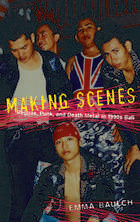
Making Scenes is an exploration of the subtle politics of identity that took place within and among these scenes throughout the course of the 1990s. Participants in the different scenes often explained their interest in death metal, punk, or reggae in relation to broader ideas about what it meant to be Balinese, which reflected views about Bali’s tourism industry and the cultural dominance of Jakarta, Indonesia’s capital and largest city. Through dance, dress, claims to public spaces, and onstage performances, participants and enthusiasts reworked “Balinese-ness” by synthesizing global media, ideas of national belonging, and local identity politics. Making Scenes chronicles the creation of subcultures at a historical moment when media globalization and the gradual demise of the authoritarian Suharto regime coincided with revitalized, essentialist formulations of the Balinese self.

The sociology of science is dominated today by relativists who boldly argue that the content of science is not influenced by evidence from the empirical world but is instead socially constructed in the laboratory. Making Science is the first serious critique by a sociologist of the social constructivist position.
Stephen Cole begins by making a distinction between two kinds of knowledge: the core, which consists of those contributions that have passed the test of evaluation and are universally accepted as true and important, and the research frontier, which is composed of all work in progress that is still under evaluation. Of the thousands of scientific contributions made each year, only a handful end up in the core. What distinguishes those that are successful?
Agreeing with the constructivists, Cole argues that there exists no set of rules that enables scientists to certify the validity of frontier knowledge. This knowledge is “underdetermined” by the evidence, and therefore social factors—such as professional characteristics and intellectual authority—can and do play a crucial role in its evaluation. But Cole parts company with the constructivists when he asserts that it is impossible to understand which frontier knowledge wins a place in the core without first considering the cognitive characteristics of the contributions. He concludes that although the focus of scientific research, the rate of advance, and indeed the everyday making of science are influenced by social variables and processes, the content of the core of science is constrained by nature. In Making Science, Cole shows how social variables and cognitive variables interact in the evaluation of frontier knowledge.
In ancient Peru, a site provides sensory surprises as voices resound beneath the ground and hidden carvings slowly reveal their secrets. In Canada and New Zealand, the flicker of reflected light from a lake dances on the faces of painted rocks and may have influenced when and why the pigment was applied. In Mesopotamia, vessels for foodstuffs build a picture of a past cuisine that encompasses taste and social activity in the building of communities. While perfume and flowers are examined in various cultures, in the chamber tombs of ancient Roman Palestine, we are reminded that not all smells are pleasant. Making Senses of the Past explores alternative ways to perceive past societies and offers a new way of wiring archaeology that incorporates the senses.

This is a book about the making and unmaking of sex over the centuries. It tells the astonishing story of sex in the West from the ancients to the moderns in a precise account of developments in reproductive anatomy and physiology. We cannot fail to recognize the players in Thomas Laqueur’s story—the human sexual organs and pleasures, food, blood, semen, egg, sperm—but we will be amazed at the plots into which they have been woven by scientists, political activists, literary figures, and theorists of every stripe.
Laqueur begins with the question of why, in the late eighteenth century, woman’s orgasm came to be regarded as irrelevant to conception, and he then proceeds to retrace the dramatic changes in Western views of sexual characteristics over two millennia. Along the way, two “master plots” emerge. In the one-sex story, woman is an imperfect version of man, and her anatomy and physiology are construed accordingly: the vagina is seen as an interior penis, the womb as a scrotum, the ovaries as testicles. The body is thus a representation, not the foundation, of social gender. The second plot tends to dominate post-Enlightenment thinking while the one-sex model is firmly rooted in classical learning. The two-sex story says that the body determines gender differences, that woman is the opposite of man with incommensurably different organs, functions, and feelings. The two plots overlap; neither ever holds a monopoly. Science may establish many new facts, but even so, Laqueur argues, science was only providing a new way of speaking, a rhetoric and not a key to female liberation or to social progress. Making Sex ends with Freud, who denied the neurological evidence to insist that, as a girl becomes a woman, the locus of her sexual pleasure shifts from the clitoris to the vagina; she becomes what culture demands despite, not because of, the body. Turning Freud’s famous dictum around, Laqueur posits that destiny is anatomy. Sex, in other words, is an artifice.
This is a powerful story, written with verve and a keen sense of telling detail (be it technically rigorous or scabrously fanciful). Making Sex will stimulate thought, whether argument or surprised agreement, in a wide range of readers.
Sport dominates television and the mass media. Politics and business are a-bustle with sports metaphors. Endorsements by athletes sell us products. "Home run," "slam dunk," and the rest of the vocabulary of sport color daily conversation. Even in times of crisis and emergency, the media reports the scores and highlights.
Marky Dyreson delves into how our obsession with sport came into being with a close look at coverage of the Olympic Games between 1896 and 1912. How people reported and consumed information on the Olympics offers insight into how sport entered the heart of American culture as part of an impetus for social reform. Political leaders came to believe in the power of sport to revitalize the "republican experiment." Sport could instill a new sense of national identity that would forge a new sense of community and a healthy political order while at the same time linking America's intellectual and power elite with the experiences of the masses.
Doty argues that films, television, and other forms of mass culture consistently elicit a wide range of queer (sexually liminal) responses, and suggests an interpretive framework for understanding mass culture that stands as a corrective to many standard cultural approaches.

Viewing the search for “coming to terms with the past” as a form of politics, John Torpey argues that there are major differences between reparations for the living victims of past wrongdoing and reparations for the descendants of such victims. More fundamentally, he argues that claims for reparations comprise a relatively novel kind of politics that involves a quest for symbolic recognition and material compensation for those seeking them—through the idiom of the past rather than the present. This reissue is the first paperback edition and contains a new preface by the author.

“Chief among the spiritually blighting tendencies of the age is materialist reductionism parading as scientific orthodoxy. David Whitney powerfully explores this movement and habit of mind as it takes its rise in the form of scientism, especially from Sir Francis Bacon’s NEW ATLANTIS in the 17th century and finds full fruition in the positivist teachings of August Comte in the 19th century—a preamble to the behavioralist dogmas of our own time. The openness to the facts of experience characteristic of all science as a search for the truth of reality in all its dimensions and diversity is thereby effectively abandoned in favor of an unrelenting insistence on a restrictive methodology ostensibly grounded in phenomenal reality that is perversely made the touchstone of all valid inquiry. The consequences are philosophically as well as politically disastrous, as Whitney brilliantly demonstrates in this path-breaking study.”
– Ellis Sandoz, Founder of the Eric Voegelin Institute for American Renaissance Studies
"David Whitney’s excellent critique of what he calls scientism, a dogmatic application of the methods of natural science to social science, provides a high-brow diagnosis of the modern maladies that result from the “rhetorical power of science.”
–– Scott Robinson, voegelinview


Men were increasingly taking over medical duties--especially surrounding childbirth--usually left to women and, as their medical knowledge increased, they became aware of bodies and behaviors--both male and female--that transgressed gender norms. The anxieties about men who acted in ways seen as increasingly womanly (from acting effeminately to participating in homosexual activity) played out in the character of pregnant Juan Rana.
Then, Velasco turns to Hollywood and asks if we might not use the lessons of Juan Rana to help explain why contemporary America is also fascinated by the idea of male pregnancy--think Arnold Schwarzenegger in Junior--and our increasing anxiety over the changing face of masculinity in our own culture.

Oudshoorn emphasizes that the introduction of contraceptives for men depends to a great extent on changing ideas about reproductive responsibility. Initial interest in the male pill, she shows, came from outside the scientific community: from the governments of China and India, which were interested in population control, and from Western feminists, who wanted the responsibilities and health risks associated with contraception shared more equally between the sexes. She documents how in the 1970s, the World Health Organization took the lead in investigating male contraceptives by coordinating an unprecedented, worldwide research network. She chronicles how the search for a male pill required significant reorganization of drug-testing standards and protocols and of the family-planning infrastructure—including founding special clinics for men, creating separate spaces for men within existing clinics, enrolling new professionals, and defining new categories of patients. The Male Pill is ultimately a story as much about the design of masculinities in the last decades of the twentieth century as it is about the development of safe and effective technologies.
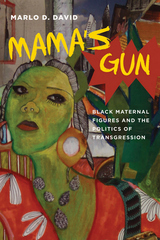
Taking inspiration from African American fiction, historical accounts of black life, Afrofuturism, and black popular culture in music and on screen, David turns her attention to Sapphire’s Push, Octavia Butler’s Dawn, and Suzan-Lori Parks’s Getting Mother’s Body as well as the performance art of Erykah Badu and the films of Tyler Perry. She draws out the implications of black maternal figures in these texts who balk at tradition and are far from “ideal.” David’s study shows how representations of blackness are deeply embedded in the neoliberal language of contemporary American politics and how black writers and performers resist such mainstream ideologies with their own transgressive black maternal figures.
In this classic study, Caillois defines play as a free and voluntary activity that occurs in a pure space, isolated and protected from the rest of life. Play is uncertain, since the outcome may not be foreseen, and it is governed by rules that provide a level playing field for all participants. In its most basic form, play consists of finding a response to the opponent's action--or to the play situation--that is free within the limits set by the rules.
Caillois qualifies types of games-- according to whether competition, chance, simulation, or vertigo (being physically out of control) is dominant--and ways of playing, ranging from the unrestricted improvisation characteristic of children's play to the disciplined pursuit of solutions to gratuitously difficult puzzles. Caillois also examines the means by which games become part of daily life and ultimately contribute to various cultures their most characteristic customs and institutions.
Presented here in Meyer Barash's superb English translation, Man, Play and Games is a companion volume to Caillois's Man and the Sacred.
2020 National Association for Chicana and Chicano Studies (NACCS) Book Award Winner
Honorable Mention, Ramirez Family Award for Most Significant Scholarly Book, Texas Institute of Letters, 2019
Managed Migrations examines the concurrent development of a border agricultural industry and changing methods of border enforcement in the Rio Grande Valley of Texas during the past century.
Needed at one moment, scorned at others, Mexican agricultural workers have moved back and forth across the US–Mexico border for the past century. In South Texas, Anglo growers’ dreams of creating a modern agricultural empire depended on continuous access to Mexican workers. While this access was officially regulated by immigration laws and policy promulgated in Washington, DC, in practice the migration of Mexican labor involved daily, on-the-ground negotiations among growers, workers, and the US Border Patrol. In a very real sense, these groups set the parameters of border enforcement policy.
Managed Migrations examines the relationship between immigration laws and policy and the agricultural labor relations of growers and workers in South Texas and El Paso during the 1940s and 1950s. Cristina Salinas argues that immigration law was mainly enacted not in embassies or the halls of Congress but on the ground, as a result of daily decisions by the Border Patrol that growers and workers negotiated and contested. She describes how the INS devised techniques to facilitate high-volume yearly deportations and shows how the agency used these enforcement practices to manage the seasonal agricultural labor migration across the border. Her pioneering research reveals the great extent to which immigration policy was made at the local level, as well as the agency of Mexican farmworkers who managed to maintain their mobility and kinship networks despite the constraints of grower paternalism and enforcement actions by the Border Patrol.
Managing "Modernity" engages a variety of intellectual perspectives in the social sciences. The theoretical approach represents a conscious effort to overcome the contentious debates in political science and sociology among proponents of historical institutionalism, cultural analysis, and rational-choice theory. The substantive argument draws on, and partially integrates, concepts and findings from comparative politics, economic sociology, industrial relations, organization theory, business management, and the political economy of Japan and Russia.
In light of ongoing debates over the significance and impact of "globalization," the eclectic and integrative approach in Managing "Modernity" offers a fresh and provocative contribution that will interest scholars and graduate students across a variety of disciplines and subfields. It offers compelling insights to anyone generally concerned with the social forces that facilitate or hinder the diffusion of ideas and institutions across national boundaries.
Rudra Sil is Janice and Julian Bers Assistant Professor in the Social Sciences, Department of Political Science, University of Pennsylvania.

The authors argue that the roles of these systems in cyberspace cannot be fully understood unless they are seen as mutually constituting each other in specific historical structures, institutions, and practices. With vision and insight, the authors look beyond the Internet to examine the entire networked world, from cell phones and satellites to global tourism and business travel.
The Mangle in Practice opens with a fresh introduction to the mangle by Pickering. Several contributors then present empirical studies that demonstrate the mangle’s applicability to topics as diverse as pig farming, Chinese medicine, economic theory, and domestic-violence policing. Other contributors offer examples of the mangle in action: real-world practices that implement a self-consciously “mangle-ish” stance in environmental management and software development. Further essays discuss the mangle as philosophy and social theory. As Pickering argues in the preface, the mangle points to a shift in interpretive sensibilities that makes visible a world of de-centered becoming. This volume demonstrates the viability, coherence, and promise of such a shift, not only in science and technology studies, but in the social sciences and humanities more generally.
Contributors: Lisa Asplen, Dawn Coppin, Adrian Franklin, Keith Guzik, Casper Bruun Jensen,Yiannis Koutalos, Brian Marick, Randi Markussen, Andrew Pickering, Volker Scheid, Esther-Mirjam Sent, Carol Steiner, Maxim Waldstein

Andrew Pickering offers a new approach to the unpredictable nature of change in science, taking into account the extraordinary number of factors—social, technological, conceptual, and natural—that interact to affect the creation of scientific knowledge. In his view, machines, instruments, facts, theories, conceptual and mathematical structures, disciplined practices, and human beings are in constantly shifting relationships with one another—"mangled" together in unforeseeable ways that are shaped by the contingencies of culture, time, and place.
Situating material as well as human agency in their larger cultural context, Pickering uses case studies to show how this picture of the open, changeable nature of science advances a richer understanding of scientific work both past and present. Pickering examines in detail the building of the bubble chamber in particle physics, the search for the quark, the construction of the quarternion system in mathematics, and the introduction of computer-controlled machine tools in industry. He uses these examples to address the most basic elements of scientific practice—the development of experimental apparatus, the production of facts, the development of theory, and the interrelation of machines and social organization.
Filipino Americans have been innovators and collaborators in hip hop since the culture’s early days. But despite the success of artists like Apl.de.Ap of the Black Eyed Peas and superstar producer Chad Hugo, the genre’s significance in Filipino American communities is often overlooked. Mark R. Villegas considers sprawling coast-to-coast hip hop networks to reveal how Filipino Americans have used music, dance, and visual art to create their worlds. Filipino Americans have been exploring their racial position in the world in embracing hip hop’s connections to memories of colonial and racial violence. Villegas scrutinizes practitioners’ language of defiance, placing the cultural grammar of hip hop within a larger legacy of decolonization.
An important investigation of hip hop as a movement of racial consciousness, Manifest Technique shows how the genre has inspired Filipino Americans to envision and enact new ideas of their bodies, their history, and their dignity.

Exposes how white supremacist groups exploit digital platforms to radicalize individuals
Manifesting Violence: White Terrorism, Digital Culture, and the Rhetoric of Replacement by Casey Ryan Kelly and William Joseph Sipe is a compelling exploration of how the digital world has become a fertile ground for white supremacist ideology. Through an in-depth analysis of white supremacist manifestos, online rhetoric, and the myth of “white genocide,” Kelly and Sipe uncover the disturbing ways in which digital culture facilitates the spread of racist ideology and the radicalization of individuals. By examining the language of white nationalism—calls to defend the white race, family, and children—Kelly and Sipe reveal how these messages, often disguised as entertainment or humor, gradually transform passive consumers into active participants in a dangerous ideology.
Manifesting Violence sheds light on the alarming shift from organized white supremacist groups to a decentralized digital arena where hate speech is disguised as humor and online conversations foster a culture of violence. Kelly and Sipe’s thorough investigation of this growing digital ecosystem offers a chilling glimpse into the dark underbelly of online extremism. A must-read for anyone seeking to understand the growing threat of hate-motivated violence and the urgent need to address its roots in digital culture, Kelly and Sipe offer rich insights to readers, researchers, academics, and policymakers concerned about extremism, online radicalization, and white supremacy.

Perelman describes the manufacture of unhappiness—the continual generation of dissatisfaction with products people are encouraged to purchase and quickly discard—and the complex techniques corporations employ to avoid responsibility and accountability to their workers, consumers and the environment. He outlines ways in which individuals can surpass individualism and instead work together to check the growing power of corporations.
While other books have surveyed the corporate landscape, or decried modern consumerism, Perelman, a professor of economics, places these ideas within a proper economic and historical context. He explores the limits of corporate accountability and responsibility, and investigates the relation between a wide range of phenomena such as food, fear and terrorism. Highly readable, Manufacturing Discontent will appeal to anyone with an interest in the way society works—and what really determines the rights of individuals in a corporate society.
Michael Perelman, Professor of Economics at California State University, Chico, received his Ph.D. from the University of California, Berkeley. He is the author of several books on economics and economic thought, including Railroading Economics (Routledge, 2006); Class Warfare in the Information Age (Palgrave Macmillan, 2000); The Invention of Capitalism (Duke University Press, 2000) and The Perverse Economy (Palgrave Macmillan, 2003).

“We've needed a book like Many Mirrors for a long time. In the veritable explosion of new scholarship on the human body, this book stands out in its focus on empirical research. Many Mirrors will move . . . the Anthropology of the Body a giant step forward.”--C. H. Browner, University of California at Los Angeles
In every society, people define and change their physical appearance in response to their relationships to others: we add clothes and masks, remove them, build up our muscles, perforate our flesh, cut parts away, comb our hair, and modify our diets. In rural Jamaica, fat women are considered desirable; in American suburbia, teenage girls are obsessed with thinness. Bedouin women use tattoos to express their secret longings; Asian American women undergo cosmetic surgery to conform to internalized western standards of beauty. Even with mirrors to see ourselves, we rely on the reactions of others to learn how we look and who we are.
Where contemporary Western culture sees the body as a concrete thing with an objective, observable reality, separate from the self, many other societies regard the person as an integrated whole that includes the mind, the body, and the spirit. Through the contributors' studies of individual cultures and through the editor’s unifying “body image system”, this volume gives us a new conceptual framework for understanding how women and men in any society perceive, describe, and alter their bodies.
The Maoist state’s dominance over Chinese society, achieved through such watersheds as the Great Leap Forward and the Cultural Revolution, is well known. Maoism at the Grassroots reexamines this period of transformation and upheaval from a new perspective, one that challenges the standard state-centered view. Bringing together scholars from China, Europe, North America, and Taiwan, this volume marshals new research to reveal a stunning diversity of individual viewpoints and local experiences during China’s years of high socialism.
Focusing on the period from the mid-1950s to 1980, the authors provide insights into the everyday lives of citizens across social strata, ethnicities, and regions. They explore how ordinary men and women risked persecution and imprisonment in order to assert personal beliefs and identities. Many displayed a shrewd knack for negotiating the maze-like power structures of everyday Maoism, appropriating regime ideology in their daily lives while finding ways to express discontent and challenge the state’s pervasive control.
Heterogeneity, limited pluralism, and tensions between official and popular culture were persistent features of Maoism at the grassroots. Men had gay relationships in factory dormitories, teenagers penned searing complaints in diaries, mentally ill individuals cursed Mao, farmers formed secret societies and worshipped forbidden spirits. These diverse undercurrents were as representative of ordinary people’s lives as the ideals promulgated in state propaganda.

“I love maps. I love math. And gosh, do I love this book, which so beautifully and clearly sounds the depths of both.” —Ben Orlin, author of Math with Bad Drawings
Explore the surprising connections between math and maps—and the myriad ways they’ve shaped our world and us.
Why are coastlines and borders so difficult to measure? How does a UPS driver deliver hundreds of packages in a single day? And where do elusive serial killers hide? The answers lie in the crucial connection between maps and math.
In Mapmatics, mathematician Paulina Rowińska leads us on a riveting journey around the globe to discover how maps and math are deeply entwined, and always have been. From a sixteenth-century map, an indispensable navigation tool that exaggerates the size of northern countries, to public transport maps that both guide and confound passengers, to congressional maps that can empower or silence whole communities, she reveals how maps and math have shaped not only our sense of space but our worldview. In her hands, we learn how to read maps like a mathematician—to extract richer information and, just as importantly, to question our conclusions by asking what we don’t see.
Written with authority and compassion, wit and unforgettable storytelling, this is math exposition at its best. By unpacking the math behind the maps we depend on, Mapmatics illuminates how our world works and, ultimately, how we can better look after it.
This textual ethnography embeds early college students’ writing in deep historical and theoretical contexts and looks for new ways that their writing contributes to and reshapes contemporary understandings of how US and global citizens are thinking about race. The book is a teaching narrative, tracing a teaching journey that considers student writing not only in the moments it is assigned but also in continual revisions of the course, making it a useful tool in helping college-age students see, explore, and articulate the role of race in determining their life experiences and opportunities.
Sophie Bell’s work narrates the experiences of a white teacher making mistakes in teaching about race and moving forward through those mistakes, considering that process valuable and, in fact, necessary. Providing a model for future scholars on how to carve out a pedagogically responsive identity as a teacher, Mapping Racial Literacies contributes to the scholarship on race and writing pedagogy and encourages teachers of early college classes to bring these issues front and center on the page, in the classroom, and on campus.

Sensational headlines have publicized the drug trafficking, brutal violence, and other organized crime elements associated with Central America's mara gangs, but there have been few clear-eyed analyses of the history, hierarchies, and future of the mara phenomenon. The first book to look specifically at the Central American gang problem by drawing on the perspectives of researchers from different disciplinary backgrounds, Maras: Gang Violence and Security in Central America provides much-needed insight.
These essays trace the development of the gangs, from Mara Salvatrucha to the 18th Street Gang, in Los Angeles and their spread to El Salvador, Honduras, Guatemala, and Nicaragua as the result of members' deportation to Central America; there, they account for high homicide rates and threaten the democratic stability of the region. With expertise in areas ranging from political science to law enforcement and human rights, the contributors also explore the spread of mara violence in the United States. Their findings comprise a complete documentation that spans sexualized violence, case studies of individual gangs, economic factors, varied responses to gang violence, the use of intelligence gathering, the limits of state power, and the role of policy makers.
Raising crucial questions for a wide readership, these essays are sure to spark productive international dialogues.
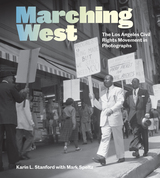
During a 1963 speech to a crowd of nearly forty thousand at Wrigley Field in Los Angeles, Dr. Martin Luther King Jr. addressed the question of how Angelenos could contribute to the civil rights movement: “The most important thing that you can do is to set Los Angeles free, because you have segregation and discrimination here, and police brutality.”
Marching West illuminates the dynamic history of civil rights activism in Los Angeles and explores how the medium of photography both witnessed and advanced the fight for Black equality. Over one hundred images, some of which have never been previously published, reveal connections between the local and national movements and document the actions of Western coalitions, religious leaders, Hollywood stars, and concerned citizens. Drawn from the Tom & Ethel Bradley Center at California State University, Northridge (CSUN), the Getty Research Institute, and other Southern California collections—including prints by Harry Adams, Howard Bingham, Charles Brittin, Joe Flowers, Vera Jackson, and Charles Williams—this unprecedented volume presents less familiar but essential stories about American progress toward social justice.
Place plays a crucial role in this work as Irvine examines its role in shaping ethnographies about outsiders and therefore understandings of social difference. Irvine has visited the sites of each of the ethnographies about which she writes, collecting photos, videos, and archival materials that will help readers understand the importance of place in the generation of particular ethnographic stories. The open-access online edition of this book is richly illustrated to help convey the deep sense of emplacement of the ethnographies discussed in this book and includes a series of interviews with sociologists about how they conduct their work and understand their forebears.
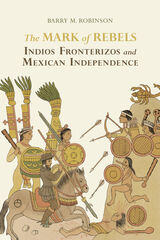
In The Mark of Rebels Barry Robinson offers a new look at Mexican Independence from the perspective of an indigenous population caught in the heart of the struggle. During the conquest and settlement of Mexico’s Western Sierra Madre, Spain’s indigenous allies constructed an indio fronterizo identity for their ethnically diverse descendants. These communities used their special status to maintain a measure of autonomy during the colonial era, but the cultural shifts of the late colonial period radically transformed the relationship between these indios fronterizos and their neighbors.
Marshalling an extensive array of archival material from Mexico, the United States, and Spain, Robinson shows that indio fronterizo participation in the Mexican wars of independence grafted into the larger Hidalgo Revolt through alignment with creole commanders. Still, a considerable gulf existed between the aims of indigenous rebels and the creole leadership. Consequently, the privileges that the indios fronterizos sought to preserve continued to diminish, unable to survive either the late colonial reforms of the Spanish regime or creole conceptions of race and property in the formation of the new nation-state.
This story suggests that Mexico’s transition from colony to nation can only be understood by revisiting the origins of the colonial system and by recognizing the role of Spain’s indigenous allies in both its construction and demolition. The study relates events in the region to broader patterns of identity, loyalty, and subversion throughout the Americas, providing insight into the process of mestizaje that is commonly understood to have shaped Latin America. It also foreshadows the popular conservatism of the nineteenth century and identifies the roots of post-colonial social unrest.
This book provides new context for scholars, historians, ethnographers, anthropologists, and anyone interested in the history of Mexico, colonization, Native Americans, and the Age of Revolutions.
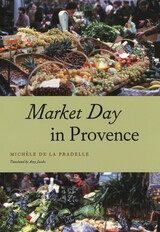
The renewal and celebration of the outdoor market culture in recent years, argues de La Pradelle, artfully masks a fierce commitment to modern-day free-market economics. Responding to consumer desire for an experience that recalls a time before impersonal supermarket chains and mass-produced products, buyers and sellers alike create an atmosphere built on various fictions. Vendors at the market at Carpentras, for example, oblige patrons by acting like lifelong acquaintances of those whom they’ve only just met as they dispense free samples and lively, witty banter. Likewise, going to the market to look for “freshness” becomes a way for the consumer to signify the product’s relation to nature—a denial of the workaday reality of growing melons under plastic sheets, then machine-sorting, crating, and transporting them.
Offering captivating descriptions of goods and the friendly and occasionally piquant exchanges between buyers and sellers, Market Day in Provence will be devoured by any reader with an interest in areas as diverse as food, ethnography, globalization, modernity, and French culture.

Winner of the National Book Critics Circle Award
A Smithsonian Book of the Year
A New York Review of Books “Best of 2020” Selection
A New York Times Best Art Book of the Year
An Art Newspaper Book of the Year
A powerful document of the inner lives and creative visions of men and women rendered invisible by America’s prison system.
More than two million people are currently behind bars in the United States. Incarceration not only separates the imprisoned from their families and communities; it also exposes them to shocking levels of deprivation and abuse and subjects them to the arbitrary cruelties of the criminal justice system. Yet, as Nicole Fleetwood reveals, America’s prisons are filled with art. Despite the isolation and degradation they experience, the incarcerated are driven to assert their humanity in the face of a system that dehumanizes them.
Based on interviews with currently and formerly incarcerated artists, prison visits, and the author’s own family experiences with the penal system, Marking Time shows how the imprisoned turn ordinary objects into elaborate works of art. Working with meager supplies and in the harshest conditions—including solitary confinement—these artists find ways to resist the brutality and depravity that prisons engender. The impact of their art, Fleetwood observes, can be felt far beyond prison walls. Their bold works, many of which are being published for the first time in this volume, have opened new possibilities in American art.
As the movement to transform the country’s criminal justice system grows, art provides the imprisoned with a political voice. Their works testify to the economic and racial injustices that underpin American punishment and offer a new vision of freedom for the twenty-first century.


This ethical and poetic ethnography analyses the upheavals to gender roles and marital relationships brought about by Somali refugee migration to the UK. Unmoored from the socio-cultural norms that made them men and women, being a refugee is described as making "everything" feel "different, mixed up, upside down." Marriage, Gender and Refugee Migration details how Somali gendered identities are contested, negotiated, and (re)produced within a framework of religious and politico-national discourses, finding that the most significant catalysts for challenging and changing harmful gender practices are a combination of the welfare system and Islamic praxis. Described as “an important and urgent monograph," this book will be a key text relevant to scholars of migration, transnational families, personal life, and gender. Written in a beautiful and accessible style, the book voices the participants with respect and compassion, and is also recommended for scholars of qualitative social research methods.
This book is the first study of Scorsese’s profound ambivalence toward the American Dream, the ways it drives some men and women to aspire to greatness, but leaves others seduced and abandoned. Showing that Scorsese understands the American dream in terms of a tension between provincialism and cosmopolitanism, Jim Cullen offers a new lens through which to view such seemingly atypical Scorsese films as The Age of Innocence, Hugo, and Kundun. Fast-paced, instructive, and resonant, Martin Scorsese and the American Dream illuminates an important dimension of our national life and how a great artist has brought it into focus.

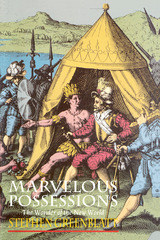
In a series of innovative readings of travel narratives, judicial documents, and official reports, Stephen Greenblatt shows that the experience of the marvelous, central to both art and philosophy, was cunningly yoked by Columbus and others to the service of colonial appropriation. He argues that the traditional symbolic actions and legal rituals through which European sovereignty was asserted were strained to the breaking point by the unprecedented nature of the discovery of the New World. But the book also shows that the experience of the marvelous is not necessarily an agent of empire: in writers as different as Herodotus, Jean de Léry, and Montaigne—and notably in Mandeville's Travels, the most popular travel book of the Middle Ages—wonder is a sign of a remarkably tolerant recognition of cultural difference.
Marvelous Possession is not only a collection of the odd and exotic through which Stephen Greenblatt powerfully conveys a sense of the marvelous, but also a highly original extension of his thinking on a subject that has occupied him throughout his career. The book reaches back to the ancient Greeks and forward to the present to ask how it is possible, in a time of disorientation, hatred of the other, and possessiveness, to keep the capacity for wonder from being poisoned?
"A marvellous book. It is also a compelling and a powerful one. Nothing so original has ever been written on European responses to 'The wonder of the New World.'"—Anthony Pagden, Times Literary Supplement
"By far the most intellectually gripping and penetrating discussion of the relationship between intruders and natives is provided by Stephen Greenblatt's Marvelous Possessions."—Simon Schama, The New Republic
"For the most engaging and illuminating perspective of all, read Marvelous Possessions."—Laura Shapiro, Newsweek
It covers a broad range of digital aspects now proliferating across our work and lives, including chapters on the digitalization of agriculture, robotics in the factory and the labor process on crowdworking platforms. It looks to how 20th century Marxist predictions of the 'workerless factory' are, or are not, coming true, and how 'Platform Capitalism' should be understood and critiqued.
Through rich empirical, theoretical and historical material, this book is necessary reading for those wanting a clear overview of our digital world.
It covers a broad range of digital aspects now proliferating across our work and lives, including chapters on the digitalization of agriculture, robotics in the factory and the labor process on crowdworking platforms. It looks to how 20th century Marxist predictions of the 'workerless factory' are, or are not, coming true, and how 'Platform Capitalism' should be understood and critiqued.
Through rich empirical, theoretical and historical material, this book is necessary reading for those wanting a clear overview of our digital world.

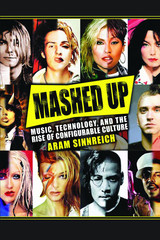
According to Aram Sinnreich, this power helps to explain why music has so often been regulated in societies around the globe and throughout history. Institutional authorities ranging from dynastic China's "Office to Harmonize Sounds" to today's copyright collecting societies like BMI and ASCAP leverage the rule of law and the power of the market to make sure that some musical forms and practices are allowed and others are prohibited.
Yet, despite the efforts of these powerful regulators, musical cultures consistently devise new and innovative ways to work around institutional regulations. These workarounds often generate new styles and traditions in turn, with effects far beyond the cultural sphere.
Mashed Up chronicles the rise of "configurability," an emerging musical and cultural moment rooted in today's global, networked communications infrastructure. Based on interviews with dozens of prominent DJs, attorneys, and music industry executives, the book argues that today's battles over sampling, file sharing, and the marketability of new styles such as "mash-ups" and "techno" presage social change on a far broader scale.
Specifically, the book suggests the emergence of a new ethic of configurable collectivism; an economic reunion of labor; a renegotiation of the line between public and private; a shift from linear to recursive logic; and a new "DJ consciousness," in which the margins are becoming the new mainstream. Whether these changes are sudden or gradual, violent or peaceful, will depend on whether we heed the lessons of configurability, or continue to police and punish the growing ranks of the mashed up.
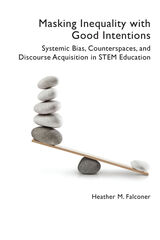
In Masking Inequality with Good Intentions, Heather M. Falconer examines the impact of systemic bias on disciplinary discourse acquisition and identity development by asking “How do the norms and expectations of higher education and STEM, specifically, impact the development of scientific identity and discursive skill?” and “What role do societal markers like race and gender play in the negotiation of identity in STEM learning environments?”
Drawing on the experiences and writings of six students from historically underrepresented backgrounds in STEM, each participating in an undergraduate research program, Falconer discusses how programmatic and pedagogical choices can work to either further marginalize students and disrupt their writing and identity development as scientists or create counterspaces—spaces where students can thrive and push back against dominant, oppressive forces. Practical applications for pedagogy, curriculum, and program design are included.

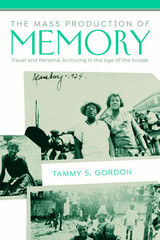
In 1888, the Eastman Dry Plate and Film Company offered the first portable camera that allowed users to conveniently take photos, using leisure travel as a primary marketing feature to promote it. The combination of portability, ease of use, and mass advertising fed into a national trend of popular photography that drew on Americans' increasing mobility and leisure time. The Kodak Company and the first generation of tourist photographers established new standards for personal archiving that amplified the individual's role in authoring the national narrative. But not everyone had equal access to travel and tourism, and many members of the African American, Native American, and gay and lesbian communities used the camera to counter the racism, homophobia, and classism that shaped public spaces.
In this groundbreaking history, Tammy S. Gordon tells the story of the camera's emerging centrality in leisure travel across the late nineteenth and early twentieth centuries and its role in “the mass production of memory,” a process in which users crafted a visual archive attesting to their experiences, values, and circumstances, setting the stage for the customizable visual culture of the digital age.

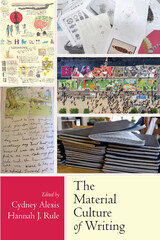
The collection features scholars across the disciplines—such as art, art history, English, museum studies, and writing studies—who work as teachers, historians, museum curators/conservators, and faculty. Each chapter features methods and questions from contributors’ own disciplines while at the same time speaking to writing studies’ interest in writers, writing identity, and writing practice. The authors in this volume also work with a variety of methodologies, including literary analysis, archival research, and qualitative research, providing models for the types of research possible using a material culture studies framework. The collection is organized into three sections—Writing Identity, Writing Work, Writing Genre—each with a contextualizing introduction from the editors that introduces the chapters themselves and imagines possible directions for writing studies research facilitated by material culture studies.
The Material Culture of Writing serves as an accessible introduction to work in material culture studies for writing studies scholars, graduate students, and undergraduates, especially as it makes a distinctive contribution to writing studies in its material culture studies approach. Because of the interdisciplinarity of material culture studies and this volume’s contributors, this collection will appeal to a wide range of scholars and readers, including those interested in writing studies, the history of the book, print culture, genre studies, archival methods, and authorship studies.
Contributors: Cydney Alexis, Debby Andrews, Diane Ehrenpreis, Keri Epps, Desirée Henderson, Kevin James, Jenny Krichevsky, Anne Mackay, Emilie Merrigan, Laura R. Micciche, Hannah J. Rule, Kate Smith
Considering theme parks, cyberspace, cinematic special effects, superhero comics, and musical films, Matters of Gravity highlights phenomena that make technology spectacular, permit unfettered flights of fantasy, and free us momentarily from the weight of gravity and history, of past and present. Bukatman delves into the dynamic ways pop culture imagines that apotheosis of modernity: the urban metropolis. He points to two genres, musical films and superhero comics, that turn the city into a unique site of transformative power. Leaping in single bounds from lively descriptions to sharp theoretical insights, Matters of Gravity is a deft, exhilarating celebration of the liberatory effects of popular culture.
Based on nearly a decade of fieldwork in the Guatemalan highlands, Tiffany D. Creegan Miller discusses images that are sonic, pictorial, gestural, and alphabetic. She reveals various forms of creativity and agency that are woven through a rich media landscape in Indigenous Guatemala, as well as Maya diasporas in Mexico and the United States. Miller discusses how technologies of inscription and their mediations are shaped by human editors, translators, communities, and audiences, as well as by voices from the natural world.
These texts push back not just on linear and compartmentalized Western notions of media but also on the idea of the singular author, creator, scholar, or artist removed from their environment. The persistence of orality and the interweaving of media forms combine to offer a challenge to audiences to participate in decolonial actions through language preservation.
The Maya Art of Speaking Writing calls for centering Indigenous epistemologies by doing research in and through Indigenous languages as we engage in debates surrounding Indigenous literatures, anthropology, decoloniality, media studies, orality, and the digital humanities.
Using a wide array of historical and contemporary sources, Way explores the multiple intersections of development and individual life, focusing on the construction of social space through successive waves of land reform, urban planning, and economic policy. His explorations move from Guatemala City's poorest neighborhoods and informal economies (run predominantly by women) to a countryside still recovering from civil war and anti-Mayan genocide, and they encompass such artifacts of development as the modernist Pan-American Highway and the postmodern Grand Tikal Futura, a Mayan-themed shopping mall ringed by gated communities and shantytowns. Capitalist development, Way concludes, has dramatically reshaped the country's physical and social landscapes—engendering poverty, ethnic regionalism, and genocidal violence—and positioned Guatemala as a harbinger of globalization's future.

AI is inescapable, from its mundane uses online to its increasingly consequential decision-making in courtrooms, job interviews, and wars. The ubiquity of AI is so great that it might produce public resignation—a sense that the technology is our shared fate.
As economist Maximilian Kasy shows in The Means of Prediction, artificial intelligence, far from being an unstoppable force, is irrevocably shaped by human decisions—choices made to date by the ownership class that steers its development and deployment. Kasy shows that the technology of AI is ultimately not that complex. It is insidious, however, in its capacity to steer results to its owners’ wants and ends. Kasy clearly and accessibly explains the fundamental principles on which AI works, and, in doing so, reveals that the real conflict isn’t between humans and machines, but between those who control the machines and the rest of us.
The Means of Prediction offers a powerful vision of the future of AI: a future not shaped by technology, but by the technology’s owners. Amid a deluge of debates about technical details, new possibilities, and social problems, Kasy cuts to the core issue: Who controls AI’s objectives, and how is this control maintained? The answer lies in what he calls “the means of prediction,” or the essential resources required for building AI systems: data, computing power, expertise, and energy. As Kasy shows, in a world already defined by inequality, one of humanity’s most consequential technologies has been and will be steered by those already in power.
Against those stakes, Kasy offers an elegant framework both for understanding AI’s capabilities and for designing its public control. He makes a compelling case for democratic control over AI objectives as the answer to mounting concerns about AI's risks and harms. The Means of Prediction is a revelation, both an expert undressing of a technology that has masqueraded as more complicated and a compelling call for public oversight of this transformative technology.
Westerners think of time as a measure of duration, a metric quantity that is continuous, homogeneous, unchangeable, and never ending—a reality that lies outside of human existence. How did the people of Mesoamerica and the Andes, isolated as they were from the rest of the world, conceive of their histories? How and why did they time their rituals? What knowledge can we acquire about their time from studying the material record they have left behind?
This volume brings together specialists in anthropology, archaeology, art history, astronomy, and the history of science to contemplate concrete and abstract temporal concepts gleaned from the Central Mexicans, Mayans, and Andeans. Contributors first address how people reckon and register time; they compare the western linear, progressive way of knowing time with the largely cyclic notions of temporality derived from the Americas, and they dissect, explain, and explore the origins of the complex dynastic and ritual calendars of the Maya, Inca, and Aztecs. They subsequently consider how people sense time and its moral dimensions. Time becomes an inescapable feature of the process of perception, an entity that occupies a succession of moments rather than the knife-edge present ingrained in our Western minds.
In recent years, many "walking audit instruments" have been developed to measure qualities like building height, block length, and sidewalk width. But while easily quantifiable, these physical features do not fully capture the experience of walking down a street. In contrast, this book addresses broad perceptions of street environments. It provides operational definitions and measurement protocols of five intangible qualities of urban design, specifically imageability, visual enclosure, human scale, transparency, and complexity.
The result is a reliable field survey instrument grounded in constructs from architecture, urban design, and planning. Readers will also find a case study applying the instrument to 588 streets in New York City, which shows that it can be used effectively to measure the built environment's impact on social, psychological, and physical well-being. Finally, readers will find illustrated, step-by-step instructions to use the instrument and a scoring sheet for easy calculation of urban design quality scores.
For the first time, researchers, designers, planners, and lay people have an empirically tested tool to measure those elusive qualities that make us want to take a stroll. Urban policymakers and planners as well as students in urban policy, design, and environmental health will find the tools and methods in Measuring Urban Design especially useful.
Contributors. Neel Ahuja, Irina Aristarkhova, Sushmita Chatterjee, Mel Y. Chen, Kim Q. Hall, Jennifer A. Hamilton, Anita Mannur, Elspeth Probyn, Parama Roy, Banu Subramaniam, Angela Willey, Psyche Williams-Forson

From large-scale cattle farming to water pollution, meat— more than any other food—has had an enormous impact on our environment. Historically, Americans have been among the most avid meat-eaters in the world, but long before that meat was not even considered a key ingredient in most civilizations’ diets. Labor historian Wilson Warren, who has studied the meat industry for more than a decade, provides this global history of meat to help us understand how it entered the daily diet, and at what costs and benefits to society.
Spanning from the nineteenth century to current and future trends, Warren walks us through the economic theory of food, the discovery of protein, the Japanese eugenics debate around meat, and the environmental impact of livestock, among other topics. Through his comprehensive, multifaceted research, he provides readers with the political, economic, social, and cultural factors behind meat consumption over the last two centuries. With a special focus on East Asia, Meat Makes People Powerful reveals how national governments regulated and oversaw meat production, helping transform virtually vegetarian cultures into major meat consumers at record speed.
As more and more Americans pay attention to the sources of the meat they consume, Warren’s compelling study will help them not only better understand the industry, but also make more informed personal choices. Providing an international perspective that will appeal to scholars and nutritionists alike, this timely examination will forever change the way you see the food on your plate.
READERS
Browse our collection.
PUBLISHERS
See BiblioVault's publisher services.
STUDENT SERVICES
Files for college accessibility offices.
RECENTLY PUBLISHED




UChicago Accessibility Resources
home | accessibility | search | about | contact us
BiblioVault ® 2001 - 2025
The University of Chicago Press