
 A SCHOLARLY BOOK REPOSITORY
60 start with N start with N
The author analyzes the traditional language of the hymn and Persephone's retelling of her story to Demeter, arguing that the hymn involves an earlier tale of Demeter and Persephone that predates the seventh century. Suter uses anthropological applications to illustrate that the story of Persephone's abduction does not reflect a female initiation rite into adulthood, as has been argued, but rather an hieros gamos. These methodologies point to the conclusion that Persephone was once a powerful goddess in her own right, independent of Hades and of Demeter as well. To test the accuracy of these possibilities, the book next examines evidence from outside the hymn. Other versions of the two myths in the hymn support the idea that these myths--Persephone's abduction and Demeter's nursing of Demophoön--were once separate and were late combined to create a new story. Evidence from the chief archaeological sites, from vase painting and other artistic forms is provided to enhance the argument. Thus the evidence from outside the hymn supports the conclusions of the textual analyses, giving surprising substantiation that the hymn itself commemorates the early days of the worship of the goddesses as a mother/daughter pair.
This book will be of particular interest to scholars of religious history, art history, archaeology, and literature. It is also accessible to the general reader interested in Greek literature, myths, and religion.
Ann Suter is Associate Professor of Classical Studies, University of Rhode Island.
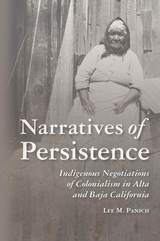
The Ohlone of the San Francisco Bay area and the Paipai of northern Baja California occupy opposite ends of the spectrum of Native Californian identities. Or so it would appear. While the Ohlone lack popular recognition and official acknowledgement from the United States government, the Paipai occupy a large reserve and celebrate their ongoing cultural traditions throughout Baja California and southern California. Yet the two groups share a similar colonial history: entanglements with early European explorers, labor and enculturation at Spanish missions, and sustained interactions with American and Mexican settler colonialism.
Based on fifteen years of archaeological and historical research in the two regions, Narratives of Persistence charts the remarkable persistence of the Ohlone and Paipai alongside a synthesis of Native Californian endurance over the past five centuries. As the case studies demonstrate, Ohlone and Paipai people made intelligent and culturally appropriate choices to cope with the impact of colonialism on their communities, even as they took different pathways to the present day.
Lee M. Panich illustrates how changes in Native identity and practice within these colonial contexts were made to best conduct the groups’ lives within shifting sets of colonial constraints. He draws connections between the events and processes of the deeper past and the way the Ohlone and Paipai today understand their own histories and identities, offering a model for how scholars of Indigenous histories may think about the connections between the past and the present.

2003 – Texas Old Missions and Forts Restoration Association Book Award Winner – Texas Catholic Historical Society
2004 – Finalist: Friends of the Dallas Public Library Award for Book Making the Most Significant Contribution to Knowledge – Texas Institute of Letters
The region that now encompasses Central Texas and northern Coahuila, Mexico, was once inhabited by numerous Native hunter-gather groups whose identities and lifeways we are only now learning through archaeological discoveries and painstaking research into Spanish and French colonial records. From these key sources, Maria F. Wade has compiled this first comprehensive ethnohistory of the Native groups that inhabited the Texas Edwards Plateau and surrounding areas during most of the Spanish colonial era.
Much of the book deals with events that took place late in the seventeenth century, when Native groups and Europeans began to have their first sustained contact in the region. Wade identifies twenty-one Native groups, including the Jumano, who inhabited the Edwards Plateau at that time. She offers evidence that the groups had sophisticated social and cultural mechanisms, including extensive information networks, ladino cultural brokers, broad-based coalitions, and individuals with dual-ethnic status. She also tracks the eastern movement of Spanish colonizers into the Edwards Plateau region, explores the relationships among Native groups and between those groups and European colonizers, and develops a timeline that places isolated events and singular individuals within broad historical processes.
No other volume assembles such a wide variety of archaeological, ethnohistorical, environmental, and biological information to elucidate the experience of Natives and Europeans in the early colonial world of Northern New Spain, and the global implications of entradas during this formative period in borderlands history.

The volume breaks new ground by entreating archaeologists to acknowledge the importance of ways of knowing that resulted from the study of nature in the history of archaeology. Some of the contributions to this volume trace the part conventions, practices, and concepts from natural history and the natural sciences played in the history and making of the discipline. Others set out to uncover, reassemble, or adjust our vision of collections that research historians of archaeology have disregarded or misrepresented—because their nineteenth-century makers would refuse to comply with today’s disciplinary borders and study natural specimens and antiquities in conjunction, under the rubric of the territorial, the curious or the universal. Other contributions trace the sociopolitical implications of studying nature in conjunction with “indigenous peoples” in the Americas—inquiring into what it meant and entailed to comprehend the inhabitants of the American continent in and through a state of nature.
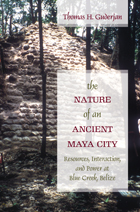
For two millennia, the site now known as Blue Creek in northwestern Belize was a Maya community that became an economic and political center that included some 15,000-20,000 people at its height. Fairly well protected from human destruction, the site offers the full range of city components including monumental ceremonial structures, elite and non-elite residences, ditched agricultural fields, and residential clusters just outside the core. Since 1992, a multi-disciplinary, multi-national research team has intensively investigated Blue Creek in an integrated study of the dynamic structure and functional inter-relationships among the parts of a single Maya city. Documented in coverage by National Geographic, Archaeology magazine, and a documentary film aired on the Discovery Channel, Blue Creek is recognized as a unique site offering the full range of undisturbed architectural construction to reveal the mosaic that was the ancient city. Moving beyond the debate of what constitutes a city, Guderjan’s long-term research reveals what daily Maya life was like.
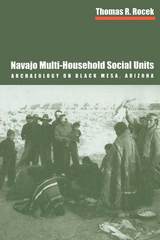
Rocek explores a neglected but major source of social flexibility in these societies. While many studies have focused on household and community-level organization, few have examined the flexible, intermediate-sized, "middle-level" cooperative units that bind small groups of households together. Middle-level units, says the author, must be recognized as important sources of social flexibility in many such cultural contexts. Futhermore, attention to middle-level units is critical for understanding household or community-level organization, because the flexibility they offer can fundamentally alter the behavior of social units of a larger or smaller scale.
In examining the archaeological record of Navajo settlement, Rocek develops archaeological methods for examing multiple-household social units (variously called "outfits or "cooperating groups") through spatial analysis, investigates evidence of change in middle-level units over time, relates these changes to economic and demographic flux, and compares the Navajo case study to the broader ethnographic literature of middle-level units. Rocek finds similarities with social organization in non-unilineally organized societies, in groups that have been traditionally described as characterized by network organization, and particularly in pastoral societies. The results of Rocek's study offer a new perspective on variability in Navajo social organization while suggesting general patterns of the response of social groups to change.
Rocek's work will be of significant interest not only to those with a professional interest in Navajo history and culture, but also, for its methodological insights, to a far broader range of archaeologists, social anthropologists, ethnohistorians, ethnoarchaeologists, historians, cultural geographers, and political scientists.
As artificial intelligence reshapes the cultural heritage sector, libraries, archives, and museums face novel opportunities and pressing ethical challenges. Navigating Artificial Intelligence for Cultural Heritage Organisations brings together leading experts from digital humanities, computer science, and information science to explore how AI-driven technologies transform the management and interpretation of digitized and born-digital records.
Through an examination of real-world case studies from the UK, US, and beyond, this volume provides significant insights into AI’s role in record management and text and data mining, while addressing issues of trust and risk in automated systems. Designed for heritage professionals, researchers, and information specialists, this book offers a timely guide to leveraging AI while also safeguarding the integrity and accessibility of cultural archives for the future.
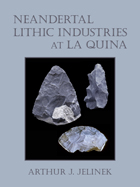
This study of the significance of changes through time revealed by an analysis of the chipped stone at La Quina reports on the excavations of the Cooperative American–French Excavation Project from 1985 to 1994. It moves beyond the largely descriptive and subjective approaches that have traditionally been applied to this kind of evidence and applies several important quantitative analytical techniques. These new approaches incorporate the history of previous excavations at the site, the results of the work of the Cooperative Project, and the most recent scientific understanding of relevant climatic changes.
This is a major contribution to our understanding of Neandertal behavior and industry. It adds new dimensions and perspectives based on innovative techniques of analysis. The analytic methods applied to lithic artifacts that form the heart of the book are the product of considerations about how to best interpret a sequence of multiple contextual samples. The author concludes the book with an extraordinarily useful chapter that places his findings into the larger context of our contemporary knowledge of Neandertal life in the region.
The book comes with a compact disc, which includes coded observations used in the analysis in as many as 47 data fields for the more than 11,500 artifacts that will allow professionals and students to further explore the collection of lithic artifacts.



Little is known about Nefertiti, the Egyptian queen whose name means “a beautiful woman has come.” She was the wife of Akhenaten, the pharaoh who ushered in the dramatic Amarna Age, and she bore him at least six children. She played a prominent role in political and religious affairs, but after Akhenaten’s death she apparently vanished and was soon forgotten.
Yet Nefertiti remains one of the most famous and enigmatic women who ever lived. Her instantly recognizable face adorns a variety of modern artifacts, from expensive jewelry to cheap postcards, t-shirts, and bags, all over the world. She has appeared on page, stage, screen, and opera. In Britain, one woman has spent hundreds of thousands of pounds on plastic surgery in hope of resembling the long-dead royal. This enduring obsession is the result of just one object: the lovely and mysterious Nefertiti bust, created by the sculptor Thutmose and housed in Berlin’s Neues Museum since before World War II.
In Nefertiti’s Face, Egyptologist Joyce Tyldesley tells the story of the bust, from its origins in a busy workshop of the late Bronze Age to its rediscovery and controversial removal to Europe in 1912 and its present status as one of the world’s most treasured artifacts. This wide-ranging history takes us from the temples and tombs of ancient Egypt to wartime Berlin and engages the latest in Pharaonic scholarship. Tyldesley sheds light on both Nefertiti’s life and her improbable afterlife, in which she became famous simply for being famous.
The discovery of the tomb of Tutankhamun in 1922 was a landmark event in Egyptology that was celebrated around the world. Had Howard Carter found his prize a few years earlier, however, the treasures of Tut might now be in the British Museum in London rather than the Egyptian Museum in Cairo. That's because the years between World War I and World War II were a transitional period in Middle Eastern archaeology, as nationalists in Egypt and elsewhere asserted their claims to antiquities discovered within their borders. These claims were motivated by politics as much as by scholarship, with nationalists seeking to unite citizens through pride in their ancient past as they challenged Western powers that still exercised considerable influence over local governments and economies. James Goode's analysis of archaeological affairs in Turkey, Egypt, Iran, and Iraq during this period offers fascinating new insight into the rise of nationalism in the Middle East, as well as archaeological and diplomatic history.
The first such work to compare archaeological-nationalistic developments in more than one country, Negotiating for the Past draws on published and archival sources in Arabic, English, French, German, Persian, and Turkish. Those sources reveal how nationalists in Iraq and Iran observed the success of their counterparts in Egypt and Turkey, and were able to hold onto discoveries at legendary sites such as Khorsabad and Persepolis. Retaining artifacts allowed nationalists to build museums and control cultural heritage. As Goode writes, "Going to the national museum became a ritual of citizenship." Western archaeologists became identified (in the eyes of many) as agents of imperialism, thus making their work more difficult, and often necessitating diplomatic intervention. The resulting "negotiations for the past" pulled patrons (such as John D. Rockefeller, Jr., and Lord Carnarvon), archaeologists (James Breasted and Howard Carter), nationalist leaders (Ataturk and Sa'd Zaghlul), and Western officials (Charles Evan Hughes and Lord Curzon) into intractable historical debates with international implications that still resonate today.
Despite our keen eye for discerning historical spin doctors operating today, it has been only in recent years that archaeologists have begun exploring in detail how the past was used in the past itself. This volume of ten original works brings critical insight to this frequently overlooked dimension of earlier societies. Drawing on the concepts of identity, memory, and landscape, the contributors show how these points of entry can lead to substantially new accounts of how people understood their lives and why things changed as they did.
Chapters include the archaeologies of the eastern Mediterranean, including Mesopotamia, Iran, Greece, and Rome; prehistoric Greece; Achaemenid and Hellenistic Armenia; Athens in the Roman period; Nubia and Egypt; medieval South India; and northern Maya Quintana Roo. The contributors show how and why, in each society, certain versions of the past were promoted while others were aggressively forgotten for the purpose of promoting innovation, gaining political advantage, or creating a new group identity.
Commentaries by leading scholars Lynn Meskell and Jack Davis blend with newer voices to create a unique set of essays that is diverse but interrelated, exceptionally researched, and novel in its perspectives.
CONTENTS
1. Peering into the Palimpsest: An Introduction to the Volume
Norman Yoffee
2. Collecting, Defacing, Reinscribing (and Otherwise Performing) Memory in the Ancient World
Catherine Lyon Crawford
3. Unforgettable Landscapes: Attachments to the Past in Hellenistic Armenia
Lori Khatchadourian
4. Mortuary Studies, Memory, and the Mycenaean Polity
Seth Button
5. Identity under Construction in Roman Athens
Sanjaya Thakur
6. Inscribing the Napatan Landscape: Architecture and Royal Identity
Lindsay Ambridge
7. Negotiated Pasts and the Memorialized Present in Ancient India: Chalukyas of Vatapi
Hemanth Kadambi
8. Creating, Transforming, Rejecting, and Reinterpreting Ancient Maya Urban Landscapes: Insights from Lagartera and Margarita
Laura P. Villamil
9. Back to the Future: From the Past in the Present to the Past in the Past
Lynn Meskell
10. Memory Groups and the State: Erasing the Past and Inscribing the Present in the Landscapes of the Mediterranean and Near East
Jack L. Davis
About the Editor
About the Contributors
Index
The contributions gathered here provide fieldwork data to document the existence of sociopolitically distinct neighborhoods within ancient Mesoamerican settlements, building upon recent advances in multi-scale archaeological studies of these communities. Chapters illustrate the cultural variation across Mesoamerica, including data and interpretations on several different cities with a thematic focus on regional contrasts. This topic is relatively new and complex, and this book is a strong contribution for three interwoven reasons. First, the long history of research on the “Teotihuacan barrios” is scrutinized and withstands the test of new evidence and comparison with other Mesoamerican cities. Second, Maya studies of dense settlement patterns are now mature enough to provide substantial case studies. Third, theoretical investigation of ancient urbanization all over the world is now more complex and open than it was before, giving relevance to Mesoamerican perspectives on ancient and modern societies in time and space.
This volume will be of interest not only to scholars and student specialists of the Mesoamerican past but also to social scientists and urbanists looking to contrast ancient cultures worldwide.
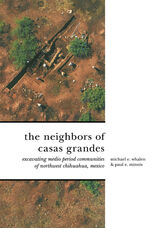
This volume provides a fascinating and detailed look into the culture of the Casas Grandes area, involving not just the research of the architecture and artifacts left behind but also the ecology of the area. The authors’ research reveals the complex relationship Casas Grandes had with its neighbors, varying from very direct contact with some communities to more indirect links with others. Important internal influences on the area’s development come to light and population sizes throughout the period demonstrate the absorption of the surrounding populations into Casas Grandes as it reached the peak of its power in the region.
New discoveries suggest the need to revise the previously held beliefs about the age of Casas Grandes and the dates of its rise to power. This ancient civilization may have developed as early as 1180 AD. Such breakthroughs provide fresh insight about not only Casas Grandes but the nearby settlements as well. The Neighbors of Casas Grandes is an important and vital piece of primary field research for all those interested in the Southwest’s archaelogy and history. Its contribution to the knowledge of the Casas Grandes region is monumental in helping us better understand the society that once flourished there.
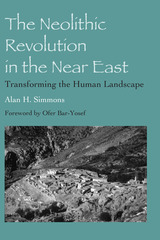
Based on more than thirty years of fieldwork, this timely volume examines the Neolithic Revolution in the Levantine Near East and the Mediterranean island of Cyprus. Alan H. Simmons explores recent research regarding the emergence of Neolithic populations, using both environmental and theoretical contexts, and incorporates specific case studies based on his own excavations. In clear and graceful prose, Simmons traces chronological and regional differences within this land of immense environmental contrasts—woodland, steppe, and desert. He argues that the Neolithic Revolution can be seen in a variety of economic, demographic, and social guises and that it lacked a single common stimulus.
Each chapter includes sections on history, terminology, geographic range, specific domesticated species, the composition of early villages and households, and the development of social, symbolic, and religious behavior. Most chapters include at least one case study and conclude with a concise summary. In addition, Simmons presents a unique chapter on the island of Cyprus, where intriguing new research challenges assumptions about the impact and extent of the Neolithic.
The Neolithic Revolution in the Near East conveys the diversity of our Neolithic ancestors, providing a better understanding of the period and the new social order that arose because of it. This insightful volume will be especially useful to Near Eastern scholars and to students of archaeology and the origins of agriculture.

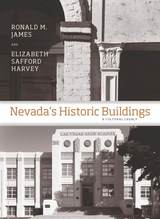
Nevada’s Historic Buildings highlights ninety of these buildings, describing them in the context of the state’s history and the character of the people who created and used them. Here are reminders of mining boomtowns, historic ranches, transportation, the divorce and gaming industries, the New Deal, and the innovation of Las Vegas’s post-modern aesthetic. These buildings provide a cross-section of Nevada’s rich historic and cultural heritage and their survival offers everyone the experience of touching the past.
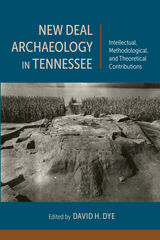
New Deal Archaeology in Tennessee tells the engrossing story of Southeastern archaeology in the 1930s. The Tennessee Valley Authority Act of May 1933 initiated an ambitious program of flood control and power generation by way of a chain of hydroelectric dams on the Tennessee River. The construction of these dams flooded hundreds of thousands of square miles of river bottoms, campsites, villages, and towns that had been homes to Native Americans for centuries. This triggered an urgent need to undertake extensive archaeological fieldwork throughout the region. Those studies continue to influence contemporary archaeology.
The state of Tennessee and the Tennessee Valley were especially well suited research targets thanks to their mild climate and long field seasons. A third benefit in the 1930s was the abundance of labor supplied by Tennesseans unemployed during the Great Depression. Within months of the passage of the Tennessee Valley Authority Act, teams of archaeologists fanned out across the state and region under the farsighted direction of Smithsonian Institution curators Neil M. Judd, Frank H. H. Roberts, and Frank M. Setzler. The early months of 1934 would become the busiest period of archaeological fieldwork in US history.
The twelve insightful essays in New Deal Archaeology in Tennessee document and explore this unique peak in archaeological study. Chapters highlight then-new techniques such as mound “peeling” and stratigraphic excavation adapted from the University of Chicago; the four specific New Deal sites of Watts Bar Reservoir, Mound Bottom, Pack, and Chickamauga Basin; bioarchaeology in the New Deal; and the enduring impact of the New Deal on contemporary fieldwork.
The challenges of the 1930s in recruiting skilled labor, training unskilled ancillary labor, developing and improvising new field methods, and many aspects of archaeological policies, procedures, and best-practices laid much of the foundation of contemporary archaeological practice. New Deal Archaeology in Tennessee offers an invaluable record of that pivotal time for professional, student, and amateur archaeologists.
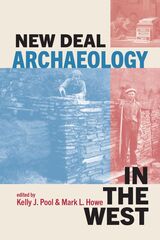
Descriptions of New Deal projects and their contributions to our understanding of the past, as well as the stories of those involved—archaeologists, avocationalists, and others—are woven together across the chapters. Also documented are lost or scattered artifacts, records, and ancestors’ remains; incomplete analyses; unpublished reports; inconsistent application of scientific methodology; and the loss of Native sacred sites and traditional lands and lifeways. Authors highlight characteristics that distinguished the American West from the East during the Depression and affected the nature of New Deal projects, including the extent of federal land available in the West, the reliance of sparsely populated areas upon tourism, the presence of large resident Native populations with deep histories, and the wide-ranging degree of existing archaeology infrastructure in each state. This volume demonstrates that despite regional differences, New Deal-funded archaeological and cultural heritage projects created a legacy of knowledge and practice across the nation.
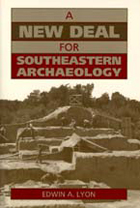
Recipient of the 1994 Anne B. and James B. McMillan Prize
This comprehensive study provides a history of New Deal archaeology in the Southeast in the 1930s and early 1940s and focuses on the projects of the Federal Emergency Relief Administration, the Civil Works Administration, the Works Progress Administration, the Tennessee Valley Authority, the National Park Service, and the Smithsonian Institution.
Utilizing primary sources including correspondence and unpublished reports, Lyon demonstrates the great importance of the New Deal projects in the history of southeastern and North American archaeology. New Deal archaeology transformed the practice of archaeology in the Southeast and created the basis for the discipline that exists today. With the current emphasis on curation and repatriation, archaeologists and historians will find this volume invaluable in reconstructing the history of the projects that generated the many collections that now fill our museums.
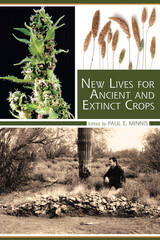
New Lives for Ancient and Extinct Crops profiles nine plant species that were important contributors to human diets and had medicinal uses in antiquity: maygrass, chenopod, marshelder, agave, little barley, chia, arrowroot, little millet, and bitter vetch. Each chapter is written by a well-known scholar, who illustrates the global value of the ancient crop record to inform the present. From eastern and western North America, Mesoamerica, South America, western Asia, and south-central Asia, the contributors provide examples of the unexpected wealth of information available in the archaeological record about ancient and extinct crops.
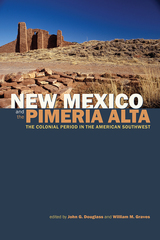
Focusing on the two major areas of the Southwest that witnessed the most intensive and sustained colonial encounters, New Mexico and the Pimería Alta compares how different forms of colonialism and indigenous political economies resulted in diverse outcomes for colonists and Native peoples. Taking a holistic approach and studying both colonist and indigenous perspectives through archaeological, ethnohistoric, historic, and landscape data, contributors examine how the processes of colonialism played out in the American Southwest.
Although these broad areas—New Mexico and southern Arizona/northern Sonora—share a similar early colonial history, the particular combination of players, sociohistorical trajectories, and social relations within each area led to, and were transformed by, markedly diverse colonial encounters. Understanding these different mixes of players, history, and social relations provides the foundation for conceptualizing the enormous changes wrought by colonialism throughout the region. The presentations of different cultural trajectories also offer important avenues for future thought and discussion on the strategies for missionization and colonialism.
The case studies tackle how cultures evolved in the light of radical transformations in cultural traits or traditions and how different groups reconciled to this change. A much needed up-to-date examination of the colonial era in the Southwest, New Mexico and the Pimería Alta demonstrates the intertwined relationships between cultural continuity and transformation during a time of immense change and highlights contemporary thought on the colonial experience.
Contributors: Joseph Aguilar, Jimmy Arterberry, Heather Atherton, Dale Brenneman, J. Andrew Darling, John G. Douglass, B. Sunday Eiselt, Severin Fowles, William M. Graves, Lauren Jelinek, Kelly L. Jenks, Stewart B. Koyiyumptewa, Phillip O. Leckman, Matthew Liebmann, Kent G. Lightfoot, Lindsay Montgomery, Barnet Pavao-Zuckerman, Robert Preucel, Matthew Schmader, Thomas E. Sheridan, Colleen Strawhacker, J. Homer Thiel, David Hurst Thomas, Laurie D. Webster
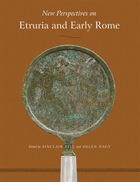
Paying tribute to Richard Daniel De Puma, a scholar who has made significant and influential contributions to Etruscan and Roman studies, the contributors to this collection echo the ambition and creativity of his work while offering an up-to-date survey of contemporary Etruscan scholarship. In surveying new developments in both fields, the work collected here represent the diverse, interdisciplinary interests of De Puma as well as areas of recent groundbreaking research.
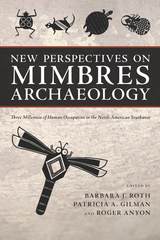
New Perspectives on Mimbres Archaeology brings together these experts in a single volume for the first time. The contributors discuss current knowledge of the people who lived in the Mimbres region of the southwestern United States and how our knowledge has changed since the Mimbres Foundation, directed by Steven A. LeBlanc, began the first modern archaeological investigations in the region. Many of these authors have spent decades conducting the fieldwork that has allowed for a broader understanding of Mimbres society.
Focusing on a variety of important research topics of interest to archaeologists—including the social contexts of people and communities, the role of ritual and ideology in Mimbres society, evidence of continuities and cultural change through time, and the varying impacts of external influences throughout the region—New Perspectives on Mimbres Archaeology presents recent data on and interpretations of the entire pre-Hispanic sequence of occupation. Additional contributions include a history of nonprofit archaeology by William H. Doelle and a concluding chapter by Steven A. LeBlanc reflecting on his decades-long work in Mimbres archaeology and outlining important areas for the next wave of research.
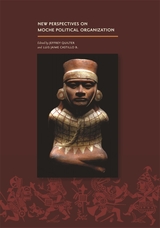
This volume brings together essays on the nature of political organization of the Moche, a complex pre-Inca society that existed on the north coast of Peru from c. 100 to 800 CE. Since the discovery of the royal tombs of Sipán in 1987, the Moche have become one of the best-known pre-Hispanic cultures of the Americas and the focus of a number of archaeological projects. But the nature of Moche political organization is still debated. Some scholars view the Moche as a monolithic state, others see a clear distinction between a northern and southern Moche polity, and yet others argue that the most accurate model is one in which each valley contained an independent polity. In a presentation of new data and new perspectives, the authors debate these competing theories.
Based on a set of papers presented by sixteen international scholars at the Dumbarton Oaks Pre-Columbian Studies symposium held in Lima, Peru, in 2004, this volume marks an important point in the development of Moche archaeology and will be a landmark work in Pre-Columbian studies.
In this landmark book, experienced scholars take a retrospective look at the developing routes that have brought American archaeologists into the 21st century.
In 1996, the Society for American Archaeology's Committee on the History of Archaeology established a biennial symposium
named after Gordon R. Willey, one of the fathers of American archaeology, to focus on the history of the discipline. This volume grew out of the
second symposium, presented at the 1998 meeting of the Society for American Archaeology.
Interest in the intellectual history of the field is certainly nothing new—the first such volume appeared in 1856—but previously, focus has been on individuals and their theories and methods, or on various government agencies that supported, developed, or mandated
excavations in North America. This volume, however, focuses on the roots of Americanist archaeology, including its pre-1915 European connections, and on some of the earliest work by women archaeologists, which has been largely overlooked.
Full of valuable insights for archaeologists and anthropologists—both professional and amateur—into the history and
development of Americanist archaeology, New Perspectives will also inspire and serve as a model for future research.
David Browman is Professor of Anthropology and Chair of the Interdisciplinary Program in Archaeology at Washington University. Stephen Williams is Professor Emeritus of Anthropology at Harvard University.
In recent years, archaeologists and other researchers dealing with heritage sites have increasingly emphasized the fact that people in the past interacted with their natural and built environment through all of their senses. In turn, they have come to acknowledge the limits of research methods that rely solely on visual analysis. Presenting studies of historical environments from multiple fields, from archaeology to acoustics, through the lens of the senses, New Sensory Approaches to the Past showcases the latest developments in sensory research through real-world scenarios of human-environment connections. Interdisciplinary examples of diverse sensory in-situ studies will enable readers to replicate and enhance their own investigations. Further, the volume pushes beyond historically Western frameworks of sensory perception towards a more global understanding of the senses.
The research in this volume derives from investigations conducted in connection with proposed widening and realignment of the Paulina-East Lake Highway, located within the caldera of Newberry Volcano. Formal evaluation of 13 localities and data recovers at four sites produced a wealth of information regarding human uses of the caldera and vicinity throughout the Holocene.
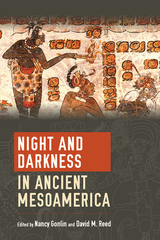
The anthropological study of night and darkness enriches and strengthens the understanding of human behavior, power, economy, and the supernatural. In eleven case studies featuring the residents of Teotihuacan, the Classic period Maya, inhabitants of Rio Ulúa, and the Aztecs, the authors challenge archaeologists to consider the influence of the ignored dimension of the night and the role and expression of darkness on ancient behavior. Chapters examine the significance of eclipses, burials, tombs, and natural phenomena considered to be portals to the underworld; animals hunted at twilight; the use and ritual meaning of blindfolds; night-blooming plants; nocturnal foodways; fuel sources and lighting technology; and other connected practices.
Night and Darkness in Ancient Mesoamerica expands the scope of published research and media on the archaeology of the night. The book will be of interest to those who study the humanistic, anthropological, and archaeological aspects of the Aztec, Maya, Teotihuacanos, and southeastern Mesoamericans, as well as sensory archaeology, art history, material culture studies, anthropological archaeology, paleonutrition, socioeconomics, sociopolitics, epigraphy, mortuary studies, volcanology, and paleoethnobotany.
Contributors: Jeremy Coltman, Christine Dixon, Rachel Egan, Kirby Farah, Carolyn Freiwald, Nancy Gonlin, Julia Hendon, Cecelia Klein, Jeanne Lopiparo, Brian McKee, Jan Marie Olson, David M. Reed, Payson Sheets, Venicia Slotten, Michael Thomason, Randolph Widmer, W. Scott Zeleznik
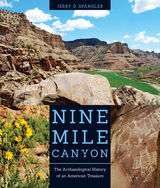
The early visitors in the 1890s were determined to recover collections for museums but never much cared to understand the people who left the artifacts. Then came a cadre of young scientists—the first to be trained specifically in archaeology—who found Nine Mile Canyon to be an intriguing laboratory that yielded more questions than answers. Scholars such as Noel Morss, Donald Scott, Julian Steward, John Gillin, and John Otis Brew all left their boot prints there.
Today, archaeological research is experiencing another renaissance—a new generation of university-trained archaeologists is determined to unravel the mystery of Nine Mile Canyon using scientific tools and techniques that were unavailable to past generations. Through the words and thoughts of the archaeologists, as well as the more than 150 photos, readers will come to see Nine Mile Canyon as an American treasure unlike any other. As the first book that is devoted exclusively to the archaeology of this unique place, Nine Mile Canyon will evoke fascination among scholars and the general public alike.
Winner of a Choice Outstanding Academic Title award.
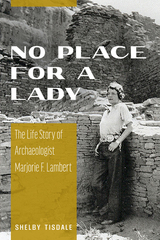
In this delightful biography, we gain insight into a time when there were few women establishing full-time careers in anthropology, archaeology, or museums. Shelby Tisdale successfully combines Lambert’s voice from extensive interviews with her own to take us on a thought-provoking journey into how Lambert created a successful and satisfying professional career and personal life in a place she loved (the American Southwest) while doing what she loved.
Through Lambert’s life story we gain new insight into the intricacies and politics involved in the development of archaeology and museums in New Mexico and the greater Southwest. We also learn about the obstacles that young women had to maneuver around in the early years of the development of southwestern archaeology as a profession. Tisdale brings into focus one of the long-neglected voices of women in the intellectual history of anthropology and archaeology and highlights how gender roles played out in the past in determining the career paths of young women. She also highlights what has changed and what has not in the twenty-first century.
Women’s voices have long been absent throughout history, and Marjorie Lambert’s story adds to the growing literature on feminist archaeology.
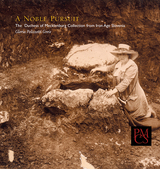
In 1905, to the consternation of her family and in defiance of convention, the 48-year-old Duchess Paul Friedrich of Mecklenburg took up the practice of archaeology. In the nine years leading up to the First World War, she successfully excavated twenty-one sites in her home province of Carniola (modern Slovenia), acquiring the patronage of Austro-Hungarian Emperor Franz Josef I and German Kaiser Wilhelm II. Mentored by the most important archaeologists of her time—Oscar Montelius and Josef Dechellette—the Duchess became an accomplished fieldworker and an important figure in the archaeology of Central Europe. Gloria Greis incorporates previously unpublished correspondence and other archival documents in this colorful account of the Duchess of Mecklenburg and her work.
The Mecklenburg Collection, the largest systematically excavated collection of European antiquities outside of Europe, resides in Harvard’s Peabody Museum of Archaeology and Ethnology. The sites excavated by the Duchess, which encompass the scope of Iron Age cultures in Slovenia, form an important resource for studying the cultural history of the region. A Noble Pursuit presents a selection of beautifully photographed artifacts that provide an overview of the scope and importance of the collection as a whole and attest to the enduring quality of the Duchess’s pioneering work.
In such a wide-ranging, long-standing, and international field of scholarship as Beowulf, one might imagine that everything would long since have been thoroughly investigated. And yet as far as the absolutely crucial question of the poem’s origins is concerned, that is not the case.
This cross-disciplinary study by Bo Gräslund argues that the material, geographical, historical, social, and ideological framework of Beowulf cannot be the independent literary product of an Old English Christian poet, but was in all essentials created orally in Scandinavia, which was a fertile seedbed for epic poetry.
Through meticulous argument interwoven with an impressive assemblage of data, archaeological and otherwise, Gräslund offers possible answers to the questions of the provenance of the Geats, the location of Heorot, and many more, such as the significance of Sutton Hoo and the signification of the Grendel kin and dragon in the sixth century when the events of the poem, coinciding with cataclysmic events in northern Europe, took place.
A Dan Josselyn Memorial Publication
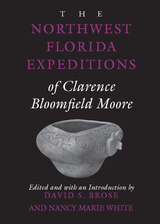
This comprehensive compilation of Moore's archaeological reports on northwest Florida and southern Alabama and Georgia presents the earliest documented investigations of this region.
When Clarence Bloomfield Moore cruised the rivers of Florida in search of prehistoric artifacts a century ago, he laid the groundwork for archaeological investigations to follow. This volume reflects Moore's fieldwork along the northwest Florida coast, the most archaeologically rich area of the state, as well as Southern Alabama and Georgia.
Here readers will share Moore's first look at the area in 1901-1903 and additional observations made in 1918 during what was to be his last field season. Moore's works reveal ceramics, tools, skeletal remains, and exotic artifacts excavated from the earthen mounds and shell middens built by native peoples over the last two millennia.
In the introduction to this edition, David Brose and Nancy Marie White place Moore's investigations within the context of the science, natural history, and antiquarianism of his day. They document what happened to the sites he explored, tell how his findings fit into the body of his research, and explain how those findings should be interpreted in the context of Southeastern culture history and modern archaeological theory.
Moore was the most knowledgeable Southeastern archaeologist of his time; his writings are a benchmark for anyone studying those areas today.
READERS
Browse our collection.
PUBLISHERS
See BiblioVault's publisher services.
STUDENT SERVICES
Files for college accessibility offices.
RECENTLY PUBLISHED






UChicago Accessibility Resources
home | accessibility | search | about | contact us
BiblioVault ® 2001 - 2025
The University of Chicago Press