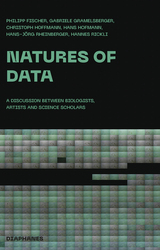
front cover of Natures of Data
Natures of Data
A Discussion between Biologists, Artists and Science Scholars
Philipp Fischer, Gabriele Gramelsberger, Christoph Hoffmann, Hans Hofmann, Hans-Jörg Rheinberger, and Hannes Rickli
Diaphanes, 2020
Computer-based technologies for the production and analysis of data have been an integral part of biological research since the 1990s at the latest. This not only applies to genomics and its offshoots but also to less conspicuous subsections such as ecology. But little consideration has been given to how this new technology has changed research practically. How and when do data become questionable? To what extent does necessary infrastructure influence the research process? What status is given to software and algorithms in the production and analysis of data? These questions are discussed by the biologists Philipp Fischer and Hans Hofmann, the philosopher Gabriele Gramelsberger, the historian of science and biology Hans-Jörg Rheinberger, the science theorist Christoph Hoffmann, and the artist Hannes Rickli. The conditions of experimentation in the digital sphere are examined in four chapters—“Data,” “Software,” “Infrastructure,” and “in silico”—in which the different perspectives of the discussion partners complement one another. Rather than confirming any particular point of view, Natures of Data deepens understanding of the contemporary basis of biological research.
[more]

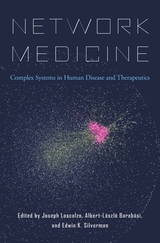
front cover of Network Medicine
Network Medicine
Complex Systems in Human Disease and Therapeutics
Joseph Loscalzo
Harvard University Press, 2017

Big data, genomics, and quantitative approaches to network-based analysis are combining to advance the frontiers of medicine as never before. Network Medicine introduces this rapidly evolving field of medical research, which promises to revolutionize the diagnosis and treatment of human diseases. With contributions from leading experts that highlight the necessity of a team-based approach in network medicine, this definitive volume provides readers with a state-of-the-art synthesis of the progress being made and the challenges that remain.

Medical researchers have long sought to identify single molecular defects that cause diseases, with the goal of developing silver-bullet therapies to treat them. But this paradigm overlooks the inherent complexity of human diseases and has often led to treatments that are inadequate or fraught with adverse side effects. Rather than trying to force disease pathogenesis into a reductionist model, network medicine embraces the complexity of multiple influences on disease and relies on many different types of networks: from the cellular-molecular level of protein-protein interactions to correlational studies of gene expression in biological samples. The authors offer a systematic approach to understanding complex diseases while explaining network medicine’s unique features, including the application of modern genomics technologies, biostatistics and bioinformatics, and dynamic systems analysis of complex molecular networks in an integrative context.

By developing techniques and technologies that comprehensively assess genetic variation, cellular metabolism, and protein function, network medicine is opening up new vistas for uncovering causes and identifying cures of disease.
[more]

front cover of New Technologies and Renaissance Studies
New Technologies and Renaissance Studies
Edited by William R. Bowen and Raymond G. Siemens
Iter Press, 2008
Near the forefront of any examination of disciplinary pursuits in the academy today, among the many important issues being addressed is the role of computing and its integration into, and perhaps revolutionizing of, central methodological approaches. The series New Technologies in Medieval and Renaissance Studies addresses this context from both broad and narrow perspectives, with anticipated discussions rooted in areas including literature, art history, musicology, and culture in the medieval and Renaissance periods.

The first volume of the series, New Technologies and Renaissance Studies, presents a collection of contributions to one ongoing forum for the dialogue which lies at the heart of the book series, the annual "conference within a conference" of the same name which takes place during the Renaissance Society of America gathering, dedicated specifically to the intersection of computational methods and Renaissance studies. Papers in this volume exemplify those fruitful and productive exchanges, from their inception at the 2001 meeting in Chicago to the 2005 meeting in Cambridge.
[more]

front cover of New Technologies and Renaissance Studies II
New Technologies and Renaissance Studies II
Edited by Tassie Gniady, Kris McAbee, Jessica Murphy
Iter Press, 2014
Near the forefront of any examination of disciplinary pursuits in the academy today, among the many important issues being addressed is the role of computing and its integration into, and perhaps revolutionizing of, central methodological approaches. The series New Technologies in Medieval and Renaissance Studies addresses this context from both broad and narrow perspectives, with anticipated discussions rooted in areas including literature, art history, musicology, and culture in the medieval and Renaissance periods.

In the fourth volume of the New Technologies in Medieval and Renaissance Studies series, volume editors Tassie Gniady, Kris McAbee, and Jessica Murphy bring together some of the best work from the New Technologies in Medieval and Renaissance Studies panels at the Renaissance Society of America (RSA) annual meetings for the years 2004–2010. These essays demonstrate a dedication to grounding the use of “newest” practices in the theories of the early modern period. At the same time, the essays are interested in the moment—the needs of scholars then, the theories of media that informed current understanding, and the tools used to conduct studies.
[more]

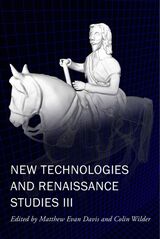
front cover of New Technologies and Renaissance Studies III
New Technologies and Renaissance Studies III
Edited by Matthew Evan Davis and Colin Wilder
Iter Press, 2022
These essays explore problems with digital approaches to analog objects and offer digital methods to study networks of production, dissemination, and collection. Further, they reflect on the limitations of those methods and speak to a central truth of digital projects: unlike traditional scholarship, digital scholarship is often the result of collective networks of not only disciplinary scholars but also of library professionals and other technical and professional staff as well as students.
 
[more]

front cover of New Technologies and Renaissance Studies IV
New Technologies and Renaissance Studies IV
The Changing Shape of Digital Early Modern Studies
Edited by Randa El Khatib and Caroline Winter
Iter Press, 2025
A collection of essays engaging with digital scholarship and new technologies.

Contributors to this volume engage with digital scholarship in several ways: by creating digital projects, often in multidisciplinary, collaborative environments; by applying digital methodologies and tools to explore research questions; and by speculating about the potential directions that digital scholarship can take to tackle existing research areas that could benefit from new perspectives. Together, the chapters demonstrate how various digital approaches—from network analysis to web mapping, VR and AR technologies, digital editions, databases, and archives—are all contributing in creative and effective ways to expand our knowledge of the past, to help ask and answer questions at a scale that was unimaginable before the digital turn, and to reshape early modern studies in the twenty-first century. Editors Randa El Khatib and Caroline Winter are co-organizers of New Technologies and Renaissance Studies–Digital Humanities at RSA (NTRS–DH@RSA) 2020, the online conference upon which this volume is based.
 
[more]

logo for The Institution of Engineering and Technology
Numerical Methods for Engineering
An introduction using MATLAB® and computational electromagnetics examples
Karl F. Warnick
The Institution of Engineering and Technology, 2011
This textbook teaches students to create computer codes used to engineer antennas, microwave circuits, and other critical technologies for wireless communications and other applications of electromagnetic fields and waves. Worked code examples are provided for MATLAB technical computing software. It is the only textbook on numerical methods that begins at the undergraduate engineering student level but brings students to the state-of-the-art by the end of the book. It focuses on the most important and popular numerical methods, going into depth with examples and problem sets of escalating complexity. This book requires only one core course of electromagnetics, allowing it to be useful both at the senior and beginning graduate levels. Developing and using numerical methods in a powerful tool for students to learn the principles of intermediate and advanced electromagnetics. This book fills the missing space of current textbooks that either lack depth on key topics (particularly integral equations and the method of moments) and where the treatment is not accessible to students without an advanced theory course. Important topics include: Method of Moments; Finite Difference Time Domain Method; Finite Element Method; Finite Element Method-Boundary Element Method; Numerical Optimization; and Inverse Scattering.
[more]


Send via email Share on Facebook Share on Twitter