
 A SCHOLARLY BOOK REPOSITORY
9 start with N start with N
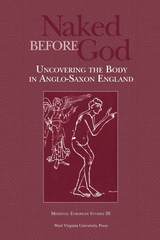
At different times and in different places, the human form has been regarded in different ways. The Ancient Greeks thought it was the most admirable subject for art, whereas early Christians often viewed it as lascivious in our post-lapsarian state. With illustrations taken from manuscripts, statuary and literary, this is a fascinating collection of essays with much that will be new to scholars and general readers alike.
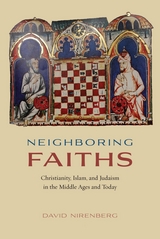
There have been countless scripture-based studies of the three “religions of the book,” but Nirenberg goes beyond those to pay close attention to how the three religious neighbors loved, tolerated, massacred, and expelled each other—all in the name of God—in periods and places both long ago and far away. Nirenberg argues that the three religions need to be studied in terms of how each affected the development of the others over time, their proximity of religious and philosophical thought as well as their overlapping geographies, and how the three “neighbors” define—and continue to define—themselves and their place in terms of one another. From dangerous attractions leading to interfaith marriage; to interreligious conflicts leading to segregation, violence, and sometimes extermination; to strategies for bridging the interfaith gap through language, vocabulary, and poetry, Nirenberg aims to understand the intertwined past of the three faiths as a way for their heirs to produce the future—together.
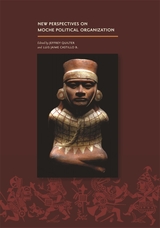
This volume brings together essays on the nature of political organization of the Moche, a complex pre-Inca society that existed on the north coast of Peru from c. 100 to 800 CE. Since the discovery of the royal tombs of Sipán in 1987, the Moche have become one of the best-known pre-Hispanic cultures of the Americas and the focus of a number of archaeological projects. But the nature of Moche political organization is still debated. Some scholars view the Moche as a monolithic state, others see a clear distinction between a northern and southern Moche polity, and yet others argue that the most accurate model is one in which each valley contained an independent polity. In a presentation of new data and new perspectives, the authors debate these competing theories.
Based on a set of papers presented by sixteen international scholars at the Dumbarton Oaks Pre-Columbian Studies symposium held in Lima, Peru, in 2004, this volume marks an important point in the development of Moche archaeology and will be a landmark work in Pre-Columbian studies.
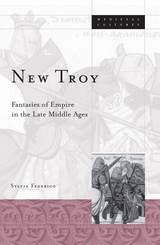
Examines the political and literary uses of the Trojan legend in the medieval period
England in the late fourteenth century witnessed a large-scale social revolt, a lingering and seemingly hopeless war with France, and fierce factional conflicts in royal politics and London civic government—struggles in which all parties sought to justify their actions by claiming historical precedent. How the Trojan legend figured in these claims—and in competing assertions of authorial legitimacy, nationhood, and rule in the later Middle Ages—is the complex nexus of history, myth, literature, and identity that Sylvia Federico explores in this ambitious book.
During the late medieval period, many European political and social groups took great pains to associate themselves with the ancient city; the claim on Troy, Federico asserts, was crucial to nationhood and was always a political act. Her book examines the poetry and prose of several late medieval authors, focusing particularly on how Chaucer’s use of the Trojan legend helped to set the terms by which the Ricardian and Lancastrian periods were distinguished, and further helped to establish English literary history as a noble precedent in its own right. Federico’s book affords remarkable insight into the workings of the medieval historical imagination.
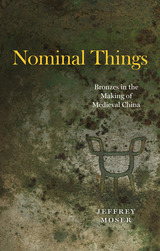
This book opens in eleventh-century China, where scholars were the first in world history to systematically illustrate and document ancient artifacts. As Jeffrey Moser argues, the visual, technical, and conceptual mechanisms they developed to record these objects laid the foundations for methods of visualizing knowledge that scholars throughout early modern East Asia would use to make sense of the world around them.
Of the artifacts these scholars studied, the most celebrated were bronze ritual vessels that had been cast nearly two thousand years earlier. While working to make sense of the relationship between the bronzes’ complex shapes and their inscribed glyphs, they came to realize that the objects were “nominal things”—objects inscribed with names that identified their own categories and uses. Eleventh-century scholars knew the meaning of these glyphs from hallowed Confucian writings that had been passed down through centuries, but they found shocking disconnects between the names and the bronzes on which they were inscribed. Nominal Things traces the process by which a distinctive system of empiricism was nurtured by discrepancies between the complex materiality of the bronzes and their inscriptions. By revealing the connections between the new empiricism and older ways of knowing, the book explains how scholars refashioned the words of the Confucian classics into material reality.
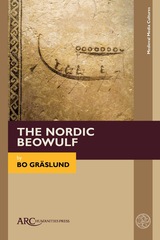
In such a wide-ranging, long-standing, and international field of scholarship as Beowulf, one might imagine that everything would long since have been thoroughly investigated. And yet as far as the absolutely crucial question of the poem’s origins is concerned, that is not the case.
This cross-disciplinary study by Bo Gräslund argues that the material, geographical, historical, social, and ideological framework of Beowulf cannot be the independent literary product of an Old English Christian poet, but was in all essentials created orally in Scandinavia, which was a fertile seedbed for epic poetry.
Through meticulous argument interwoven with an impressive assemblage of data, archaeological and otherwise, Gräslund offers possible answers to the questions of the provenance of the Geats, the location of Heorot, and many more, such as the significance of Sutton Hoo and the signification of the Grendel kin and dragon in the sixth century when the events of the poem, coinciding with cataclysmic events in northern Europe, took place.
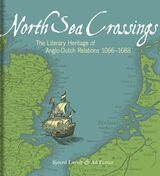
This richly illustrated book tells the story of cultural exchange between the people of the Low Countries and England in the Middle Ages and the Early Modern period, revealing how Anglo-Dutch connections changed the literary landscape on both sides of the North Sea.
Ranging from the Norman Conquest of 1066 to the “Glorious Revolution” of 1688, North Sea Crossings uncovers the lasting impact of contacts and collaborations between Dutch and English speakers on historical writing, map-making, manuscript production, and early printing. The literary heritage of Anglo-Dutch relations is explored and lavishly illustrated through a unique collection of manuscripts, early prints, maps, and other treasures from the Bodleian Library.
READERS
Browse our collection.
PUBLISHERS
See BiblioVault's publisher services.
STUDENT SERVICES
Files for college accessibility offices.
RECENTLY PUBLISHED




UChicago Accessibility Resources
home | accessibility | search | about | contact us
BiblioVault ® 2001 - 2025
The University of Chicago Press