
 A SCHOLARLY BOOK REPOSITORY
6 start with N start with N
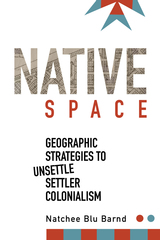
What are the limits and potentials of indigenous acts of spatial production? Native Space argues that control over the notion of “Indianness” still sits at the center of how space is produced in a neocolonial nation, and shows how non-indigenous communities uniquely deploy Native identities in the direct construction of colonial geographies. In short, “the Indian” serves to create White space in concrete ways. Yet, Native geographies effectively reclaim indigenous identities, assert ongoing relations to the land, and refuse the claims of settler colonialism.
Barnd creatively and persuasively uses original cartographic research and demographic data, a series of interrelated stories set in the Midwestern Plains states of Kansas and Oklahoma, an examination of visual art by contemporary indigenous artists, and discussions of several forms of indigenous activism to support his argument. With its highly original, interdisciplinary approach, Native Space makes a significant contribution to the literature in cultural and critical geography, comparative ethnic studies, indigenous studies, cultural studies, American Studies, and related fields.
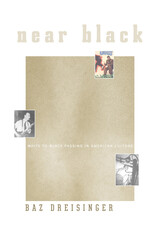
In Near Black, Dreisinger explores the oft-ignored history of what she calls "reverse racial passing" by looking at a broad spectrum of short stories, novels, films, autobiographies, and pop-culture discourse that depict whites passing for black. The protagonists of these narratives, she shows, span centuries and cross contexts, from slavery to civil rights, jazz to rock to hip-hop. Tracing their role from the 1830s to the present day, Dreisinger argues that central to the enterprise of reverse passing are ideas about proximity. Because "blackness," so to speak, is imagined as transmittable, proximity to blackness is invested with the power to turn whites black: those who are literally "near black" become metaphorically "near black."
While this concept first arose during Reconstruction in the context of white anxieties about miscegenation, it was revised by later white passers for whom proximity to blackness became an authenticating badge. As Dreisinger shows, some white-to-black passers pass via self-identification. Jazz musician Mezz Mezzrow, for example, claimed that living among blacks and playing jazz had literally darkened his skin. Others are taken for black by a given community for a period of time. This was the experience of Jewish critic Waldo Frank during his travels with Jean Toomer, as well as that of disc jockey Hoss Allen, master of R&B slang at Nashville's famed WLAC radio. For journalists John Howard Griffin and Grace Halsell, passing was a deliberate and fleeting experiment, while for Mark Twain's fictional white slave in Pudd'nhead Wilson, it is a near-permanent and accidental occurrence.
Whether understood as a function of proximity or behavior, skin color or cultural heritage, self-definition or the perception of others, what all these variants of "reverse passing" demonstrate, according to Dreisinger, is that the lines defining racial identity in American culture are not only blurred but subject to change.
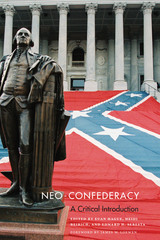
A century and a half after the conclusion of the Civil War, the legacy of the Confederate States of America continues to influence national politics in profound ways. Drawing on magazines such as Southern Partisan and publications from the secessionist organization League of the South, as well as DixieNet and additional newsletters and websites, Neo-Confederacy probes the veneer of this movement to reveal goals far more extensive than a mere celebration of ancestry.
Incorporating groundbreaking essays on the Neo-Confederacy movement, this eye-opening work encompasses such topics as literature and music; the ethnic and cultural claims of white, Anglo-Celtic southerners; gender and sexuality; the origins and development of the movement and its tenets; and ultimately its nationalization into a far-reaching factor in reactionary conservative politics. The first book-length study of this powerful sociological phenomenon, Neo-Confederacy raises crucial questions about the mainstreaming of an ideology that, founded on notions of white supremacy, has made curiously strong inroads throughout the realms of sexist, homophobic, anti-immigrant, and often "orthodox" Christian populations that would otherwise have no affiliation with the regionality or heritage traditionally associated with Confederate history.
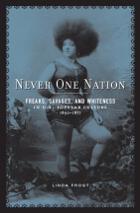
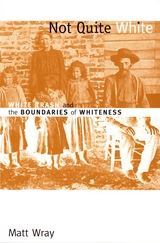
Of crucial importance are the ideas about poor whites that circulated through early-twentieth-century public health campaigns, such as hookworm eradication and eugenic reforms. In these crusades, impoverished whites, particularly but not exclusively in the American South, were targeted for interventions by sanitarians who viewed them as “filthy, lazy crackers” in need of racial uplift and by eugenicists who viewed them as a “feebleminded menace” to the white race, threats that needed to be confined and involuntarily sterilized.
Part historical inquiry and part sociological investigation, Not Quite White demonstrates the power of social categories and boundaries to shape social relationships and institutions, to invent groups where none exist, and to influence policies and legislation that end up harming the very people they aim to help. It illuminates not only the cultural significance and consequences of poor white stereotypes but also how dominant whites exploited and expanded these stereotypes to bolster and defend their own fragile claims to whiteness.
READERS
Browse our collection.
PUBLISHERS
See BiblioVault's publisher services.
STUDENT SERVICES
Files for college accessibility offices.
RECENTLY PUBLISHED



UChicago Accessibility Resources
home | accessibility | search | about | contact us
BiblioVault ® 2001 - 2025
The University of Chicago Press