
 A SCHOLARLY BOOK REPOSITORY
17 start with P start with P

Nick Juravich and Steve Striffler edit a collection that examines the effects of the pandemic on workers. Sections of the book focus on specific impacts and government efforts to restructure the economy; the dramatic effect of the pandemic on the hospitality industry; educators’ response on behalf of themselves and their students; frontline healthcare workers; and the innovative forms of labor organizing that emerged during and after COVID.
Contributors: Carlos Aramayo, Kathleen Brown, Sandrine Etienne, Ismael García-Colón, Puya Gerami, Maura Hagan, Connor Harney, Devan Hawkins, Leigh Howard, Marian Moser Jones, Doris Joy, Nick Juravich, Eric Larson, Kathryn M. Meyer, Samir Sonti, Steve Striffler, Lia Warner, Andrew B. Wolf, and Jennifer Zelnick
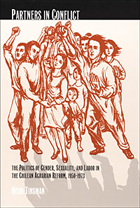
Tinsman restores women to a scholarly narrative that has been almost exclusively about men, recounting the centrality of women’s labor to the pre-Agrarian Reform world of the hacienda during the 1950s and recovering women’s critical roles in union struggles and land occupations during the Agrarian Reform itself. Providing a theoretical framework for understanding why the Agrarian Reform ultimately empowered men more than women, Tinsman argues that women were marginalized not because the Agrarian Reform ignored women but because, under both the Frei and Allende governments, it promoted the male-headed household as the cornerstone of a new society. Although this emphasis on gender cooperation stressed that men should have more respect for their wives and funneled unprecedented amounts of resources into women’s hands, the reform defined men as its protagonists and affirmed their authority over women.
This is the first monographic social history of Chile’s Agrarian Reform in either English or Spanish, and the first historical work to make sexuality and gender central to the analysis of the reforms.

Based on recent qualitative research, this book shows high varieties across European countries and economic sectors in degrees, forms and impacts of decentralisation. The authors explore, in interdisciplinary and multi-level perspectives, continuity and change in regulating and practicing collective bargaining in France, Germany, Ireland, Italy, the Netherlands, Poland, Spain and Sweden. In cross-country comparisons, company case studies in manufacturing and retail show the divergent effects of national regimes and social partners’ power resources on trade unions’ strategies and influence in company bargaining.

Grounded in the theoretical perspectives of subaltern studies and drawing on an extremely complete archive of landed estates that includes detailed regular reports by plantation managers on all aspects of farming life, Peasants on Plantations reveals the intricate ways peasants, managers, and owners manipulated each other to benefit their own interests. As Peloso demonstrates, rather than a simple case of domination of the peasants by the owners, both parties realized that negotiation was the key to successful growth, often with the result that peasants cooperated with plantation growth strategies in order to participate in a market economy. Long-term contracts gave tenants and sharecroppers many opportunities to make farming choices, to assert claims on the land, compete among themselves, and participate in plantation expansion. At the same time, owners strove to keep the peasants in debt and well aware of who maintained ultimate control.
Peasants on Plantations offers a largely untold view of the monumental struggle between planters and peasants that was fundamental in shaping the agrarian history of Peru. It will interest those engaged in Latin American studies, anthropology, and peasant and agrarian studies.


We know a lot about how clothing and shoes are made cheaply, but very little about the process when they are made beautifully. In The Perfect Fit, Claudio E. Benzecry looks at the craft that goes into designing shoes for women in the US market, revealing that this creative process takes place on a global scale. Based on unprecedented behind-the-scenes access, The Perfect Fit offers an ethnographic window into the day-to-day life of designers, fit models, and technicians as they put together samples and prototypes, showing how expert work is a complement to and a necessary condition for factory exploitation.
Benzecry looks at the decisions and constraints behind how shoes are designed and developed, from initial inspiration to the mundane work of making sure a size seven stays constant. In doing so, he also fosters an original understanding of how globalization works from the ground up. Drawing on five years of research in New York, China, and Brazil, The Perfect Fit reveals how creative decisions are made, the kinds of expertise involved, and the almost impossible task of keeping the global supply chain humming.

In this richly illustrated book, Robert Macieski examines Lewis W. Hine's art and advocacy on behalf of child laborers as part of the National Child Labor Committee (NCLC) between 1909 and 1917. A “social photographer”—as he called himself—Hine created images that documented children at work throughout New England, revealing their exploitation in the North as he had for rural working children in the South. Hine staged his images, highlighting particular types of labor in specific places: the “newsies” in Connecticut cities; sardine canners in Eastport, Maine; cranberry pickers in Cape Cod bogs; industrial homeworkers in Boston and Providence; and cotton textile workers throughout the region. His association with the NCLC connected him to a network of local and national reformers, social workers, and child welfare professionals, a broad coalition he supported in their fight to end this unethical labor practice. Macieski also chronicles Hine's efforts to mount major exhibitions that would help move public opinion against child labor.
In Picturing Class, Macieski explores the historical context of Hine's photographs and the social worlds of his subjects. He offers a detailed analysis of many of the images, unearthing the stories behind the creation of these photographs and the lives of their subjects. In telling the story of these photographs, their creation, and their reception, Macieski demonstrates how Hine worked to advance an unvarnished picture of a rapidly changing region and the young workers at the center of this important shift.

Kieran Allen breaks this mould, assessing the founder of the Irish Marxist movement ideas from a revolutionary socialist perspective. Allen considers the strengths and weaknesses of Connolly’s revolutionary strategy, the effect of his commitment to international socialism on his nationalist loyalties and arguing that, ultimately, Connolly's enduring relevance derives from his anti-imperialism. Any socialist movement today ignores this book at its peril.
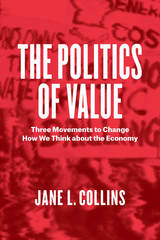
Each case shows how the concrete actions of a group of citizens can prompt us to reflect on what is needed for a just and sustainable economic system. In one case, activists raised questions about the responsibilities of business, in the second about the significance of local economies, and in the third about the contributions of the public sector. Through these movements, Jane L. Collins maps a set of cultural conversations about the types of investments and activities that contribute to the health of the economy. Compelling and persuasive, The Politics of Value offers a new framework for viewing economic value, one grounded in thoughtful assessment of the social division of labor and the relationship of the state and the market to civil society.

The recent vast upsurge in social science scholarship on job precarity has generally little to say about earlier forms of this phenomenon. Eloisa Betti’s monograph convincingly demonstrates on the example of Italy that even in the post-war phase of Keynesian stability and welfare state, precarious labor was an underlying feature of economic development. She examines how in this short period exceptional politics of labor stability prevailed. The volume then presents the processes whereby labor precarity regained momentum— under the name of flexibility— in the post-Fordist phase from the early 1980s, taking on new forms in the Craxi and Berlusconi eras.
Multiple actors are addressed in the analysis. The book gives voice to intellectuals, scholars, politicians and trade unionists as they have framed the concept and debates on precarious work from the 1950s onwards. Views of labor law experts, politicians and public servants are investigated in regard to labor regulations. Positions of the very precarians are explored, ranging from rural women, industrial homeworkers and blue-collar workers to physicians, university researchers and trainees, unveiling the emergence of anti-precarity social movements. The continuous role of women’s associations and feminist groups in opposing labor precarity since the 1950s is prominently exposed.
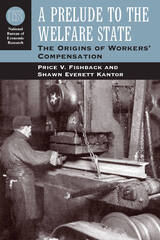
In this highly original and persuasive work, Price V. Fishback and Shawn Everett Kantor challenge widespread historical perceptions, arguing that, rather than being an early progressive victory, workers' compensation succeeded because all relevant parties—labor and management, insurance companies, lawyers, and legislators—benefited from the legislation. Thorough, rigorous, and convincing, A Prelude to the Welfare State: The Origins of Workers' Compensation is a major reappraisal of the causes and consequences of a movement that ultimately transformed the nature of social insurance and the American workplace.
The volume, developed from a 1984 National Bureau of Economic Research conference, focuses on various labor issues in military and other governmental employment. Several contributors discuss compensation in the armed forces and its relationship to that in the private sector, as well as the interaction between the military and the private sector in the employment of youth. This latter is of particular interest because studies of youth employment have generally ignored the important influence of military hiring practices on labor market conditions. In other contributions, the response of wages and employment in the public sector to economic conditions is analyzed, and a detailed study of government pension plans is presented. Also included is a theoretical and empirical analysis of comparable worth in the public sector from the viewpoint of analytical labor economics. The volume concludes with a look at public school teachers' salaries in the context of current debates over improving the quality of American education.
A valuable resource to policymakers, Public Sector Payrolls will be an important addition to research in the field of labor economics.
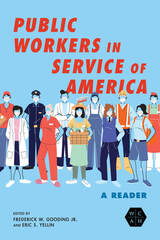
From white-collar executives to mail carriers, public workers meet the needs of the entire nation. Frederick W. Gooding Jr. and Eric S. Yellin edit a collection of new research on this understudied workforce. Part One begins in the late nineteenth- and early twentieth century to explore how questions of race, class, and gender shaped public workers, their workplaces, and their place in American democracy. In Part Two, essayists examine race and gender discrimination while revealing the subtle contemporary forms of marginalization that keep Black men and Black and white women underpaid and overlooked for promotion. The historic labor actions detailed in Part Three illuminate how city employees organized not only for better pay and working conditions but to seek recognition from city officials, the public, and the national labor movement. Part Four focuses on nurses and teachers to address the thorny question of whether certain groups deserve premium pay for their irreplaceable work and sacrifices or if serving the greater good is a reward unto itself.
Contributors: Eileen Boris, Cathleen D. Cahill, Frederick W. Gooding Jr., William P. Jones, Francis Ryan, Jon Shelton, Joseph E. Slater, Katherine Turk, Eric S. Yellin, and Amy Zanoni
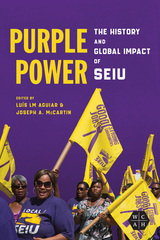
Luís LM Aguiar and Joseph A. McCartin edit essays on one of contemporary labor’s bedrock organizations. The contributors explore key episodes, themes, and features in the union’s recent history and evaluate SEIU as a union with global aspirations and impact. The first section traces the SEIU’s growth in the last and current centuries. The second section offers in-depth studies of key campaigns in the United States, including the Justice for Janitors and Fight for $15 movements. The third section focuses on the SEIU’s work representing low-wage workers in Canada, Australia, Europe, and Brazil. An interview with Justice for Janitors architect Stephen Lerner rounds out the volume.
Contributors: Luís LM Aguiar, Adrienne E. Eaton, Janice Fine, Euan Gibb, Laurence Hamel-Roy, Tashlin Lakhani, Joseph A. McCartin, Yanick Noiseux, Benjamin L. Peterson, Allison Porter, Alyssa May Kuchinski, Maite Tapia, Veronica Terriquez, and Kyoung-Hee Yu
READERS
Browse our collection.
PUBLISHERS
See BiblioVault's publisher services.
STUDENT SERVICES
Files for college accessibility offices.
RECENTLY PUBLISHED





UChicago Accessibility Resources
home | accessibility | search | about | contact us
BiblioVault ® 2001 - 2025
The University of Chicago Press