
 A SCHOLARLY BOOK REPOSITORY
6 start with P start with P
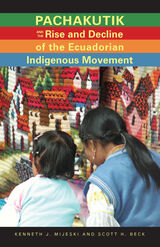
The mobilization of militant indigenous politics is one of the most important stories in Latin American studies today. In this critical work, Kenneth J. Mijeski and Scott H. Beck examine the rise and decline of Ecuador’s leading indigenous party, Pachakutik, as it tried to transform the state into a participative democracy.
Using in-depth interviews with political activists, as well as a powerful statistical analysis of election results, the authors show that the political election game failed to advance the causes of Ecuador’s poor or the movement’s own indigenous supporters. Pachakutik and the Rise and Decline of the Ecuadorian Indigenous Movement is an extraordinarily valuable case study of Ecuador’s indigenous movement and the challenges it still faces.
From the 1848 Treaty of Guadalupe Hidalgo to the 1960s, Mexican American Catholics experienced racism and discrimination within the U.S. Catholic church, as white priests and bishops maintained a racial divide in all areas of the church's ministry. To oppose this religious apartheid and challenge the church to minister fairly to all of its faithful, a group of Chicano priests formed PADRES (Padres Asociados para Derechos Religiosos, Educativos y Sociales, or Priests Associated for Religious, Educational, and Social Rights) in 1969. Over the next twenty years of its existence, PADRES became a powerful force for change within the Catholic church and for social justice within American society.
This book offers the first history of the founding, activism, victories, and defeats of PADRES. At the heart of the book are oral history interviews with the founders of PADRES, who describe how their ministries in poor Mexican American parishes, as well as their own experiences of racism and discrimination within and outside the church, galvanized them into starting and sustaining the movement. Richard Martínez traces the ways in which PADRES was inspired by the Chicano movement and other civil rights struggles of the 1960s and also probes its linkages with liberation theology in Latin America. He uses a combination of social movement theory and organizational theory to explain why the group emerged, flourished, and eventually disbanded in 1989.

--Fred Ross, Cesar Chavez, Dolores Huerta, and the Community Service Organization and National Farm Workers Association
--Nicholas von Hoffman and the Woodlawn Organization
--Tom Gaudette and the Northwest Community Organization
--Ed Chambers, Richard Harmon, and the Industrial Areas Foundation
--Shel Trapp, Gale Cincotta, and National People's Action
--Heather Booth, Midwest Academy, and Citizen Action
--Wade Rathke and ACORN
Weaving classic texts with interviews and their own context-setting commentaries, the editors of People Power provide the first comprehensive history of Alinsky-based organizing in the tumultuous period from 1955 to 1980, when the key organizing groups in the United States took form. Many of these selections--previously available only on untranscribed audiotapes or in difficult-to-read mimeograph or Xerox formats--appear in print here for the first time.

An engaging look at one of English history and literature’s most compelling, complicated, and talented figures, Percy Bysshe Shelley will be a valuable contribution to our understanding of the man and his work.
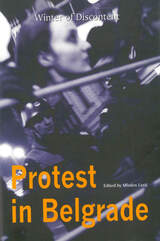
Protest in Belgrade addresses one of the most important social movements of this decade - the civil and student peace demonstrations which took place in Belgrade during the winter of 1996/97. The demonstrations, the largest ever in history, were in response to Milošević’s nullifying of the results of local elections in fourteen towns in Serbia which created global media attention and attracted worldwide sympathy.
This in-depth study of a society calling for democracy is based on interviews with over 1000 civilians and students. The book is unique because much of the research was carried out and completed while the demonstrations were still in progress and before the outcome of events was known. A chronology of events is also included.
The book provides an abundance of valuable information for analysts of post-socialist transformation, researchers of social movements and social change, and for all those concerned with the tragic events in Southeast Europe.
READERS
Browse our collection.
PUBLISHERS
See BiblioVault's publisher services.
STUDENT SERVICES
Files for college accessibility offices.
RECENTLY PUBLISHED





UChicago Accessibility Resources
home | accessibility | search | about | contact us
BiblioVault ® 2001 - 2026
The University of Chicago Press