
 A SCHOLARLY BOOK REPOSITORY
18 start with R start with R

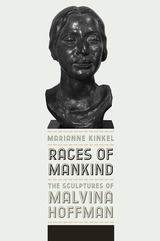
A fascinating cultural history, Races of Mankind examines how we continually re-negotiate the veracity of race through collaborative processes involved in the production, display, and circulation of visual representations.
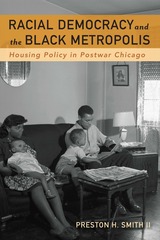
“The African American community.” “The black position.” In accounts of black politics after the Second World War, these phrases reflect how the African American perspective generally appeared consistent, coherent, and unified. In Racial Democracy and the Black Metropolis, Preston H. Smith II examines housing debates in Chicago that go beyond black and white politics, and he shows how class and factional conflicts among African Americans actually helped to reproduce stunning segregation along economic lines.
Class and factional conflicts were normal in the rough-and-tumble world of land use politics. They are, however, often not visible in accounts of the postwar fight against segregation. Smith outlines the ideological framework that black civic leaders in Chicago used to formulate housing policy, both within and outside the black community, to reveal a surprising picture of leaders who singled out racial segregation as the source of African Americans’ inadequate housing rather than attacking class inequalities. What are generally presented as black positions on housing policy in Chicago, Smith makes clear, belonged to the black elite and did not necessarily reflect black working-class participation or interests.
This book details how black civic leaders fought racial discrimination in ways that promoted—or at least did not sacrifice—their class interests in housing and real estate struggles. And, as Smith demonstrates, their accommodation of the real estate practices and government policy of the time has had a lasting effect: it contributed to a legacy of class segregation in the housing market in Chicago and major metropolitan areas across the country that is still felt today.
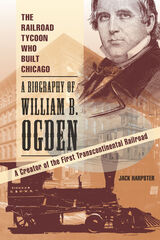
William Butler Ogden was a pioneer railroad magnate, one of the earliest founders and developers of the city of Chicago, and an important influence on U.S. westward expansion. His career as a businessman stretched from the streets of Chicago to the wilds of the Wisconsin lumber forests, from the iron mines of Pennsylvania to the financial capitals in New York and beyond. Jack Harpster’s The Railroad Tycoon Who Built Chicago: A Biography of William B. Ogden is the first chronicle of one of the most notable figures in nineteenth-century America.
Harpster traces the life of Ogden from his early experiences as a boy and young businessman in upstate New York to his migration to Chicago, where he invested in land, canal construction, and steamboat companies. He became Chicago’s first mayor, built the city’s first railway system, and suffered through the Great Chicago Fire. His diverse business interests included real estate, land development, city planning, urban transportation, manufacturing, beer brewing, mining, and banking, to name a few. Harpster, however, does not simply focus on Ogden’s role as business mogul; he delves into the heart and soul of the man himself.
The Railroad Tycoon Who Built Chicago is a meticulously researched and nuanced biography set against the backdrop of the historical and societal themes of the nineteenth century. It is a sweeping story about one man’s impact on the birth of commerce in America. Ogden’s private life proves to be as varied and interesting as his public persona, and Harpster weaves the two into a colorful tapestry of a life well and usefully lived.

From 1932 to 1953, during the Black Chicago Renaissance, numerous literary events were held within and for the city’s Black community. In book clubs, public forums, print reviews, little magazines, local programming, and other public venues, Black women in particular debated the role of literature in racial uplift efforts, set literary standards, and acted as community gatekeepers for cultural production during a time known as the Black Chicago Renaissance. Through these inspiring efforts, a mix of publishers, well-known authors, and everyday readers significantly fostered a robust literary culture in the Windy City.
Reading the Renaissance constructs a reception history of the Black women who read and reviewed, published and promoted, and collected and curated literature of the era. Mary Unger interprets how local figures such as Vivian G. Harsh, Ora Morrow, Gwendolyn Brooks, Alice Browning, Fern Gayden, and Margaret Walker cultivated particular literary tastes through collective acts of reading and reception. She does so by recovering a network of readers, book clubs, literary magazines, civic programs, and book businesses that Black women created, led, and transformed during the early 1930s through the early 1950s in Bronzeville, Chicago’s predominantly Black South Side neighborhood.
This illuminating work includes close readings of texts alongside letters, scrapbooks, meeting minutes, reviews, and other ephemera of local reading practices to show how Black women facilitated diverse strategies of reading while instructing community members how to engage a variety of print cultures at the time. Unger demonstrates how Black women readers influenced individual authors as well as the norms and expectations of African American literature more broadly, becoming important (yet too often overlooked) players in American literary history.
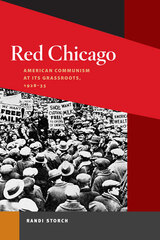
Red Chicago is a social history of American Communism set within the context of Chicago's neighborhoods, industries, and radical traditions. Using local party records, oral histories, union records, party newspapers, and government documents, Randi Storch fills the gap between Leninist principles and the day-to-day activities of Chicago's rank-and-file Communists.
Uncovering rich new evidence from Moscow's former party archive, Storch argues that although the American Communist Party was an international organization strongly influenced by the Soviet Union, at the city level it was a more vibrant and flexible organization responsible to local needs and concerns. Thus, while working for a better welfare system, fairer unions, and racial equality, Chicago's Communists created a movement that at times departed from international party leaders' intentions. By focusing on the experience of Chicago's Communists, who included a large working-class, African American, and ethnic population, this study reexamines party members' actions as an integral part of the communities and industries in which they lived and worked.
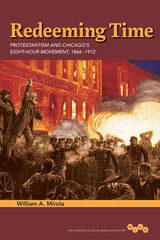
William A. Mirola explores how the city's eight-hour movement intersected with a Protestant religious culture that supported long hours to keep workers from idleness, intemperance, and secular leisure activities. Analyzing how both workers and clergy rewove working-class religious cultures and ideologies into strategic and rhetorical frames, Mirola shows how every faith-based appeal contested whose religious meanings would define labor conditions and conflicts. As he notes, the ongoing worker-employer tension transformed both how clergy spoke about the eight-hour movement and what they were willing to do, until intensified worker protest and employer intransigence spurred Protestant clergy to support the eight-hour movement even as political and economic arguments eclipsed religious framing.
A revealing study of an era and a movement, Redeeming Time illustrates the potential--and the limitations--of religious culture and religious leaders as forces in industrial reform.
Moffett-Bateau uses radical Black feminist political theory and develops a framework called the political possible-self, which argues that belonging to a community and developing political imagination foment change. These women employ grassroots efforts to subvert oppressive power structures by protesting institutions within their communities, addressing the benign neglect of their housing development, organizing community art shows and meals, volunteering at local public schools, and holding meetings to increase the political confidence of public-housing tenants by educating them on navigating government bureaucracies.
Ultimately, Redefining the Political shows how political engagement at both the individual and community levels can be fruitful for nontraditional political contributions.

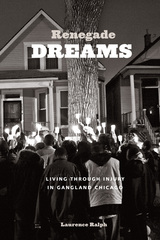
Going deep into a West Side neighborhood most Chicagoans only know from news reports—a place where children have been shot just for crossing the wrong street—Ralph unearths the fragile humanity that fights to stay alive there, to thrive, against all odds. He talks to mothers, grandmothers, and pastors, to activists and gang leaders, to the maimed and the hopeful, to aspiring rappers, athletes, or those who simply want safe passage to school or a steady job. Gangland Chicago, he shows, is as complicated as ever. It’s not just a warzone but a community, a place where people’s dreams are projected against the backdrop of unemployment, dilapidated housing, incarceration, addiction, and disease, the many hallmarks of urban poverty that harden like so many scars in their lives. Recounting their stories, he wrestles with what it means to be an outsider in a place like this, whether or not his attempt to understand, to help, might not in fact inflict its own damage. Ultimately he shows that the many injuries these people carry—like dreams—are a crucial form of resilience, and that we should all think about the ghetto differently, not as an abandoned island of unmitigated violence and its helpless victims but as a neighborhood, full of homes, as a part of the larger society in which we all live, together, among one another.

By weaving together the behind-the-scenes story of the library's formation and the stories between the covers of books on display, Wadsworth and Wiegand firmly situate the Woman's Building Library within the historical context of the 1890s. Interdisciplinary in approach, their book demonstrates how this landmark collection helped consolidate and institutionalize women's writing in conjunction with the burgeoning women's movement and the professionalization of librarianship in late nineteenth-century America.
Americans in this period debated a wide range of topics, including women's rights, gender identity, racial politics, nationalism, regionalism, imperialism, and modernity. These debates permeated the cultural climate of the Columbian Exposition. Wadsworth and Wiegand's book illuminates the range and complexity of American women's responses to these issues within a public sphere to which the Woman's Building provided unprecedented access.
In this book, Sam Mitrani cogently examines the making of the police department in Chicago, which by the late 1800s had grown into the most violent, turbulent city in America. Chicago was roiling with political and economic conflict, much of it rooted in class tensions, and the city's lawmakers and business elite fostered the growth of a professional municipal police force to protect capitalism, its assets, and their own positions in society. Together with city policymakers, the business elite united behind an ideology of order that would simultaneously justify the police force's existence and dictate its functions.
Tracing the Chicago police department's growth through events such as the 1855 Lager Beer riot, the Civil War, the May Day strikes, the 1877 railroad workers strike and riot, and the Haymarket violence in 1886, Mitrani demonstrates that this ideology of order both succeeded and failed in its aims. Recasting late nineteenth-century Chicago in terms of the struggle over order, this insightful history uncovers the modern police department's role in reconciling democracy with industrial capitalism.
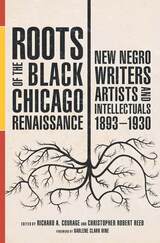
Richard A. Courage and Christopher Robert Reed have brought together essays that explore the intersections in the backgrounds, education, professional affiliations, and public lives and achievements of black writers, journalists, visual artists, dance instructors, and other creators working in the late nineteenth and early twentieth centuries. Organized chronologically, the chapters unearth transformative forces that supported the emergence of individuals and social networks dedicated to work in arts and letters. The result is an illuminating scholarly collaboration that remaps African American intellectual and cultural geography and reframes the concept of urban black renaissance.
Contributors: Richard A. Courage, Mary Jo Deegan, Brenda Ellis Fredericks, James C. Hall, Bonnie Claudia Harrison, Darlene Clark Hine, John McCluskey Jr., Amy M. Mooney, Christopher Robert Reed, Clovis E. Semmes, Margaret Rose Vendryes, and Richard Yarborough
READERS
Browse our collection.
PUBLISHERS
See BiblioVault's publisher services.
STUDENT SERVICES
Files for college accessibility offices.
RECENTLY PUBLISHED


UChicago Accessibility Resources
home | accessibility | search | about | contact us
BiblioVault ® 2001 - 2025
The University of Chicago Press