
 A SCHOLARLY BOOK REPOSITORY
12 start with S start with S
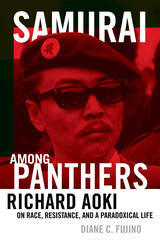
An iconic figure of the Asian American movement, Richard Aoki (1938–2009) was also, as the most prominent non-Black member of the Black Panther Party, a key architect of Afro-Asian solidarity in the 1960s and ’70s. His life story exposes the personal side of political activism as it illuminates the history of ethnic nationalism and radical internationalism in America.
A reflection of this interconnection, Samurai among Panthers weaves together two narratives: Aoki’s dramatic first-person chronicle and an interpretive history by a leading scholar of the Asian American movement, Diane C. Fujino. Aoki’s candid account of himself takes us from his early years in Japanese American internment camps to his political education on the streets of Oakland, to his emergence in the Black Panther Party. As his story unfolds, we see how his parents’ separation inside the camps and his father’s illegal activities shaped the development of Aoki’s politics. Fujino situates his life within the context of twentieth-century history—World War II, the Cold War, and the protests of the 1960s. She demonstrates how activism is both an accidental and an intentional endeavor and how a militant activist practice can also promote participatory democracy and social service.
The result of these parallel voices and analysis in Samurai among Panthers is a complex—and sometimes contradictory—portrait of a singularly extraordinary activist and an expansion and deepening of our understanding of the history he lived.

The exposure of undercover policeman Mark Kennedy in the eco-activist movement revealed how the state monitors and undermines political activism. This book shows the other grave threat to our political freedoms - undercover activities by corporations.
Secret Manoeuvres in the Dark documents how corporations are halting legitimate action and investigation by activists. Using exclusive access to previously confidential sources, Eveline Lubbers shows how companies such as Nestlé, Shell and McDonalds use covert methods to evade accountability. She argues that corporate intelligence gathering has shifted from being reactive to pro-active, with important implications for democracy itself.
Secret Manoeuvres in the Dark will be vital reading for activists, investigative and citizen journalists, and all who care about freedom and democracy in the 21st century.

Sometimes troublemakers emerge from the most unlikely of places. This true story follows the lives of two daughters of the Gilded Age—Lucy and Eliza Kennedy—who were educated at Vassar College and became leaders of the suffrage movement. Then, after the Nineteenth Amendment was passed in 1920, they spent the next forty years fighting corruption in politics and government.
Tenacious, smart, and witty, they captivated crowds, disarmed their opponents, and instilled particular dread among the corrupt politicians who were the unfortunate targets of their nonpartisan crusade. Their entry across the threshold of Pittsburgh’s City-County Building would reportedly invoke a flurry of hushed warnings through the halls: “The She Devils are at the door!” Together, Lucy and Eliza fought for the vote, empowered women to use it wisely, forced a mayor out of office in disgrace, took control of the city budget, exposed a series of scandals, spearheaded police reform, and launched a campaign that would eventually clear Pittsburgh of its smoky veil.
Featuring the true story of two powerful women, this book comes at a propitious time, reminding us how far women have come and how vigilant we must remain.
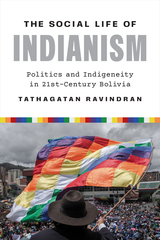
A sophisticated analysis of an influential Indigenous political ideology.
When the political ideology known as “Indianism” developed in Bolivia in the 1960s, it was premised on a rejection of Bolivian nationalism. Over the ensuing decades, however, it underwent several mutations as it moved out of a close circle of intellectuals to grip the urban masses that brought Evo Morales—the first Indigenous president—to power in 2006.
The Social Life of Indianism offers a fresh perspective by examining Bolivian Indigenous politics through the lens of political ideology. Through an ethnographic study of Indianism in the city of El Alto, Tathagatan Ravindran shows how canonical Indianism—the original ideology that rejects Bolivia as enslaver of the Indian nation—provided philosophical ballast for exponents of a more popular folk Indianism that accommodates the Bolivian state and pursues Indigenous empowerment within it. Synthesizing approaches from several disciplines, Ravindran demonstrates how canonical Indianism was not refuted or supplanted; it refracted, in the broader public, into a new common sense. A sophisticated analysis of a complex political landscape, The Social Life of Indianism brings much-needed nuance to one of the most prominent forms of Indigenous ideology and offers a unique framework for analyzing political ideologies across the contemporary world.

These books are not Plaatje’s only claim to fame. In the course of a prolific career he wrote letters to the press, newspaper articles and editorials, pamphlets, political speeches, evidence to government commissions of enquiry, unpublished autobiographical writings, and many personal letters. Together they provide both an engaging personal record and a very readable – and revealing – commentary on South African social and political affairs during the era of segregation, from 1899 through to Plaatje’s tragically early death in 1932.
What he wrote has a unique historical importance, all the more meaningful from the perspective of the 1990s.
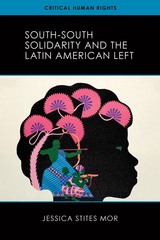
Jessica Stites Mor looks at four in-depth case studies: the use of legal reform to accomplish the goals of solidarity embedded in Mexico's revolutionary constitution, visual and print media circulated by Cuba and its influence on the agenda of the Afro-Asian block at the United Nations, organizing on behalf of Palestinian nationalism in reshaping Argentina's socialist left, and the role of Latin American Catholic activists in challenging the South African apartheid state. These examples serve as a much-needed road map to navigate our current political climate and show us how solidarity movements might approach future struggles.
The Squatters' Movement in Europe is the first definitive guide to squatting as an alternative to capitalism. It offers a unique insider's view on the movement – its ideals, actions and ways of life. At a time of growing crisis in Europe with high unemployment, dwindling social housing and declining living standards, squatting has become an increasingly popular option.
The book is written by an activist-scholar collective, whose members have direct experience of squatting: many are still squatters today. There are contributions from the Netherlands, Spain, the USA, France, Italy, Germany, Switzerland and the UK.
In an age of austerity and precarity this book shows what has been achieved by this resilient social movement, which holds lessons for policy-makers, activists and academics alike.
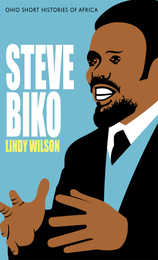
Steve Biko inspired a generation of black South Africans to claim their true identity and refuse to be a part of their own oppression. Through his example, he demonstrated fearlessness and self-esteem, and he led a black student movement countrywide that challenged and thwarted the culture of fear perpetuated by the apartheid regime. He paid the highest price with his life. The brutal circumstances of his death shocked the world and helped isolate his oppressors.
This short biography of Biko shows how fundamental he was to the reawakening and transformation of South Africa in the second half of the twentieth century—and just how relevant he remains. Biko’s understanding of black consciousness as a weapon of change could not be more relevant today to “restore people to their full humanity.”
As an important historical study, this book’s main sources were unique interviews done in 1989—before the end of apartheid—by the author with Biko’s acquaintances, many of whom have since died.
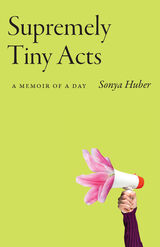
“I think we have to get to the real, to catch the facts we have, to hold on to what we see. . . .in this time where lies are currency,” Sonya Huber writes in her book-length essay Supremely Tiny Acts: A Memoir of a Day. On the theory that naming the truths of quotidian experience can counter the dangerous power of lies, she carefully recounts two anxiety-fueled days one fall. On the first, she is arrested as part of a climate protest in Times Square. On the other, she must make it to her court appearance while also finding time to take her son to get his learner's permit. Paying equal attention to minor details, passing thoughts, and larger political concerns around activism and parenting in the Trump-era United States, Huber asks: How can one simultaneously be a good mother, a good worker, and a good citizen? As she reflects on the meaning of protest and on whiteness and other forms of privilege within political activism, Huber offers a wry, self-aware, and stirring testament to the everyday as a seedbed for meaningful change.
READERS
Browse our collection.
PUBLISHERS
See BiblioVault's publisher services.
STUDENT SERVICES
Files for college accessibility offices.
RECENTLY PUBLISHED



UChicago Accessibility Resources
home | accessibility | search | about | contact us
BiblioVault ® 2001 - 2026
The University of Chicago Press