
 A SCHOLARLY BOOK REPOSITORY
32 start with S start with S
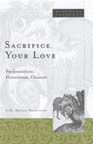
A long-awaited reevaluation of Chaucer through the lens of sacrifice by a major figure in medieval studies
Historicism and its discontents have long been central to the work of Louise Fradenburg, one of the world’s most original and provocative literary medievalists. Sacrifice Your Love brings this interest to bear on Chaucer’s writing and his world, rethought in light of a theory of sacrifice and its part in cultural production. Fradenburg writes the "history of the signifier"—a way of reading change in the symbolic order—and its role in making sacrifice enjoyable.
Sacrifice Your Love develops the idea that sacrifice is a mode of enjoyment—that our willingness to sacrifice our desire is actually a way of pursuing it. Fradenburg considers the implications of this idea for various problems important in medieval studies today—how to understand the religiosity of cultural forms, particularly chivalry, in the later Middle Ages and how to understand the ethics of Chaucer’s famously nondidactic poetry—as well as in other fields of inquiry. A major rethinking of Chaucer, Sacrifice Your Love works in depth as well as across a broad range of topics from medievalism to psychoanalysis, advancing both the theory and practice of a new kind of historicist approach.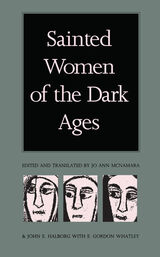
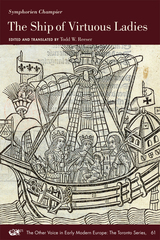
Three of these holy women were queens who turned to religion only after a period of intense worldly activity. Others were members of the Carolingian family, deeply implicated in the political ambitions of their male relatives. Some were partners in the great Irish missions to the pagan countryside and others worked for the physical salvation of the poor. From the peril and suffering of their lives they shaped themselves as paragons of power and achievement. Beloved by their sisters and communities for their spiritual gifts, they ultimately brought forth a new model of sanctity.
These biographies are unusually authentic. At least two were written by women who knew their subjects, while others reflect the direct testimony of sisters within the cloister walls. Each biography is accompanied by an introduction and notes that clarify its historical context. This volume will be an excellent source for students and scholars of women's studies and early medieval social, religious, and political history.
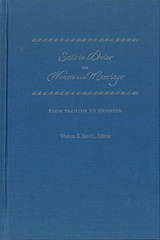
Advice on sex and marriage in the literature of antiquity and the middle ages typically stressed the negative: from stereotypes of nagging wives and cheating husbands to nightmarish visions of women empowered through marriage. Satiric Advice on Women and Marriage brings together the leading scholars of this fascinating body of literature. Their essays examine a variety of ancient and early medieval writers' cautionary and often eccentric marital satire beginning with Plautus in the third century B.C.E. through Chaucer (the only non-Latin author studied). The volume demonstrates the continuity in the Latin tradition which taps into the fear of marriage and intimacy shared by ancient ascetics (Lucretius), satirists (Juvenal), comic novelists (Apuleius), and by subsequent Christian writers starting with Tertullian and Jerome, who freely used these ancient sources for their own purposes, including propaganda for recruiting a celibate clergy and the promotion of detachment and asceticism as Christian ideals.
Warren S. Smith is Professor of Classical Languages at the University of New Mexico.

By showing how the medieval poet's obsession with the outrageous, the low, and the lewd was intimately bound to poetry, Bloch forces a revision of traditional approaches to Old French literature. His final chapter, on castration anxiety, fetishism, and the comic, links the fabliaux with the development of modern notions of the self and makes a case for the medieval roots of our own sense of humor.
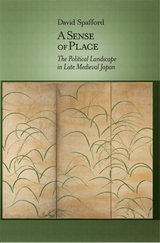
A Sense of Place examines the vast Kanto region as a locus of cultural identity and an object of familial attachment during the political and military turmoil of the late fifteenth and early sixteenth centuries in Japan. Through analysis of memoirs, letters, chronicles, poetry, travelogues, lawsuits, land registers, and archeological reports, David Spafford explores the relationships of the eastern elites to the space they inhabited: he considers the region both as a whole, in its literary representations and political and administrative dimensions, and as an aggregation of discrete locales, where struggles over land rights played out alongside debates about the meaning of ties between families and their holdings. Spafford also provides the first historical account in English of medieval castle building and the castellan revolution of the late fifteenth century, which militarized the countryside and radically transformed the exercise of authority over territory.
Simultaneously, the book reinforces a sense of the eastern elite's anxieties and priorities, detailing how, in their relation to land and place, local elites displayed a preference for past precedent and inherited wisdom. Even amidst the changes wrought by war, this inclination, although quite at odds with their conventional reputation for ruthless pragmatism and forward thinking, prevailed.
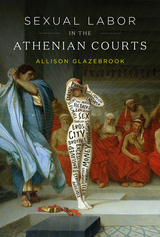
Oratory is a valuable source for reconstructing the practices, legalities, and attitudes surrounding sexual labor in classical Athens. It provides evidence of male and female sex laborers, sex slaves, brothels, sex traffickers, the cost of sex, contracts for sexual labor, and manumission practices for sex slaves. Yet the witty, wealthy, and independent hetaira, well-known from other genres, does not feature. Its detailed narratives and character portrayals provide a unique discourse on sexual labor and reveal the complex relationship between such labor and Athenian society.
Through a holistic examination of five key speeches, Sexual Labor in the Athenian Courts considers how portrayals of sex laborers intersected with gender, the body, sexuality, the family, urban spaces, and the polis in the context of the Athenian courts. Drawing on gender theory and exploring questions of space, place, and mobility, Allison Glazebrook shows how sex laborers represented a diverse set of anxieties concerning social legitimacy and how the public discourse about them is in fact a discourse on Athenian society, values, and institutions.
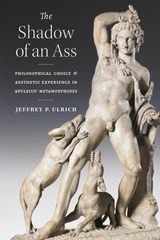
Situating the novel in a long history of philosophical and literary conversations, Ulrich suggests that the Metamorphoses anticipates much of the philosophical burlesque we tend to associate with early modern fiction, from Don Quixote to Lewis Carroll.
This book explores shared religious practices among Jews, Christians, and Muslims, focusing primarily on the medieval Mediterranean. It examines the meanings members of each community ascribed to the presence of the religious other at "their" festivals or holy sites during pilgrimage. Communal boundaries were often redefined or dissolved during pilgrimage and religious festivals. Yet, paradoxically, shared practices served to enforce communal boundaries, since many of the religious elite devised polemical interpretations of these phenomena which highlighted the superiority of their own faith. Such interpretations became integral to each group’s theological understanding of self and other to such a degree that in some regions, religious minorities were required to participate in the festivals of the ruling community. In all formulations, “otherness” remained an essential component of both polemic and prayer.

Shifting Stories explores the tale literature of eighth- and ninth-century China to show how the written tales we have today grew out of a fluid culture of hearsay that circulated within elite society. Sarah M. Allen focuses on two main types of tales, those based in gossip about recognizable public figures and those developed out of lore concerning the occult. She demonstrates how writers borrowed and adapted stories and plots already in circulation and how they transformed them—in some instances into unique and artfully wrought tales.
For most readers of that era, tales remained open texts, subject to revision by many hands over the course of transmission, unconstrained by considerations of textual integrity or authorship. Only in the mid- to late-ninth century did some readers and editors come to see the particular wording and authorship of a tale as important, a shift that ultimately led to the formation of the Tang tale canon as it is envisioned today.
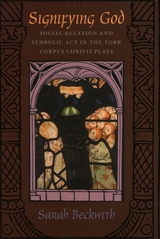
Introducing a radical new understanding of these plays as "sacramental theater," Beckwith shows how organizing the plays served as a political mechanism for regulating labor, and how theater and sacrament combined in them to do important theological work. She argues, for instance, that the theology of Corpus Christi in the resurrection plays can only be understood as a theatrical exploration of eucharistic absence and presence. Beckwith frames her study with discussions of twentieth-century manifestations of sacramental theater in Barry Unsworth's novel Morality Play and Denys Arcand's film Jesus of Montreal, and the connections between contemporary revivals of the York Corpus Christi plays and England's heritage culture.
Siren Songs synthesizes audience-oriented and narratological approaches, and examines the relationships among three kinds of audiences: internal, implied, and actual. The author prefaces her own reading of the Odyssey with an analysis of the issues posed by the earlier feminist readings on which she builds. Should the Odyssey be read as a "closed" text, that is, as one whose meaning is highly determined, or as an "open" text whose contradictions and ambiguities undercut its overt meanings?
Siren Songs presents a feminist critique of the Odyssey in an accessible manner aimed at a more general audience. All Greek is translated, and critical terminology is clearly defined.
Lillian Eileen Doherty is Associate Professor of Classics, University of Maryland, College Park.
Each generation finds in Chaucer’s works the concerns and themes of its own era. But what of Chaucer’s contemporaries? For whom was he writing? With what expectations would his original audience have approached his works? In what terms did he and his audience understand their society, and how does his poetry embody a view of society?
These are some of the questions Paul Strohm addresses in this innovative look at the historical Chaucer. Fourteenth-century English society was, he reminds us, in a state of accelerating transition: feudalism was yielding to capitalism, and traditional ways of understanding one’s place in society were contending with new social paradigms. Those like Chaucer who lived on the fringe of gentility were particularly sensitive to these changes. Their social position opened the way to attractive possibilities, even as it exposed them to special perils.
Strohm draws on seldom-considered documents to describe Chaucer’s social circle and its experiences, and he relates this circle to implied and fictional audiences in the texts. Moving between major works like the Canterbury Tales and less frequently discussed works like Complaint of Mars, he suggests that Chaucer’s poetry not only reproduces social tensions of the time but also proposes conciliatory alternatives. His analysis yields a fuller understanding of Chaucer’s world and new insight into the social implications of literary forms and styles.
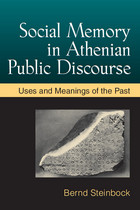
Integrating literary, epigraphic, and archaeological evidence with recent scholarship on memory, identity, rhetoric, and international relations, Social Memory in Athenian Public Discourse: Uses and Meanings of the Past enhances our understanding of both the function of memory in Athenian public discourse and the history of Athenian-Theban relations. It should be of interest not only to students of Greek history and oratory but to everybody interested in memory studies, Athenian democracy, and political decision making.

The Ancrene Wisse is a spiritual guide for female recluses, written at the request of three young anchoresses who were voluntarily enclosed for life within small cells. With rare sensitivity and discernment, Linda Georgianna analyzes this complex and skillfully composed treatise and examines its detailed portrayal of the rich, sometimes rewarding and sometimes frustrating inner life of the solitary. Georgianna sees in the author’s practical and spiritual counsel, ranging from advice on owning a cat to the confession of sin, an assumption that exterior and interior realities are inextricably bound in the solitary life, which becomes a highly self-conscious journey through human experience.
The Solitary Self offers both a reading of this linguistically difficult text and a study of those contemporary intellectual and cultural concerns—particularly the widespread interest in the psychology of sin, confession, and repentance—which help to explain the Ancrene Wisse author’s insistence upon self-awareness and individuality in the solitary life.
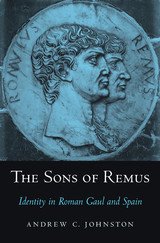
Histories of ancient Rome have long emphasized the ways in which the empire assimilated the societies it conquered, bringing civilization to the supposed barbarians. Yet interpretations of this “Romanization” of Western Europe tend to erase local identities and traditions from the historical picture, leaving us with an incomplete understanding of the diverse cultures that flourished in the provinces far from Rome.
The Sons of Remus recaptures the experiences, memories, and discourses of the societies that made up the variegated patchwork fabric of the western provinces of the Roman Empire. Focusing on Gaul and Spain, Andrew Johnston explores how the inhabitants of these provinces, though they willingly adopted certain Roman customs and recognized imperial authority, never became exclusively Roman. Their self-representations in literature, inscriptions, and visual art reflect identities rooted in a sense of belonging to indigenous communities. Provincials performed shifting roles for different audiences, rehearsing traditions at home while subverting Roman stereotypes of druids and rustics abroad.
Deriving keen insights from ancient sources—travelers’ records, myths and hero cults, timekeeping systems, genealogies, monuments—Johnston shows how the communities of Gaul and Spain balanced their local identities with their status as Roman subjects, as they preserved a cultural memory of their pre-Roman past and wove their own narratives into Roman mythology. The Romans saw themselves as the heirs of Romulus, the legendary founder of the eternal city; from the other brother, the provincials of the west received a complicated inheritance, which shaped the history of the sons of Remus.
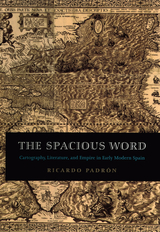
Padrón contends too that maps and geographic writings heavily influenced the Spanish imperial imagination. During the early modern period, the idea of "America" was still something being invented in the minds of Europeans. Maps of the New World, letters from explorers of indigenous civilizations, and poems dramatizing the conquest of distant lands, then, helped Spain to redefine itself both geographically and imaginatively as an Atlantic and even global empire. In turn, such literature had a profound influence on Spanish ideas of nationhood, most significantly its own.
Elegantly conceived and meticulously researched, The Spacious Word will be of enormous interest to historians of Spain, early modern literature, and cartography.
Looking closely at how medieval Jewish and Christian identities are distinguished from each other, yet intimately intertwined, Kruger demonstrates how Jews were often corporealized in ways that posited them as inferior to Christians—archaic and incapable of change—even as the two mutually shaped each other. But such attempts to differentiate Jews and Christians were inevitably haunted by the knowledge that Christianity had emerged out of Judaism and was, in its own self-understanding, a community of converts.
Examining the points of contact between Christian and Jewish communities, Kruger discloses the profound paradox of the Jew as different in all ways, yet capable of converting to fully Christian status. He draws from central medieval authors and texts such as Peter Damian, Guibert of Nogent, the Barcelona Disputation, and the Hebrew chronicles of the First Crusade, as well as lesser known writings such as the disputations of Ceuta, Majorca, and Tortosa and the immensely popular Dialogues of Peter Alfonsi.
By putting the conversion narrative at the center of this analysis, Kruger exposes it as a disruption of categories rather than a smooth passage and reveals the prominent role Judaism played in the medieval Christian imagination.
Steven F. Kruger is professor of English and medieval studies at Queens College and the Graduate Center, CUNY. He is author of several books and editor with Glenn Burger of Queering the Middle Ages (Minnesota, 2001).
"Bold, deeply learned, and important, offering a provocative thesis that is worked out through legal and archival materials and in subtle and original readings of literary texts. Absolutely new in content and significantly innovative in methodology and argument, Stumbling Blocks Before the Blind offers a cultural geography of medieval blindness that invites us to be more discriminating about how we think of geographies of disability today."
---Christopher Baswell, Columbia University
"A challenging, interesting, and timely book that is also very well written . . . Wheatley has researched and brought together a leitmotiv that I never would have guessed was so pervasive, so intriguing, so worthy of a book."
---Jody Enders, University of California, Santa Barbara
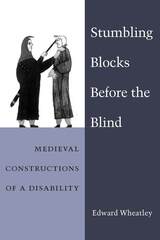
Stumbling Blocks Before the Blind presents the first comprehensive exploration of a disability in the Middle Ages, drawing on the literature, history, art history, and religious discourse of England and France. It relates current theories of disability to the cultural and institutional constructions of blindness in the eleventh through fifteenth centuries, examining the surprising differences in the treatment of blind people and the responses to blindness in these two countries. The book shows that pernicious attitudes about blindness were partially offset by innovations and ameliorations---social; literary; and, to an extent, medical---that began to foster a fuller understanding and acceptance of blindness.
A number of practices and institutions in France, both positive and negative---blinding as punishment, the foundation of hospices for the blind, and some medical treatment---resulted in not only attitudes that commodified human sight but also inhumane satire against the blind in French literature, both secular and religious. Anglo-Saxon and later medieval England differed markedly in all three of these areas, and the less prominent position of blind people in society resulted in noticeably fewer cruel representations in literature.
This book will interest students of literature, history, art history, and religion because it will provide clear contexts for considering any medieval artifact relating to blindness---a literary text, a historical document, a theological treatise, or a work of art. For some readers, the book will serve as an introduction to the field of disability studies, an area of increasing interest both within and outside of the academy.
Edward Wheatley is Surtz Professor of Medieval Literature at Loyola University, Chicago.
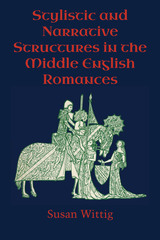
This volume provides a generic description, based on a formal analysis of narrative structures, of the Middle English noncyclic verse romances. As a group, these poems have long resisted generic definition and are traditionally considered to be a conglomerate of unrelated tales held together in a historical matrix of similar themes and characters. As single narratives, they are thought of as random collections of events loosely structured in chronological succession. Susan Wittig, however, offers evidence that the romances are carefully ordered (although not always consciously so) according to a series of formulaic patterns and that their structures serve as vehicles for certain essential cultural patterns and are important to the preservation of some community-held beliefs.
The analysis begins on a stylistic level, and the same theoretical principles applied to the linguistic formulas of the poems also serve as a model for the study of narrative structures. The author finds that there are laws that govern the creation, selection, and arrangement of narrative materials in the romance genre and that act to restrict innovation and control the narrative form.
The reasons for this strict control are to be found in the functional relationship of the genre to the culture that produced it. The deep structure of the romance is viewed as a problem-solving pattern that enables the community to mediate important contradictions within its social, economic, and mythic structures. Wittig speculates that these contradictions may lie in the social structures of kinship and marriage and that they have been restructured in the narratives in a “practical” myth: the concept of power gained through the marriage alliance, and the reconciliation of the contradictory notions of marriage for power’s sake and marriage for love’s sake.
This advanced, thorough, and completely original study will be valuable to medieval specialists, classicists, linguists, folklorists, and Biblical scholars working in oral-formulaic narrative structure.

In 1468, on the final night of Carnival in Rome, Pope Paul II sat enthroned above the boisterous crowd, when a scuffle caught his eye. His guards had intercepted a mysterious stranger trying urgently to convey a warning—conspirators were lying in wait to slay the pontiff. Twenty humanist intellectuals were quickly arrested, tortured on the rack, and imprisoned in separate cells in the damp dungeon of Castel Sant’Angelo.
Anthony D’Elia offers a compelling, surprising story that reveals a Renaissance world that witnessed the rebirth of interest in the classics, a thriving homoerotic culture, the clash of Christian and pagan values, the contest between republicanism and a papal monarchy, and tensions separating Christian Europeans and Muslim Turks. Using newly discovered sources, he shows why the pope targeted the humanists, who were seen as dangerously pagan in their Epicurean morals and their Platonic beliefs about the soul and insurrectionist in their support of a more democratic Church. Their fascination with Sultan Mehmed II connected them to the Ottoman Turks, enemies of Christendom, and the love of the classical world tied them to recent rebellious attempts to replace papal rule with a republic harking back to the glorious days of Roman antiquity.
From the cosmetic-wearing, parrot-loving pontiff to the Turkish sultan, savage in war but obsessed with Italian culture, D’Elia brings to life a Renaissance world full of pageantry, mayhem, and conspiracy and offers a fresh interpretation of humanism as a dynamic communal movement.

In a world of relentless and often violent change, what does it take for a culture to survive? Steven Weitzman addresses this question by exploring the "arts of cultural persistence"--the tactics that cultures employ to sustain themselves in the face of intractable realities. Surviving Sacrilege focuses on a famously resilient culture caught between two disruptive acts of sacrilege: ancient Judaism between the destruction of the First Temple (by the Babylonians) in 586 B.C. and the destruction of the Second Temple (by the Romans) in 70 C.E..
Throughout this period Jews faced the challenge of preserving their religious traditions in a world largely out of their control--a world ruled first by the Persians, then by the Hellenistic Seleucid Kingdom, and finally by the Roman Empire. Their struggle to answer this challenge yields insight into the ingenuity, resourcefulness, and creativity of a distinctive period in Jewish history, but one with broad implications for the study of religious and cultural survival.
Detecting something tenaciously self-preserving at the core of the imagination, Weitzman argues that its expression in storytelling, fantasy, imitation, metaphor, and magic allows a culture's survival instinct to maneuver within, beyond, and even against the limits of reality.

READERS
Browse our collection.
PUBLISHERS
See BiblioVault's publisher services.
STUDENT SERVICES
Files for college accessibility offices.
RECENTLY PUBLISHED


UChicago Accessibility Resources
home | accessibility | search | about | contact us
BiblioVault ® 2001 - 2025
The University of Chicago Press