
 A SCHOLARLY BOOK REPOSITORY
22 start with T start with T
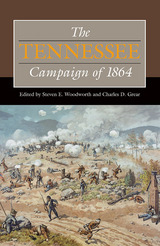
Contributors explore the campaign’s battlefield action, including how Major General Andrew J. Smith’s three aggressive divisions of the Army of Tennessee became the most successful Federal unit at Nashville, how vastly outnumbered Union troops held the Allatoona Pass, why Hood failed at Spring Hill and how the event has been perceived, and why so many of the Army of Tennessee’s officer corps died at the Battle of Franklin, where the Confederacy suffered a disastrous blow. An exciting inclusion is the diary of Confederate major general Patrick R. Cleburne, which covers the first phase of the campaign. Essays on the strained relationship between Ulysses S. Grant and George H. Thomas and on Thomas’s approach to warfare reveal much about the personalities involved, and chapters about civilians in the campaign’s path and those miles away show how the war affected people not involved in the fighting. An innovative case study of the fighting at Franklin investigates the emotional and psychological impact of killing on the battlefield, and other implications of the campaign include how the courageous actions of the U.S. Colored Troops at Nashville made a lasting impact on the African American community and how preservation efforts met with differing results at Franklin and Nashville.
Canvassing both military and social history, this well-researched volume offers new, illuminating perspectives while furthering long-running debates on more familiar topics. These in-depth essays provide an expert appraisal of one of the most brutal and notorious campaigns in Civil War history.
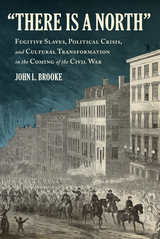
How does political change take hold? In the 1850s, politicians and abolitionists despaired, complaining that the "North, the poor timid, mercenary, driveling North" offered no forceful opposition to the power of the slaveholding South. And yet, as John L. Brooke proves, the North did change. Inspired by brave fugitives who escaped slavery and the cultural craze that was Uncle Tom's Cabin, the North rose up to battle slavery, ultimately waging the bloody Civil War.
While Lincoln's alleged quip about the little woman who started the big war has been oft-repeated, scholars have not fully explained the dynamics between politics and culture in the decades leading up to 1861. Rather than simply viewing the events of the 1850s through the lens of party politics, “There Is a North” is the first book to explore how cultural action—including minstrelsy, theater, and popular literature—transformed public opinion and political structures. Taking the North's rallying cry as his title, Brooke shows how the course of history was forever changed.
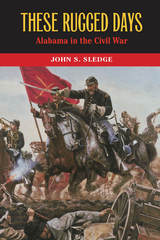
Alabama’s Civil War story—told with grit, grace, and truth.
In These Rugged Days: Alabama in the Civil War, John S. Sledge offers a riveting and readable account of Alabama’s Civil War saga. Focused on the conflict’s turning points within the state’s borders, Sledge recounts residents’ experiences from secession’s early days to its tumultuous collapse, when 75,000 blue-coated soldiers were on the move statewide. Sledge brings these tumultuous years to life in an impressive array of primary and secondary sources, including official records, diaries, newspapers, memoirs, correspondence, sketches, and photographs. He also highlights such colorful personalities as John Pelham, the youthful Jacksonville artillerist who was shipped home in an iron casket with a glass faceplate; Gus Askew, a nine-year-old Barbour County slave who vividly recalled the day the Yankees marched in; Augusta Jane Evans, the Mobile novelist who was given a gold pen by a daring blockade runner; and Emma Sansom, a plucky Gadsden teenager who acted as a scout and guide to Nathan Bedford Forrest.
These Rugged Days is an enthralling tale of action, courage, pride, and tragedy. The Civil War has left indelible marks on Alabama’s land, culture, economy, and people, and Sledge offers a refreshing take on the state's role in the conflict. His narrative is a dramatic account that will be enjoyed by lay readers as well as students and scholars of Alabama and the Civil War.
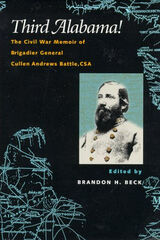
From Seven Pines to Sharpsburg and Chancellorsville to Spotsylvania, the Third Alabama Regiment played a key role in the Civil War. One of the first infantry units from the Deep South to make the journey to Virginia in 1861, the Third Alabama was the first to cross the Potomac into Maryland and to enter the streets of Gettysburg in 1863.
As the regiment’s leader and one of General Robert E. Lee’s brigade commanders, General Cullen Andrews Battle witnessed the extent of the many triumphs and sufferings of the Army of Northern Virginia. Trained as a journalist and lawyer, he records these events honestly and with compassion. Battle captures the courage of citizen soldiers fighting without prior military training, always paying tribute to the heroism of those under his command, while providing vivid accounts of some of the war’s bloodiest fights. He assesses Confederate mistakes, particularly at Seven Pines—and sheds light on the third Battle of Winchester, the only decisive defeat in which the regiment was involved.
Brandon Beck’s introductory notes provide a thorough review of Battle’s life and valuable biographical information on soldiers under his command as well as on other officers in the Army of Northern Virginia. A worthwhile addition to all Civil War libraries, public or private, Third Alabama! offers an informative, dramatic reading of the wartime activities of one of the Confederacy’s bravest fighting units.
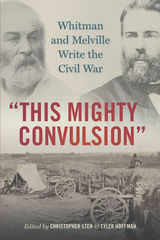
This is the first book exclusively devoted to the Civil War writings of Walt Whitman and Herman Melville, arguably the most important poets of the war. The essays brought together in this volume add significantly to recent critical appreciation of the skill and sophistication of these poets; growing recognition of the complexity of their views of the war; and heightened appreciation for the anxieties they harbored about its aftermath. Both in the ways they come together and seem mutually influenced, and in the ways they disagree, Whitman and Melville grapple with the casualties, complications, and anxieties of the war while highlighting its irresolution. This collection makes clear that rather than simply and straightforwardly memorializing the events of the war, the poetry of Whitman and Melville weighs carefully all sorts of vexing questions and considerations, even as it engages a cultural politics that is never pat.
Contributors: Kyle Barton, Peter Bellis, Adam Bradford, Jonathan A. Cook, Ian Faith, Ed Folsom, Timothy Marr, Cody Marrs, Christopher Ohge, Vanessa Steinroetter, Sarah L. Thwaites, Brian Yothers
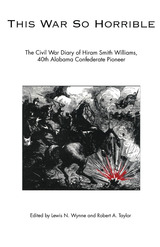
The Civil War diary of Hiram Smith Williams is extremely unusual. A carriage maker and native of New Jersey, Williams only arrived in the Deep South in 1959 and yet enlisted in the Confederate Army. As a middle-class craftsman, he represented neither wealthy Southern planters nor yeoman farmers. Part of the 40th Alabama Volunteer Regiment, he was first in Mobile, where he attempted to transfer to the CSA Navy. Failing that, he went with his regiment to Atlanta to engage in the great battle there.
A careful writer, Williams paid the same attention to his composition as he did to his carriages. Unlike many Civil War veterans, he never revised his diary to embellish his record or heroism. Prized by historians both for providing an unique point of view as well as an exceptionally articulate narrative, Williams' diary is an important addition to any Civil War library.
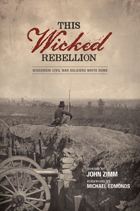
Over one hundred and fifty years after it began, the Civil War still fascinates us—the vast armies marching to war, iconic leaders like Abraham Lincoln and Robert E. Lee, the drama of a nation divided. But the Civil War was also about individuals, the hundreds of thousands of ordinary men and boys who fought and died on either side and the families and friends left at home.
This Wicked Rebellion: Wisconsin Civil War Soldiers Write Home tells this other side of the story. Drawing from over 11,000 letters in the Wisconsin Historical Society’s Civil War collection, it gives a unique and intimate glimpse of the men and women who took part in the War for the Union. Follow Wisconsin soldiers as they sign up or get drafted, endure drill and picket duty, and get their first experiences of battle. Join them as they fight desperation and fear, encounter the brutality of slavery, and struggle with the reasons for war.
From impressions of army life and the South to the hardships of disease and battle, these letters tell the story of the war through the eyes and pens of those who fought in it. This Wicked Rebellion brings to life the heroism and heartache, mayhem and misery of the Civil War, and the powerful role Wisconsin played in it.
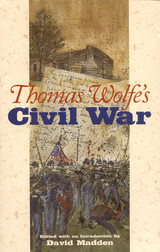
An anthology of Thomas Wolfe’s short stories, novel excerpts, and plays illuminating the Civil War
This collection of Thomas Wolfe’s writings demonstrates the centrality of the Civil War to Wolfe’s literary concerns and identity. From Look Homeward, Angel to The Hill Beyond and The Web and the Rock, Wolfe perpetually returned to the themes of loss, dissolution, sorrow, and romance engendered in the minds of many southerners by the Civil War and its lingering aftermath. His characters reflect time and again on Civil War heroes and dwell on ghostlike memories handed down by their mothers, fathers, and grandfathers. Wolfe and his protagonists compare their contemporary southern landscape to visions they have conjured of its appearance before and during the war, thereby merging the past with the present in an intense way. Ultimately, Wolfe’s prose style—incantatory and rhapsodic—is designed to evoke the national tragedy on an emotional level.
Selections of Wolfe’s writings in this collection include short stories ("Chickamauga," "Four Lost Men," "The Plumed Knight"), excerpts from his novels (O Lost, the restored version of Look Homeward, Angel, The Hills Beyond, and Of Time and the River) and a play, Mannerhouse, edited and introduced by David Madden. Madden, who makes the provocative claim that everything a southern writer writes derives from the Civil War experience, also highlights many issues essential to understanding Wolfe’s absorption with the Civil War.
Establishing himself as a fresh and important voice in the history of African American emancipation,William S. King provides a critical introduction to the lead-up to the Civil War. A skilled and judicious chronicler, King seamlessly weaves multiple and seemingly disparate threads, including early nineteenth-century Revivalism, the emergence of the Republic of Texas, the fugitive slave laws—and even the explosion of a cannon aboard the U.S.S. Princeton in 1844—to explain how the opposition to slavery in America changed from producing speeches and pamphlets to embracing the reality that slavery could be eradicated only through armed conflict. By tracing this transformation through the life of John Brown, King provides an entirely new assessment of this enigmatic figure who was characterized as a “mad man” in the wake of his butchering of proslavery settlers in Kansas and the inept raid on Harpers Ferry, Virginia. King puts these actions in context to explain the paradox of Brown’s legacy. On one hand he was vilified as an unstable threat to American democracy or a fanatical sideshow to the history of the Civil War, while on the other he was an inspiration to the oppressed, a man who garnered the indomitable Harriet Tubman’s commitment to the righteousness of his endeavor.
Elegantly written with a command of period sources, Till the Dark Angel Comes: Abolitionism and the Road to the Second American Revolution is the story of interracial opposition to slavery, the important debates among free blacks as to their future in America, and the arguments and compromises at the highest levels of government. Here we encounter many personalities of the time, some well known, such as Frederick Douglass,William Lloyd Garrison, and John C. Calhoun, and others less so, but no less important—Martin Delany, Henry Highland Garnet, and Elijah Lovejoy.
Focusing on literary and popular poets, as well as work by women, African Americans, and soldiers, this book considers how writers used poetry to articulate their relationships to family, community, and nation during the Civil War. Faith Barrett suggests that the nationalist “we” and the personal “I” are not opposed in this era; rather they are related positions on a continuous spectrum of potential stances. For example, while Julia Ward Howe became famous for her “Battle Hymn of the Republic,” in an earlier poem titled “The Lyric I” she struggles to negotiate her relationship to domestic, aesthetic, and political stances.
Barrett makes the case that Americans on both sides of the struggle believed that poetry had an important role to play in defining national identity. She considers how poets created a platform from which they could speak both to their own families and local communities and to the nations of the Confederacy, the Union, and the United States. She argues that the Civil War changed the way American poets addressed their audiences and that Civil War poetry changed the way Americans understood their relationship to the nation.
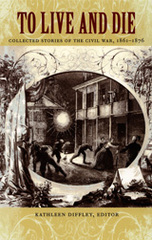
The authors, who include Louisa May Alcott and Mark Twain, depict the horrors of the battlefield, the suffering in prison camps and field hospitals, and the privations of the home front. In these pages, bushwhackers carry the war to out-of-the-way homesteads, spies work households from the inside, journeying paymasters rely on the kindness of border women, and soldiers turn out to be girls. The stories are populated with nurses, officers, speculators, preachers, slaves, and black troops, and they take place in cities, along the frontier, and on battlefields from Shiloh to Gettysburg.
The book opens with a prewar vigilante attack on the Underground Railroad and a Kansas parson in Henry King’s “The Cabin at Pharoah’s Ford” and concludes with an ex-slave recalling the loss of her remaining son in Twain’s “A True Story.” In between are stories written by both women and men that were published in magazines from the South and West as well as the culturally dominant Northeast. Wartime wood engravings highlight the text. Kathleen Diffley’s introduction provides literary and historical background, and her commentary introduces readers to magazine authors as well as the deepening disruptions of a country at war.
Just as they did for nineteenth-century readers, these stories will bring the war home to contemporary readers, giving shape to a crisis that rocked the nation then and continues to haunt it now.

Drawing on decades of research, and demonstrating remarkable command of a great range of primary sources, William S. King has written an important history of African Americans’ own contributions and points of crossracial cooperation to end slavery in America. Beginning with the civil war along the border of Kansas and Missouri, the author traces the life of John Brown and the personal support for his ideas from elite New England businessmen, intellectuals such as Emerson and Thoreau, and African Americans, including his confidant, Frederick Douglass, and Harriet Tubman. Throughout, King links events that contributed to the growing antipathy in the North toward slavery and the South’s concerns for its future, including Nat Turner’s insurrection, the Amistad affair, the Fugitive Slave law, the Kansas-Nebraska Act, and the Dred Scott decision. The author also effectively describes the debate within the African American community as to whether the U.S. Constitution was colorblind or if emigration was the right course for the future of blacks in America.
Following Brown’s execution after the failed raid on Harper’s Ferry in 1859, King shows how Brown’s vision that only a clash of arms would eradicate slavery was set into motion after the election of Abraham Lincoln. Once the Civil War erupted on the heels of Brown’s raid, the author relates how black leaders, white legislators, and military officers vigorously discussed the use of black manpower for the Union effort as well as plans for the liberation of the “veritable Africa” within the southern United States. Following the Emancipation Proclamation of January 1863, recruitment of black soldiers increased and by war’s end they made up nearly ten percent of the Union army, and contributed to many important victories.
To Raise Up a Nation: John Brown, Frederick Douglass, and the Making of a Free Country is a sweeping history that explains how the destruction of American slavery was not directed primarily from the counsels of local and national government and military men, but rather through the grassroots efforts of extraordinary men and women. As King notes, the Lincoln administration ultimately armed black Americans, as John Brown had attempted to do, and their role was a vital part in the defeat of slavery.
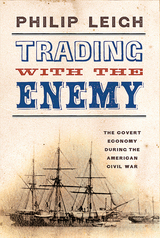
While Confederate blockade runners famously carried the seaborne trade for the South during the American Civil War, the amount of Southern cotton exported to Europe was only half of that shipped illicitly to the North. Most went to New England textile mills where business “was better than ever,” according to textile mogul Amos Lawrence. Rhode Island senator William Sprague, a mill owner and son-in-law to Treasury Secretary Salmon P. Chase, was a member of a partnership supplying weapons to the Confederacy in exchange for cotton. The trade in contraband was not confined to New England. Union General William T. Sherman claimed Confederates were supplied with weapons from Cincinnati, while General Ulysses S. Grant captured Rebel cavalry armed with carbines purchased in Union-occupied Memphis. During the last months of the war, supplies entering the Union-controlled port of Norfolk, Virginia, were one of the principal factors enabling Robert E. Lee’s Confederate army to avoid starvation. Indeed, many of the supplies that passed through the Union blockade into the Confederacy originated in Northern states, instead of Europe as is commonly supposed. Merchants were not the only ones who profited; Union officers General Benjamin Butler and Admiral David Dixon Porter benefited from this black market. President Lincoln admitted that numerous military leaders and public officials were involved, but refused to stop the trade.
In Trading with the Enemy: The Covert Economy During the American Civil War, New York Times Disunion contributor Philip Leigh recounts the little-known story of clandestine commerce between the North and South. Cotton was so important to the Northern economy that Yankees began growing it on the captured Sea Islands of South Carolina. Soon the neutral port of Matamoras, Mexico, became a major trading center, where nearly all the munitions shipped to the port—much of it from Northern armories—went to the Confederacy. After the fall of New Orleans and Vicksburg, a frenzy of contraband-for-cotton swept across the vast trans-Mississippi Confederacy, with Northerners sometimes buying the cotton directly from the Confederate government. A fascinating study, Trading with the Enemy adds another layer to our understanding of the Civil War.
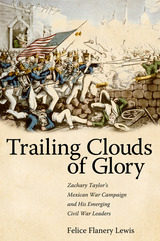
Trailing Clouds of Glory is the first examination of the roles played in the Mexican War by the large number of men who served with Taylor and who would be prominent in the next war, both as volunteer and regular army officers, and it provides fresh information, even on such subjects as Robert E. Lee and Ulysses S. Grant. Particularly interesting for the student of the Civil War are largely unknown aspects of the Mexican War service of Daniel Harvey Hill, Braxton Bragg, and Thomas W. Sherman.
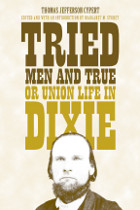
A gripping firsthand account of loyalty, resistance, and survival in Confederate Tennessee, this memoir reveals the untold story of Unionist courage behind enemy lines.
Tried Men and True, or Union Life in Dixie is the memoir of a Union supporter in south-central Tennessee. In it, he chronicles in vivid and emotional detail the local tensions between Unionists and Confederates during the Civil War South and offers a rare first-person account of the guerrilla war that devastated Western Tennessee.
Thomas Jefferson Cypert (1827-1918) was a staunch Union man of Wayne County, Tennessee. In 1863, he helped organize the Second Tennessee Mounted Infantry, a regiment of loyalist Southerners enlisted to combat Confederate cavalry in West Tennessee and Northern Alabama. Tried Men and True is Cypert’s memoir of his time as Captain of Company A, including his capture by Confederate cavalry and subsequent daring escape, in which he was aided by local Union sympathizers and slaves.
After the Civil War, Cypert served two terms in the Tennessee State Senate, one of them during the heated first years of Reconstruction, when Tennessee disenfranchised former rebels and attempted to establish Unionist Republican rule in the state. Cypert clearly wrote his memoir to defend Unionism, condemn secession and rebellion, and support loyalists’ claims for post-war power through an account of their wartime sacrifices. Never before published, the manuscript has been preserved in nearly perfect condition by Cypert’s descendants over the generations. This book is a remarkable and engagingly written account of resistance to the Confederacy by a group of southwestern Tennessee loyalists.
READERS
Browse our collection.
PUBLISHERS
See BiblioVault's publisher services.
STUDENT SERVICES
Files for college accessibility offices.
RECENTLY PUBLISHED





UChicago Accessibility Resources
home | accessibility | search | about | contact us
BiblioVault ® 2001 - 2025
The University of Chicago Press