
 A SCHOLARLY BOOK REPOSITORY
139 start with T start with T
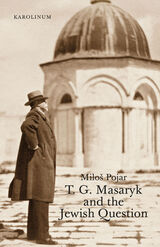
In this book, Miloš Pojar traces the development and transformation of the opinions about Jews and Judaism of the first Czechoslovak president, T. G. Masaryk. Pojar describes the key events and ideas that shaped Masaryk’s attitudes: his first contacts with the Jewish world as a child, and later as a student; his work as a philosopher and sociologist, through which his thinking on Marxism, social issues, Christianity, and Judaism evolved; and his later, pivotal, experience at the time of the anti-Semitic libel trials against Leopold Hilsner, known as the Hilsner Affair. Pojar also details the period when Masaryk, as president, formulated his position on matters such as the Czech-Jewish movement, the question of assimilation, and Zionism. Featuring an entire chapter on Masaryk’s celebrated 1927 trip to Palestine as well as a series of brief profiles of outstanding Jewish figures that explore both Masaryk’s attitudes to their ideas and their opinions of Masaryk, this book is a compelling personal portrait and a substantial contribution to our understanding of the history of Jews in the Czech lands.
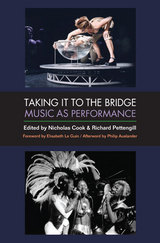
The overriding aim of this groundbreaking volume—whether the subject is vocal ornamentation in 19th-century opera or the collective improvisation of the Grateful Dead—is to give new recognition to performance as the core of musical culture. The collection brings together renowned scholars from performance studies and musicology (including Philip Auslander, David Borgo, Daphne Brooks, Nicholas Cook, Maria Delgado, Susan Fast, Dana Gooley, Philip Gossett, Jason King, Elisabeth Le Guin, Aida Mbowa, Ingrid Monson, Roger Moseley, Richard Pettengill, Joseph Roach, and Margaret Savilonis), with the intent of sparking a productive new dialogue on music as performance. Taking It to the Bridge is on the one hand a series of in-depth studies of a broad range of performance artists and genres, and on the other a contribution to ongoing methodological developments within the study of music, with the goal of bridging the approaches of musicology and performance studies, to enable a close, interpretive listening that combines the best of each. At the same time, by juxtaposing musical genres that range from pop and soul to the classics, and from world music to games and web-mediated performances, Taking It to the Bridge provides an inventory of contrasted approaches to the study of performance and contributes to its developing centrality within music studies.
As narrow, nationalist views of patriotic allegiance have become widespread and are routinely invoked to justify everything from flag-waving triumphalism to xenophobic bigotry, the concept of a nonnationalist patriotism has vanished from public conversation. Taking Liberties is a study of what may be called patriotism without borders: a nonnational form of loyalty compatible with the universal principles and practices of democracy and human rights, respectful of ethnic and cultural diversity, and, overall, open-minded and inclusive.
Moving beyond a traditional study of Polish dramatic literature, Halina Filipowicz turns to the plays themselves and to archival materials, ranging from parliamentary speeches to polemical pamphlets and verse broadsides, to explore the cultural phenomenon of transgressive patriotism and its implications for society in the twenty-first century.
In addition to recovering lost or forgotten materials, the author builds an innovative conceptual and methodological framework to make sense of those materials. The result is not only a significant contribution to the debate over the meaning and practice of patriotism, but a masterful intellectual history.
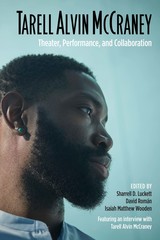
Contributors consider McCraney’s innovations as a playwright, adapter, director, performer, teacher, and collaborator, bringing fresh and diverse perspectives to their observations and analyses. In so doing, they expand and enrich the conversations on his much-celebrated and deeply resonant body of work, which includes the plays Choir Boy, Head of Passes, Ms. Blakk for President, The Breach, Wig Out!, and the critically acclaimed trilogy The Brother/Sister Plays: In the Red and Brown Water, The Brothers Size, and Marcus; Or the Secret of Sweet, as well as the Oscar Award–winning film Moonlight, which was based on his play In Moonlight Black Boys Look Blue.
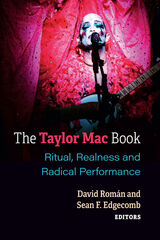
Featuring essays, interviews, and commentaries by noted critics and artists, the volume examines the vastness of Mac’s theatrical imagination, the singularity of their voice, the inclusiveness of their cultural insights and critiques, and the creativity they display through stylistic and formal qualities and the unorthodoxies of their personal and professional trajectories. Contributors consider the range of Mac’s career as a playwright, performer, actor, and singer, expanding and enriching the conversation on this much-celebrated and deeply resonant body of work.
Winner, Susan Koppelman Award, Best Edited Volume in Women's Studies in Popular and American Culture, 2008
The 1970s and 1980s saw the awakening of social awareness and political activism in Mexican-American communities. In San Diego, a group of Chicana women participated in a political theatre group whose plays addressed social, gender, and political issues of the working class and the Chicano Movement. In this collective memoir, seventeen women who were a part of Teatro de las Chicanas (later known as Teatro Laboral and Teatro Raíces) come together to share why they joined the theatre and how it transformed their lives. Teatro Chicana tells the story of this troupe through chapters featuring the history and present-day story of each of the main actors and writers, as well as excerpts from the group's materials and seven of their original short scripts.
Starting at the beginning of the twentieth century, Albuquerque examines the way the Modernist movement both fueled and inhibited the use of gay imagery in Brazilian drama. This elegant and fluid study ultimately becomes an examination of a whole Latin society, and the ways in which Latin theatre has absorbed and reflected the culture's own changing sensibilities, that will intrigue anyone interested in Latin American culture, literature, or theater.
Winner, 2008 Elizabeth A. Steinberg Prize
Bridging the stage-versus-page gap between actors, critics, and scholars, the contributors in this carefully crafted yet energizing book reflect upon the many kinds of evidence available to us from Shakespeare's various incarnations as historical subject and as “our contemporary” as well as from his amphibious occupation of both stage and study. The constraints become arbitrary as each essayist clarifies the sources of this evidence; the seemingly rigid boundaries of scholarly and creative disciplines are crossed and redrawn.
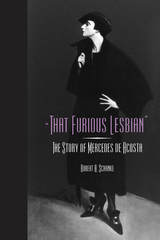
In this first book-length biography of Mercedes de Acosta, theatre historian Robert A. Schanke adroitly mines lost archival materials and mixes in his own interviews with de Acosta’s intimates to correct established myths and at last construct an accurate, detailed, and vibrant portrait of the flamboyantly uninhibited early-twentieth-century author, poet, and playwright.
Born to wealthy Spanish immigrants, Mercedes de Acosta (1893–1968) lived in opulence and traveled in the same social circles as the Astors and Vanderbilts. Introduced to the New York theater scene at an early age, her dual loves of performance and of women informed every aspect of her life thereafter. Alice B. Toklas’s observation, “Say what you will about Mercedes, she’s had the most important women in the twentieth century,” was well justified, as her romantic conquests included such internationally renowned beauties as Greta Garbo, Marlene Dietrich, Isadora Duncan, and Eva Le Gallienne as well as Alla Nazimova, Tamara Karsavina, Pola Negri, and Ona Munson.
More than a record of her personal life and infamous romances, this account offers the first analysis of the complete oeuvre of de Acosta’s literary works, including three volumes of poetry, two novels, two film scripts, and a dozen plays. Although only two of her plays were ever published during her lifetime, four of them were produced, featuring such stage luminaries as John Gielgud, Ralph Richardson, and Eva Le Gallienne. Critics praised her first volume of poetry, Moods, in 1919 and predicted her rise to literary fame, but the love of other women that fueled her writing also limited her opportunities to fulfill this destiny. Failing to achieve any lasting fame, she died in relative poverty at the age of seventy-five.
De Acosta lived her desires publicly with verve and vigor at a time when few others would dare, and for that, she paid the price of marginalized obscurity. Until now. With “That Furious Lesbian” Schanke at last establishes Mercedes de Acosta’s rightful place as a pioneer—and indeed a champion—in the early struggle for lesbian rights in this country.
Robert A. Schanke has edited a companion to this biography, Women in Turmoil: Six Plays by Mercedes de Acosta,also available from Southern Illinois University Press.
The volume also features selections from Krzhizhanovsky's compelling and idiosyncratic essays on Shakespeare, Pushkin, Shaw, and the philosophy of theater. Professionally, he worked with director Alexander Tairov at the Moscow Kamerny Theater, and his original philosophy of the stage bears comparison with the great theater theorists of the twentieth century. In these writings, he reflects on the space and time of the theater, the resonance of language onstage, the experience of the actor, and the relationship between the theater and the everyday. Commentary by Alisa Ballard Lin and Caryl Emerson contextualizes Krzhizhanovsky's writings.
This original and insightful study explores the points at which theater and propaganda meet. Defining propaganda as a form of "activated ideology," George H. Szanto discusses the distortion of information that occurs in dramatic literature in its stage, film, and television forms.
Szanto analyzes the nature of "integration propaganda," which is designed to render the audience passive and to encourage the acceptance of the status quo, as opposed to "agitation propaganda," which aims to inspire the audience to action. In Szanto's view, most popular western theater is saturated, though usually not intentionally, with integration propaganda. The overall purpose of Theater and Propaganda is twofold: to analyze the nature of integration propaganda so that it becomes visible to western readers as a tool of the dominant class in society, and to examine the manner by which unself-conscious propagandistic methods have saturated dramatic presentation.
In discussing the importance of propaganda within and between technological states, the author examines the seminal work of Jacques Ellul. In this chapter he analyzes the function of integration propaganda in a relatively stable society. The following chapter defines and analyzes three theaters (in the sense of performance) of propaganda: the theater of agitation propaganda, of integration propaganda, and of dialectical propaganda. In this section he uses examples from a variety of plays, movies, and television commercials. In succeeding chapters Szanto discusses the role of integration propaganda in the medieval Wakefield mystery plays and the plays of Samuel Beckett. The appendix, "Contradiction and Demystification," provides a general model that suggests ways of breaking down and overcoming the propagandistic intentions of an artwork and discusses theater's possible role in this breakdown.
In Theater after Film, Martin Harries argues that after 1945, as cinema became omnipresent in popular culture, theater had to respond to cinema’s hegemony. Theater couldn’t break that hegemony, but it could provide a zone of contestation. Theater made film’s domination of the cultural field visible through hyperbole, refusal, and other strategies, thereby unsettling its power. Postwar theatrical experiment, Harries shows, often channeled and represented film’s mass cultural force, while knowing that it could never possess that force. Throughout the book, Harries brings critical theory into contact with theories of performance. Although Theater after Film treats the theatrical work of many figures, its central focus falls on Tennessee Williams, Samuel Beckett, and Adrienne Kennedy. Discussions of these dramatists consider their ways of addressing spectators, the politics of race between film and theater, and the place of the theatrical apparatus. Readings of these central figures in twentieth-century theater exemplify the book’s historical engagement with the media surround that drama confronted. This confrontation, Harries shows, was central to the development of some of the most continually compelling postwar drama.
Rather than approaching the problem of racial reckoning through history, where periodization and progress are dominant narratives, Theater and Crisis argues that myth and memory allow for better theorization about recurring events from the past, their haunting, and what these apparent ghosts ask of us. Building on the study of myth as active, processual storytelling, Rankine acknowledges that it grounds and orients groups toward significant events. Theater and Crisis aligns narratives about Emmett Till, Trayvon Martin, and George Floyd, among others, with ancient, mythic figures such as Christ, Dionysus, Oedipus, and Moses. As living and verbal visitations, these stories performed on stage encode the past through their epiphanies in the present, urging audiences toward shared meaning.
Rankine traces the cyclical hauntings of race through the refiguring of mythic stories across the past 75 years in the plays of James Baldwin, Ntozake Shange, Antoinette Nwandu, and many more, and in response to flashpoints in US racial history, such as the 1955 lynching of Emmett Till, the upheavals of the 1960s and 1970s, the wars on drugs and crime, and the continued violence against and disenfranchisement of Black people into the twenty-first century. Theater and Crisis explores the appearance of myth on the American stage and showcases the ongoing response by the theatrical establishment to transform the stage into a space for racial reckoning. This timely book is essential reading for scholars of theater studies, classics, and American studies.
It locates ambiguities in our discourse about integrity, and it delves into conceptions of identity, morality, selfhood, and otherness. Its explorations ask if integrity is less a quality we might possess than a contingent gift that may appear, disappear, and perhaps reappear. Not only does he chart anew the ethical and religious dimensions of integrity, but he also reads closely across the history of theater, from Greek and Shakespearean drama to the likes of Seamus Heaney, T. S. Eliot, Caryl Churchill, Wole Soyinka, Tony Kushner, and Suzan-Lori Parks. His is an approach of juxtaposition and reflection, starting from the perennial observation that theater both criticizes and acknowledges dimensions of drama and theatricality in life.
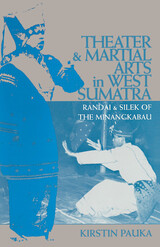
Randai, the popular folk theater tradition of the Minangkabau ethnic group in West Sumatra, has evolved to include influences of martial arts, storytelling, and folk songs. Theater and Martial Arts in West Sumatra describes the origin, development, and cultural background of randai and highlights two recent developments: the emergence of female performers and modern staging techniques.
This book also explores the indigenous martial arts form silek, a vital part of randai today. The strong presence of silek is illustrated in the martial focus of the stories that are told through randai, in its movement repertoire, and even in its costumes and musical accompaniment. As Kirstin Pauka shows, randai, firmly rooted in silek and Minangkabau tradition, is an intriguing mirror of the Minangkabau culture.

Theater and Social Change not only tracks the historical evolution of political theater but also explores the current state and future prospects of different modes, including agit-prop, demonstrations, solo performance, Augusto Boal’s Theater of the Oppressed, and community-based production. With such notable contributors as Anna Deavere Smith, Jonathan Kalb, Holly Hughes, and Tony Kushner, the issue offers a diverse assemblage of personal statements, conversations, photographs, interviews, and performance text.
Contributors include: Reverend Billy, Jan Cohen-Cruz, Arlene Goldbard, Sharon Green, Lani Guinier, Holly Hughes, Jonathan Kalb, Tony Kushner, Judith Malina, Robbie McCauley, John O'Neal, Claudia Orenstein, Bill Rauch, Julie Salverson, Anna Deavere Smith, Alisa Solomon, Roberta Uno
In Theater and Violence, through interviews, play excerpts, and full-length plays—including the first American publication of two major German playwrights and directors—theater artists offer their own narratives for humankind’s violent psychologies. One full-length play, Falk Richter’s Seven Seconds (In God We Trust), probes the mind of an American pilot moments before he releases a bomb on a city below. Another, René Pollesch’s 24 Hours Are Not a Day, humorously explores the ironies and pathologies of globalization after September 11. The issue also includes a commentary on the National Endowment for the Arts’ Shakespeare presentations for the U.S. military; interviews with Russian theater artists on the first anniversary of the Chechen rebels’ siege of a Moscow theater; and Jonathan Kalb’s powerful adaptation of Heiner Müller’s Mauser, set in Tikrit.
Contributors. Josh Fox, Gitta Honegger, Jonathan Kalb, Anna Kohler, James Leverett, Mark Lord, Marlene Norst, René Pollesch, Falk Richter, Yana Ross, Scott Saul, Tom Sellar, Catherine Sheehy, Robert Woodruff
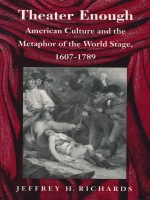
The rhetoric, or discourse, of early American theater emerged out of the figures of speech that permeated the colonists’ lives and literary productions. Jeffrey H. Richards examines a variety of texts—histories, diaries, letters, journals, poems, sermons, political tracts, trial transcripts, orations, and plays—and looks at the writings of such authors as John Winthrop and Mercy Otis Warren. Richards places the American usage of theatrum mundi—the world depicted as a stage—in the context of classical and Renaissance traditions, but shows how the trope functions in American rhetoric as a register for religious, political, and historical attitudes.
Features include:
Over 200 color-coded cards
Suggestions for focusing, side-coaching, and evaluating games
Games for students of all ages and levels of experience
Handbook included
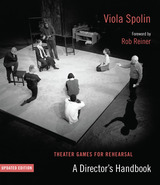
An updated edition of a key reference text by “the high priestess of improvisational theater”
A major force in the development of American theater, Viola Spolin devised pedagogical techniques that have influenced and inspired legions of actors, improvisers, and directors. Theater Games for Rehearsal: A Director's Handbook, first published in 1985, is a practical application of Spolin's famous method that guides directors and their companies step-by-step through all phases of the rehearsal period.
In Theater Games for Rehearsal, Spolin shows in easy-to-follow detail how her techniques can be used for a variety of theater needs, from selecting performance material, casting, and building a harmonious company to warming up actors, creating stage space, and overcoming opening-night jitters. This new edition, edited by Carol Bleackley Sills, incorporates Spolin's wished-for updates: four important exercises have been added, and instructions presenting her improvisational approach have been clarified throughout. Sidecoaching instructions and game evaluations are boxed and highlighted for on-the-spot reading by the director during rehearsal.
With these additions and improvements, Theater Games for Rehearsal: A Director's Handbook brings Spolin's ideas to a new generation with greater accessibility and excitement. Featuring a new foreword by renowned film director Rob Reiner, the updated edition is mandatory for any theater bookshelf.
The most comprehensive theater instruction guide for all types of students
This best-selling book by Viola Spolin offers the most comprehensive theater instruction for all types of students, from small children to young adults. It includes over 130 theater games, plus exercises and instructional strategies. First developed by Spolin, the originator of modern improvisational theater techniques, these games have been tried and tested for over fifty years.
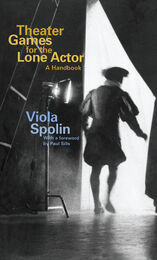
Spolin's improvisational techniques changed the nature and practice of modern theater. Her work has inspired actors, directors, teachers, and writers in theater, television, and film. Her techniques have also influenced the fields of education, mental health, social work, and psychology.

The collection provides a thorough and engaging survey of the playwrights, directors, actors, and productions that comprise this dynamic theater, a theater whose evolution and ideology diverges from Anglo-American models. The book's early essays trace the development of Hebrew drama from its inception in Moscow in 1918 to the establishment of a national theater and the emergence of a national repertoire.
Succeeding essays explore the personalities and themes that have dominated the Israeli stage, featuring interviews with leading Israeli playwrights, actors, directors, and dramaturgs. The book also provides highlights from the first Palestinian and Israeli Arab Theater Symposium, focusing on the history, themes, and future of Arab theater.
The contributors include Karen Alkalay-Gut, Shosh Avigal, Linda Ben-Zvi, Erella Brown, Joseph Chaikin, Scott Cummings, Ben-Ami Feingold, Gad Kaynar, Shimon Lev- Ari, Shimon Levy, Gabriella Moscati-Steindler, Freddie Rokem, Eli Rozik, Gershon Shaked, Chaim Shoham, Michael Taub, Dan Urian, Shoshana Weitz, and Nurit Yaari.
"Impressive historical, critical, and theoretical depth . . . a sophisticated introduction to theater in Israel." --Anne Golomb Hoffman, Fordham University
Linda Ben-Zvi is Professor of English and Theater, Colorado State University, and Professor of Theater, Tel Aviv University.


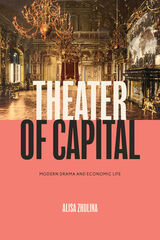
Emerging amid the turbulent rise of market finance and wider socioeconomic changes, modern drama enacted vital critiques of art and life under capitalism. Alisa Zhulina shows how fin-de-siècle playwrights such as Henrik Ibsen, August Strindberg, Anton Chekhov, George Bernard Shaw, and Gerhart Hauptmann interrogated the meaning of this newly coined economic concept. Acutely aware of their complicity in the system they sought to challenge, these playwrights staged economic questions as moral and political concerns, using their plays to explore the theories of Adam Smith, Karl Marx and Friedrich Engels, Max Weber, and others within the boundaries of bourgeois theater.
Theater of Capital: Modern Drama and Economic Life reveals the prescient and unsettling visions of life in a new financial and societal reality in now-canonical plays such as A Doll’s House, Miss Julie, and The Cherry Orchard, as well as in lesser-known and long-overlooked works. This wide-ranging study prompts us to reevaluate modern drama and its legacy for the urgent economic and political questions that haunt our present moment.
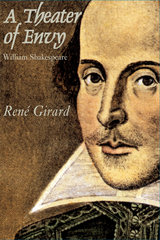
Bringing such provocative and iconoclastic insights to bear on Shakespeare, Girard reveals the previously overlooked coherence of problem plays like Troilus and Cressida, and makes a convincing argument for elevating A Midsummer Night’s Dream from the status of a chaotic comedy to a masterpiece. The book abounds with novel and provocative interpretations: Shakespeare becomes "a prophet of modern advertising," and the threat of nuclear disaster is read in the light of Hamlet. Most intriguing of all, perhaps, is a brief, but brilliant aside in which an entirely new perspective is brought to the chapter on Joyce’s Ulysses in which Stephen Dedalus gives a lecture on Shakespeare. In Girard’s view only Joyce, perhaps the greatest of twentieth-century novelists, comes close to understanding the greatest of Renaissance playwrights.
Throughout this impressively sustained reading of Shakespeare, Girard’s prose is sophisticated, but contemporary, and accessible to the general reader.
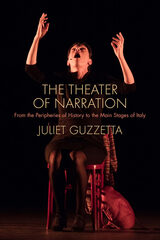
This book examines the theater of narration, an Italian performance genre and aesthetic that revisits historical events of national importance from local perspectives, drawing on the rich relationship between personal experiences and historical accounts. Incorporating original research from the private archives of leading narrators—artists who write and perform their work—Juliet Guzzetta argues that the practice teaches audiences how ordinary people aren’t simply witnesses to history but participants in its creation.
The theater of narration emerged in Italy during the labor and student protests, domestic terrorism, and social progress of the 1970s. Developing Dario Fo and Franca Rame’s style of political theater, influenced by Jerzy Grotowski and Bertolt Brecht, and following in the freewheeling actor‑author traditions of the commedia dell’arte, narrators created a new form of popular theater that grew in prominence in the 1990s and continues to gain recognition. Guzzetta traces the history of the theater of narration, contextualizing its origins—both political and intellectual—and centers the contributions of Teatro Settimo, a performance group overlooked in previous studies. She also examines the genre’s experiments in television and media.
The first full-length book in English on the subject, The Theater of Narration leverages close readings and a wealth of primary sources to examine the techniques used by narrators to remake history—a process that reveals the ways in which history itself is a theater of narration.
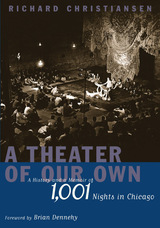
A Theater of Our Own is a fascinating, fast-paced, and fact-filled chronicle of Chicago's legendary theater scene by the long-time chief critic for the Chicago Tribune. Who produced the first stage adaptation of "The Wizard of Oz" in 1902-nearly forty years before the movie classic? What entertainment juggernaut began in a converted Chinese laundry on Wells Street in 1959? Where did Louis (Studs) Terkel make his stage debut? When did the original production of "Grease" open at Kingston Mines Theater? Richard Christiansen, former chief critic for the Chicago Tribune, answers these and many more questions about the rich role of the theater in Chicago, from its earliest days in 1837 to its present state as a diverse community of artists with international stature.
In A Theater of Our Own, he draws upon his exclusive interviews, insights, and memories gathered over a period of more than forty years of reviewing the arts. This history and memoir traces the evolution of the Chicago theater scene from small theaters to major institutions such as the Steppenwolf Theatre Company, the Goodman Theater, and The Second City. Along the way, Richard Christiansen relates his behind-the-scenes conversations with some of Chicago's most acclaimed writers, directors, and actors--David Mamet, Frank Galati, Mary Zimmerman, John Malkovich, Laurie Metcalf, Harold Ramis, Gary Sinise, and Joe Mantegna--all a part of Chicago's theater renaissance from the 1970s onward. To this day, Chicago remains a city known for its imaginative, innovative, and influential theaters and artists. A Theater of Our Own, a valuable contribution to the history of theater, is a book written for anyone who enjoys the theater and its people as well as the story of Chicago.
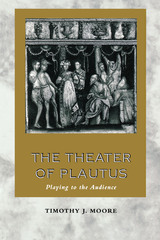
The relationship between actors and spectators has been of perennial interest to playwrights. The Roman playwright Plautus (ca. 200 BCE) was particularly adept at manipulating this relationship. Plautus allowed his actors to acknowledge freely the illusion in which they were taking part, to elicit laughter through humorous asides and monologues, and simultaneously to flatter and tease the spectators.
These metatheatrical techniques are the focus of Timothy J. Moore's innovative study of the comedies of Plautus. The first part of the book examines Plautus' techniques in detail, while the second part explores how he used them in the plays Pseudolus, Amphitruo, Curculio, Truculentus, Casina, and Captivi. Moore shows that Plautus employed these dramatic devices not only to entertain his audience but also to satirize aspects of Roman society, such as shady business practices and extravagant spending on prostitutes, and to challenge his spectators' preconceptions about such issues as marriage and slavery. These findings forge new links between Roman comedy and the social and historical context of its performance.
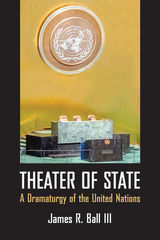
This study of the lived experience of spectacular politics on the world stage draws on theories of theater, performance, and politics to offer new ways of approaching issues of war, cosmopolitanism, international justice, governance, and activism. Situated at the nexus of two disciplines, performance studies and political science, this volume encourages conversations between the two so that each might offer lessons to the other.
For generations, fans and critics have characterized classic American radio drama as a “theater of the mind.” This book unpacks that characterization by recasting the radio play as an aesthetic object within its unique historical context. In Theater of the Mind, Neil Verma applies an array of critical methods to more than six thousand recordings to produce a vivid new account of radio drama from the Depression to the Cold War.
In this sweeping exploration of dramatic conventions, Verma investigates legendary dramas by the likes of Norman Corwin, Lucille Fletcher, and Wyllis Cooper on key programs ranging from The Columbia Workshop, The Mercury Theater on the Air, and Cavalcade of America to Lights Out!, Suspense, and Dragnet to reveal how these programs promoted and evolved a series of models of the imagination.
With close readings of individual sound effects and charts of broad trends among formats, Verma not only gives us a new account of the most flourishing form of genre fiction in the mid-twentieth century but also presents a powerful case for the central place of the aesthetics of sound in the history of modern experience.
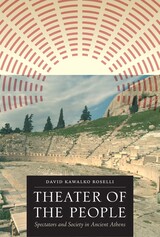
Greek drama has been subject to ongoing textual and historical interpretation, but surprisingly little scholarship has examined the people who composed the theater audiences in Athens. Typically, scholars have presupposed an audience of Athenian male citizens viewing dramas created exclusively for themselves—a model that reduces theater to little more than a medium for propaganda. Women's theater attendance remains controversial, and little attention has been paid to the social class and ethnicity of the spectators. Whose theater was it?
Producing the first book-length work on the subject, David Kawalko Roselli draws on archaeological and epigraphic evidence, economic and social history, performance studies, and ancient stories about the theater to offer a wide-ranging study that addresses the contested authority of audiences and their historical constitution. Space, money, the rise of the theater industry, and broader social forces emerge as key factors in this analysis. In repopulating audiences with foreigners, slaves, women, and the poor, this book challenges the basis of orthodox interpretations of Greek drama and places the politically and socially marginal at the heart of the theater. Featuring an analysis of the audiences of Aeschylus, Sophocles, Euripides, Aristophanes, and Menander, Theater of the People brings to life perhaps the most powerful influence on the most prominent dramatic poets of their day.

Bringing together a series of two dozen photographs with essays discussing and analyzing the influence of the media, particularly photographs and video, on the culture at large and how conflict is "discussed" in the visual realm, Theater of War is a unique look at the influence of contemporary conflict, and their omni-presence in the media on popular culture. Written by an experienced photojournalist who has covered a variety of human rights issues worldwide, this book is an essential addition to the library of anyone interested in the confluence of war and media.
"A much-needed study of the impact of rock music on the musical theater and its resulting challenges, complexities, failures, and successes. Anyone interested in Broadway will learn a great deal from this book."
---William Everett, author of The Musical: A Research Guide to Musical Theatre
"As Wollman weaves her historical narrative, she compellingly returns to . . . the conflict between the aesthetics and ideologies of rock music and the disciplined and commercial practices of the musical stage."
---Theatre Research International
"This well-written account puts the highs and lows of producing staged rock musicals in New York City into perspective and is well worth reading for the depth of insight it provides."
---Studies in Musical Theatre
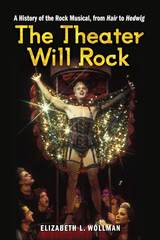
Despite the genre’s influence and fame, there are still some critics who claim that the term “rock musical” is an oxymoron. The relationship between rock and the musical theater has been stormy from the start, and even the comparatively recent success of Rent has done little to convince theater producers that rock musicals are anything but highly risky ventures. Elizabeth L. Wollman explores the reasons behind these problematic connections and looks at the socioeconomic forces that underlie aesthetic decisions. She weighs the influence on the rock musical by mass media, sound, and recording technology, and the economic pressures that have affected New York theater in general over the past three decades. Finally, Wollman offers a meditation on the state of the musical, its relation to rock, and, ultimately, its future.
Packed with candid commentary by members of New York's vibrant theater community, The Theater Will Rock traces the rock musical’s evolution over nearly fifty years, in popular productions such as Hair, The Who's Tommy, Jesus Christ Superstar, The Rocky Horror Picture Show, Little Shop of Horrors, Rent, and Mamma Mia!—and in notable flops such as The Capeman.
Elizabeth L. Wollman is Assistant Professor of Music at Baruch College of the City University of New York.
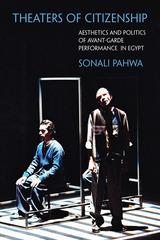
In 2004, independent cultural institutions were sites for more democratic forms of youth organization and cultural participation than were Egyptian state theaters. Sonali Pahwa looks at identity formation within this infrastructure for new cultural production: festivals, independent troupes, workshops, and manifesto movements. Bringing institutional changes in dialogue with new performance styles on stages and streets, Pahwa conceptualizes performance culture as a school of citizenship. Independent theater incubated hope in times of despair and pointed to different futures for the nation’s youth than those seen in television and newspapers. Young dramatists countered their generation’s marginalization in the neoliberal economy, media, and political institutions as they performed alternative visions for the nation. An important contribution to the fields of anthropology and performance studies, Pahwa’s analysis will also interest students of sociology and Egyptian history.
Offering both fresh reappraisals of canonical figures and movements and new examinations of theatrical innovators, Theaters of the Everyday reveals surprising affinities between artists often considered poles apart, such as John Cage and Lee Strasberg, and Thornton Wilder and the New York experimentalist Nature Theater of Oklahoma. Gallagher-Ross persuasively shows how these creators eschew conventional definitions of dramatic action and focus attention on smaller but no less profound dramas of perception, consciousness, and day-to-day life.
Gallagher-Ross traces some of the intellectual roots of the theater of the everyday to American transcendentalism, with its pragmatic process philosophy as well as its sense of ordinary experience as the wellspring of aesthetic awareness.
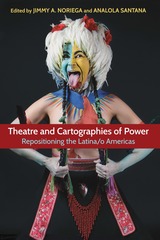
Building on hemispheric and transnational models, this book demonstrates the capacity of theatre studies to challenge the up-down/North-South approach that dominates scholarship in the United States and presents a strong case for a repositioning of the Latina/o Americas in theatrical histories and practices.
• What inspires the dramatist to write a play? This question addresses the nature of the creative process.
• How do different plays reflect human consciousness?
• What kinds of new ideas did major directors or theatre makers, such as Artaud, Grotowski, Barba, and Brook introduce?
• Should actors be personally involved with the emotions they have to portray?
• Are puppets or marionettes superior to actors?
• How to account for the designer’s combination of creativity and practical skill? What part does mental imagination play in the design process? How do designers get their own spatial awareness across to their spectators?
• How does theatre affect the spectator? Why do spectators react as they do? How do distance and suspension of disbelief ‘work’?
An improved and expanded understanding of theatre, resulting from answering the questions above in the context of consciousness studies, should inspire new developments in theatre practice.
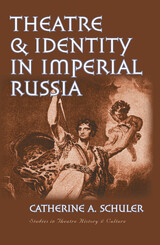
Schuler draws upon contemporary journals written and published by the educated nobility and the intelligentsia—who represented the intellectual, aesthetic, and cultural groups of the day—as well as upon the laws of the Russian empire and upon theatrical memoirs. With fascinating detail, she spotlights the ideologically charged binaries ascribed to prominent actors—authentic/performed, primitive/civilized, Russian/Western—that mirrored the volatility of national identity from the Napoleonic Wars through the reign of Alexander II.
If the path traveled by Russian artists and audiences from the turn of the nineteenth century to the era of the Great Reforms reveals anything about Russian culture and society, it may be that there is nothing more difficult than being Russian in Russia. By exploring the ways in which theatrical administrators, playwrights, and actors responded to three tsars, two wars, and a major revolt, this carefully crafted book demonstrates the battle for the hearts and minds of the Russian people.
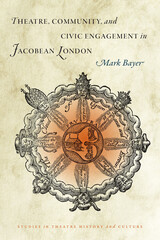
Taking to heart Thomas Heywood’s claim that plays “persuade men to humanity and good life, instruct them in civility and good manners, showing them the fruits of honesty, and the end of villainy,” Mark Bayer’s captivating new study argues that the early modern London theatre was an important community institution whose influence extended far beyond its economic, religious, educational, and entertainment contributions. Bayer concentrates not on the theatres where Shakespeare’s plays were performed but on two important amphitheatres, the Fortune and the Red Bull, that offer a more nuanced picture of the Jacobean playgoing industry. By looking at these playhouses, the plays they staged, their audiences, and the communities they served, he explores the local dimensions of playgoing.
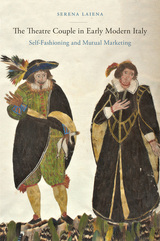
Who were the first celebrity couples? How was their success forged? Which forces influenced their self-fashioning and marketing strategies?
These questions are at the core of this study, which looks at the birth of a phenomenon, that of the couple in show business, with a focus on the promotional strategies devised by two professional performers: Giovan Battista Andreini (1576–1654) and Virginia Ramponi (1583–ca.1631). This book examines their artistic path – a deliberately crafted and mutually beneficial joint career – and links it to the historical, social, and cultural context of post-Tridentine Italy. Rooted in a broad research field, encompassing theatre history, Italian studies, celebrity studies, gender studies, and performance studies, The Theatre Couple in Early Modern Italy revises the conventional view of the Italian diva, investigates the deployment of Catholic devotion as a marketing tool, and argues for the importance of the couple system in the history of Commedia dell’Arte, a system that continues to shape celebrity today.

Contributors: Tom Cantrell, Francesca Coppa, Ruth Foulis, Helen Freshwater, Emily Garside, Caroline Heim, Matt Hills, Natalie Ibu, Laura MacDonald, Dominique Morisseau, Rachael Nicholas, Louie Lang Norman, Owen G. Parry, Stephanie E. Pitts, Sarah M. Price, Beth Emily Richards, Kirsty Sedgman, Megan Vaughan, Ben Walmsley, Sarah K. Whitfield
Theatre for Lifelong Learning is a step-by-step guide for anyone interested in teaching theatre courses and creating theatre with older adults. This book provides instructors with syllabi, discussion questions, classroom management strategies, resource lists, and activities to teach courses from beginning to end. Special topics include playwriting, play development, storytelling, theatre appreciation, theatre criticism, theatre history, and theatre theory.
Older adult theatre courses support emotional well-being and the development of artistic communities and anyone can contribute to lifelong learning as an instructor. If you are new to theatre and theatre education, Theatre for Lifelong Learning offers tips throughout to assist you in creating accessible environments and making courses your own. If you have a background in performing arts, this book enriches your experience with interdisciplinary approaches to share your expertise. If you are an educator, it provides useful strategies to adapt your current skill set for the theatre classroom.
Regardless of your experience, you can help older adults connect, engage, and create. You may find yourself learning, exploring, and experimenting alongside your students. Teaching older adults theatre will contribute to your own enjoyment. In theatre, everyone gets to have fun!
Theatre History Studies is a peer-reviewed journal of theatre history and scholarship published annually since 1981 by the Mid-American Theatre Conference (MATC), a regional body devoted to theatre scholarship and practice. The conference encompasses the states of Illinois, Iowa, Nebraska, Kansas, Missouri, Minnesota, North Dakota, South Dakota, Wisconsin, Indiana, Michigan, and Ohio. The purpose of the conference is to unite persons and organizations within the region with an interest in theatre and to promote the growth and development of all forms of theatre.
THS is a member of the Council of Editors of Learned Journals and is included in the MLA Directory of Periodicals. THS is indexed in Humanities Index, Humanities Abstracts, Book Review Index, MLA International Bibliography, International Bibliography of Theatre, Arts & Humanities Citation Index, IBZ International Bibliography of Periodical Literature, and IBR International Bibliography of Book Reviews. Full texts of essays appear in the databases of both Humanities Abstracts Full Text as well as SIRS.
THS is a member of the Council of Editors of Learned Journals and is included in the MLA Directory of Periodicals. THS is indexed in Humanities Index, Humanities Abstracts, Book Review Index, MLA International Bibliography, International Bibliography of Theatre, Arts & Humanities Citation Index, IBZ International Bibliography of Periodical Literature, and IBR International Bibliography of Book Reviews. Full texts of essays appear in the databases of both Humanities Abstracts Full Text as well as SIRS.
A Copublication of the Mid-American Theatre Conference and The University of Alabama Press.
Theatre History Studies is a peer-reviewed journal of theatre history and scholarship published annually since 1981 by the Mid-American Theatre Conference (MATC), a regional body devoted to theatre scholarship and practice. The conference encompasses the states of Illinois, Iowa, Nebraska, Kansas, Missouri, Minnesota, North Dakota, South Dakota, Wisconsin, Indiana, Michigan, and Ohio. The purpose of the conference is to unite persons and organizations within the region with an interest in theatre and to promote the growth and development of all forms of theatre.
Rhona Justice-Malloy is Chair of the Department of Theatre Arts at the University of Mississippi.
Theatre History Studies is a peer-reviewed journal of theatre history and scholarship published annually since 1981 by the Mid-American Theatre Conference (MATC), a regional body devoted to theatre scholarship and practice. The conference encompasses the states of Illinois, Iowa, Nebraska, Kansas, Missouri, Minnesota, North Dakota, South Dakota, Wisconsin, Indiana, Michigan, and Ohio. The purpose of the conference is to unite persons and organizations within the region with an interest in theatre and to promote the growth and development of all forms of theatre.
Reimagining the archive, one performance at a time.
Theatre History Studies is a peer-reviewed journal dedicated to excellence in theatre historiography. Volume 29, edited by Rhona Justice-Malloy, includes essays that span a wide range of historical periods, geographic regions, and thematic concerns. Highlights include explorations of pain and torment in performance, the aesthetics of American modernity through Belasco and Jones, and the cultural politics of prohibition on stage. The volume also features visual and archival studies, including an interview with playwright Wendy Wasserstein and analyses of Shakespeare’s reception in Restoration theatre. With contributions from over thirty scholars, this edition offers a rich and multifaceted view of how theatre reflects, resists, and reshapes historical narratives.
To mark the thirtieth anniversary of the Theatre History Studies journal, editor Rhona Justice-Malloy and the Mid-America Theatre Conference have collected a special-themed volume covering the past and present of African and African American theatre. Topics included range from modern theatrical trends and challenges in Zimbabwe and Kenya, and examining the history and long-range impact of Paul Robeson’s groundbreaking and troubled life and career, to gender issues in the work of Ghanaian playwright Efo Kodjo Mawugbe, and the ways that 19th-century American blackness was defined through Othello and Desdemona. This collection fills a vacancy in academic writing. Readers will enjoy it; academics can incorporate it into their curriculum; and students will find it helpful and illuminating.
THS is a member of the Council of Editors of Learned Journals and is included in the MLA Directory of Periodicals. THS is indexed in Humanities Index, Humanities Abstracts, Book Review Index, MLA International Bibliography, International Bibliography of Theatre, Arts & Humanities Citation Index, IBZ International Bibliography of Periodical Literature, and IBR International Bibliography of Book Reviews. Full texts of essays appear in the databases of both Humanities Abstracts Full Text as well as SIRS
From published reviews
“This established annual is a major contribution to the scholarly analysis and historical documentation of international drama. Refereed, immaculately printed and illustrated . . . . The subject coverage ranges from the London season of 1883 to the influence of David Belasco on Eugene O’Neill.”—CHOICE
“International in scope but with an emphasis on American, British, and Continental theater, this fine academic journal includes seven to nine scholarly articles dealing with everything from Filipino theater during the Japanese occupation to numerous articles on Shakespearean production to American children’s theater. . . . an excellent addition for academic, university, and large public libraries.”—Magazines for Libraries, 6th Edition
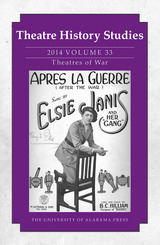
War and theatre is a subject of increasing popularity among scholars of theatre. The essays in this special edition of Theatre History Studies brings together a unique collection of work by thirteen innovative scholars whose work explores such topics as theatre performances during war times, theatre written and performed to resist war, and theatre that fosters and promotes war.
The contributors to this volume write poignantly about nationhood and about how war—through both propaganda and protest—defines a people. The contributors also delve into numerous fascinating themes that transcend time, peoples, nations, and particular conflicts: the foundations of nationalism and the concepts of occupied and occupier, nostalgia and utopia, and patriotism and revolution.
These essays survey a march of civil and international wars spanning three centuries. Arranged chronologically, they invite comparisons between themes and trace the development of the major themes of war. Ideas manifest in the theatre of one period recall ideologies and propaganda of the past, reflect those of the present, and anticipate wars to come.
The five essays are arranged chronologically, starting with Alan Sikes’s discussion of the Abydos Passion Play. Sikes challenges the long-held interpretation of that ritualized annual reenactment of the death, dismemberment, and return to life of Egyptian god-king Osiris as the world’s first recorded dramatic production. In analyzing the “Passion Play”—Sikes argues the term is not apt—he applies semiotic theory using "sign and referent" to revise general concepts of mimesis, and in so doing clarifies the fundamental answer to the question, “What is theatre?”
In a pair of essays, Andrew Gibb and Nicole Berkin both explore theatre during America’s antebellum period. Gibb examines minstrelsy in antebellum California, exploding narrow definitions of minstrelsy as a primarily Eastern phenomenon and one reflecting a stark interaction of two races. Following the story of Jewish African Caribbean immigrant William Alexander Leidesdorff, Gibb demonstrates that national forms are always affected by their local productions and audiences. Berkin’s essay focuses on the struggles over cultural power that took place between popular entertainers and theatre managers. She examines how both parties used touring strategically to engage with antebellum notions of deception and fraud.
The last two essays, by Megan Geigner and Heide Nees, present findings from performance studies which, by examining a wide array of dramatic and performative texts, expands the interdisciplinary foundations of theatre history studies. This fascinating collection is rounded out by an expanded selection of insightful reviews of recent literature in the area.
Theatre History Studies, published since 1981 by the Mid-American Theatre Conference (MATC) is a leading scholarly publication in the field of theatrical history and theory. The conference encompasses the states of Illinois, Iowa, Nebraska, Kansas, Missouri, Minnesota, North Dakota, South Dakota, Wisconsin, Indiana, Michigan, and Ohio. The purpose of the conference is to unite persons and organizations within the region with an interest in theatre and to promote the growth and development of all forms of theatre.
Theatre History Studies is devoted to research in all areas of theatre studies, with special interest in archival research, historical documentation, and historiography. Many issues feature a special section curated around a special theme or topic; for 2017 that special section focus on histories of new writing for the theatre.
Featured in THEATRE HISTORY STUDIES 2017, VOLUME 36
- “Resisting Arlecchino’s Mask: The Case of Marcello Moretti” by Gabrielle Houle
- “Making Space for Performance: Theatrical-Architectural Nationalism in Postindependence Ghana” by David Afriyie Donkor
- “Preparing Boys for War: J. M. Barrie’s Peter Pan Enlists in World War I’s ‘Great Adventure’” by Laura Ferdinand Feldmeyer
- “Not Just Rock ‘n’ Roll: Chicago Theatre, 1984–1990” by Julie Jackson
- “New Writing and Theatre History” by Sara Freeman
- “New Plays in New Tongues: Bilingualism and Immigration at the New Italian Theatre in France” by Matthew McMahan
- “The Waterloo Summer of the Prince of Wales’s Theatre: New Writing, Old Friends, and Early Realism in the Victorian Theatre” by Shannon Epplett
- “Chekhov’s Three Sisters: A Proto-Poststructuralist Experiment” by Sarah Wyman
- “Historicizing Shakesfear and Translating Shakespeare Anew” by Lezlie C. Cross
- “A New Noble Kinsmen: The Play On! Project and Making New Plays Out of Old” by Martine Kei Green-Rogers and Alex N. Vermillion
- “Making New Theatre Together: The First Writers’ Group at the Royal Court Theatre and Its Legacy Within the Young Writers’ Programme” by Nicholas Holden
- “New Writing in a Populist Context: A Play,a Pie, and a Pint” by Deana Nichols
- “American Playwriting and the Now New” by Todd London
- The Robert A. Schanke Award-Winning Essay: “Black Folk’s Theatre to Black Lives Matter: The Black Revolution on Campus” by La Donna L. Forsgren
THEATRE HISTORY STUDIES, VOLUME 37
STEFAN AQUILINA
Meyerhold and The Revolution: A Reading through Henri Lefebvre’s Theories on “Everyday Life”
VIVIAN APPLER
“Shuffled Together under the Name of a Farce”: Finding Nature in Aphra Behn’s The Emperor of the Moon
KRISTI GOOD
Kate Soffel’s Life of Crime: A Gendered Journey from Warden’s Wife to Criminal Actress
PETER A. CAMPBELL
Staging Ajax’s Suicide: A Historiography
BRIAN E. G. COOK
Rousing Experiences: Theatre, Politics, and Change
MEGAN LEWIS
Until You See the Whites of Their Eyes: Brett Bailey’s Exhibit B and the Consequences of Staging the Colonial Gaze
PATRICIA GABORIK
Taking the Theatre to the People: Performance Sponsorship and Regulation in Mussolini’s Italy
ILINCA TODORUT AND ANTHONY SORGE
To Image and to Imagine: Walid Raad, Rabih Mouré, and the Arab Spring
SHULAMITH LEV-ALADGEM
Where Has the Political Theatre in Israel Gone? Rethinking the Concept of Political Theatre Today
CHRISTINE WOODWORTH
“Equal Rights By All Means!”: Beatrice Forbes-Robertson’s 1910 Suffrage Matinee and the Onstage Junction of the US And UK Franchise Movements
LURANA DONNELS O’MALLEY
“Why I Wrote the Phyllis Wheatley Pageant-Play”: Mary Church Terrell’s Bicentennial Activism
JULIET GUZZETTA
The Lasting Theatre of Dario Fo and Franca Rame
ASHLEY E. LUCAS
Chavez Ravine: Culture Clash and the Political Project of Rewriting History
NOE MONTEZ
The Heavy Lifting: Resisting the Obama Presidency’s Neoliberalist Conceptions of the American Dream in Kristoffer Diaz’s The Elaborate Entrance of Chad Deity
THEATRE HISTORY STUDIES, VOLUME 38
PART I: Studies in Theatre History
ELIZABETH COEN
Hanswurst’s Public: Defending the Comic in the Theatres of Eighteenth-Century Vienna
BRIDGET MCFARLAND
“This Affair of a Theatre”: The Boston Theatre Controversy and the Americanization of the Stage
RYAN TVEDT
From Moscow to Simferopol: How the Russian Cubo-Futurists Accessed the Provinces
DANIELLA VINITSKI MOONEY
So Long Ago I Can’t Remember: GAle GAtes et al. and the 1990s Immersive Theatre
Part II: The Site-Based Theatre Audience Experience: Dramaturgy and Ethics
—EDITED BY PENELOPE COLE AND RAND HARMON
PENELOPE COLE
Site-Based Theatre: The Beginning
PENELOPE COLE
Becoming the Mob: Mike Brookes and Mike Pearson’s Coriolan/us
SEAN BARTLEY
A Walk in the Park: David Levine’s Private Moment and Ethical Participation in Site-Based Performance
DAVID BISAHA
“I Want You to Feel Uncomfortable”: Adapting Participation in A 24-Decade History of Popular Music at San Francisco’s Curran Theatre
COLLEEN RUA
Navigating Neverland and Wonderland: Audience as Spect-Character
GUILLERMO AVILES-RODRIGUEZ, PENELOPE COLE, RAND HARMON, AND ERIN B. MEE
Ethics and Site-Based Theatre: A Curated Discussion
PART III: The Robert A. Schanke Award-Winning Essay from the 1038 Mid-America Theatre Conference
MICHELLE GRANSHAW
Inventing the Tramp: The Early Tramp Comic on the Variety Stage
Theatre History Studies (THS) is a peer-reviewed journal of theatre history and scholarship published annually since 1981 by the Mid-America Theatre Conference
Reframing the past to illuminate the future of performance.
Theatre History Studies is a peer-reviewed journal devoted to excellence in theatre historiography. Volume 38, edited by Lisa Jackson-Schebetta, features three distinct sections: foundational studies in theatre history, a special section on hemispheric historiographies, and award-winning essays from the Mid-America Theatre Conference. Contributors examine topics ranging from Shakespeare and racial antagonism to systemic dramaturgy, labor unions in regional theatre, and digital diasporic activism. The volume also includes visual histories and decolonial methodologies that challenge Eurocentric narratives and foreground Latinx, feminist, and socialist performance traditions. With 272 pages and 18 black-and-white figures, this edition is a rich resource for scholars seeking to expand the scope and methods of theatre history.
Introduction
—LISA JACKSON-SCHEBETTA, WITH ODAI JOHNSON, CHRYSTYNA DAIL, AND JONATHAN SHANDELL
PART I
STUDIES IN THEATRE HISTORY
Un-Reading Voltaire: The Ghost in the Cupboard of the House of Reason
—ODAI JOHNSON
Caricatured, Marginalized,
and Erased: African American Artists and Philadelphia’s Negro Unit of the FTP, 1936–1939
—JONATHAN SHANDELL
Stop Your Sobbing: White Fragility, Slippery Empathy, and Historical Consciousness in Branden Jacobs-Jenkins’s Appropriate
—SCOTT PROUDFIT
Asia and Alwin Nikolais: Interdisciplinarity, Orientalist Tendencies, and Midcentury American Dance
—ANGELA K. AHLGREN
PART II
WITCH CHARACTERS AND WITCHY PERFORMANCE
Editor’s Introduction to the Special Section
Shifting Shapes: Witch Characters and Witchy Performances
—CHRYSTYNA DAIL
To Wright the Witch: The Case of Joanna Baillie’s Witchcraft
—JANE BARNETTE
Nothing Wicked This Way Comes: Shakespeare’s Subversion of Archetypal Witches in The Winter’s Tale
—JESSICA HOLT
Of Women and Witches: Performing the Female Body in Caryl Churchill’s Vinegar Tom
—MAMATA SENGUPTA
(Un)Limited: The Influence of Mentorship and Father-Daughter Relationships on Elphaba’s Heroine Journey in Wicked
—REBECCA K. HAMMONDS
Immersive Witches: New York City under the Spell of Sleep No More and Then She Fell
—DAVID BISAHA
PART III
Essay from the Conference
The Robert A. Schanke Award-Winning Essay, MATC 2020
New Conventions for a New Generation: High School Musicals and Broadway in the 2010s
—LINDSEY MANTOAN
Volume 41 of the official journal of the Mid-America Theatre Conference
Theatre History Studies is the official journal of the Mid-America Theatre Conference, Inc. (MATC). The conference is dedicated to the growth and improvement of all forms of theatre throughout a twelve-state region that includes the states of Illinois, Iowa, Nebraska, Kansas, Missouri, Minnesota, North Dakota, South Dakota, and Wisconsin. Its purposes are to unite people and organizations within this region and elsewhere who have an interest in theatre and to promote the growth and development of all forms of theatre.
Published annually since 1981, Theatre History Studies provides critical, analytical, and descriptive essays on all aspects of theatre history and is devoted to disseminating the highest quality peer-review scholarship in the field.
CONTRIBUTORS
Angela K. Ahlgren / Samer Al-Saber / Kelly I. Aliano / Gordon Alley-Young / Melissa Blanco Borelli / Trevor Boffone / Jay Buchanan / Matthieu Chapman / Joanna Dee Das / Ryan J. Douglas / Victoria Fortuna / Christiana Molldrem Harkulich / Alani Hicks-Bartlett / Jeanmarie Higgins / Lisa Jackson-Schebetta / Erin Rachel Kaplan / Heather Kelley / Patrick Maley / Karin Maresh / Lisa Milner / Courtney Elkin Mohler / Heather S. Nathans / Heidi L. Nees / Sebastian Samur / Michael Schweikardt / Teresa Simone / Dennis Sloan / Guilia Taddeo / Kyle A. Thomas / Alex Vermillion / Bethany Wood
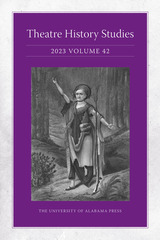
The official journal of the Mid-America Theatre Conference
Theatre History Studies (THS) is a peer-reviewed journal of theatre history and scholarship published annually since 1981 by the Mid-America Theatre Conference (MATC), a regional body devoted to theatre scholarship and practice. The conference encompasses the states of Illinois, Iowa, Nebraska, Kansas, Missouri, Minnesota, North Dakota, South Dakota, Wisconsin, Indiana, Michigan, and Ohio. The purpose of the conference is to unite persons and organizations within the region with an interest in theatre and to promote the growth and development of all forms of theatre. THS is a member of the Council of Editors of Learned Journals and is included in the MLA Directory of Periodicals. THS is indexed in Humanities Index, Humanities Abstracts, Book Review Index, MLA International Bibliography, International Bibliography of Theatre, Arts & Humanities Citation Index, IBZ International Bibliography of Periodical Literature, and IBR International Bibliography of Book Reviews. Full texts of essays appear in the databases of both Humanities Abstracts Full Text and SIRS.Along with book reviews on the latest publications from established and emerging voices in the field, this issue of Theatre History Studies contains three sections with fourteen essays total. In the general section, three essays offer an array of insights, methods, and provocations. In the special section on care, contributors capture their experience as scholars, humans, and citizens in 2022. In Part III, the 2022 Robert A. Schanke Research Award-winning paper by Heidi L. Nees asks historians to rethink Western constructions of time. Taken together, volume 42 captures how this journal serves theatre historians as scholars and laborers as they work to attend and tend to their field.
CONTRIBUTORS
Cheryl Black / Shelby Brewster / Matthieu Chapman / Meredith Conti / Zach Dailey / Michael DeWhatley / Whit Emerson / Katherine Gillen / Miles P. Grier / Patricia Herrera / Lisa Jackson-Schebetta / Nancy Jones / Joshua Kelly / Felicia Hardison Londré / Bret McCandless / Marci R. McMahon/ Tom Mitchell / Sherrice Mojgani / John Murillo III / Heidi L. Nees / Jessica N. Pabón-Colón / Kara Raphaeli / Leticia L. Ridley / Cynthia Running-Johnson / Alexandra Swanson / Catherine Peckinpaugh Vrtis / Shane Wood / Christine Woodworth / Robert O. Yates
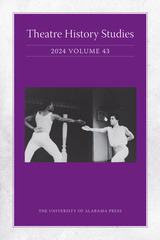
The official journal of the Mid-America Theatre Conference
Where past and performance converge—scholarship that moves the stage forward.
Theatre History Studies (THS) is a peer-reviewed journal of theatre history and scholarship published annually since 1981 by the Mid-America Theatre Conference (MATC), a regional body devoted to theatre scholarship and practice. The conference encompasses the states of Illinois, Iowa, Nebraska, Kansas, Missouri, Minnesota, North Dakota, South Dakota, Wisconsin, Indiana, Michigan, and Ohio. The purpose of the conference is to unite persons and organizations within the region with an interest in theatre and to promote the growth and development of all forms of theatre. THS is a member of the Council of Editors of Learned Journals and is included in the MLA Directory of Periodicals. THS is indexed in Humanities Index, Humanities Abstracts, Book Review Index, MLA International Bibliography, International Bibliography of Theatre, Arts & Humanities Citation Index, IBZ International Bibliography of Periodical Literature, and IBR International Bibliography of Book Reviews. Full texts of essays appear in the databases of both Humanities Abstracts Full Text as well as SIRS.
Along with books reviews on the latest publications from established and emerging voices in the field, this issue of Theatre History Studies contains four sections with two introductions, nine essays, and eleven book reviews total. In the general section, three essays offer an array of insights, methods, and provocations. In the special section titled “Manifestos for Black Theatre, Then and Now,” contributors capture their moment, their ways of working, and their experience as scholars, humans, and citizens in 2023. In part III, Ariel Nereson’s Robert A. Schanke Research Award-winning paper from the 2023 MATC conference examines collective dance histories through the Bill T. Jones/Arnie Zane Dance Company’s Continuous Replay. Taken together, volume 43 captures how this journal serves theatre historians as scholars and laborers as they work to attend and tend to their field.
CONTRIBUTORS
Daniel E. Atkinson / Ashlyn K. Barnett / David Bisaha / Jocelyn L. Buckner / Julie Burrell / Jordana Cox / Jordan Ealey / Eric M. Glover / Adam Goldstein / Chao Guo / Amy B. Huang / Ariel Nereson / Zachary F. Price / Danielle Rosvally / Letica L. Ridley / Bradford G. Sadler / Richard Sautter / Michael Schweikardt / Margo Skornia / Dennis Sloan / Josh Stenberg / Paul Michael Thomson / Scott Venters / Isaiah Matthew Wooden
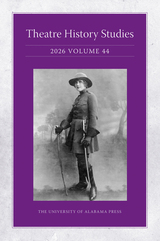
The official journal of the Mid-America Theatre Conference
Theatre History Studies (THS) is a peer-reviewed journal of theatre history and scholarship published annually since 1981 by the Mid-American Theatre Conference (MATC), a regional body devoted to theatre scholarship and practice. The conference is dedicated to the growth and improvement of all forms of theatre throughout a twelve-state region encompassing Illinois, Indiana, Iowa, Kansas, Michigan, Minnesota, Missouri, Nebraska, North Dakota, Ohio, South Dakota, and Wisconsin. The purposes of the conference are to unite people and organizations within the region and elsewhere who have an interest in theatre and to promote the growth and development of all forms of theatre. THS is a member of the Council of Editors of Learned Journals and is included in the MLA Directory of Periodicals. THS is cataloged in numerous periodical indexes and databases.
Along with sixteen book reviews on the latest publications from established and emerging voices in the field, this issue of Theatre History Studies contains four sections with two introductions and nine essays total. In the general section, three essays consider performance histories and reevaluations of historiographical approaches. The special section on queer historiographies responds to calls for a more expansive and inclusive understanding of trans histories and for centralizing contemporary queer performers. In part III, the Robert A. Schanke Research Award-winning paper from the 2024 MATC conference by Ali-Reza Mirsajadi addresses erasures in the theatrical archive and highlights the long legacy of queer, Southwest Asian, and North African representation in dramatic texts. Taken together, volume 44 captures how this journal serves theatre historians as scholars and laborers as they work to attend and tend to their field.
Theatre in Passing explores spaces of performance in contemporary Moscow. Inspired by French philosopher Michel de Certeau’s model of a "second, poetic geography" in which the walker—the everyday practitioner—invents the space observed by the voyeur, this book takes the reader on a tour of spaces of performance in contemporary Moscow. Through text and photography, the city’s "theatrical geography" is uncovered, from the Bolshoi Theater in Theater Square to hidden gems like the recently restored Kuskovo estate. With additional sections on street theater and other public gatherings, Theatre in Passing is a must-read book for anyone curious about the theatrical architecture and geography of Russia’s capital.
Theatre in Prison is a collection of thirteen international essays exploring the rich diversity of innovative drama works in prisons. The book includes an introduction that will present a contextualisation of the prison theatre field. Thereafter, leading practitioners and academics will explore key aspects of practice &endash; problemitising, theorising and describing specific approaches to working with offenders. The book also includes extracts from prison plays, poetry and prisoners writings that offer illustrations and insights into the experience of prison life.
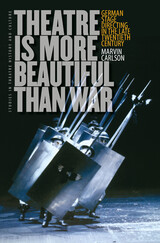
In almost every area of production, German theatre of the past forty years has achieved a level of distinction unique in the international community. This flourishing theatrical culture has encouraged a large number of outstanding actors, directors, and designers as well as video and film artists. The dominant figure throughout these years, however, has remained the director. In this stimulating and informative book, noted theatre historian Marvin Carlson presents an in-depth study of the artistic careers, working methods, and most important productions of ten of the leading directors of this great period of German staging.
Beginning with the leaders of the new generation that emerged in the turbulent late 1960s—Peter Stein, Peter Zadek, and Claus Peymann, all still major figures today—Carlson continues with the generation that appeared in the 1980s, particularly after reunification—Frank Castorf, Anna Viebrock, Andrea Breth, and Christoph Marthaler—and concludes with the leading directors to emerge after the turn of the century, Stefan Pucher, Thomas Ostermeier, and Michael Thalheimer. He also provides information not readily available elsewhere in English on many of the leading actors and dramatists as well as the designers whose work, much of it for productions of these directors, has made this last half century a golden age of German scenic design.
During the late twentieth century, no country produced so many major theatre directors or placed them so high in national cultural esteem as Germany. Drawing on his years of regular visits to the Theatertreffen in Berlin and other German productions, Carlson will captivate students of theatre and modern German history and culture with his provocative, well-illustrated study of the most productive and innovative theatre tradition in Europe.
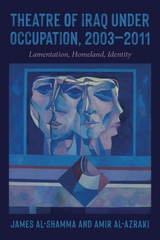
However, in 2003, the United States invasion of Iraq propelled Iraqi theatre in an altogether different direction. Global media published photographs documenting the torture of Iraqi detainees by American soldiers and sectarian violence broke out, as Shiʿa and Sunni militias struggled for power. Theatre of Iraq Under Occupation examines the occupation’s impact on Iraqi theatre as eliciting lamentation over loss of homeland and identity, and as an assault on the Iraqi character itself. The first volume in English dedicated solely to theatre in Iraq, James Al-Shamma and Amir Al-Azraki’s insights don’t just offer a significant contribution to cultural studies, they bridge foreign policy and art in real time.
The Theatre of Sabina Berman: The Agony of Ecstasy and Other Plays introduces and makes accessible to an English-speaking audience the work of the contemporary Mexican playwright Sabina Berman. The book contains translations of the four plays that established Berman’s career: The Agony of Ecstasy, Yankee, Puzzle, and Heresy. An introduction by Adam Versényi provides a critical assessment of each play, a discussion of the specific problems of translation involved, and placement of Berman’s work in the larger Mexican and Latin American context.
It is evident that Sabina Berman’s theatrical acumen matches the depth of her dramatic design whether it is the sheer variety of techniques from song to staged tableau that appear in The Agony of Ecstasy; the physicalization of what it means to be interrogated and to interrogate in Yankee; the final enigmatic image of a soldier alone on stage, silently aiming his firearm at an undefined threat that potentially emanates from the audience in Puzzle; or the manner in which the family narrates its own “heretical” actions in Heresy. It is the combination of theatrical technique with universal themes of self-definition that cuts across cultures and ultimately makes these plays translatable.
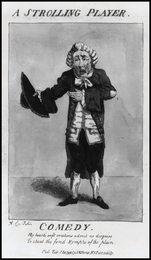
The essays gathered in Volume 16 of the annual journal Theatre Symposium illustrate well the range of material that falls under the heading "comedy" as it is played on stage.
Stanley Longman's essay on "The Commedia dell'Arte as the Quintessence of Comedy" introduces us to the inhabitants of "Commediatown," character types who are descendents of the Greeks and ancestors, it seems, of almost everyone who came after. Boris Senker, an eyewitness to Croatia's evolution from communism to democracy, reports on the all-too-real "Commedia" stereotypes that have found their way onto the stage in his homeland.
Other essays address the improvisational nature of "Commedia"; the roots of laughter and the expectations inherent in presenting "old schtick" to a new generation; comedic technique, verbal and physical, in Molière; the use of the macabre to create humor in the "Théâtre du Grand Guignol"; the story of Henry Fielding, the theatre practitioner most responsible for the British government's crackdown on subversive material, via the Licensing Act of 1737; Beckett's theatrical connections to the comedy theory of Henri Bergson; and do-it-yourself (DIY) comedy—happenings, situations, gatherings—as practiced in British stand-up comedy.
Volume 16 provides just a glimpse into the possibilities for comedy on the stage. If the past examples allow for extrapolation into the future, the position of comedy as a means of communicating problems and solutions for society's woes is remarkably sound.
Among other subjects, these essays explore the rise of "airdomes" as performance spaces in the American Midwest in the first half of the 20th century; the civic-religious pageants staged by certain Mormon congregations; Wheels-A-Rolling, and other railroad themed pageants; first-hand accounts of the innovative Hunter Hills theatre program in Tennessee; the role of traditional outdoor historical drama, particularly the long-running performances of Paul Green's The Lost Colony; and the rise of the part dance, part sport, part performance phenomenon "parkour"-- the improvised traversal of obstacles found in both urban and rural landscapes.
The contributors illuminate many aspects of this largely ignored yet crucial part of the theatre. Kyna Hamill looks at props as a means to mark social status. Christine Woodworth addresses the challenges presented by using blood onstage, while Andrew Sofer discusses the use of prop corpses on the Shakespearean stage. Andrew Kimbrough moves from an examination of actors’ use of props to a consideration of audience response to performance. Other essays investigate specific objects or productions, and introduce provocative and original perspectives to the growing discussion about stage properties.
Whether or not theatre arose from ritual and/or religion, from prehistory to the present there have been clear and vital connections among the three. Ritual, Religion, and Theatre, volume 21 of the annual journal Theatre Symposium, presents a series of essays that explore the intricate and vital relationships that exist, historically and today, between these various modes of expression and performance.
The essays in this volume discuss the stage presence of the spiritual meme; ritual performance and spirituality in The Living Theatre; theatricality, themes, and theology in James Weldon Johnson’s God’s Trombones; Jordan Harrison’s Act a Lady and the ritual of queerness; Gerpla and national identity in Iceland; confession in Hamlet and Measure for Measure; Christian liturgical drama; Muslim theatre and performance; cave rituals and the Brain’s Theatre; and other, more general issues.
Edited by E. Bert Wallace, this latest publication by the largest regional theatre organization in the United States collects the most current scholarship on theatre history and theory.
CONTRIBUTORS
Cohen Ambrose / David Callaghan / Gregory S. Carr
Matt DiCintio / William Doan / Tom F. Driver / Steve Earnest
Jennifer Flaherty / Charles A. Gillespie / Thomas L. King
Justin Kosec / Mark Pizzato / Kate Stratton
The eleven contributors to this fascinating collection illuminate many aspects of commercial theatre and how best to examine it. George Pate analyzes the high-stakes implication of a melodramatic legal battle. Christine Woodworth recounts the difficulties encountered by British actresses near the turn of the twentieth century, while Boone J. Hopkins considers newly found images of Margo Jones along with the commercial appeal they represent.
The volume continues with articles that follow developments with ties to commercial theatre, such as the interplay between Broadway companies and regional theatres, musical productions in communist Poland, and the influence of Korean popular culture on theatre and the unique production arrangements that have resulted. Other essays investigate alternative concepts related to commercial themes with regard to audience interaction and the burgeoning world of geek theatre.
Edited by David S. Thompson, this latest publication by the largest regional theatre organization in the United States collects the most current scholarship on theatre history and theory.
The first set of essays draws from robustly diverse sources: the work of Frank Wedekind in nineteenth-century Germany, Peter Pan’s several stage incarnations, Evgeny Shvarts’s antitotalitarian plays in Soviet Russia, and Christopher Marlowe’s Dido, Queen of Carthage, whose depictions of childhood comment on both the classical period as well as Marlowe’s own Elizabethan age.
The second part of the collection explores and illustrates how youth participate in theatre, the cognitive benefits youth reap from theatre practice, and the ameliorating power of theatre to help at-risk youth. These essays show fascinating and valuable case studies of, for example, theatre employed in geography curricula to strengthen spatial thinking, theatre as an antidote to youth delinquency, and theatre teaching Latinos in the south strategies for coping in a multilingual world.
Rounding out this exemplary collection are a pair of essays that survey the state of the art, the significance of theatre-for-youth programming choices, and the shifting attitudes young Americans are bringing to the discipline. Eclectic and vital, this expertly curated collection will be of interest to educators and theatre professionals alike.
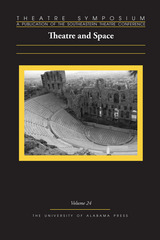
Exploring the dynamic intersections of performance and place.
At a time when so many options exist for access to theatrical entertainments, it is no surprise that theatre practitioners and scholars are often preoccupied with the role of the audience. While space undoubtedly impacts the rehearsal and production processes, its greater significance seems to rest in the impact a specific location has on the audience.
This volume provides diverse viewpoints on theatre and space, as well as its relationship to the audience. Sebastian Trainor and Samuel T. Shanks offer contemporary perspectives on two ancient theatre spaces, while Lisa Marie Bowler describes the Globe Theatre, a replica of the original, as embodying a kind of absence despite its rich link to the past. Focusing on distinctly different periods and settings, both Andrew Gibb and Christine Woodworth describe a politics of space in which specific players gain prestige and power. Chase Bringardner identifies the audience as playing an important role in creating a space for parody in a historic Nashville venue, while Arnab Banerji describes an exhausting process for members of the Bengali group theatre who must continually move from space to space. Finally, Alicia Corts discusses virtual performance spaces and the degree to which participants are able to control their online identities within virtual performances. Bookending these eight essays are Marvin Carlson’s keynote presentation “Whose Space Is It Anyway?” and his closing remarks for the symposium, both of which allude to, and richly explicate, the ultimate arbiters of theatrical space: the audience.
Globalization may strike many as a phenomenon of our own historical moment, but it is truly as old as civilization: we need only look to the ancient Silk Road linking the Far East to the Mediterranean in order to find some of the earliest recorded impacts of people and goods crossing borders. Yet, in the current cultural moment, tensions are high due to increased migration, economic unpredictability, complicated acts of local and global terror, and heightened political divisions all over the world.
Thus globalization seems new and a threat to our ways of life, to our nations, and to our cultures. In what ways have theatre practitioners, educators, and scholars worked to support cross-cultural dialogue historically? And in what ways might theatre embrace the complexities and contradictions inherent in any meaningful exchange? The essays in Theatre Symposium, Volume 25 reflect on these questions.
Featured in Theatre Symposium, Volume 25
- “Theatre as Cultural Exchange: Stages and Studios of Learning” by Anita Gonzalez
- “Certain Kinds of Dances Used among Them: An Initial Inquiry into Colonial Spanish Encounters with the Areytos of the Taíno in Puerto Rico” by E. Bert Wallace
- “Gertrude Hoffmann’s Lawful Piracy: ‘A Vision of Salome’ and the Russian Season as Transatlantic Production Impersonations” by Sunny Stalter-Pace
- “Greasing the Global: Princess Lotus Blossom and the Fabrication of the ‘Orient’ to Pitch Products in the American Medicine Show” by Chase Bringardner
- “Dismembering Tennessee Williams: The Global Context of Lee Breuer’s A Streetcar Named Desire” by Daniel Ciba
- “Transformative Cross-Cultural Dialogue in Prague: Americans Creating Czech History Plays” by Karen Berman
- “Finding Common Ground: Lessac Training across Cultures” by Erica Tobolski and Deborah A. Kinghorn
Stage costumes reveal character. They tell audiences who the character is or how a character functions within the world of the play, among other things. Theatrical costuming, however, along with other forms of theatre design, has often been considered merely a craft, rather than part of the deeply systemic creation of meaning onstage. In what ways do our clothes shape and reveal our habits of behavior? How do stage costumes work to reveal one kind of habit via the manipulation of another? How might theatre practitioners learn to most effectively exploit this dynamic? Theatre Symposium, Volume 26 analyzes the ways in which meaning is conveyed through costuming for the stage and explores the underlying assumptions embedded in theatrical practice and costume production.
THEATRE SYMPOSIUM, VOLUME 26
MICHELE MAJER
Plus que Reine: The Napoleonic Revival in Belle Epoque Theatre and Fashion
CAITLIN QUINN
Creating a Realistic Rendering Pedagogy: The Fashion Illustration Problem
ALY RENEE AMIDEI
Where'd I Put My Character?: The Costume Character Body and Essential Costuming for the Ensemble Actor
KYLA KAZUSCHYK
Embracing the Chaos: Creating Costumes for Devised Work
DAVID S. THOMPSON
Dressing the Image: Costumes in Printed Theatrical Advertising
LEAH LOWE
Costuming the Audience: Gentility, Consumption, and the Lady’s Theatre Hat in Gilded Age America
JORGE SANDOVAL
The RuPaul Effect: The Exploration of the Costuming Rituals of Drag Culture in Social Media and the Theatrical Performativity of the Male Body in the Ambit of the Everyday
GREGORY S. CARR
A Brand New Day on Broadway: The Genius of Geoffrey Holder’s Artistry and His Intentional Evocation of the African Diaspora
ANDREW GIBB
On the [Historical] Sublime: J. R. Planché’s King John and the Romantic Ideal of the Past
Theatre is inescapably about bodies. By definition, theatre requires the live bodies of performers in the same space and at the same time as the live bodies of an audience. And, yet, it’s hard to talk about bodies. We talk about characters; we talk about actors; we talk about costume and movement. But we often approach these as identities or processes layered onto bodies, rather than as inescapably entwined with them. Bodies on the theatrical stage hold the power of transformation. Theatre practitioners, scholars, and educators must think about what bodies go where onstage and what stories which bodies to tell.
The essays in Theatre Symposium, Volume 27 explore a broad range of issues related to embodiment. The volume begins with Rhonda Blair’s keynote essay, in which she provides an overview of the current cognitive science underpinning our understanding of what it means to be “embodied” and to talk about “embodiment.” She also provides a set of goals and cautions for theatre artists engaging with the available science on embodiment, while issuing a call for the absolute necessity for that engagement, given the primacy of the body to the theatrical act.
The following three essays provide examinations of historical bodies in performance. Timothy Pyles works to shift the common textual focus of Racinian scholarship to a more embodied understanding through his examination of the performances of the young female students of the Saint-Cyr academy in two of Racine’s Biblical plays. Shifting forward in time by three centuries, Travis Stern’s exploration of the auratic celebrity of baseball player Mike Kelly uncovers the ways in which bodies may retain the ghosts of their former selves long after physical ability and wealth are gone. Laurence D. Smith’s investigation of actress Manda Björling’s performances in Miss Julie provides a model for how cognitive science, in this case theories of cognitive blending, can be integrated with archival theatrical research and scholarship.
From scholarship grounded in analysis of historical bodies and embodiment, the volume shifts to pedagogical concerns. Kaja Amado Dunn’s essay on the ways in which careless selection of working texts can inflict embodied harm on students of color issues an imperative call for careful and intentional classroom practice in theatre training programs. Cohen Ambrose’s theorization of pedagogical cognitive ecologies, in which subjects usually taught disparately (acting, theatre history, costume design, for example) could be approached collaboratively and through embodiment, speaks to ways in which this call might be answered.
Tessa Carr’s essay on "The Integration of Tuskegee High School" brings together ideas of historical bodies and embodiment in the academic theatrical context through an examination of the process of creating a documentary theatre production. The final piece in the volume, Bridget Sundin’s exchange with the ghost of Marlene Dietrich, is an imaginative exploration of how it is possible to open the archive, to create new spaces for performance scholarship, via an interaction with the body.
The scholarly conference from which this publication emerged was circulated in the waning months of 2018, following a summer of urgent and emotional debate surrounding new US immigration policies regarding immigrant family separations, arguments fueled on one side by fears about the loss of social cohesion, and on the other by photographs of incarcerated children. Given the then-prevailing political atmosphere, editor Andrew Gibb anticipated that a good number of submissions might draw connections between the patterns, policies, and histories of immigration on the one hand, and theatrical or otherwise performance-centered expressions of citizenship, whether inclusive or exclusionary, on the other. In retrospect, what could have been foreseen is that theatre scholars, educators, and professionals would interpret recent events against a wider and more complex backdrop. The ultimate result of that initial call is this volume, a collection of essays whose authors reach beyond simple definitions of citizenship as determined by documents and legal rights, and who engage in larger conversations about what citizenship can mean, and how such meanings are expressed through theatre and performance.
Interestingly, while none of the authors published herein take up immigration as a central issue, they all make use of some combination of three particular analytical frameworks, all of which happen to be pertinent to the current immigrant experience and attempts to regulate it: bodies, institutions, and technologies.
A few weeks prior to the submission deadline for this volume of Theatre Symposium, the murder of George Floyd by officers of the Minneapolis Police Department sparked a movement for racial justice that reverberated at every level of US society. At predominantly and historically white academic institutions (including Theatre Symposium and its parent organization, the Southeastern Theatre Conference) leaders were compelled, as perhaps never before, to account for the role of systematic racism in the foundation and perpetuation of their organizations. While the present volume’s theme of “Theatre and Race” was announced in the waning days of 2019, the composition and editing of the issue’s essays were undertaken almost entirely within the transformed cultural and professional landscape of 2020. Throughout its twenty-nine years of publication, Theatre Symposium’s pages have included many excellent essays whose authors have deployed theories of race as an analytical framework, and (less often) treated BIPOC-centered art and artists as subject. The intent of the current editors in conceiving this issue was to center such subjects and theorizations, a goal that has since taken on a more widely recognized urgency.
Taken together, these twelve essays represent a wide range of scholarly responses to the theme of “theatre and race.” The fact that there is so much to say on the topic, from so many different perspectives, is a sign of how profoundly theatre practices have been—and continue to be—shaped by racial discourses and their material manifestations.
The current moment presents a compelling opportunity to revisit, revise, and reengage. Certainly, in the twenty-one volumes since volume 9, the political landscape both nationally and internationally has shifted dramatically. The past two years specifically have seen an increase in the already prevalent presence of the political in our daily discourse. The COVID-19 global pandemic and ongoing racial reckonings have further unmoored many systems and structures, requiring action and change. Rather than a moment of pause or passivity, pandemic times have seen an increase in political activity and political discourse on the local, national, and global levels. Within the theatre and performance communities, these calls to action have resulted in movements like #weseeyouWAT and other calls to break down old systems and create new ones, to privilege access for those of the global majority, and to explicitly demand advocacy and activism. Organizations like the Southeastern Theatre Conference (SETC) itself crafted new ethos statements and engaged in the necessary work of boldly foregrounding equity, diversity, inclusion, and accessibility at the center of all its efforts.
The editors and contributors to this volume respond to the immediacy of this moment and the clarion call for change. From Shakespeare to new productions like Alabama Love Stories, presented at Auburn University, contributors grapple with a range of examples, contemporary and historical, and argue with renewed urgency for the importance of intentionally interrogating the interplay of performance and politics. The essays in this volume demonstrate that theatre and performance cannot rise to this moment or even begin to address it without doing that substantial work to clean its own house and create accessible new spaces.
Contributors
Chase Bringardner / Tessa Carr / Lily Climenhaga / Abena Foreman-Trice / Emma Givens / TK Manwill / Boomie Pederson / Royal Shirée / Teresa Simone / Tony Tambasco / Jonathon W. Taylor / Justice von Maur / Patricia Ybarra
READERS
Browse our collection.
PUBLISHERS
See BiblioVault's publisher services.
STUDENT SERVICES
Files for college accessibility offices.
RECENTLY PUBLISHED





UChicago Accessibility Resources
home | accessibility | search | about | contact us
BiblioVault ® 2001 - 2025
The University of Chicago Press