
 A SCHOLARLY BOOK REPOSITORY
11 start with U start with U

Unbroken Nostalgia: Haitian Kreyòl Poetry in Cuba is the first English translation and scholarly edition of the collection Nostalji san pwen ni vigil: pwezi kreyòl nan peyi Kiba (2016) by Hilario Batista Félix. A poet, journalist, and language activist, Batista (1955– ) embodies and expresses Cuba’s cultural and linguistic diversity as a descendant of Haitian migrant workers to Eastern Cuba during the mid-twentieth century; his poems bridge regions usually separated by language—the Spanish and Creolophone/Francophone Caribbean—and vividly depict the distinct heritage of Haitian Cubans and their shared dreams and challenges. A scholarly introduction by translator and editor Mariana F. Past provides biographical information about the author, situates his work within Haitian diasporic literature, and addresses patterns of Haitian migration to Cuba. Batista’s original poems appear alongside facing-page English translations with annotations that clarify historical figures and events, geographical features, and Haitian cultural and religious practices. Grounded in oral storytelling traditions, Unbroken Nostalgia brings to light the collective memory and complicated hybridity of the Haitian community in Cuba and upholds Haitian Kreyòl as a language of resistance.
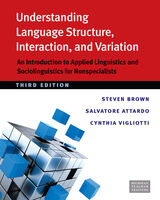
Understanding Language Structure, Interaction, and Variation is an introduction to the study of language and applied linguistics for students who have had a minimum of exposure to the discipline of linguistics. Using clear, easy-to-understand explanations and examples, this text avoids the in-depth theoretical coverage found in texts written for those who specialize in linguistics or SLA. As a result, this book is perfect for students whose chosen fields require them to be acquainted with the ways language works--such as future teachers, psychologists, sociologists, and anthropologists--but who do not intend to become linguists. The text is also suitable for English or ESL/EFL teachers who need a reference volume about various aspects of language, particularly as it applies to teaching. Each chapter includes research projects and further readings.
The third edition of Understanding Language Structure, Interaction, and Variation features a new design and reorganization. All content has been significantly revised and updated. Each chapter also debunks a common language myth and now incorporates exercises that, for prior editions, appeared in a supplementary workbook. Extra practice for students is available online, as is additional materials for teachers. (There is no workbook for the third edition.)
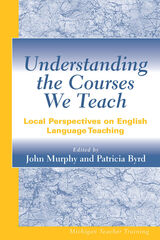
Individual chapters are rich in descriptive details and resonate with the contributor-teachers' personal investment in teaching. John Murphy and Patricia Byrd have arranged these chapters in four thematic clusters, the first dealing with general purposes instruction, including workplace literacy, community-based ESL, and courses designed for rich recent immigrants; the second with the teaching of English as a foreign language; the third with university credit-bearing courses focused on the teaching of English for academic purposes; and the fourth with noncredit university-affiliated courses offered through intensive English programs.
The contributors represent a variety of educational settings and many different countries and include many of the most well-known researchers in the field.
.
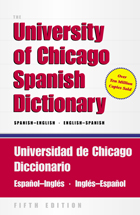
With thousands of added entries, the Dictionary builds on the features that have made it the leader in its field for more than fifty years: authority, scope, clarity, and conciseness. And with this edition, the Dictionary brilliantly captures the current core vocabularies of two rapidly changing—and increasingly connected—languages and cultures.
Entirely bilingual, the fifth edition focuses on two contemporary international languages—American English and a basic, worldwide Spanish that draws from both Latin American and Iberian sources.
Designed for a wide range of users, including travelers, businesspeople, students, teachers, and professionals, the new Dictionary is the essential first resource for speakers of both languages—from beginners to those at all other stages. Up to date, just comprehensive enough, and extraordinarily clear and easy to use, the new edition of The University of Chicago Spanish Dictionary stands alone. No other dictionary offers so many users so much help—or so much value.
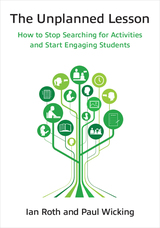
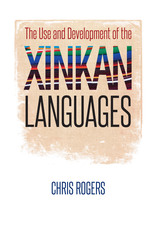
Once spoken only in Santa Rosa Department, Guatemala, the Xinkan language family is unique within Mesoamerica, comprising four closely related languages that are unrelated to any of the other language groups used within the region. Descriptions of Xinkan date to 1770 but are typically only sketches or partial word lists. Not even the community of indigenous people who identify as Xinka today—the last speakers—have had access to a reliable descriptive source on their ancestral tongue. Preserving this endangered communication system in accurate, thorough detail, The Use and Development of the Xinkan Languages presents a historical framework, internal classifications, and both synchronic and diachronic descriptions, incorporating all elements of grammar based on extensive unpublished data collected in the 1970s by Lyle Campbell and Terrence Kaufman.
This valuable contribution is enhanced by author Chris Rogers’s emphasis on contextualizing the findings. Introducing the languages, Rogers presents important information regarding the social and cultural milieu of the speakers. He also traces a phonological reconstruction of Proto-Xinkan and reconstructs historical morphology and syntax. These revelations are of particular interest because the development of Xinka and the many aspects of Xinka morphosyntax have not been well understood. A sample text, “Na Mulha Uy,” is included as well. Solving numerous complex, centuries-old linguistic puzzles, The Use and Development of the Xinkan Languages unlocks new potential for the rediscovery of a rich cultural history.
This book is a part of the Recovering Languages and Literacies of the Americas publication initiative, funded by a grant from the Andrew W. Mellon Foundation.
Using Numbers in Arabic is an invaluable reference for the intermediate to advanced learner of Arabic. The proper use of numbers can often be perplexing for students of the Arabic language. While most Arabic grammars and textbooks include a chapter or discussion on the topic, that coverage is inadequate for serious students, scholars, and researchers.
This guide shows the reader, using clear explanations and examples, exactly how to use cardinal and ordinal numbers in Arabic, from one to the billions and beyond. Each entry features a brief description in English followed by examples in Arabic from actual written and recorded texts; each example is also accompanied by an English translation. All information is based on real-world practice, with helpful citations from literature and media to illustrate each principle. In a second section, the author covers useful number-related topics, such as dates, times, fractions, decimals, and percentages, as well as basic arithmetic functions. While focusing on Modern Standard Arabic, the volume also covers Classical Arabic and describes and illustrates differences between classical and modern practice. The volume’s glossary, bibliography, and index will also be useful to students.
Using Numbers in Arabic is a handy addition to the reference shelf of every serious student of the Arabic language, and it will be welcomed by native speakers with fluency in English interested in a reference on how to render numbers correctly.
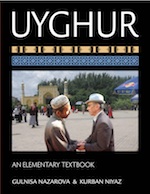
The Uyghurs are one of the oldest Turkic-speaking peoples of Central Asia. Their language is closely related to Uzbek, with which it shares a common ancestor. Modern Uyghur is spoken by about 11 million people in Xinjiang and 2 million people in Central Asia and elsewhere. This textbook offers beginning students a thematically organized and integrative approach to the Uyghur language that emphasizes communicative activities, step-by-step development of linguistic skills, and elements of Uyghur culture. A multimedia DVD includes audio that helps develop listening and speaking skills and videos filmed in different regions of Xinjiang, China.
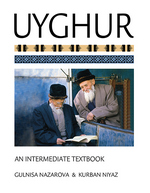
Uyghur: An Intermediate Textbook offers students, professionals, and travelers alike the preeminent tool for expanding their knowledge of the Uyghur language and culture. Combining innovative language learning methodology with authentic audio and video materials, this textbook develops the four primary language skills—speaking, listening, reading, and writing—by integrating them into a clear, balanced whole.
Uyghur: An Intermediate Textbook prepares learners to perform at level 1+/2 or 2+ on the ILR scale and at the Intermediate High to Advanced Mid/High levels on the ACTFL scale.
Features include:
* A multimedia CD that contains videos filmed on location as well as both authentic and scripted audio segments, all highlighting key elements of Uyghur culture
* Authentic original and modified reading passages ranging from short stories to news articles to menus
* Abundant cultural notes to reinforce reading, grammar, and vocabulary skills
* Easy-to-understand examples and exercises on points of Uyghur grammar
* Chapter themes that facilitate immersion in daily Uyghur life and culture
Designed for both classroom and on-the-ground learners, and developed in accordance with the latest ideas in performance-based principles and methodology, Uyghur: An Intermediate Textbook guides readers on a journey to the heart of a fascinating culture.
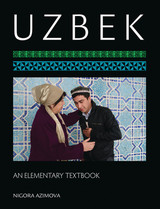
Designed to cover beginning college levels of language instruction, Uzbek: An Elementary Textbook provides learners and instructors with a wide selection of materials and task-oriented activities to facilitate the development of language learning. It offers a thematically organized and integrative approach to the Uzbek language and its culture, including a functional approach to grammar, an emphasis on integrated skills development, and the use of authentic materials such as videos filmed in various regions of Uzbekistan.
This volume includes
-authentic audio and video materials, available for free on GUPTextbooks.com
-an extensive glossary
-color illustrations and photographs throughout
Topics Covered
The Uzbek alphabet, greetings and introductions, commands and requests, daily routines, etiquette, weather, family, money, food, clothing, travel, leisure, and medical matters.
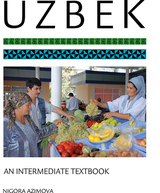
Using a wide selection of materials and task-oriented activities drawn from realistic situations and contexts, Uzbek: An Intermediate Textbook, is designed to help adult professional and higher education learners deepen their understanding of the Uzbek language, culture, and its people. Learners will develop listening, reading, speaking, and writing skills, with special attention to grammatical accuracy. With a variety of texts, audio clips, videos, and activities, this textbook will encourage learners to explore Uzbek culture and to compare and contrast it with their own.
Uzbek: An Intermediate Textbook prepares learners to perform at level 1+ or 2 on the ILR scale and at the Intermediate High or Advanced Low level on the ACTFL scale.
Features of Uzbek: An Intermediate Textbook:
-Topics covered include work, study, personal interests, and travel.
-Authentic audio and video materials to accompany the text, available for free on GUPTextbooks.com
-The book uses the Cyrillic alphabet—the alphabet used in current government reports and the mass media as well as in archival material from the Soviet era.
-A useful appendix compares the Cyrillic alphabet with the Latin alphabet.
-Uzbek-English and English-Uzbek glossaries facilitate vocabulary acquisition.
READERS
Browse our collection.
PUBLISHERS
See BiblioVault's publisher services.
STUDENT SERVICES
Files for college accessibility offices.
RECENTLY PUBLISHED



UChicago Accessibility Resources
home | accessibility | search | about | contact us
BiblioVault ® 2001 - 2025
The University of Chicago Press