
 A SCHOLARLY BOOK REPOSITORY
5 start with W start with W

In Walking in Art Education, authors explore walking and a/r/tography in their local contexts. As a result, the book finds that kinship and relationality are significant themes that permeate across a/r/tographic practices focused on ecopedagogy and learning with the land. These walking practices serve as ecopedagogical moments that attune us to human-land and more-than-human relationships, while also moving us past Western-centric understandings of land and place. More than this, the book situates this work in a/r/tographic practices taking up walking as one method for engagement.
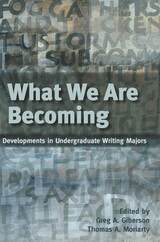
Contributors to the volume address a range of vital questions for undergraduate programs, including such issues as the competition for majors within departments, the job market for undergraduates, varying focuses and curricula of such majors, and the formation of them in departments separate from English. Other chapters discuss the importance of flexibility, consider arguments for a rhetorical or civic discourse core for the writing major, address the relationship between rhetoric and composition majors, and review the role of multiliteracies in the major.
The field of composition has not come to a consensus on the shape, content, or focus of the undergradutate major. But as individual programs develop and refine their curricula, one thing has become clear: we must think about them in ways that go beyond our particular circumstances, theorize them in ways that secure their place on our campuses and in our discipline for years to come. What We Are Becoming is an effort to do just that.
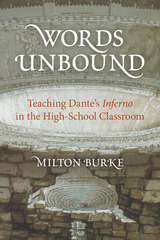
Words Unbound draws on Milton Burke’s thirty years of teaching experience to help educators bring Inferno alive for today’s young reader. In a conversational, “colleague-to-colleague” style, Burke shares the interpretations, questions, and exercises he found effective in his high-school classroom, emphasizing group discussion to help students, no matter their religious or philosophical moorings, engage meaningfully with the notoriously difficult text.
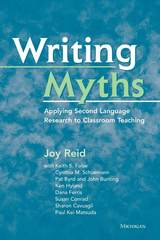
This volume was conceived as a "best practices" resource for writing teachers in the way that Vocabulary Myths by Keith S. Folse is one for reading and vocabulary teachers. It was written to help ensure that writing teachers are not perpetuating the myths of teaching writing.
Each author is a practicing teacher who selected his or her "myth" based on classroom experience and expertise. Both the research and pedagogy in this book are based on the newest research in, for example, teacher preparation, EAP and ESP, and corpus linguistics. The myths discussed in this book are:
§ Teaching vocabulary is not the writing teacher's job. (Keith S. Folse)
§ Teaching citation is someone else's job. (Cynthia M. Schuemann)
§ Where grammar is concerned, one size fits all. (Pat Byrd and John Bunting)
§ Academic writing should be assertive and certain. (Ken Hyland)
§ Students must learn to correct all their writing errors. (Dana Ferris)
§ Corpus-based research is too complicated to be useful for writing teachers. (Susan Conrad)
§ Academic writing courses should focus on paragraph and essay development. (Sharon Cavausgil)
§ International and U.S. resident ESL writers cannot be taught in the same class. (Paul Kei Matsuda)
The book concludes with a discussion of students' myths about academic writing and teaching written by Joy Reid.READERS
Browse our collection.
PUBLISHERS
See BiblioVault's publisher services.
STUDENT SERVICES
Files for college accessibility offices.
RECENTLY PUBLISHED


UChicago Accessibility Resources
home | accessibility | search | about | contact us
BiblioVault ® 2001 - 2025
The University of Chicago Press