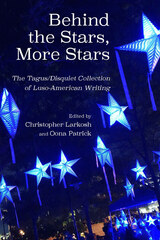
Presenting experimental and boundary-breaking prose from women, people of color, and LGBTQ writers, Behind the Stars, More Stars imagines a more diverse and inclusive Luso-American and Portuguese-American literary scene, which has traditionally been dominated by male voices. Since its first “Writing the Luso Experience” workshops were held in 2011, Dzanc Books's Disquiet International Literary Program in Lisbon has aimed to break silences within today's Luso-American communities. Disquiet faculty Katherine Vaz and Frank X. Gaspar appear alongside up-and-coming writers from the workshops, such as Traci Brimhall, Megan Fernandes, Hugo Dos Santos, and previously unpublished women writers.
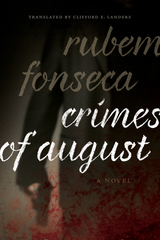
Rubem Fonseca's Crimes of August offers the first serious literary treatment of the cataclysmic events of August 1954, arguably the most turbulent month in Brazilian history. A rich novel, both culturally and historically, Crimes of August tells two stories simultaneously. The first is private, involving the well-delineated character of Alberto Mattos, a police officer. The other is public, focusing on events that begin with the attempted assassination of Carlos Lacerda, a demagogic journalist and political enemy of President Getúlio Vargas, and culminate in Vargas's suicide on August 24,1954. Throughout this suspenseful novel, deceptively couched as a thriller, Fonseca interweaves fact and fiction in a complex, provocative plot. At the same time, he re-creates the atmosphere of the 1950s, when Rio de Janeiro was Brazil's capital and the nexus of political intrigue and corruption. Mattos is assigned to solve the brutal murder of a wealthy entrepreneur in the aftermath of what appears to be a homosexual liaison. An educated and introspective man, and one of the few in his precinct not on the take from the bankers of the illegal lottery, Mattos suffers from alienation and a bleeding ulcer. His investigation puts him on a dangerous collision course with the conspiracy to depose Vargas, the novel's other narrative thread. The two overlap at several points, coming to their tragic end with the aged politician's suicide and Mattos's downfall.
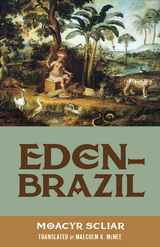
Adamastor is a freshly divorced, frustrated bureaucrat trying to reinvent his life. Richie is a young, struggling actor. Together with Ernesto, a rakish, expat Argentine showman, they create Eden-Brazil, an ecotourism destination in a stunning swath of coastal rainforest. Inspired to provide visitors with the ultimate return to nature, they decide to stage the biblical story of the Garden of Eden, complete with Adam, Eve, snake, apple, the works. But recreating an earthly paradise as something more than another roadside attraction is no easy feat. In this charming, tragicomic tale, Moacyr Scliar employs his signature humor and talent for crisp storytelling, weaving together a playfully serious parable of environmentalist ideals clashing with the realities of local politics, global consumer culture, and competing visions of authentic nature.
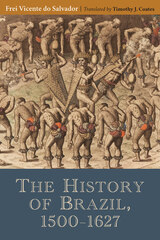
Written during the early seventeenth century, Frei Vicente do Salvador’s The History of Brazil: 1500–1627 offers a unique account of this volatile and dynamic period and holds the distinction of being the first history of Brazil written by a Brazilian. With sections devoted to natural, social, and political history, this expansive volume serves as a rich primary source, detailing the successes and failures of colonial governance, interactions with a diversity of Native peoples, and disputes between the Portuguese and the French and Dutch. As an eyewitness to many of the events he describes, Frei Vincente offers unparalleled access to the incidents, social customs, and personalities at play in colonial Brazil.
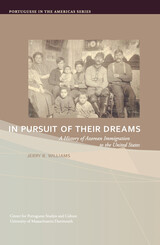
Jerry Williams' history of Azorean immigration to the United States offers us valuable insight into the experience and culture of Portuguese immigrants and their descendants. This account fills a major gap in American immigration history and gives us a comprehensive overview of how Portuguese-Americans—now numbering close to a million people—have come to constitute a vibrant and highly visible presence within southeastern New England, the areas around San Francisco and San Diego, Hawaii, and the New Jersey/New York metropolitan area. Even though Azorean immigrants all came from similar cultural and social backgrounds, Williams shows how regionally specific opportunity structures and social hierarchies have contributed to significant differences within the Portuguese-American experience.
Starting with the whaling routes that first connected the mid-Atlantic archipelago with the ports of call in New England and California in the early 1800s, Williams lays out the complex relationship between the Azores and the US that has continued into the present. We learn how particular patterns of poverty, overpopulation and social inequality in the Azores pushed large numbers of the islands' inhabitants to leave their homes in search of better opportunities for themselves and their children. He tells the story of how the early whalers who jumped ship in New Bedford, San Francisco, or Hawaii were followed by kin and fellow villagers who had heard of plentiful jobs in New England's textile mills, gold and land in California, or agricultural work on Hawaiian plantations. Williams' account allows us to understand the importance of family and community connections throughout the immigrants' arduous transition from peasant life to industrial society.
Winner of the Barnes and Noble Discovery Prize
Winner of the California Book Award for First Fiction
A New York Times Notable Book
In the insular Portuguese fishing community of Provincetown, Josie Carvalho’s life has been shaped by the annual influx of summer tourists and his great aunt’s fervent, if idiosyncratic, Catholicism. The counterweight to these forces has always been Josie’s relationship with his grandfather John Joseph, a drunk, clam-poaching old man who is nevertheless a sly and masterful storyteller.
After a stranger starts dating Josie’s mother and upsets the family’s equilibrium, John Joseph heals the rift with the colorful and adventurous stories of their ancestor, Francisco Carvalho, a Portuguese explorer who just may have beaten Columbus to the New World. With the guidance of these obscure but inspired tales, Josie begins to find new ways of understanding his family and the outside world. This new edition of Leaving Pico makes Frank X. Gaspar’s award-winning coming-of-age novel accessible to a new generation of readers.
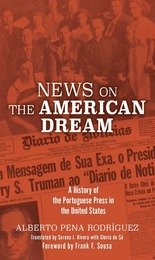
News on the American Dream traces the development of the Portuguese-American press from its beginnings in the late nineteenth century to the present, taking readers from the East Coast to Hawaii, with strategic stops in places with large Portuguese communities, including New Bedford, Massachusetts; Oakland, California; and Newark, New Jersey. Alberto Pena Rodríguez's nuanced analysis of the political, economic, social, and cultural roles played by these publications proves how important they were for the Portuguese-American community and the history of the ethnic press in the United States. Fascinating narratives about the founders, editors, and owners of these publications—and their challenges, squabbles, and successes—round out this engaging study.
The Relic is an irreverent fictional autobiography narrating the picaresque adventures of Teodorico, a Portuguese playboy determined to be the sole heir of his absurdly pious, sexually repressed, and tyrannical Auntie. Sent to the Holy Land, he returns with what he presumes is the “relic of relics” in hopes of persuading Auntie to bequeath her vast fortune to him. While in Jerusalem, Teodorico has a vision in which he witnesses Christ's trial and crucifixion and the founding of Christianity—with a twist.
These poems—varying from narrative to imagist to lyrical—reflect the “sodade” of Cape Verdean culture that is shaped by separation and longing—longing for the home that has been left behind and for loved ones who have departed. Cape Verdean communities extend beyond national boundaries and are paradoxically independent of place, even when inspired by it. Return Flights marks a turning point for Cape Verdean American culture, one in which a partially forgotten past becomes a starting point for possible futures, both of new transoceanic contacts and of new reinventions of culture.
Many people of Portuguese descent take pride in claiming that the word “saudade” is untranslatable. In reality, we come close with a melding of bittersweet nostalgia, bone-deep longing, and an endless yearning for what one can never have again—or indeed may never have had. Adelaide Freitas dipped her pen in saudade to tell of family separation and bonds that never loosen. In her authentic Azorean voice, she recounts the immigrant experience and centrifugal impulses that force people apart in spite of their desperation to cling to one another. In their sensitive rendering, the translators have captured the nuances of Freitas's novel Smiling in the Darkness, with special care for those who have her native language in their heritage and heartfelt saudade for its loss.
This revised and updated bilingual edition of Sonnets and Other Poems offers a cross-section of lyric poetry by Portugal's Luís de Camões, author of The Lusiads (1572), the great Renaissance epic memoralizing Vasco da Gama's inaugural voyage to India (1497-99). A selection of forty sonnets is followed by poems using other metrical patterns and rhyme schemes, including terza rima, ottava rima, the sestina, the canzone, and the redondilha, a verse form typical of Portuguese poetry. Richard Zenith's fluid renditions, far from attempting to "update" Camões, closely adhere to the original text, employing modern English but resisting the temptation to expand on the relatively small and simple lexicon of the Portuguese. Along with discussing his method of translation, Zenith's illuminating introduction shows how Camões's life and work were intimately entwined.
Grappling with metaphysical questions of suffering, death, and infinity, Antero de Quental’s sonnets have been widely celebrated by writers and intellectuals around the world, with Fernando Pessoa calling him “one of the greatest poets of the nineteenth century.” Irreverent and nonconformist, Antero became the ideologue and moving spirit behind the group of progressive intellectuals known as the Generation of 1870 who rebelled against tradition and attempted to reverse Portugal’s intellectual stagnation. This is the first bilingual (Portuguese-English) edition of Antero's sonnets and poems, as well as the first to assemble the translations by Aubrey F. G. Bell, Roy Campbell, Richard Garnett, George Monteiro, S. Griswold Morley, Fernando Pessoa, Edgar Prestage, and Richard Zenith in a single volume.
Elizabeth Lowe charts her journey to becoming a translator through a series of vignettes relating her life as a “third-culture kid” and living and working abroad in a kaleidoscope of cultures and languages. She lived in Germany as a young child immediately after the Second World War while her father worked in the Nuremberg trials and as a newly married military spouse during the Vietnam War; she lived in Haiti just prior to Papa Doc's consolidation of power, in Brazil when the military dictatorship seized the country in its two-decade vise, at the University of Coimbra, Portugal during Salazar, and Colombia at the height of the guerrilla conflicts, and in Miami during the heyday of the cartels. The book is a reflection on translation as an art, on five decades teaching languages, literatures, and translation, and on her close relationship with writers from the Lusophone world. It explores theoretical aspects of translation as well as practical challenges faced by translators, especially those working in Portuguese literature. Lowe offers intimate insights into the creative process of the writers she translates and her own philosophy of literary translation.
The idea for The Traveling Eye came as a new departure in an old dialogue between the two authors, one a literary scholar, the other a philosopher. Our focus was initially centered on a philosophical hypothesis concerning evidence, with specific reference to the prophetic writings of Father António Vieira, but it occurred to us that this perspective could be applied to literary works, particularly those of the Portuguese Renaissance. The studies that one of us had dedicated to the initiatory aspects of The Lusiads and to the codification of esoteric meanings in the work of Bernardim Ribeiro suggested a possible convergence of our two lines of research. But there are other issues raised by the Portuguese Renaissance: voyages, the new, the encounter with difference and how to understand it. The most obvious and direct expression of these issues is found in the chronicles of voyage and empire, whose importance is duly noted in the study by Luís de Sousa Rebelo included in Chapter III of this book. The literary treatment of this material seems to us no less revealing. Seeing ("seeing clearly seen" as Camões says in The Lusiads) poses the problem of simultaneously seeing "what is there" and of how what is there could be seen. This questioning from the outside by "the traveling eye" went hand in hand with new ways of relating to oneself and to others. Three key Renaissance authors, Luís de Camões (1525?-1580), Francisco de Sá de Miranda (1481?-1558?) and Bernardim Ribeiro (b.1480s?), address the human subject's relationship as a perplexing issue. Their works transform the feeling of love into a multifaceted investigation that questions the identity of the individual. A recurring theme in this book is the metamorphoses of the self brought about by love.
Winner of the Independent Publishers Book Awards’ Silver Prize for Multicultural Fiction
Alarmed by her father’s unexplained disappearance, Julia Castro travels from California to her family’s ancestral home in the Azores to find the islands abuzz with tales of ghost ships, seductive sirens, and witchcraft. The mystery deepens when a drowned man’s body is discovered on a mountainside and an unknown island emerges from the sea. While she is on the hunt for her father, Julia succumbs to the bewitching allure of the islands—and to Nicolau, a fellow musician. History, legend, poetry, and myth are seamlessly interwoven as the novel explores relationships between personal and cultural identity, fate and self-determination, reality and illusion. This revised edition of The Undiscovered Island features a new introduction from Katherine Vaz.
When cruelty is sanctified, betrayal is rewarded as virtue, and the innocent must hide their true identities to survive, seventeen-year-old Isaaque Zarco struggles to preserve the principles he lives by and protect the people he loves in this luminous and deeply moving conclusion to The Vanished Souls duology.
As Isaaque attempts to put his life back together, mysteries and conflicts continue to haunt him, most prominently his father’s inexplicable rejection and the knowledge that his survival depends on concealing his identity and faith.
His world is shaken by a letter saying his grandmother, Flor, has been arrested. Unable to abandon the woman who guided him throughout his childhood, Isaaque crosses into Spain, entering a society ruled by fear and deception, where anonymous accusations carry the force of law and compassion itself has become an act of defiance. Flor has been transferred to a prison in Madrid. She has been physically broken by imprisonment. Isaaque learns that, under torture, she revealed the names of two of his oldest friends as secret Jews. Racing back to his home village, he embarks on a desperate attempt to help them escape before the Inquisition comes for them.
The Upside-Down Forest portrays a society in which slander is revered as truth, mercy is condemned as weakness, and persecution masquerades as justice. Giving voice to victims whose suffering has too often been erased from history, Richard Zimler explores how systems of fear corrupt not only institutions but also the bonds between family, friends, and neighbors. Ultimately, it asks what remains of our humanity when the moral order itself has been turned upside down—and whether a life shaped by love, loyalty, and compassion can still endure when survival itself demands treachery and betrayal.
Winner of Book of the Year in Portugal, The Village of Vanished Souls is a sweeping historical tale inspired by authentic records of the Portuguese Inquisition and the real lives of villagers whose stories have long been forgotten.
Portugal, 1671—Nine-year-old Isaaque Zarco lives a peaceful life in the remote mountain village of Castelo Rodrigo, where he helps his mother prepare meals, roams the surrounding forests with his spirited best friend Lena, and learns about nature from the village apothecary, Samuel. But his idyllic childhood is shattered when Lena and her family suddenly vanish, followed by a series of brutal murders that plunge the isolated community into fear.
When Isaaque’s formidable Castilian grandmother visits, she says what no one else dares: the Inquisition is hunting descendants of Jews who continue to secretly practice. Then she entrusts Isaaque with an even more dangerous secret—that he, too, belongs to a secret Jewish family. As she introduces him to the forbidden traditions and sacred writings of their ancestors, Isaaque’s understanding of his parents, his village, and himself is transformed forever.
As Isaaque comes of age, he is drawn into a clandestine network that helps persecuted Jews escape Portugal. Every mission carries the risk of imprisonment, torture, and death, yet this dangerous work gives Isaaque a profound sense of purpose while deepening his commitment to his heritage. When he learns that his beloved grandmother is ill, he embarks on a journey that will expose long-buried family secrets and reveal that learning to embrace his heritage is only the beginning of what will soon be asked of him.
Inspired by the names, arrest records, and testimonies preserved in Inquisitional archives, The Village of Vanished Souls recreates a little-known chapter of history with vivid historical detail and emotional depth. At once an unforgettable coming-of-age story and a moving portrait of resilience, identity, faith, and love, it gives voice to people whose courage endured despite centuries of persecution and forced silence.
READERS
Browse our collection.
PUBLISHERS
See BiblioVault's publisher services.
STUDENT SERVICES
Files for college accessibility offices.
UChicago Accessibility Resources
home | accessibility | search | about | contact us
BiblioVault ® 2001 - 2026
The University of Chicago Press