
 A SCHOLARLY BOOK REPOSITORY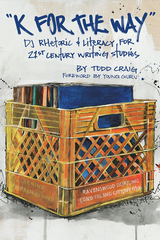
Using material from a larger qualitative research study that illustrates the Hip Hop DJ as a twenty-first-century new media reader, writer, and literary critic, Craig blends interviews from prominent and influential DJs in the Hip Hop community with narrative and interdisciplinary scholarship from writing studies, Hip Hop studies, African American studies, urban education, and ethnomusicology. The voices of DJs sit front and center, presenting a revolutionary conversation about writing and communication in the twenty-first century.
Weaving Craig’s life experiences with important discussions of racial literacies, “K for the Way” is a layered and utterly singular exploration of culture, identity, and literacy in America.

In describing the career of Abraham Yagel, a Jewish physician, kabbalist, and naturalist who lived in northern Italy from 1553 to about 1623, David Ruderman observes the remarkable interplay between early modern scientific thought and religious and occult traditions from a wholly new perspective: that of Jewish intellectual life.
Whether he was writing about astronomical discoveries, demons, marvelous creatures and prodigies of nature, the uses of magic, or reincarnation, Yagel made a consistent effort to integrate empirical study of nature with kabbalistic and rabbinic learning. Yagel's several interests were united in his belief in the interconnectedness of all thing—a belief, shared by many Renaissance thinkers, that turns natural phenomena into “signatures” of the divine unity of all things. Ruderman argues that Yagel and his coreligionists were predisposed to this prevalent view because of occult strains in traditional Jewish thought He also suggests that underlying Yagel's passion for integrating and correlating all knowledge was a powerful psychological need to gain cultural respect and acceptance for himself and for his entire community, especially in a period of increased anti-Semitic agitation in Italy.
Yagel proposed a bold new agenda for Jewish culture that underscored the religious value of the study of nature, reformulated kabbalist traditions in the language of scientific discourse so as to promote them as the highest form of human knowledge, and advocated the legitimate role of the magical arts as the ultimate expression of human creativity in Judaism. This portrait of Yagel and his intellectual world will well serve all students of late Renaissance and early modern Europe.
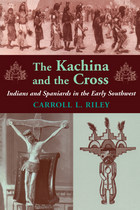
In The Kachina and the Cross, Carroll Riley weaves elements of archaeology, anthropology, and history to tell a dramatic story of conflict between the Pueblo Indians and Franciscan missionaries in the seventeenth-century Spanish colony of New Mexico.
Until now, histories of the early Southwest have tended to concentrate on the Spanish presence, with little mention of Indian resistance or the decade-long war that eventually erupted. In The Kachina and the Cross Riley completes the picture by utilizing archaeological and anthropological research from the past forty years, fleshing out the story of the first century of sustained Spanish-Pueblo relations.
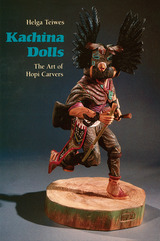
Teiwes explains the role of the Katsina spirit in Hopi religion and that of the kachina doll—the carved representation of a Katsina—in the ritual and economic life of the Hopis. In tracing the history of the kachina doll in Hopi culture, she shows how these wooden figures have changed since carvers came to be influenced by their marketability among Anglos and how their carving has been characterized by increasingly refined techniques. Unique to this book are Teiwes's description of the most recent trends in kachina doll carving and her profiles of twenty-seven modern carvers, including such nationally known artists as Alvin James Makya and Cecil Calnimptewa. Enhancing the text are more than one hundred photographs, including twenty-five breathtaking color plates that bring to life the latest examples of this popular art form.
In Kafka's writing, Albert Camus tells us, we travel "to the limits of human thought." And in this book, the world's leading Kafka authority conducts us to the deepest reaches of Kafka's own troubled psyche, to reveal the inner workings of the man who gave his name to a central facet of modern experience, the Kafkaesque. Klaus Wagenbach, who wrote the first major critical biography of Kafka, draws upon a wealth of new and recent information to produce a concise but finely nuanced portrait of the author, an ideal introduction to this quintessential figure of modernity.
With extensive reference to Kafka's extraordinary letters and diaries, Wagenbach shows us the author of Metamorphosis and The Trial perpetually caught between the irresistible attractions of the world and his ruthless desire for solitude and isolation. It was this tension, Wagenbach tells us, that gave Kafka's writing its uncanny quality and that haunted his intense, unresolved relationships with women. And it was in this tension that both his misery and mastery inhered, making his one of the most painfully powerful voices of the experience of the twentieth century.
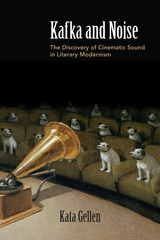
Kafka and Noise offers a method for pursuing intermedial research in the humanities—namely, via the productive "misapplication" of theoretical tools, which exposes the contours, conditions, and expressive possibilities of the media in question. This book will be of interest to scholars of modernism, literature, cinema, and sound, as well as to anyone wishing to explore how artistic and technological media shape our experience of the world and the possibilities for representing it.
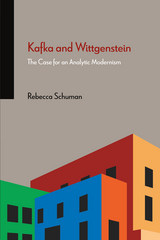
In Kafka and Wittgenstein, Rebecca Schuman undertakes the first ever book-length scholarly examination of Ludwig Wittgenstein’s philosophy of language alongside Franz Kafka’s prose fiction. In groundbreaking readings, she argues that although many readers of Kafka are searching for what his texts mean, in this search we are sorely mistaken. Instead, the problems and illusions we portend to uncover, the im-portant questions we attempt to answer—Is Josef K. guilty? If so, of what? What does Gregor Samsa’s transformed body mean? Is Land-Surveyor K. a real land surveyor?— themselves presuppose a bigger delusion: that such questions can be asked in the first place. Drawing deeply on the entire range of Wittgenstein’s writings, Schuman can-nily sheds new light on the enigmatic Kafka.

Since many of Kafka's visits to the cinema occurred during bachelor trips with Max Brod, Zischler's research took him not only to Kafka's native Prague but to film archives in Munich, Milan, and Paris. Matching Kafka's cinematic references to reviews and stills from daily papers, Zischler hunted down rare films in collections all across Europe. A labor of love, then, by a true man of the cinema, Kafka Goes to the Movies brims with discoveries about the pioneering years of European film. With a wealth of illustrations, including reproductions of movie posters and other rare materials, Zischler opens a fascinating window onto movies that have been long forgotten or assumed lost.
But the real highlights of the book are those about Kafka himself. Long considered one of the most enigmatic figures in literature, the Kafka that emerges in this work is strikingly human. Kafka Goes to the Movies offers an absorbing look at a witty, passionate, and indulgently curious writer, one who discovered and used the cinema as a place of enjoyment and escape, as a medium for the ambivalent encounter with modern life, and as a filter for the changing world around him.

Set in El Paso and other Latinx-dominant urban spaces, Kafka in a Skirt is an immersive look into the myriad lives of the characters who inhabit these culturally diverse areas. Chacón masterfully weaves elements of the surreal and fantastic through a shining tapestry of fiction, creating moments of touching realism in contrast with scenes that are fascinatingly unfamiliar. Occasionally teasing the ghosts of Jorge Luis Borges and the Argentine poet Alejandra Pizarnik, this collection disregards boundaries and transports readers into a world merely parallel to our own. Kafka in a Skirt unravels the intricacies of culture, sexuality, love, and loneliness in a collection that shows the personal implications of barriers while remaining hopeful and bright.
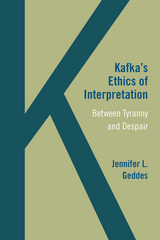
Geddes explores the interpretation that takes place within, and in response to, Kafka's writings, and pairs Kafka's works with readings of Sigmund Freud, Pierre Bourdieu, Tzvetan Todorov, Emmanuel Levinas, and others. She argues that Kafka explores interpretation as a mode of power and violence, but also as a mode of engagement with the world and others. Kafka, she argues, challenges us to rethink the ways we read texts, engage others, and navigate the world through our interpretations of them.
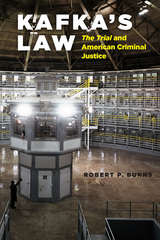
With Kafka’s Law, Robert P. Burns shows how The Trial provides an uncanny lens through which to consider flaws in the American criminal justice system today. Burns begins with the story, at once funny and grim, of Josef K., caught in the Law’s grip and then crushed by it. Laying out the features of the Law that eventually destroy K., Burns argues that the American criminal justice system has taken on many of these same features. In the overwhelming majority of contemporary cases, police interrogation is followed by a plea bargain, in which the court’s only function is to set a largely predetermined sentence for an individual already presumed guilty. Like Kafka’s nightmarish vision, much of American criminal law and procedure has become unknowable, ubiquitous, and bureaucratic. It, too, has come to rely on deception in dealing with suspects and jurors, to limit the role of defense, and to increasingly dispense justice without the protection of formal procedures. But, while Kennedy may be correct in his grim assessment, a remedy is available in the tradition of trial by jury, and Burns concludes by convincingly arguing for its return to a more central place in American criminal justice.
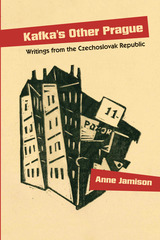
Franz Kafka was born in Prague, a bilingual city in the Habsburg Empire. He died a citizen of Czechoslovakia. Yet Kafka was not Czech in any way he himself would have understood. He could speak Czech, but, like many Prague Jews, he was raised and educated and wrote in German. Kafka critics to date have had little to say about the majority language of his native city or its “minor literature,” as he referred to it in a 1913 journal entry. Kafka’s Other Prague explains why Kafka’s later experience of Czech language and culture matters.
Bringing to light newly available archival material, Anne Jamison’s innovative study demonstrates how Czechoslovakia’s founding and Kafka’s own dramatic political, professional, and personal upheavals altered his relationship to this “other Prague.” It destabilized Kafka’s understanding of nationality, language, gender, and sex—and how all these issues related to his own writing.
Kafka’s Other Prague juxtaposes Kafka’s German-language work with Czechoslovak Prague’s language politics, intellectual currents, and print culture—including the influence of his lover and translator, the journalist Milena Jesenská—and shows how this changed cultural and linguistic landscape transformed one of the great literary minds of the last century.
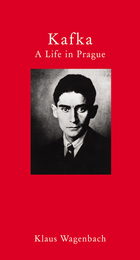
Drawing from a range of documents and historical materials, this is the first book specifically dedicated to the relationship between Kafka and Prague. Klaus Wagenbach’s account of Kafka’s life in the city is a meticulously researched insight into the author’s family background, his education and employment, his attitude toward the town of his birth, his literary influences, and his relationships with women. The result is a fascinating portrait of the twentieth century’s most enigmatic writer and the city that provided him with so much inspiration. W. G. Sebald recognized that “literary and life experience overlap” in Kafka’s works, and the same is true of this book.
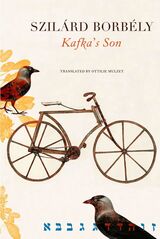
Born in 1963, Szilárd Borbély emerged as one of the most important poets of post-communist Europe, exploring the themes of grief, memory, and trauma in his critically acclaimed work. Following the murder of his mother during a burglary in 2000, and the subsequent breakdown and death of his father, Borbély suffered from post-traumatic depression and tragically ended his own life in 2014.
Among the manuscripts that Borbély left behind was Kafka’s Son, a fragmentary work, rendered still more fragmented through the author’s death. Through a series of haunting passages that explore early twentieth-century Prague, including the ruins of the ancient Jewish ghetto during the time of its demolition, Borbély inscribes the story of Franz Kafka and his father onto the city. We are used to hearing from Franz; here Hermann Kafka is also given a voice. “The son,” he tells us, “is the life of the father. The father is the death of the son.” By extension, then, this book is also an indirect telling of the story of Borbély and his father, and about sons and fathers in the Habsburg empire and the culture of brutality that defined Eastern Europe.
A posthumously published Hungarian masterpiece, Kafka’s Son now appears in English in award-winning translator Ottilie Mulzet’s sensitive translation, a fragmentary yet iridescent work inviting us to reflect on our fragmented lives.
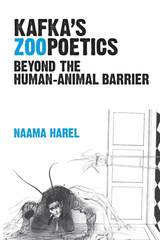
Nonhuman figures are ubiquitous in the work of Franz Kafka, from his early stories down to his very last one. Despite their prominence throughout his oeuvre, Kafka’s animal representations have been considered first and foremost as mere allegories of intrahuman matters. In recent years, the allegorization of Kafka’s animals has been poetically dismissed by Kafka’s commentators and politically rejected by posthumanist scholars. Such critique, however, has yet to inspire either an overarching or an interdiscursive account. This book aims to fill this lacuna. Positing animal stories as a distinct and significant corpus within Kafka’s entire poetics, and closely examining them in dialogue with both literary and posthumanist analysis, Kafka’s Zoopoetics critically revisits animality, interspecies relations, and the very human-animal contradistinction in the writings of Franz Kafka.
Kafka’s animals typically stand at the threshold between humanity and animality, fusing together human and nonhuman features. Among his liminal creatures we find a human transformed into vermin (in “The Metamorphosis”), an ape turned into a human being (in “A Report to an Academy”), talking jackals (in “Jackals and Arabs”), a philosophical dog (in “Researches of a Dog”), a contemplative mole-like creature (in “The Burrow”), and indiscernible beings (in “Josefine, the Singer or the Mouse People”). Depicting species boundaries as mutable and obscure, Kafka creates a fluid human-animal space, which can be described as “humanimal.” The constitution of a humanimal space radically undermines the stark barrier between human and other animals, dictated by the anthropocentric paradigm. Through denying animalistic elements in humans, and disavowing the agency of nonhuman animals, excluding them from social life, and neutralizing compassion for them, this barrier has been designed to regularize both humanity and animality. The contextualization of Kafka's animals within posthumanist theory engenders a post-anthropocentric arena, which is simultaneously both imagined and very real.
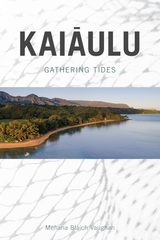
This coast is known as a playground for tourists and backdrop for Hollywood movies, but catch from small local reefs, and the sharing of this abundance, has sustained area families for centuries, helping them to thrive through tidal waves, hurricanes, an influx of new residents, and economic recessions. Yet fishing families are increasingly invisible and many have moved away, threatened by global commodification and loss of access to coastal lands that are now private retreats for star entertainers, investors, and dot-com millionaires.
Building on two decades of interviews with more than sixty Hawaiian elders, leaders, and fishermen and women, Kaiāulu shares their stories of enduring community efforts to perpetuate kuleana, often translated to mean “rights and responsibilities.” Community actions extend kuleana to include nurturing respectful relationships with resources, guarding and cultivating fishing spots, perpetuating collective harvests and sharing, maintaining connection to family lands, reasserting local governance rooted in ancestral values, and preparing future generations to carry on.
An important contribution to scholarship in the fields of natural resource management, geography, Indigenous Studies, and Hawaiian Studies, Kaiāulu is also a skillfully written and deeply personal tribute to a community based not on ownership, but reciprocity, responsibility, and caring for the places that shape and sustain us all.
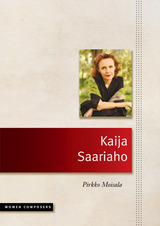
Pirkko Moisala approaches the unique characteristics of Saariaho's music through composition sketches, scores, critical reviews, and interviews with the composer and her trusted musicians. Drawing extensively from this material, Moisala describes the development of Saariaho's career and international reception, the characteristics of her musical expression, and the progression of her compositional process.
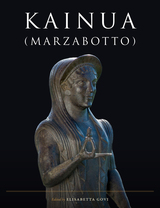
This volume brings together leading scholars of Etruria to provide up-to-date findings from the key archaeological site of Kainua. Located in what is now the Italian town of Marzabotto, Kainua is the only Etruscan site whose complete urban layout has been preserved, making it possible to trace houses, roads, drainage systems, cemeteries, craft workshops, and an acropolis.
Under excavation since the 1850s, Kainua offers a trove of insights into Etruscan culture and society. The volume’s editor, Elisabetta Govi, and her fellow experts examine the material evidence underlying our understanding of the history, economy, religion, and social structures of Kainua, including trade routes that linked the city with the wider Mediterranean. Particularly exciting are recent discoveries of sanctuaries dedicated to Tinia and Uni, analogous to the Greek Zeus and Hera, which provide new information about Etruscan cults. Kainua (Marzabotto) also draws on the latest research to reconstruct the city’s foundation rites, a sacred charter, and urban plan. Finally, the authors explore the site’s archaeological history, discussing new knowledge made possible since the introduction of modern techniques of remote sensing and 3D modeling.
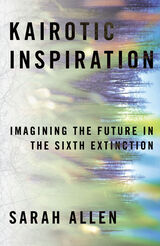
On the precipice of the Sixth Extinction, we face a frightening fate—ongoing ecological crises that may result in not only the extinction of a million species within decades but another mass extinction event like the one that wiped out the dinosaurs. In Kairotic Inspiration: Imagining the Future in the Sixth Extinction, Sarah Allen suggests that humans face this future, whatever it brings, by attending to the ways in which all beings are caught in the entangled processes of becoming. But change is often painful and requires inspiration. Allen explores a theory that shifts the concept of inspiration away from the unique genius of the individual and instead situates it within conceptual, human and nonhuman animal relations that can disrupt the state of being. To expand the understanding of change beyond the polarized binary that defines difference, the author builds on Nietzsche’s conceptualization of the Dionysian, which explains how the self is unmade through immersive experiences. This unmaking creates room for a different experience of becoming, one which Donna Haraway calls “becoming-with” and “producing-with.” In the end, Allen demonstrates how deepening kairotic connections can transform us as beings, thrusting us further into the processes of becoming and embracing the change that is possible in this living, changing, endangered world.

This is a history of the early days of Uganda. The account has an African focus because it shows the British takeover through the experiences of an extraordinary leader.
“At this spot in the year 1901 the British flag was first hoisted by Semei Kakanguru, emissary and loyal servant of His Majesty the King. He built here a boma which was for a short time the headquarters of the district. From this beginning came the establishment of peace and the development of orderly progress in this part of Uganda.”
Michael Twaddle was shown this plaque in 1963 by a local government official who said “That man created the Uganda we Ugandans are fighting for today.” And yet the local people had had the plaque removed to a bicycle shed.
How do people regard an African who had an active role in the creation of the imperial state? Was this man “a hero,” “a collaborator,” “a warlord”? The reaction of colonial officials was mixed. One considered him “…in point of general intelligence, progressive ideas and charm of manner…far above all other natives in the Protectorate…” Another dismissed him, along with his companions, as “no better than Masai or Nandi cattle lifters.” And yet another viewed him as “undoubtedly…a partial religious maniac.”
The story of this man is an example of the dilemma for a whole generation of East Africans at the turn of the last century. This book has been compared in its importance to Shepperson’s and Price’s Independent African.
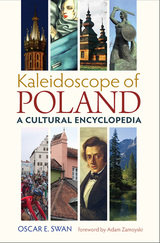
Kaleidoscope of Poland is a highly readable volume containing short articles on major personalities, places, events, and accomplishments from the thousand-year record of Polish history and culture. Featuring approximately 900 compact text entries and 600 illustrations, it will be a handy reference at home, a perfect supplement to traditional guide books when traveling, an aid to language study, or simply browsed with enjoyment from cover to cover by anyone with an interest in Poland.
The entries describe essential features of Poland from the mundane to the sublime. Whether it is bagels or the Bug River, Chopin or Madame Curie, the authors offer colorful and often witty snapshots of significant individuals, customs, folklore, historic events, phrases, places, geography, and much, much more. Beginning with the emergence of the Polish state in 966 under Mieszko I, to the resurrection of present-day Poland within the European Union, it’s also a sweeping account of the tumult and triumphs the nation has witnessed through much of its history.
This highly entertaining yet informative book is essentially a “cultural dictionary”—offering a knowledge base that can be referred to time and time again. Kaleidoscope of Poland will be welcomed by readers of Polish descent, students of Polish, or anyone planning to visit Poland—anyone seeking a greater insight into this fascinating land.
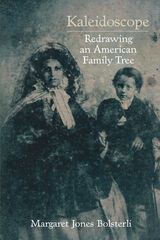
Kaleidoscope is the story of this discovery, and it is the story, too, of the rise and fall of the Chavis fortunes in Mississippi, from the family’s first appearance on a frontier farm in 1829 to ownership of over a thousand acres and the slaves to work them by 1860. Bolsterli learns that in the 1850s, when all free colored people were ordered to leave Mississippi or be enslaved, Jordan Chavis’s white neighbors successfully petitioned the legislature to allow him to remain, unmolested, even as three of his sons and a daughter moved to Arkansas and Illinois. She learns about the agility with which the old man balanced on a tightrope over chaos to survive the war and then take advantage of the opportunities of newly awarded citizenship during Reconstruction. The story ends with the family’s loss of everything in the 1870s, after one of the exiled sons returns to Mississippi to serve in the Reconstruction legislature and a grandson attempts unsuccessfully to retain possession of the land. In Kaleidoscope, long-silenced truths are revealed, inviting questions about how attitudes toward race might have been different in the family and in America if the truth about this situation and thousands of others like it could have been told before.
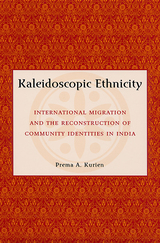
Co-Winner of the 2003 American Sociological Association's Asia/Asian American book award.
Based on ethnographic research in three communities (Ezhava Hindu, Mappila Muslim, and Syrian Christian) in Kerala, India, which sent large numbers of workers to the Middle East for temporary jobs, Kaleidoscopic Ethnicity explores the factors responsible for the striking differences in the groups’ patterns of migration and migration-induced social change. Most broadly, Prema Kurien seeks to understand what ethnicity is and how it affects people’s activities and decisions. She argues that, in each case, a community-specific nexus of religion, gender, and status shaped migration, and was, in turn, transformed by it.
The religious background of the three groups determined their social location within colonial and postcolonial Kerala. This social location in turn affected their occupational profiles, family structures, and social networks, as well as their conceptions of gender and honor, and thus was fundamental in shaping migration patterns. The rapid enrichment brought about by international migration resulted in a reinterpretation of religious identity and practice which was manifested by changes in patterns of gendered behavior and status in each of the three communities. What makes this book unique is its focus on the sociocultural patterns of short-term international migration and its comparative ethnographic approach.
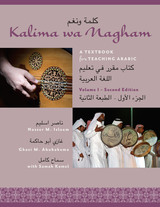
Presenting a new Teaching Arabic as a Foreign Language (TAFL) curriculum that can be used in secondary and postsecondary educational settings, Kalima wa Nagham (Volume I) is a textbook that uniquely and simultaneously introduces Modern Standard Arabic (MSA) and salient aspects of Educated Spoken Arabic (ESA) to beginning language students. Students who fully utilize this book should be able to develop the different language skills: listening, speaking, reading, writing, and expressing deep cultural knowledge.
Written by Arabic language teaching practitioners and experienced educators who are certified language testers, Volume I of Kalima wa Nagham employs a threaded story that introduces language concepts along with music to enhance vocabulary retention and recall. At the core of the textbook are dialogues that present students and teachers with examples of Arabic grammatical concepts and important cultural aspects, as well as related vocabulary. These are supplemented by drills and activities that can be used in a classroom setting or pursued individually. Dialogues, pronunciation and listening drills, and charts to accompany the lessons are available on the UT Press website. This volume is student-centered in content and methodology, which will enable learners to meet and exceed linguistic and cultural proficiency expectations.
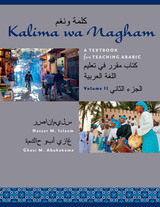
Presenting a new Teaching Arabic as a Foreign Language (TAFL) curriculum that can be used in secondary and postsecondary educational settings, Kalima wa Nagham, Volume 2, is a textbook that uniquely and simultaneously introduces Modern Standard Arabic (MSA) and salient aspects of Educated Spoken Arabic (ESA) to level two language students. Students who fully utilize this book should be able to develop important language skills: listening, speaking, reading, writing, and expressing deep cultural knowledge.
Written by Arabic language teaching practitioners and experienced educators who are certified language testers, Kalima wa Nagham employs a threaded story that introduces language concepts along with music to enhance vocabulary retention and recall. At the core of the textbook are dialogues that present students and teachers with examples of Arabic grammatical concepts and important cultural aspects, as well as related vocabulary. These are supplemented by drills and activities that can be used in a classroom setting or pursued individually. Volume 2 incorporates media language to help students understand news reports and other media texts as well as original cartoons that demonstrate the meaning and significance of idiomatic expressions in a refreshing way. Dialogues and pronunciation and listening drills to accompany the lessons are available on the University of Texas Press website. This volume is student-centered in content and methodology, which will enable learners to meet and exceed linguistic and cultural proficiency expectations.
Presenting a new Teaching Arabic as a Foreign Language (TAFL) curriculum that can be used in secondary and postsecondary educational settings, Kalima wa Nagham, volume 3, is a textbook that uniquely and simultaneously introduces Modern Standard Arabic (MSA) and salient aspects of Educated Spoken Arabic (ESA) to students whose proficiency level is at least intermediate high according to ACTFL’s rating scale. Students who fully use this book should be able to develop important language skills—listening, speaking, reading, writing, and expressing deep cultural knowledge—and reach the advanced high proficiency level by the end of the book.
Written by Arabic language teaching practitioners and experienced educators who are certified language testers, Kalima wa Nagham employs a threaded story that introduces language concepts along with music to enhance vocabulary retention and recall. At the core of the textbook are written and oral texts that present students and teachers with examples of Arabic grammatical concepts and important cultural aspects, as well as related vocabulary. These are supplemented by drills and activities that can be used in a classroom setting or pursued individually. Dialogues and pronunciation and listening drills that accompany the lessons are available on the University of Texas Press website. This volume is student-centered in content and methodology, which will enable learners to meet and exceed linguistic and cultural proficiency expectations.
In a substantial new preface to this second edition, Kripal answers his critics, addresses the controversy the book has generated in India, and traces the genealogy of his work in the history of psychoanalytic discourse on mysticism, Hinduism, and Ramakrishna himself. Kali's Child has already proven to be provocative, groundbreaking, and immensely enjoyable.
"Only a few books make such a major contribution to their field that from the moment of publication things are never quite the same again. Kali's Child is such a book."—John Stratton Hawley, History of Religions
Winner of the American Academy of Religion's History of Religions Prize for the Best First Book of 1995
In this work, Jeffrey J. Kripal attempts to untangle the paradox. He demonstrates that Ramakrishna's famous mystical experiences were driven by erotic energies that he neither fully accepted nor understood; the key to understanding this extraordinary figure, Kripal argues, lies in Tantra and its ritual, symbolic, and doctrinal equation of the mystical and the erotic.
Moving through Ramakrishna's world both chronologically and conceptually, Kali's Child employs two complementary interpretive strategies, a nuanced phenomenological reinterpretation of original Bengali texts and a nonreductive psychoanalytic reading of Ramakrishna's mystical eroticism. Kripal shows how the heterosexual structure of Tantric symbolism, the abusive way its rituals were often forced upon the saint, and Ramakrishna's own homosexual desires all came together to produce in him profound feelings of shame, disgust, and fear. Kripal establishes that the homosexuality of this great, if unwilling, Tantric mystic is linked inextricably to virtually every aspect of his life and teachings.
The famous library of Alexandria, founded around 295 BCE by Ptolemaios I, housed the greatest collection of texts in the ancient world and was a fertile site of Hellenistic scholarship. Rudolf Blum’s landmark study, originally published in German in 1977, argues that Kallimachos of Kyrene was not only the second director of the Alexandrian library but also the inventor of two essential scholarly tools still in use to this day: the library catalog and the “biobibliographical” reference work. Kallimachos expanded the library’s inventory lists into volumes called the Pinakes, which extensively described and categorized each work and became in effect a Greek national bibliography and the source and paradigm for most later bibliographic lists of Greek literature. Though the Pinakes have not survived, Blum attempts a detailed reconstruction of Kallimachos’s inventories and catalogs based on a careful analysis of surviving sources, which are presented here in full translation.

"Ikuya Sato's Kamikaze Biker is an exceptionally fine ethnographic analysis of a recurrent form of Japanese collective youth deviance. . . . Sato has contributed a work of value to a wide range of scholarly audiences."—Jack Katz, Contemporary Sociology
"A must for anyone interested in Japan, juvenile delinquency and/or youth behavior in general, or the impact of affluence on society."—Choice
"The volume provides a sophisticated . . . discussion of changes happening in Japanese society in the early 1980s. As such, it serves as a window on the 1990s and beyond."—Ross Mouer, Asian Studies Review
"Kamikaze Biker is a superlative study, one that might help liberate American social science from the simplistic notion that behavior not directly contributing to economic productivity should be summarily dismissed as 'dangerous' and 'deviant.' "—Los Angeles Times Book Review
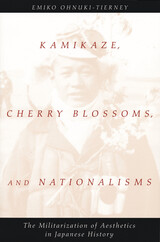
Drawing on diaries never before published in English, Ohnuki-Tierney describes these young men's agonies and even defiance against the imperial ideology. Passionately devoted to cosmopolitan intellectual traditions, the pilots saw the cherry blossom not in militaristic terms, but as a symbol of the painful beauty and unresolved ambiguities of their tragically brief lives. Using Japan as an example, the author breaks new ground in the understanding of symbolic communication, nationalism, and totalitarian ideologies and their execution.

This moving history presents diaries and correspondence left by members of the tokkotai and other Japanese student soldiers who perished during the war. Outside of Japan, these kamikaze pilots were considered unbridled fanatics and chauvinists who willingly sacrificed their lives for the emperor. But the writings explored here by Emiko Ohnuki-Tierney clearly and eloquently speak otherwise. A significant number of the kamikaze were university students who were drafted and forced to volunteer for this desperate military operation. Such young men were the intellectual elite of modern Japan: steeped in the classics and major works of philosophy, they took Descartes’ “I think, therefore I am” as their motto. And in their diaries and correspondence, as Ohnuki-Tierney shows, these student soldiers wrote long and often heartbreaking soliloquies in which they poured out their anguish and fear, expressed profound ambivalence toward the war, and articulated thoughtful opposition to their nation’s imperialism.
A salutary correction to the many caricatures of the kamikaze, this poignant work will be essential to anyone interested in the history of Japan and World War II.
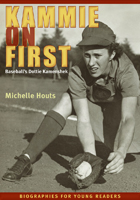
Dorothy Mary Kamenshek was born to immigrant parents in Norwood, Ohio. As a young girl, she played pickup games of sandlot baseball with neighborhood children; no one, however, would have suspected that at the age of seventeen she would become a star athlete at the national level.
The outbreak of World War II and the ensuing draft of able-bodied young men severely depleted the ranks of professional baseball players. In 1943, Philip K. Wrigley, owner of the Chicago Cubs, led the initiative to establish a new league—a women’s league—to fill the ballparks while the war ground on in Europe and the Pacific. Kamenshek was selected and assigned to the Rockford Peaches in their inaugural season and played first base for a total of ten years, becoming a seven-time All-Star and holder of two league batting titles. When injuries finally put an end to her playing days, she went on to a successful and much quieter career in physical therapy. Fame came again in 1992, when Geena Davis portrayed a player loosely based on Kamenshek in the hit movie A League of Their Own.
Kammie on First is a real-life tale that will entertain and inspire young readers, both girls and boys. It is the first book in a new series, Biographies for Young Readers, from Ohio University Press.
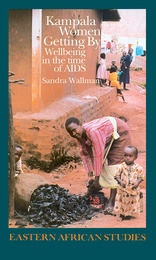
What do ordinary women in an African city do in the face of “serious enough” infections in themselves and signs of acute illness in their young children? How do they manage? What does it take to get by? How do they maintain the wellbeing of the household in a setting without what would be considered as basic health provision in an American or European city?
Professor Wallman focuses on women in a densely-populated part of Kampala called Kamwokya. With the help of a team of Ugandans and non-Ugandans, a vivid picture emerges, enhanced by color photographs, sketches and maps.
Women are largely responsible for the management of illness in all members of the family. Young children are at particular risk and the women have to take the first crucial decisions about treatment. Formal health resources are scarce and so they most often resort to an extraordinary range of treatments provided in the informal economy. A holistic picture of all the options that local people recognize is drawn, and an enriched understanding of problems and opportunities for health care in tropical cities emerges.
Multidisciplinary work on sexually transmitted disease is rare, even in this time of AIDS, and the book effectively maps the social contexts of its perception and management. Moreover, it focuses on women as ordinary citizens, selected by residence and not by reference to known medical conditions or high risk behavior. It is important too that the field strategies have encouraged local informants to become active participants in the definition of local problems and their solutions.
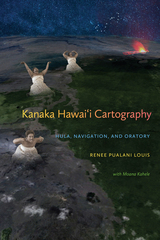
An important symbolic element in Hawai'ian cartography is the storied place name, which reflects Hawai'ian spatial knowledge of the environment. Many Hawai'ian place names performed in daily rituals were a conscious act of locating genealogical connections, recreating cultural landscapes, and regenerating cultural mores. They constitute a critically important body of Hawai'ian cultural knowledge. When Hawai'ian place names were incorporated into Western cartographic maps they were transformed epistemologically. They went from representing place as a repository of cultural knowledge to representing place as an object on the landscape. Hawai'ian spatial knowledge presentation is interactive, multi-sensual, and multi‐ dimensional.
Kanaka Hawai'i Cartography interweaves methodology with personal narrative and performance presentation in a playbill format. Three of the seven chapters are presented as “Acts” in a play. The remaining four chapters serve as intermissions or interludes together with a prologue and an epilogue for setting the stage and providing closure. To help make the topic more accessible, complex terms have been minimized, making academic theory easier for the educated reader to understand. The book will fill an important gap in Indigenous and Native Studies and will be welcomed by anyone interested in traditional Hawai’ian performance cartography.
From Kanga and her son Roo in Winnie the Pooh to the boxing champ Hippety Hopper who punches Sylvester in Looney Tunes, kangaroos appear frequently in children’s books, cartoons, and songs. They are a favorite animal at zoos, charming yet peculiar-looking with their powerful hind legs, long tails, and pouches. Though kangaroos are beloved in the imagination, but reality of their relationship with humans is darker and more troubled. In this book, John Simon tackles the story of these marsupials—and their use and abuse—in global history.
Designed as a companion and study guide for the textbook Comprehending Technical Japanese, this book may also be used as a supplement to the textbook Basic Technical Japanese. It provides detailed explanations of the origin and meaning of the 500 kanji featured in CTJ, which were chosen for their frequency and significance in chemistry, physics, and biology.
Each chapter is keyed to a chapter in CTJ, presenting twenty kanji, vocabulary that use those kanji, a kanji-card format for study and review, and the Japanese essay that appears at the close of each CTJ chapter, and its English translation. This volume also introduces significant scientific vocabulary that include kanji other than the 500 introduced in CTJ.
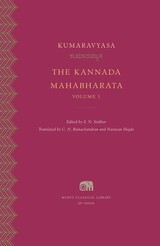
The classic Kannada version of the Mahabharata, a jewel of world literature, translated into English.
The Mahabharata, a cornerstone of ancient Indian literature, recounts the rivalry between branches of a royal family, the Pandavas and the Kauravas, culminating in a cataclysmic war. It has inspired numerous adaptations across languages and artistic media.
The Kannada Mahabharata, known as Kumāravyāsa Bhārata, is an innovative retelling where Krishna occupies center stage, composed by the fifteenth-century poet Kumaravyasa. His powerful verses critique kingship and caste and remain popular in musical performances and improvisational folk theatre today.
Volume 1 comprises “The Book of Beginnings” and “The Book of the Assembly,” including Pandu’s tragic death, the marriage of the Pandavas to Draupadi, Arjuna’s fiery destruction of the Khandava forest, the slaying of King Shishupala, and the dice game plotted by the Kauravas leading to the Pandavas’s exile.
This edition, which abridges the Kannada classic, presents a new English translation and the most reliable text of the original in the Kannada script.
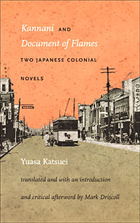
In his introduction, Mark Driscoll provides a nuanced and engaging discussion of Yuasa’s life and work and of the cultural politics of Japanese colonialism. He describes Yuasa’s sharp turn, in the years following the publication of Kannani and Document of Flames, toward support for Japanese nationalism and the assimilation of Koreans into Japanese culture. This abrupt ideological reversal has made Yuasa’s early writing—initially censored for its anticolonialism—all the more controversial. In a masterful concluding essay, Driscoll connects these novels to larger theoretical issues, demonstrating how a deep understanding of Japanese imperialism challenges prevailing accounts of postcolonialism.
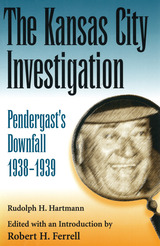
The long reign of Kansas City political boss Thomas J. Pendergast came to an end in 1939, after an investigation led by Special Agent Rudolph Hartmann of the U.S. Department of the Treasury resulted in Pendergast's conviction for income tax evasion. In 1942, Hartmann's account was submitted to Secretary of the Treasury Henry Morgenthau, Jr., in whose papers it remained for the past fifty-six years unbeknownst to historians. While researching the relations between Pendergast and Franklin D. Roosevelt, Robert H. Ferrell came across Hartmann's landmark report—the only firsthand account of the investigation that brought down the greatest political machine of its time, possibly one of the greatest in all of American history.
Reading like a "whodunit," The Kansas City Investigation traces Pendergast's political career from its beginnings to its end. As one of America's major city bosses, Pendergast was at the height of his influence in 1935-1936 when his power reached not merely to every ward and precinct in Kansas City but also to the statehouse in Jefferson City and Capitol Hill in Washington, D.C. It was during this time that the boss took a massive bribe—$315,000—from 137 national fire insurance companies operating within Missouri, opening him to attack by his enemies.
Early in 1938, an official in the Washington headquarters of the Bureau of Internal Revenue, a former Missourian, quit his job to accept private employment, but not without first tipping off a reporter from the Kansas City Star about Pendergast's bribe. The reporter immediately phoned Lloyd C. Stark, the governor of Missouri and a known enemy of Pendergast. Stark then went to Washington to inform President Roosevelt. Although the president had been a supporter of Pendergast, he now considered Stark a more important political ally. Roosevelt asked the Treasury Department to investigate Pendergast's income taxes. The intelligence unit of the Treasury Department put Hartmann, its best operative, on the case. Within a year, after the most minute of inquiries into checkbooks, serial numbers on currency, a safe-deposit box, and a telegraphed transfer of $10,000, Hartmann and his agents found enough evidence to convict Boss Tom.
More than a simple account of what the Roosevelt administration did to cause the collapse of the Pendergast machine, The Kansas City Investigation takes the reader through the ups and downs, twists and turns, of this intriguing investigation, all from an insider's perspective. More important, Hartmann's report provides historians and readers alike the opportunity to evaluate the machine era in American political history—an era that, according to the investigation, "proved the old axiom that `truth is stranger than fiction.'"
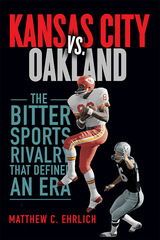
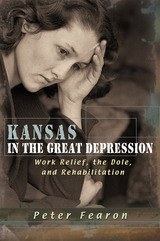
No part of the United States escaped the ravages of the Great Depression, but some coped with it better than others. This book examines New Deal relief programs in Kansas throughout the Depression, focusing on the relationship between the state and the federal government to show how their successful operation depended on the effectiveness of that partnership.
Ranging widely over all of Kansas’s 105 counties, Peter Fearon provides a detailed analysis of the key relief programs for both urban and rural areas and shows that the state’s Republican administration—led by FDR’s later presidential opponent Governor Alf Landon—effectively ran New Deal welfare policies. As early as 1933, federal officials reported the Kansas central relief administration to be one of the most efficient in the country, and funding for farm policies was generous enough to keep many Kansas farm families off the relief rolls. Indeed, historically high levels of social spending ensured that New Deal initiatives were radical for their day, but Fearon shows that, especially in Kansas, fears of the debilitating effects of the dole and the insistence on means testing and work relief served as conservative balances to the threat of a dependency culture.
Drawing on extensive research at the county level, Fearon examines relief problems from the perspective of recipients, social workers, and poor commissioners, all of whom had to cope with inadequate and fluctuating funding. He plumbs the sometimes volatile relationships between social workers and their clients to illustrate the formidable difficulties faced by the former and explain reasons for—and effects of—strikes and riots by the latter. He also investigates the operation of work relief, considers the treatment of women and blacks in the distribution of welfare resources, and assesses the effects of the WPA on employment—showing that the majority of those eligible were unable to secure positions and were forced to fall back on county relief.
Kansas in the Great Depression is an insightful look at how federal, state, and local authorities worked together to deal with a national emergency, revealing the complexities of policy initiatives not generally brought to light in studies at the national level while establishing important links between pre-Roosevelt policies and the New Deal. It reaffirms the virtues of government programs run by dedicated public officials as it opens a new window on Americans helping Americans in their darkest hours.
When the Civil War broke out in April 1861, Kansas was in a unique position. It had been a state for mere weeks, and already its residents were intimately acquainted with civil strife. Since its organization as a territory in 1854, Kansas had been the focus of a national debate over the place of slavery in the Republic. By 1856, the ideological conflict developed into actual violence, earning the territory the sobriquet “Bleeding Kansas.” Because of this steady escalation in violence, the state’s transition from peace to war was not as abrupt as that of other states.
Kansas’s War illuminates the new state’s main preoccupations: the internal struggle for control of policy and patronage; border security; and issues of race—especially efforts to come to terms with the burgeoning African American population and Native Americans’ coninuing claims to nearly one-fifth of the state’s land. These documents demonstrate how politicians, soldiers, and ordinary Kansans were transformed by the war.
Phenomenology, together with Marxism, pragmatism, and analytic philosophy, dominated philosophy in the twentieth century—and Edmund Husserl is usually thought to have been the first to develop the concept. His views influenced a variety of important later thinkers, such as Heidegger and Merleau-Ponty, who eventually turned phenomenology away from questions of knowledge. But here Tom Rockmore argues for a return to phenomenology’s origins in epistemology, and he does so by locating its roots in the work of Immanuel Kant.
Kant and Phenomenology traces the formulation of Kant’s phenomenological approach back to the second edition of Kant’s Critique of Pure Reason. In response to various criticisms of the first edition, Kant more forcefully put forth a constructivist theory of knowledge. This shift in Kant’s thinking challenged the representational approach to epistemology, and it is this turn, Rockmore contends, that makes Kant the first great phenomenologist. He then follows this phenomenological line through the work of Kant’s idealist successors, Fichte and Hegel. Steeped in the sources and literature it examines, Kant and Phenomenology persuasively reshapes our conception of both of its main subjects.
Kant sought throughout his life to provide a philosophy adequate to the sciences of his time—especially Euclidean geometry and Newtonian physics. In this new book, Michael Friedman argues that Kant’s continuing efforts to find a metaphysics that could provide a foundation for the sciences is of the utmost importance in understanding the development of his philosophical thought from its earliest beginnings in the thesis of 1747, through the Critique of Pure Reason, to his last unpublished writings in the Opus postumum.
Previous commentators on Kant have typically minimized these efforts because the sciences in question have since been outmoded. Friedman argues that, on the contrary, Kant’s philosophy is shaped by extraordinarily deep insight into the foundations of the exact sciences as he found them, and that this represents one of the greatest strengths of his philosophy. Friedman examines Kant’s engagement with geometry, arithmetic and algebra, the foundations of mechanics, and the law of gravitation in Part One. He then devotes Part Two to the Opus postumum, showing how Kant’s need to come to terms with developments in the physics of heat and in chemistry formed a primary motive for his projected Transition from the Metaphysical Foundations of Natural Science to Physics.
Kant and the Exact Sciences is a book of high scholarly achievement, argued with impressive power. It represents a great advance in our understanding of Kant’s philosophy of science.
Autonomy for Kant is not just a synonym for the capacity to choose, whether simple or deliberative. It is what the word literally implies: the imposition of a law on one’s own authority and out of one’s own rational resources. In Kant and the Limits of Autonomy, Shell explores the limits of Kantian autonomy—both the force of its claims and the complications to which they give rise. Through a careful examination of major and minor works, Shell argues for the importance of attending to the difficulty inherent in autonomy and to the related resistance that in Kant’s view autonomy necessarily provokes in us. Such attention yields new access to Kant’s famous, and famously puzzling, Groundlaying of the Metaphysics of Morals. It also provides for a richer and more unified account of Kant’s later political and moral works; and it highlights the pertinence of some significant but neglected early writings, including the recently published Lectures on Anthropology.
Kant and the Limits of Autonomy is both a rigorous, philosophically and historically informed study of Kantian autonomy and an extended meditation on the foundation and limits of modern liberalism.
Kant scholars since the early nineteenth century have disaxadgreed about how to interpret his theory of moral motivation. Kant tells us that the feeling of respect is the incentive to moral action, but he is notoriously ambiguous on the question of what exactly this means. In Kant and the Role of Pleasure in Moral Action, Iain Morrisson offers a new view on Kant’s theory of moral action.
In a clear, straightforward style, Morrisson responds to the ongoing interpretive stalemate by taking an original approach to the problem. Whereas previous commentators have attempted to understand Kant’s feeling of respect by studying the relevant textual evidence in isolation, Morrisson illuminates this evidence by determining what Kant’s more general theory of action commits him to regarding moral action. After looking at how Kant’s treatment of desire and feeling can be reconciled with his famous account of free maxim-based action, Morrisson argues that respect moves us to moral action in a way that is structurally parallel to the way in which nonmoral pleasure motivates nonmoral action.
In reconstructing a unified theory of action in Kant, Morrisson integrates a number of distinct elements in his practical philosophy. Kant and the Role of Pleasure in Moral Action is part of a new wave of interest in Kant’s anthropological (that is, psychological) works.
An author’s true meaning has always been largely a matter of opinion among literary critics, even when only objective language was analyzed. However, a writer’s inner meaning, which perhaps not even he or she consciously realizes, interests the “new critics,” who base their theory of criticism on the writings of Immanuel Kant and hold philosophical values to be essential in studying a literary work.
William J. Handy, a former student of John Crowe Ransom, himself a critic of note, reveals the inadequacy of logical concept to represent the full quality of human experience. In Kant and the Southern New Critics he discusses the theories and practices of some pioneers of philosophical criticism—John Crowe Ransom, Allen Tate, Cleanth Brooks, and others—and traces the influence of the Kantian generative idea on their assumption that a work of art is the celebration of one’s qualitative experience.
Critics in the new school believe that knowledge of experience is distorted when abstracted into scientific, quantitative notations, and that the artist, to portray things in their more natural state, must employ particulars in order to achieve “universals.” Knowledge of any subject or object must include the aesthetic qualities of imagination and emotion that cannot be discovered through analysis.
This study explores Ransom’s theory of “ontological criticism.” The basic difference in symbols representing things and those representing ideas was discerned by Kant, who distinguished between understanding (analysis of an object in order to classify it)and imagination (realization of an object undistorted by logical reduction). Handysuggests that ontological structure requires a writer to use the logic that springs from his image-making faculty—a thought also expressed by T. S. Eliot, who says, “The only way of expressing emotion in the form of art is by finding an ‘objective correlative.’ ”
The discipline of philosophical aesthetics is necessary for the critic, Handy says, if his principles are to be substantial enough to make a significant contribution to knowledge of literary theory. This book clearly delineates the origins of a philosophical approach and leads the reader to an appreciation of the deeper enjoyment and meaning it can give to literary experience.
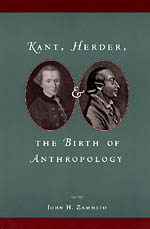
Relying on previously unexamined sources, Zammito traces Kant's friendship with Herder as well as the personal tensions that destroyed their relationship. From this he shows how two very different philosophers emerged from the same beginnings and how, because of Herder's reformulation of Kant, anthropology was born out of philosophy.
Shedding light on an overlooked period of philosophical development, this book is a major contribution to the history of philosophy and the social sciences, and especially to the history of anthropology.
From Kant to Kierkegaard, from Hegel to Heidegger, continental philosophers have indelibly shaped the trajectory of Western thought since the eighteenth century. Although much has been written about these monumental thinkers, students and scholars lack a definitive guide to the entire scope of the continental tradition. The most comprehensive reference work to date, this eight-volume History of Continental Philosophy will both encapsulate the subject and reorient our understanding of it. Beginning with an overview of Kant’s philosophy and its initial reception, the History traces the evolution of continental philosophy through major figures as well as movements such as existentialism, phenomenology, hermeneutics, and poststructuralism. The final volume outlines the current state of the field, bringing the work of both historical and modern thinkers to bear on such contemporary topics as feminism, globalization, and the environment. Throughout, the volumes examine important philosophical figures and developments in their historical, political, and cultural contexts.
The first reference of its kind, A History of Continental Philosophy has been written and edited by internationally recognized experts with a commitment to explaining complex thinkers, texts, and movements in rigorous yet jargon-free essays suitable for both undergraduates and seasoned specialists. These volumes also elucidate ongoing debates about the nature of continental and analytic philosophy, surveying the distinctive, sometimes overlapping characteristics and approaches of each tradition. Featuring helpful overviews of major topics and plotting road maps to their underlying contexts, A History of Continental Philosophy is destined to be the resource of first and last resort for students and scholars alike.

Kant on Causality, Freedom, and Objectivity was first published in 1984. Minnesota Archive Editions uses digital technology to make long-unavailable books once again accessible, and are published unaltered from the original University of Minnesota Press editions.
Kant's account of causation is central to his views on objective truth and freedom. The Second Analogy of Experience, in the Critique of Pure Reason,where he provides his defense of the causal principle, has long been the focus of intense philosophical research. In the past twenty years, there have been two major periods of interest in Kantian themes, The first coincided with a general turn away from positivism by analytic philosophers, and resulted in a fruitful interchange between Kant scholars and those who applied Kantian ideas to contemporary philosophical problems. In recent years, a new surge of interest in Kant's work occurred along with the developing controversy over realism generated by the work of Dummett and Putnam. Scholars now appreciate the extent to which the Kantian causal principle is illuminated by the philosopher's argument that his transcendental idealism supports an empirical realism. And in turn, Kant's views on objectivity, causation, and freedom are especially relevant to the philosophical concerns raised by the new debate over realism.
The eight papers in this book are drawn from two conferences that honored Lewis White Beck, an influential Kant scholar. Together with the introductory essay by the editors, they show the continuing relevance of Kant's analysis for the present-day philosophy of causation.
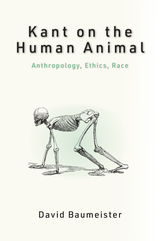
David Baumeister tracks four decades of Kant’s intellectual development, surveying works published in Kant’s lifetime along with posthumously published notes and student lecture transcripts. They show the crucial role that animality plays in many previously unconnected areas of Kant’s thought, such as his account of the human’s originally quadrupedal posture, his theory of early childhood development, and his conception of the process of human racial differentiation. Beginning with a delineation of Kant’s understanding of the commonalities and differences between humans and other animals, Baumeister focuses on the contribution of animality to Kant’s views of ethics, anthropology, human nature, and race.
Placing divergent features of Kant’s thought within a unified interpretive framework, Kant on the Human Animal reveals how, for Kant, becoming human requires that animality not be eclipsed and overcome but rather disciplined and developed. What emerges is a new appreciation of Kant’s human being as the human animal it is.
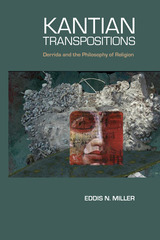
Kantian Transpositions presents an important new reading of Jacques Derrida’s writings on religion and ethics. Eddis Miller argues that Derrida’s late texts on religion constitute an interrogation of the meaning and possibility of a “philosophy of religion.” It is the first book to fully engage Derrida’s claim, in “Faith and Knowledge: The Two Sources of ‘Religion’ at the Limits of Reason Alone” to be transposing the Kantian gesture of thinking religion “within the limits of reason alone.”
Miller outlines the terms of this “transposition” and reads Derrida’s work as an attempt to enact such a transposition. Along the way, he stakes out new ground in the debate over deconstruction and ethics, showing—against recent interpretations of Derrida’s work—that there is an ethical moment in Derrida’s writings that cannot be understood properly without accounting for the decisive role played by Kant’s ethics. The result is the most sustained demonstration yet offered of Kant’s indispensible contribution to Derrida’s thought.
The first book to focus on character formation in Kant's moral philosophy, it builds on important recent work on Kant's aesthetics and anthropology, and brings these to bear on moral issues. Munzel traces Kant's multifaceted definition of character through the broad range of his writings, and then explores the structure of character, its actual exercise in the world, and its cultivation.
An outstanding work of original textual analysis and interpretation, Kant's Conception of Moral Character is a major contribution to Kant studies and moral philosophy in general.
Although Kant was involved in the education debates of his time, it is widely held that in his mature philosophical writings he remained silent on the subject. In her groundbreaking Kant’s Conception of Pedagogy, G. Felicitas Munzel finds extant in Kant’s writings the so-called missing critical treatise on education. It appears in the Doctrines of Method with which he concludes each of his major works.
In it, Kant identifies the fundamental principles for the cultivation of reason’s judgment when it comes to cognition, beauty, nature, and the exercise of morality while subject to the passions and inclinations that characterize the human experience.
From her analysis, Munzel extrapolates principles for a cosmopolitan education that parallels the structure of Kant’s republican constitution for perpetual peace. With the formal principles in place, the argument concludes with a query of the material principles that would fulfill the formal conditions required for an education for freedom.

This is the first book in English devoted entirely to Kant’s Opus postumum and its place in the Kantian oeuvre. Over the last few decades, the importance of this text for our understanding of Kant’s philosophy has emerged with increasing clarity.
Although Kant began it in order to solve a relatively minor problem within his philosophy, his reflections soon forced him to readdress virtually all the key problems of his critical philosophy: the objective validity of the categories, the dynamical theory of matter, the natures of space and time, the refutation of idealism, the theory of the self and its agency, the question of living organisms, the doctrine of the practical postulates and the idea of God, the unity of theoretical and practical reason, and the idea of transcendental philosophy itself. In the end Kant was convinced that these problems, some of which had preoccupied him throughout his career, could finally be brought to a coherent and adequate solution and integrated into a single philosophical conception.
As Eckart Förster shows in his penetrating study, Kant’s conviction deserves not only our intellectual respect but also our undivided philosophical attention. Förster provides detailed analyses of the key problems of Kant’s Opus postumum and also relates them to Kant’s major published writings. In this way he provides unique insights into the extraordinary continuity and inner dynamics of Kant’s transcendental philosophy as it progresses toward its final synthesis.
Kant’s revolution in methodology limited metaphysics to the conditions of possible experience. Since, following Hume, analysis—the “method of discovery” in early modern physics—could no longer ground itself in sense or in God’s constituting reason a new arché, “origin” and “principle,” was required, which Kant found in the synthesis of the productive imagination, the common root of sensibility and understanding. Charles Bigger argues that this imaginative “between” recapitulates the ancient Gaia myth which, as used by Plato in the Timaeus, offers a way into this originary arché. Since it depends on myth and the “likely story” rather than on a self-certain apprehension of Being, this facilitates an imaginative approach to the natural sciences which, through its synthetic a priori formations, can claim to be Kantian.
Bigger explores Kant’s ethics as an alternative to metaphysics that holds open the prospect of a Good beyond Being—and phenomenology—whose traces nevertheless appear in original synthesis. Though wary of its reductive implications, Bigger uses Derrida’s difference, a medial, feminine arché, as a way into this creative and procreative metaxu (between). As Emmanuel Levinas suggests, this is Plato’s gap [chaos] between being and becoming, whose possibility, beyond both, lies in chora and the Good. This Open also presents the possibility for a new, yet still Kantian, understanding of the formal and material conditions for the natural sciences.
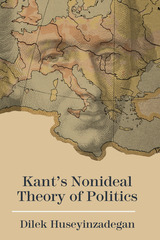
This novel analysis thus challenges the common assumption that an ideal theory of cosmopolitanism constitutes Kant’s sole political legacy. Dilek Huseyinzadegan demonstrates that Kant employs a teleological worldview throughout his political writings as a means of grappling with the pressing issues of multiplicity, diversity, and plurality—issues that confront us to this day.
Kant’s Nonideal Theory of Politics is the first book-length treatment of Kant’s political thought that gives full attention to the role that history, anthropology, and geography play in his mainstream political writings. Interweaving close textual analyses of Kant’s writings with more contemporary political frameworks, this book also makes Kant accessible and responsive to fields other than philosophy. As such, it will be of interest to students and scholars working at the intersections of political theory, feminism, critical race theory, and post- and decolonial thought.

To comprehend, according to Kant, is to possess sufficient insight into situations so as to also achieve some purpose. This requires that reason be applied with the discernment that reflective judgment makes possible. Comprehension, practical as well as theoretical, can fill in Kant’s world concept and his sublime evocation of a Weltanschauung with a more down-to-earth worldview.
Scholars have recently stressed Kant’s impure ethics, his nonideal politics, and his pragmatism. Makkreel complements these efforts by using Kant’s ethical, sociopolitical, religious, and anthropological writings to provide a more encompassing account of the role of human beings in the world. The result is a major contribution to our understanding of Kant and the history of European philosophy.
Topics covered include the history of kaon physics, direct CP violation in kaon decays, time reversal violation, CPT studies, theoretical aspects of kaon physics, rare kaon decays, hyperon physics, charm: CP violation and mixing, the physics of B mesons, and future opportunities for kaon physics in the twenty-first century.
The collection of documents known as the Kaqchikel Chronicles consists of rare highland Maya texts, which trace Kaqchikel Maya history from their legendary departure from Tollan/Tula through their migrations, wars, the Spanish invasion, and the first century of Spanish colonial rule. The texts represent a variety of genres, including formal narrative, continuous year-count annals, contribution records, genealogies, and land disputes.
While the Kaqchikel Chronicles have been known to scholars for many years, this volume is the first and only translation of the texts in their entirety. The book includes two collections of documents, one known as the Annals of the Kaqchikels and the other as the Xpantzay Cartulary. The translation has been prepared by leading Mesoamericanists in collaboration with Kaqchikel-speaking linguistic scholars. It features interlinear glossing, which allows readers to follow the translators in the process of rendering colonial Kaqchikel into modern English. Extensive footnoting within the text restores the depth and texture of cultural context to the Chronicles. To put the translations in context, Judith Maxwell and Robert Hill have written a full scholarly introduction that provides the first modern linguistic discussion of the phonological, morphological, syntactic, and pragmatic structure of sixteenth-century Kaqchikel. The translators also tell a lively story of how these texts, which derive from pre-contact indigenous pictographic and cartographic histories, came to be converted into their present form.
In his introduction, Terras outlines the genesis, main ideas, and structural peculiarities of the novel as well as Dostoevsky’s political, philosophical, and aesthetic stance. The detailed commentary takes the reader through the novel, clarifying aspects of Russian life, the novel’s sociopolitical background, and a number of polemic issues. Terras identifies and explains hundreds of literary and biblical quotations and allusions. He discusses symbols, recurrent images, and structural stylistic patterns, including those lost in English translation.
Russian history was typically studied through liberal or socialist lenses until Richard Pipes first published his translation of Karamzin's Memoir. Almost fifty years later, it is still the only English-language edition of this classic work. Still fresh and readable today, the Memoir-in which Alexander I's state historian elaborates his arguments for a strong Russian state-remains the most accessible introduction to the conservatism of Russia's ancien regime. This annotated translation is a "faithful rendition of the letter and spirit of the original," which not only introduces readers to the sweep of Karamzin's ideas, but also weaves together a fascinating version of Russia's rich history. With a new foreword by Richard Pipes, Karamzin's Memoir on Ancient and Modern Russia is a touchstone for anyone interested in Russia's fascinating and turbulent past.
Richard Pipes is Baird Professor of History at Harvard University.
Nikolai M. Karamzin (1766-1826) was a Russian historian, poet, and journalist. He was appointed court historian by Tsar Alexander I.

Selected by Joy Harjo
Karankawa is a collection that explores some of the ways in which we (re)construct our personal histories. Rich in family narratives, myths, and creation stories, these are poems that investigate passage—dying, coming out, transforming, being born—as well as the gaps that also reside in our stories, for, as Rocha suggests, the opportunity to create myths is provided by great silences. Much like the Karankawa Indians whose history works in omissions, Karankawa reconfigures such spaces, engaging with the burden and freedom of memory in order to rework and recontextualize private and public mythologies. First and last, these are poems that honor our griefs and desires, for they keep alive the very things we cannot possess.
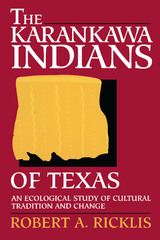
Popular lore has long depicted the Karankawa Indians as primitive scavengers (perhaps even cannibals) who eked out a meager subsistence from fishing, hunting and gathering on the Texas coastal plains. That caricature, according to Robert Ricklis, hides the reality of a people who were well-adapted to their environment, skillful in using its resources, and successful in maintaining their culture until the arrival of Anglo-American settlers.
The Karankawa Indians of Texas is the first modern, well-researched history of the Karankawa from prehistoric times until their extinction in the nineteenth century. Blending archaeological and ethnohistorical data into a lively narrative history, Ricklis reveals the basic lifeway of the Karankawa, a seasonal pattern that took them from large coastal fishing camps in winter to small, dispersed hunting and gathering parties in summer. In a most important finding, he shows how, after initial hostilities, the Karankawa incorporated the Spanish missions into their subsistence pattern during the colonial period and coexisted peacefully with Euroamericans until the arrival of Anglo settlers in the 1820s and 1830s. These findings will be of wide interest to everyone studying the interactions of Native American and European peoples.

The result is Karaoke Idols, a close ethnography of life at a karaoke bar that reveals just what we’re doing when we take up the mic—and how we shape our identities, especially in terms of gender, ethnicity, and class, through performances in everyday life. Marrying a comprehensive introduction to the history of public singing and karaoke with a rich analysis of karaoke performers and the community that their shared performances generate, Karaoke Idols is a book for both the casual reader and the scholar, and a fascinating exploration of our urge to perform and the intersection of technology and culture that makes it so seductively easy to do so.
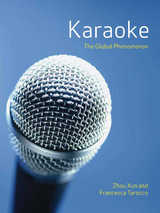
Dancing Queen. Respect. Brandy (You’re a Fine Girl). There are some songs so infectious that you can’t help but belt out the lyrics along with the singer. Karaoke—meaning “empty orchestra” in Japanese—gets rid of the singer and leaves you in the spotlight alone. It is the social manifestation of our desire to sing, in tune or out, and in three short decades, it has exploded into a worldwide craze. In this unprecedented study, Zhou Xun and Francesca Tarocco engagingly examine karaoke and all its associated kitsch, crime, and weirdness.
Usually thought of as the pastime of desperately bad singers and slurring drunks, karaoke has never enjoyed a particularly stellar image. Xun and Tarocco, however, reveal its surprisingly complex history and significant cultural impact around the world. Originating in postwar Japan, karaoke soon spread to Southeast Asia and the West. Karaoke traces how it became a wildly successful social phenomenon that constantly evolved to keep pace with changes in technology and culture. Drawing on extensive research and international travels, the authors chart the varied manifestations of karaoke, from karaoke taxis in Bangkok to nude karaoke in Toronto to the role of karaoke in prostitution. Extensive personal anecdotes reveal the dramatic range of social experiences made possible by karaoke and how the obsession with performance and song has touched politics, history, and pop culture throughout global society.
Karaoke bars are at the heart of rich escapist fantasies and the authors—in readable fashion and using vibrant full-color illustrations—document this unpredictable fantasy world and the people who inhabit it. Karaoke,therefore, will delight anyone who has had the courage to take the mike and front the “empty orchestra.”

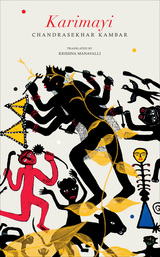
Karimayi breaks the familiar narrative of an idyllic and traditional village community being destroyed by the incursion of modernity. Instead, the multilayered narrative of Karimayi weaves everything into itself—the story of the village’s past, the myth of Karimayi, the disorder that sets in with the invasion of colonial modernity and the lure of the city, and, most importantly, of the disruption of another form of “native” modernity that the village community has already begun to incorporate into its rhythms of life. Cleverly challenging colonial cartography, Kambar’s book plays with the idea of an eternal India that exists between myth and reality.
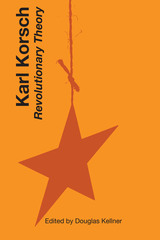
There is growing interest in Europe and the United States in the work of the major German social-political philosopher Karl Korsch. Korsch participated in the turbulent struggles in Weimar Germany and while in exile continually reflected on history and politics. His work affords one of the most important interpretations of the role of Marxism in twentieth-century revolutionary movements, while developing an ongoing critical interrogation of Marxism. His thought provides an illuminating perspective on the process of revolution and counterrevolution in recent history. Karl Korsch: Revolutionary Theory is the first English anthology of his most important writings.
This collection presents Korsch's essays on a wide range of subjects, including Marxism and socialization, Lenin and the Soviet Union, the crisis of Marxism, models of revolutionary practice, fascism and counterrevolution, and Korsch's final evaluation of Marxism. Much of this work is translated into English for the first time, and many unknown essays first published in radical journals which are no longer available appear here. The volume includes Korsch's major essays written during the 1920s and 1930s as well as some of his later work.
Douglas Kellner's detailed introduction, "Korsch's Revolutionary Marxism," contains the first comprehensive critical interpretation of Korsch's work to appear in English. It provides a historical-theoretical reconstruction of Korsch's life and thought and roots his political theory in the sociopolitical context in which it evolved. The introduction has been described by Korsch scholars as a "first-class piece of exposition and interpretation" and a "serious, first-rate contribution likely to preempt the field in the English language." The editor's introduction along with the representative selection of essays provide firm grounding in the ideas and historical significance of Karl Korsch.
READERS
Browse our collection.
PUBLISHERS
See BiblioVault's publisher services.
STUDENT SERVICES
Files for college accessibility offices.
RECENTLY PUBLISHED


UChicago Accessibility Resources
home | accessibility | search | about | contact us
BiblioVault ® 2001 - 2024
The University of Chicago Press