A behind-the-scenes look at why Latinos—the largest immigrant group in the United States—make up a staggeringly low percentage of the elite US labor force.
Carla, Douglas, and Isabel each migrated to the United States from Latin American countries before they were teenagers. Each had big dreams—in medicine, business, and government—and each did what they were told to do to achieve their goals: work hard, stay in school, and follow the rules. Yet none of them reached the top of the labor market, and they are far from alone. Only one out of one hundred Latino immigrants who arrive in the United States as children will ever secure a job that requires a college degree and pays high wages.
To better understand why Latinos are more likely to have difficulty finding success in the labor market, sociologist A. Nicole Kreisberg’s 1 in 100 shares stories directly from Latino immigrants experiencing this exclusion. Kreisberg argues that despite increasing access to higher education, Latino immigrant youth seldom land high-paying jobs. But contrary to what Americans might think, this is not the result of individual failure. Instead, these slim odds are the result of immigration laws, schools, and workplaces that interact in ways that systematically disadvantage so many Latinos. Kreisberg finds that stereotypes about Latino immigrants are activated in US schools, exacerbated in US colleges, and reinforced by employers’ hiring decisions. And because most Americans cannot tell who is and who isn’t an immigrant, the stereotypes harming immigrants often spill over to the 68 million Latinos living in the United States, including those born here as US citizens.
By tracing the school-to-work trajectories of child-arriving Latino immigrants and native-born Latinos, alongside the gatekeepers who structure their opportunities, 1 in 100 shows that the 99 who struggle are not the exception—they are the unfortunate norm.
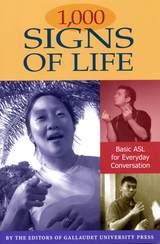
Here’s the succinct handbook that will allow everyone to enjoy the beauty and functionality of American Sign Language. 1,000 Signs of Life: Basic ASL for Everyday Conversation illustrates a potpourri of intriguing and entertaining signs that can be grasped quickly and used to communicate with anyone familiar with ASL, deaf or hearing. Organized alphabetically in 17 categories, this handy paperback offers common signs for animals, food, clothes, people, health and body, the time, days of the week, seasons, colors, quantities, transportation and travel, and many more practical topics. Readers also can learn signs for community-related terms, holidays and religion, and for thoughts and emotions, signs that will offer them the opportunity to experience the full potential of ASL.
1,000 Signs of Life begins with a concise introduction to American Sign Language, including how it evolved and how its grammar and syntax work. Complementing this information are categories on signs for adjectives and adverbs, prepositions and locations, question words, and verbs and action words. Interspersed throughout the text are tips for signing, rules of signing etiquette, and engaging anecdotes about Deaf culture, Deaf people, and the Deaf community. 1,000 Signs of Life provides a fun, fast way to learn basic ASL signs and also offers easy-to-follow instructions and hints on how to use them in a variety of everyday situations. It's the perfect streamlined guide for signing ASL.

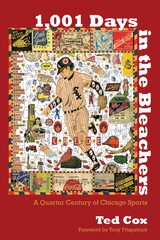
Loyal sports fans follow their teams through peaks and valleys, but in no other city have fans experienced the highs and lows of Chicagoans in the past generation. This collection of Ted Cox’s greatest hits writing "The Sports Section" for the Chicago Reader from 1983 to 2008 constitutes an intimate history of Chicago teams during these years. From the triumphs—the six titles won by the Bulls, the Super Bowl champion 1985 Bears, and the White Sox winning the World Series in 2005—to the regularly occurring collapses of the Cubs, Cox puts his audience on the scene. He evokes the fan’s experience with a level of vivid detail now nearly extinct from sports journalism. Cox writes like an ordinary observer who just happens to have excellent seats and easy access to the players and coaches. 1,001 Days in the Bleachers stands not only as a chronicle of Chicago’s teams but also as a portrait of the evolution of professional sports and their place in the life of the city.
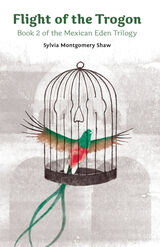
A novel of love, revenge, and redemption set during three crucial years of the Mexican Revolution (1910–13).
When an eccentric Mexican general dies and leaves his entire fortune to Isabel Brentt, the American daughter-in-law he never met, his widow suspects foul play and seeks revenge against the young woman.
This is a story of love, the backlash of revenge, and the choices that define us: A young lawyer sets off on a quest to find the truth about the general’s death. A bodyguard is ordered to murder the man he is supposed to protect. A ruthless criminal falls in love with a prostitute. A priest is forced to maintain an elaborate lie. An accused patricide seeks redemption through a brotherhood of criminals. Above all, it is Isabel’s exploration of the problem of evil and of prayer as a pathway to inner freedom.
Sylvia Montgomery Shaw invites readers to follow the continuing romance of Benjamín and Isabel as both seek their freedom against the backdrop of a brutal war and learn the unexpected strength that can come from one’s inner will.
While gangs and gang culture have been around for countless centuries, The Gang is one of the first academic studies of the phenomenon. Originally published in 1927, Frederic Milton Thrasher’s magnum opus offers a profound and careful analysis of hundreds of gangs in Chicago in the early part of the twentieth century. With rich prose and an eye for detail, Thrasher looked specifically at the way in which urban geography shaped gangs, and posited the thesis that neighborhoods in flux were more likely to produce gangs. Moreover, he traced gang culture back to feudal and medieval power systems and linked tribal ethos in other societies to codes of honor and glory found in American gangs. Thrasher approaches his subject with empathy and insightfulness, and creates a multifaceted and textured portrait that still has much to offer to readers today. With handsome images that evoke the era, this unabridged edition of The Gang not only explores an important moment in the history of Chicago, but also is itself a landmark in the history of sociology and subcultural theory.
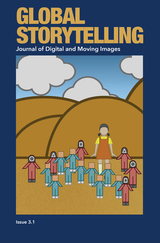
Global Storytelling: Journal of Digital and Moving Images, housed at the Academy of Film and published by Michigan Publishing, is an open access, peer-reviewed international and interdisciplinary journal for intellectual debates concerning the politics, economics, culture, media, and technology of the moving image.
The Journal of Cinema and Media Studies is the peer-reviewed, scholarly publication of the Society for Cinema and Media Studies (SCMS). The journal was renamed (from Cinema Journal) in October 2018.
JCMS’s basic mission is to foster engaged debate and rigorous thinking among humanities scholars of film, television, digital media, and other audiovisual technologies. We are committed to the aesthetic, political, and cultural interpretation of these media and their production, circulation, and reception.
To that end, JCMS is dedicated to intellectual diversity of all kinds. We publish critical inquiry into the global, national, and local circulation of a wide variety of media. We seek to promote a range of approaches to film and media studies and attendant fields, including (but not limited to) digital media, sound studies, visual culture, video game studies, fan studies, and avant-garde and experimental film and media practices. We do not adhere to any methodological approach to media studies, nor do we focus on particular emphases in the field. The journal is open to all areas of humanities-oriented scholarship in media studies, including digital humanities.
The Journal of Cinema and Media Studies is the peer-reviewed, scholarly publication of the Society for Cinema and Media Studies (SCMS). The journal was renamed (from Cinema Journal) in October 2018.
JCMS’s basic mission is to foster engaged debate and rigorous thinking among humanities scholars of film, television, digital media, and other audiovisual technologies. We are committed to the aesthetic, political, and cultural interpretation of these media and their production, circulation, and reception.
To that end, JCMS is dedicated to intellectual diversity of all kinds. We publish critical inquiry into the global, national, and local circulation of a wide variety of media. We seek to promote a range of approaches to film and media studies and attendant fields, including (but not limited to) digital media, sound studies, visual culture, video game studies, fan studies, and avant-garde and experimental film and media practices. We do not adhere to any methodological approach to media studies, nor do we focus on particular emphases in the field. The journal is open to all areas of humanities-oriented scholarship in media studies, including digital humanities.
The Journal of Cinema and Media Studies is the peer-reviewed, scholarly publication of the Society for Cinema and Media Studies (SCMS). The journal was renamed (from Cinema Journal) in October 2018.
JCMS’s basic mission is to foster engaged debate and rigorous thinking among humanities scholars of film, television, digital media, and other audiovisual technologies. We are committed to the aesthetic, political, and cultural interpretation of these media and their production, circulation, and reception.
To that end, JCMS is dedicated to intellectual diversity of all kinds. We publish critical inquiry into the global, national, and local circulation of a wide variety of media. We seek to promote a range of approaches to film and media studies and attendant fields, including (but not limited to) digital media, sound studies, visual culture, video game studies, fan studies, and avant-garde and experimental film and media practices. We do not adhere to any methodological approach to media studies, nor do we focus on particular emphases in the field. The journal is open to all areas of humanities-oriented scholarship in media studies, including digital humanities.
In This Issue:
Together again: The value of our encounters, offline - Emily McTernan
The Moral Importance of Low-Welfare Species - Jakob Lohmar
Promises and Consent - Arjan S. Heir
Georgetown University Press no longer publishes the Journal of the Society of Christian Ethics (JSCE). To subscribe or find out more about the journal, please visit the JSCE website.
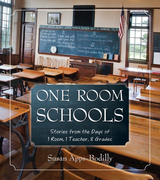
Have you ever wondered what it was like to attend a one-room school, to be in the same classroom as your older brother or younger sister, or to have your teacher live with your family for part of the school year?
In One Room Schools, Susan Apps-Bodilly chronicles life in Wisconsin’s early country schools, detailing the experiences of the students, the role of the teacher, and examples of the curriculum, including the importance of Wisconsin School of the Air radio programs. She describes the duties children had at school besides their schoolwork, from cleaning the erasers and sweeping cobwebs out of the outhouse to carrying in wood for the stove. She also tells what led to the closing of the one room schools, which were more than just centers of learning: they also served as the gathering place for the community.
Susan Apps-Bodilly drew from the research compiled by her father Jerry Apps for his book, One-Room Country Schools: History and Recollections. Apps-Bodilly has geared her book toward young readers who will learn what students and their teacher did on cold mornings before the wood stove warmed them up. They also will find out how to play recess games like Fox and Geese and Anti-I-Over and will learn the locations of 10 former one room schools that can be toured. Apps-Bodilly also encourages readers to ask themselves what lessons can be learned from these early schools that have application for today’s schools?
One Room Schools will transport young readers back in time and make their grandparents and others of that generation nostalgic—perhaps even prompting them to share memories of their school days.
READERS
Browse our collection.
PUBLISHERS
See BiblioVault's publisher services.
STUDENT SERVICES
Files for college accessibility offices.
UChicago Accessibility Resources
home | accessibility | search | about | contact us
BiblioVault ® 2001 - 2026
The University of Chicago Press