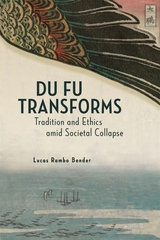
front cover of Du Fu Transforms
Du Fu Transforms
Tradition and Ethics amid Societal Collapse
Lucas Rambo Bender
Harvard University Press, 2021

Often considered China’s greatest poet, Du Fu (712–770) came of age at the height of the Tang dynasty, in an era marked by confidence that the accumulated wisdom of the precedent cultural tradition would guarantee civilization’s continued stability and prosperity. When his society collapsed into civil war in 755, however, he began to question contemporary assumptions about the role that tradition should play in making sense of experience and defining human flourishing.

In this book, Lucas Bender argues that Du Fu’s reconsideration of the nature and importance of tradition has played a pivotal role in the transformation of Chinese poetic understanding over the last millennium. In reimagining his relationship to tradition, Du Fu anticipated important philosophical transitions from the late-medieval into the early-modern period and laid the template for a new and perduring paradigm of poetry’s relationship to ethics. He also looked forward to the transformations his own poetry would undergo as it was elevated to the pinnacle of the Chinese poetic pantheon.

[more]

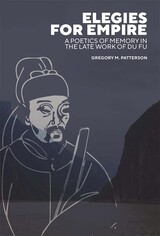
front cover of Elegies for Empire
Elegies for Empire
A Poetics of Memory in the Late Work of Du Fu
Gregory M. Patterson
Harvard University Press, 2024

Facing a transformed socio-political landscape after the An Lushan Rebellion (756–763), Tang dynasty elites questioned inherited understandings of tradition and anxiously reflected on their relations to both recent and ancient pasts. Du Fu (712–770), widely considered China’s greatest poet, presciently addressed these concerns in his late work on memory and the means by which the past survives.

In Elegies for Empire, Gregory Patterson maps out a poetics of memory in Du Fu’s poems from his prolific period of residence in Kuizhou, a remote border town in the Yangzi River Three Gorges. Patterson argues that, for Du Fu, memory held the promise of rebuilding frameworks of belonging under conditions of displacement and dynastic crisis. Remembering also led the poet to think through the material underpinnings on which cultural transmission depends; therefore, these late poems are distinguished by a highly creative, often melancholy engagement with the forms and media that preserve memory, such as monuments, paintings, and poetry. Elegies for Empire elucidates the vital roles of place, memory, and media in poems that are among the most influential in the Chinese literary tradition.


[more]


Send via email Share on Facebook Share on Twitter