logo for University of North Texas Press
Insurgent Politics in the Lone Star State
Remembering the Antiwar Movement in Austin, Texas, 1967–1973
Martin J. Murray
University of North Texas Press, 2025

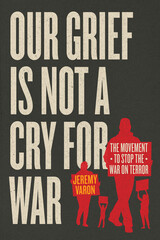
front cover of Our Grief Is Not a Cry for War
Our Grief Is Not a Cry for War
The Movement to Stop the War on Terror
Jeremy Varon
University of Chicago Press, 2025
An original history of the popular movement against the War on Terror—the greatest case of “we told you so” in modern political history.
 
Just after 9/11, President George W. Bush climbed the rubble where the World Trade Center had stood. Surrounded by shouts of anger, he said, “The people who knocked these buildings down will hear all of us soon!” With these words, Bush ushered in the War on Terror. Quickly, a global protest movement mobilized against it, reshaping the political, moral, and media landscape.

Jeremy Varon’s Our Grief Is Not a Cry for War is the definitive history of that movement. Millions of Americans participated in thousands of acts of protest, from demonstrations to civil disobedience to peace encampments in Iraq. On February 15, 2003, up to 30 million people worldwide took to the streets in the largest protest in human history. But this enormous outcry was not enough to stop the US invasion of Iraq. Varon explores the limits to the movement’s power but also shows how it worked to make opposition to the Iraq War a part of public debate, hastening its end and limiting the broader War on Terror. In the book, you’ll meet the families of the 9/11 victims, Iraq War veterans, and Gold Star families who spoke out against war.

Written with a lively and revelatory voice, Our Grief Is Not a Cry for War illuminates the passion of the peace movement, the mark it made, and the enduring legacies of the War on Terror.
[more]

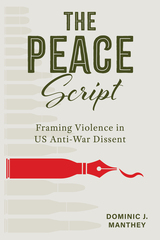
front cover of The Peace Script
The Peace Script
Framing Violence in US Anti-War Dissent
Dominic J. Manthey
University of Alabama Press, 2025

Exposes how appeals to civility, harmony, and nonaggression can unwittingly underpin exclusionary assumptions about race, gender, and class

Offering an innovative critique of peace rhetoric throughout US history, The Peace Script: Framing Violence in US Anti-War Dissent reexamines the language of dissent with lessons for our era defined by digital activism and fierce political debates. Dominic J. Manthey explores the peace arguments of various movements, including the Copperhead Movement during the Civil War, the Anti-Imperialist League’s stance against US colonialism, Henry Ford's Peace Ship expedition during World War I, the Mothers’ Movement during World War II, and the Vietnam Veterans against the War. Each chapter reveals how these movements, while advocating for peace, often upheld or encouraged racial, gender, and class inequalities.

Manthey navigates the complex terrain of grassroots activism by blending rhetorical criticism and historical insight to tell readers about the “peace script” that has echoed across America’s many wars. Through archival materials and case studies, The Peace Script reveals how anti-war movements craft compelling narratives that dramatize society through heroes, antagonists, and transformative ideals.

Redefining the struggle for peace as not only a fight against warfare but also a battle over space, identity, and the right to live with dignity, The Peace Script is essential for scholars of history, rhetoric, and social justice. Manthey provides a crucial perspective on the intersection of race, memory and power, offering urgent insights into how these legacies continue to shape society today.

 

[more]


Send via email Share on Facebook Share on Twitter