In war films, the portrayal of deep friendships between men is commonplace. Given the sexually anxious nature of the American imagination, such bonds are often interpreted as carrying a homoerotic subtext. In Armed Forces , Robert Eberwein argues that an expanded conception of masculinity and sexuality is necessary in order to understand more fully the intricacy of these intense and emotional human relationships. Drawing on a range of examples from silent films such as What Price Glory and Wings to sound era works like The Deer Hunter, Platoon, Three Kings, and Pearl Harbor , he shows how close readings of war films, particularly in relation to their cultural contexts, demonstrate that depictions of heterosexual love, including those in romantic triangles, actually help to define and clarify the nonsexual nature of male love. The book also explores the problematic aspects of masculinity and sexuality when threatened by wounds, as in The Best Years of Our Lives, and considers the complex and persistent analogy between weapons and the male body, as in Full Metal Jacket and Saving Private Ryan .
From the mid-seventeenth to the mid-nineteenth century, millions of Korean men from all walks of life trained in the arts of war to prepare not for actual combat but to sit for the state military examination (mukwa). Despite this widespread interest, only for a small minority did passing the test lead to appointment as a military official. Why, then, did so many men aspire to the mukwa?
Eugene Y. Park argues that the mukwa was not only the state's primary instrument for recruiting aristocrats as new members to the military bureaucracy but also a means by which the ruling elite of Seoul could partially satisfy the status aspirations of marginalized regional elites, secondary status groups, commoners, and manumitted slaves. Unlike the civil examination (munkwa), however, that assured successful examinees posts in the prestigious central bureaucracy, achievement in the mukwa did not enable them to gain political power or membership in the existing aristocracy.
A wealth of empirical data and primary sources drives Park's study: a database of more than 32,000 military examination graduates; a range of new and underutilized documents such as court records, household registers, local gazetteers, private memoirs, examination rosters, and genealogies; and products of popular culture, such as p'ansori storytelling and vernacular fiction. Drawing on this extensive evidence, Park provides a comprehensive sociopolitical history of the mukwa system in late Choson Korea.
Maggie Rivas-Rodríguez 's edited volume Mexican Americans & World War II brought pivotal stories from the shadows, contributing to the growing acknowledgment of Mexican American patriotism as a meaningful force within the Greatest Generation. In this latest anthology, Rivas-Rodríguez and historian Emilio Zamora team up with scholars from various disciplines to add new insights. Beyond the Latino World War II Hero focuses on home-front issues and government relations, delving into new arenas of research and incorporating stirring oral histories.
These recollections highlight realities such as post-traumatic stress disorder and its effects on veterans' families, as well as Mexican American women of this era, whose fighting spirit inspired their daughters to participate in Chicana/o activism of the 1960s and 1970s. Other topics include the importance of radio as a powerful medium during the war and postwar periods, the participation of Mexican nationals in World War II, and intergovernmental negotiations involving Mexico and Puerto Rico. Addressing the complexity of the Latino war experience, such as the tandem between the frontline and the disruption of the agricultural migrant stream on the home front, the authors and contributors unite diverse perspectives to harness the rich resources of an invaluable oral history.
The first comprehensive collection of legal history documents from the Civil War and Reconstruction, this volume shows the profound legal changes that occurred during the Civil War era and highlights how law, society, and politics inextricably mixed and set American legal development on particular paths that were not predetermined. Editor Christian G. Samito has carefully selected excerpts from legislation, public and legislative debates, court cases, investigations of white supremacist violence in the South, and rare court-martial records, added his expert analysis, and illustrated the selections with telling period artwork to create an outstanding resource that demonstrates the rich and important legal history of the era.
For six decades the Soviet system has been immune to military rebellion and takeover, which often characterizes modernizing countries. How can we explain the stability of Soviet military politics? asks Timothy Colton in his compelling interpretation of civil–military relations in the Soviet Union.
Hitherto most western scholars have posited a basic dichotomy of interests between the Soviet army and the Communist party. They view the two institutions as conflict-prone, with civilian supremacy depending primarily upon the party’s control of officers through its organs within the military establishment. Colton challenges this thesis and argues that the military party organs have come to possess few of the attributes of an effective controlling device, and that the commissars and their heirs have operated as allies rather than adversaries of the military commanders. In explaining the extraordinary stability in army–party relations in terms of overlapping interests rather than controlling mechanisms, Colton offers a major case study and a new model to students of comparative military politics.
In nine insightful chapters, this volume's contributors outline each nation's demilitarization choices and how they were made. They investigate factors such as military defeat, border security risks, economic pressures, and the development of strong peace cultures among citizenry. Also at center stage is the influence of the United States, which fills a paradoxical role as both an enabler of demilitarization and a leader in steadily accelerating militarization.
Bookended by Peter N. Stearns' thought-provoking historical introduction and forward-looking conclusion, the chapters in this volume explore what true demilitarization means and how it impacts a society at all levels, military and civilian, political and private. The examples chosen reveal that successful demilitarization must go beyond mere troop demobilization or arms reduction to generate significant political and even psychological shifts in the culture at large. Exemplifying the political difficulties of demilitarization in both its failures and successes, Demilitarization in the Contemporary World provides a possible roadmap for future policies and practices.
Until 1930, Argentina was one of the great hopes for stable democracy in Latin America. Argentines themselves believed in the destiny of their nation to become the leading Latin American country in wealth, power, and culture. But the revolution of 1930 unleashed the scourges of modern militarism and chronic instability in the land. Between 1930 and 1966, the Argentine armed forces, or factions of the armed forces, overthrew the government five times.
For several decades, militarism was the central problem in Argentine political life. In this study, Marvin Goldwert interprets the rise, growth, and development of militarism in Argentina from 1930 to 1966. The tortuous course of Argentine militarism is explained through an integrating hypothesis. The army is viewed as a “power factor,” torn by a permanent dichotomy of values, which rendered it incapable of bringing modernization to Argentina. Caught between conflicting drives for social order and modernization, the army was an ambivalent force for change. First frustrated by incompetent politicians (1916–1943), the army was later driven by Colonel Juan D. Perón into an uneasy alliance with labor (1943–1955). Peronism initially represented the means by which army officers could have their cake—nationalistic modernization—and still eat it in peace, with the masses organized in captive unions tied to an authoritarian state.
After 1955, when Perón was overthrown, a deeply divided army struggled to contain the remnants of its own dictatorial creation. In 1966, the army, dedicated to staunch anti-Peronism, again seized the state and revived the dream of reconciling social order and modernization through military rule.
Although militarism has been a central problem in Argentine political life, it is also the fever that suggests deeper maladies in the body politic. Marvin Goldwert seeks to relate developments in the military to the larger political, social, and economic developments in Argentine history. The army and its factions are viewed as integral parts of the whole political spectrum during the period under study.
The Ethiopian popular revolution of 1974 ended a monarchy that claimed descent from King Solomon and the Queen of Sheba, and brought to power a military government that created one of the largest and best-equipped armies in Africa. In his panoramic study of the Ethiopian army, Fantahun Ayele draws upon his unprecedented access to Ethiopian Ministry of Defense archives to study the institution that was able to repel the Somali invasion of 1977 and suppress internal uprisings, but collapsed in 1991 under the combined onslaught of armed insurgencies in Eritrea and Tigray. Besides military operations, The Ethiopian Army discusses tactical areas such as training, equipment, intelligence, and logistics, as well as grand strategic choices such as ending the 1953 Ethio-American Mutual Defense Agreement and signing a treaty of military assistance with the Soviet Union. The result sheds considerable light on the military developments that have shaped Ethiopia and the Horn in the twentieth century.
Given U.S. focus on the continuing wars in Iraq and Afghanistan, it is easy to miss that the military does much more than engage in combat. On any given day, military engineers dig wells in East Africa, medical personnel provide vaccinations in Latin America, and special forces mentor militaries in southeast Asia.
To address today's security challenges, the military partners with civilian agencies, NGOs, and the private sector both at home and abroad. By doing so, the United States seeks to improve its international image, strengthen the state sovereignty system by training and equipping partners’ security forces, prevent localized violence from escalating into regional crises, and protect U.S. national security by addressing underlying conditions that inspire and sustain violent extremism.
In Exporting Security, Derek Reveron provides a comprehensive analysis of the shift in U.S. foreign policy from coercive diplomacy to cooperative military engagement, examines how and why the U.S. military is an effective tool of foreign policy, and explores the methods used to reduce security deficits around the world.
How did the global Cold War influence American politics at home? For Might and Right traces the story of how Cold War defense spending remade participatory politics, producing a powerful and dynamic political coalition that reached across party lines. This “Cold War coalition” favored massive defense spending over social welfare programs, bringing together a diverse array of actors from across the nation, including defense workers, community boosters, military contractors, current and retired members of the armed services, activists, and politicians. Faced with neoliberal austerity and uncertainty surrounding America's foreign policy after the 1960s, increased military spending became a bipartisan solution to create jobs and stimulate economic growth, even in the absence of national security threats.
Using a rich array of archival sources, Michael Brenes draws important connections between economic inequality and American militarism that enhance our understanding of the Cold War's continued impact on American democracy and the resilience of the military-industrial complex, up to the age of Donald Trump.
By the Cold War's end, U.S. military bases harbored nearly 20,000 toxic waste sites. All told, cleaning the approximately 27 million acres is projected to cost hundreds of billions of dollars. And yet while progress has been made, efforts to integrate environmental and national security concerns into the military's operations have proven a daunting and intrigue-filled task that has fallen short of professed goals in the post-Cold War era.
In The Greening of the U.S. Military, Robert F. Durant delves into this too-little understood world of defense environmental policy to uncover the epic and ongoing struggle to build an environmentally sensitive culture within the post-Cold War military. Through over 100 interviews and thousands of pages of documents, reports, and trade newsletter accounts, he offers a telling tale of political, bureaucratic, and intergovernmental combat over the pace, scope, and methods of applying environmental and natural resource laws while ensuring military readiness. He then discerns from these clashes over principle, competing values, and narrow self-interest a theoretical framework for studying and understanding organizational change in public organizations.
From Dick Cheney's days as Defense Secretary under President George H. W. Bush to William Cohen's Clinton-era-tenure and on to Donald Rumsfeld's Pentagon, the battle over "greening" the military has been one with high-stakes consequences for both national defense and public health, safety, and the environment. Durant's polity-centered perspective and arguments will evoke needed scrutiny, debate, and dialogue over these issues in environmental, military, policymaking, and academic circles.
Few battles in world history provide a cleaner dividing line than Waterloo: before, there was Napoleon; after, there was the Pax Britannica. While Waterloo marked France’s defeat and Britain’s ascendance as an imperial power, the war was far from over for many soldiers and sailors, who were forced to contend with the lasting effects of battlefield trauma, the realities of an impossibly tight labor market, and growing social unrest. The Horrible Peace details a story of distress and discontent, of victory complicated by volcanism, and of the challenges facing Britain at the beginning of its victorious century.
Examining the process of demobilization and its consequences for British society, Evan Wilson draws on archival research and veterans’ memoirs to tell the story of this period through the experiences of veterans who struggled to reintegrate and soldiers and sailors who remained in service as Britain attempted to defend and expand the empire. Veterans were indeed central to Britain’s experience of peace, as they took to the streets to protest the government’s indifference to widespread unemployment and misery. The fighting did not stop at Waterloo.
Immortal is the only single-volume English-language survey of Iran’s military history. CIA analyst Steven R. Ward shows that Iran’s soldiers, from the famed “Immortals” of ancient Persia to today’s Revolutionary Guard, have demonstrated through the centuries that they should not be underestimated. This history also provides background on the nationalist, tribal, and religious heritages of the country to help readers better understand Iran and its security outlook.
Immortal begins with the founding of ancient Persia’s empire under Cyrus the Great and continues through the Iran-Iraq War (1980–1988) and up to the present. Drawing on a wide range of sources including declassified documents, the author gives primary focus to the modern era to relate the build-up of the military under the last Shah, its collapse during the Islamic revolution, its fortunes in the Iran-Iraq War, and its rise from the ashes to help Iran become once again a major regional military power. He shows that, despite command and supply problems, Iranian soldiers demonstrate high levels of bravery and perseverance and have enjoyed surprising tactical successes even when victory has been elusive. These qualities and the Iranians’ ability to impose high costs on their enemies by exploiting Iran’s imposing geography bear careful consideration today by potential opponents.
Benjamin Lowy’s powerful and arresting color photographs, taken over a six-year period through Humvee windows and military-issue night vision goggles, capture the desolation of a war-ravaged Iraq as well as the tension and anxiety of both U.S. soldiers and Iraqi civilians. To photograph on the streets unprotected was impossible for Lowy, so he made images that illuminate this difficulty by shooting photographs through the windows and goggles meant to help him, and soldiers, to see. In doing so he provides us with a new way of looking at the war—an entirely different framework for regarding and thinking about the everyday activities of Iraqis in a devastated landscape and the movements of soldiers on patrol, as well as the alarm and apprehension of nighttime raids.
“Iraq was a land of blast walls and barbed wire fences. I made my first image of a concrete blast wall through the window of my armored car. These pictures show a fragment of Iraqi daily life taken by a transient passenger in a Humvee; yet they are a window to a world where work, play, tension, grief, survival, and everything in between are as familiar as the events of our own lives. . . . [In] the ‘Nightvision’ images . . . as soldiers weave through the houses and bedrooms of civilians during nighttime military raids, they encounter the faces of their suspects as well as bystanders, many of whom are parents protecting their children. . . . I hope that these images provide the viewer with momentary illumination of the fear and desperation that is war.”—Benjamin Lowy
In this unprecedented account of the intensive air and ground operations in Iraq, two of America’s most distinguished military historians bring clarity and depth to the first major war of the new millennium. Reaching beyond the blaring headlines, embedded videophone reports, and daily Centcom briefings, Williamson Murray and Robert Scales analyze events in light of past military experiences, present battleground realities, and future expectations.
The Iraq War puts the recent conflict into context. Drawing on their extensive military expertise, the authors assess the opposing aims of the Coalition forces and the Iraqi regime and explain the day-to-day tactical and logistical decisions of infantry and air command, as British and American troops moved into Basra and Baghdad. They simultaneously step back to examine long-running debates within the U.S. Defense Department about the proper uses of military power and probe the strategic implications of those debates for America’s buildup to this war. Surveying the immense changes that have occurred in America’s armed forces between the Gulf conflicts of 1991 and 2003—changes in doctrine as well as weapons—this volume reveals critical meanings and lessons about the new “American way of war” as it has unfolded in Iraq.
“The scholarship of this book is breathtaking…No one interested in the history of Europe, and of the Germans in particular, can afford not to read this stupendous book.” —Simon Heffer, The Telegraph
“[Iron and Blood’s] long view of Germany’s military history, magisterial detail and acute analysis provide a new understanding of what was once Europe’s warring heart.” —The Economist
“Astonishingly ambitious and detailed…An absorbing overview of how slowly changing societal forces… have transformed the use of military force across modern times.” —Foreign Affairs
German military history is typically viewed as an inexorable march to the rise of Prussia and the two world wars, the road paved by militarism and the result a specifically German way of war. Looking beyond Prussia to German-speaking Europe across the last five centuries, Peter Wilson challenges this narrative. In fact, he finds little unique or preordained in German militarism or warfighting.
Starting with the consolidation of the Holy Roman Empire, which was largely defensive in orientation, Iron and Blood shows that German participation in foreign wars was most often in partnership with allies. The primary aggressor in Central Europe was not Prussia but the Austrian Habsburg monarchy, which owed much of its strength to its ability to secure alliances. Prussia, meanwhile, invested in militarization but maintained a part-time army well into the nineteenth century. Both states, Wilson shows, exemplify the longstanding civilian element within German military power. Only after Prussia’s unexpected victory over France in 1871 did Germans and outsiders come to believe in a German gift for warfare—a special capacity for high-speed, high-intensity combat that could overcome numerical disadvantage.
It took two world wars to expose the fallacy of German military genius. Yet even today, Wilson argues, Germany’s strategic position is misunderstood. The country now seen as a bastion of peace spends heavily on defense in comparison to its peers and is deeply invested in less kinetic contemporary forms of coercive power.
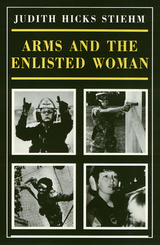
In the last twenty-five years the U.S. military has seen the abolition of women's separate corps, the appointment of women generals, and an unprecedented increase in the ratio of women to men. Also, women are now permitted to serve on combat planes and ships. Despite these developments, most civilians know very little about women in the military.
This collection includes unusual accounts by women on active duty, retired officers, women who have worked for the armed forces in a civilian capacity, and civilian academics. The book offers insights on a variety of pressing issues including minority women, lesbians, combat, the role of gender in weapons design, and the changing mission of the military.
Through personal accounts and commentaries, this book dispels many of the myths about women and the military and explores the reasons for the persistence of misconceptions in the face of increased female participation. This comprehensive effort will be of interest to anyone who wants to know the truth about women in the armed forces and will be a wake-up call to women who feel that the military is irrelevant to them.
Contributors: Rhonda Cornum, Virginia Solms, Billie Mitchell, Connie L. Reeves, Brenda L. Moore, Nina Richman-Loo, Rachel Weber, Lucinda Joy Peach, M. C. Devilbiss, Carol Burke, Susan Jeffords, Miriam Cooke.
Japan’s U.S.–imposed postwar constitution renounced the use of offensive military force, but, as Sheila Smith shows, a nuclear North Korea and an increasingly assertive China have the Japanese rethinking that commitment, and their reliance on United States security.
Japan has one of Asia’s most technologically advanced militaries and yet struggles to use its hard power as an instrument of national policy. The horrors of World War II continue to haunt policymakers in Tokyo, while China and South Korea remain wary of any military ambitions Japan may entertain. Yet a fundamental shift in East Asian geopolitics has forced Japan to rethink the commitment to pacifism it made during the U.S. occupation. It has increasingly flexed its muscles—deploying troops under UN auspices, participating in coercive sanctions, augmenting surveillance capabilities, and raising defense budgets.
Article Nine of Japan’s constitution, drafted by U.S. authorities in 1946, claims that the Japanese people “forever renounce the use of force as a means of settling international disputes.” When Prime Minister Shinzo Abe broke this taboo by advocating revision of Article Nine, public outcry was surprisingly muted. The military, once feared as a security liability, now appears to be an indispensable asset, called upon with increasing frequency and given a seat at the policymaking table.
In Japan Rearmed Sheila Smith argues that Japan is not only responding to increasing threats from North Korean missiles and Chinese maritime activities but also reevaluating its dependence on the United States. No longer convinced that they can rely on Americans to defend Japan, Tokyo’s political leaders are now confronting the possibility that they may need to prepare the nation’s military for war.
The first book-length study of Latina/o experiences in World War II over a wide spectrum of identities and ancestries—from Cuban American, Spanish American, and Mexican American segments to the under-studied Afro-Latino experience—Latina/os and World War II probes the controversial aspects of Latina/o soldiering and citizenship in the war, the repercussions of which defined the West during the twentieth century. The editors also offer a revised, more accurate tabulation of the number of Latina/os who served in the war.
Spanning imaginative productions, such as vaudeville and the masculinity of the soldado razo theatrical performances; military segregation and the postwar lives of veterans; Tejanas on the homefront; journalism and youth activism; and other underreported aspects of the wartime experience, the essays collected in this volume showcase rarely seen recollections. Whether living in Florida in a transformed community or deployed far from home (including Mexican Americans who were forced to endure the Bataan Death March), the men and women depicted in this collection yield a multidisciplinary, metacritical inquiry. The result is a study that challenges celebratory accounts and deepens the level of scholarly inquiry into the realm of ideological mobility for a unique cultural crossroads. Taking this complex history beyond the realm of war narratives, Latina/os and World War II situates these chapters within the broader themes of identity and social change that continue to reverberate in postcolonial lives.
This volume tells the stories of 62 men and women from Wisconsin who served in the Spanish-American War, World War I, and World War II. Letters from the Front is a vivid social history of wartime as told by those who took part in these foreign conflicts. Most of them are "ordinary" people, uprooted from farms, factories, and offices, who took part in extraordinary events. This work explores how war changed their lives and reveals the emotions they felt in uniform, in remote outposts, in combat, and in prison camps. These letters, diaries, oral histories, newspapers, and contemporary accounts provide a history of adaptation to military life; they also reflect the changes that occurred over the half-century encompassing these confilcts, an era of great technological innovation — and one in which America's vision of itself also changed.
"Lifting the Fog of Peace is a captivating study of an agile and adaptive military evolving through the chaos of the post-9/11 world. In what is certain to be regarded as the definitive analysis of the reshaping of American combat power in the face of a complex and uncertain future, Dr. Janine Davidson firmly establishes herself as a rising intellectual star in government and politics. A thoroughly captivating study of organizational learning and adaptation—a 'must read' for leaders in every field."
---LTG William B. Caldwell, IV, Commanding General, NATO Training Mission - Afghanistan
"In Lifting the Fog of Peace, Dr. Janine Davidson explains how the American military has adapted itself to succeed in the wars in Afghanistan and Iraq that are the most likely future face of combat. The book is informed by her experience of these wars in the Department of Defense, where she now plays a critical role in continuing the process of learning that has so visibly marked the military's performance in today's wars. Highly recommended."
---John A. Nagl, President, Center for a New American Security
"Janine Davidson’s Lifting the Fog of Peace is a superb, concise, and well-written book that makes important contributions in three areas. It advances our knowledge of organizational learning in the Armed Forces. It also accurately captures the rich post-Vietnam operational and doctrinal history of the Army and the Marine Corps. The simplistic cartoon of dim-witted generals fixated on the Fulda Gap is replaced here by a more accurate version, where engaged senior officers studied the security environment, absorbed important lessons, and began to improve the learning capacity of the military services. Finally, Lifting the Fog of Peace assesses the state of contemporary stability operations and what must be done to further prepare our Armed Forces for modern war on the low end of the spectrum of conflict. It will be a 'must read' on the E-Ring of the Pentagon and in security studies programs across the nation."
---Joseph J. Collins, Professor, National War College, and former Deputy Assistant Secretary of Defense for Stability Operations
Counterinsurgency and stability operations in Iraq and Afghanistan are only the most recent examples of the U.S. Armed Forces fighting insurgents, building infrastructure, enforcing laws, and governing cities. For more than two centuries, these assignments have been a regular part of the military's tasks; yet until recently the lessons learned from the experiences have seldom been formally incorporated into doctrine and training. As a result, each generation of soldiers has had to learn on the job.
Janine Davidson traces the history of the U.S. military's involvement in these complex and frustrating missions. By comparing the historical record to the current era, Davidson assesses the relative influence of organizational culture and processes, institutional structures, military leadership, and political factors on the U.S. military's capacity to learn and to adapt. Pointing to the case of Iraq, she shows that commanders serving today have benefited at the tactical level from institutional changes following the Vietnam War and from the lessons of the 1990s. Davidson concludes by addressing the question of whether or not such military learning, in the absence of enhanced capabilities and capacity in other U.S. government agencies, will be sufficient to meet the complex challenges of the 21st century.
Janine Davidson, a former Air Force pilot, is a professor of national security at George Mason University, currently serving in the Pentagon as Deputy Assistant Secretary of Defense for Plans.
The views presented in this book are those of the author and do not necessarily represent the views of the Department of Defense or its Components.
This book examines the Reserve Officers Training Corps program as a distinctively American expression of the social, cultural, and political meanings of military service. Since 1950, ROTC has produced nearly two out of three American active duty officers, yet there has been no comprehensive scholarly look at civilian officer education programs in nearly forty years.
While most modern military systems educate and train junior officers at insular academies like West Point, only the United States has relied heavily on the active cooperation of its civilian colleges. Michael Neiberg argues that the creation of officer education programs on civilian campuses emanates from a traditional American belief (which he traces to the colonial period) in the active participation of civilians in military affairs. Although this ideology changed shape through the twentieth century, it never disappeared. During the Cold War military buildup, ROTC came to fill two roles: it provided the military with large numbers of well-educated officers, and it provided the nation with a military comprised of citizen-soldiers. Even during the Vietnam era, officers, university administrators, and most students understood ROTC's dual role. The Vietnam War thus led to reform, not abandonment, of ROTC.
Mining diverse sources, including military and university archives, Making Citizen-Soldiers provides an in-depth look at an important, but often overlooked, connection between the civilian and military spheres.
A compelling union of analysis and rich storytelling, Making the Immigrant Soldier traces the complexities of serving in the military in order to pursue the American dream.
On October 10, 1941, the entire Jewish population of the Belarusian village of Krucha was rounded up and shot. While Nazi death squads routinely carried out mass executions on the Eastern Front, this particular atrocity was not the work of the SS but was committed by a regular German army unit acting on its own initiative. Marching into Darkness is a bone-chilling exposé of the ordinary footsoldiers who participated in the Final Solution on a daily basis.
Although scholars have exploded the myth that the Wehrmacht played no significant part in the Holocaust, a concrete picture of its involvement at the local level has been lacking. Among the crimes Waitman Wade Beorn unearths are forced labor, sexual violence, and graverobbing, though a few soldiers refused to participate and even helped Jews. By meticulously reconstructing the German army's activities in Belarus in 1941, Marching into Darkness reveals in stark detail how the army willingly fulfilled its role as an agent of murder on a massive scale. Early efforts at improvised extermination progressively became much more methodical, with some army units going so far as to organize "Jew hunts." Beorn also demonstrates how the Wehrmacht used the pretense of anti-partisan warfare as a subterfuge by reporting murdered Jews as partisans.
Through archival research into military and legal records, survivor testimonies, and eyewitness interviews, Beorn paints a searing portrait of a professional army's descent into ever more intimate participation in genocide.
Among the various human interventions in landscape, war has left one of the most lasting and eloquent records, literally inscribed on the face of the earth. Military landscapes can assume different forms and functions; yet, by controlling vision and movement, they impose shared strategies of seeing upon geography and the environment.
Built around such fundamental concepts as representation, scale, nature, gender, and memory, Military Landscapes seeks to reevaluate the role of militarization as a fundamental factor in human interaction with land. Moving beyond discussions of infrastructure, battlefields, and memorials, it foregrounds the representational role of military landscapes across different historical periods, geographical regions, and territorial scales, covering a wide range of subjects, including the home front and refugee camps. It contributes to scholarship by shifting the focus to often overlooked factors, such as local knowledge, traditional technology, and physical labor, highlighting the historical character of militarized environments as inherently gendered and racialized. By juxtaposing and synthesizing diverse disciplinary perspectives, this volume seeks to develop a more inclusive and nuanced definition of military landscapes under the framework of landscape theory, based on their understanding as a physical reality as well as a cultural construction.
In Mobility, Mobilization, and Counter/Insurgency, Daniel Agbiboa takes African insurgencies back to their routes by providing a transdisciplinary perspective on the centrality of mobility to the strategies of insurgents, state security forces, and civilian populations caught in conflict. Drawing on one of the world’s deadliest insurgencies, the Boko Haram insurgency in northeast Nigeria and the Lake Chad region, this well-crafted and richly nuanced intervention offers fresh insights into how violent extremist organizations exploit forms of local immobility and border porosity to mobilize new recruits, how the state’s “war on terror” mobilizes against so-called subversive mobilities, and how civilian populations in transit are treated as could-be terrorists and subjected to extortion and state-sanctioned violence en route. The multiple and intersecting flows analyzed here upend Eurocentric representations of movement in Africa as one-sided, anarchic, and dangerous. Instead, this book underscores the contradictions of mobility in conflict zones as simultaneously a resource and a burden. Intellectually rigorous yet clear, engaging, and accessible, Mobility, Mobilization, and Counter/Insurgency is a seminal contribution that lays bare the neglected linkages between conflict and mobility.
Napalm, incendiary gel that sticks to skin and burns to the bone, came into the world on Valentine’s Day 1942 at a secret Harvard war research laboratory. On March 9, 1945, it created an inferno that killed over 87,500 people in Tokyo—more than died in the atomic explosions at Hiroshima or Nagasaki. It went on to incinerate sixty-four of Japan’s largest cities. The Bomb got the press, but napalm did the work.
After World War II, the incendiary held the line against communism in Greece and Korea—Napalm Day led the 1950 counter-attack from Inchon—and fought elsewhere under many flags. Americans generally applauded, until the Vietnam War. Today, napalm lives on as a pariah: a symbol of American cruelty and the misguided use of power, according to anti-war protesters in the 1960s and popular culture from Apocalypse Now to the punk band Napalm Death and British street artist Banksy. Its use by Serbia in 1994 and by the United States in Iraq in 2003 drew condemnation. United Nations delegates judged deployment against concentrations of civilians a war crime in 1980. After thirty-one years, America joined the global consensus, in 2011.
Robert Neer has written the first history of napalm, from its inaugural test on the Harvard College soccer field, to a Marine Corps plan to attack Japan with millions of bats armed with tiny napalm time bombs, to the reflections of Phan Thi Kim Phuc, a girl who knew firsthand about its power and its morality.
Focusing on the period between World War I and 1968, Mann draws on archival research and extensive interviews with surviving Malian veterans of French wars to explore the experiences of the African soldiers. He describes the effects their long absences and infrequent homecomings had on these men and their communities, he considers the veterans’ status within contemporary Malian society, and he examines their efforts to claim recognition and pensions from France. Mann contends that Mali is as much a postslavery society as it is a postcolonial one, and that specific ideas about reciprocity, mutual obligation, and uneven exchange that had developed during the era of slavery remain influential today, informing Malians’ conviction that France owes them a “blood debt” for the military service of African soldiers in French wars.
Richard Moser uses interviews and personal stories of Vietnam veterans to offer a fundamentally new interpretation of the Vietnam War and the antiwar movement. Although the Vietnam War was the most important conflict of recent American history, its decisive battle was not fought in the jungles of Vietnam, or even in the streets of the United States, but rather in the hearts and minds of American soldiers. To a degree unprecedented in American history, soldiers and veterans acted to oppose the very war they waged. Tens of thousands of soldiers and veterans engaged in desperate conflicts with their superiors and opposed the war through peaceful protest, creating a mass movement of dissident organizations and underground newspapers.
Moser shows how the antiwar soldiers lived out the long tradition of the citizen soldier first created in the American Revolution and Civil War. Unlike those great upheavals of the past, the Vietnam War offered no way to fulfill the citizen-soldier's struggle for freedom and justice. Rather than abandoning such ideals, however, tens of thousands abandoned the war effort and instead fulfilled their heroic expectations in the movements for peace and justice. According to Moser, this transformation of warriors into peacemakers is the most important recent development of our military culture.
The struggle for peace took these new winter soldiers into America rather than away from it. Collectively these men and women discovered the continuing potential of American culture to advance the values of freedom, equality, and justice on which the nation was founded.
Considers what the military presence in Hawai’i tells us about colonialism, gender, race, and class.
Everywhere you look in Hawai’i, you might see the military. And yet, in daily life few residents see the military at all-it is hidden in plain sight. This paradox of invisibility and visibility, of the available and the hidden, is the subject of Oh, Say, Can You See?, which maps the power relations involving gender, race, and class that define Hawai’i in relation to the national security state.
Western intruders into Hawai’i-from the early explorers, missionaries, and sugar planters to the military, tourists, and foreign investors-have seen the island nation as a feminine place, waiting to embrace those who come to penetrate, protect, mold, and develop, yet conveniently lacking whatever the newcomers claim to possess. Thus feminized, this book contends, the islands and the people have been reinscribed with meanings according to the needs, fears, and desires of outsiders. Authors Kathy E. Ferguson and Phyllis Turnbull locate and “excavate” sites of memory, such as cemeteries, memorials, monuments, and museums, to show how the military constructs its gendered narrative upon prior colonial discourses. Among the sites considered are Fort DeRussy, Pearl Harbor, and Punchbowl Cemetery, as well as the practices of citizenship that are produced or foreclosed by the narratives of order and security written upon Hawai’i by the military.This semiotic investigation of ways the military marks Hawai’i necessarily explores the intersection of immigration, colonialism, military expansion, and tourism on the islands. Attending to the ways in which the military represents itself and others represent the military, the authors locate the particular representational elements that both conceal and reveal the military’s presence and power; in doing so, they seek to expand discursive space so that other voices can be heard. ISBN 0-8166-2978-1 Cloth $49.95xxISBN 0-81662979-X Paper $19.95x240 pages 5 7/8 x 9 DecemberBorderlines Series, Volume 10Translation inquiries: University of Minnesota Press
On October 3, 1968, a military junta led by General Juan Velasco Alvarado took over the government of Peru. In striking contrast to the right-wing, pro–United States/anti-Communist military dictatorships of that era, however, Velasco’s “Revolutionary Government of the Armed Forces” set in motion a left-leaning nationalist project aimed at radically transforming Peruvian society by eliminating social injustice, breaking the cycle of foreign domination, redistributing land and wealth, and placing the destiny of Peruvians into their own hands. Although short-lived, the Velasco regime did indeed have a transformative effect on Peru, the meaning and legacy of which are still subjects of intense debate.
The Peculiar Revolution revisits this fascinating and idiosyncratic period of Latin American history. The book is organized into three sections that examine the era’s cultural politics, including not just developments directed by the Velasco regime but also those that it engendered but did not necessarily control; its specific policies and key institutions; and the local and regional dimensions of the social reforms it promoted. In a series of innovative chapters written by both prominent and rising historians, this volume illuminates the cultural dimensions of the revolutionary project and its legacies, the impact of structural reforms at the local level (including previously understudied areas of the country such as Piura, Chimbote, and the Amazonia), and the effects of state policies on ordinary citizens and labor and peasant organizations.
A New Statesman Book of the Year
Winner of the Helen and Howard R. Marraro Prize
Winner of the Aldo and Jeanne Scaglione Prize for Italian Studies
“Extraordinary…I could not put it down.”
—Margaret MacMillan
“Reveals how ideology corrupts the truth, how untrammeled ambition destroys the soul, and how the vanity of white male supremacy distorts emotion, making even love a matter of state.”
—Sonia Purnell, author of A Woman of No Importance
When Attilio Teruzzi, a decorated military officer and early convert to the Fascist cause, married a rising American opera star, his good fortune seemed settled. The wedding was blessed by Mussolini himself. Yet only three years later, Teruzzi, now commander of the Black Shirts, renounced his wife. Lilliana was Jewish, and fascist Italy would soon introduce its first race laws.
The Perfect Fascist pivots from the intimate story of a tempestuous courtship and inconvenient marriage to the operatic spectacle of Mussolini’s rise and fall. It invites us to see in the vain, unscrupulous, fanatically loyal Attilio Teruzzi an exemplar of fascism’s New Man. Victoria De Grazia’s landmark history shows how the personal was always political in the fascist quest for manhood and power. In his self-serving pieties and intimate betrayals, his violence and opportunism, Teruzzi is a forefather of the illiberal politicians of today.
“The brilliance of de Grazia’s book lies in the way that she has made a page-turner of Teruzzi’s chaotic life, while providing a scholarly and engrossing portrait of the two decades of Fascist rule.”
—Caroline Moorhead, Wall Street Journal
“Original and important…A probing analysis of the fascist ‘strong man.’ De Grazia’s attention to Teruzzi’s private life, his behavior as suitor and husband, deepens and enriches our understanding of the nature of leadership in Mussolini’s regime and of masculinity, virility, and honor in Italian fascist culture.”
—Robert O. Paxton, author of The Anatomy of Fascism
“This is a perfect book!…Its two entwined narratives—one political and public, the other personal and private—help us understand why the personal is political for those who insist on reshaping people and society.”
—Azar Nafisi, author of Reading Lolita in Tehran
Race and Gender at War offers a groundbreaking examination of how race and gender shaped experiences and narratives during the American Civil War. Through vivid analysis of soldiers, civilians, and cultural memory, this book reveals the complex intersections of identity on and off the battlefield—where notions of masculinity, femininity, and racial hierarchy influenced enlistment, combat roles, and postwar remembrance. Drawing on letters, diaries, and official records, this work challenges traditional war histories by foregrounding voices often marginalized, providing a nuanced understanding of how social constructs defined loyalty, honor, and survival in America’s most transformative conflict.
When African American servicemen went to fight in the Vietnam War, discrimination and prejudice followed them. Even in a faraway country, their military experiences were shaped by the racial environment of the home front. War is often viewed as a crucible that can transform society, but American race relations proved remarkably durable.
In Race in the Crucible of War, Gerald F. Goodwin examines how Black servicemen experienced and interpreted racial issues during their time in Vietnam. Drawing on more than fifty new oral interviews and significant archival research, as well as newspapers, periodicals, memoirs, and documentaries, Goodwin reveals that for many African Americans the front line and the home front were two sides of the same coin. Serving during the same period as the civil rights movement and the race riots in Chicago, Detroit, and dozens of other American cities, these men increasingly connected the racism that they encountered in the barracks and on the battlefields with the tensions and violence that were simmering back home.
Wartime military service is held up as a marker of civic duty and patriotism, yet the rewards of veteran status have never been equally distributed. Certain groups of military veterans—women, people of color, LGBTQ people, and former service members with stigmatizing conditions, “bad paper” discharges, or criminal records—have been left out of official histories, excised from national consciousness, and denied state recognition and military benefits.
Chronicling the untold stories of marginalized veterans in the twentieth and twenty-first centuries, Service Denied uncovers the generational divides, cultural stigmas, and discriminatory policies that affected veterans during and after their military service. Together, the chapters in this collection recast veterans beyond the archetype, inspiring an innovative model for veterans studies that encourages an intersectional and interdisciplinary analysis of veterans history. In addition to contributions from the volume editors, this collection features scholarship by Barbara Gannon, Robert Jefferson, Evan P. Sullivan, Steven Rosales, Heather Marie Stur, Juan Coronado, Kara Dixon Vuic, John Worsencroft, and David Kieran.
Called upon for the first time to render military service outside the States, Negro soldiers (called Smoked Yankees by the Spaniards) were eager to improve their status at home by fighting for the white man in the Spanish-American War. Their story is told through countless letters sent to black U.S. newspapers that lacked resources to field their own reporters. The collection constitutes a remarkably complete and otherwise undisclosed amount of the black man’s role in—and attitude toward—America’s struggle for empire.
In first-hand reports of battles in the Philippine Islands and Cuba, Negro soldiers wrote from the perspective of dispossessed citizens struggling to obtain a larger share of the rights and privileges of Americans.
These letters provide a fuller understanding of the exploits of black troops through their reports of military activities and accounts of foreign peoples and its cultures.
Since pre-Columbian times, soldiering has been a traditional life experience for innumerable women in Mexico. Yet the many names given these women warriors—heroines, camp followers, Amazons, coronelas, soldadas, soldaderas, and Adelitas—indicate their ambivalent position within Mexican society. In this original study, Elizabeth Salas explores the changing role of the soldadera, both in reality and as a cultural symbol, from pre-Columbian times up to the present day.
Drawing on military archival data, anthropological studies, and oral history interviews, Salas first explores the real roles played by Mexican women in armed conflicts. She finds that most of the functions performed by women easily equate to those performed by revolutionaries and male soldiers in the quartermaster corps and regular ranks. She then turns her attention to the soldadera as a continuing symbol in Mexican and Chicano culture, examining the image of the soldadera in literature, corridos, art, music, and film.
Challenging many traditional stereotypes, Salas finds that the fundamental realities of war link all Mexican women, regardless of time period, social class, or nom de guerre.
What were the catalysts that motivated Mexican American youth to enlist or readily accept their draft notices in World War II, Korea, or Vietnam? In Soldados Razos at War, historian and veteran Steven Rosales chronicles the experiences of Chicano servicemen who fought for the United States, explaining why these men served, how they served, and the impact of their service on their identity and political consciousness.
As a social space imbued with its own martial and masculine ethos, the U.S. military offers an ideal way to study the aspirations and behaviors that carried over into the civilian lives of these young men. A tradition of martial citizenship forms the core of the book. Using rich oral histories and archival research, Rosales investigates the military’s transformative potential with a particular focus on socioeconomic mobility, masculinity, and postwar political activism across three generations.
The national collective effort characteristic of World War II and Korea differed sharply from the highly divisive nature of American involvement in Vietnam. Thus, for Mexican Americans, military service produced a wide range of ideological reactions, with the ideals of each often in opposition to the others. Yet a critical thread connecting these diverse outcomes was a redefined sense of self and a willingness to engage in individual and collective action to secure first-class citizenship.
Compelling and eye-opening, Tactical Inclusion combines original analysis with personal experience to chart advertising’s role in building the all-volunteer military.
Nearly half a century ago, the economic historian Harold Innis pointed out that the geographical limits of empires were determined by communications and that, historically, advances in the technologies of transport and communications have enabled empires to grow. This power of communications was demonstrated when Japanese Emperor Hirohito’s radio speech announcing Japan’s surrender and the dissolution of its empire was broadcast simultaneously throughout not only the Japanese home islands but also all the territories under its control over the telecommunications system that had, in part, made that empire possible.
In the extension of the Japanese empire in the 1930s and 1940s, technology, geo-strategy, and institutions were closely intertwined in empire building. The central argument of this study of the development of a communications network linking the far-flung parts of the Japanese imperium is that modern telecommunications not only served to connect these territories but, more important, made it possible for the Japanese to envision an integrated empire in Asia. Even as the imperial communications network served to foster integration and strengthened Japanese leadership and control, its creation and operation exacerbated long-standing tensions and created new conflicts within the government, the military, and society in general.
The life story of this World War II Navajo Code Talker introduces middle-grade readers to an unforgettable person and offers a close perspective on aspects of Navajo (or Diné) history and culture.
Thomas H. Begay was one of the young Navajo men who, during World War II, invented and used a secret, unbreakable communications code based on their native Diné language to help win the war in the Pacific. Although the book includes anecdotes from other code talkers, its central narrative revolves around Begay. It tells his story, from his birth near the Navajo reservation, his childhood spent herding sheep, his adolescence in federally mandated boarding schools, and ultimately, his decision to enlist in the US Marine Corps.
Alysa Landry relies heavily on interviews with Begay, who, as of this writing, is in his late nineties and one of only three surviving code talkers. Begay’s own voice and sense of humor make this book particularly significant in that it is the only Code Talker biography for young readers told from a soldier’s perspective. Begay was involved with the book every step of the way, granting Landry unlimited access to his military documents, personal photos, and oral history. Additionally, Begay’s family contributed by reading and fact-checking the manuscript. This truly is a unique collaborative project.
… I offer my life in a holocaust … This people whose slave I was will no longer be slave to anyone. My sacrifice will remain forever in their souls and my blood will be the price of their ransom.
President Getulio Vargas' testament—written shortly before his suicide on August 24, 1954—was prophetic, for the Vargas legacy was to cast a shadow on political-military events of the next decade.
With news of Vargas' suicide, opponents of the late President, who were usually out of power, tried to organize. The military itself was split, but those favoring Kubitschek, apparent winner of the 1955 presidential election on a ticket of Vargas-created parties, gained control. To assure Kubitschek's inauguration Army leaders deposed two acting Presidents in 1955.
During Kubitschek's presidency (1956–1961 ) there were manifestations of discontent by military and political groups who ascribed numerous evils to Vargas and his followers.
In 1961, when Kubitschek's successor, Jânio Quadros, resigned after six months in office, the unrest intensified. Vice President Jango Goulart assumed the presidency and sought unsuccessfully to conciliate contending forces; his battle for reform seemed to make him an ally of "far leftists." Feeling that discipline was being undermined by men close to the President and that only military action could save Brazil from following the path favored by influential Communist labor leaders, a majority of the Army officers agreed to overthrow Goulart's administration in 1964.
Unrest in Brazil describes in exciting detail the government crises and resulting military interventions that punctuated the power struggle between supporters and opponents of Vargas in the decade following his death.
Field Manual 3-07, Stability Operations, represents a milestone in Army doctrine.
With a focus on transforming conflict, managing violence when it does occur and maintaining stable peace, The U.S. Army Stability Operations Field Manual (otherwise known as FM 3-07) signals a stark departure from traditional military doctrine. The Army officially acknowledges the complex continuum from conflict to peace, outlines the military's responsibility to provide stability and security, and recognizes the necessity of collaboration, coordination, and cooperation among military, state, commercial, and non-government organizations in nation-building efforts.
The manual reflects a truly unique collaboration between the Army and a wide array of experts from hundreds of groups across the United States Government, the intergovernmental and non-governmental communities, America's allies around the world, and the private sector. All branches of the armed forces, U.S. agencies ranging from the State Department to Homeland Security to Health and Human Services, international agencies from the United Nations to the Red Cross to the World Bank, countries from the United Kingdom to India to South Africa, private think tanks from RAND to the United States Institute of Peace to the Center for New American Security, all took part in the shaping of this document.
The U.S. Army Stability Operations FieldManual, marks just the second time in modern history that the U.S. Army has worked with a private publisher to produce a military doctrinal document.
Lieutenant General William B. Caldwell, IV is Commander of the Combined Arms Center at Fort Leavenworth, Kansas.
Michèle Flournoy, Under Secretary of Defense for Policy
Shawn Brimley, Fellow, Center for a New American Security
Janine Davidson, Deputy Assistant Secretary of Defense for Plans
"It is a roadmap from conflict to peace, a practical guidebook for adaptive, creative leadership at a critical time in our history. It institutionalizes the hard-won lessons of the past while charting a path for tomorrow. This manual postures our military forces for the challenges of an uncertain future, an era of persistent conflict where the unflagging bravery of our Soldiers will continue to carry the banner of freedom, hope, and opportunity to the people of the world."
—From the foreword by Lieutenant General William B. Caldwell, IV, Commander of the Combined Arms Center at Fort Leavenworth, Kansas
Warrior Ways is one of the first book-length explorations of military folklife, and focuses on the lore produced by modern American warriors, illuminating the ways in which members of the armed services creatively express the complex experience of military life. In short, lively essays, contributors to the volume, all of whom have close personal or professional relationships to the military, examine battlefield talismans, personal narrative (storytelling), “Jody calls” (marching and running cadences), slang, homophobia and transgressive humor, music, and photography, among other cultural expressions.
Military folklore does not remain in an isolated subculture; it reveals our common humanity by delighting, disturbing, infuriating, and inspiring both those deeply invested in and those peripherally touched by military life. Highlighting the contemporary and historical importance of the military in American life, Warrior Ways will be of interest to scholars and students of folklore, anthropology, and popular culture; those involved in veteran services and education; and general readers interested in military culture.
This book is a profound reexamination of the role of the German army, the Wehrmacht, in World War II. Until very recently, the standard story avowed that the ordinary German soldier in World War II was a good soldier, distinct from Hitler's rapacious SS troops, and not an accomplice to the massacres of civilians. Wolfram Wette, a preeminent German military historian, explodes the myth of a "clean" Wehrmacht with devastating clarity.
This book reveals the Wehrmacht's long-standing prejudices against Jews, Slavs, and Bolsheviks, beliefs that predated the prophecies of Mein Kampf and the paranoia of National Socialism. Though the sixteen-million-member German army is often portrayed as a victim of Nazi mania, we come to see that from 1941 to 1944 these soldiers were thoroughly involved in the horrific cleansing of Russia and Eastern Europe. Wette compellingly documents Germany's long-term preparation of its army for a race war deemed necessary to safeguard the country's future; World War II was merely the fulfillment of these plans, on a previously unimaginable scale.
This sober indictment of millions of German soldiers reaches beyond the Wehrmacht's complicity to examine how German academics and ordinary citizens avoided confronting this difficult truth at war's end. Wette shows how atrocities against Jews and others were concealed and sanitized, and history rewritten. Only recently has the German public undertaken a reevaluation of this respected national institution--a painful but necessary process if we are to truly comprehend how the Holocaust was carried out and how we have come to understand it.
Between 1939 and 1945 more than 17,000 Catholic German priests and seminarians were conscripted into Hitler’s Wehrmacht. Men who had devoted their lives to God found themselves advancing the cause of an abhorrent regime. Lauren Faulkner Rossi draws on personal correspondence, official military reports, memoirs, and interviews to present a detailed picture of Catholic priests who served faithfully in the German armed forces in the Second World War. Most of them failed to see the bitter irony of their predicament.
Wehrmacht Priests plumbs the moral justifications of men who were committed to their religious vocation as well as to the cause of German nationalism. In their wartime and postwar writings, these soldiers often stated frankly that they went to war willingly, because it was their spiritual duty to care for their countrymen in uniform. But while some priests became military chaplains, carrying out work consistent with their religious training, most served in medical roles or, in the case of seminarians, in general infantry. Their convictions about their duty only strengthened as Germany waged an increasingly desperate battle against the Soviet Union, which they believed was an existential threat to the Catholic Church and German civilization.
Wehrmacht Priests unpacks the complex relationship between the Catholic Church and the Nazi regime, including the Church’s fierce but futile attempts to preserve its independence under Hitler’s dictatorship, its accommodations with the Nazis regarding spiritual care in the military, and the shortcomings of Catholic doctrine in the face of total war and genocide.
Women and Gender Perspectives in the Military compares the integration of women, gender perspectives, and the women, peace, and security agenda into the armed forces of eight countries plus NATO and United Nations peacekeeping operations. This book brings a much-needed crossnational analysis of how militaries have or have not improved gender balance, what has worked and what has not, and who have been the agents for change.
The country cases examined are Sweden, the Netherlands, Canada, the United States, the United Kingdom, Israel, Australia, and South Africa. Despite increased opportunities for women in the militaries of many countries and wider recognition of the value of including gender perspectives to enhance operational effectiveness, progress has encountered roadblocks even nearly twenty years after United Nations Security Council Resolution 1325 kicked off the women, peace, and security agenda. Robert Egnell, Mayesha Alam, and the contributors to this volume conclude that there is no single model for change that can be applied to every country, but the comparative findings reveal many policy-relevant lessons while advancing scholarship about women and gendered perspectives in the military.
READERS
Browse our collection.
PUBLISHERS
See BiblioVault's publisher services.
STUDENT SERVICES
Files for college accessibility offices.
UChicago Accessibility Resources
home | accessibility | search | about | contact us
BiblioVault ® 2001 - 2026
The University of Chicago Press