
 A SCHOLARLY BOOK REPOSITORY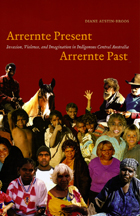
Employing ethnographic and archival research, Diane Austin-Broos traces the history of the Arrernte as they have transitioned from a society of hunter-gatherers to members of the Hermannsburg Mission community to their present, marginalized position in the modern Australian economy. While she concludes that these wrenching structural shifts led to the violence that now marks Arrernte communities, she also brings to light the powerful acts of imagination that have sustained a continuing sense of Arrernte identity.
Three forces—dwindling British power, rising American influence, and nationalism in a variety of forms—have transformed Australia, New Zealand, and the adjacent islands since 1919. In this volume, some of the most distinguished scholars of the Pacific region assess these significant historical changes.
These essays deal with international relations, politics, changing social structures, and literature since World War I. The themes of the volume as a whole are social and humanistic; they concern the evolution of both a regional identity and separate national identities in the Southwest Pacific. The unique areal and thematic concentration of this book makes it essential reading for all those interested in the history, politics, and culture of the Pacific.

From August 1965 to February 1968, during his period of service in Australia, Ambassador Edward Clark traveled in that country as no other American and probably few Australians ever have. His wife, Anne Clark, traveled with him, then wrote her observations and impressions to friends and family in the United States.
Her letters, published for the first time in this volume, reveal the isolations and involvements as well as the opportunities and the pleasures of embassy life. The etiquette of official functions at times posed problems, as in the Clarks' first black-tie dinner with the Acting Governor General, where Mrs. Clark was supposed to curtsy. "Some Ambassadors feel strongly that the representative of the President of the United States should never bend his knee (or rather his wife's) to any man. Mrs. Battle, wife of our predecessor ... put the question directly to President Kennedy. His answer to her was, 'Curtsy you must, but keep a stiff upper knee.'"
Soon, Anne Clark realized that the routine of appearances and entertainments was constant: "I do not know when I will make peace with the schedule. I am a slave to the little black book that is my calendar."
In addition to the intricacies of embassy life, the Clarks encountered much that was unfamiliar—new people, almost a new language, new flowers, new animals—even a sky with its new moon upside down. But their warm hospitality and genuine interest in things Australian attracted friends throughout the continent. Figures from the government, the church, the diplomatic circle, and everyday life, plus well-known guests from home, all become known to the reader in this perceptive account of official life from the inside.

The Cassowary's Revenge is an intimate account of how Ilahita’s men and women think, emote, dream, and explain themselves. Tuzin also explores how the death of masculinity in a remote society raises disturbing implications for gender relations in our own society. In this light Tuzin's book is about men and women in search of how to value one another, and in today's world there is no theme more universal or timely.

Since first reported to the world in 1780, the death of Captain Cook on a Hawaiian beach the previous year has been revered, celebrated, and shrouded in mystery. Simultaneously called a hero and an antihero, a ruthless invader, and a torchbearer of the Enlightenment, Cook’s reputation grew as much out of the moving story of his death as out of his adventures while he lived.
In a style that is more detective story than conventional biography, Glyn Williams explores the multiple narratives of Cook’s death. He reveals how the British Admiralty first attempted to censor accounts of Cook’s erratic behavior and how the “authorized” version of his death—a lengthy narrative serialized in the leading publications of the day—reduced the story to the final hours of a noble leader who gave his life to save others. Williams argues that the contrary evidence of a chaotic bloody fracas on the beach at Kealakekua Bay was ignored, and that the unexplained disappearance of Cook’s own journal helped the process of concealment. He believes that Cook was not entirely the man sanctified by the British public. More than two hundred years later, an explosive interplay between academic controversy and nationalist feelings has once more drawn attention to a life that has attracted praise and controversy, abhorrence and admiration. In short, Williams examines the story of Cook’s progress from obscurity to fame and, eventually, to infamy—a story that, until now, has never been fully told.
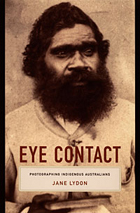
Lydon shows how the photographic portrayals of the Aboriginal residents of Coranderrk changed over time, reflecting various ideas of the colonial mission—from humanitarianism to control to assimilation. In the early twentieth century, the images were used on stereotypical postcards circulated among the white population, showing what appeared to be compliant, transformed Aboriginal subjects. The station closed in 1924 and disappeared from public view until it was rediscovered by scholars years later. Aboriginal Australians purchased the station in 1998, and, as Lydon describes, today they are using the Coranderrk photographic archive in new ways, to identify family members and tell stories of their own.
Beginning in the last third of the twentieth century, Australian literary and cultural studies underwent a profound transformation to become an important testing ground of new ideas and theories. How do Australian cultural products project a sense of the nation today? How do Australian writers, artists, and film directors imagine the Australian heritage and configure its place in a larger world that extends beyond Australia's shores?
Ranging from the country's colonial beginnings to its more globally oriented present, the nineteen essays by distinguished scholars working on the cutting edge of the field present a multi-faceted view of the vast land down under. A central theme is the relation of cultural products to nature and history. Issues explored include problems of race and gender, colonialism and postcolonialism, individual and national identity, subjective experience and international connections. Among others, the essays treat major authors such as Peter Carey, David Malouf, and Judith Wright.

In Oceania documents and analyzes the "rhetorical artifacts" of explorers, missionaries, fiction and travel writers, and the people of the Pacific themselves to illustrate how Oceanic identities have been represented over time. Not content with conventional methods of anthropology or history, Thomas draws on postcolonial theory and literary analysis in extraordinarily wide-ranging analyses of texts, visual images, and historical processes. He demonstrates how cultures of the Pacific Islands have dealt with colonialist ventures, modernity, and the debate about the recuperation of histories and traditions. The picture Thomas paints of Oceania, however, is not one of a group of societies stripped of meaning, but one that shows how the interactions between indigenous cultures and European influences have created entirely new identities.
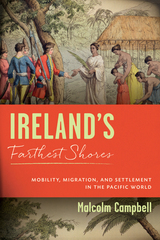
Malcolm Campbell examines the rich history of Irish experiences on land and at sea, offering new perspectives on migration and mobility in the Pacific world and of the Irish role in the establishment and maintenance of the British Empire. This volume investigates the extensive transnational connections that developed among Irish immigrants and their descendants across this vast and unique oceanic space, ties that illuminate how the Irish participated in the making of the Pacific world and how the Pacific world made them.
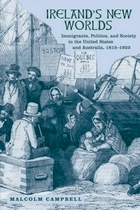
Ireland’s New Worlds is the first book to compare Irish immigrants in the United States and Australia. In a profound challenge to the national histories that frame most accounts of the Irish diaspora, Malcolm Campbell highlights the ways that economic, social, and cultural conditions shaped distinct experiences for Irish immigrants in each country, and sometimes in different parts of the same country. From differences in the level of hostility that Irish immigrants faced to the contrasting economies of the United States and Australia, Campbell finds that there was much more to the experiences of Irish immigrants than their essential “Irishness.” America’s Irish, for example, were primarily drawn into the population of unskilled laborers congregating in cities, while Australia’s Irish, like their fellow colonialists, were more likely to engage in farming. Campbell shows how local conditions intersected with immigrants’ Irish backgrounds and traditions to create surprisingly varied experiences in Ireland’s new worlds.
“Well conceived and thoroughly researched . . . . This clearly written, thought-provoking work fulfills the considerable ambitions of comparative migration studies.”—Choice
A small canoe with Polynesians brought the first humans to Easter Island in 700 CE, and when boat travel in the South Pacific drastically decreased around 1500, the Easter Islanders were forced to adapt in order to survive their isolation. Adaptation, Fischer asserts, was a continuous thread in the life of Easter Island: the first European visitors, who viewed the awe-inspiring monolithic busts in 1722, set off hundreds of years of violent warfare, trade, and disease—from the smallpox, wars, and Great Death that decimated the island to the late nineteenth-century Catholic missionaries who tried to "save" it to a despotic Frenchman who declared sole claim of the island and was soon killed by the remaining 111 islanders. The rituals, leaders, and religions of the Easter Islanders evolved with all of these events, and Fischer is just as attentive to the island's cultural developments as he is to its foreign invasions.
Bringing his history into the modern era, Fischer examines the colonization and annexation of Easter Island by Chile, including the Rapanui people's push for civil rights in 1964 and 1965, by which they gained full citizenship and freedom of movement on the island. As travel to and interest in the island rapidly expand, Island at the End of the World is an essential history of this mysterious site.
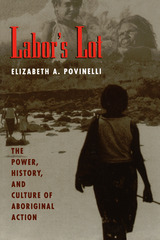
In Labor's Lot, Povinelli shows how everyday activities shape Aboriginal identity and provide cultural meaning. She focuses on the Belyuen women's interactions with the countryside and on Belyuen conflicts with the Australian government over control of local land. Her analysis raises serious questions about the validity of Western theories about labor and culture and their impact on Aboriginal society.
Povinelli's focus on women's activities provides an important counterpoint to recent works centering on male roles in hunter-gatherer societies. Her unique "cultural economy" approach overcomes the dichotomy between the two standard approaches to these studies. Labor's Lot will engage anyone interested in indigenous peoples or in the relationship between culture and economy in contemporary social practice.
For a British Empire that stretched across much of the globe at the start of the nineteenth century, the interiors of Africa and Australia remained intriguing mysteries. The challenge of opening these continents to imperial influence fell to a proto-professional coterie of determined explorers. They sought knowledge, adventure, and fame, but often experienced confusion, fear, and failure. The Last Blank Spaces follows the arc of these explorations, from idea to practice, from intention to outcome, from myth to reality.
Those who conducted the hundreds of expeditions that probed Africa and Australia in the nineteenth century adopted a mode of scientific investigation that had been developed by previous generations of seaborne explorers. They likened the two continents to oceans, empty spaces that could be made truly knowable only by mapping, measuring, observing, and preserving. They found, however, that their survival and success depended less on this system of universal knowledge than it did on the local knowledge possessed by native peoples.
While explorers sought to advance the interests of Britain and its emigrant communities, Dane Kennedy discovers a more complex outcome: expeditions that failed ignominiously, explorers whose loyalties proved ambivalent or divided, and, above all, local states and peoples who diverted expeditions to serve their own purposes. The collisions, and occasional convergences, between British and indigenous values, interests, and modes of knowing the world are brought to the fore in this fresh and engaging study.
Learning Whiteness examines the material conditions, knowledge politics and complex feelings that create and relay systems of racial domination. Focusing on Australia, the authors demonstrate how whiteness is fundamentally an educational project – taught within education institutions and through public discourse – in active service of the settler colonial state.
To see whiteness as learned is to recognize that it can be confronted. This book invites readers to reckon with past and present politics of education in order to imagine a future thoroughly divested from racism.
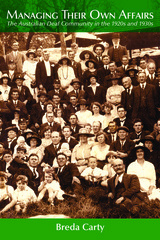
During this time, deaf Australians aspired to manage their own affairs. They enjoyed some success by establishing “breakaways” from the Deaf Societies, and they also established an independent national organization, which was contested and ultimately suppressed by the Deaf Societies. These developments were influenced by wider social movements in Australian society, such as the mobilization of minority groups in their push for autonomy and equal rights. Although most of the breakaway Deaf organizations did not survive beyond the 1930s, they significantly affected the power structures and relationships between deaf and hearing people in Australia. The Australian Deaf community’s attempts to organize independently during these years have been largely erased from collective memory, making Carty’s examination a particularly important and necessary addition to the historical literature.
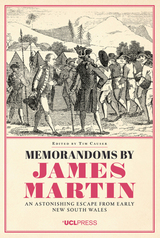
Though the author has restricted the results of his research to Aboriginal Australia, his methodological approach is generalizable. Hence this work will be of importance to specialists in many areas.
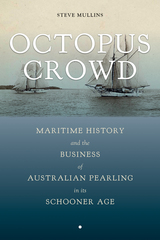
For most of its history, Australian pearling was a shore-based activity. But from the mid-1880s until the World War I era, the industry was dominated by highly mobile, heavily capitalized, schooner-based fleets of pearling luggers, known as floating stations, that exploited Australia’s northern continental shelf and the nearby waters of the Netherlands Indies. Octopus Crowd: Maritime History and the Business of Australian Pearling in Its Schooner Age is the first book-length study of schooner-based pearling and explores the floating station system and the men who developed and employed it.
Steve Mullins focuses on the Clark Combination, a syndicate led by James Clark, Australia’s most influential pearler. The combination honed the floating station system to the point where it was accused of exhausting pearling grounds, elbowing out small-time operators, strangling the economies of pearling ports, and bringing the industry to the brink of disaster. Combination partners were vilified as monopolists—they were referred to as an “octopus crowd”—and their schooners were stigmatized as hell ships and floating sweatshops.
Schooner-based floating stations crossed maritime frontiers with impunity, testing colonial and national territorial jurisdictions. The Clark Combination passed through four fisheries management regimes, triggering significant change and causing governments to alter laws and extend maritime boundaries. It drew labor from ports across the Asia-Pacific, and its product competed in a volatile world market. Octopus Crowd takes all of these factors into account to explain Australian pearling during its schooner age. It argues that the demise of the floating station system was not caused by resource depletion, as was often predicted, but by ideology and Australia’s shifting sociopolitical landscape
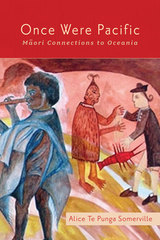
Native identity is usually associated with a particular place. But what if that place is the ocean? Once Were Pacific explores this question as it considers how Māori and other Pacific peoples frame their connection to the ocean, to New Zealand, and to each other through various creative works. Māori scholar Alice Te Punga Somerville shows how and when Māori and other Pacific peoples articulate their ancestral history as migratory seafarers, drawing their identity not only from land but also from water.
Although Māori are ethnically Polynesian, and Aotearoa New Zealand is clearly a part of the Pacific region, in New Zealand the terms “Māori” and “Pacific” are colloquially applied to two distinct communities: Māori are Indigenous, and “Pacific” refers to migrant communities from elsewhere in the region. Asking how this distinction might blur historical and contemporary connections, Te Punga Somerville interrogates the relationship between indigeneity, migration, and diaspora, focusing on texts: poetry, fiction, theater, film, and music, viewed alongside historical instances of performance, journalism, and scholarship.
In this sustained treatment of the Māori diaspora, Te Punga Somerville provides the first critical analysis of relationships between Indigenous and migrant communities in New Zealand.
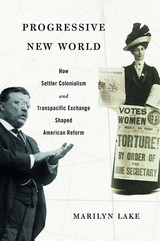
The paradox of progressivism continues to fascinate more than one hundred years on. Democratic but elitist, emancipatory but coercive, advanced and assimilationist, Progressivism was defined by its contradictions. In a bold new argument, Marilyn Lake points to the significance of turn-of-the-twentieth-century exchanges between American and Australasian reformers who shared racial sensibilities, along with a commitment to forging an ideal social order. Progressive New World demonstrates that race and reform were mutually supportive as Progressivism became the political logic of settler colonialism.
White settlers in the United States, who saw themselves as path-breakers and pioneers, were inspired by the state experiments of Australia and New Zealand that helped shape their commitment to an active state, women’s and workers’ rights, mothers’ pensions, and child welfare. Both settler societies defined themselves as New World, against Old World feudal and aristocratic societies and Indigenous peoples deemed backward and primitive.
In conversations, conferences, correspondence, and collaboration, transpacific networks were animated by a sense of racial kinship and investment in social justice. While “Asiatics” and “Blacks” would be excluded, segregated, or deported, Indians and Aborigines would be assimilated or absorbed. The political mobilizations of Indigenous progressives—in the Society of American Indians and the Australian Aborigines’ Progressive Association—testified to the power of Progressive thought but also to its repressive underpinnings. Burdened by the legacies of dispossession and displacement, Indigenous reformers sought recognition and redress in differently imagined new worlds and thus redefined the meaning of Progressivism itself.
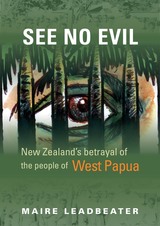
See No Evil is a shocking account by one of New Zealand’s most respected authors on peace and Pacific issues, issuing a powerful call for a just and permanent solution – self-determination – for the people of West Papua.
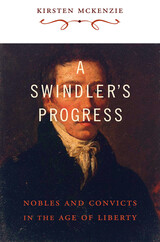
In May 1835 in a Sydney courtroom, a slight, balding man named John Dow stood charged with forgery. The prisoner shocked the room by claiming he was Edward, Viscount Lascelles, eldest son of the powerful Earl of Harewood. The Crown alleged he was a confidence trickster and serial impostor. Was this really the heir to one of Britain's most spectacular fortunes?
Part Regency mystery, part imperial history, A Swindler's Progress is an engrossing tale of adventure and deceit across two worlds—British aristocrats and Australian felons—bound together in an emerging age of opportunity and individualism, where personal worth was battling power based on birth alone. The first historian to unravel the mystery of John Dow and Edward Lascelles, Kirsten McKenzie illuminates the darker side of this age of liberty, when freedom could mean the freedom to lie both in the far-flung outposts of empire and within the established bastions of British power.
The struggles of the Lascelles family for social and political power, and the tragedy of their disgraced heir, demonstrate that British elites were as fragile as their colonial counterparts. In ways both personal and profound, McKenzie recreates a world in which Britain and the empire were intertwined in the transformation of status and politics in the nineteenth century.

Born in 1916 at the northern end of New Zealand’s South Island, the teenaged Robert William Lane became obsessed with the singing and expressive yodeling of country music’s Jimmie Rodgers. By the 1940s, his obsession and subsequent focus on his own guitar playing, singing, and yodeling led him to achieve musical stardom as Tex Morton, master showman and influential progenitor of Australian country music. Tex Morton: From Australian Yodeler to International Showman offers the first full-length biography of this country music phenomenon from down under.
“From the time he first left the security of his home and set out to discover the world, life was a continual journey for Tex Morton,” Smith writes in chapter 1. And it was: Beginning with Morton’s early life and chronicling his burgeoning career and ultimate stardom, Smith’s study showcases Morton’s multi-faceted creative endeavors over the years, from showman and sharpshooter to hypnotist and academic. His talents took him all over the world, from Australia and New Zealand and countries throughout Asia to the United States, Canada, and England. Smith’s carefully constructed narrative captures the nuance of a versatile yet driven, flawed yet talented figure who ultimately became both an influential country artist and an entertainer of international standing over the course of an almost fifty-year career.
An important contribution to music history scholarship, this volume not only establishes Morton’s significance in the history of Australian country music, but it also draws deep connections between Morton’s Australasian influence and country music in the United States, exploring Morton’s legacy in the wider context of the genre worldwide. Complete with a comprehensive discography of Tex Morton’s works, Smith’s in-depth biography claims for Morton his rightful place as a major founding figure in the history of Australian country music.
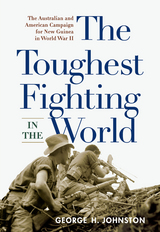
A Classic Firsthand Account of the Struggle to Stop the Japanese Advance Toward Australia in 1942
Following their attacks on Pearl Harbor, the Dutch East Indies, and the Philippines, the Japanese invaded New Guinea in early 1942 as part of their attempt to create a Pacific empire. Control of New Guinea would enable Japan to establish large army, air force, and naval bases in close proximity to Australia. The Australians, with American cooperation, began a counterattack in earnest. The mountainous terrain covered with nearly impenetrable tropical forest and full of natural hazards resulted in an exceedingly grueling battleground. The struggle for New Guinea, one of the major campaigns of World War II, lasted the entire war, with the crucial fighting occurring in the first year. In The Toughest Fighting in the World, first published in 1943, Australian war correspondent George H. Johnston recorded the efforts of both the Australian and American troops, aided by the New Guinea native people, throughout 1942 as they fought a series of vicious and bitter battles against a determined foe. In one of the classic accounts of combat in World War II, the author makes a compelling case that the hardships endured by the soldiers in New Guinea from both nature and the enemy were among the most severe in the war.
READERS
Browse our collection.
PUBLISHERS
See BiblioVault's publisher services.
STUDENT SERVICES
Files for college accessibility offices.
RECENTLY PUBLISHED




UChicago Accessibility Resources
home | accessibility | search | about | contact us
BiblioVault ® 2001 - 2024
The University of Chicago Press