
 A SCHOLARLY BOOK REPOSITORY
In fact, Baha’i draws on a diverse heritage that encompasses both East and West. Reflecting their Islamic roots, they observe daily prayers and the reading of sacred texts; a month of fast; pilgrimage to Haifa, Israel, where the religion’s relics are preserved; and abstinence from alcohol. They face toward their prophet Baha’u'llah’s resting place when praying, which is reminiscent of Muslims facing Mecca to pray.
In other ways, the Baha’i religion has dissociated itself from orthodox Shi’ism. Adherents avoid communal prayer, reject the idea of a professional clergy, promote gender equality, and devote a great deal of attention to education, health care, and environmental issues. They work actively through the United Nations system to promote their view of a new world order of peace and harmony that they feel will one day unify humankind across all nations, races, and religions.
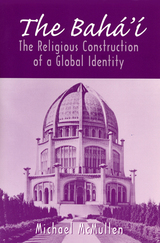
The Bahá’í Faith is one of the fastest growing, but least studied, of the world’s religions. Adherents view themselves as united by a universal belief that transcends national boundaries. Michael McMullen examines how the Bahá’í develop and maintain this global identity. Taking the Bahá’í community in Atlanta, Georgia, as a case in point, his book is the first to comprehensively examine the tenets of this little-understood faith.
McMullen notes that, to the Bahá’í, Buddha, Moses, Jesus, and Mohammed are all divinely sent teachers of ‘the Truth’, whose messages conform to the needs of their individual cultures and historical periods. But religion—which draws from the teaching of Bahá’u’lláh, a nineteenth-century Persian—encourages its members to think of themselves as global citizens. It also seeks to establish unity among its members through adherence to a Bahá’í worldview.
By examining the Atlanta Bahá’í community, McMullen shows how this global identity is interpreted locally. He discusses such topics as: the organizational structure and authority relations in the Bahá’í “Administrative Order”; Bahá’í evangelicalism; and the social boundaries between Bahá’ís and the wider culture.
READERS
Browse our collection.
PUBLISHERS
See BiblioVault's publisher services.
STUDENT SERVICES
Files for college accessibility offices.
RECENTLY PUBLISHED






UChicago Accessibility Resources
home | accessibility | search | about | contact us
BiblioVault ® 2001 - 2025
The University of Chicago Press