
 A SCHOLARLY BOOK REPOSITORY
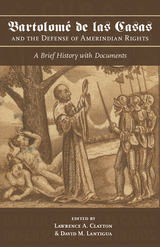
With the exception of Christopher Columbus, Bartolomé de las Casas is arguably the most notable figure of the Encounter Age. He is remembered principally as the creator of the Black Legend, as well as the protector of American Indians. He was one of the pioneers of the human rights movement, and a Christian activist who invoked law and Biblical scripture to challenge European colonialism in the great age of the Encounter. He was also one of the first and most thorough chroniclers of the conquest, and a biographer who saved the diary of Columbus’s first voyage for posterity by transcribing it in his History of the Indies before the diary was lost.
Bartolomé de las Casas and the Defense of Amerindian Rights: A Brief History with Documents provides the most wide-ranging and concise anthology of Las Casas’s writings, in translation, ever made available. It contains not only excerpts from his most well-known texts, but also his largely unavailable writings on political philosophy and law, and addresses the underappreciated aspects of his thought. Fifteen of the twenty-six documents are entirely new translations of Las Casas’s writings, a number of them appearing in English for the first time.
This volume focuses on his historical, political, and legal writings that address the deeply conflicted and violent sixteenth-century encounter between Europeans and indigenous peoples of the Americas. It also presents Las Casas as a more comprehensive and systematic philosophical and legal thinker than he is typically given credit for. The introduction by Lawrence A. Clayton and David M. Lantigua places these writings into a synthetic whole, tracing his advocacy for indigenous peoples throughout his career. By considering Las Casas’s ideas, actions, and even regrets in tandem, readers will understand the historical dynamics of Spanish imperialism more acutely within the social-political context of the times.

For thousands of years we have recorded real lives--the lives of others, and of ourselves. For what purpose and for whom has this universal and timeless pursuit endured? What obstacles have lain in the path of biographers in the past, and what continues to confound biographers today? Above all, how is it that biographies and autobiographies play such a contested, popular role in contemporary Western culture, from biopics to blogs, from memoir to docudrama?
Award-winning biographer and teacher Nigel Hamilton addresses these questions in an incisive and vivid narrative that will appeal to students of human nature and self-representation across the arts and sciences. Tracing the remarkable and often ignored historical evolution of biography from the ancient world to the present, this brief and fascinating tour of the genre conveys the passionate quest to capture the lives of individuals and the many difficulties it has entailed through the centuries. From the Epic of Gilgamesh to American Splendor, from cuneiform to the Internet, from commemoration to deconstruction, from fiction to fact--by way of famous biographical artists such as Plutarch, Saint Augustine, Sir Walter Raleigh, Samuel Johnson, Jean-Jacques Rousseau, Lord Byron, Sigmund Freud, Lytton Strachey, Abel Gance, Virginia Woolf, Leni Riefenstahl, Orson Welles, Julian Barnes, Ted Hughes, Frank McCourt, and many others--Nigel Hamilton's Biography: A Brief History will change the way you think about biography and real lives.


Using the work of archaeologists and paleoanthropologists, Spellman examines how interpreting physical remains gives us insight into prehistoric perspectives on death. He traces how humans have died over the centuries, both in the causes of death and in the views of actions that lead to death. He spotlights the great philosophical and scientific traditions of the West, which did not believe in an afterlife or see the purpose of bereavement, while also casting new light on the major religious beliefs that emerged in the ancient world, particularly the centuries-long development of Christianity. He delves into three approaches to the meaning of death—the negation of life, continuity in another form, and agnosticism—from both religious and secular-scientific perspectives.
Providing a deeper context for contemporary debates over end-of-life issues and the tension between longevity and quality of life, A Brief History of Death is an illuminating look at the complex ways humans face death and the dying.

Maurits S. Berger focuses in particular on the transformations that the figure of the Muslim and the image of Islam have undergone in the European mind. Conqueror, Antichrist, scholar, benign ruler, corsair, tradesman, fellow citizen—the Muslim has been all of those and more, and even today, as Muslims make up a substantial portion of Europe’s citizenry, they remain all too often a source of undeserved anxiety for ordinary people and politicians alike. Through Berger’s clear prose and incisive analysis, the story of Islam and Europe is seen as one of interaction and mutual influence rather than perpetual antagonism.

As one common story goes, Adam and Eve, the first man and woman, had no idea that there was any shame in their lack of clothes; they were perfectly confident in their birthday suits among the animals of the Garden of Eden. All was well until that day when they ate from the Tree of Knowledge of Good and Evil and went scrambling for fig leaves to cover their bodies. Since then, lucrative businesses have arisen to provide many stylish ways to cover our nakedness, for the naked human body now evokes powerful and often contradictory ideas—it thrills and revolts us, signifies innocence and sexual experience, and often marks the difference between nature and society. In A Brief History of Nakedness psychologist Philip Carr-Gomm traces our inescapable preoccupation with nudity.
Rather than studying the history of the nude in art or detailing the ways in which the naked body has been denigrated in the media, A Brief History of Nakedness reveals the ways in which religious teachers, politicians, protesters, and cultural icons have used nudity to enlighten or empower themselves as well as entertain us. Among his many examples, Carr-Gomm discusses how advertisers and the media employ images of bare skin—or even simply the word “naked”—to garner our attention, how mystics have used nudity to get closer to God, and how political protesters have discovered that baring all is one of the most effective ways to gain publicity for their cause. Carr-Gomm investigates how this use of something as natural as nakedness actually gets under our skin and evokes complicated and complex emotional responses.
From the naked sages of India to modern-day witches and Christian nudists, from Lady Godiva to Lady Gaga, A Brief History of Nakedness surveys the touching, sometimes tragic and often bizarre story of our relationships with our naked bodies.
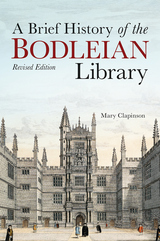
How did a library founded over four hundred years ago grow to become the world-renowned institution it is today, home to over thirteen million items? From its foundation by Sir Thomas Bodley in 1598 to the opening of the Weston Library in 2015, this illustrated account shows how the Library’s history has been involved with the British monarchy and political events throughout the centuries. The history of the Library is also a history of collectors and collections, and this book traces the story of major donations and purchases, making use of the Library’s own substantial archives to show how it came to house key items such as early confirmations of the Magna Carta, Shakespeare’s First Folio, and the manuscript of Jane Austen’s earliest writings, among many others.
This revised edition brings the history of the Bodleian Library up to the present moment. Beautifully illustrated with prints, portraits, manuscripts, and archival material, this book is essential reading for anyone interested in the history of libraries and collections.
A Brief History of the Bodleian Library takes readers through the Library’s history, from its founding in 1602 by Sir Thomas Bodley to the present day. Along the way, the book traces the development of the Library’s incomparable collection, complete with details that reveal the eccentricities of those who have helped shape it, including Bodley himself, who conceived of the Library as a “republic of the learned,” and King George VI, who inadvertently delayed the opening of the New Bodleian in 1946 when he broke the key in the lock. Covering the major moments in the Library’s history and with a great many fun facts—How did the Library come to own not one of Shakespeare’s First Folios but two?—the book also apprises readers of its present concerns, including the building of individual subject libraries across Oxford, the use of underground passages, and the perennial search for more space.
After introductory chapters on what it means to study the history of a language, the concept of linguistic change, and the nature of language families, Pharies traces the development of Spanish from its Latin roots, all with the minimum amount of technical language possible. In the core sections of the book, readers are treated to an engaging and remarkably succinct presentation of the genealogy and development of the language, including accounts of the structures and peculiarities of Latin, the historical and cultural events that deeply influenced the shaping of the language, the nature of Medieval Spanish, the language myths that have become attached to Spanish, and the development of the language beyond the Iberian Peninsula, especially in the Americas. Focusing on the most important facets of the language’s evolution, this compact work makes the history of Spanish accessible to anyone with a knowledge of Spanish and a readiness to grasp basic linguistic concepts.
Available in both English and Spanish editions, A Brief History of the Spanish Language provides a truly outstanding introduction to the exciting story of one of the world’s great languages.
A Brief History of the Spanish Language focuses on the most important aspects of the development of the Spanish language, eschewing technical jargon in favor of straightforward explanations. Along the way, it answers many of the common questions that puzzle native speakers and non-native speakers alike, such as: Why do some regions use tú while others use vos? How did the th sound develop in Castilian? And why is it la mesa but el agua?
David A. Pharies, a world-renowned expert on the history and development of Spanish, has updated this edition with new research on all aspects of the evolution of Spanish and current demographic information. This book is perfect for anyone with a basic understanding of Spanish and a desire to further explore its roots. It also provides an ideal foundation for further study in any area of historical Spanish linguistics and early Spanish literature.
A Brief History of the Spanish Language is a grand journey of discovery, revealing in a beautifully compact format the fascinating story of the language in both Spain and Spanish America.

In The Last Thirty Seconds: A Brief History of the Evolution of Hit-to-Kill Technology, David K. Stumpf details the development of one of many possible solutions for ballistic missile defense commonly known as hit-to-kill. Hit-to-kill is a nonnuclear technique using kinetic energy, rather than explosives, to destroy reentry vehicles carrying chemical, biological, or nuclear warheads. It is the centerpiece of the United States’ current ballistic missile defense systems and has proven invaluable in the conflict between Ukraine and Russia as well as in the ongoing conflict with the Houthi rebels in the Red Sea. While much of the subject remains classified, this detailed study will be welcomed for its substantial references and the inclusion of newly declassified material.

Lang describes how working and lower class students openly acknowledge and struggle with challenging experiences on a predominantly middle and upper middle class campus. We appreciate how first generation students are risk takers, boundary crosser, and successful social class immigrants. Resourceful first-gen efforts become the basis of connection and community as students begin their social mobility journeys. Overtime a public story emerges: stories making the invisible visible; stories of courage and persistence; stories of structural changes; a thoughtful student movement that is hard to ignore. We come to better understand the power of shared determination.
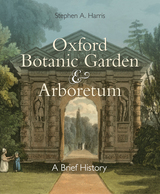
This book tells the story of the garden through accounts of each of its keepers, tracing their work and priorities, from its founding keeper, Jacob Bobart, through to the early nineteenth-century partnership of gardener William Baxter and academic Charles Daubeny, who together gave the garden its greenhouse and ponds and helped ensure its survival to the present. Richly illustrated, this book offers a wonderful introduction to a celebrated Oxford site.

"Endlessly absorbing and informative. It would be hard to imagine a better introduction to this most important and fascinating field.”—Bill Bryson, author of A Short History of Nearly Everything
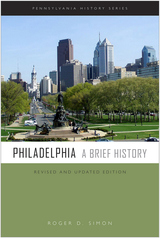
Understanding Philadelphia’s history requires that we understand that nothing is inevitable; history is not made by abstract forces, but by the decisions of real individuals as they conduct their lives. With its insightful analysis and engaging prose, Philadelphia provides an accessible and readable overview of the history of the Quaker City from its founding by William Penn to the deindustrialization and gentrification of the early twenty-first century. Roger Simon asserts that the history of Philadelphia is a story of the efforts to sustain economic prosperity while fulfilling community needs, and the continued tension between those priorities.
Philadelphia devotes considerable attention to the evolving physical development of the city and to the social conditions and class structure of the people. Three dozen maps and illustrations enrich this edition, which has been fully updated and revised to reflect new scholarship on Philadelphia’s role in the post-industrial present and the diverse communities that incorporated women and minorities into the economic and social fabric of the city.
Published in association with the Pennsylvania Historical Association
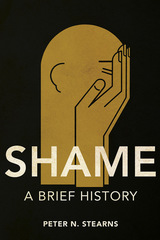
Peter N. Stearns draws on his long career as a historian of emotions to provide the foundational text on shame’s history and how this history contributes to contemporary issues around the emotion. Summarizing current research, Stearns unpacks the major debates that surround this complex emotion. He also surveys the changing role of shame in the United States from the nineteenth century to today, including shame’s revival as a force in the 1960s and its place in today’s social media. Looking ahead, he maps the abundant opportunities for future historical research and historically informed interdisciplinary scholarship.
Written for interested readers and scholars alike, Shame combines significant new research with a wider synthesis.

The final book in the groundbreaking Voices from the Underground series, Stop the Presses! I Want to Get Off!, is the inspiring, frenetic, funny, sad, always-cash-starved story of Joe Grant, founder and publisher of Prisoners’ Digest International, the most important prisoners’ rights underground newspaper of the Vietnam era. From Grant’s military days in pre-Revolutionary Cuba during the Korean War, to his time as publisher of a pro-union newspaper in Cedar Rapids and his eventual imprisonment in Leavenworth, Kansas, Grant’s personal history is a testament to the power of courage under duress. One of the more notorious federal penitentiaries in the nation, Leavenworth inspired Grant to found PDI in an effort to bring hope to prisoners and their families nationwide.
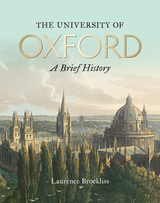
This book offers a succinct illustrated account of the university’s colorful and controversial eight-hundred-year history, from medieval times through the Reformation and on to the nineteenth century, in which the foundations of the modern tutorial system were laid. It describes the extraordinary and influential people who shaped the development of the institution and helped to create today’s world-class research university.
Richly illustrated with archival material, prints, and portraits, this book explores how a university in a small provincial town rose to become one of the top universities in the world at the beginning of the twenty-first century.
READERS
Browse our collection.
PUBLISHERS
See BiblioVault's publisher services.
STUDENT SERVICES
Files for college accessibility offices.
RECENTLY PUBLISHED



UChicago Accessibility Resources
home | accessibility | search | about | contact us
BiblioVault ® 2001 - 2024
The University of Chicago Press