
 A SCHOLARLY BOOK REPOSITORY
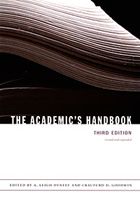
Faculty members, administrators, and professionals with experience at all levels of higher education offer candid, practical advice to help beginning academics understand matters including:
— The different kinds of institutions of higher learning and expectations of faculty at each.
— The advantages and disadvantages of teaching at four-year colleges instead of research universities.
— The ins and outs of the job market.
— Alternatives to tenure-track, research-oriented positions.
— Salary and benefits.
— The tenure system.
— Pedagogy in both large lecture courses and small, discussion-based seminars.
— The difficulties facing women and minorities within academia.
— Corporations, foundations, and the federal government as potential sources of research funds.
— The challenges of faculty mentoring.
— The impact of technology on contemporary teaching and learning.
— Different types of publishers and the publishing process at university presses.
— The modern research library.
— The structure of university governance.
— The role of departments within the university.
With the inclusion of eight new chapters, this edition of The Academic’s Handbook is designed to ease the transition from graduate school to a well-rounded and rewarding career.
Contributors. Judith K. Argon, Louis J. Budd, Ronald R. Butters, Norman L. Christensen, Joel Colton, Paul L. Conway, John G. Cross, Fred E. Crossland, Cathy N. Davidson, A. Leigh DeNeef, Beth A. Eastlick, Matthew W. Finkin, Jerry G. Gaff, Edie N. Goldenberg, Craufurd D. Goodwin, Stanley M. Hauerwas, Deborah L. Jakubs, L. Gregory Jones, Nellie Y. McKay, Patrick M. Murphy, Elizabeth Studley Nathans, A. Kenneth Pye, Zachary B. Robbins, Anne Firor Scott, Sudhir Shetty, Samuel Schuman, Philip Stewart, Boyd R. Strain, Emily Toth, P. Aarne Vesilind, Judith S. White, Henry M. Wilbur, Ken Wissoker

research, teaching, or practice in the United States between 1859 and 1940, John Lankford
paints a meticulously documented portrait of this community. He tallies the number with and
without doctorates, the number that taught in colleges or universities versus those involved in
industrial or government work, the number of women versus men, and so on. He also
addresses the crucial question of power within the community—what it meant, which
astronomers had it, and what they did with it.
Drawing on more than a decade of archival research, Lankford attends to the numbers in
concise tables and figures, and takes care to focus through biographical sketches on the
human beings his data represent. This dual approach convincingly illustrates how the changing
structure of a scientific community can alter both the career trajectories of its members and the
nature of the scientific research they choose to pursue.
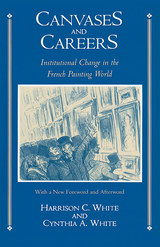
Originally published in 1965, this ground-breaking work is a classic piece of empirical research in the sociology of art. In this edition, Harrison C. White's new Foreword compares the marketing approaches of two contemporary painters, while Cynthia A. White's new Afterword reviews recent scholarship in the field.

Career Diplomacy is an insider's guide to the Foreign Service as an institution, a profession, and a career. In this thoroughly revised third edition, Kopp and Naland provide an up-to-date, authoritative, and candid account of the life and work of professional US diplomats, who advance and protect this country’s national security interests around the globe. The authors explore the five career tracks—consular, political, economic, management, and public diplomacy—through their own experience and through interviews with more than a hundred current and former members of the Foreign Service. They lay out what to expect in a Foreign Service career, from the entrance exam through midcareer and into the senior service—how to get in, get around, and get ahead.
New in the third edition: • A discussion of the relationship of the Foreign Service and the Department of State to other agencies, and to the combatant commands • An expanded analysis of hiring procedures• Commentary on challenging management issues in the Department of State, including the proliferation of political appointments in high-level positions and the difficulties of running an agency with employees in two personnel systems (Civil Service and Foreign Service) • A fresh examination of the changing nature and demographics of the Foreign Service
Timothy Bledsoe bases his findings on the political careers of more than eight-hundred city council members representing cities with large and medium populations. Tracing how some officials' careers unfolded over five years, Bledsoe studies their reasons for seeking office and examines how successful they were in adapting to their jobs. He evaluates office-holders whose council careers were cut short and those whose lengthy service qualified them as “careerists,” paying special attention to first-term officials and to those who used their seats as stepping-stones to higher political offices. In this first-of-its-kind study, Bledsoe offers specific recommendations for restoring some of the lost vigor to local politics.
Careers in International Affairs, now in its eighth edition, is the ultimate job hunting guide for anyone hoping to work in the U.S. government, international organizations, business, or nonprofits. This thoroughly revised edition provides up-to-date descriptions and data about careers in the global workplace and how to find them—along with nearly 300 organization profiles.
In addition to a remarkably broad and deep list of organizations and contacts, Careers in International Affairs offers insight and guidance from a career counselor, a graduate student, and practitioners in the international affairs community on networking, interviewing, finding a mentor, and choosing the best graduate school.
The book also presents numerous firsthand perspectives on various career sectors from those who have found their own international niche—from young professionals to senior policymakers. It is designed to encourage international job seekers to think about what they know and what talents they have to offer, to widen their horizons and reveal all the possibilities, to help them realize that the future could hold several careers, and to remind them that it is never too early—or too late—to consider the variety of options that await them around the world.
Careers in International Affairs is published in cooperation with Georgetown University's School of Foreign Service, the oldest and largest school of international affairs in the United States.
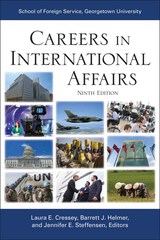
This is the essential resource and job-hunting guide for all those interested in international careers in the US government, multinational corporations, banks, consulting companies, international and nongovernmental organizations, the media, think tanks, universities, and more. Careers in International Affairs, now in its ninth edition, provides up-to-date insights about the range of possibilities in the global workplace and tips on how to get these jobs—along with profiles of hundreds of important employers.
This helpful guide includes a directory of more than 250 organizations who offer internationally oriented jobs such as the US Department of State, CIA, United Nations, World Bank, J.P. Morgan Chase, Google, McKinsey & Company, and dozens more. The book also includes insightful testimonies about what these careers are really like from both junior and senior professionals in these fields. Careers in International Affairs gives advice on academic paths that will prepare students for demanding international careers and guidance on how to write resumes, interview for jobs, network, and maintain their online profile.
Published in cooperation with the Edmund A. Walsh School of Foreign Service at Georgetown University, the oldest school of international affairs in the United States, Careers in International Affairs will encourage job seekers to consider their goals and talents, widen their horizons to consider new possibilities, and help them realize that their future can hold several careers, while reminding all that it is never too early—or too late—to consider the realm of opportunities that await them throughout the world.
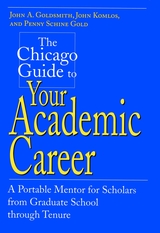
With a perpetually tight job market in the traditional academic fields, the road to an academic career for many aspiring scholars will often be a rocky and frustrating one. Where can they turn for good, frank answers to their questions? Here, three distinguished scholars—with more than 75 years of combined experience—talk openly about what's good and what's not so good about academia, as a place to work and a way of life.
Written as an informal conversation among colleagues, the book is packed with inside information—about finding a mentor, avoiding pitfalls when writing a dissertation, negotiating the job listings, and much more. The three authors' distinctive opinions and strategies offer the reader multiple perspectives on typical problems. With rare candor and insight, they talk about such tough issues as departmental politics, dual-career marriages, and sexual harassment. Rounding out the discussion are short essays that offer the "inside track" on financing graduate education, publishing the first book, and leaving academia for the corporate world.
This helpful guide is for anyone who has ever wondered what the fascinating and challenging world of academia might hold in store.
Part I - Becoming a Scholar
* Deciding on an Academic Career
* Entering Graduate School
* The Mentor
* Writing a Dissertation
* Landing an Academic Job
Part II - The Academic Profession
* The Life of the Assistant Professor
* Teaching and Research
* Tenure
* Competition in the University System and Outside Offers
* The Personal Side of Academic Life
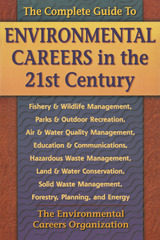
Compiled by the acknowledged leaders in environmental career information, The Complete Guide to Environmental Careers in the 21st Century is a completely revised and updated edition of what has become the standard reference on the subject. Organized for ease of use and fully updated to reflect ongoing changes in environmental fields, it is the most comprehensive and reliable resource available for anyone seeking information about environmental career opportunities and how to get started in one. The book presents: a thorough consideration of environmental trends for the 21st century and the likely impact of those trends on future career opportunities an overview of environmental professions including a statistical review of the private sector environmental industry, state and local government, federal government, academia, and nonprofits valuable tips on career search strategies along with information about education, volunteering, and internships case studies of representative work and individual profiles that give readers an up-close and personal look at a variety of environmental professionals, what they really do, and how they arrived at their current positions resources for further information including more than 100 of the top web sites for the environmental career seeke.
Chapters examine the entire spectrum of career fields, with each chapter providing an "at a glance" summary of the field; discussion of history and background along with current issues and trends; examination of specific career opportunities and the educational requirements for each; salary ranges by type of employer, level of experience, and responsibility; and an extensive list of resources for further information. Fields profiled include: planning, education and communications, energy management and conservation, fisheries and wildlife management, forestry, land and water conservation, and others.
Written at a broad introductory level, The Complete Guide to Environmental Careers in the 21st Century provides an informative and inspirational starting place from which to learn more about specific fields. For recent college graduates, students, volunteers, librarians, career counselors, or anyone interested in working to protect the environment, it is an essential reference.
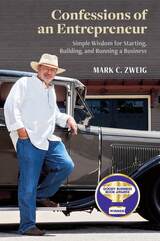
Finalist, 2022 Goody Business Book Awards, Entrepreneur, Start Ups / New Business Category
With more than fifty years of professional experience, Mark C. Zweig has seen it all—from the fear and excitement of starting a new business to the joys and challenges of life as an entrepreneur. In Confessions of an Entrepreneur: Simple Wisdom for Starting, Building, and Running a Business, Zweig draws upon this wealth of experience to offer practical, easy-to-understand guidance for bringing a business to life and cultivating success at every stage of its development. The candid stories he shares from his career provide insight into the realities of business ownership and illustrate proven principles for both personal and professional success. Written by an entrepreneur for entrepreneurs, this book is an indispensable guide filled with wisdom for new and seasoned business leaders alike.

This fascinating culinarian is John Dabney (1821–1900), who was born a slave, but later built an enterprising catering business. Dabney is just one of 175 influential cooks and restaurateurs profiled by David S. Shields in The Culinarians, a beautifully produced encyclopedic history of the rise of professional cooking in America from the early republic to Prohibition.
Shields’s concise biographies include the legendary Julien, founder in 1793 of America’s first restaurant, Boston’s Restorator; and Louis Diat and Oscar of the Waldorf, the men most responsible for keeping the ideal of fine dining alive between the World Wars. Though many of the gastronomic pioneers gathered here are less well known, their diverse influence on American dining should not be overlooked—plus, their stories are truly entertaining. We meet an African American oyster dealer who became the Congressional caterer, and, thus, a powerful broker of political patronage; a French chef who was a culinary savant of vegetables and drove the rise of California cuisine in the 1870s; and a rotund Philadelphia confectioner who prevailed in a culinary contest with a rival in New York by staging what many believed to be the greatest American meal of the nineteenth century. He later grew wealthy selling ice cream to the masses. Shields also introduces us to a French chef who brought haute cuisine to wealthy prospectors and a black restaurateur who hosted a reconciliation dinner for black and white citizens at the close of the Civil War in Charleston.
Altogether, Culinarians is a delightful compendium of charcuterie-makers, pastry-pipers, caterers, railroad chefs, and cooking school matrons—not to mention drunks, temperance converts, and gangsters—who all had a hand in creating the first age of American fine dining and its legacy of conviviality and innovation that continues today.
Delinquency evaluates one of the largest longitudinal-observational studies of juvenile delinquents ever conducted. Utilizing a normal population sample and conducting individual interviews repeatedly over many years, the author and his colleagues followed the development of 400 British working-class boys from age eight to twenty-five, of whom one-third eventually had criminal records.
Five factors were found to predict most delinquent behavior, the most powerful statistically being the presence of a criminal parent. By measuring the accumulated pressure of these factors, D. J. West demonstrates the extent to which delinquency can be predicted from classroom observations or social background at an early age. He outlines policy guidelines that would tailor intervention to a youth's age and circumstances, and he argues persuasively that positive change in the parents' situation usually produces good effects on the children.
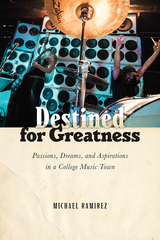
In Destined for Greatness, sociologist Michael Ramirez examines the lives of forty-eight independent rock musicians who seek out such non-normative choices in a college town renowned for its music scene. He explores the rich life course trajectories of women and men to explore the extent to which pathways are structured to allow some, but not all, individuals to fashion careers in music worlds. Ramirez suggests a more nuanced understanding of factors that enable the pursuit of musical livelihoods well into adulthood.
Finding a job used to be simple. Now . . . well, it’s complicated. In today’s economy, you can’t just be an employee looking to get hired—you have to market yourself as a business, one that can help another business achieve its goals.
That’s a radical transformation in how we think about work and employment, says Ilana Gershon. And with Down and Out in the New Economy, she digs deep into that change and what it means, not just for job seekers, but for businesses and our very culture. In telling this story, Gershon covers all parts of the employment spectrum: she interviews hiring managers about how they assess candidates; attends personal branding seminars; talks with managers at companies around the United States to suss out regional differences—like how Silicon Valley firms look askance at the lengthier employment tenures of applicants from the Midwest. And she finds that not everything has changed: though the technological trappings may be glitzier, in a lot of cases, who you know remains more important than what you know.
Rich in the voices of people deeply involved with all parts of the employment process, Down and Out in the New Economy offers a snapshot of the quest for work today—and a pointed analysis of its larger meaning.
Developed by The Environmental Careers Organization (ECO, the creators of the popular Complete Guide to Environmental Careers), this new volume is unlike any careers book you've seen before. Reaching far beyond job titles and resume tips, The ECO Guide immerses you in the strategies and tactics that leading edge professionals are using to tackle pressing problems and create innovative solutions.
To bring you definitive information from the real world of environmental problem-solving, The ECO Guide has engaged some of the nation's most respected experts to explain the issues and describe what's being done about them today. You'll explore: Global climate change with Eileen Claussen, Pew Center for Global Climate Change; Biodiversity loss with Stuart Pimm, Nicholas School for the Environment at Duke University; Green Business with Stuart Hart, Kenan-Flager Business School at University of North Carolina; Ecotourism with Martha Honey, The International Ecotourism Society; Environmental Justice with Robert Bullard, Environmental Justice Center at Clark Atlanta University; Alternative Energy with Seth Dunn, Worldwatch Institute; Water Quality with Sandra Postel, Global Water Policy Project; Green Architecture with William McDonough, McDonough + Partners; and twelve other critical issues.
To demonstrate even more clearly what eco-work feels like on the ground, The ECO Guide offers vivid "Career Snapshots" of selected employers and the professionals that work there. You'll visit government agencies like the USDA Forest Service, nonprofit organizations like Conservation International and Project Wild, and local advocates like Alternatives for Community and Environment. You'll go inside environmental businesses like Wildland Adventures and Stonyfield Farms. And you'll learn from academic institutions like the National Center for Atmospheric Research and the Gund Institute for Ecological Economics.
ECO also identifies and describes forty specific jobs that are representative of environmental career opportunities in the twenty-first century. It provides dozens of the best Internet resources. And most importantly, The ECO Guide offers all of the insight about current trends you expect from ECO, the acknowledged leaders in environmental career information.
In an increasingly competitive world market, how does the United States rank? Many Americans are worried about the economic state of their nation, especially now that countries like China are becoming ever more economically powerful. What does America need to both stabilize and energize its economy?
Entrepreneurship, Steve Mariotti claims, is vital. An Entrepreneur’s Manifesto is Mariotti’s rallying cry for the world to recognize the potential that business creation holds for the individual and the economy. Mariotti explores how entrepreneurship affects schools and prisons, developed cities and isolated villages, brick-and-mortar stores, and internet-based businesses. He takes a hard look at the research on entrepreneurial education, entrepreneurship, government policy, and the social and cultural attributes most likely to foster successful business creation, incorporating his discussions with some of the best minds on the question of entrepreneurship. Mariotti also examines how the rise of the Internet and Web-based innovations like crowdfunding have both changed—and not changed—the fundamentals of promoting those who take the ultimate gamble of going into business for themselves.
As the author of several leading textbooks on the subject and founder of the Network for Teaching Entrepreneurship (NFTE), a global nonprofit organization that has educated more than 500,000 students and trained more than 5,000 teachers in 50 countries, Mariotti is both an experienced and reliable leader in what he calls the entrepreneurial revolution. Mariotti frequently writes for the Huffington Post and has been recruited by the State Department to discuss his ideas on youth entrepreneurship in Cambodia and other developing countries seeking to escape the shackles of centrally planned economic policies.
Neither a dry recitation of academic theory nor a scattered collection of feel-good stories, An Entrepreneur’s Manifesto builds on Mariotti’s unique perspective to offer a critique that is both inspiring and practical. Riveting stories complement enlightening real-world perspectives, making the work relatable and inspiring.
“There is no more revolutionary act,” Mariotti says, “than starting a business.”
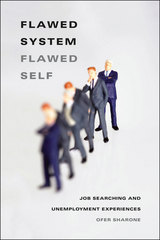
Flawed System/Flawed Self delves beneath these staggering numbers to explore the world of job searching and unemployment across class and nation. Through in-depth interviews and observations at job-search support organizations, Ofer Sharone reveals how different labor-market institutions give rise to job-search games like Israel’s résumé-based “spec games”—which are focused on presenting one’s skills to fit the job—and the “chemistry games” more common in the United States in which job seekers concentrate on presenting the person behind the résumé. By closely examining the specific day-to-day activities and strategies of searching for a job, Sharone develops a theory of the mechanisms that connect objective social structures and subjective experiences in this challenging environment and shows how these different structures can lead to very different experiences of unemployment.
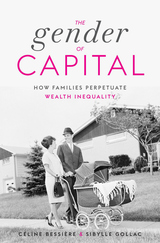
Two leading social scientists examine the gender wealth gap in countries with officially egalitarian property law, showing how legal professionals—wittingly and unwittingly—help rich families and men maintain their privilege.
In many countries, property law grants equal rights to men and women. Why, then, do women still accumulate less wealth than men? Combining quantitative, ethnographic, and archival research, The Gender of Capital explains how and why, in every class of society, women are economically disadvantaged with respect to their husbands, fathers, and brothers. The reasons lie with the unfair economic arrangements that play out in divorce proceedings, estate planning, and other crucial situations where law and family life intersect.
Céline Bessière and Sibylle Gollac argue that, whatever the law intends, too many outcomes are imprinted with unthought sexism. In private decisions, old habits die hard: families continue to allocate resources disproportionately to benefit boys and men. Meanwhile, the legal profession remains in thrall to assumptions that reinforce gender inequality. Bessière and Gollac marshal a range of economic data documenting these biases. They also examine scores of family histories and interview family members, lawyers, and notaries to identify the accounting tricks that tip the scales in favor of men.
Women across the class spectrum—from poor single mothers to MacKenzie Scott, ex-wife of Amazon billionaire Jeff Bezos—can face systematic economic disadvantages in divorce cases. The same is true in matters of inheritance and succession in family-owned businesses. Moreover, these disadvantages perpetuate broader social disparities beyond gender inequality. As Bessière and Gollac make clear, the appropriation of capital by men has helped to secure the rigid hierarchies of contemporary class society itself.
This second edition is updated with a new Afterword and includes Granovetter's influential article "Economic Action and Social Structure: The Problems of Embeddedness."
"Who would imagine that a book with such a prosaic title as 'getting a job' could pose such provocative questions about social structure and even social policy? In a remarkably ingenious and deceptively simple analysis of data gathered from a carefully designed sample of professional, technical, and managerial employees . . . Granovetter manages to raise a number of critical issues for the economic theory of labor markets as well as for theories of social structure by exploiting the emerging 'social network' perspective."—Edward O. Laumann, American Journal of Sociology
"This short volume has much to offer readers of many disciplines. . . . Granovetter demonstrates ingenuity in his design and collection of data."—Jacob Siegel, Monthly Labor Review
"A fascinating exploration, for Granovetter's principal interest lies in utilizing sociological theory and method to ascertain the nature of the linkages through which labor market information is transmitted by 'friends and relatives.'"—Herbert Parnes, Industrial and Labor Relations Review
Getting a job, or changing from one job to another, is usually of interest only to the people directly involved. Mark Granovetter sees it differently, however, and so will his readers. He provides for the first time a detailed account and analysis of how professionals are channeled into high-level jobs. It is friends, and sometimes relatives, who provide the crucial information and contacts. This does not seem surprising in any individual case but it is often denied in the aggregate.
Granovetter also explores the nature of the relation between job-changer and his contact, and gives systematic attention to the problem of why some individuals have the "right" contacts while others do not. He traces the way job information moves from the employer who has a vacancy to the man who ultimately fills it, and discusses the factors that influence the transmission of the information. In conclusion he considers the impact of these factors on career patterns, organizational structure, and "affirmative action" programs.
Conducting research is an important foundation for many undergraduates on STEMM career paths. But landing an extremely competitive research spot that is also an enriching experience involves knowing how to present yourself effectively and an awareness of your goals and expectations. In this book, an expert lab manager and a longtime principal investigator share their secrets for obtaining these coveted positions.
Offering advice to students in a wide variety of STEMM fields at both research-intensive universities and primarily undergraduate institutions, Getting In helps students navigate the hidden curriculum of academia, unofficial rules that disproportionately affect first-generation college students and those from low-income backgrounds and communities historically underrepresented in science. The authors provide not only an overview of STEMM research and lab opportunities but also specific strategies for the entire application process—including how to write emails that get noticed by busy professors, how to ask for a research position during office hours, and interview questions to prepare for—so students can claim their place in research settings.
With its emphasis on the many interpersonal and professional benefits of research experiences, Getting In equips all STEMM undergrads with the tools they need both to secure these valued positions and to develop habits that will build productive relationships with their future research mentors.
As an undergrad, Getting In will help you:
- determine how much time you can spend on research by evaluating your current activity level and goals.
- find the time to do research without giving up your social life or risking your GPA.
- avoid common mistakes in the search, application, or interview that make it harder to find a research experience.
- write emails that get you noticed by busy professors by customizing the included templates.
- prepare for tough interview questions so you’ll impress the interviewer with your answers, and be able to determine if the position is right for you.
As a research mentor, Getting In will help your students:
- navigate the hidden curriculum of finding a research experience in science, technology, engineering, math, and medicine (STEMM).
- set realistic expectations for their research experience.
- understand why conducting research requires effort and will include some failure and other challenges.
- be active participants in their success in the lab.
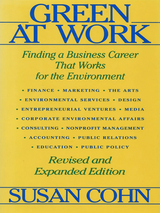
Green at Work, published by Island Press in 1992, was the first source of information to help nontechnical but environmentally concerned job seekers learn about career opportunities with environmental companies or within the newly emerging "green" corporate culture. Now entirely revised and expanded, this indispensable volume again offers invaluable tools and strategies for launching a green career.
Susan Cohn has expanded her scope beyond the business world to examine environmentally focused, nontechnical careers in a wide variety of fields, including communications, banking and finance, consulting, public policy, the non-profit sector, and more. This completely updated edition includes:
- profiles of more than 70 individuals that illustrate how people have woven their skills, values, and passions into their work
- listings of more than 400 companies with contact names, addresses, phone numbers, information on what the company does, and its environmental programs and policies
- listings of more than 50 resources, including organizations, publications, and other sources of information
- a bibliography of recommended readings
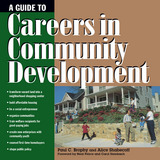
Community development -- the economic, physical, and social revitalization of a community, led by the people who live in that community -- offers a wide range of exciting and rewarding employment options. But until now, there has been no "road map" for professionals, volunteers, students, or anyone wishing to become involved in the field.
A Guide to Careers in Community Development describes the many different kinds of community development jobs available, ranging from community organizing, to financing housing and new businesses, to redeveloping brownfields. It offers advice on how to break into the field along with guidance for career advancement and lateral movement.
Following an introductory chapter that offers an overview and definition of community development and its history, the authors describe:
- different institutions in the field and how they fit together
- pros and cons of community development careers, with a self-assessment quiz for readers to use in analyzing their suitability for the field
- the work and skills involved in different kinds of positions
- how to prepare for and move up in a career
- how to land that first job
A Guide to Careers in Community Development is an essential reference for anyone interested in working in the community development field, including graduate and undergraduate students, volunteers, and mid-career professionals seeking a more fulfilling line of work.
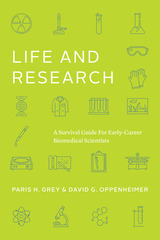
Building and maintaining a mentoring network, practicing self-care and having a life outside of the lab, understanding that what works perfectly for a labmate might not work for you—these are just a few of the strategies that lab manager and molecular biologist Paris H. Grey and PI and geneticist David G. Oppenheimer wished they had implemented far sooner in their careers. They also offer practical advice on managing research projects, sharing your work on social media, and attending conferences. Above all, they coach early-career scientists to avoid burnout and make the most of every lab experience to grow and learn.
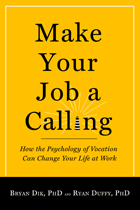
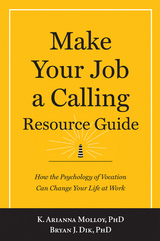
It is designed to assist instructors, book study leaders, career counselors, human resources professionals, and individual readers who seek to delve deeper into the book, Make Your Job a Calling. In each chapter of the guide, the reader is given (1) a chapter summary, (2) general themes, (3) discussion questions, and (4) suggested activities. The suggested activities often involve a free write where you are encouraged to write your thoughts down without editing yourself. In a free-write you are not concerned with proper grammar or punctuation. Rather, you write your immediate thoughts down in a free-flowing manner. This allows for deep exploration and can inform rich discussion of ideas in a productive learning environment.
The elements in this guide are designed to facilitate the reflection and discussion process, providing readers with useful starting points. Of course, not all group leaders will find every question or activity useful for their particular group, which is why we encourage flexible use of the material. By all means, pick, choose, add to, and adapt according to your sense of what will be most helpful for the group you are leading.
Whether you feel stuck or overwhelmed, hopeful or uncertain, or energized and ready to go, this guide can assist you in that journey.


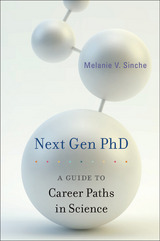
For decades, top scientists in colleges and universities pursued a clear path to success: enroll in a prestigious graduate program, conduct research, publish papers, complete the PhD, pursue postdoctoral work. With perseverance and a bit of luck, a tenure-track professorship awaited at the end. In today’s academic job market, this scenario represents the exception. As the number of newly conferred science PhDs keeps rising, the number of tenured professorships remains stubbornly stagnant.
“Next Gen PhD: A Guide to Career Paths in Science is a practical and thorough manual for the entire career transition process, from defining personal interests and deciding on a career path all the way to day one of a new job. Written by experienced career counselor Melanie Sinche, it is geared toward postdocs and graduate students who may not have access to effective career counseling or mentorship or are not satisfied with what they have received thus far.”
—Teegan A. Dellibovi-Ragheb, Science
“With its focus on PhD level scientists, this book fills a gap in job search and career information literature. It’s a must-read for those contemplating or actively pursuing studies in the subject area, as well as those who provide guidance to undergraduates, graduate students, and postdoctoral scholars.”
—Alan Farber, Library Journal (starred review)
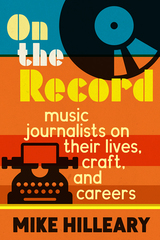
Bringing together interviews from an impressive roster of over fifty music writers, Mike Hilleary offers up an engaging and wide-reaching examination of the past and potential future of music journalism. This accessible oral history contains professional insights into journalists' craft and purpose, practical advice, and essential life lessons from a diverse cast of music writers—ranging from long-respected veterans of the field such as Rob Sheffield, Jessica Hopper, Ann Powers, and Chuck Klosterman to must-read modern voices including Amanda Petrusich, Hanif Abdurraqib, Lindsay Zoladz, and Jayson Greene. Honest and absorbing, On the Record will educate and enlighten anyone who wants to write about music, or anyone who wants a better understanding about those who do.
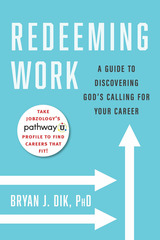
The author, Bryan Dik, PhD, is one of the leading psychologists in the world who specializes in vocation. A professor, entrepreneur, and follower of Christ, Dik wrote this book as a labor of love after devoting his career to research and development of practical strategies for helping others find purposeful work. His message: there are abundant opportunities for Christians to forge careers that answer God’s calling for their lives. In Redeeming Work, he shares the tools you need to find these opportunities and pursue them successfully.
Your purchase of Redeeming Work comes with a special bonus: free access to an evidence-based online career assessment system called PathwayU. By taking this assessment, you’ll learn about what makes you unique, including what you enjoy (interests), what matters to you (values), your general tendencies (personality), and what you most need from an organization (workplace preferences). Then, you’ll be able to explore career paths (and current job openings) that fit the pattern of gifts God has given you.
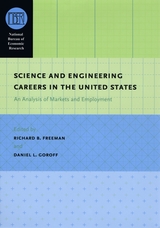
Beginning in the early 2000s, there was an upsurge of national concern over the state of the science and engineering job market that sparked a plethora of studies, commission reports, and a presidential initiative, all stressing the importance of maintaining American competitiveness in these fields. Science and Engineering Careers in the United States is the first major academic study to probe the issues that underlie these concerns.
This volume provides new information on the economics of the postgraduate science and engineering job market, addressing such topics as the factors that determine the supply of PhDs, the career paths they follow after graduation, and the creation and use of knowledge as it is reflected by the amount of papers and patents produced. A distinguished team of contributors also explores the tensions between industry and academe in recruiting graduates, the influx of foreign-born doctorates, and the success of female doctorates. Science and Engineering Careers in the United States will raise new questions about stimulating innovation and growth in the American economy.
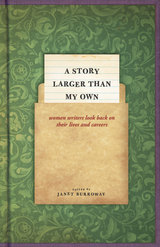
Kumin, who went on to win the Pulitzer Prize for poetry, was part of a groundbreaking generation of women writers who came of age during the midcentury feminist movement. By challenging the status quo and ultimately finding success for themselves, they paved the way for future generations of writers. In A Story Larger than My Own, Janet Burroway brings together Kumin, Julia Alvarez, Jane Smiley, Erica Jong, and fifteen other accomplished women of this generation to reflect on their writing lives.
The essays and poems featured in this collection illustrate that even writers who achieve critical and commercial success experience a familiar pattern of highs and lows over the course of their careers. Along with success comes the pressure to sustain it, as well as a constant search for subject matter, all too frequent crises of confidence, the challenges of a changing publishing scene, and the difficulty of combining writing with the ordinary stuff of life—family, marriage, jobs. The contributors, all now over the age of sixty, also confront the effects of aging, with its paradoxical duality of new limitations and newfound freedom.
Taken together, these stories offer advice from experience to writers at all stages of their careers and serve as a collective memoir of a truly remarkable generation of women.

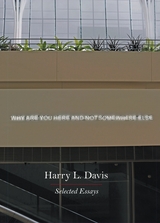
On the occasion of the fiftieth anniversary of Davis’s arrival at the Booth School, Why Are You Here and Not Somewhere Else offers seven essays by Davis that offer new perspectives and contribute to a more well-rounded understanding of business education. Adapted from convocation addresses given by Davis at different points during his five-decade career, the essays encapsulate the spirit of business education at the Booth School, while at the same time providing encouraging, invaluable wisdom for those about to embark on business careers or take on leadership positions. Topics addressed range from the role of the university in the business world to the crucial role of intangible values in shaping one’s career.
Davis has been a formative influence on more executives and leaders than perhaps any other business educator living today, and Why Are You Here and Not Somewhere Else provides a unique and valuable perspective on how leaders in business and elsewhere can shape and define their careers in new ways.
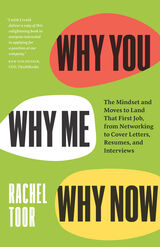
Searching for a job can be hard and demoralizing work. In Why You, Why Me, Why Now, Rachel Toor delivers some good news. The most important thing is within your control—a mindset that shows you know the goals of the organization you want to work for and that you’re ready and eager to contribute. Toor provides, with compassion and enthusiasm, strategies to make it easy for hiring managers to say “yes.” Through useful and funny anecdotes, she offers advice from professionals across industries and focuses on the attitude applicants can adopt to find success. Revealing traits employers seek, Toor shows how to craft winning cover letters, ways to tailor resumes for each job, and practical tips to get past AI screening. She also explains how to use LinkedIn and gives tips on preparing for interviews. Throughout, the book features Toor’s notes on writing well to help in landing a first job and beyond. Encouraging, entertaining, and blunt, this is a job-search guide like no other.
Are you looking for a career with professional rewards and personal satisfaction? Perhaps you'd like to find meaningful employment in the field of international relations? Working World is the perfect resource for making sound career choices, and is particularly valuable for those interested in exploring a career in international education, exchange, and development.
Sherry Mueller, president emeritus of a large nonprofit organization with an international focus, and Mark Overmann, a young professional on his way up, serve as spirited guidance counselors and offer valuable insight on launching a career, not just landing a job. The two authors—representing contrasting personalities, levels of experience, and different generations—engage in an entertaining dialogue designed to highlight alternative approaches to the same destination: making a difference in the world. With a rich mix of anecdotes and advice, the two authors present their individual perspectives on career development: identifying your cause, the art of networking, the value of mentors, and careers as "continuous journeys." Mueller and Overmann push job seekers to challenge assumptions about what it means to pursue a career in international relations and to recognize that the path to career success is rarely straight.
To help the job seeker chart the best course, Working World provides specific resources including annotated lists of selected organizations, websites, and further reading. Profiles of twelve professionals, from promising young associates to presidents and CEOs, illustrate the book's main topics. Each professional provides insight into his or her career choices, distills lessons learned, and offers practical advice about building a career in international affairs. All of these resources were chosen specifically to help job seekers map the next steps toward the internship, job, or other opportunity that will give shape to the career they envision.
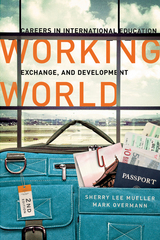
Now available in a new second edition, Working World: Careers in International Education, Exchange, and Development offers an engaging guide for cause-oriented people dedicated to begin or enhance careers in the now burgeoning fields of international affairs. Mueller and Overmann expand their original dialogue between a career veteran and a young professional to address issues that recognize the meteoric rise of social media and dramatic geopolitical events. They explore how the idea of an international career has shifted: nearly every industry taking on more and more international dimensions, while international skills—linguistic ability, intercultural management, and sensitivity—become ever more highly prized by potential employers.
This second edition of Working World offers ten new and four significantly updated profiles as well as new and expanded concepts that include work-life balance, the importance of informational interviews, moving on, and key building blocks for international careers.Like the award-winning first edition, Working World is a rare and valuable resource to students and graduates interested in careers in international affairs, mid-career professionals who want to make a career change or shift, as well as guidance counselors and career center specialists at universities.
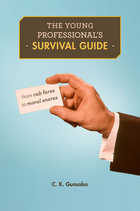
Imagine yourself in your new job, doing your best to make a good impression—and your boss asks you to do something that doesn’t feel right, like fudge a sales report, or lie to a customer. You have no idea how to handle the situation, and your boss is hovering. When you’re caught off guard, under pressure from someone more powerful, it’s easy to make a mistake. And having made one, it’s easier to rationalize the next one.
The Young Professional’s Survival Guide shows how to avoid these traps in the first place, and how to work through them if you can’t avoid them. Many of the problems that arise in the workplace are predictable. C. K. Gunsalus, a nationally recognized expert on professional ethics, uses short, pungent real-world examples to help people new to the work world recognize the situations that can lead to career-damaging missteps—and prevent them. Gunsalus offers questions to ask yourself (and others) to help you recognize trouble and temptation, sample scripts to use to avoid being pressured into doing something you’ll regret, and guidance in handling disputes fairly and diplomatically. Most of all, she emphasizes, choose your mentors for their characters as well as their titles and talents.
You can’t control the people around you, but you can control what you do. Reliance on a few key habits and a professional persona, Gunsalus shows, can help you advance with class, even in what looks like a “casual” workplace.
READERS
Browse our collection.
PUBLISHERS
See BiblioVault's publisher services.
STUDENT SERVICES
Files for college accessibility offices.
RECENTLY PUBLISHED




UChicago Accessibility Resources
home | accessibility | search | about | contact us
BiblioVault ® 2001 - 2024
The University of Chicago Press