
 A SCHOLARLY BOOK REPOSITORY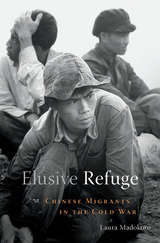
The 1949 Chinese Communist Revolution is a subject of inexhaustible historical interest, but the plight of millions of Chinese who fled China during this tumultuous period has been largely forgotten. Elusive Refuge recovers the history of China’s twentieth-century refugees. Focusing on humanitarian efforts to find new homes for Chinese displaced by civil strife, Laura Madokoro points out a constellation of factors—entrenched bigotry in countries originally settled by white Europeans, the spread of human rights ideals, and the geopolitical pressures of the Cold War—which coalesced to shape domestic and international refugee policies that still hold sway today.
Although the United States, Canada, Australia, New Zealand, and South Africa were home to sizeable Asian communities, Chinese migrants were a perpetual target of legislation designed to exclude them. In the wake of the 1949 Revolution, government officials and the broader public of these countries questioned whether Chinese refugees were true victims of persecution or opportunistic economic migrants undeserving of entry. It fell to NGOs such as the Lutheran World Federation and the World Council of Churches to publicize the quandary of the vast community of Chinese who had become stranded in Hong Kong.
These humanitarian organizations achieved some key victories in convincing Western governments to admit Chinese refugees. Anticommunist sentiment also played a role in easing restrictions. But only the plight of Southeast Asians fleeing the Vietnam War finally convinced the United States and other countries to adopt a policy of granting permanent residence to significant numbers of refugees from Asia.
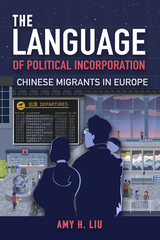
In this groundbreaking study, The Language of Political Incorporation, Amy Liu focuses on Chinese migrants in Central-Eastern Europe and their varying levels of political incorporation in the local community. She examines the linguistic diversity of migrant networks, finding institutional trust and civic engagement depend not on national identity, but on the network’s linguistic diversity—namely, whether the operating language is a migrant’s mother tongue or a lingua franca.
The Language of Political Incorporation uses original survey data to assess when the Chinese engage positively with the authorities and when they become civic minded. The results are surprising. In Hungary, the Chinese community has experienced high levels of political incorporation in part because they have not been targeted by anti-immigrant rhetoric and policies. In contrast, migrants in Romania sought the assistance of the Chinese embassy to fight an effort to collect back taxes.
Liu also compares the Chinese experiences in Central-Eastern Europe with those of Muslims in the region, as well as how the Chinese are treated in Western Europe. Additionally, she considers how the local communities perceive the Chinese. The Language of Political Incorporation concludes by offering best practices for how governments can help migrants become more trusting of—and have greater involvement with—locals in their host countries. Ultimately, Liu demonstrates the importance of linguistic networks for the incorporation of immigrants.
READERS
Browse our collection.
PUBLISHERS
See BiblioVault's publisher services.
STUDENT SERVICES
Files for college accessibility offices.
RECENTLY PUBLISHED





UChicago Accessibility Resources
home | accessibility | search | about | contact us
BiblioVault ® 2001 - 2025
The University of Chicago Press